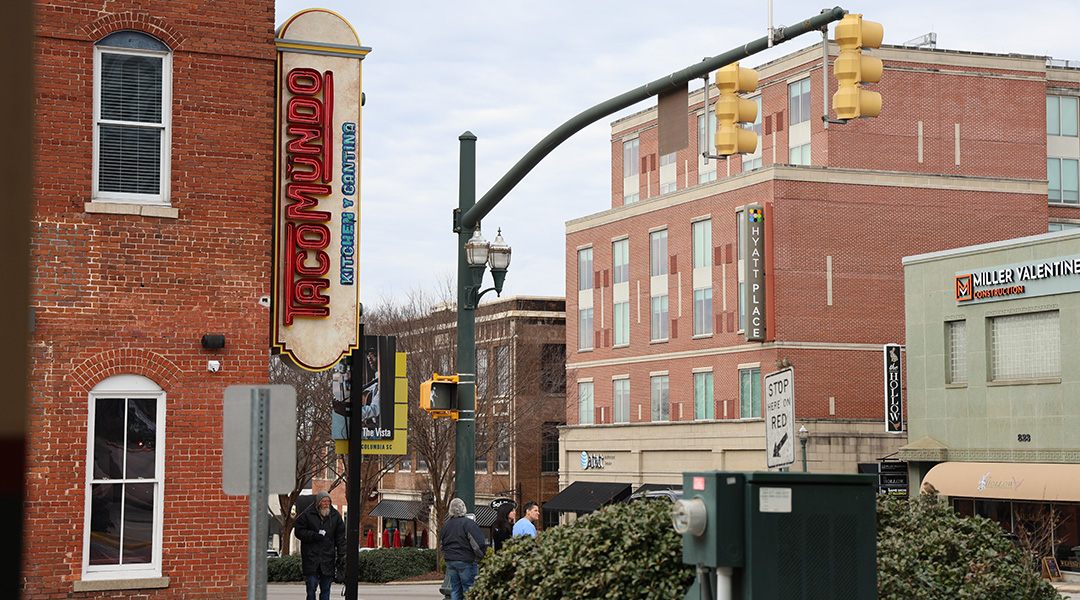
Taco Mundo Kitchen y Cantina, which opened in the Vista in February 2025, serves lunch and dinner daily. Photo by Payton Hamrick/The Carolina Reporter
With inclement weather ranging from ice storms to inland hurricanes, more than 1,400 restaurants in Columbia frequently have to make emergency plans for staff and customers.
Restaurants have to weigh whether to ask employees to drive to work in bad weather – or to close the business and lose a day’s worth of sales.
South Carolina’s restaurant industry produces roughly 8% of the state’s annual revenue. Restaurants lost 8.8% of sales when hurricanes Helene and Milton hit, according to Black Box Intelligence. And that year posted an overall loss of 0.4%.
Deciding whether to open or close has multiple ramifications.
Spencer Smith, the front of the house manager at Taco Mundo Kitchen y Cantina in Columbia’s Vista area, said food deliveries may be delayed due to snow or ice storms, since the majority of food is imported from outside the state. Keeping food from going bad is what the staff focuses on.
“Our main concern, just because it’s an older building, we’re always looking out for if we lose power, or things like that,” Smith said. “So we’re storing ice in our coolers, in our freezers. We also are putting up sensors, just so that we can check to know if the temperature has risen overnight or if anything has shut off.”
The restaurant corporate office also prepares by ensuring the restaurant has the proper insurance coverage to prevent anything that could be costly, Smith said.
There are several different coverages that a local restaurant or business can get to prepare for inclement weather, said John Sadler Jr., an insurance agent and president of Sadler & Co. Having a backup generator is a way to avoid having claims filed over spoiled food.
“Another example is (in) a hurricane, your roof could be blown off,” Sadler said. “You’re going to want to go ahead to … buy tarps so you can quickly put the tarp over the hole on the roof, so that you don’t incur water damage.”
A restaurant can obtain general liability, workers compensation and business auto insurance, if you’re a chain and transport your own food to avoid losses. Other insurance add-ons also can help, Sadler said.
Sadler said his insurance agents go through a checklist with companies to ensure they have the best coverage possible.
Some restaurants play it by ear, said restaurant hostess Alyssa Morrison, who’s a freshman industrial engineering major at the University of South Carolina. She said she recently was notified an hour before her shift started that her restaurant would be open. Then she didn’t have to work the next day. But she walked through the snow and ice that day to get herself some food, knowing that the restaurant workers who served her probably had driven on dangerous roads to get to work.
“I felt bad for the poor workers who had to come in,” Morrison said.
Motor Supply Co. Bistro owner Eddie Wales said every instance of bad weather is different. The restaurant keeps an eye on the national and local forecasts, as well as road conditions that customers and staff may drive on, he said.
“For a small restaurant or any kind of small local business to have to close for several days is very detrimental to their bottom line,” Wales said. “We try to avoid it at all costs, but it just becomes necessary at certain times.”
Employees being able to plan around family members is important, Wales said. Getting staff to and from the restaurant without jeopardizing their safety is of utmost importance.
“There’s been many times that we’ve closed, and then we realized we could have been open and people could have gotten here,” Wales said. “But the main thing is concern for our staff.”
FINDINGS
- Columbia restaurants make case-by-case decisions during storms, weighing staff safety and the bottom line.
- Insurance can help restaurants make some bad weather decisions.
- Employees still have to decide whether they can safely go to work or stay home but lose income.
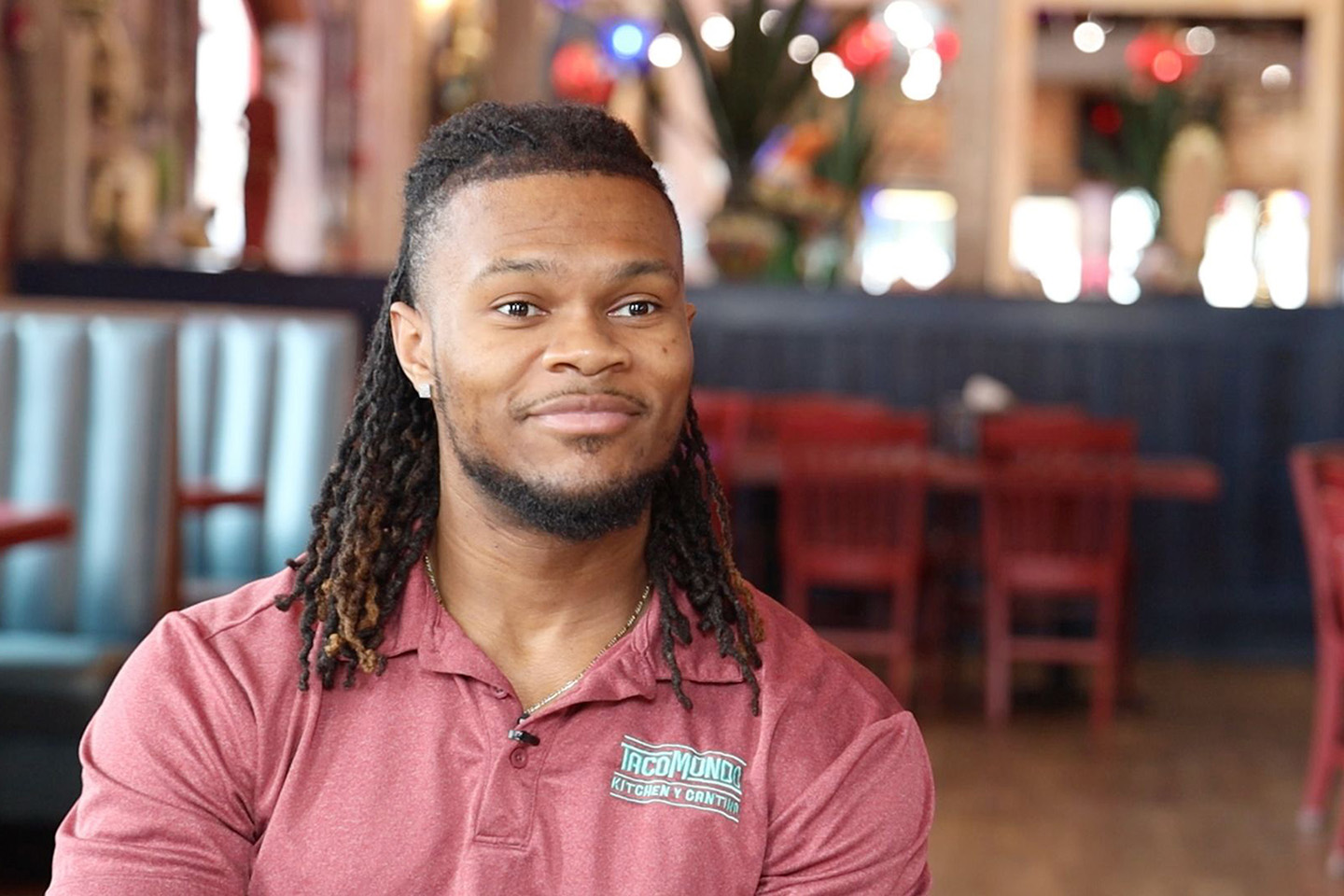
Taco Mundo Kitchen y Cantina front-of-the-house manager Spencer Smith runs a one waitress, one bartender staff when the city suffers from the snow and ice. Some staff live two or three minutes away, Smith said. Staff that have to drive 30 minutes or more to get to work get the day off. Photo by Payton Hamrick/The Carolina Reporter
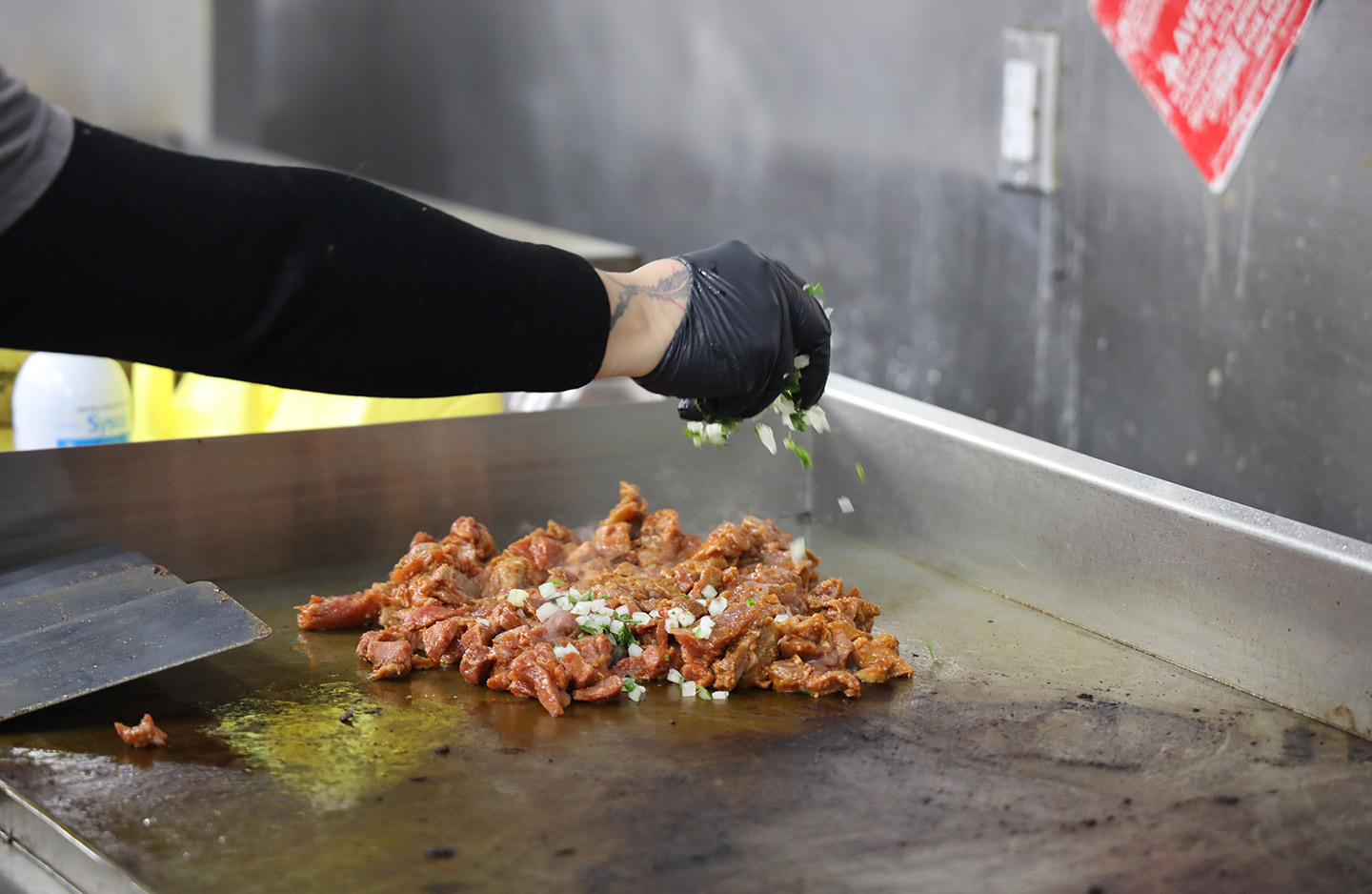
A Taco Mundo Kitchen y Cantina chef cooks for lunch customers during a snow storm in Columbia. Photo by Payton Hamrick/The Carolina Reporter
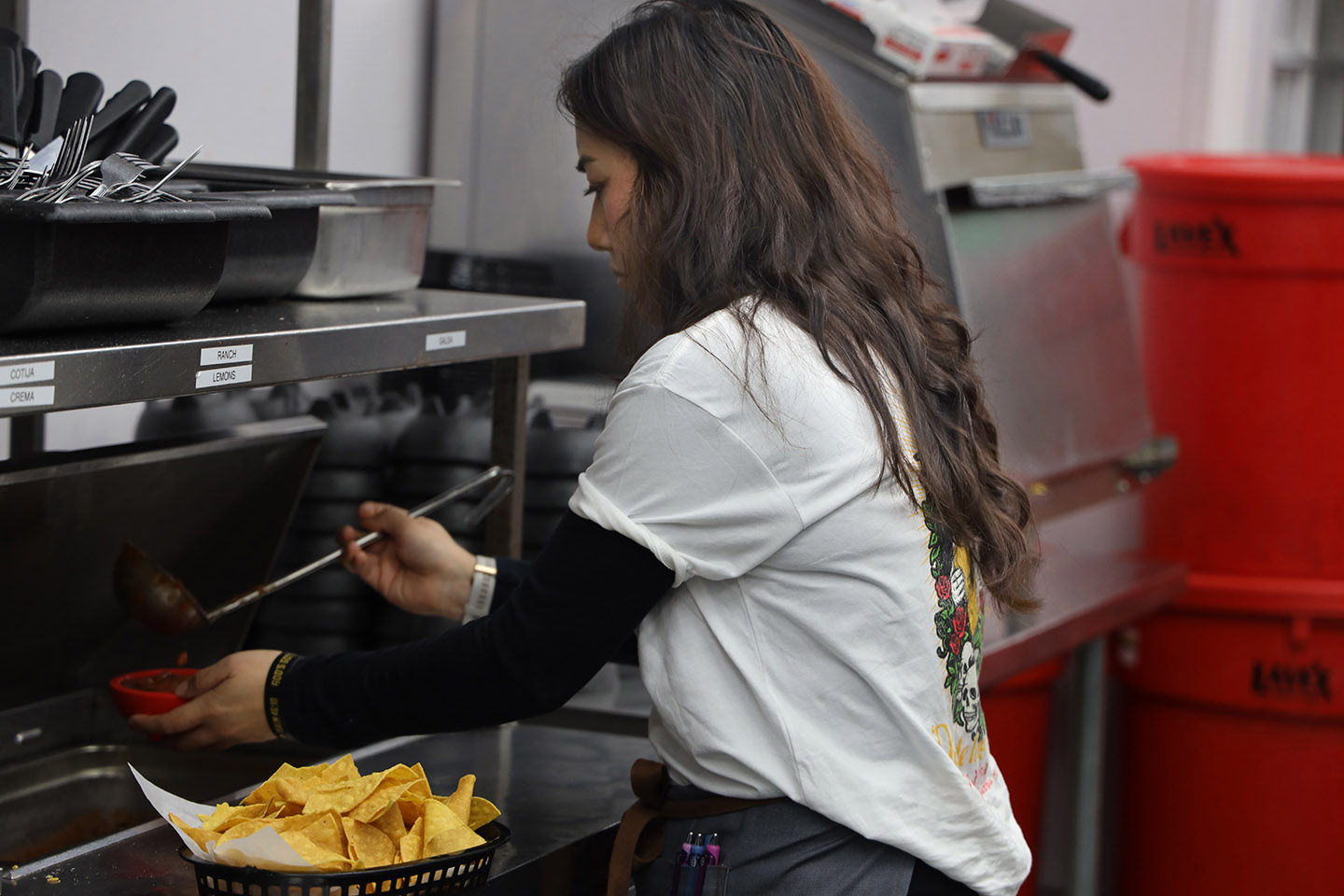
Bre Rodriguez works the lunch shift as the main waitress alongside one bartender at Taco Mundo Kitchen y Cantina. Photo by Payton Hamrick/The Carolina Reporter