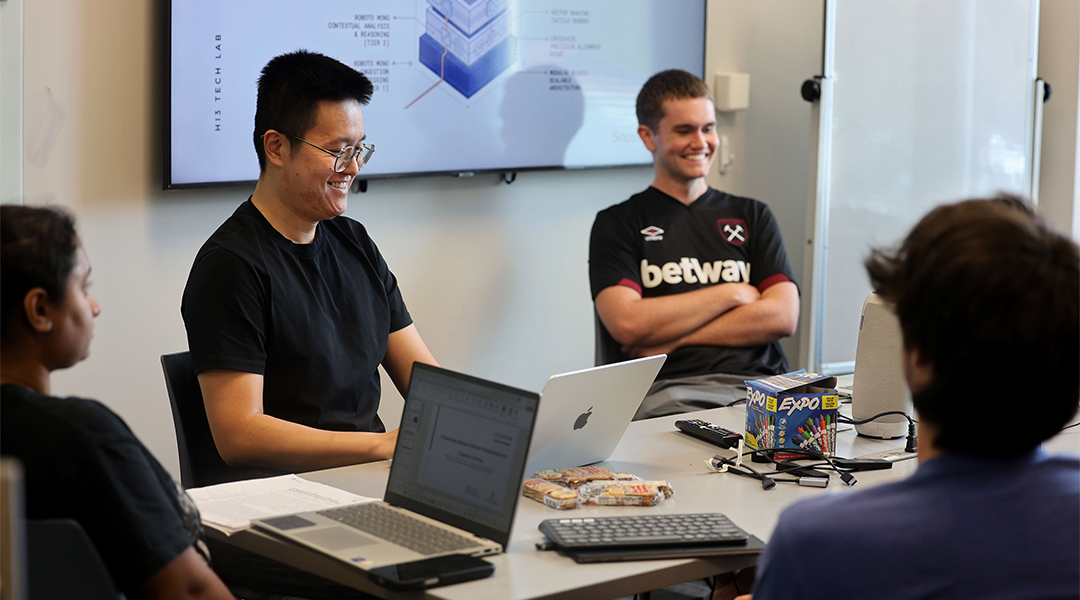
Engineering school doctoral candidates Jiaxuan Zhang, left, and Lucas Aust smile as their research meeting starts in the USC Innovation Center on March 23. Photo by Lacy Latham/The Carolina Reporter
Two University of South Carolina student teams competed at this year’s national Big Data Health Science Student Case Competition, and one emerged as the second-place winner.
The three-student team participated in the virtual case competition, held Feb. 6-8. The annual event, hosted by USC’s Big Data Health Science Center, drew 32 teams from across the country. The USC team — Jiaxuan Zhang, Bharat Sowrya Yaddanapalli and Dao Bui — received a $3,000 prize for their work analyzing a large dataset of more than 100,000 rows and building a predictive model addressing a healthcare problem.
The students work in the HI3 Tech Lab on campus under Dezhi Wu, an integrated information technology professor. She encouraged them to compete after talking about the event with Bui.
“This is their first time,” she said. “I’m sure I pushed them so hard. I said, ‘Hey, I’ll pay for your entrance fees. Go for it.’”
The team met once before the weekend-long competition to divide responsibilities. Bui, a freshman – yes, freshman – studying computer science and mathematics, focused on analyzing datasets. Zhang, a doctoral candidate studying informatics, handled research, coordination and presentation. Yaddanapalli, a doctoral candidate studying health informatics, led model development and healthcare-focused analysis.
The first round focused on analyzing the data and developing a machine learning model.
The team quickly realized the level of competition.
“I was semi-confident going into it,” Bui said. “(But) I didn’t know that all the teams were graduate students. … I wasn’t ready for that.”
Yaddanapalli shared similar concerns after hearing there were teams from Carnegie Mellon, Rice and Duke universities.
“‘Oh my God, we are not going to survive this,’” he remembered saying to himself.
The competition began Feb. 6 with a virtual kickoff. The team worked through the night at USC’s Innovation Center with Wu’s support.
“She got all the snacks, pizza and … some drinks, coffee pots, everything,” Yaddanapalli said.
Zhang said the team initially felt behind.
“All other teams are getting started, but me, or our team, we are still trying to figure out what’s going on,” Zhang said.
Participants were asked to identify five key variables that influence whether a patient would choose surgery or alternative treatment. The process required filtering large amounts of data to find what would be relevant for the prediction.
“Within the data sets, there’s a bunch of noise,” Bui said. “You’re supposed to filter that out and see what kind of insights you get.”
The goal of the competition is to generate as accurate a set of predictions as possible, Yaddanapalli said. After hours of trial and error, including building multiple models, the team began to find direction.
“We were roaming here and there because we didn’t know what to do,” Zhang said. “After midnight, we kind of started to have some ideas, and we started to build together the model.”
They worked nearly nonstop, starting the evening of Feb. 6 and submitting their first-round project just minutes before the 9 a.m. deadline Feb. 7. The team presented its work to the judges at noon.
“We just met 30 minutes before our presentation to practice after hopefully getting like an hour of sleep or something,” Zhang said
The team advanced to the final round and was tasked with building an interactive dashboard using refined variables to help patients and clinicians make treatment decisions together. The tool incorporated not only clinical data but also social factors such as time and financial considerations.
The final stretch required another overnight effort. After submitting its work the morning of Feb. 8, the team presented again before the judges.
Zhang and Bui rested after the presentation to catch up on multiple sleepless nights. Meanwhile, Yaddanapalli and Wu attended the closing ceremony to hear the announcer name the winners.
“That was, like, a heartpounding moment,” Yaddanapalli said. “The announcement he made was so slow.”
Zhang learned of the result later.
“I woke up … on Sunday afternoon,” he said. “I found hundreds of text messages in our group chat talking about it.”
Wu said she was proud of the team’s effort.
“Behind the scenes, it’s a lot of hard work,” she said. “I did not expect for the young kids (to) win that big.”
Beyond the competition, students said the experience mirrored real-world applications of data science in healthcare. Judges evaluated not only technical performance but also practical usefulness.
“Working in such a large data set is definitely beneficial,” Zhang said. “It’s like real-world level data.”
The experience also reinforced the importance of human-centered solutions.
“No matter how fancy it is, at the end of the day, we still need to solve patient or human problems,” Zhang said.
Yaddanapalli said he would consider competing again.
“Maybe next time, we don’t need to stay the entire night,” he said. “Maybe we can finish it in, like, six hours.”
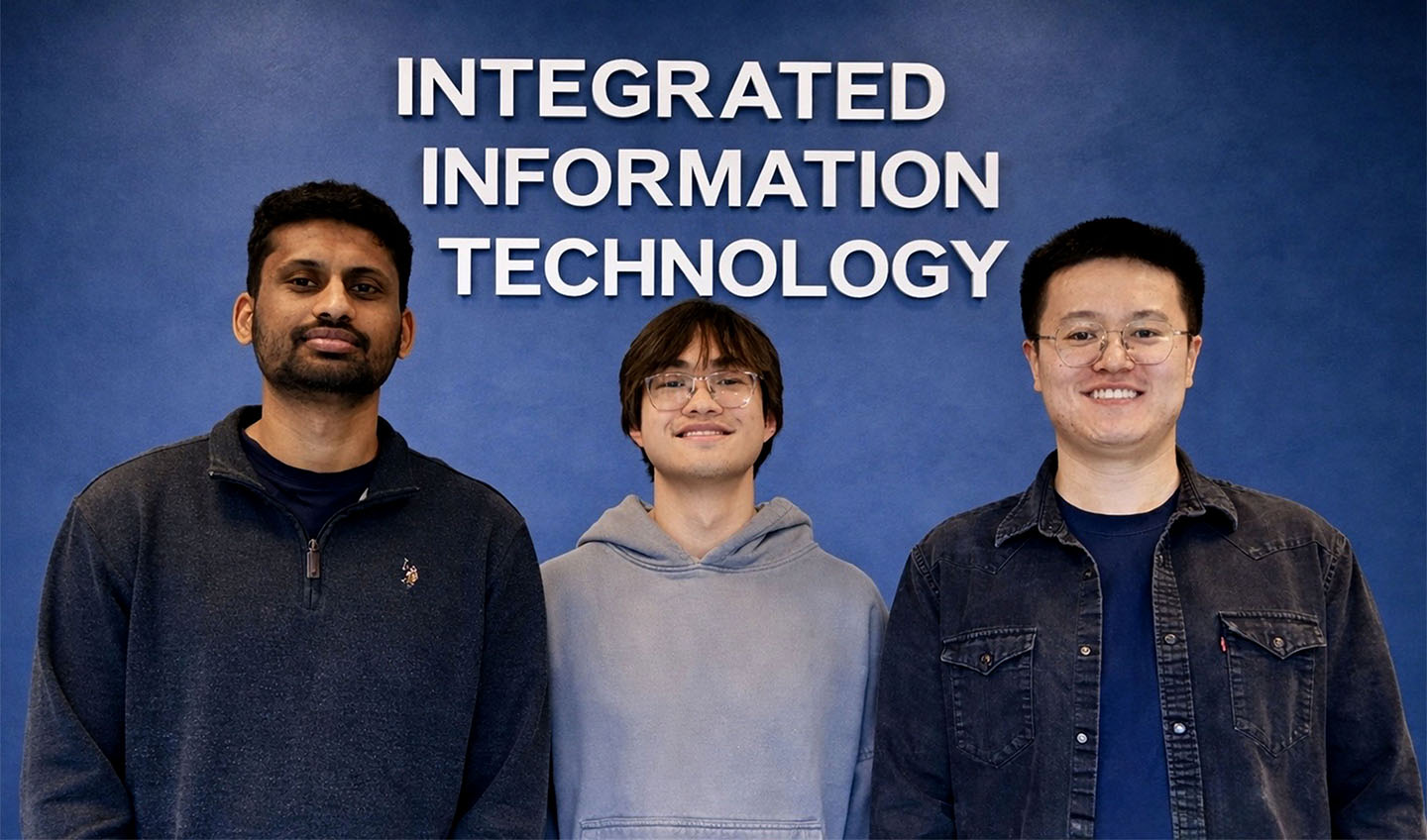
Yaddanapalli, left, Bui and Zhang pose for a celabratory photo in the Integrated Information Technology Department after placing second at the national competition. Photo provided by Dezhi Wu/The Carolina Reporter
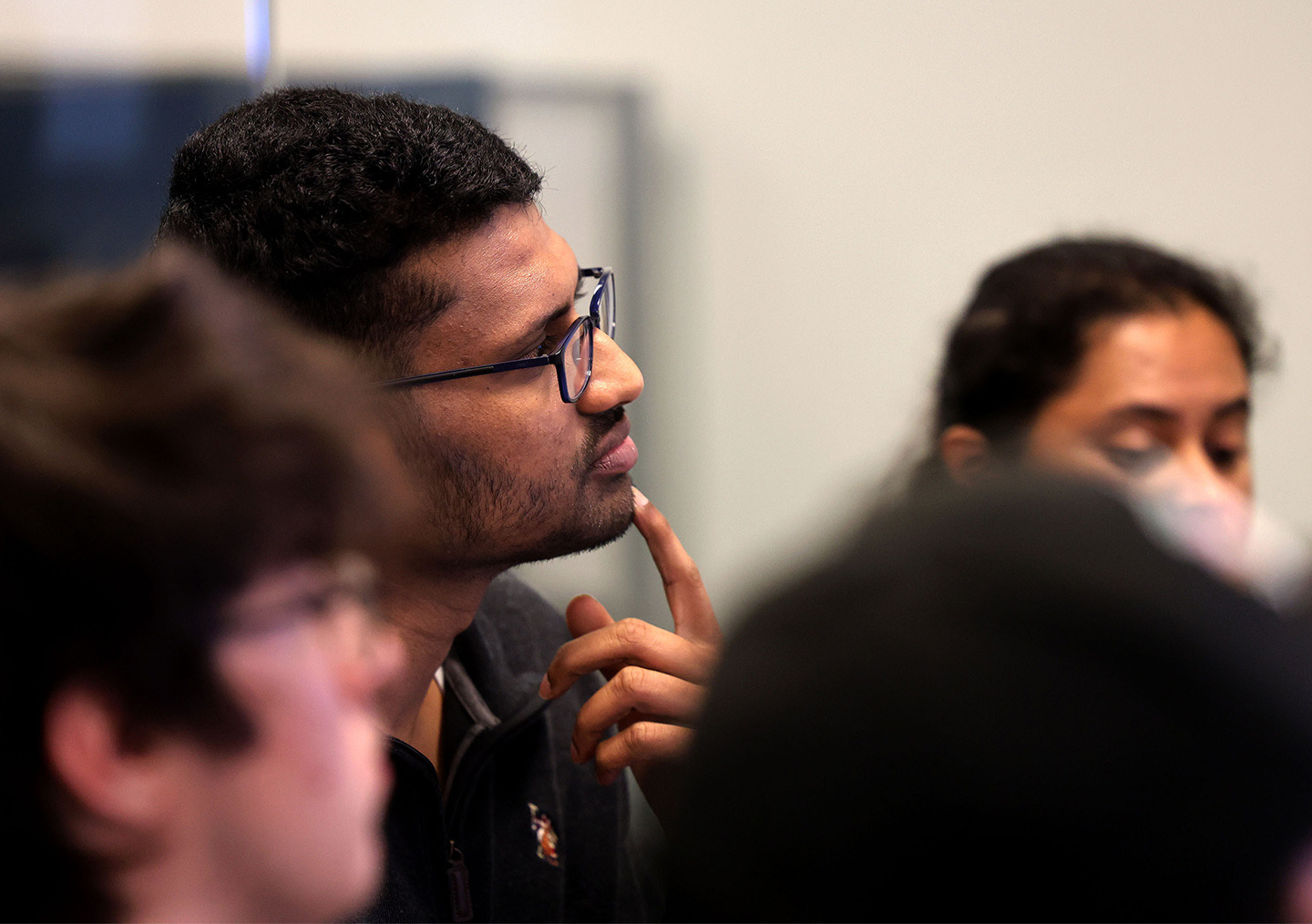
Yaddanapalli thinks about the research another lab member presents to the group. Photo by Lacy Latham/The Carolina Reporter
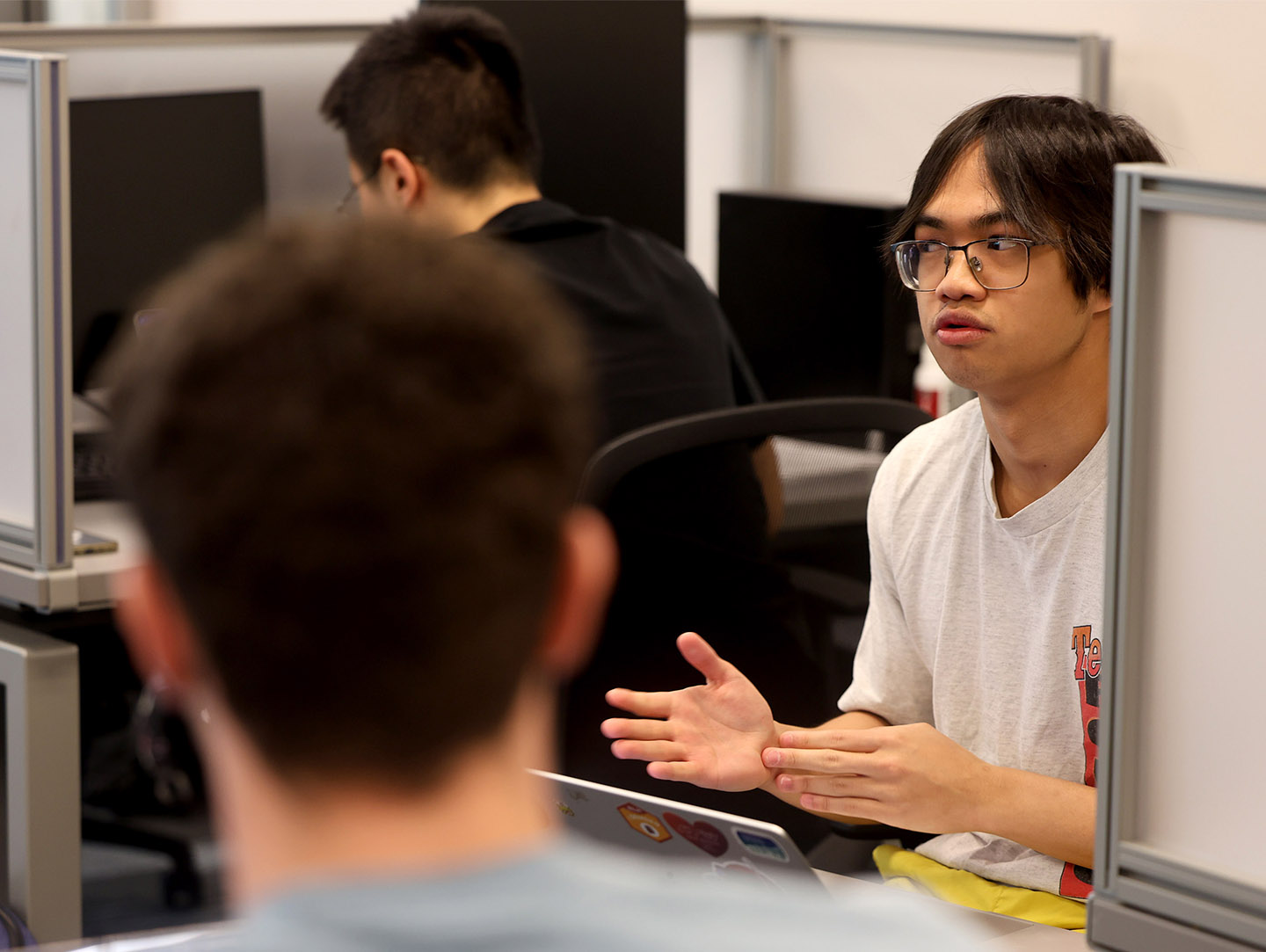
Bui talks to another student in the HI3 Tech Lab at USC’s Innovation Center. Photo by Lacy Latham/The Carolina Reporter
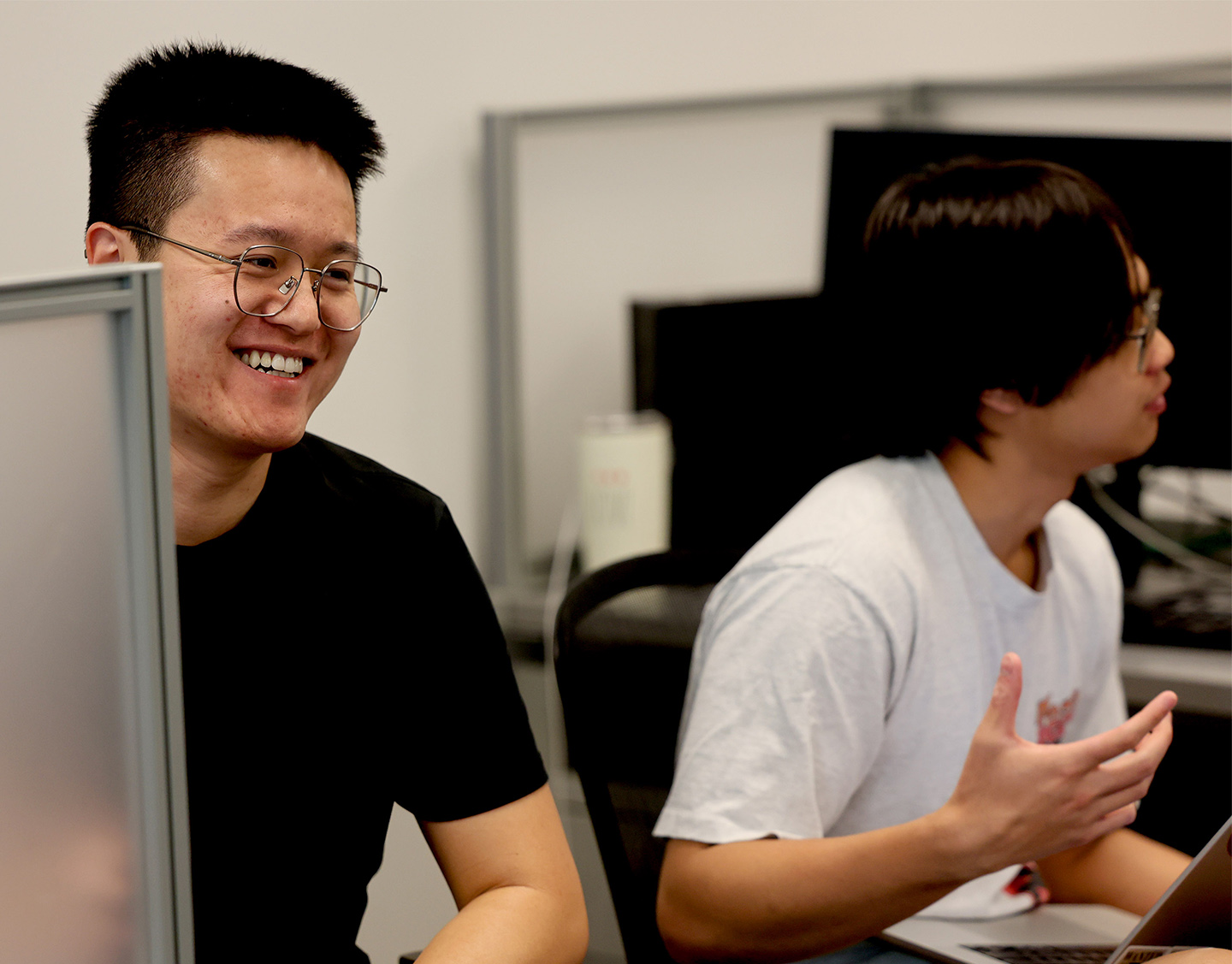
Zhang asks Yaddanapalli a question from across the room while Bui talks to other HI3 Tech Lab students. Photo by Lacy Latham/The Carolina Reporter