
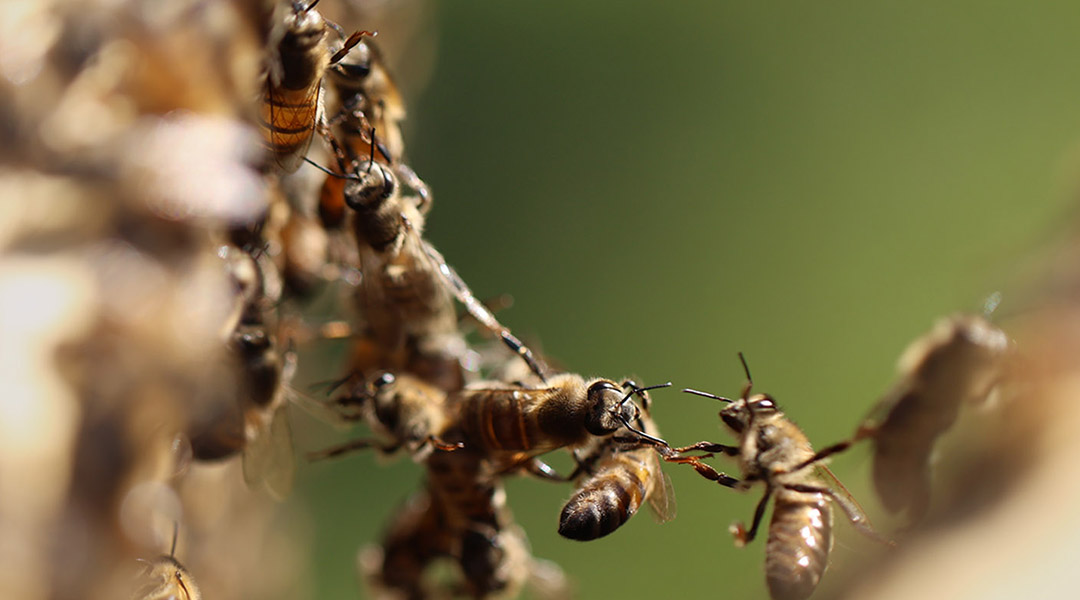
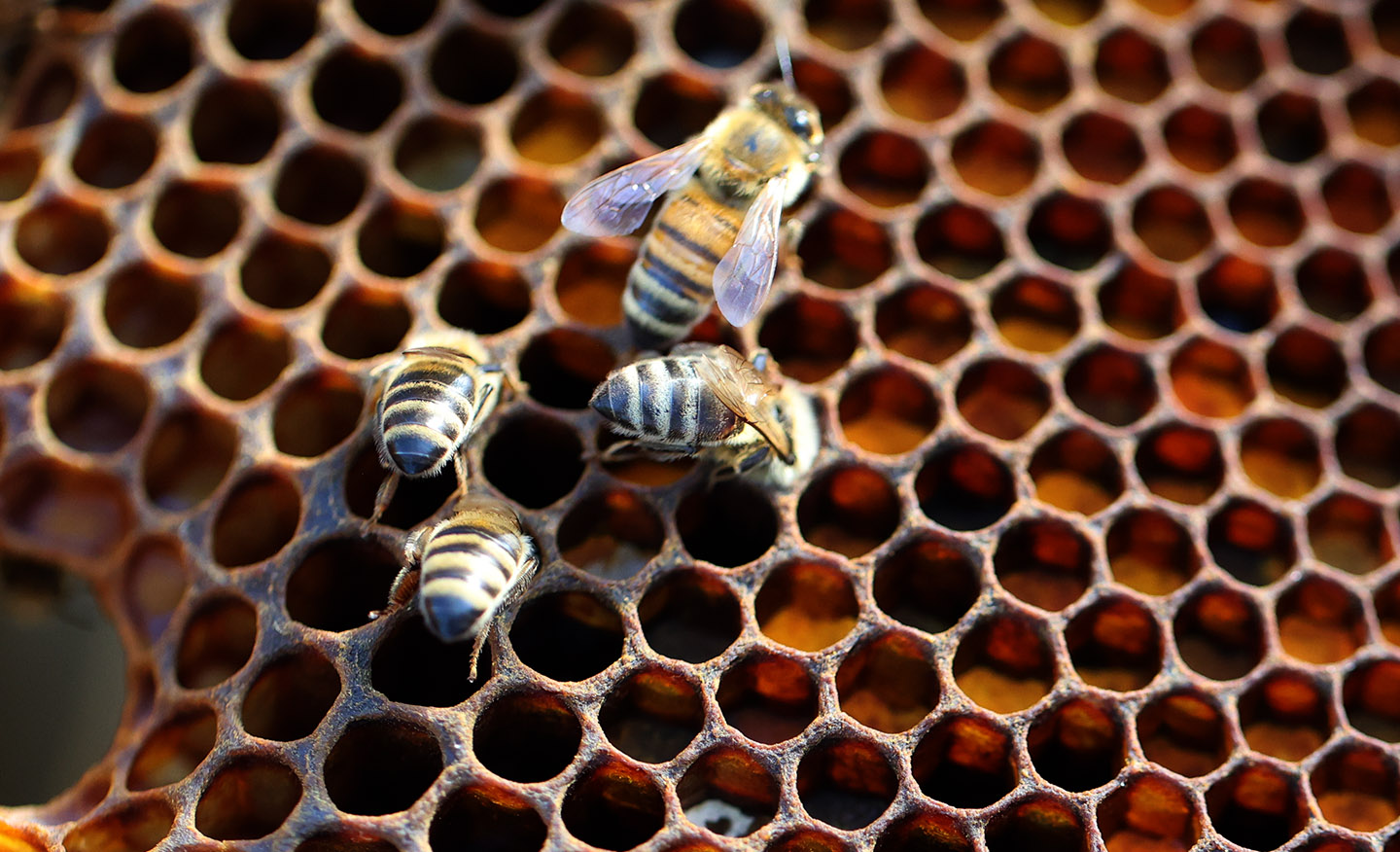
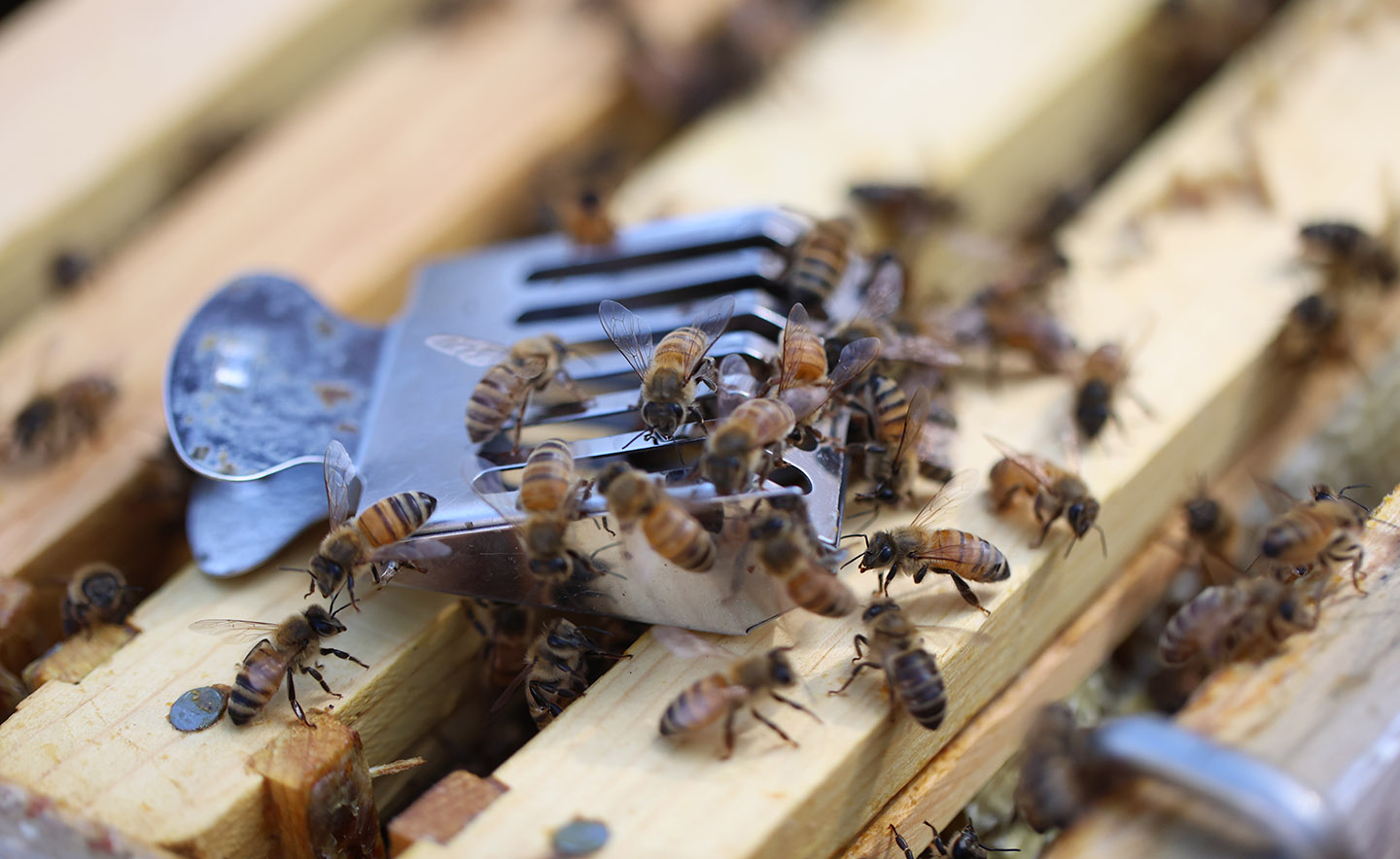
Bees cling onto one another during a “hive dive” inspection on Sept. 9. Photo by Colin Elam/Carolina Reporter
McCORMICK COUNTY – It was only a year ago when Savannah Smith worked with bees for the first time.
Now, the S.C. Governor’s School of Agriculture student has her beginner’s certification from the Master Beekeeper’s Association. And she is competing in and winning honey competitions.
A donation from the Duke Energy Foundation played a pivotal role in the development of the 91-student agricultural school’s bee program, turning into new equipment, storage and a new, certified honey house, where honey is extracted and stored. Some of the honey will be sold on campus, and some is being set aside for students to use for competitions, according to school spokesperson Steven Teeters.
The donation tripled the school’s hive count from six to 18, with two hives yet to be built.
A ribbon cutting for the honey house on Aug. 14 marked the start of the second year of the beekeeping program at the school, located at the John de la Howe school in McCormick County near the Savannah River.
Savannah Smith said she has learned how to manage and identify honey bees, pests and diseases. She also teaches other students about beekeeping safety through her own club on campus.
“Obviously you’re going to learn how to beekeep,” Savannah Smith wrote to the Carolina Reporter. “But if you want the truth, I have learned to not be scared. You only live once, and memories are priceless, so make them and keep them close.”
Ryan Mosier, Duke Energy Corp.’s public affairs manager, said the donation is an investment in future agricultural leaders across South Carolina.
“Agribusiness is a top industry in South Carolina going back to the state’s beginnings, and this school is educating the next generation of those business leaders,” Mosier wrote in an email to the Carolina Reporter.
South Carolina agribusinesses generated nearly $52 million in revenues, a figure expected only to increase with time, according to a 2022 article in The State newspaper.
The agribusiness in South Carolina is thriving but often overlooked day to day, said the executive director of the John de la Howe Foundation, Stacie Smith. Its tentacles reach into construction, law and housing developments, she said.
Bees are often overlooked for their role in the larger ecosystem, she said. Nearly 35% of the world’s food crops depend on pollinators like bees to reproduce, according to the U.S. Department of Agriculture.
“Bees make the world go round, not just honey bees but all bees,” Savannah Smith wrote. “I could spit facts all day. Protecting our bees, both managed and native, is crucial for our survival.”
But beekeepers face overwhelming pressure, as their responsibility to keep bee colonies alive is more important than ever, said Apiculture Specialist Susan Jones, an instructor and head of the school’s beekeeping program.
The bees are under pressure, too.
Among beekeeping operations with more than five colonies, the total colony count dropped by 1% between 2024 and 2025, according to an August 2024 release from the U.S. Department of Agriculture’s National Agricultural Statistics Service. A top threat to bees in the country are varroa mites.
That’s one of the issues John de la Howe students study.
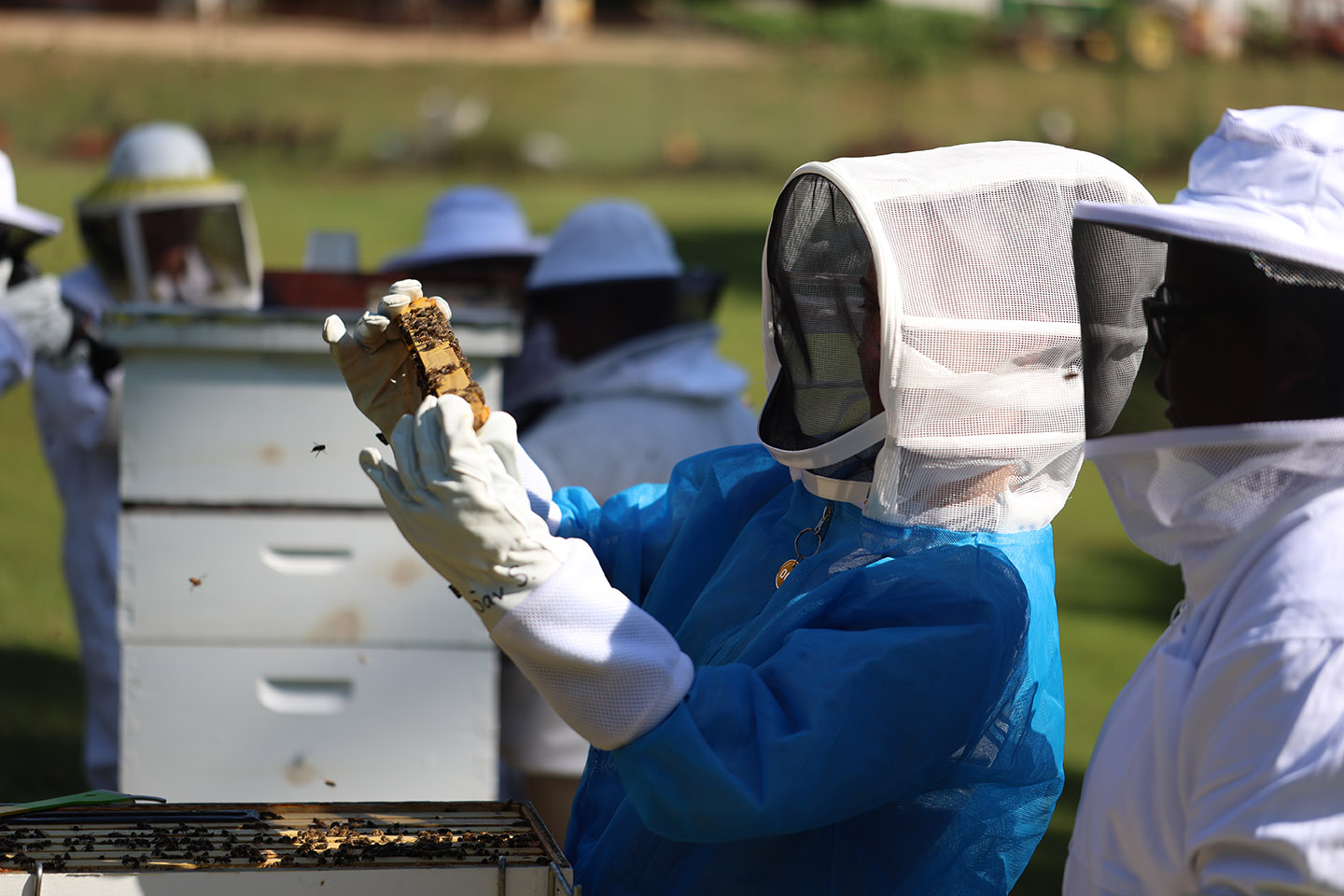
Jones recently led a group of students on a “hive dive,” alongside Smith, the certified student. These hive inspections give less-experienced students a chance to watch how she and Smith work with the bees, Jones said.
“They’re still kind of getting used to it, and I’m not going to turn them loose until they’re ready for it,” Jones said.
One of the colonies they inspected was afflicted by varroa mites, which feed off the fat bodies of the bees, Jones said. She said it’s not the mites, but rather the viruses they carry that damage bee colonies. One of those diseases is deformed wing virus.
“You see these poor bees with deformed wings,” Jones said. “They’ll never fly, so, you know, they die. They’re doomed from the time they’re born.”
Genetics are one tool that can be used to help bees against the mites, Jones said. If a certain colony is faring better against the diseases, additional queens can be raised from that colony to spread its resistance.
That type of project may be too advanced for the still-young program at the agricultural school, Jones said. But Smith, even though she’s in high school, is working on a genetics-based project of a different kind, Jones said.
John de la Howe, the French physician whose name and former estate is possessed by the school, kept bees, Jones said. Since the 1700s, a swathe of forest has been left untouched by controlled burns and logging. Smith will strategically set traps for wild bees in the forest, and with genetic testing, she might find out whether the genetics of the 18th century physician’s bees live on, Jones said.
For the students, the program can give them a new perspective to carry with them into their future agricultural careers, Jones said.
“I think it’s so important that we have this program here at the school,” Jones said. “We are teaching the future leaders in agriculture in our state here, and we’re giving them that foundation that this is important.”
The students will take those perspectives with them when they leave school, Jones said.
And for Jones, working with the students in the program has inspired her to be a better beekeeper, she said.
“I am having an impact on the future by just physically being here and sharing what I know and what I do,” Jones said. “I can die happy knowing that I was able to invest, and my life was worth something, doing that.”
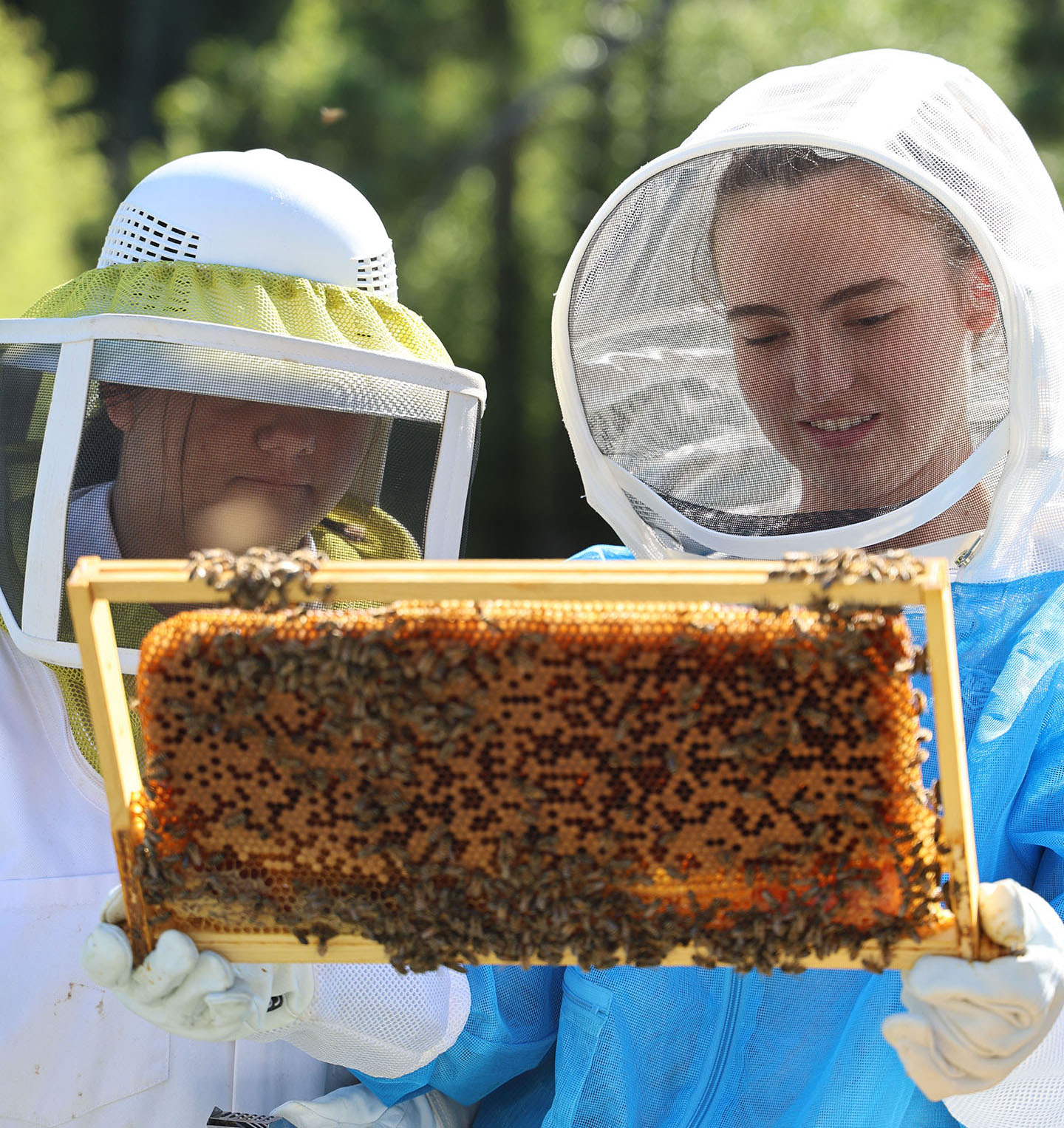
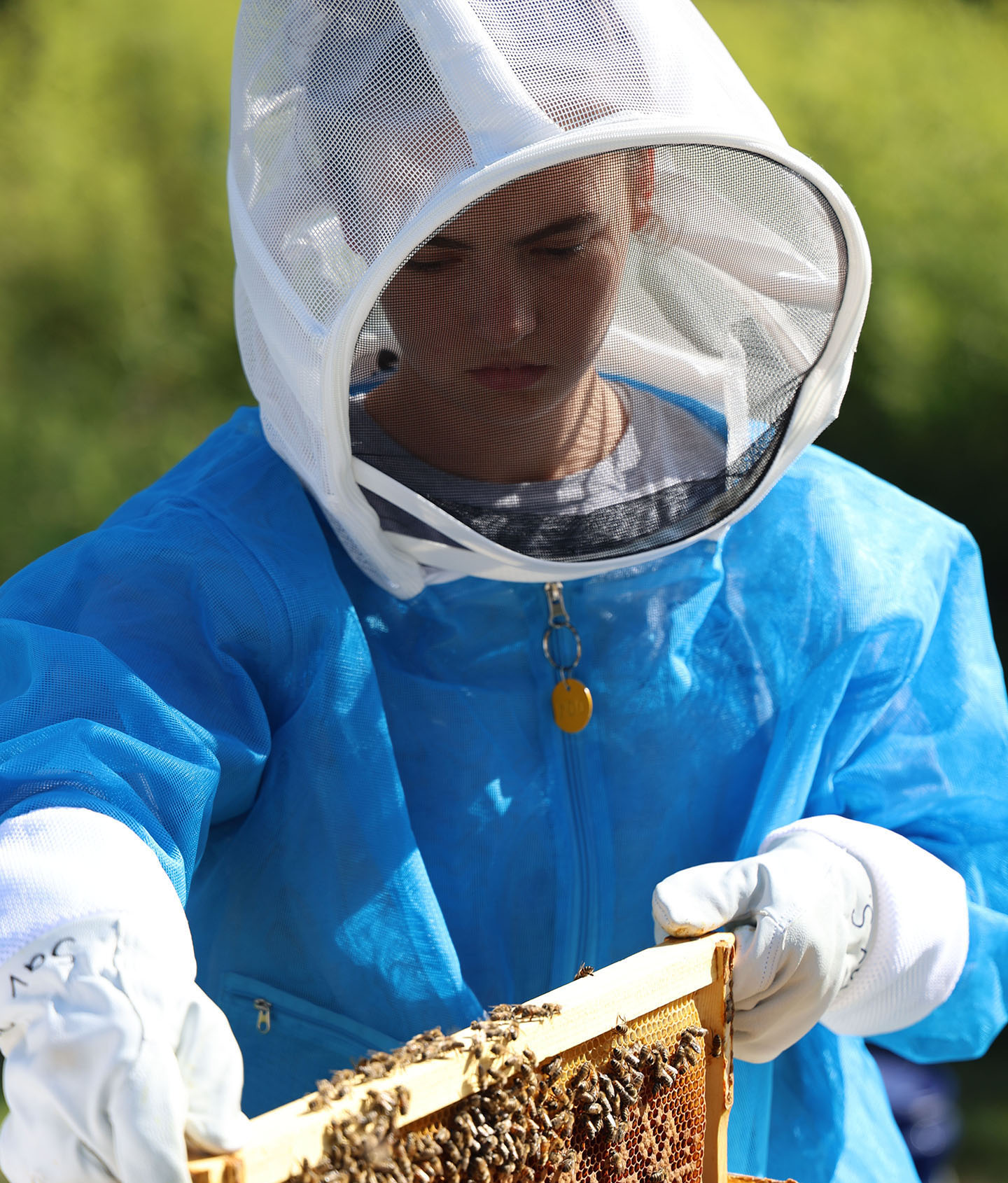
Senior Savannah Smith shows a younger student a section of the beehive during an inspection. Photo by CJ Leathers/Carolina Reporter
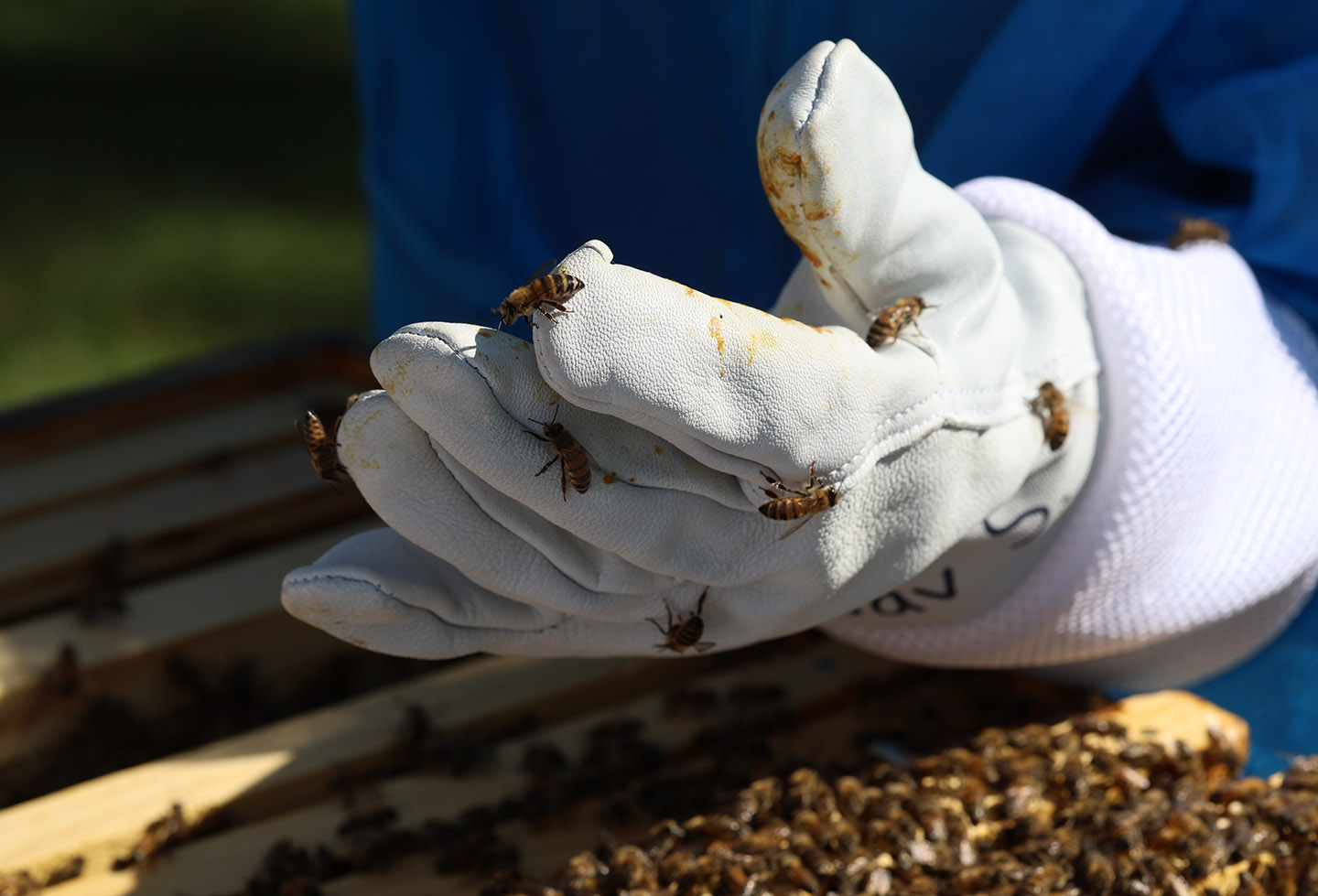
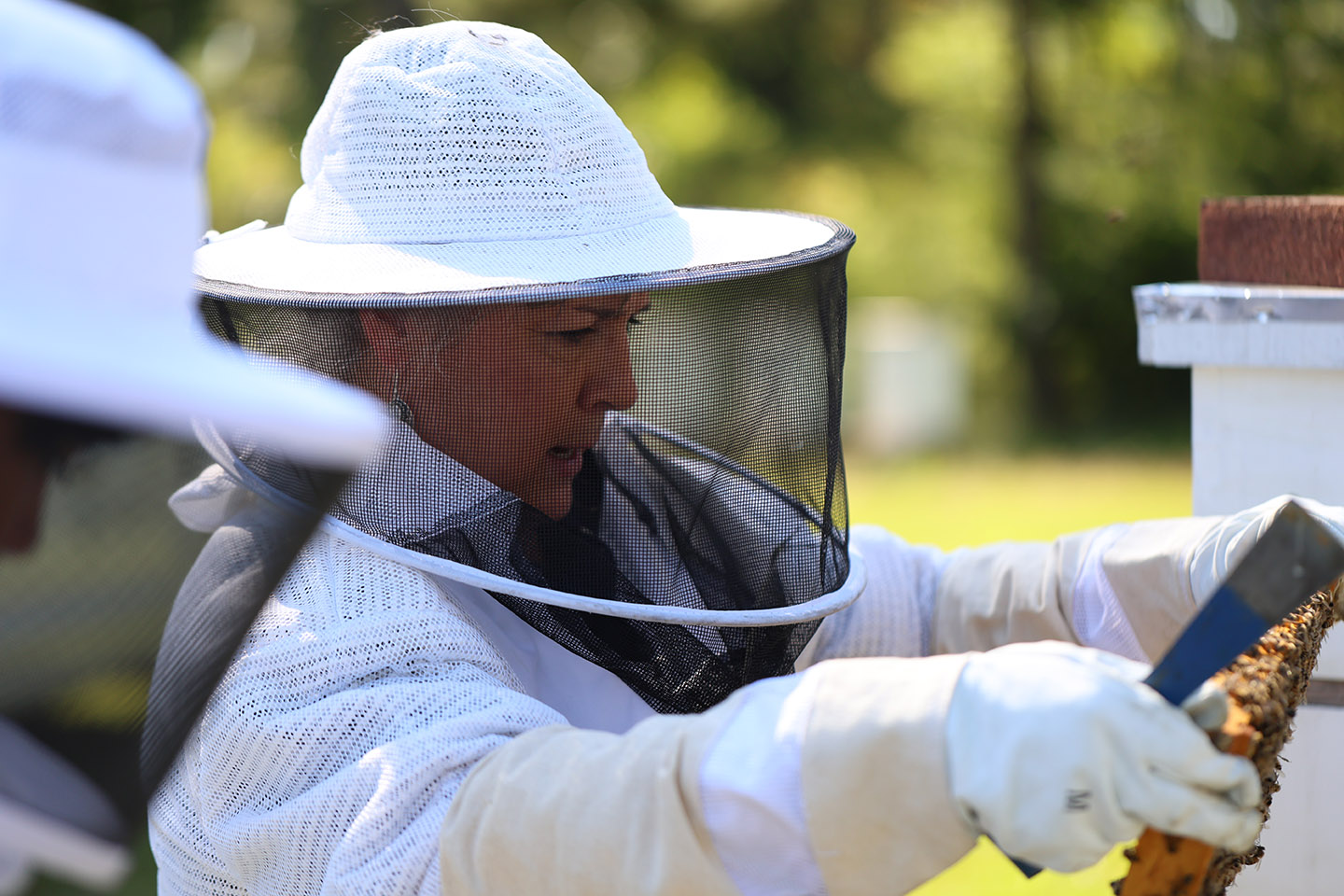
Bees crawl onto a student’s hand during the hive inspection. Photo by Colin Elam/Carolina Reporter
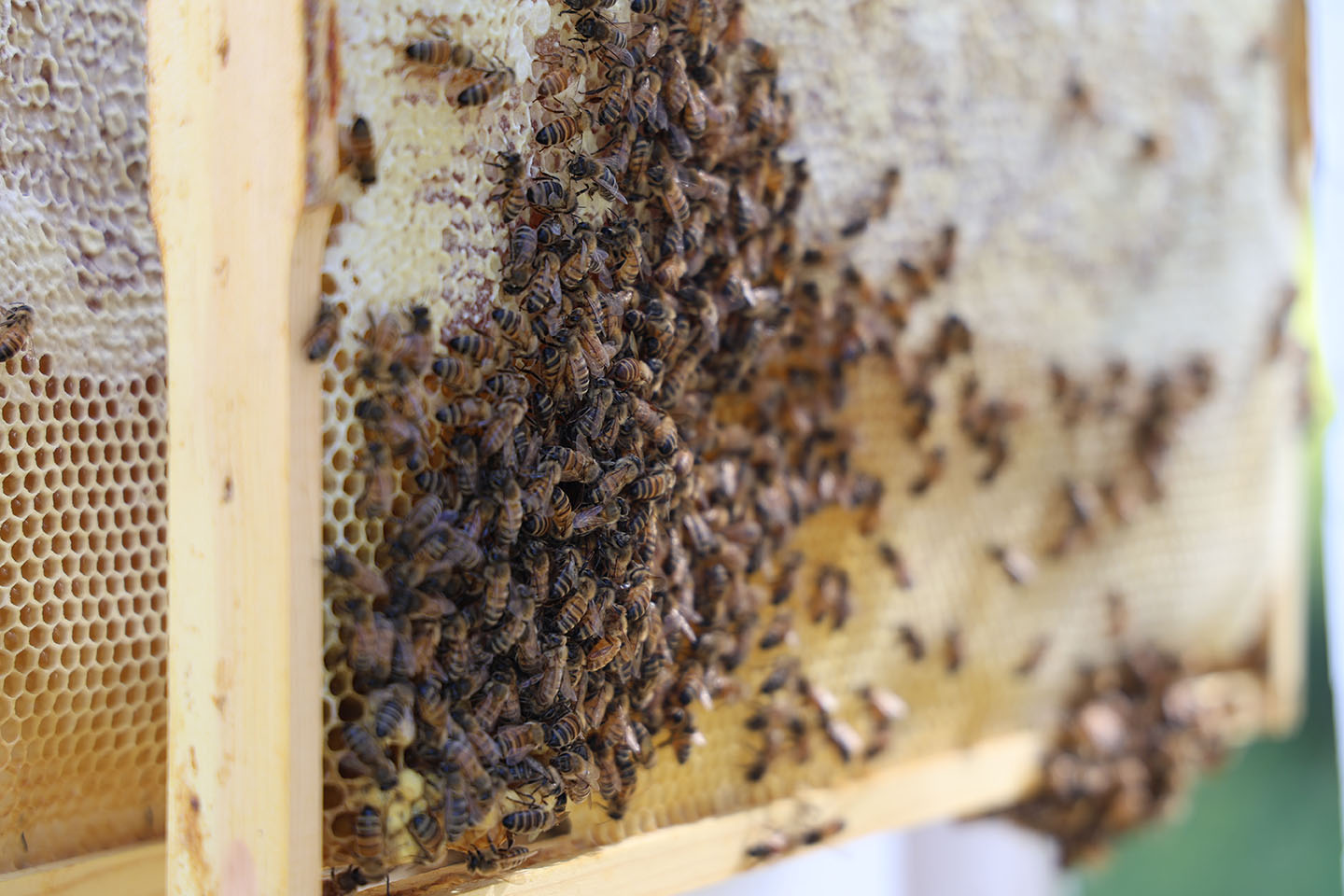
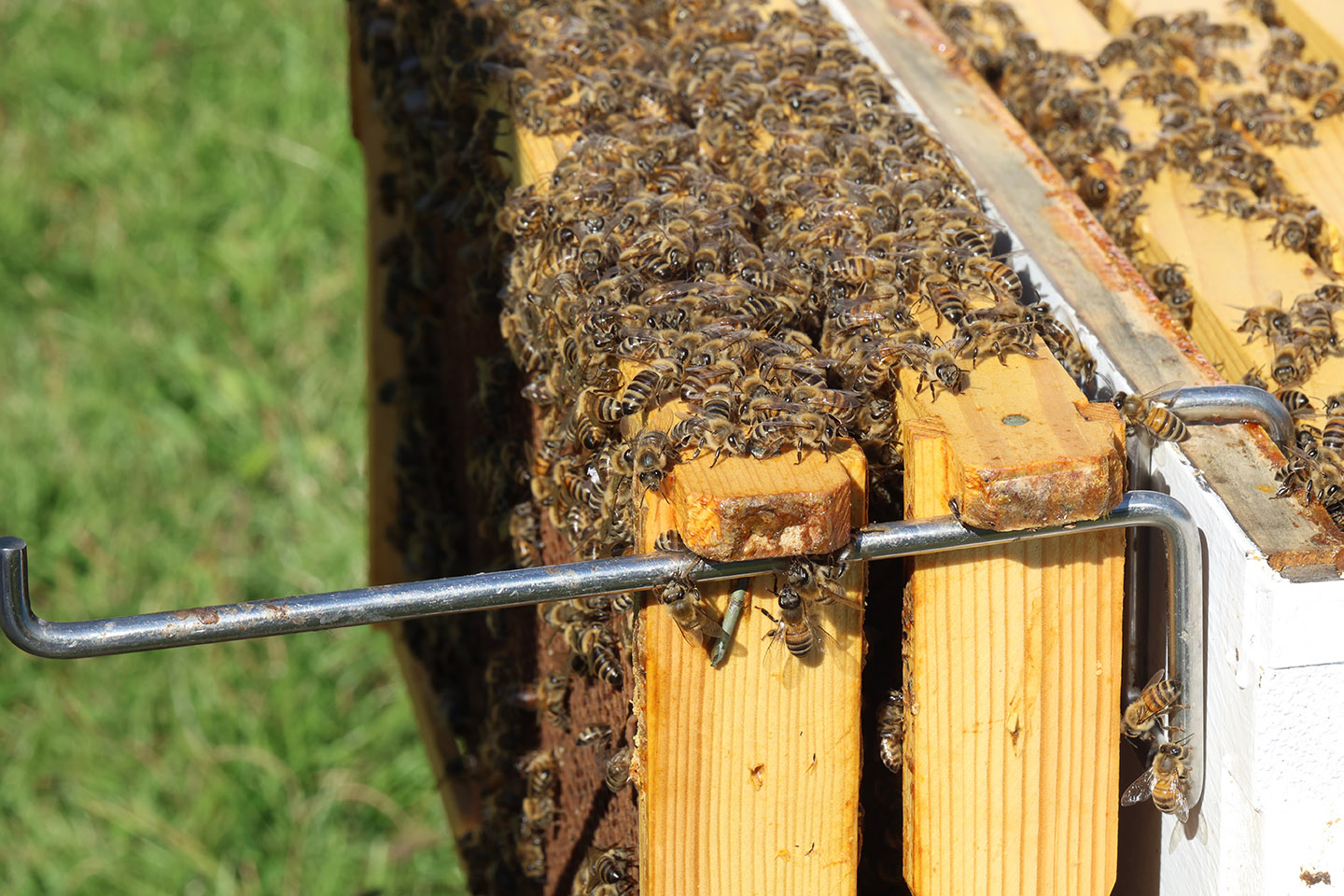
Bees cover a frame in one of the school’s hives. Photo by CJ Leathers/Carolina Reporter
More photos from the Governor’s School for Agriculture at John de la Howe by CJ Leathers and Colin Elam
ABOUT THE JOURNALISTS
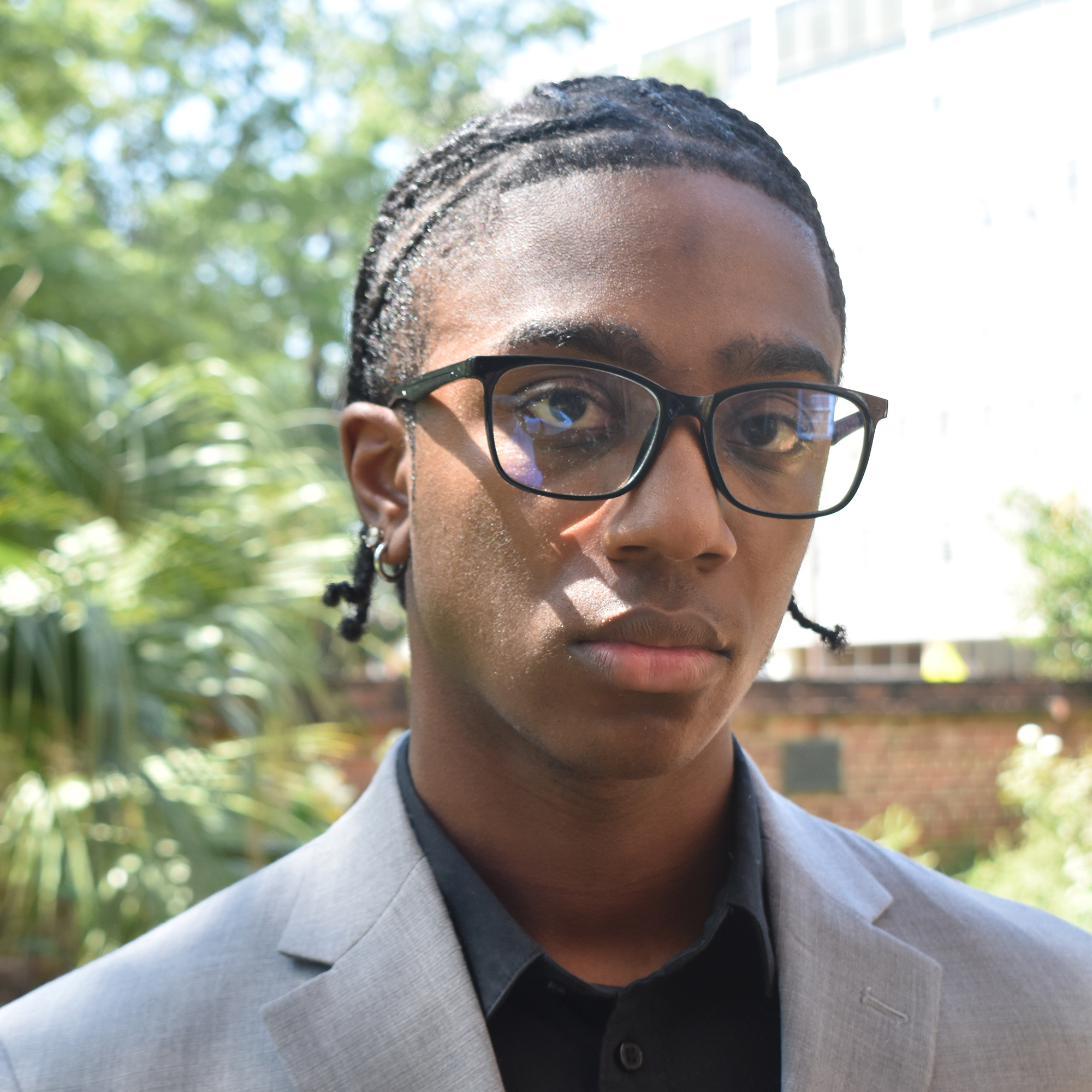
CJ Leathers
Leathers is a junior journalism student at USC. He has various interests in reporting, including culture and news. He has written for the student-run Daily Gamecock for five semesters and now serves as culture editor. He has interned with The Charlotte Post and was selected as a New York University journalism fellow.
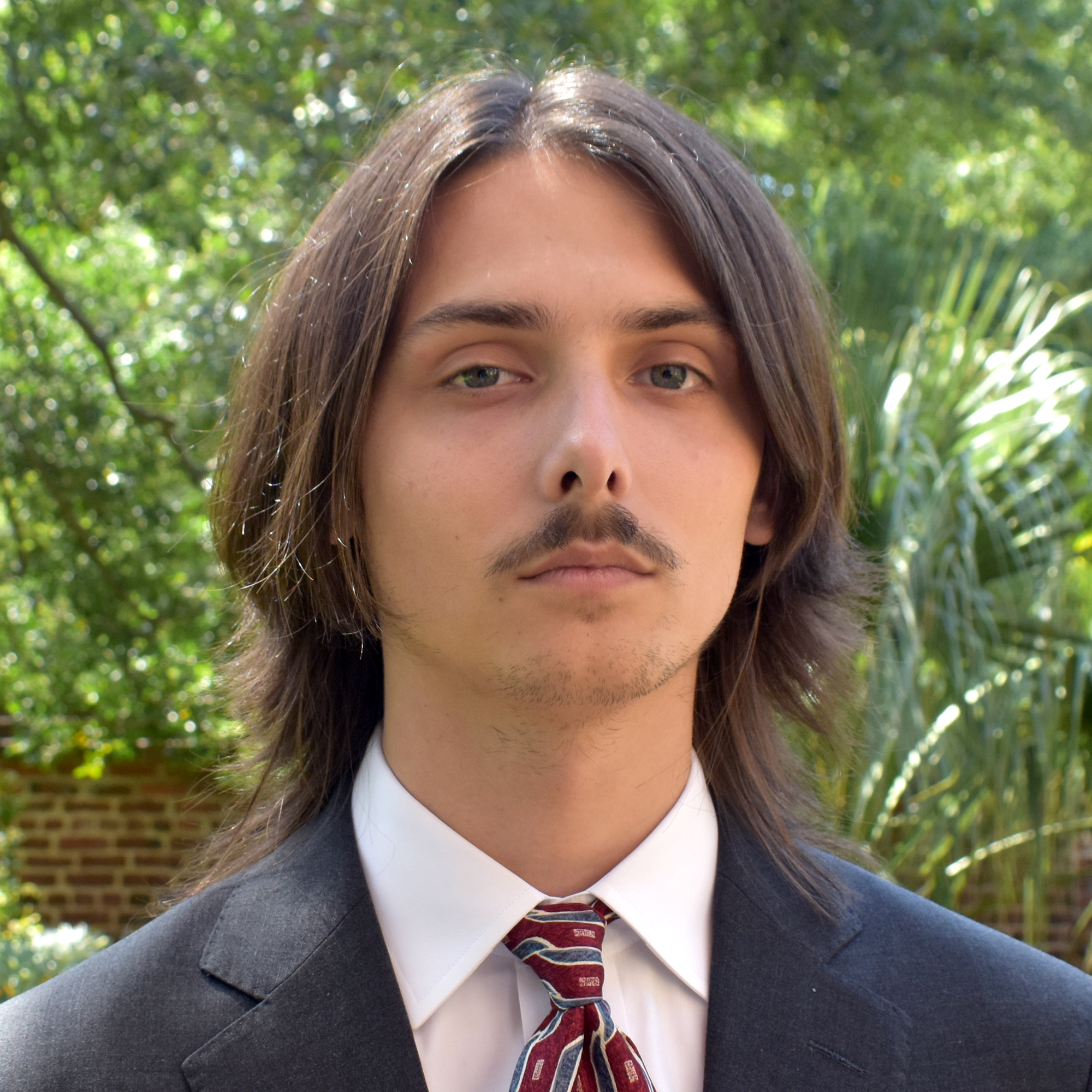
Colin Elam
Elam is a senior journalism student at USC with a minor in Russian. He interned for The State newspaper in the summer of 2025. He is the news editor at the student-run Daily Gamecock this fall, his fourth semester with the paper. Elam is interested in growth and development reporting and hopes to continue working at local news outlets after graduation.
