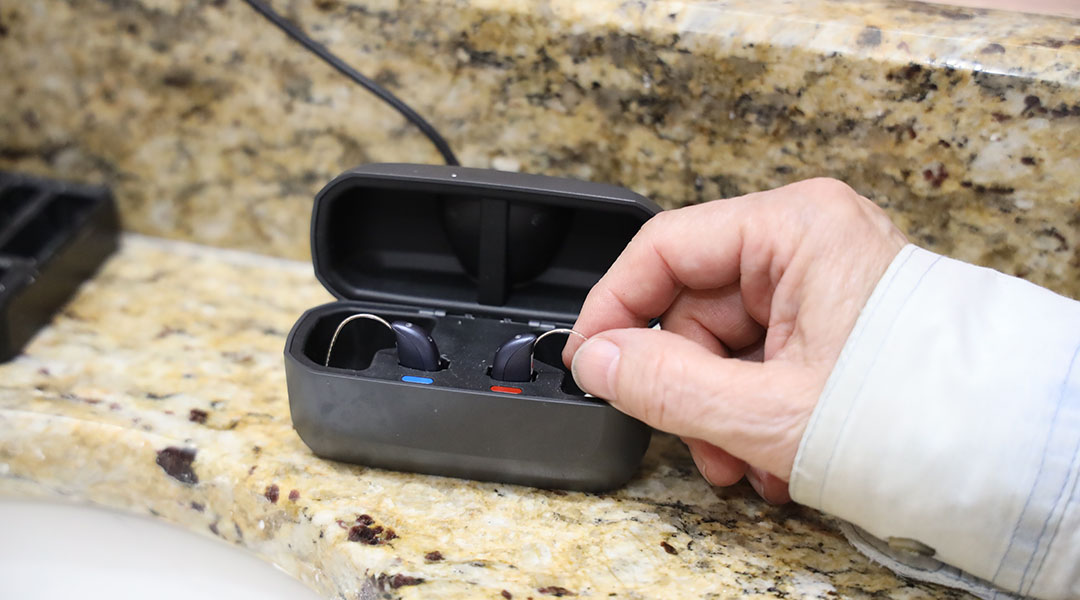
Hearing devices could aid in more than hearing loss. Hearing loss and cognitive decline are proving to have a causal relationship. Photo by Belle McGuirt/The Carolina Reporter
A simple device people can overlook could play a powerful role in preventing dementia if used early. Hearing aids are proving to be more than just helpful for hearing loss. Experts are examining the importance of early diagnosis for hearing loss as a way to prevent dementia.
“Early intervention could be key,” researcher Dr. Alexa Beiser said in a press release.
A recent study published in JAMA Neurology found that adults under 70 with hearing loss who used hearing aids were 61% less likely to develop dementia over a 20-year period. The findings are drawn from nearly 3,000 participants in the Framingham Heart Study and add to the growing evidence that treating hearing loss early may help protect brain health.
For those diagnosed with hearing loss before age 70, hearing aids appeared to make a significant difference. In contrast, researchers found no measurable reduction in dementia risk among adults who were already 70 or older when they began using hearing aids.
The World Health Organization estimates that by 2050 more than 700 million people, nearly one in 10, will have disabling hearing loss, so the growing causal relationship could have implications. Early hearing evaluations and routine audiological checkups can help a patient know if they are qualified for hearing aids.
Early symptoms of hearing loss are asking people to repeat themselves, turning up the television volume and experiencing tinnitus, which is a ringing noise in one or both ears.
“It is imperative to be proactive with evaluations since there is no pain associated with hearing loss,” said Dr. Lesley Kirby from Lifetime Hearing Services in Florence.
Lifetime Hearing Services is a small business that offers comprehensive evaluations, treatment plans and ongoing care from licensed audiologists.
Along with being an audiologist, Kirby has completed a professional training course in Alzheimer’s disease and dementia care offered by the National Council of Certified Dementia Practitioners. The course teaches doctors how to better understand dementia and how to care for people with it and conditions like it.
Kirby is confident in the correlation between hearing loss and mental decline.
“When comparing a scan of the activity in a brain with hearing loss versus a brain with normal hearing, not only is the brain with hearing loss less active, but there is also atrophy and changes in shape,” Kirby said.
If an individual has reduced hearing abilities, then the brain has less inputs to process, which can result in a brain not functioning the way it used to.
Kirby said there are several elements that she thinks go into the association between hearing loss and dementia.
“You can’t engage your brain’s memory and remember if you never heard what a person said to begin with,” Kirby said.
A person with hearing loss also has a higher chance of socially isolating themselves because they too often have to ask people to repeat themselves and the frustrations of not hearing those around you. Someone who is socially isolated has a higher chance of developing dementia since there is less brain engagement.
“Untreated hearing loss can also increase the risk of depression, reduced quality of life, early retirement, hospitalizations and premature death,” Kirby said.
Wearing hearing aids can’t cure dementia, but it can reduce an effected individual’s symptoms by up to 75 percent.
A patient of Kirby’s, Gary Bellos, is nearing retirement. He lost his hearing in two industrial explosions that happened exactly a year apart.
“The first explosion was May 29, 1979, and the next explosion was May 29, 1980,” Bellos said.
Bellos began to lose his hearing over time due to the neurological damage. He consistently was having to ask people to repeat themselves and became less socially engaged and less interactive with the world around him.
After years of discussion with Kirby and his wife, he got his first set of hearing aids.
“These hearing aids have given me back the gift of life,” Bellos said. “I knew I was losing my hearing and I knew why, but until I got my first set of hearing aids, I never realized how much.”
The hearing aids allowed him to be more socially involved and in turn strengthened his brain cognition.
“I definitely am able to use my brain more,” Bellos said.
Gary’s wife, Karen Bellos, was a driving factor for him to get the hearing aids.
“She is glad that I can hear better than before,” Bellos said. “She was very tired of repeating everything to me several times.”
Dementia affects the individual’s family and friends.
Watching a loved one lose their ability to perform daily tasks can be disheartening and challenging.
College student Claire Dafoe watched her grandmother lose her cognitive function.
“My grandma actually lost her hearing first, and that’s when everything started to change,” Dafoe said. “At first, it just meant we had to speak louder or repeat things. But it slowly became more than that.”
As time went on, her grandmother pulled back socially while her memory deteriorated and the isolation got to her.
“It felt like she was drifting from us,” Dafoe said. “We were slowly losing pieces of her from just something that started with her hearing. It was really hard to watch for our family.”
FINDINGS
- Hearing aids used in patients under 70 with hearing loss reduces dementia risk by 61% over 20 years, researchers say.
- No significant reduction in dementia was found in individuals who developed hearing loss when they were aged 70 or older and began to use hearing aids.
- A brain with hearing loss begins to atrophy and become less alert.
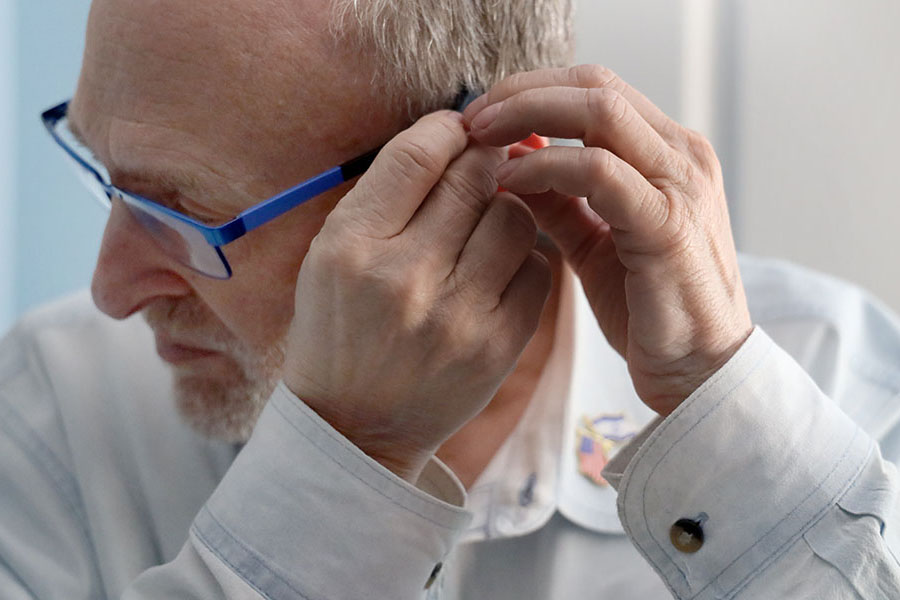
Gary Bellos’ life changed when he received his first set of hearing aids. Photo by Belle McGuirt/The Carolina Reporter
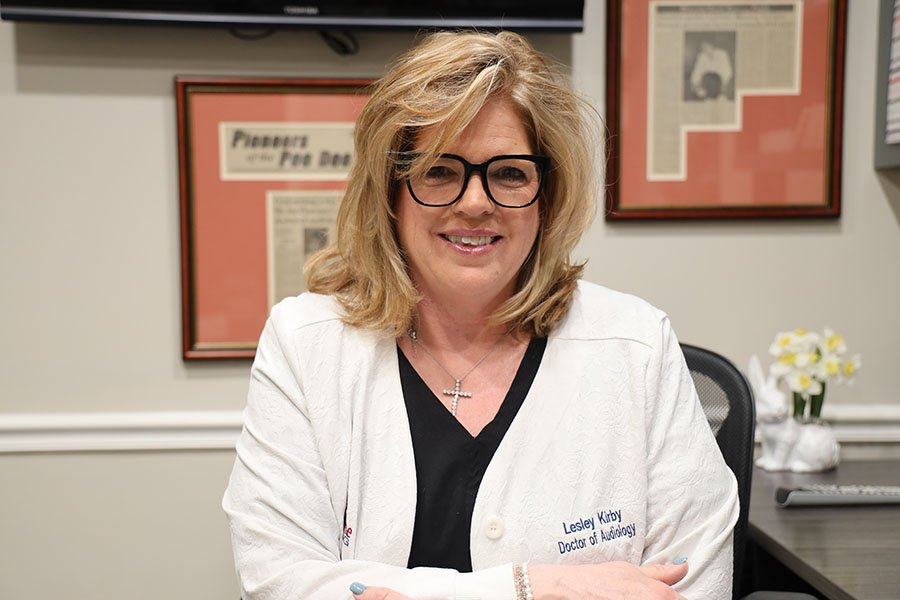
Dr. Lesley Kirby explains why she thinks there is a connection between hearing loss and brain decline. Photo by Belle McGuirt/The Carolina Reporter
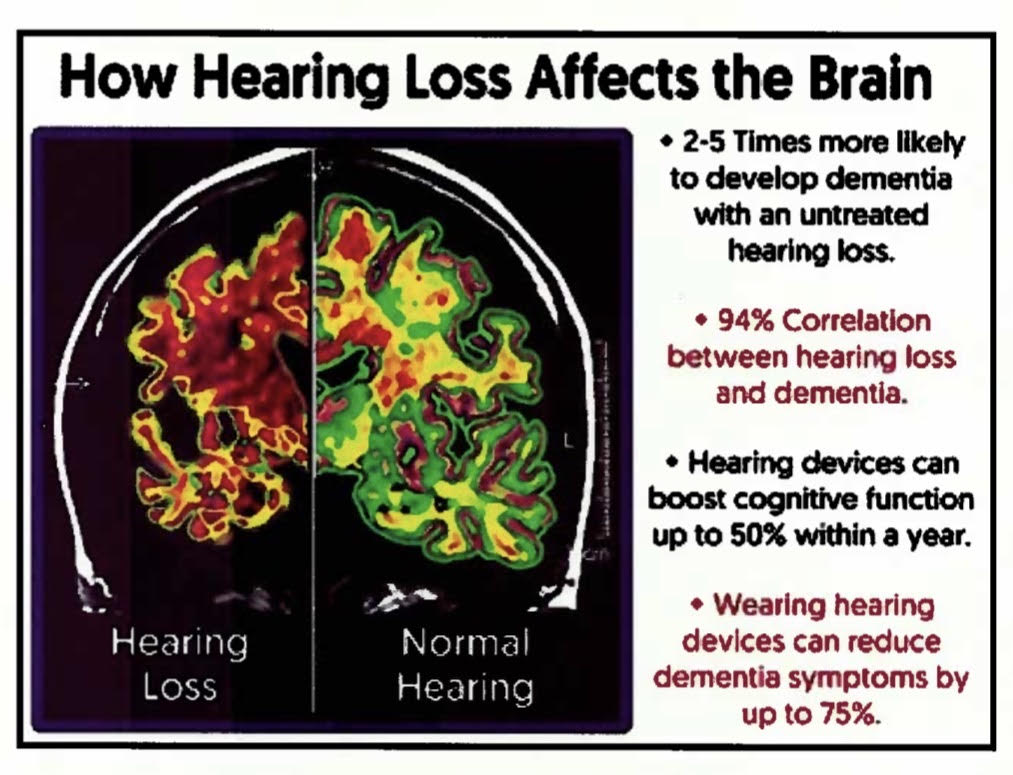
National experts say there is a strong connection between untreated hearing loss and lowered brain activity. Graphic courtesy of the National Council of Certified Dementia Practitioners/Belle McGuirt/The Carolina Reporter