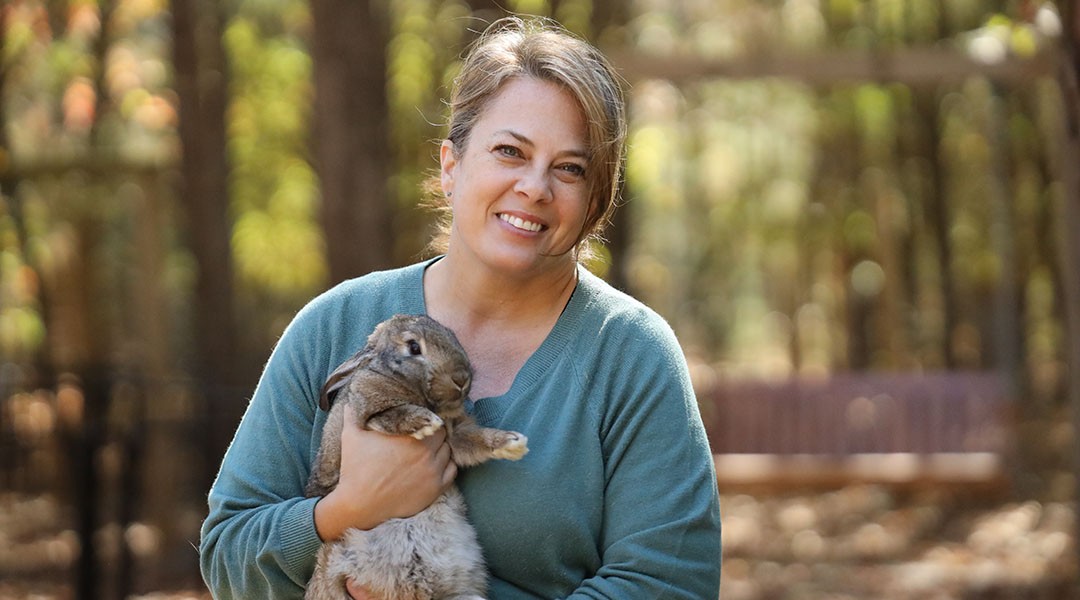
Amy Romleski holds bunny who has come out of its shell after months of being at the rescue. Photo by Camille Molten/Carolina Reporter
Do you think that bunnies can’t be litter-box trained?
That’s one of the first myths Amy Romleski wants to dispel.
“Rabbits can actually make really good pets in your home just like a dog or cat can,” Romleski said.
The founder of the Columbia-area Bugz Bunny Rescue also has seen firsthand how often people underestimate what it takes to care for them properly.
Romleski’s mission is to educate people about the care that bunnies really need – space, enrichment, medical care and patience.
“People buy them from pet stores thinking they’re like guinea pigs or hamsters,” Romleski said. “But they require much more upkeep and room than a cage can accommodate.”
They need to be spayed and neutered to maintain cleanliness – litterbox training is very difficult to do if they are not “fixed.” She said the cost to spay or neuter a rabbit is about $700. Rabbits are considered exotic pets, so finding a vet that is qualified to perform this operation is harder than for a cat or dog. Vets also do not provide discounts for bunny rescues because of this reason.
Two of Romleski’s permanent residents at her rescue shelter, Oliver and Twixie, greet her eagerly when she approaches their enclosure, hopping over for treats. They’re reminders of what a healthy, socialized rabbit can become.
“When you put a rabbit in the right environment, you get to see their personalities come to life,” Romleski said. “They can purr, give kisses and show affection.”
Romleski sees one common mistake again and again: people adopting rabbits without understanding their needs.
“The biggest misconception is that they’re just rabbits,” she said. “They each have their own unique personality.”
Too often, bunnies bought from pet stores or flea markets are released into the wild when their owners lose interest.
“A domestic rabbit can only survive two or three days out there before being captured or eaten,” Romleski said. “They’re so domesticated, they can’t live in the wild.”
The hardest thing for Romleski to see is that when some of the rescues arrive, they bear emotional scars.
“We’ve had bunnies come in that just shake while you hold them,” she said. “I once held a rabbit for 30 minutes while she cried. She was terrified of what I might do.”
“She’s come so far,” Romleski said of that rabbit. “Now I can pick her up, hand-feed her. She’s OK being held.”
Launching a rescue wasn’t easy and after four years has become the reason she must close.
“You have to have the financial reserves,” Romleski said. “You have to be able to put a building out, research the materials, call around, have veterinarians available to help, and file all the paperwork with the state and IRS.”
Her organization is now a registered 501(c)(3) nonprofit — but it has been sustained almost entirely through her own work as a real estate agent.
“A portion of every real estate transaction goes to the rescue,” Romleski said. “There’s no state funding for rabbit rescues.”
There are other rescues that Romleski urges people to look into, such as Wayward Rabbits and Hoppy Hearts in the Columbia area. Those rescues, like Romleski’s, focus on the physical rehabilitation as well as the emotional.
“We focus on the mental health of the rabbits,” she said. “We hand-feed them, pet them, get them used to people again so they can be rehomed.”
The most rewarding aspect of running a rescue is when the rabbits find their forever homes.
One rescuer, Renee Singer, said on Romleski’s Facebook post that Bugz Bunny Rescue will be missed.
“Because of you, we have our Holland Lop, Bugsby, that survived physical injuries from a human that bought him at a local pet store,” Singer wrote. “Because of you, we have a bigger than life personality, our English Lop, Summer. She is everything to my 10 year old daughter.
Evamarie Spataro, another rescuer, was grateful as well.
“Thank you so much for giving me my Edgar. He is absolutely incredible and means the world to me. The rescue impressed me so much, you took amazing care of all the babies that have stayed there.”
Those heartfelt messages – and others – are the reason that Romleski said she started the rescue and poured her heart into it.
“It’s heartwarming to see that I got to change that rabbit’s life, not only for the rabbit, but for the person, too,” Romleski said.
Video by Abagael Strating
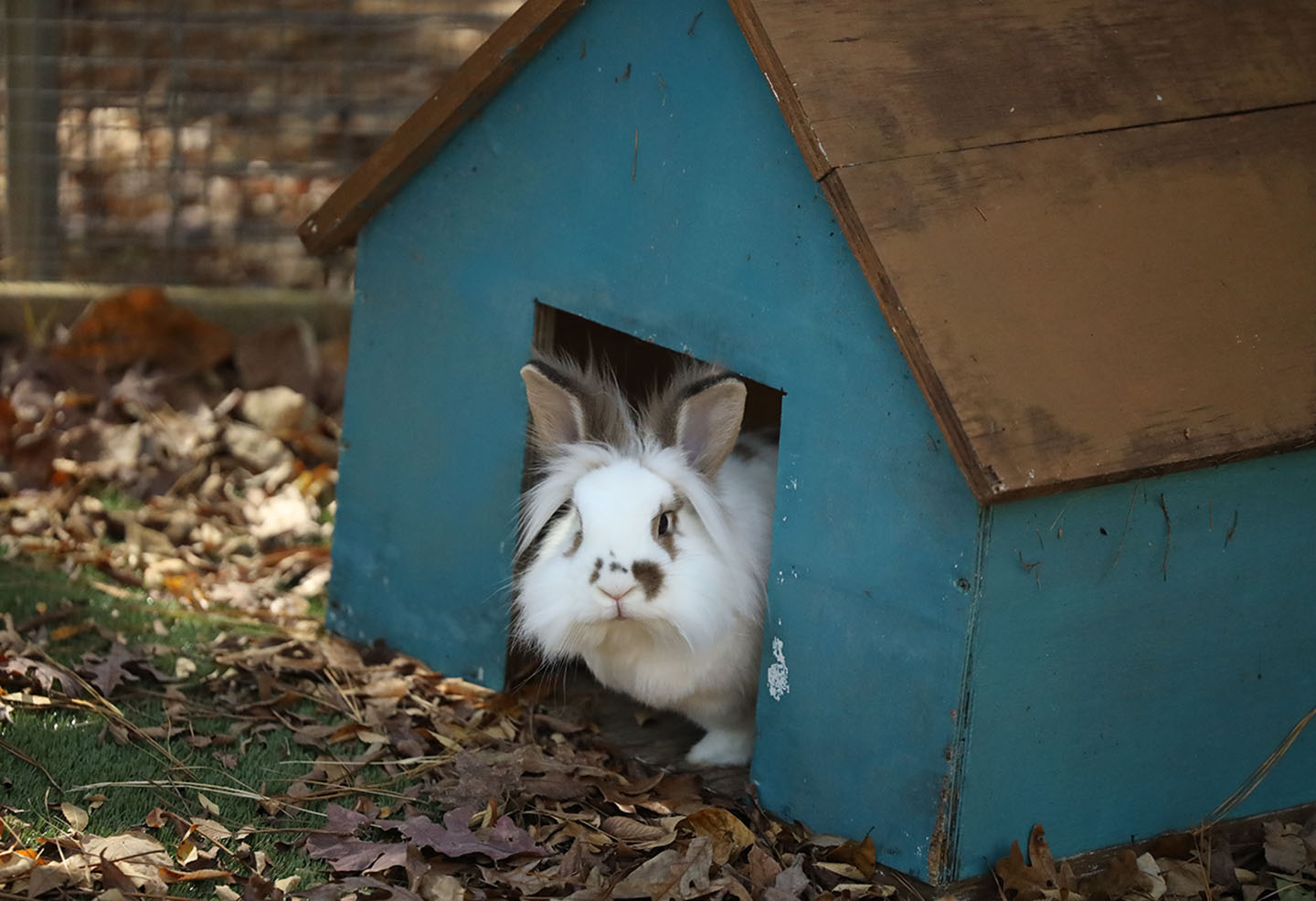
Trixie, a permanent resident of Bugz Bunny Rescue, peeks out of her hutch and enjoys her outside time. Photo by Camille Molten
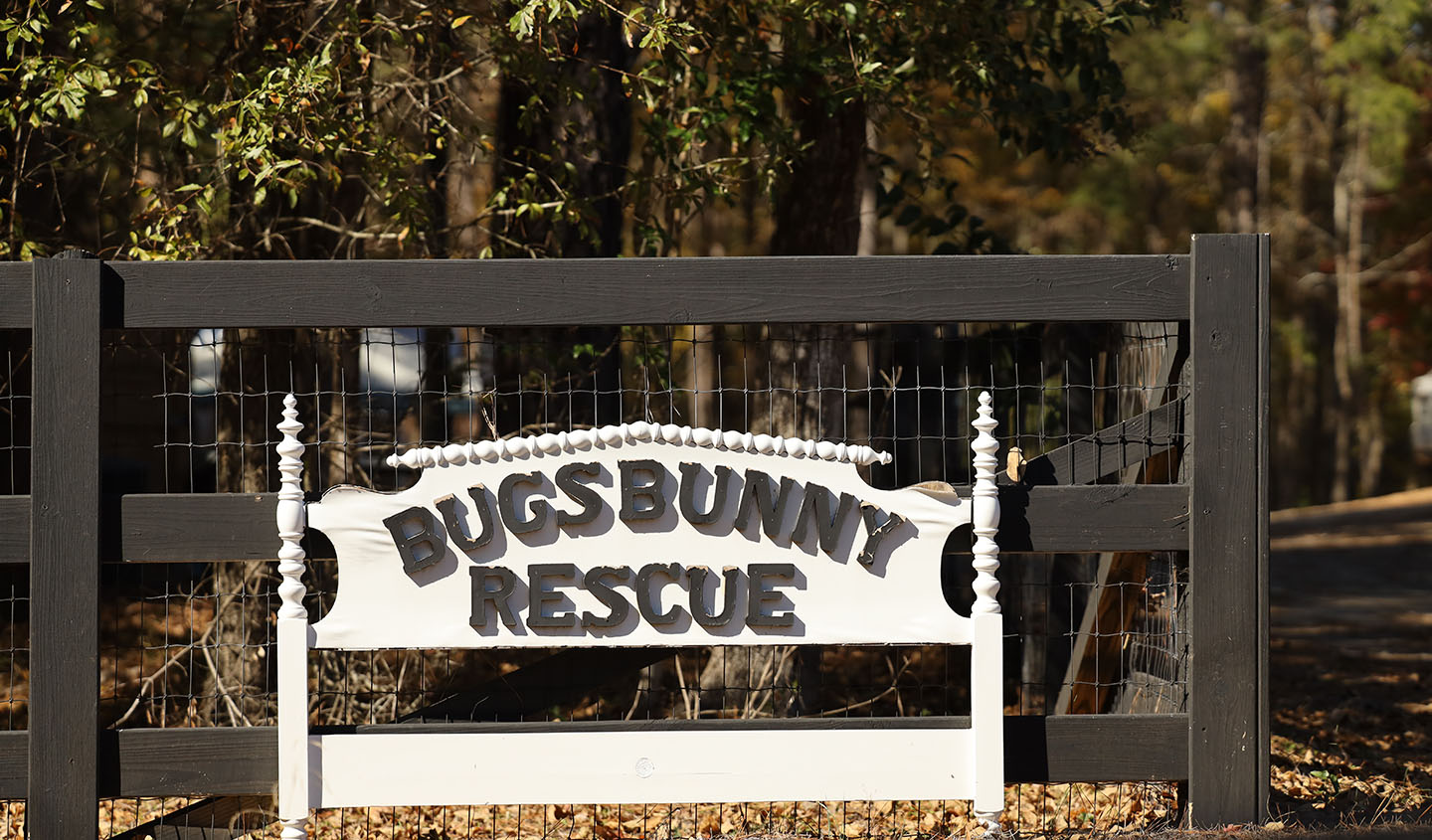
Bugz Bunny Rescue is secluded, with lots of room for bunnies to roam around. Photo by Camille Molten/Carolina Reporter
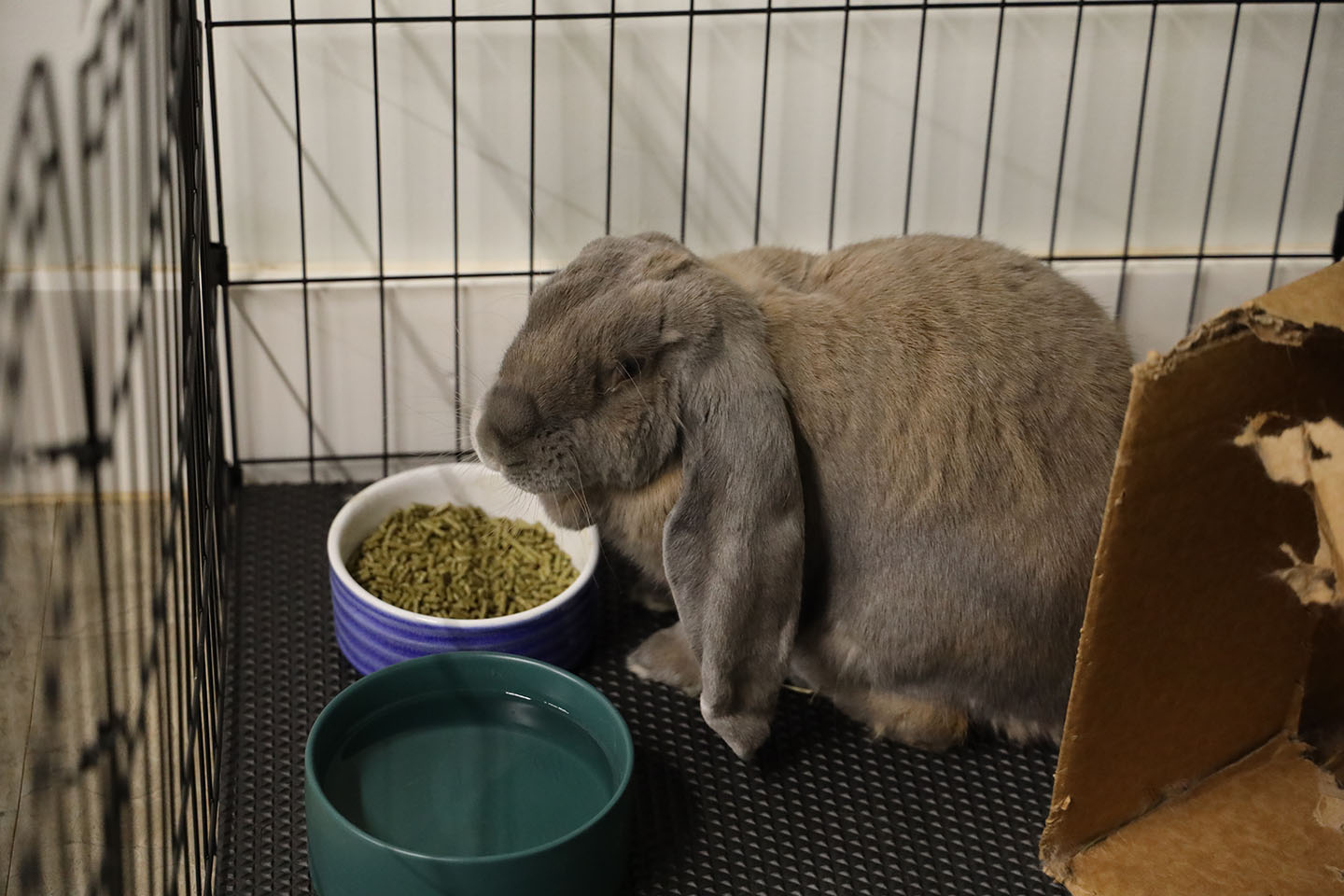
Hunny eats timothy hay in her enclosure. Photo by Camille Molten/Carolina Reporter
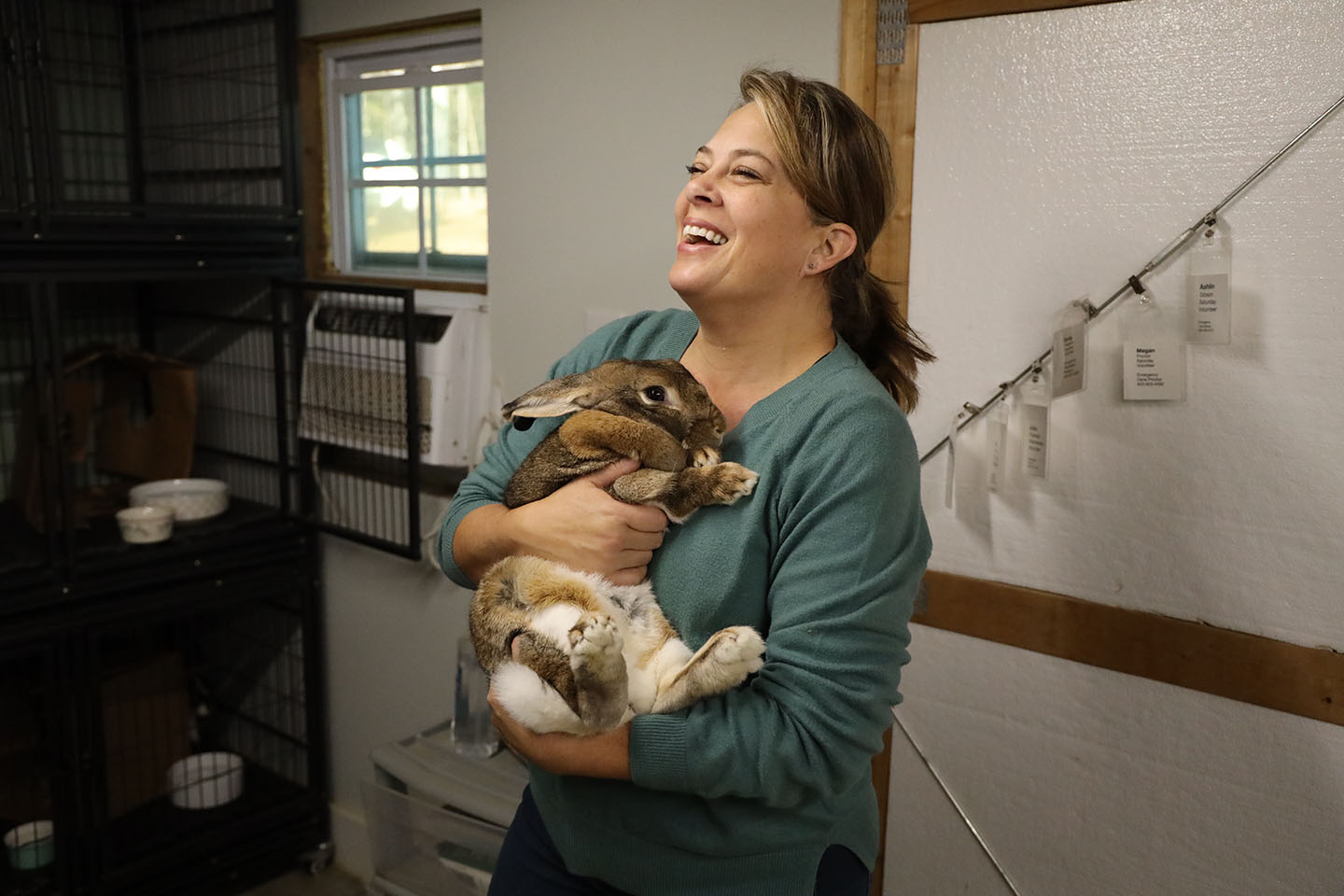
Romleski is entertained by the different rabbits’ personalities. Photo by Camille Molten/Carolina Reporter