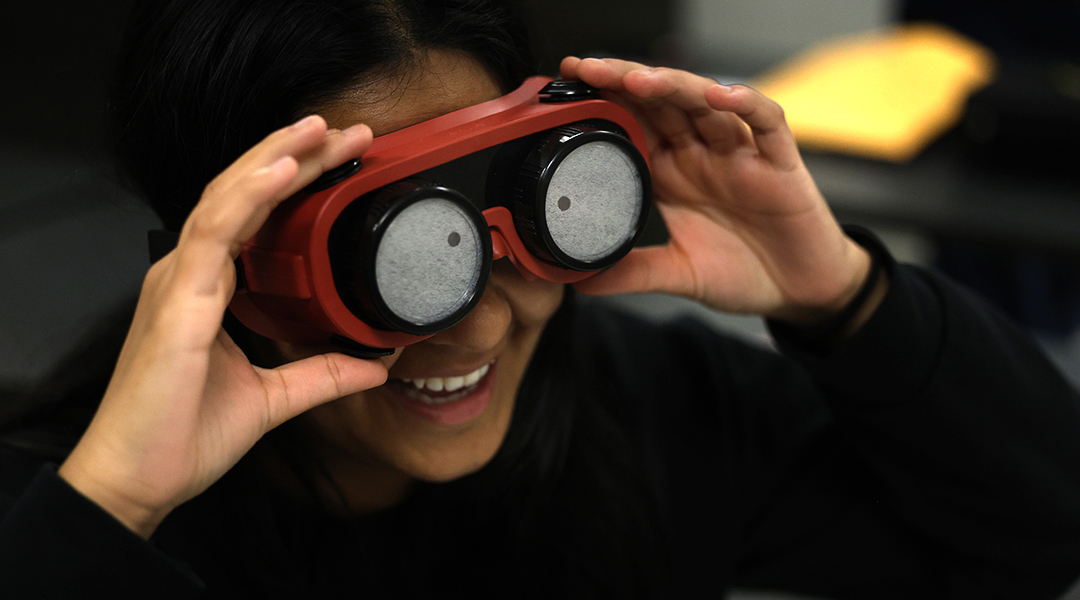
American Sign Language Club member Yesvi Patel wears ear plugs and goggles that simulate vision impairment for a club activity demonstrating the effects of Usher Syndrome, a progressive sight and hearing disorder. Photo by Erin Abdalla/Carolina Reporter
The University of South Carolina’s American Sign Language program’s success over the past four years has driven student interest up.
The university now is being called on to expand the program.
USC has offered ASL for more than 20 years, but it didn’t gain popularity until the COVID pandemic. The university in 2020, during the pandemic, approved a student petition to create an ASL Club, which has drawn in many students who haven’t been able to get into the limited ASL classes.
ASL Club president Isabella Lorenzo started a petition asking the university to expand the ASL program to include a third ASL class and to consider creating an ASL minor. Lorenzo earlier had reached out to her fellow ASL Club members and a professor to see if there was a demand for an expanded ASL program.
“I wanted to make sure that this was something that people actually wanted,” she said.
Lorenzo said the need for an expanded ASL program was apparent after talking to fellow students. Students in the past had fought to get into one of the 60 seats offered each semester, now there’s more than double the amount of seats.
The latest push has been the biggest development in the program since ASL Professor Andrea Martinez-Johnson started at the university in 2004. Martinez-Johnson has advocated for the university to expand the ASL program for the past two decades, but frequent staff turnover has stunted her efforts.
“Starting over again, you just have to wait for the next person who has that kind of momentum,” Martinez-Johnson said.
The need for an expanded ASL program is even more apparent now that the university is offering more sections of ASL, .
“We’re just watching the demand go up and up and up,” Paul Malovhr, chair of USC’s language department said.
Malovhr said he hopes the university will try to keep up with demand, as ASL continues to be one of the fastest-growing languages in the United States.
For ASL to have enough classes to count towards a minor, the university would need to create more ASL classes and classes dedicated to teaching about deaf culture. There are several approval processes the language department will have to go through to create new classes and bring in new professors, meaning it will be years before the program is big enough to create an ASL minor.
“We’re in a period of decision-making right now,” Malovhr said. “And I’m hopeful to see things grow to meet student demand.”
EDITORS NOTE: Some of the interviews for this story were conducted using ASL through an interpreter. ASL Professor Andrea Martinez-Johnson was signing to an interpreter, who translated over the phone for the reporter.
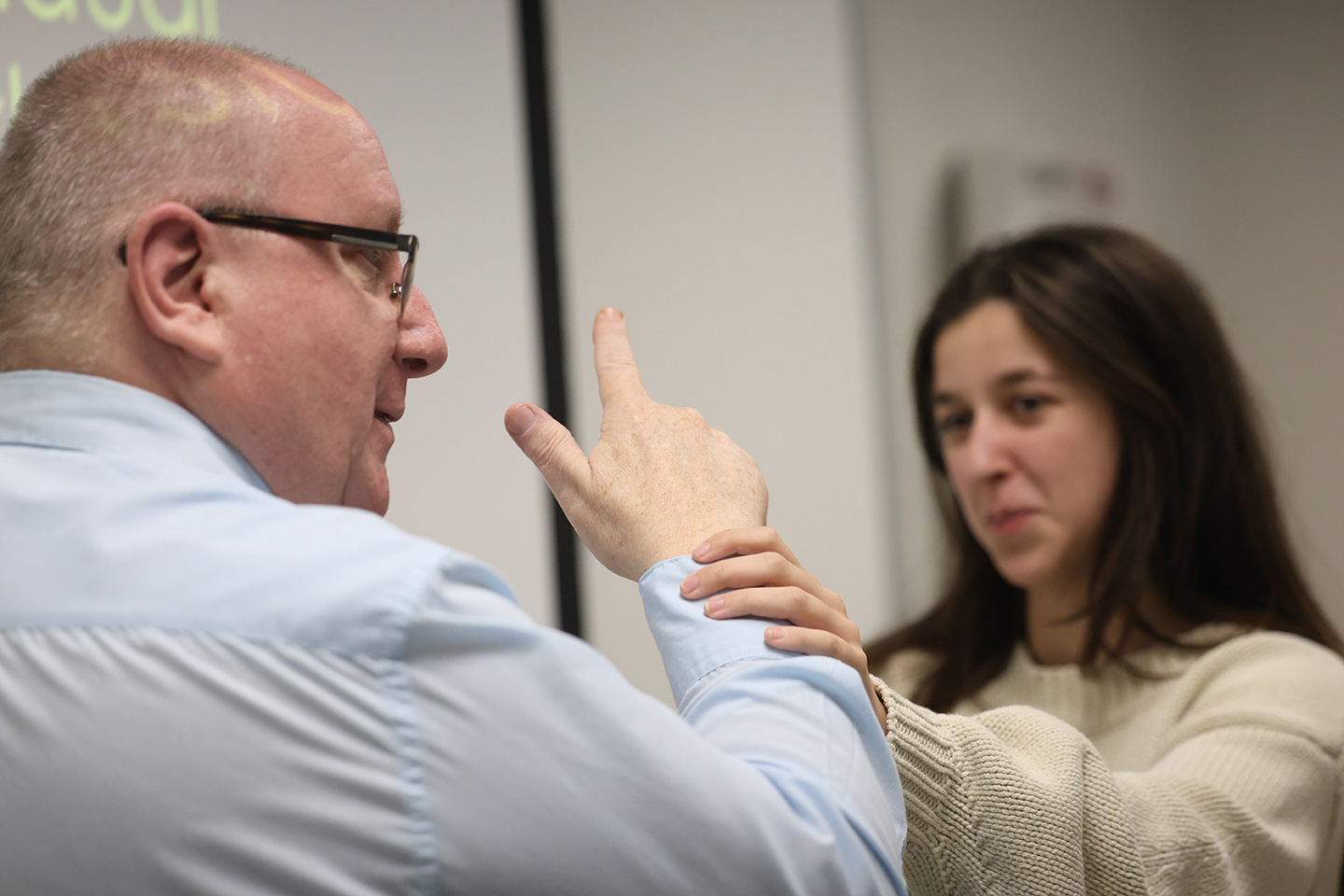
Interpreter Jeffery Francis shows members of the University of South Carolina’s ASL Club how people with vision loss communicate by holding someone’s hand while they sign. Photos by Erin Abdalla/Carolina Reporter
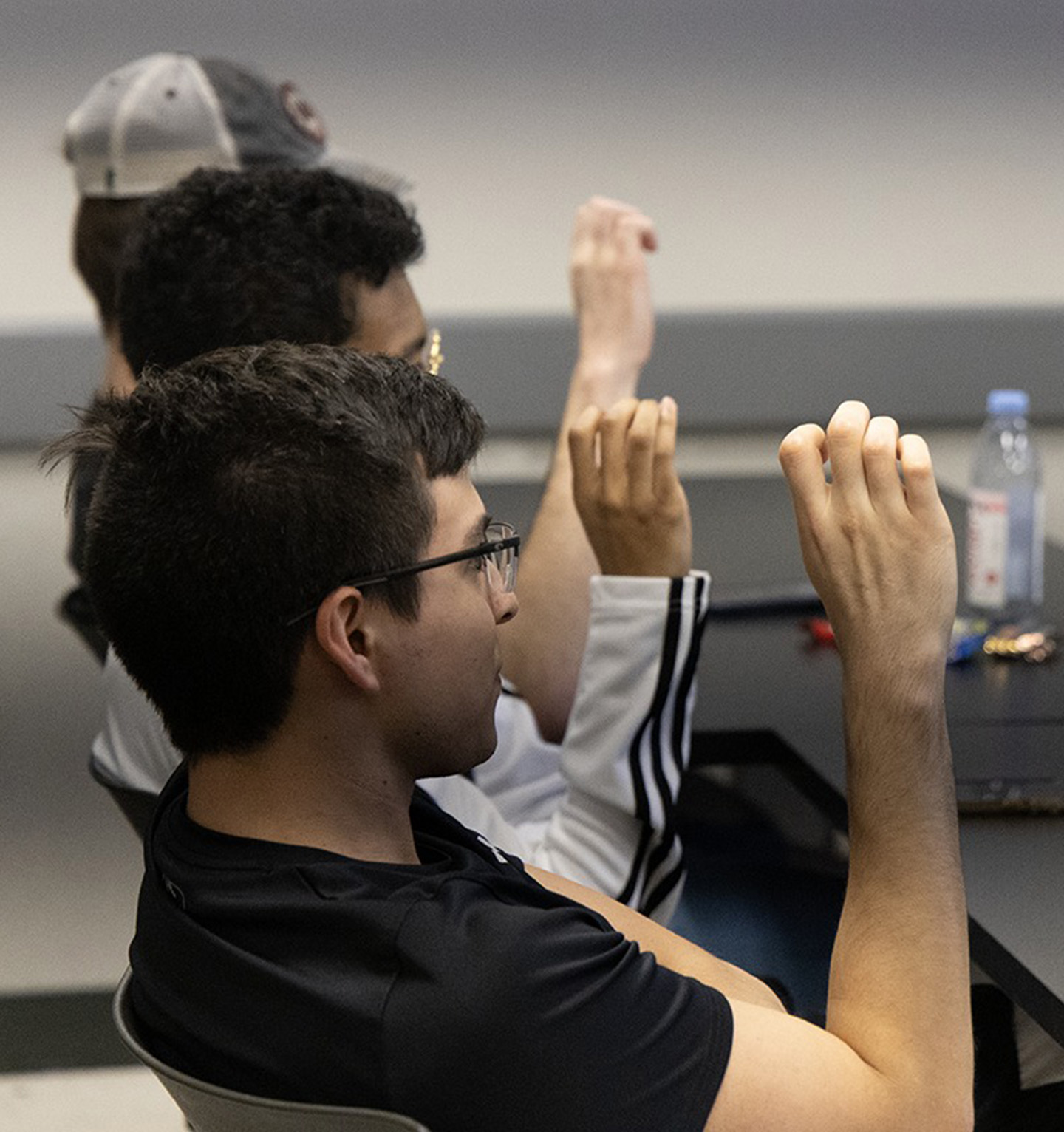
Student Andrew Pattengill learns the ASL alphabet at a club meeting. Photo by Erin Abdalla/Carolina Reporter