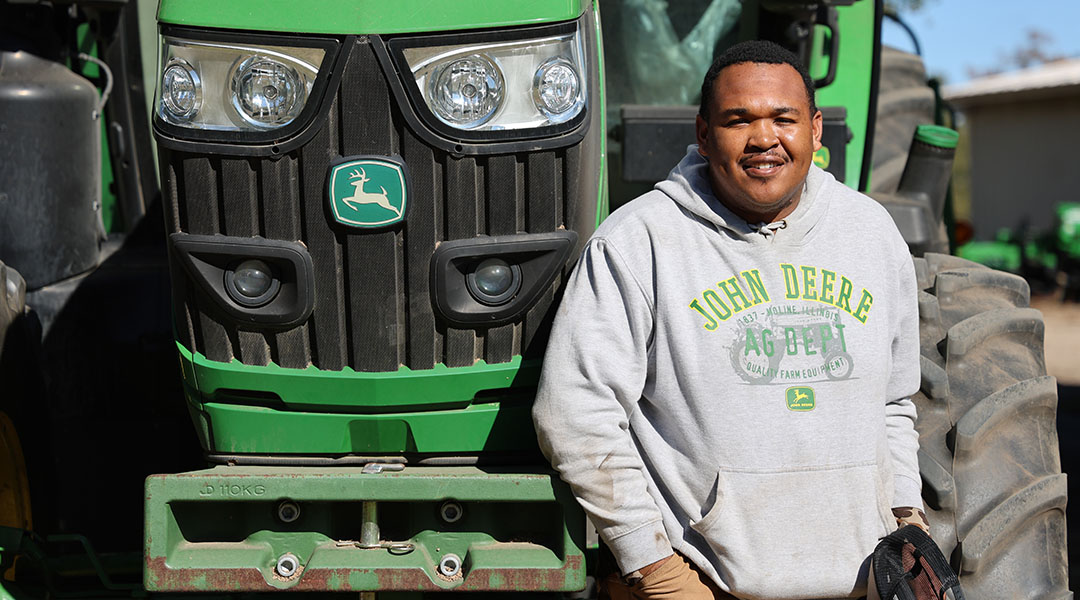
Eric Jones, 20, an employee at the South Carolina State (University) Research & Demonstration Farm, uses a 2022 John Deere tractor daily on the farm where he works. Photo by CJ Leathers/Carolina Reporter
OLAR – Every day from sunup to sundown, S.C. Governor’s School of Agriculture alumnus Eric Jones walks through five generations of his family’s accumulated land, upkeeping the farm and learning in the process.
It feels oh-so good.
“Ever since I could walk or talk, (I’ve) always had little toy tractors playing in the dirt whenever I got a chance,” Jones said. “I started playing my first crop when I was 14, planted 30 acres of corn. And I mean, I’ve been full of throttle, wide open since then.”
Ronquel Rhodes said her son has been very strong-willed since he was younger, separating himself from others in her eyes. His father passed away when he was 10 years old. But farming only became a stronger outlet for Jones during the grieving process.
She admires the work he does in the present and will do in the future, wanting him to continue being a staple in his community.
“I just want him to do what he loves and to never get comfortable,” Rhodes said. “I want him to be a pillar in the community while mentoring other youth on the opportunities in agriculture. I know he will continue to make me proud because he’s a part of my family’s legacy.”
The second-year business management student at Orangeburg-Calhoun Technical College also works at the South Carolina State (University) Research & Demonstration Farm in Olar, South Carolina. The farm plants different crops and resources to use for data collection and research purposes, including a pine tree plot, Jones said.
He manages many parts of the farm and crops such as peanuts, chickpeas and local hay. Tillage is an important step to prepare the fields for spring planting. It breaks the soil and removes weeds, shrubs and other growth that could interfere with the new season.
Jones said he was inspired by his grandfather after watching him work when he was young. He said he was bullied as a child and used his frustration as motivation on the farm.
“What brought me joy was seeing that crop grow from seed to harvesting and stuff … and probably seeing my granddad in the fields during summer, when it’s 90-something degrees outside on an open station tractor trying to work yourself to death,” Jones said. “When I was growing up, I always looked at him as Superman. If he couldn’t do it, anybody couldn’t do it.”
His 400-acre family farm is in Rowesville, South Carolina. Jones said the primary differences between the farms are the size – his family’s farm is bigger – and the data collection at the research farm.
“We’re just a row crop operation,” Jones said. “So corn, cotton, soybeans – sometimes we experiment with sorghum and sunflowers. Sometimes for the dove fields and stuff, I plant a couple food plots for like the deer and turkeys and also manage about 140 or 150 acres of production through this program, through NRCS, called EQIP.”
The state Natural Resources Conservation Service has implemented its Environmental Quality Incentives Program since 1996, delivering conservation technical and financial assistance to those who need it most.
When he was in his school, Jones went to the S.C. Governor’s School for Agriculture, also known as John de la Howe, in McCormick County near the Savannah River.
Jaquez Perry, Jones’ friend from John de la Howe and senior agribusiness student at South Carolina State University, said he and Jones got along from the very beginning at the governor’s school. Perry is originally from Wadley, Georgia, and moved to South Carolina because a previous agriculture teacher recommended he attend the school.
Perry said he met Jones on the first day, when everyone moves into the dorms. He related the most to him, considering he also comes from an agriculturally based family that owns a farm.
“He was one of South Carolina Young Farmers because, you know, he was on the board to do everything,” Perry said. “I mean, he was just all over the place. So I got to kind of take in from him a little bit.”
Perry spent a lot of time with Jones during their time at the governor’s school, appreciating his personality and work ethic among his peers.
“His love for this (agriculture), it amazed me, because he is very dedicated to it, you know, he’s willing to get the job done,” Perry said. “He’s willing to go that extra mile just to (do) what we need in order to have a successful crop and be able to share the good news and everything with other people.”
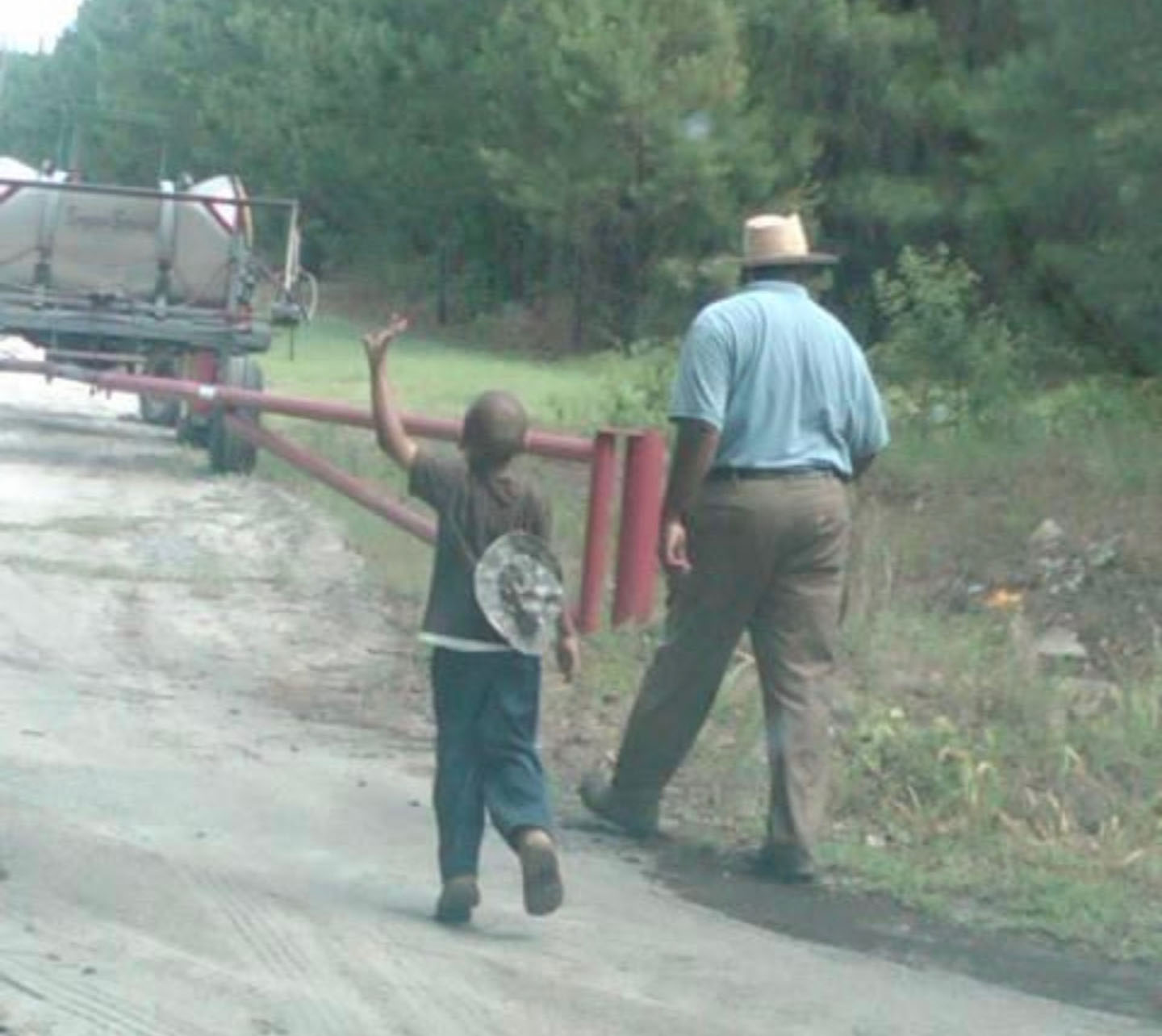
A young Eric Jones trots down his family’s farm after getting home from school, eager to apply liquid nitrogen to corn with his grandfather, Nathaniel Rhodes. Liquid nitrogen is applied to corn because it supports plant growth and helps prevent nutrient deficiencies and poor crop development. Photo courtesy of Eric Jones/Carolina Reporter
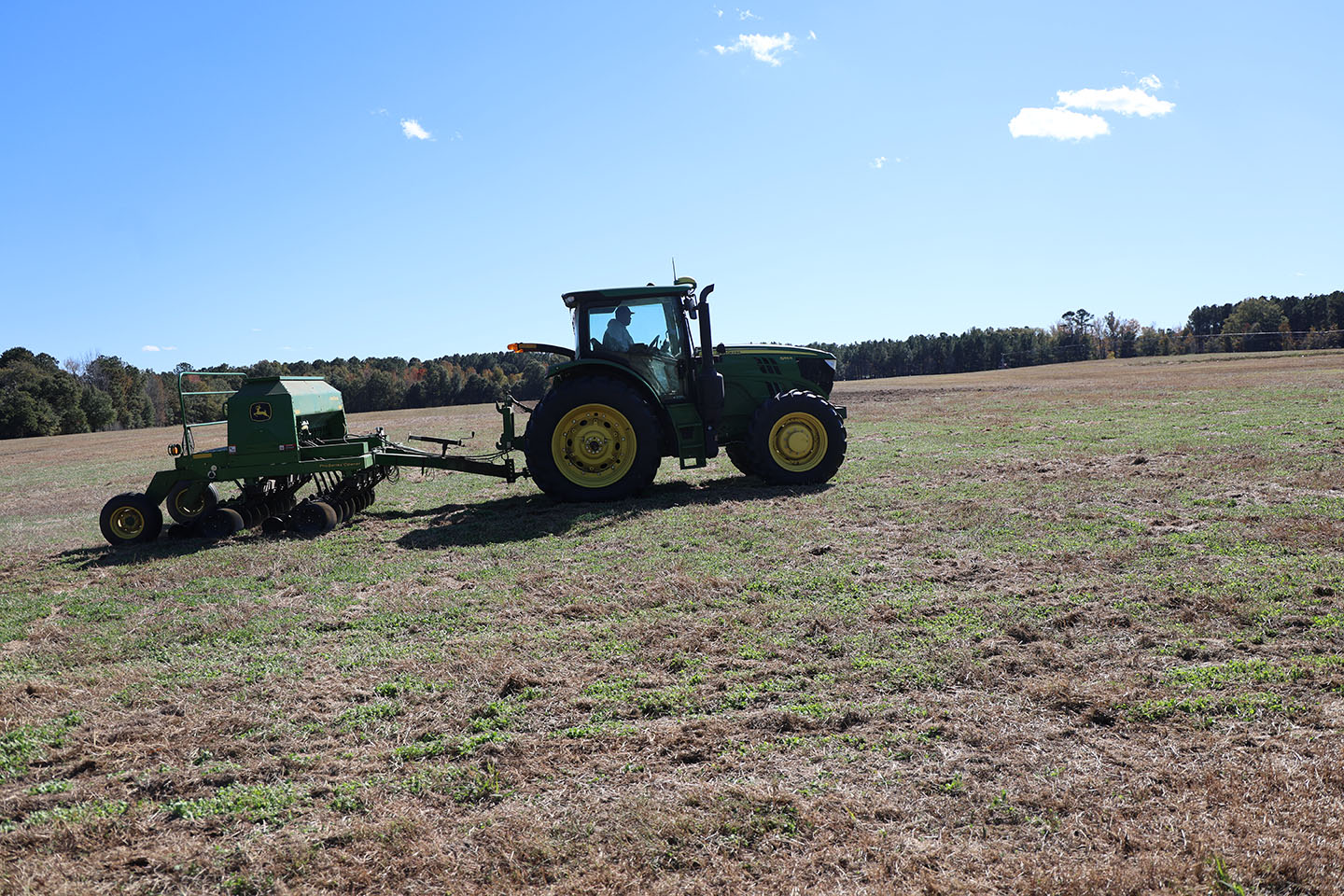
Jones drives the tractor through the field of weeds and shrubs left from the previous farming season. He’s preparing the fields for planting crops in the spring by loosening and turning the soil. Photo by CJ Leathers/Carolina Reporter
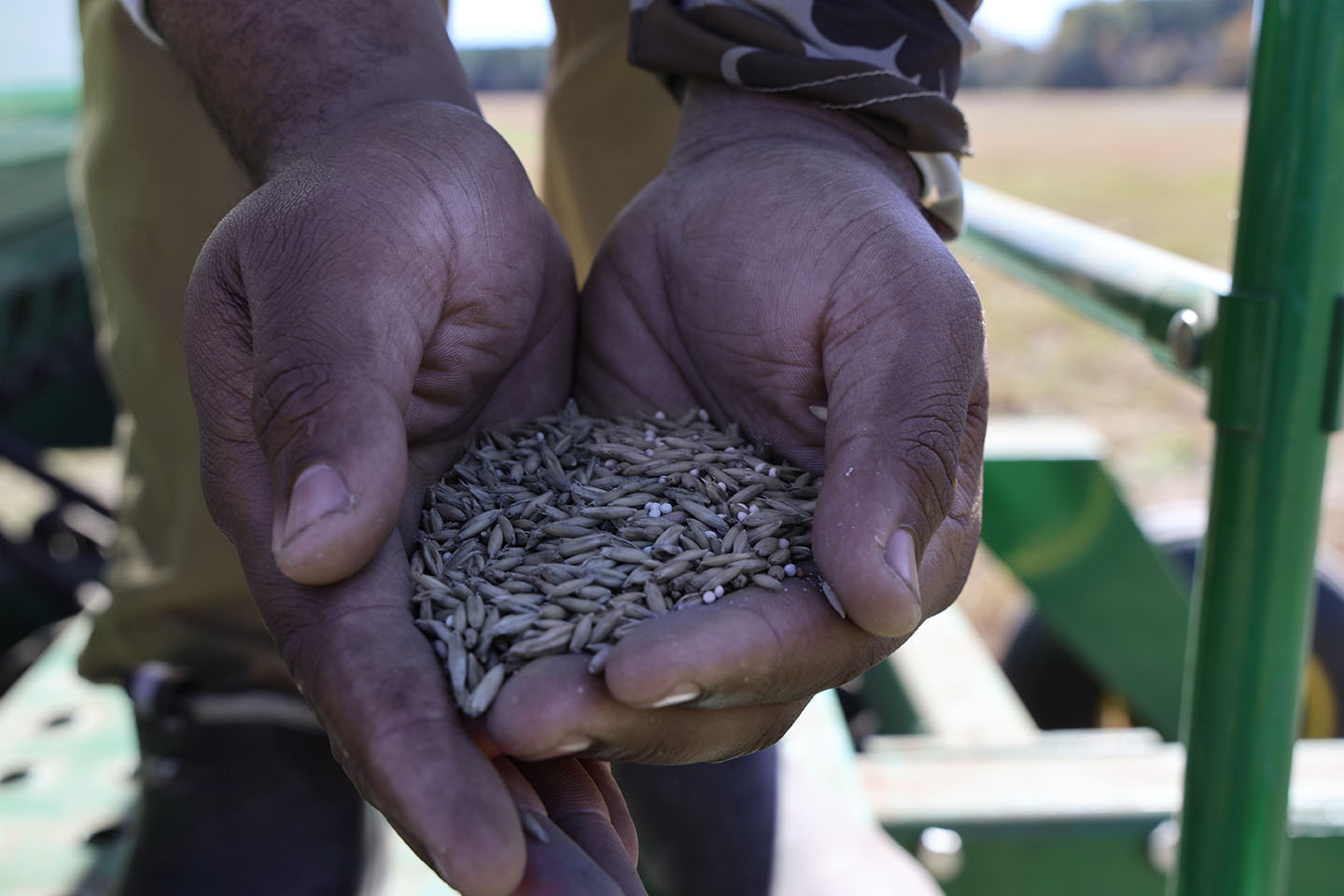
Jones holds a combination of wheat, oats and clover that have been grown on the farm. Jones said these are fall cover crops, plants grown in the late summer or fall to protect and improve the soil over winter, rather than for harvest. Photo by CJ Leathers/Carolina Reporter
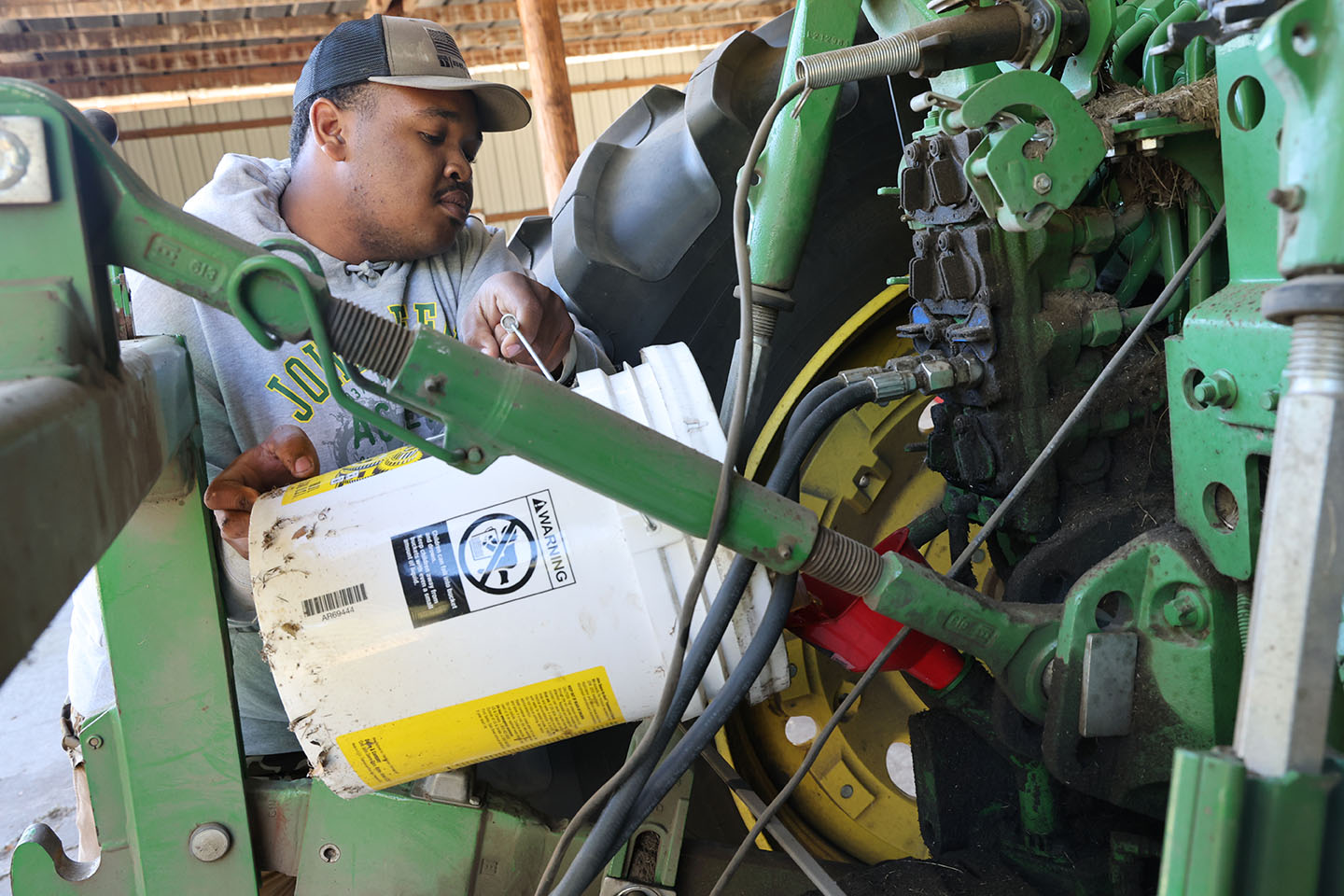
Eric Jones pours fluid into the backside of the tractor. The lubricant protects the tractor from potential damage when it’s in use. Photo by CJ Leathers/Carolina Reporter
Eric Jones flies a drone above him, recording himself in a combine as the fields are prepared to harvest corn. The farm is more than 200+ acres large. Video courtesy of Eric Jones/Carolina Reporter