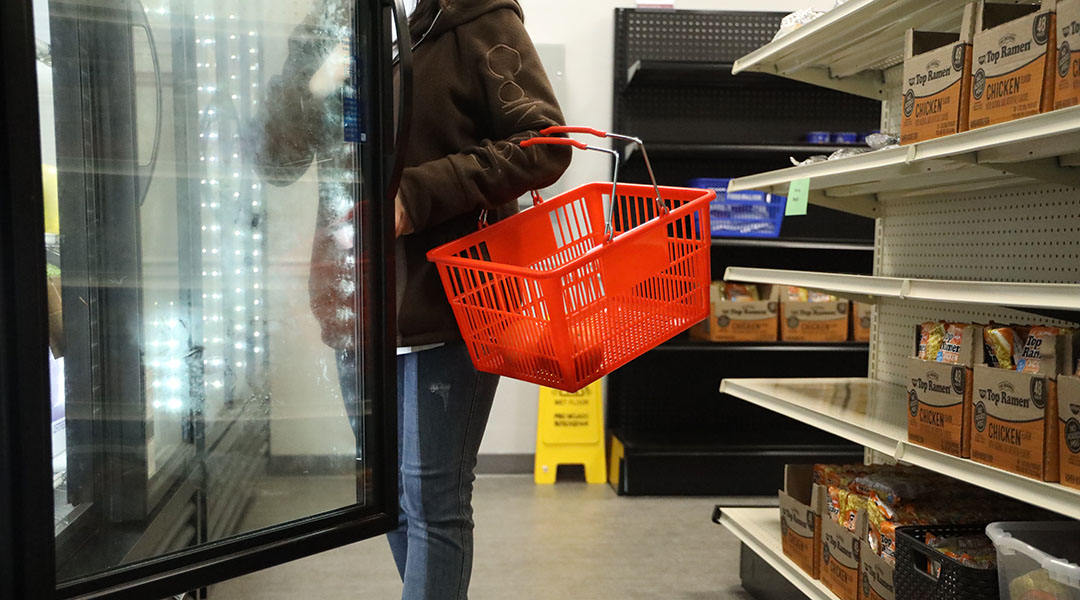
A student grabs items from the refrigerated section in the pantry of the Gamecock CommUnity Shop. Photo by Riley Mekanik/The Carolina Reporter
Food insecurity has been on the rise in Columbia, South Carolina – and it began picking up steam at the end of 2025.
Nearly 14.4% of households have been suffering with food scarcity, surpassing the national average of 12.2%, according to reports from the USDA Economic Research Service. There are a number of causes: inflation, housing costs, new federal poverty regulations and a lack of healthy whole foods.
Fortunately, there are many non-profit organizations in the Midlands helping fight the battle, including on-campus resources at the University of South Carolina, such as the Gamecock CommUnity Shop.
Executive director of the shop Christina Stokes said she and her staff also have witnessed a steep increase in shoppers this past year.
“We’ve had about a 300% increase this summer alone,” she said.
That includes students, faculty and staff.
“We have at least 100 people visit us daily, and have about 1,000 items coming out of the shop daily,” Stokes said.
Cindye Richburg-Cotton, executive director of the Brookland-Lakeview Empowerment Center in West Columbia, said food insecurity in Lexington and Richland counties is often connected to where you live.
“We’re in a food desert and a food swamp,” she said. “We have an abundance of unhealthy stores like convenient stores and liquor stores.”
Richburg-Cotton’s food pantry, community garden and food box services for senior citizens have been in high demand. She said she has seen an immense increase in families coming to the food bank for free food and freshly grown produce.
“South Carolina ranks seventh in the country for food insecurity, so that impacts all the counties,” she said. “Richland and Lexington are (among) the largest counties in South Carolina, so obviously we have a lot more people that are impacted.”
The Empowerment Center’s good deeds do not go unnoticed. Richburg-Cotton said both the center’s Richland and Lexington locations serve on average about 50 families a week. With the helpful collaboration of the non-profit organization Harvest Hope, each month they give out another 130 “senior boxes” – 25-pound supplemental boxes, including non-perishable items, for senior citizens residing in Lexington County.
As chairwoman of the West Columbia-Cayce Food Policy Coalition, Richburg-Cotton also supports roadside produce stands, which not only benefit the community with fresh produce, but help keep farmers in business as well.
“We do this to try to decrease the amount of food deserts, and it benefits everyone involved,” she said.
Foodshare South Carolina, a program created through USC’s School of Medicine, works to provide easier access to fresh produce to struggling students from Columbia’s five college campuses.
Ashley Page Bookhart, Foodshare’s director of programs and rural outreach, said food insecurity has fluctuated since the pandemic – and her organization has worked to keep up.
Food insecurity fell during COVID-19 because of federal government funding increased, then rose again afterward.
“The federal government also provided pandemic SNAP to school-age children as well as provided all SNAP participants with the maximum benefit amount,” Bookhart said.
But with the current SNAP changes in South Carolina, recipients must now must have proof that they have done 80 hours of volunteer work a month.
“Estimates expect thousands of individuals to loose their benefits, which could increase their chances to experience food insecurity,” Bookhart said.
College students are a particular focus.
“Foodshare SC has been able to support several colleges and universities in the Midlands area, including USC, with our no-cook boxes to provide to college students for almost four years due to grant and donation funding,” Bookhart said. “Over 2,700 boxes have been provided to help students have access to fresh healthy fruits and vegetables.”
A new effort has gotten underway in the Midlands in January, with the launch of The Grace Market.
The goal of the digital food pantry is to provide food-insecure residents with digital gift cards to grocery shop.
Residents can apply for assistance on the organization’s website.
FINDINGS
- SC ranks seventh-worst in the country for food insecurity, with 14.4% of households suffering
- USC’s Gamecock CommUnity Shop saw a 300% increase in shoppers this summer alone
- Non-profit organizations provide fresh produce and non-perishable foods for families and students
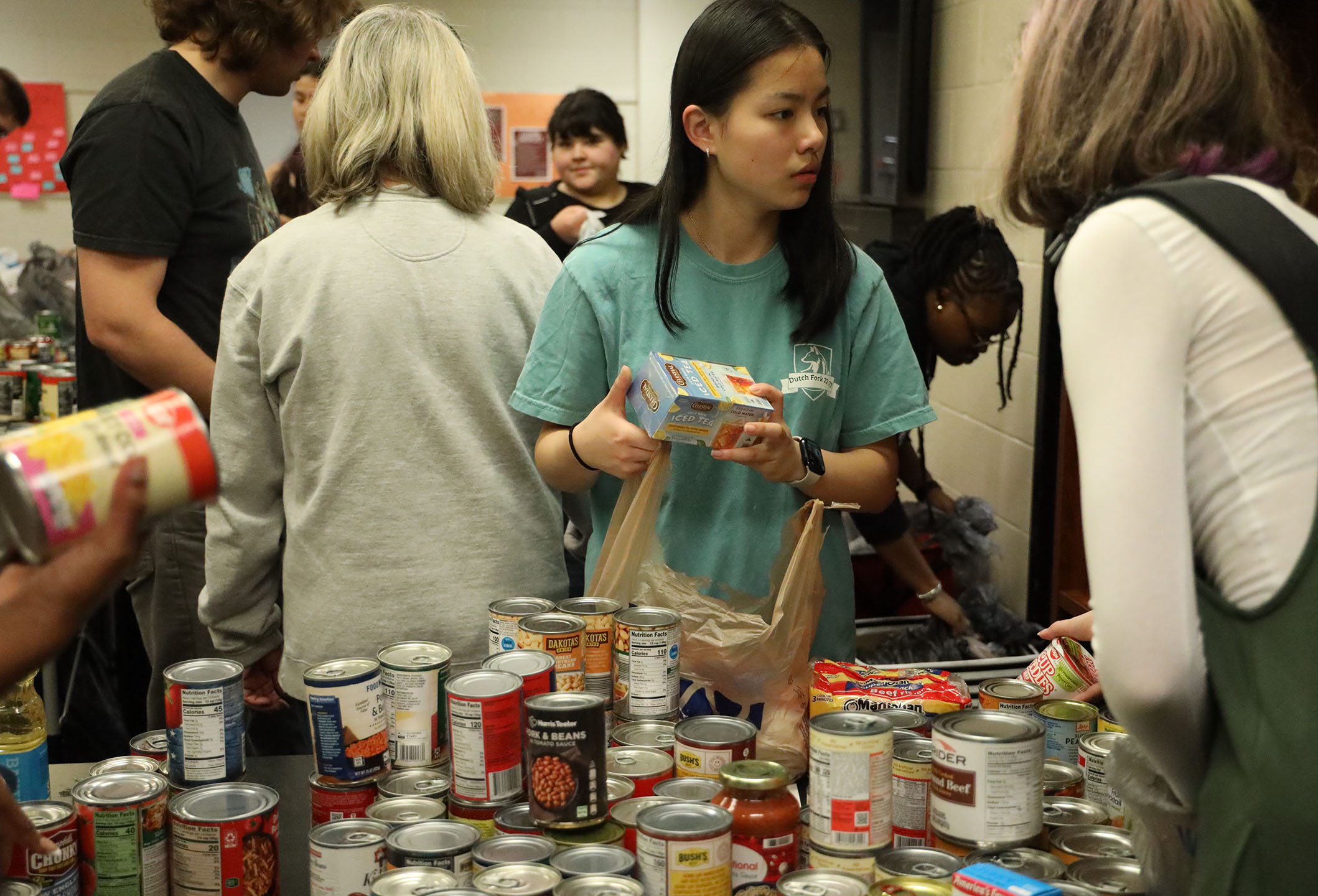
A volunteer at the Gamecock CommUnity Shop helps organize and sort canned donations. Photo by Riley Mekanik/The Carolina Reporter
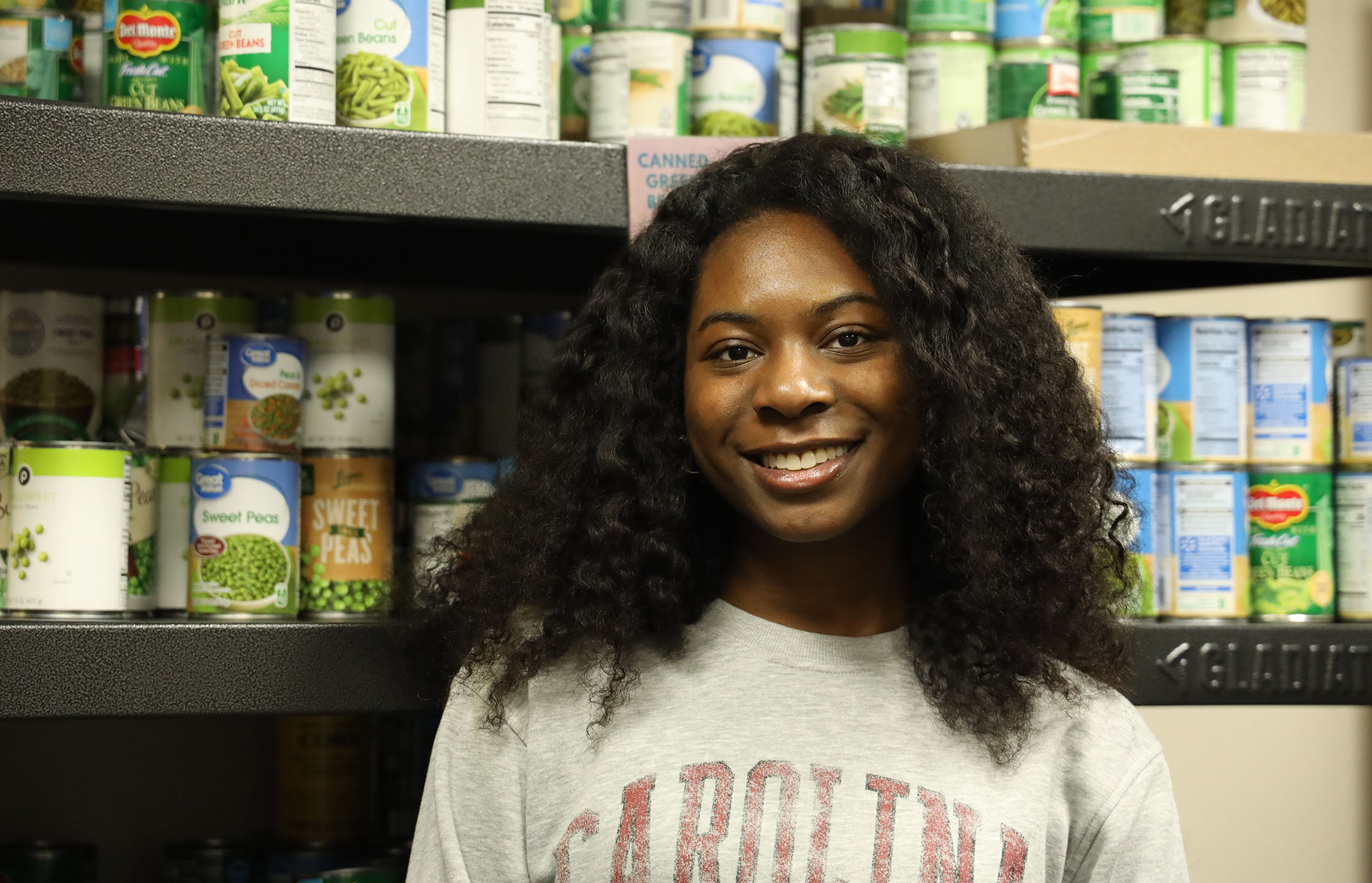
Executive Director of the Gamecock CommUnity Shop Christina Stokes oversees the stocking of the pantry in the back of the shop. Photo by Riley Mekanik/The Carolina Reporter
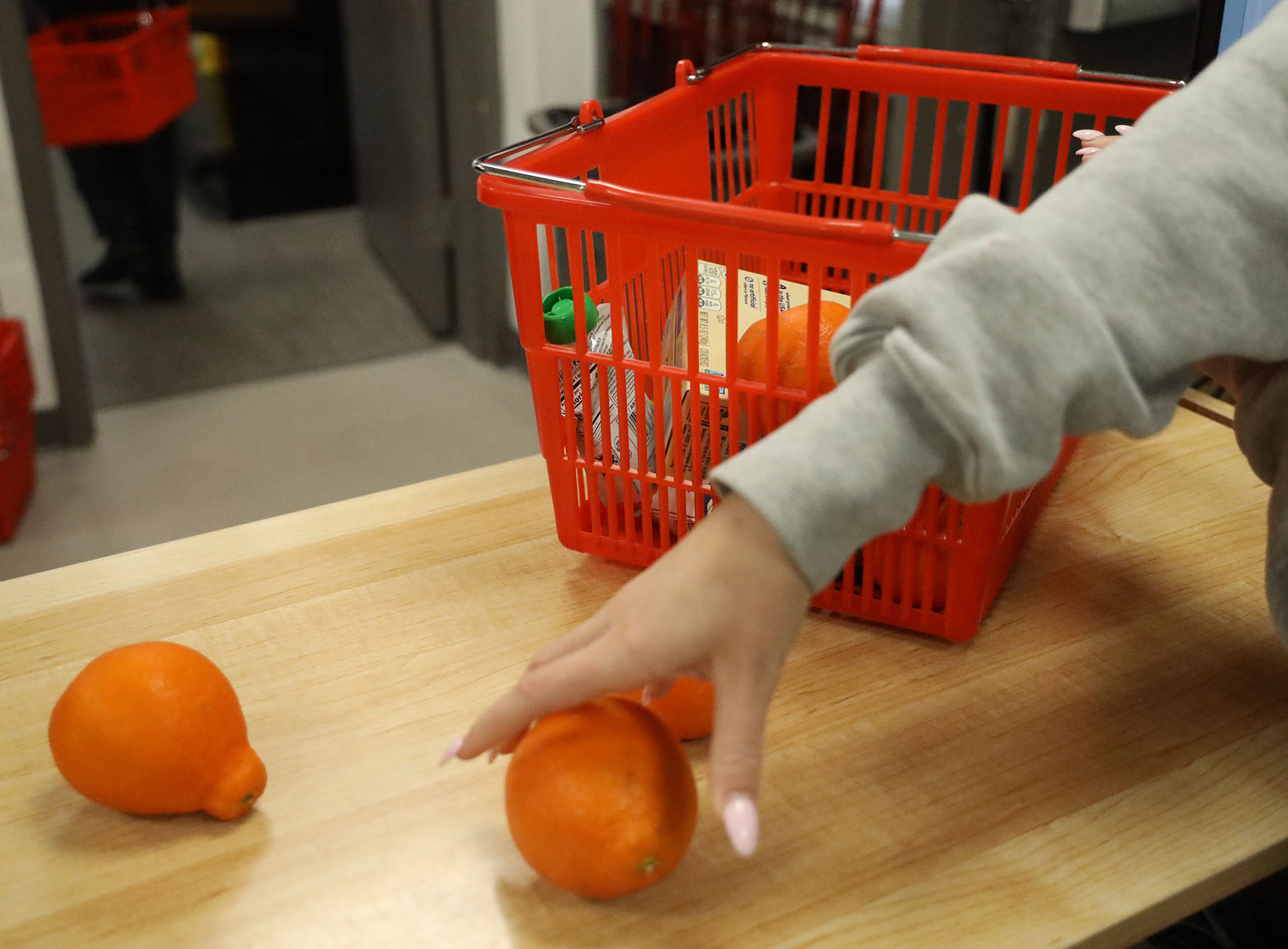
A worker at the Gamecock CommUnity Shop scans and bags a student’s oranges for purchase. Photo by Riley Mekanik/The Carolina Reporter
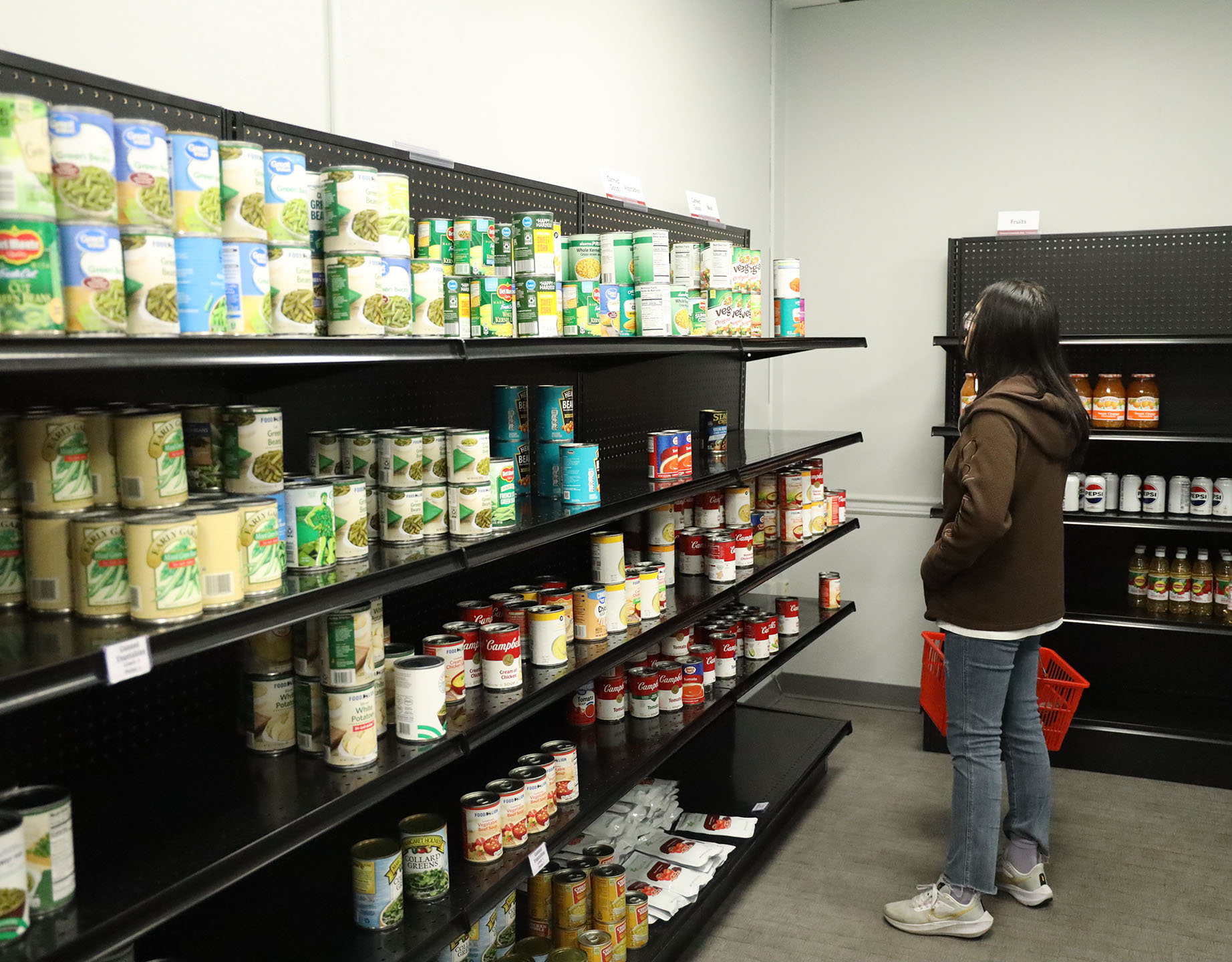
A student browses the aisles while shopping at the Gamecock CommUnity Shop. Photo by Riley Mekanik/The Carolina Reporter
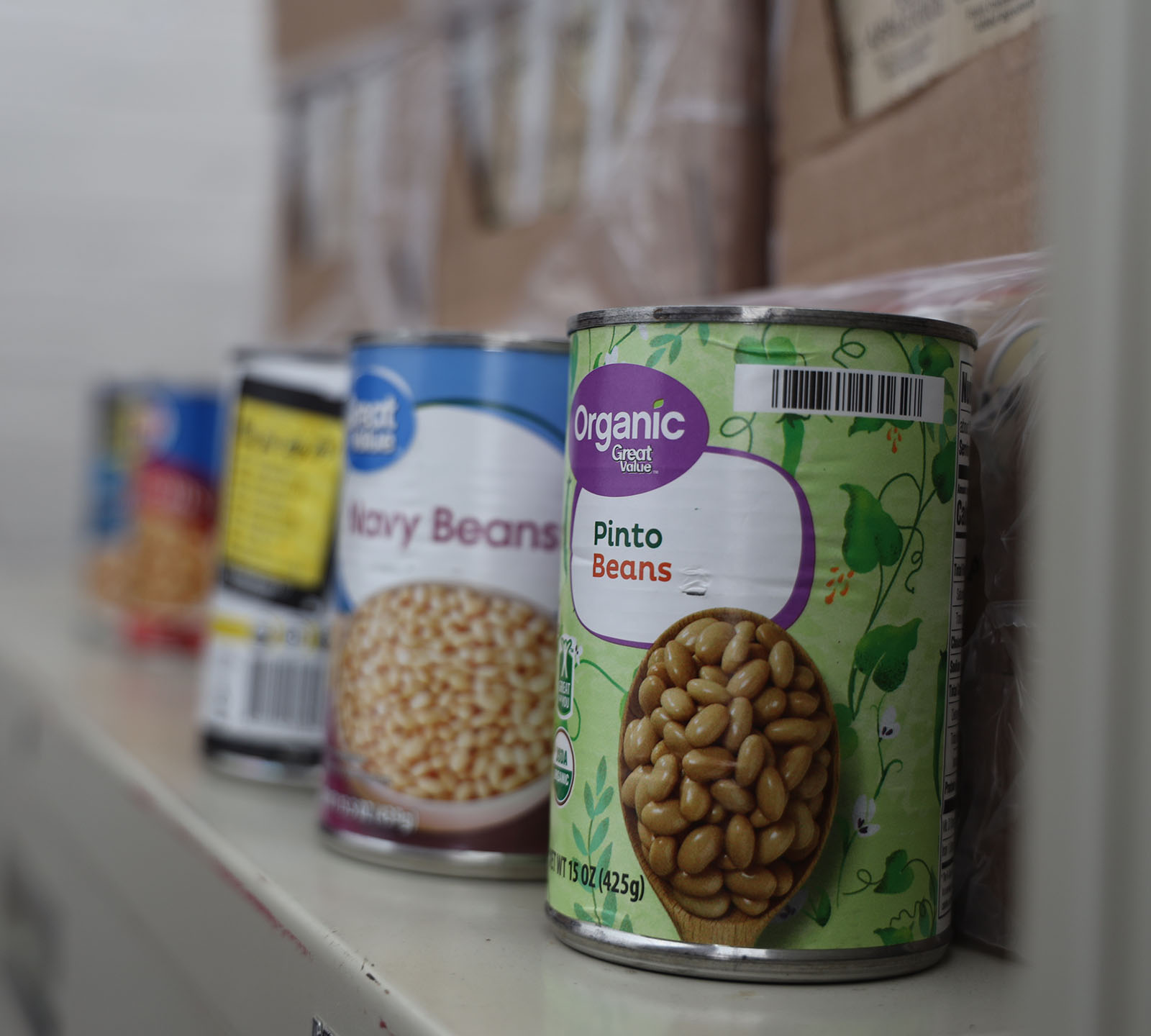
Cans line the wall of an emergency pantry at the Brookland Empowerment Center in West Columbia. Photo by Riley Mekanik/The Carolina Reporter
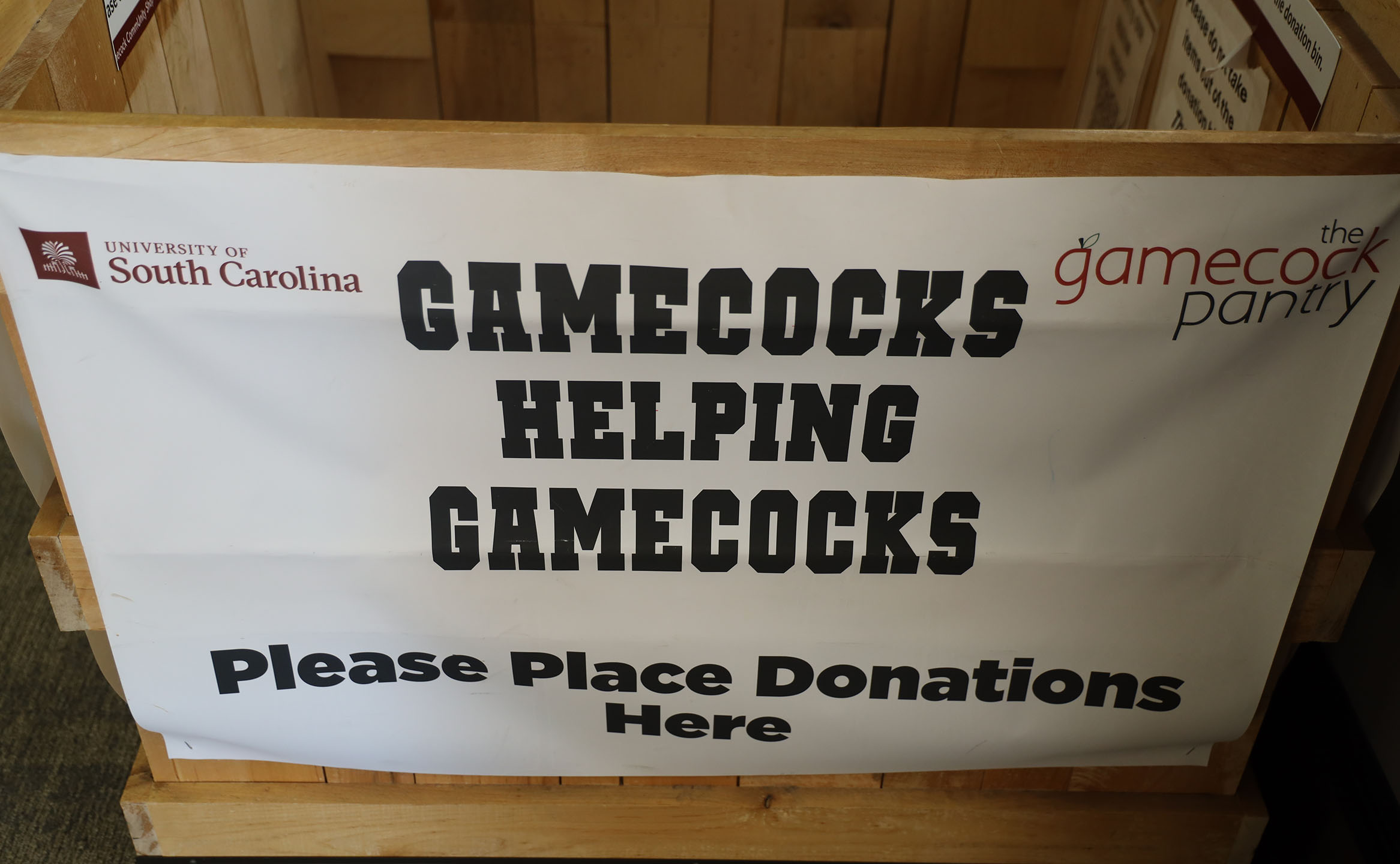
The Gamecock CommUnity donation box sits outside the shop at the Carolina Coliseum. Photo by Riley Mekanik/The Carolina Reporter