
Investigator Kalema Grant and her then-infant daughter were followed by an eviction filing after Grant left a relationship gone bad. She entered transitional housing at St. Lawrence Place, regained her footing and joined the Richland County Sheriff’s Department Photo by Sydney Lewis/The Carolina Reporter
The lifespan of an eviction filing in the state of South Carolina, at least under current law, is practically infinite.
“If the landlord files you have a problem,” said Adam Protheroe, an attorney at the SC Appleseed Legal Justice Center. “It doesn’t matter if you’re right, and it doesn’t matter if you win.”
Protheroe, a former litigator of housing disputes, has seen previous eviction filings immediately become a barrier to affordable housing for his clients. Even if tenants settle debts with their landlord, or come to an agreement outside of court, or make it through a legal dispute, the filing may remain part of their legal record for more than a decade. Some call it “The Scarlet E.”
South Carolina court records do not distinguish between a case in which someone was actually evicted, which the law calls “being ejected,” and those in which the tenant settled their dispute. Codes aren’t standardized, and language can be vague. That creates inconsistencies from county to county and landlord to landlord, according to Protheroe.
And Protheroe said he has been able to access eviction records digitally going as far back as the 1990s.
In Richland County, perhaps especially, those records matter.
More than 20,000 evictions were filed in Richland County alone in 2025, according to the Civil Court Data Initiative’s eviction tracker.
From data collected since 2020, Richland County leads the state in filings by more than 14,000.
How eviction filings stick around
Kenni Cummings, the Executive Director of the SC Tenants Union and one of the first in their family to move out of public housing, is more than familiar with the impact these records can have.
“I show up to this work as someone who’s been impacted by housing security and issues of eviction, and I’m really grateful I get to lead this work,” Cummings said. “But I’m also grateful to be doing this work with people who are also impacted, and their choices and decisions and insight really being at the crux of this.”
Through their two years on the job and lifelong contact with public housing, Cummings saw a clear pattern. When people were backed into a corner and being denied even the most last-resort housing, they noticed a common culprit – eviction filings, many more than five years old.
“One of the things that kept coming up was that filings and even final writs of eject(ion) keep people out of quality housing,” Cummings said.
South Carolina’s filing fee is also the second lowest in the nation – $40 with service charges – making the barrier for landlords filing eviction paperwork comparatively low. A provision proposed to lower this fee was defeated in subcommittee at the Statehouse in early February.
Cummings is also concerned that landlords’ use of artificial intelligence to investigate tenant backgrounds might erase any opportunity for tenants to explain themselves. A case study by AI company PropWitAI concluded that while artificial intelligence cut down operating costs and processing time for filings, “discrimination and privacy risks” are “massive.”
“With the onslaught of AI, people are spending significant amounts of money putting their information into a screening system that has no human element,” Cummings said. “And unfortunately, in the state of South Carolina, the records from court are not always clear.”
Kalema Grant, now an investigator for the Columbia Police Department, was pushed to move couch-to-couch with her then-infant daughter by an eviction filing dogging her record. Though Grant received transitional housing assistance from local non-profit Homeless No More and regained her footing, she said the eviction filing was a real barrier to her and her child’s fresh start.
“If I didn’t have that eviction on my record, I probably would have been able to find an apartment, as opposed to staying with other people for years,” Grant said.
The issue affects tenants statewide.
Greenville resident Quentoria Jones experienced a plumbing issue at the house she was renting in 2021, when sewage and water overflowed into her tub, bathroom and washing machine. After a dispute with the property manager, an eviction was filed against her that was dismissed by a judge. The property manager continued to file, citing vague “lease violations.”
When Jones began looking for new housing for her and her four children, she was shocked to find that those six filings remained on her rental history despite never being ejected.
“I automatically assumed when a person was evicted that was because they failed to pay their rent,” Jones said. “Having my own experience, I learned that’s not always the case. You do have to treat individuals case by case.”
Jones finally found a new place to live for her and her four children after a landlord had a conversation with her about her history. But she had drained much of her savings on application fees, derailing her plan to buy a home and destabilizing her family’s life.
“An eviction is more than just a paper,” Jones said. “It uprooted our stability. I feel like, even though we have a home, we still haven’t been able to get settled or stable.”
The need for change seemed pressing, leading the South Carolina Tenants Union to bring their concerns to both the ACLU and the SC Appleseed Legal Justice Center. Over the course of the past three years and with the added help of lead sponsor, Rep. Carla Schuessler, R-Horry County, a bill was drafted and introduced to address the lifetime of an eviction record.
The eviction record sealing bill is gaining traction in the S.C. House of Representatives.
Momentum in the statehouse
The bi-partisan bill is having unprecedented success in its journey to becoming law, having passed through committee and onto the House floor in late March.
The bill, if passed by the House and the Senate, would automatically expunge any eviction filing from public records if an ejection or eviction order was not filed within the next 30 days. Eviction filings resulting from a Writ of Ejection will be automatically expunged after a period of six years.
“This is momentous,” Cummings said. “We would be the first in the Southeast to take on this particular policy, and getting to even a point of a subcommittee is a really big deal for a bill.”
SC Appleseed attorney Sue Berkowitz helped write the bill’s text and is lobbying for its passage. She credits the coalition of tenant advocates for the bill’s momentum.
“It being tenant led and community led, it got the voices out there,” Berkowitz said. “It was not just lobbyists doing it or one or two organizations doing it. It was full community support of having this legislation which was needed, and to move (it) forward. “
Bailey Byram, a Charleston bartender and Canvasing Captain for the SC Tenants Union, entered the world of community organizing because of financial struggles during the COVID-19 pandemic. Aware of the crisis they would have faced without family support, Byram has since dedicated themselves to spreading the word about the eviction record sealing bill. They say that once most people get past seeing eviction as a personal failing, the need for updated legislation becomes clear.
“Frankly, there’s a lot of good people who are getting caught up in this,” Byram said. “I think being able to reassure people of that really does make people want to come into the fold and start pushing for legislation like this.”
Mikel Burns, a college student and preschool teacher, traveled from Charleston to testify on behalf of the bill. Burns’ family in 2018 was forced out of their home when Burns was a child after requesting repairs to the property’s insulation and HVAC systems. Rather than make the repairs, the landlord evicted the family, he said.
“That one housing crisis uprooted my childhood and pushed my family into years of instability,” Burns told the subcommittee. “Even though we left to avoid eviction, the eviction record followed my mother for years – making it harder to find housing and harder to move forward.”
FINDINGS
- Eviction filings in South Carolina – even those that do NOT result in an actual eviction, are dismissed in court or are settled in arbitration with a landlord – can stay on someone’s record for more than a decade.
- Landlords are increasingly using AI tools to sort tenant applications, reducing an applicant’s chance to explain vague records.
- A bill with bi-partisan support that is making its way through the Statehouse would, after six years, automatically expunge records of an actual eviction as well as automatically and immediately expunge any filing that was resolved through negotiation.
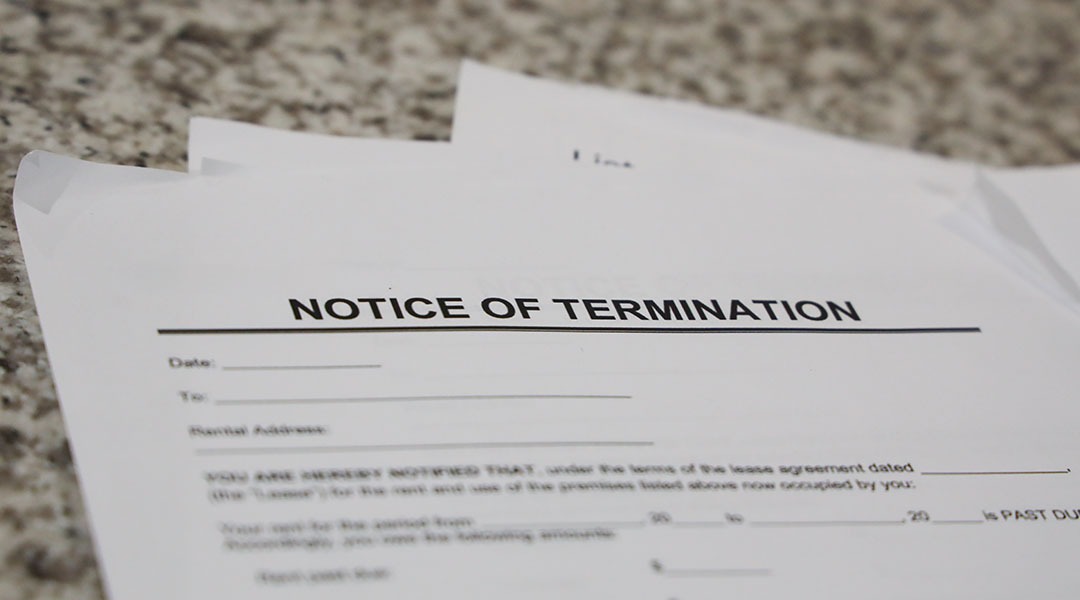
A third of Richland County households saw eviction filings in 2025, according to the Civil Court Data Initiative’s eviction tracker. Some records are confusing. Codes aren’t standardized, and language can be vague. That creates inconsistencies from county to county and landlord to landlord, said SC Appleseed attorney Adam Protheroe. Photo by Sydney Lewis/The Carolina Reporter
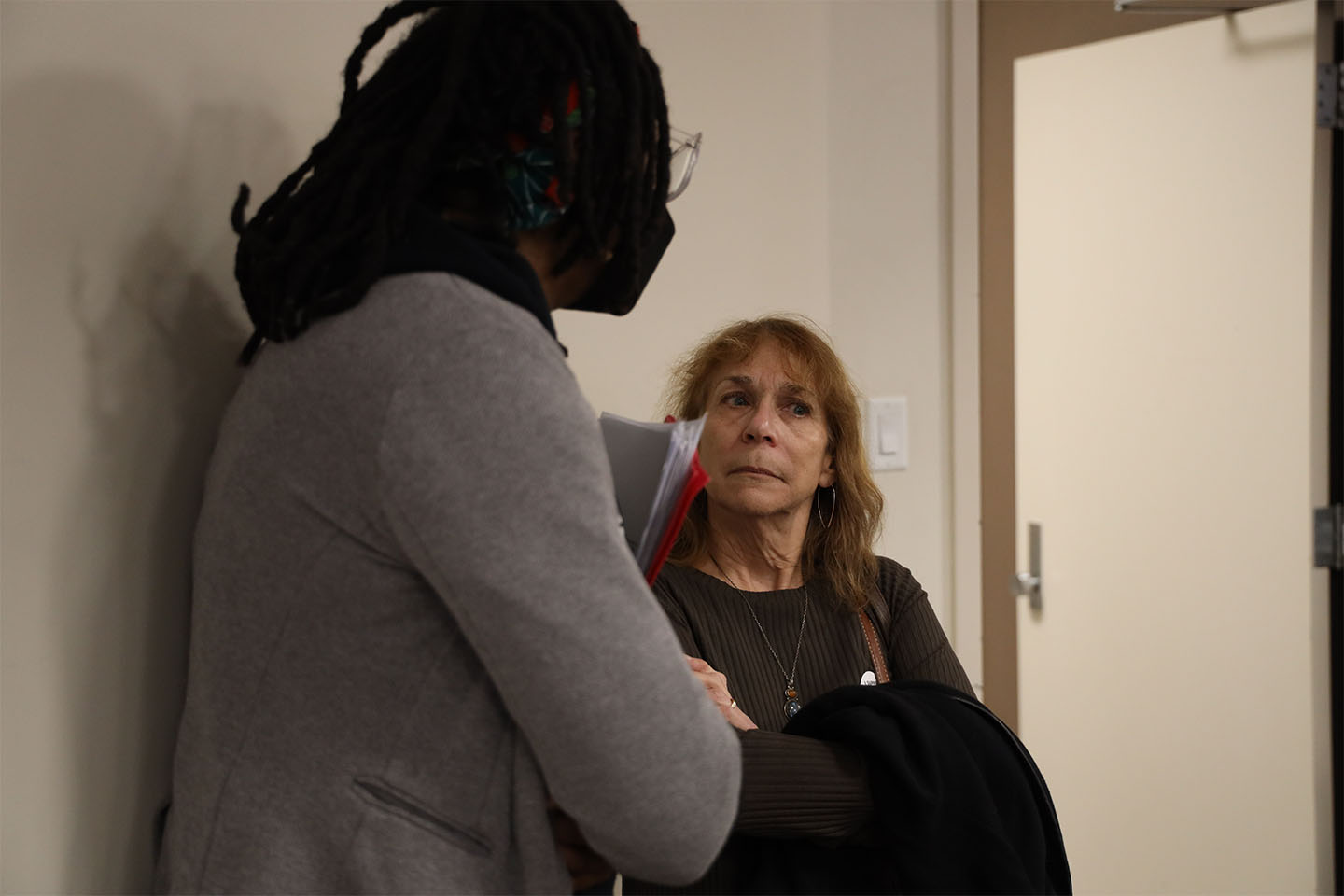
SC Tenant Union Executive Director Kenni Cummings and SC Appleseed attorney Sue Berkowitz meet before the House subcommittee meeting for the eviction records sealing bill. The bill has been tenant-led from the beginning, with legal advocacy organizations such as Appleseed and the state’s ACLU office incorporating tenant feedback. Photo by Sydney Lewis/The Carolina Reporter
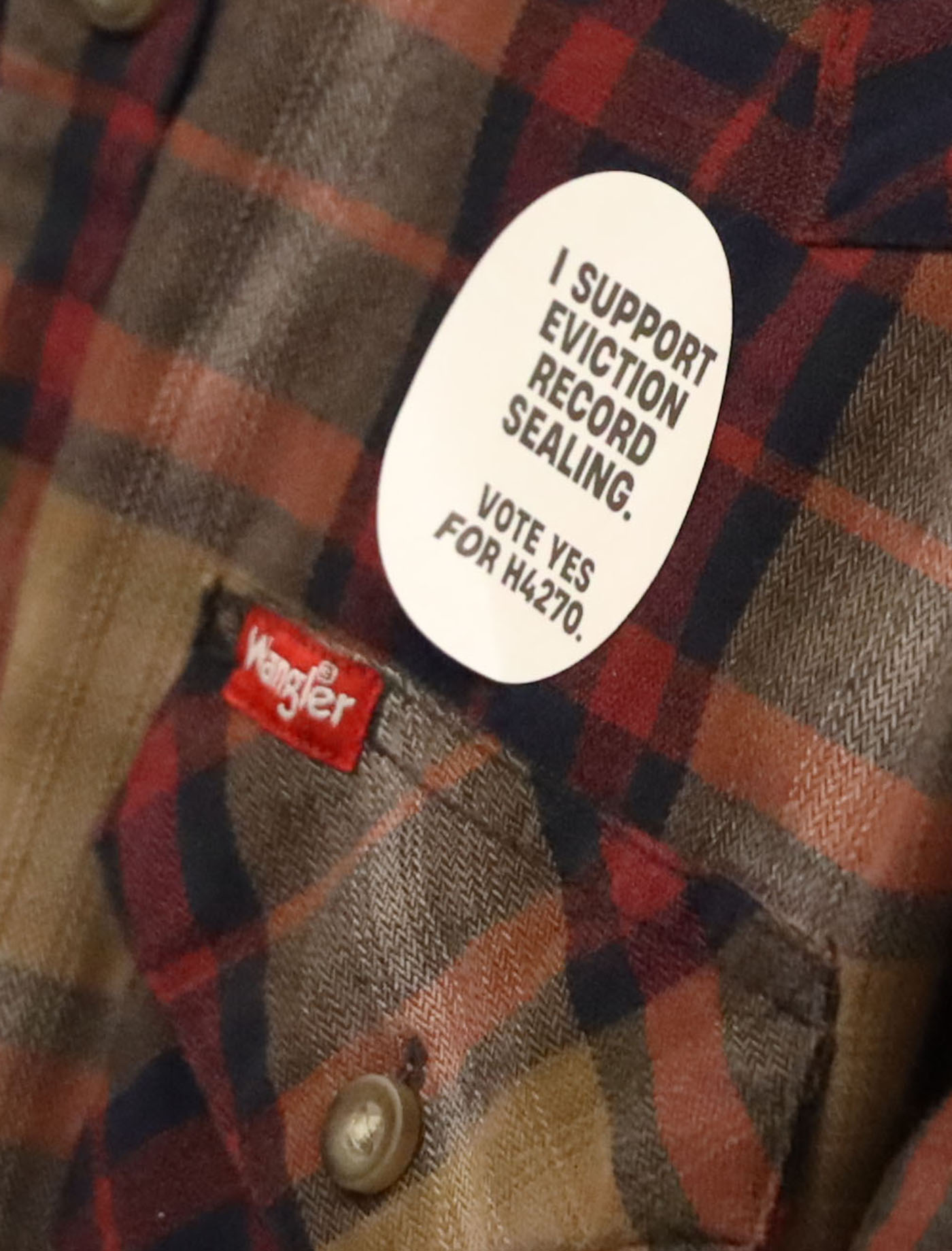
Mikel Burns, a college student and pre-school teacher, wears a sticker distributed by the SC Tenant Union. Burns traveled from Charleston for the meeting. Photo by Sydney Lewis/The Carolina Reporter
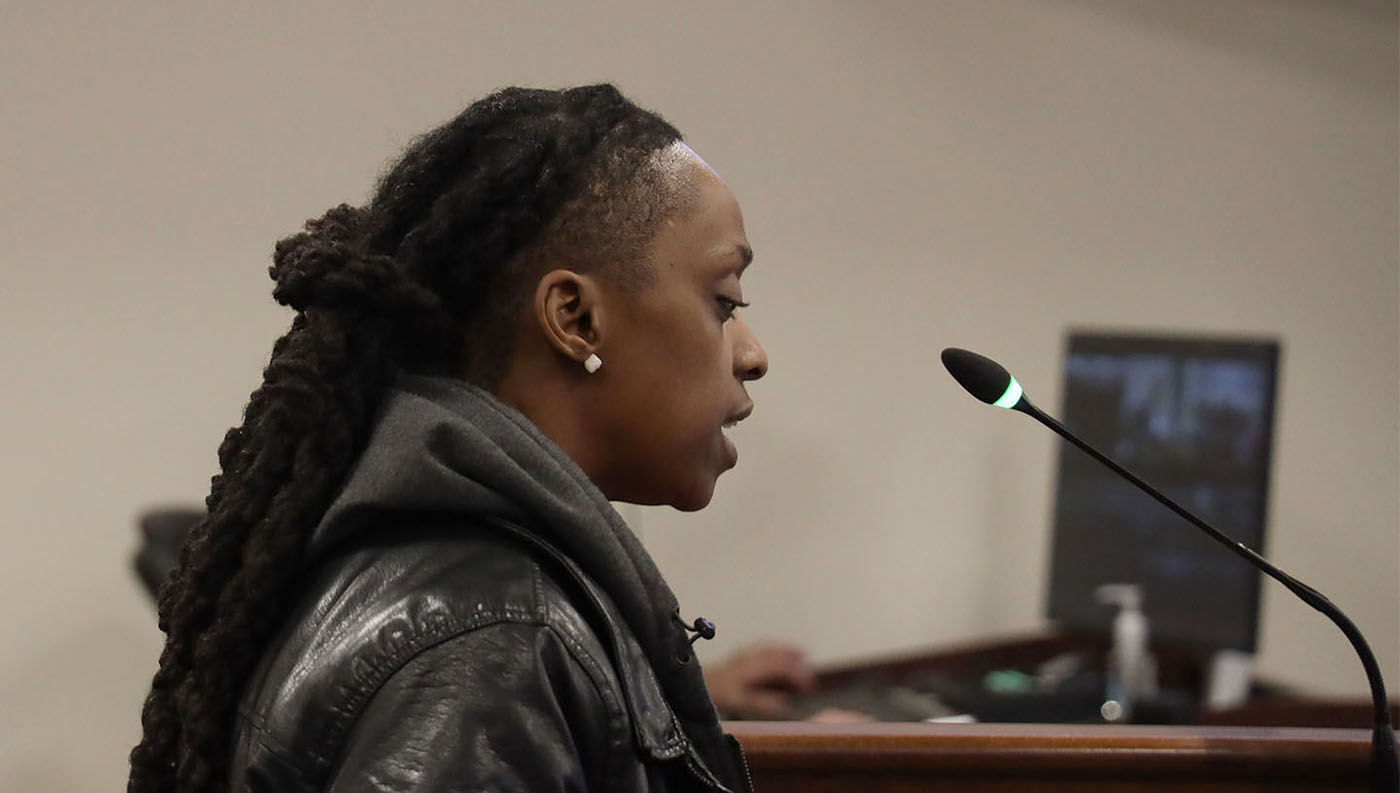
Meghan Ravenell speaks at the subcommittee hearing for the eviction record sealing bill. After experiencing eviction and housing instability, she eventually became a real estate agent to help protect vulnerable tenants from exploitation. Photo by Sydney Lewis/The Carolina Reporter