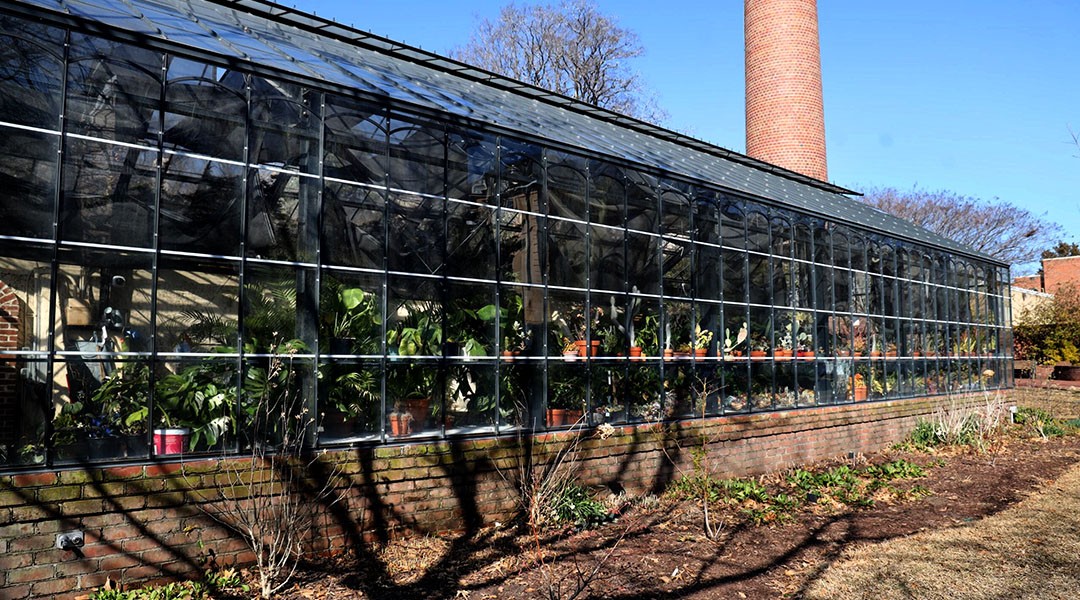
A glimpse of a greenhouse, one of several sustainability spaces students at the University of South Carolina often describe as hidden or overlooked. Photo by Amelia Gay/The Carolina Reporter
When Abby Goepel arrived on campus as a freshman, she didn’t know the University of South Carolina had a national sustainability rating – or that it had declined over time.
“I personally would say that they aren’t necessarily that transparent, unfortunately,” said Goepel, a USC sophomore biology major and former chairwoman of the USC Student Government Sustainability Committee. “I was unaware of a program called STARS, which kind of tracks sustainable efforts here at South Carolina. And we are unfortunately in Silver.”
The Sustainability Tracking, Assessment and Rating System, or STARS, is a national framework used by colleges and universities to measure sustainability across academics, operations and community engagement. Sustainability in higher education is defined broadly as encompassing “human and ecological health, social justice, secure livelihoods, and a better world for all generations,” according to the Association for the Advancement of Sustainability in Higher Education (AASHE), which runs the STARS program.
USC’s most recent publicly available report, released in 2020, awarded the university a Silver rating, down from Gold in 2012.
“So above us is Gold and then Platinum, and in 2012 we were Gold, 2015 we were Silver, and 2020 we are still Silver,” Goepel said. “So since 2012, we have dropped, but no one really knows that.”
Public university sustainability documents show limited recent updates to reporting, with the last STARS submission expiring in 2024 and several initiative pages on the university’s sustainability website unchanged for years. While the data exists, it is not always easy for students to find or interpret.
AASHE describes higher education institutions as working to “operate as a model for sustainability,” but Goepel said that expectation does not always translate into student awareness or experience on campus.
That gap between what is recorded and what is visible is central to her experience.
“As a recent freshman, I would say that the majority of students are not very involved,” she said. “I lived in one of the Quads and I could never find where the recycling bin was.”
She said that even when sustainability resources exist, they are often difficult to access in practice.
“There also aren’t recycling bins near the dorm rooms – only in the lobby – so I think having access to recycling or sustainability initiatives takes students extra effort to do,” Goepel said. “So a lot of students won’t unfortunately do it.”
Even broader sustainability infrastructure can be difficult to locate or understand.
“Greenhouses are kind of hidden, so sometimes they’re hard to see,” she said. “Just accessing sustainability resources can be really difficult and kind of discourage students.”
Despite those challenges, some sustainability efforts are more visible to students, particularly in campus dining halls.
“I definitely think that food waste is something the university is doing well,” Goepel said. “Every dining hall sends their leftover food every day to nearby shelters, or they send it to composting for nutrient soil.”
USC also recently launched Garnet Bites, a food-recovery initiative that redistributes surplus food from campus events to students, faculty and staff to reduce waste and address food insecurity.
For students, those programs stand out because they are tangible – something they can see and understand without navigating university systems or reports.
Goepel’s role in student government also has given her direct contact with sustainability staff, whom she described as responsive and engaged.
“Larry Cook and Jessie McNevin are absolutely amazing,” she said. “They’re the head of the sustainability department. They will respond to you within the same day if not the next day.”
But she said communication becomes more difficult at higher levels of administration.
“Higher-up administrators are very hard to reach,” Goepel said. “They usually won’t respond to you. And if they do, they’ll probably send you somewhere else.”
That disconnect reflects a broader challenge: While sustainability is described in institutional terms as a campus-wide effort, students often experience it in fragmented and uneven ways.
AASHE states that sustainability in higher education includes “academics, engagement, operations, and planning and administration,” reinforcing that it is meant to function across every part of campus life.
At USC, however, students like Goepel say that system is not always clearly visible.
Across South Carolina, universities use national sustainability frameworks like STARS to measure environmental performance, but outcomes vary by campus. In 2026, Coastal Carolina University earned a Gold rating, the highest in the state, while Clemson University holds a Silver rating. Unlike USC, Clemson’s STARS report remains current and has not expired, highlighting differences in how recently institutions have updated their sustainability reporting.
STARS itself is described by AASHE as “a transparent, self-reporting framework for colleges and universities to measure their sustainability performance,” designed to standardize how institutions track progress. But while the framework provides structure, it does not guarantee that students understand or engage with the results.
For Goepel, that difference matters.
“It really takes a lot of searching and talking to people to kind of figure out sustainable initiatives,” she said. “What’s being worked on, what’s not, and who I can talk to.”
Without that visibility, she said, sustainability risks becoming something that exists in policy and reporting, but remains disconnected from everyday student life.
Even so, Goepel believes the foundation is there. If students better understood where the university stands, and how students’ actions connect to larger systems, participation could grow.
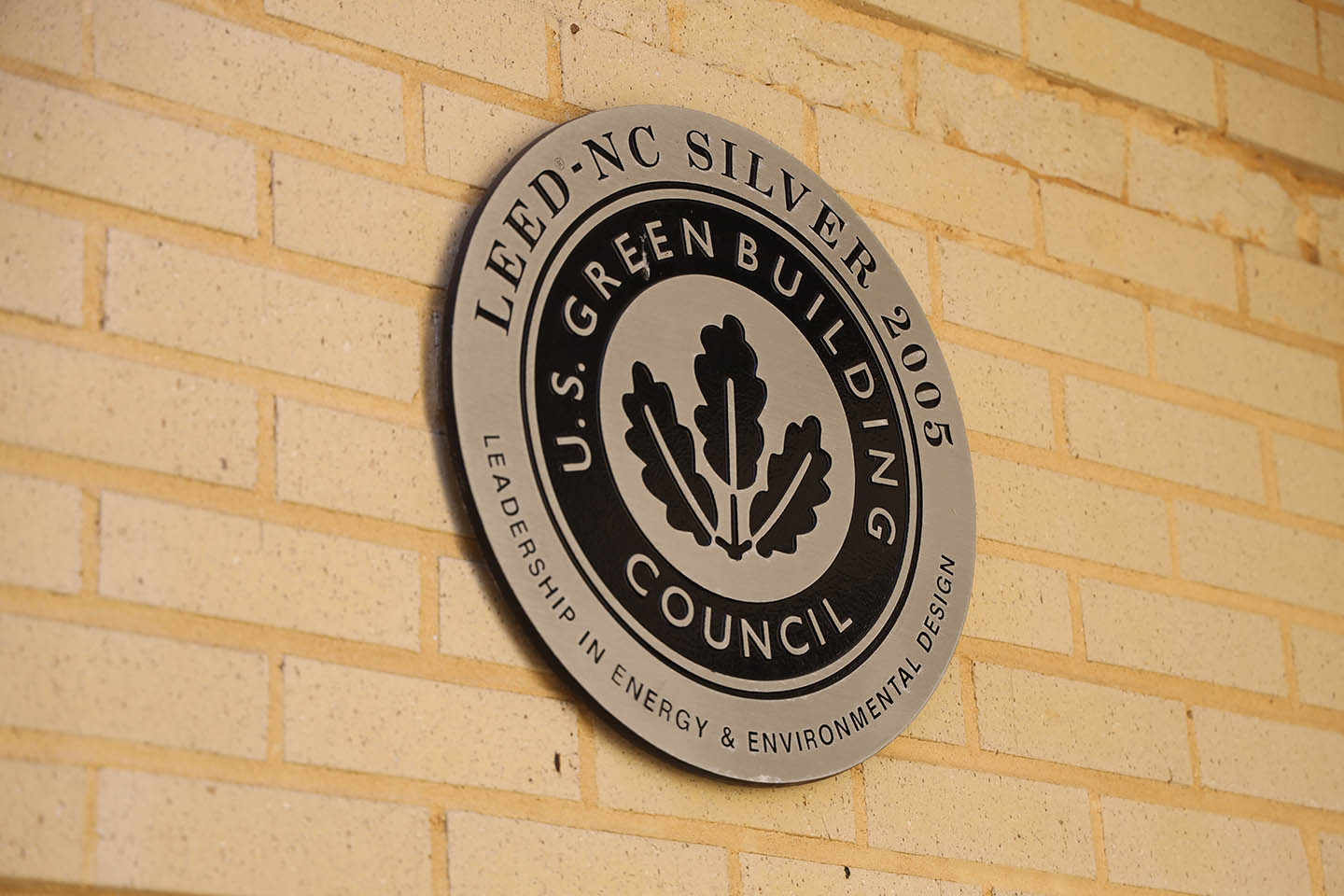
LEED Silver recognition outside USC’s Green Quad, highlighting sustainability work that isn’t always clearly communicated or visible to students. Photo by Amelia Gay/The Carolina Reporter
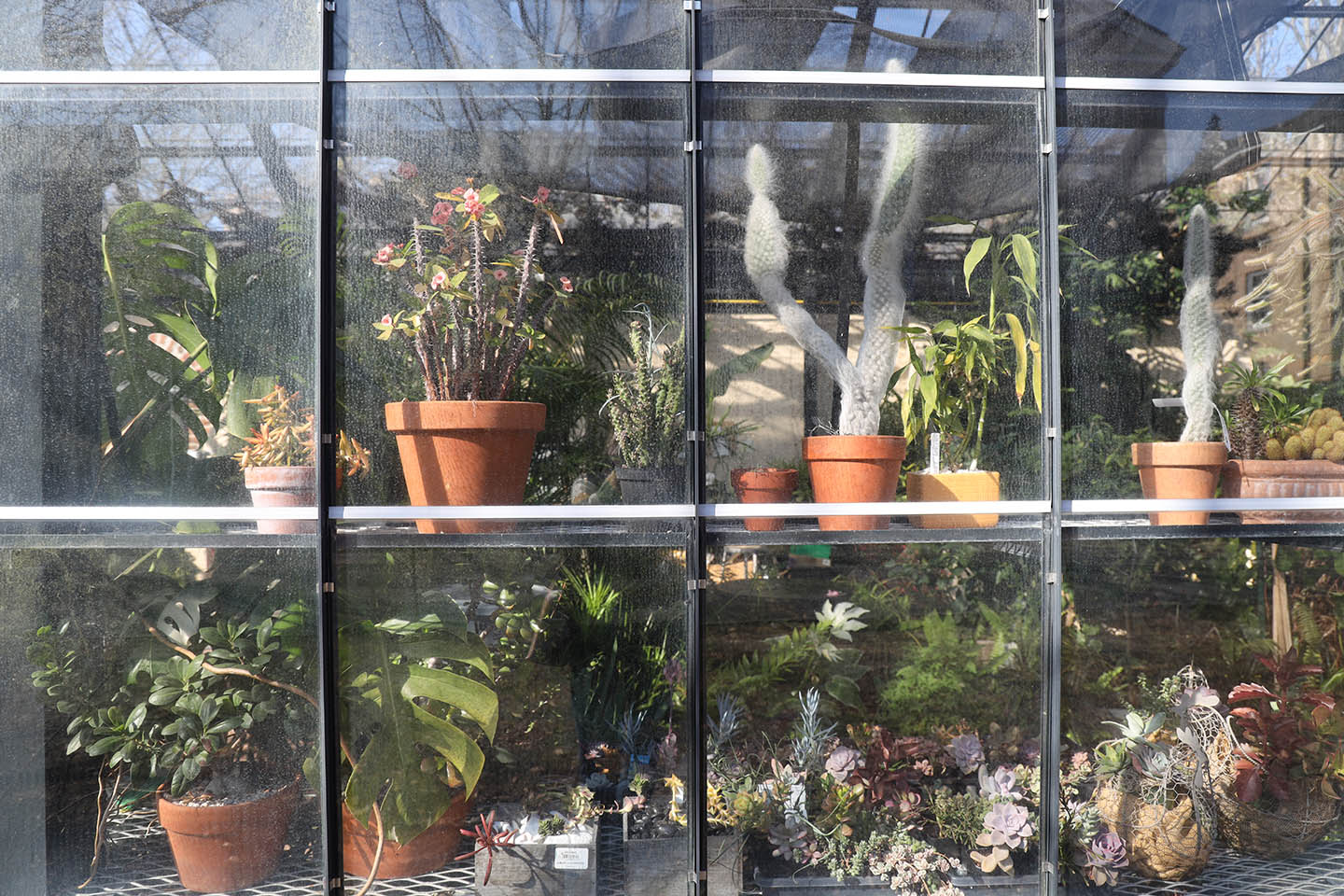
Lush plants inside a USC greenhouse are part of the university’s sustainability work that students aren’t always aware of. Photo by Amelia Gay/The Carolina Reporter
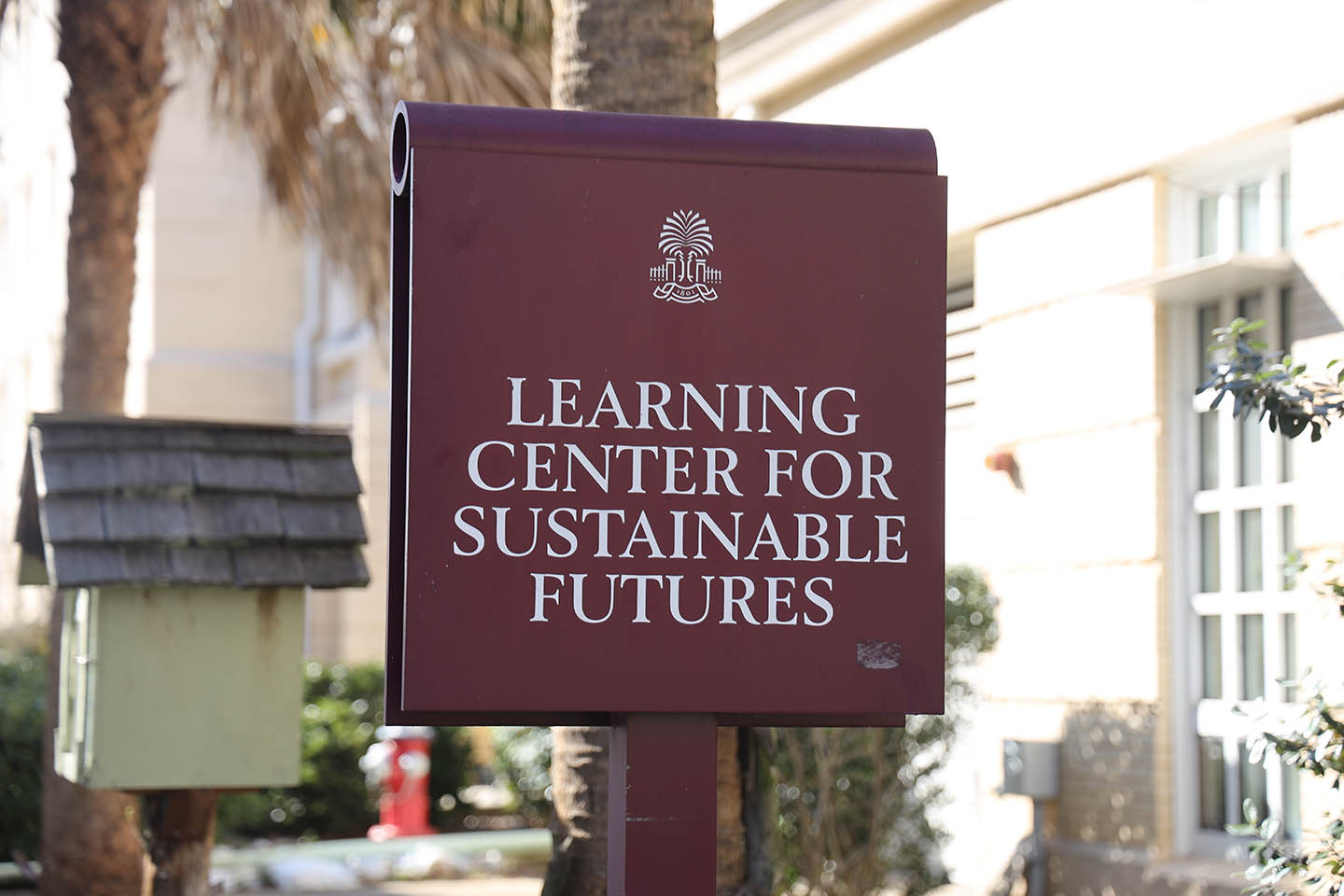
The Learning Center for Sustainable Futures at USC, reflecting institutional sustainability goals that don’t always translate into everyday student awareness. Photo by Amelia Gay/The Carolina Reporter