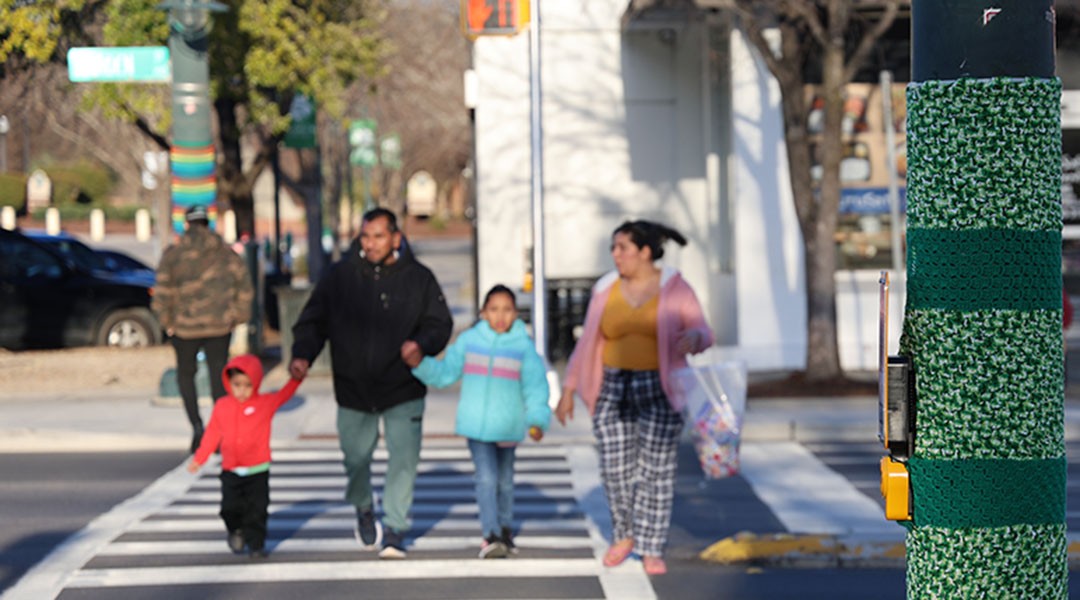
The Yarnbombers of Columbia is showing its work in Five Points for St. Patrick’s Day. Photo by Penelope Marshall/The Carolina Reporter
On a cold winter morning in late 2025, Kerry Duncan and her daughter Sarah Rotureau made a lap around downtown Columbia, sizing up lampposts, eyeing tree trunks and measuring traffic lights.
It might have looked suspicious. But it wasn’t. They had permission. They’re yarnbombers.
“We get some disapproving looks, which is fine, but most people love it,” Duncan said. “They want to know about it.”
Yarnbombing is the art of wrapping public structures in colorful crocheted pieces, transforming ordinary street corners into public art displays. Big cities, such as London and New York, are yarnbombing hotspots. But Columbia is making a name for itself in fiber arts circles.
Interest in crochet is growing in general, according to Market Reports World. Sales of crochet hooks and knitting needles have grown 44% between 2021 and 2024, reflecting a nationwide fiber arts growth that Columbia locals have matched.
Duncan is a key organizer for Yarnbombers of Columbia, which works with the City of Columbia to display work on trees, traffic lights and poles downtown. The works isn’t stealthy. But it can sneak up on you.
The group made a comeback in late 2025 after the pandemic cancelled its regular in-person meetings. Duncan teamed up with her son, who served as vice president of Columbia Pride, to bring the colors and energy of yarn back to the city last October.
“He got me in touch with the city, and asked me to find some people to help,” Duncan said. “I contacted people in the group, and a few rallied. And we got two blocks done, and then they really liked what we did.”
Since then, the Main Street District reached out for a holiday installation covering Christmas, Hanukkah and Kwanzaa. Local restaurant Villa Tronco reached out next. Now, the yarnbombers have decked out five trees around the Five Points fountain, multiple traffic lights, and other trees and poles throughout the area, just in time for the St. Pat’s in Five Points festival.
“And then the most fun project, I think, is Fritz, the robot,” Duncan said. “I’ve done a scarf for him.”
Fritz is the 1,200-pound robot head created by artist Clark Ellefson that was recently installed near the Five Points fountain.
Crocheters of all levels of skill are welcome to take part in yarnbombing, Duncan said. She was taught to crochet by her grandmother. And she mostly uses YouTube videos to teach herself patterns now.
“There’s some ladies who are very talented,” Duncan said. “We had a lady who did a Kwanzaa piece, and it was absolutely stunning. It had fruit, and it had all kinds of things on it that I never would have been able to to create myself. So there’s some talent in Columbia for sure.”
Crochet has generational roots in Duncan’s family. Duncan’s daughter, Rotureau, is a fellow yarnbomber. Duncan’s mother passed on the craft to Rotureau and gave handmade blankets to every family member to mark major milestones — from marriages to home purchases to new babies.
“Crocheting is something I love to do because it is nostalgic, and it feels like home,” Rotureau said. “Tradition is really important to me, and I like that I’m carrying on a tradition that goes generations back.”
When Rotureau wanted to surprise her family with her own pregnancy announcement, she marked the moment by crocheting a blanket for her grandmother, who had always made them but never received one.
“I had just said something like, ‘I wanted to make you a blanket before I ask you to make another one for us,’” Rotureau said. “My whole family kind of went silent for a second and then erupted.”
Duncan became the family’s yarn matriarch when her mother’s arthritis made the craft too difficult. And Rotureau is now following in those same footsteps, with her first yarnbombing piece going up a few months ago for the holiday installation. She is now working on another for this year’s Pride event.
“Yarnbombing is something that brings a more social aspect to the hobby,” Rotureau said. “When we install items, people stop in the street and just say the nicest things.”
That community is something Deborah Yerkes, a retired university librarian and member of the Yarnbombers of Columbia, was drawn to after spotting one of the group’s installations downtown.
“People are going to walk by for two weeks or a month and look at these things, and they’re going to smile,” Yerkes said. “That’s part of it. You know you made somebody’s day.”
Yerkes said she enjoys the curious passersby.
“People come by saying, ‘I love what you’re doing’ or, ‘Thank you for doing this,’” she said. “Occasionally someone asks if we have permission, but of course we do.”
She said seeing other yarnbombers’ finished work is inspiring.
“There’s this joy in putting up your own piece but then walking around looking at what other people do,” she said. “You think, ‘Wow, I never thought of that. I want to see if I can do that next time.'”
The COVID-19 pandemic for some was an opportunity to pick up new hobbies in the wake of unprecedented boredom.
Jessica Dugita was a college student at the time and tried a variety of activities before feeling a spark for crochet.
“What kind of inspired me to start crocheting is seeing crochet pieces and being like, ‘You know, maybe I could make that,’” Dugita said. “And that’s what everyone says, but nobody actually tries. So I wanted to try.”
Her hobby grew into a small business, Funky Fiber Studios. She sells pieces online. And although she now has graduated and works full-time, Dugita spends most of her free time crocheting.
“It’s so satisfying to be done with a piece, especially to get to put it on and wear it and go out and take pictures in it,” Dugita said. “I do love getting the compliments when I’m wearing my stuff and getting to say, ‘Oh, thank you. I made it.’”
She said she has inspired one of her friends to pick up crochet, and she has observed many people on social media pick up crochet in the past few years.
“Honestly, I think crochet is getting super popular right now,” she said. “It’s really exciting to see because everyone has a different technique. No one makes the same stuff, so it’s a really unique craft.”
Annabel Voskuil is president of the Carolina Crochet Club at the University of South Carolina. She said she has watched the craft’s popularity swell since the pandemic.
“Even though some of those people have slowed down, we still have a lot of new people joining just because it became so popularized after that,” Voskuil said.
The club now meets weekly and holds workshops every Friday for anyone interested in learning. It’s open to all fiber arts. Regular members simply bring whatever project they are working on and sit together for a couple hours.
That accessibility is part of what has made crochet endure beyond a passing trend, Rotureau said. The supplies, a hook and a ball of yarn, are portable enough to fit in a purse or a backpack.
“I call it a purse project,” Rotureau said. “It’s something I can take with me wherever I go. Twenty minutes here, 15 minutes there – they really do add up.”
That convenience gives crochet a simplicity that allows for mental relaxation for some. At a certain point, Rotureau said, you can simply count stitches and let everything else go quiet.
Voskuil agreed.
“It’s very repetitive, so you can just do it and turn your brain off and just relax,” she said.
Between 2021 and 2024, national demand for sustainable fibers increased by 48%, and digital pattern downloads surged by 56%, according to Market Reports World. Voskuil is even experimenting with “plarn,” plastic yarn made by knotting together plastic bags, reflecting the growing interest in sustainable and inventive materials.
For the Yarnbombers of Columbia, the next installation is already underway. And somewhere in the family, another blanket is likely in the works.
FINDINGS
- Yarnbombers of Columbia took time off during the pandemic. The group is back and ready to show off its next big project: St. Patrick’s Day in Five Points.
- The pandemic brought other people to fiber arts. Sales of yarn and supplies continue to increase.
- Columbia has a rich crochet scene. Crochet seems to be the most popular of the fiber and yarn arts.
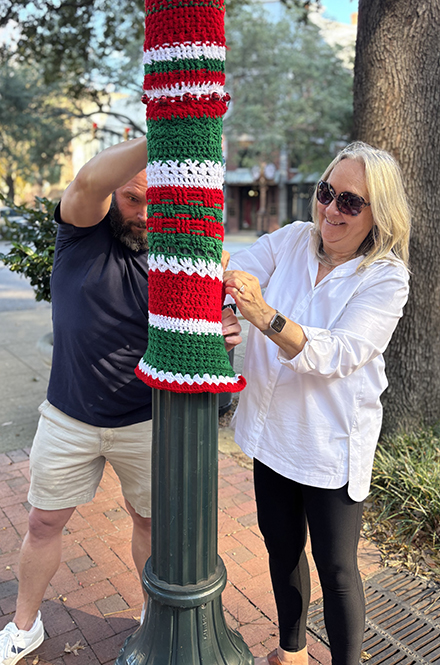
Kerry Duncan, right, of the Yarnbombers of Columbia attaches a holiday-themed crochet piece to a lamppost in downtown Columbia for the group’s December yarnbombing project. Photo courtesy of Sarah Rotureau/The Carolina Reporter
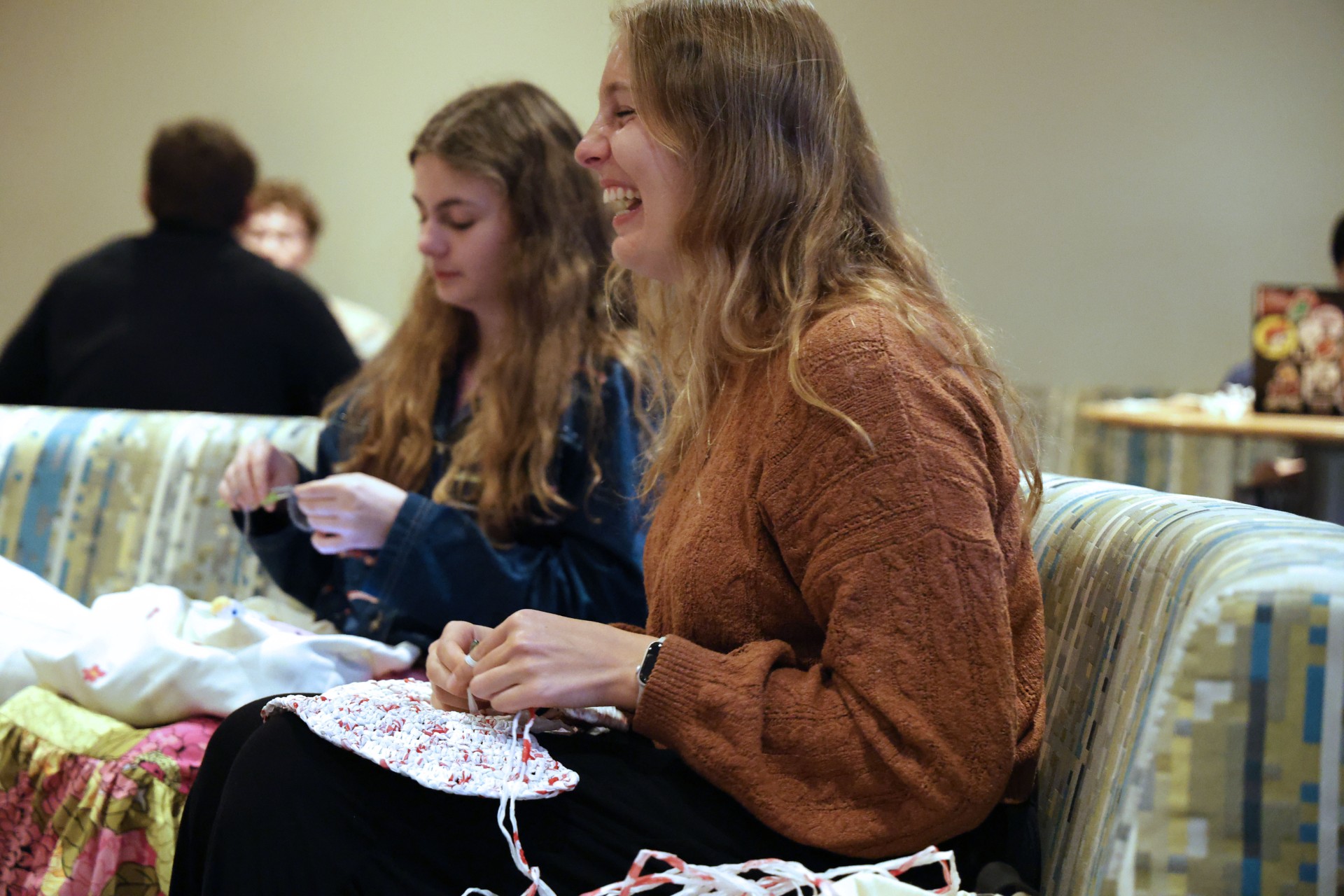
Carolina Crochet Club President Annabel Voskuil creates a tote bag using yarn made from recycled plastic bags. Photo by Penelope Marshall/The Carolina Reporter
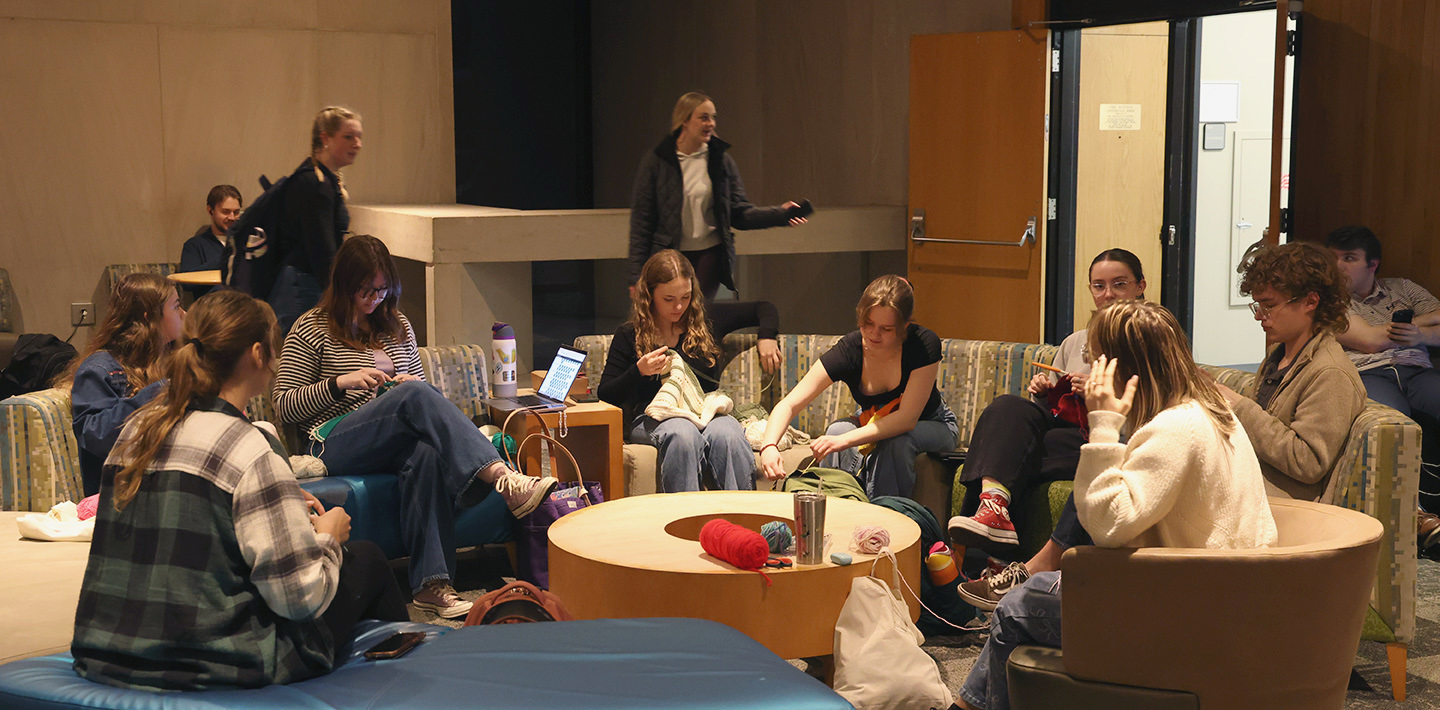
Members of the Carolina Crochet Club meet on Monday evenings to work on their yarn projects and chat. Photo by Penelope Marshall/The Carolina Reporter
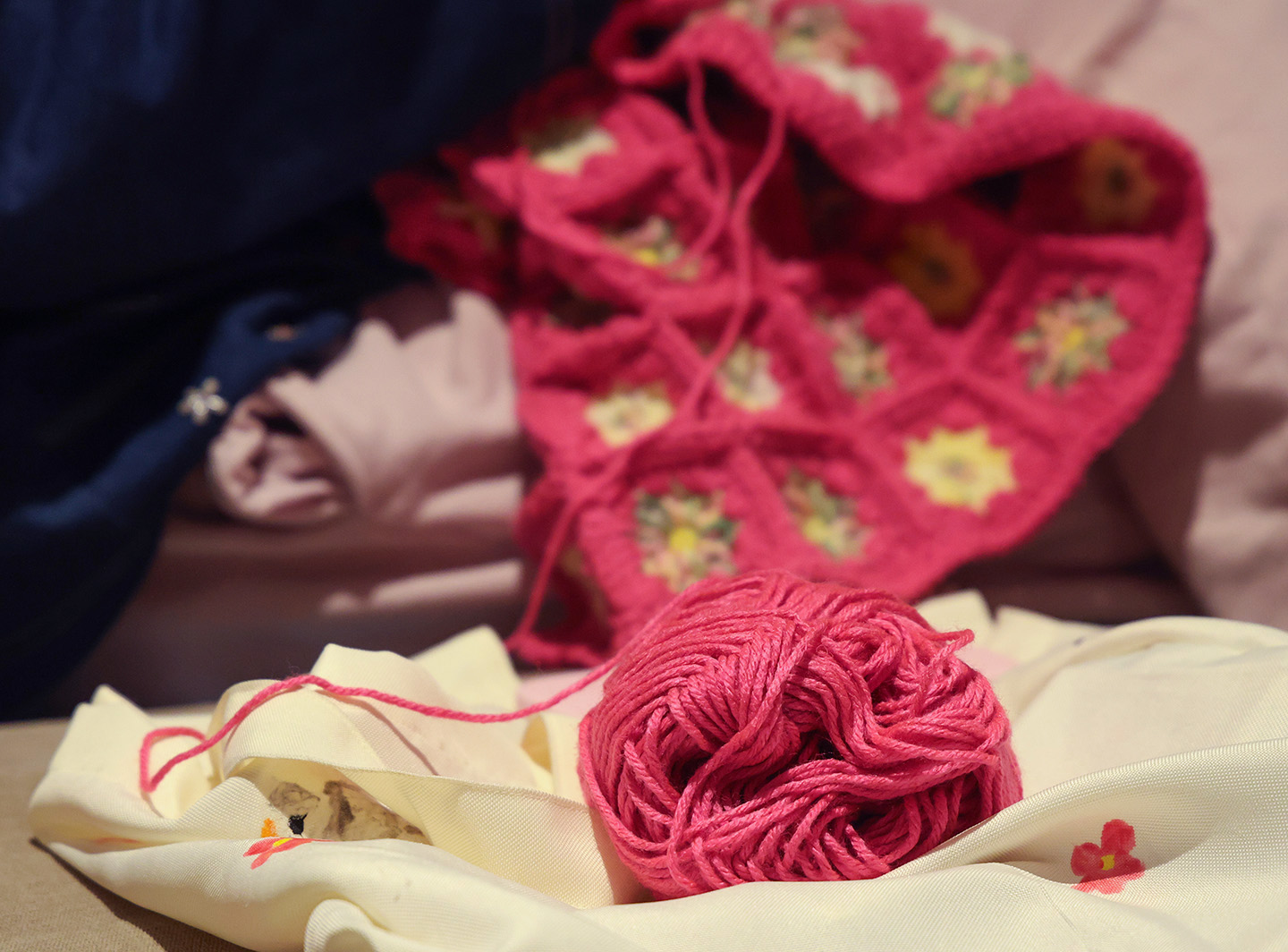
Members of the Carolina Crochet Club use yarn and supplies from Hobby Lobby, Michaels and local craft stores. Photo by Penelope Marshall/The Carolina Reporter
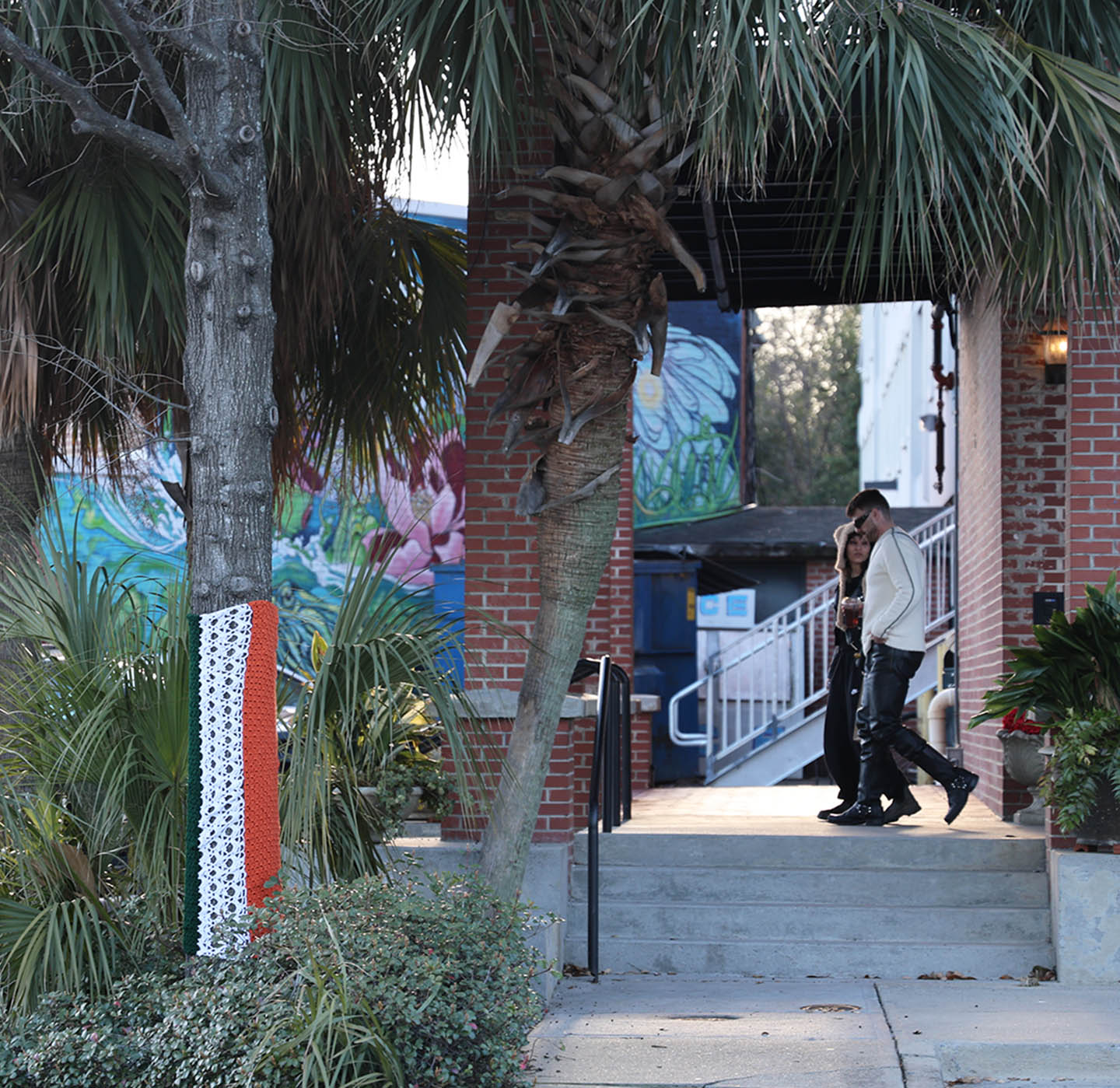
The yarnbombers display their work on trees, traffic lights and poles. Photo by Penelope Marshall/The Carolina Reporter