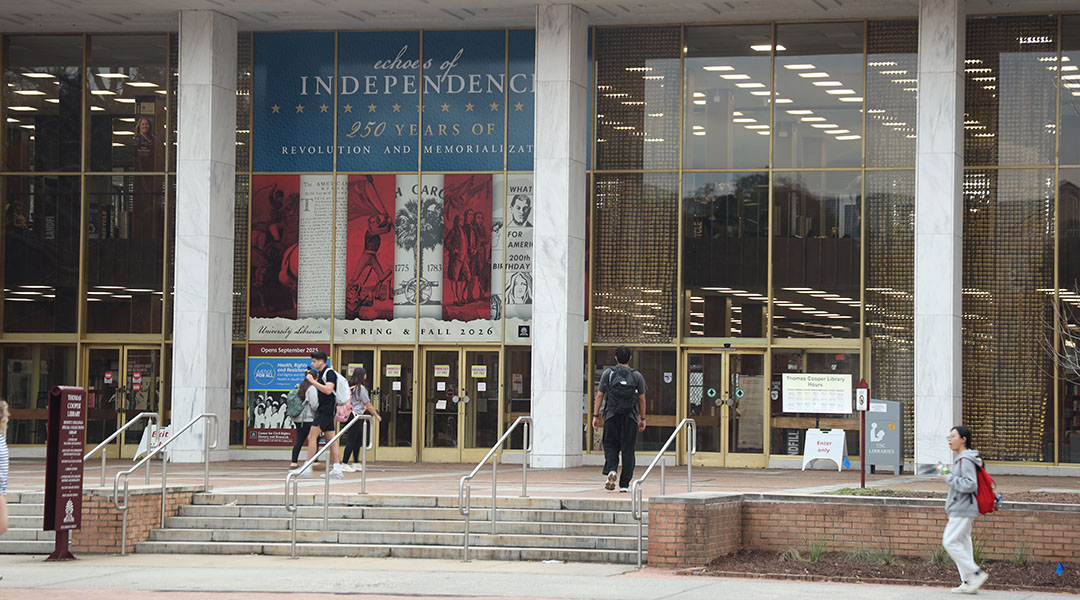
The exhibit in the Hollings Special Collections library opened Jan. 30 and will be up all year for students and Columbia residents to enjoy and learn from. Photo by Ansley Peterson/The Carolina Reporter
A year of remembrance. A year of opportunity. And, yes, a year of inclusivity and education.
The nation’s 250th birthday is a big deal.
And it’s vital when celebrating to acknowledge the perspectives of those whose stories have gone untold over the years, South Carolina historians and local residents say.
Historical organizations and societies throughout the state are collaborating to share those stories. And they’re working to get young people interested.
“South Carolina, we believe we’re tasked with telling the whole story – the good, the bad, and the ugly – because we don’t want the ugly to happen anymore,” said Carolyn Nations, chairwoman of the state Pickens County SC250 Commission, one of the groups advising state leaders.
Educators with the University of South Carolina’s political and special collections collaborated with the South Caroliniana Library to curate an exhibit on USC’s campus entitled “Echoes of Independence.” The goal is to encourage people to learn about the movements and mistakes that got us to this moment in history.
Michael Weisenburg is director of the special collections library at Thomas Cooper Library, and worked with curators Brittany Champion, Nathan Saunders and Mike Berry to tell a full and rich picture of the past. Artifacts from different eras and primary sources tell the tales.
It’s important to recognize the events leading up to the American Revolution, Weisenburg said. But it’s also important to look at how each centennial afterward was celebrated and how this was contextualized by the nation’s political climate at the time.
Weisenburg said that around each centennial there was “national reckoning and introspection and questioning about what exactly it means to be an American and what is it that we celebrate when we celebrate independence and the revolution.”
This exhibit, which is open though December, is meant to be thought provoking in that it encourages people to look back on history as a way of moving forward.
Bill Davies, vice chairman of the state’s 250th Commission, said the group had two main goals for the year: educating people about South Carolina’s role in winning the country’s independence from Britain and increasing cultural heritage tourism.
“We mostly wanted to tell the story of what we call the unrepresented or underrepresented people, … the women and children to begin with – of all races, colors, and creeds,” Davies said.
All of those minorities were affected by the war in some way, Davies said, whether they were directly involved or affected by the outcomes. The commission wanted to tell stories from multiple points of view.
Davies said the commission looked back on artifacts from the bicentennial celebration in 1976. One video discussed the commission’s plans at the time, and he noticed that only white people were in the room with no participation from people of color.
The commission was not going to let that happen again.
Each of the 46 counties formed a committee made up of local people who know the county’s stories and could identify overlooked people or landmarks to be recognized.
Who is involved?
Nations is a “self-proclaimed history nerd” and enjoys sharing the story of where she lives, both the county and the state, with students and younger generations.
“I used to be a school teacher,” said Nations, who also is chairwoman of the state Daughters of the American Revolution (DAR). “And I am a firm believer that if you can put something in a child’s hands that they can have fun doing, then they will take that memory with them.”
This mindset inspired her to take action. She created historical coloring books, not just for kids, but to help families learn about South Carolina’s history together.
She wants to make learning accessible by giving her coloring books out for free and refusing to sell them, just so students have the opportunity to learn.
She is always learning when researching what events or people to highlight for the coloring books. A dozen books later, she aims to create a detailed scene of the state’s true history.
Her time as a member of the DAR has made her aware of the many overlooked women who contributed to the American Revolution, Nations said.
Also involved in the SC250 Commission is Dianne Culbertson, a DAR member for the past 30 years.
She said it was important to the commission to create numerous events across the state each week of 2026 to highlight a different region’s contributions.
“We especially want to get the schools interested in teaching this and the hands-on learning that can come about through all these activities,” Culbertson said.
Working together
Earlier this year, 250 fourth-grade students selected from across the state gathered at the Statehouse to celebrate Liberty Day.
They were welcomed by Gov. Henry McMaster before hearing from historical interpreters and make connections between their curriculum and their experiences.
That hands-on approach from government officials is evident in other organizations contributing to this year’s celebrations. One is the South Carolina African American Heritage Commission.
Heritage Commission Chairwoman Vivian Glover said, in the past, many African American voices weren’t brought to the forefront.
State government leaders understood this and delegated funds to the Commission to create curricula in schools so students would be more aware of the contributions of Black people to the American Revolution.
Another Heritage commissioner, Dr. Robert Adams, is an anthropologist who’s the executive director of the Penn Center, a Black History education and historic preservation site in Beaufort County.
Adams is working with South Carolina Humanities to develop the curriculum for fourth-, eighth- and eleventh-graders.
With this year’s celebrations, significant parts of South Carolina’s past are being recognized that had previously gone unnoticed, commissioners said.
Correcting past mistakes creates ideals for future generations to follow and look to for guidance.
“We never stop learning, and we’ll never cover this subject,” Culbertson said.
FINDINGS
- Being aware of underrepresented groups is important when examining history, experts say.
- Government officials are working with people from across the state to celebrate SC contributions to the country’s founding.
- Historians are developing curriculum for SC students about the role of African Americans in the Revolutionary War.
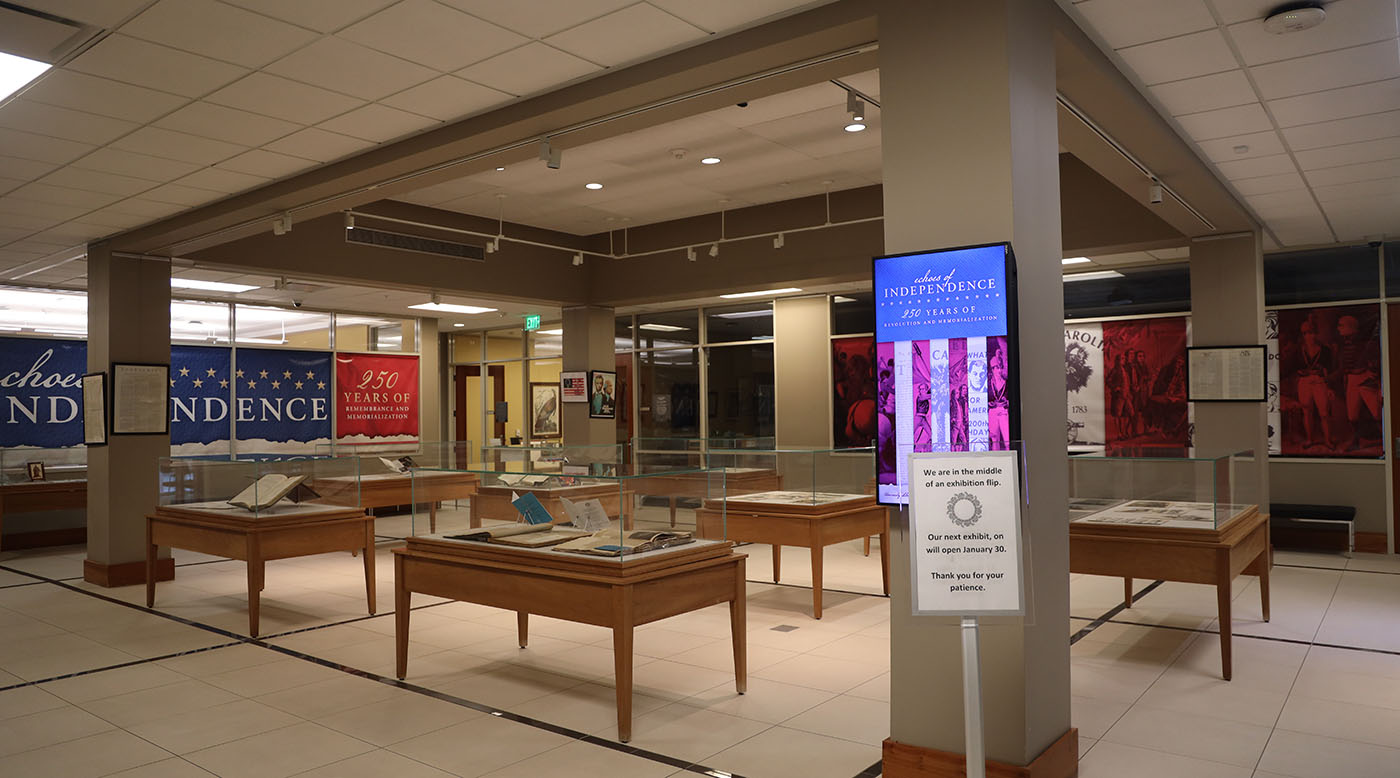
The Echoes of Independence exhibit is separated into a roughly chronological order featuring some of the first land grants given to residents even before the Revolution. Photo by Ansley Peterson/The Carolina Reporter
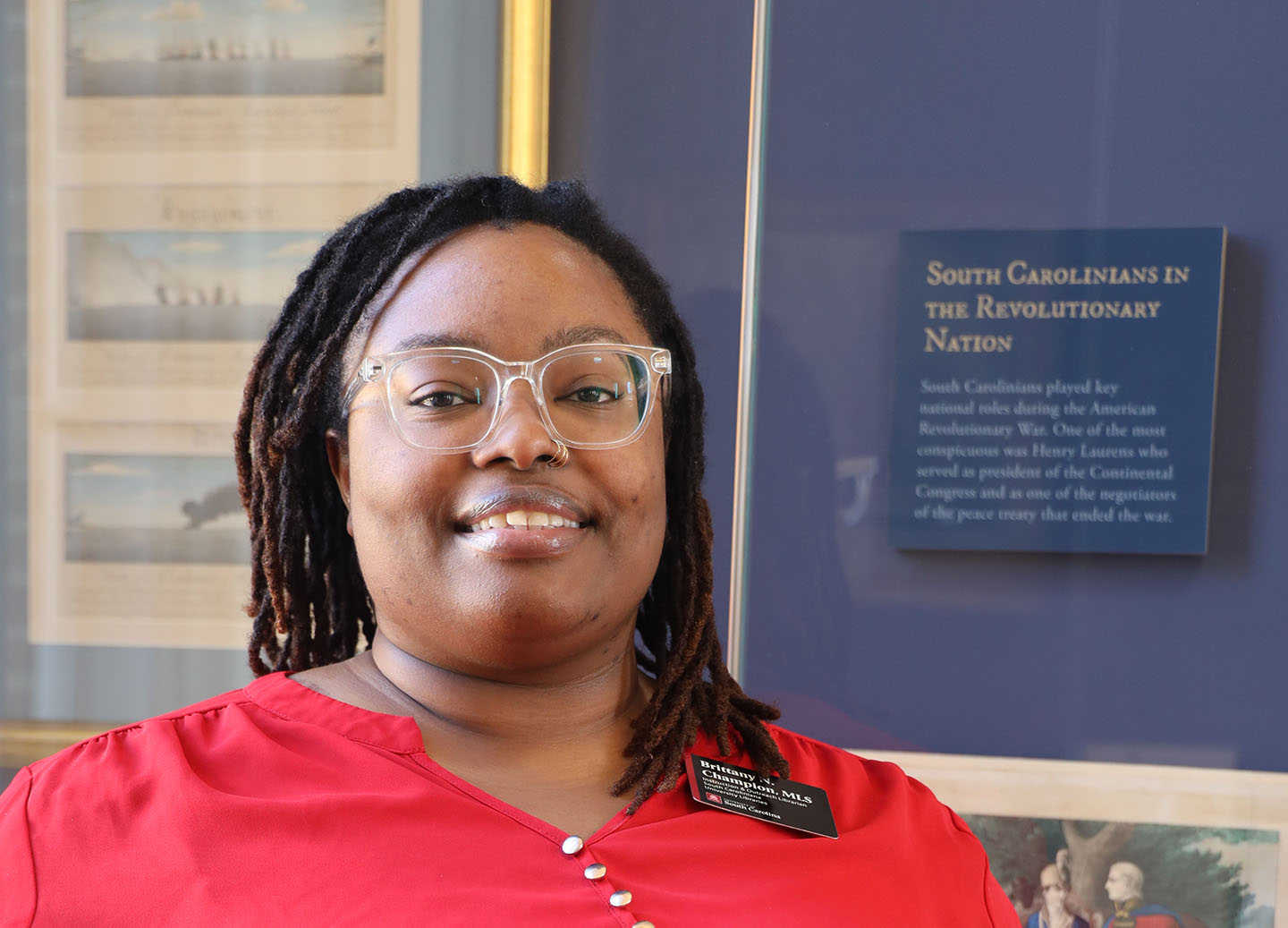
Brittany Champion, an instruction and outreach librarian at the South Caroliniana Library, loves to fuel students’ interests in research and self-discovery. Photo by Ansley Peterson/The Carolina Reporter
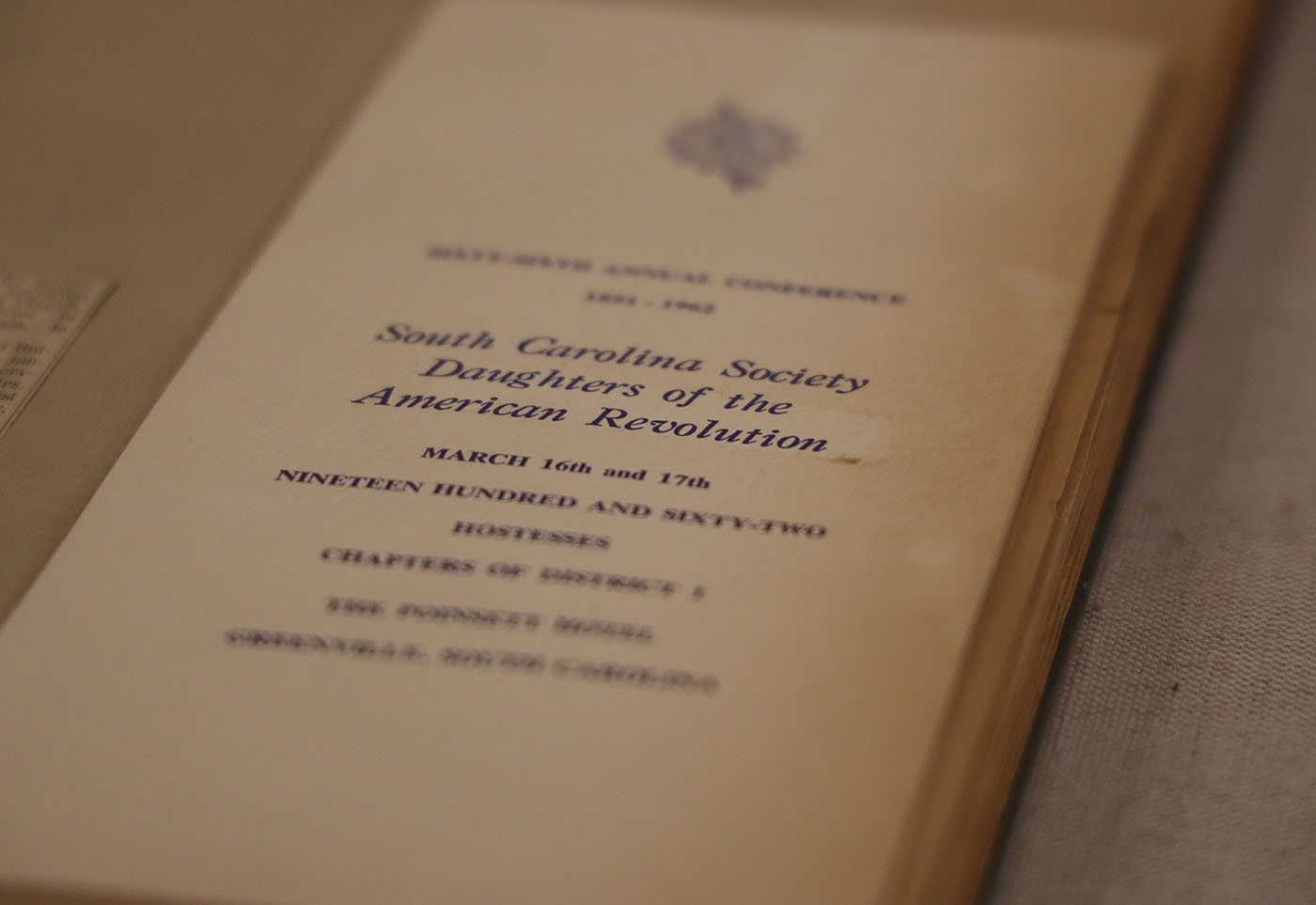
The Daughters of the American Revolution, founded in 1891, has 63 chapters across South Carolina. Photo by Ansley Peterson/The Carolina Reporter
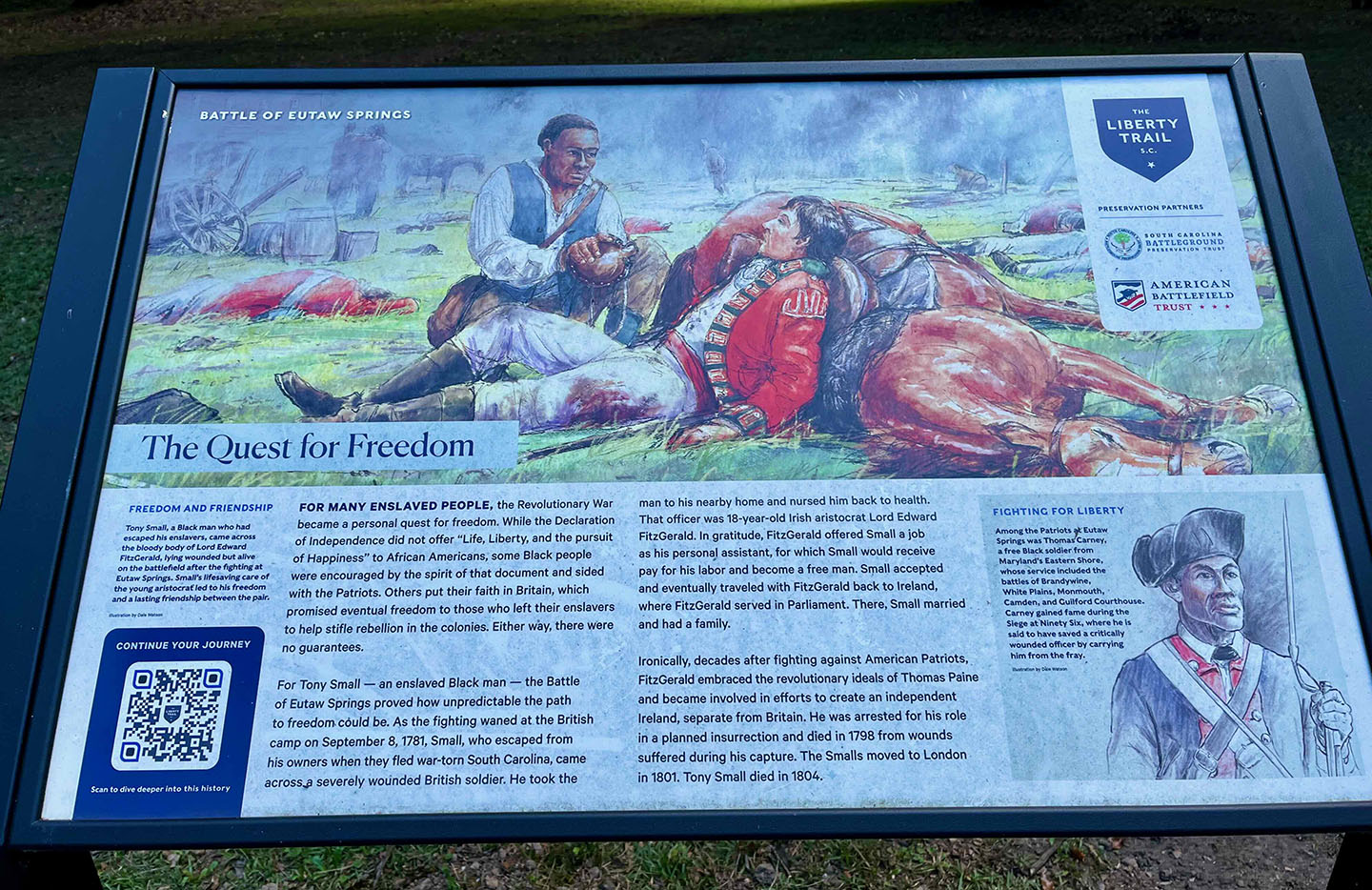
The Eutaw Springs Battlefield site features Tony Small, a runaway slave whose bravery in 1871 is included in the South Carolina African American Heritage Commission’s contribution to SC250. Photo courtesy of Vivian Glover/The Carolina Reporter
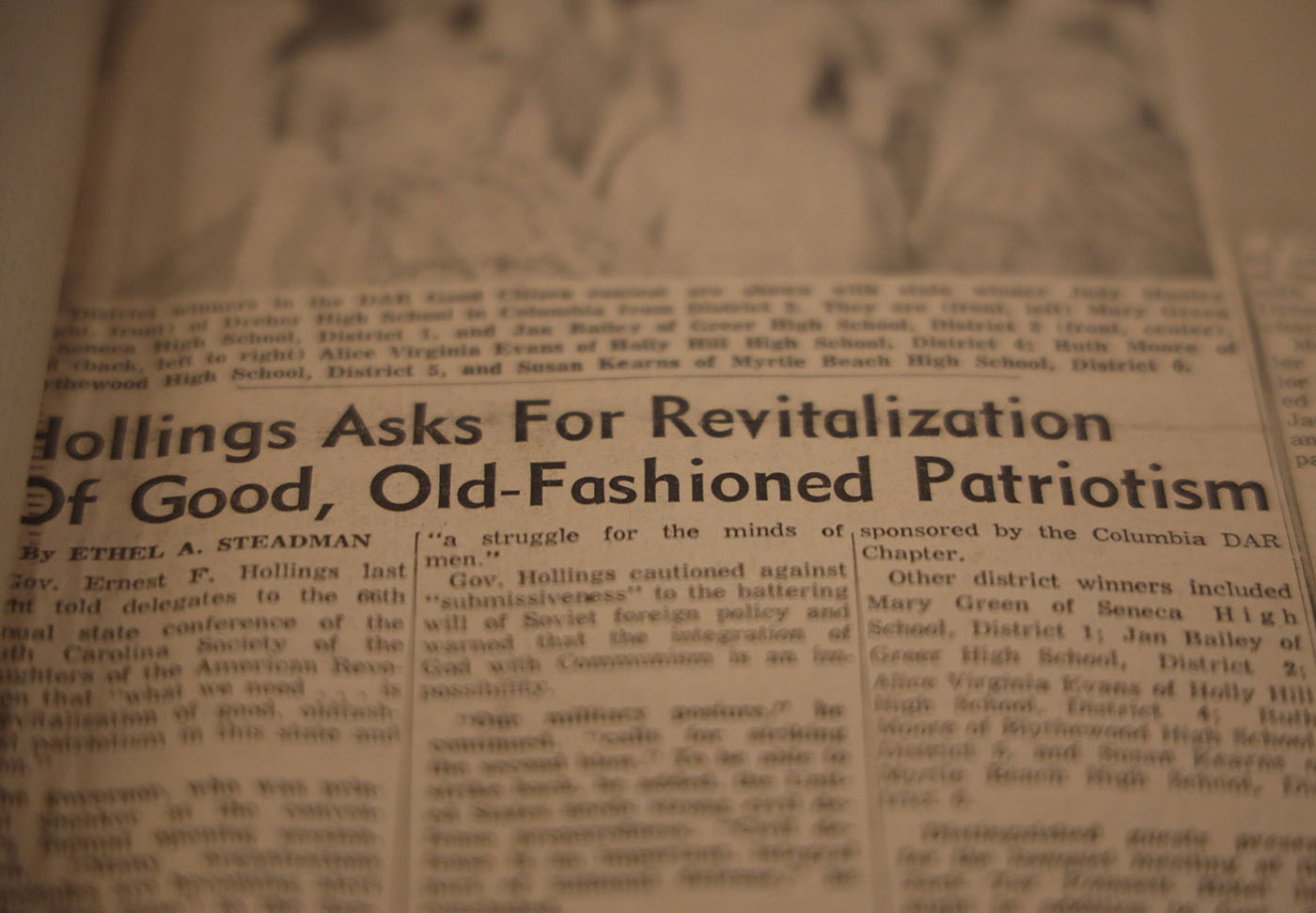
Patriotism was valued highly in the years following the American Revolution, and its meaning continues to evolve today. It’s also one of the core values of the Daughters of the American Revolution. Photo by Ansley Peterson/The Carolina Reporter