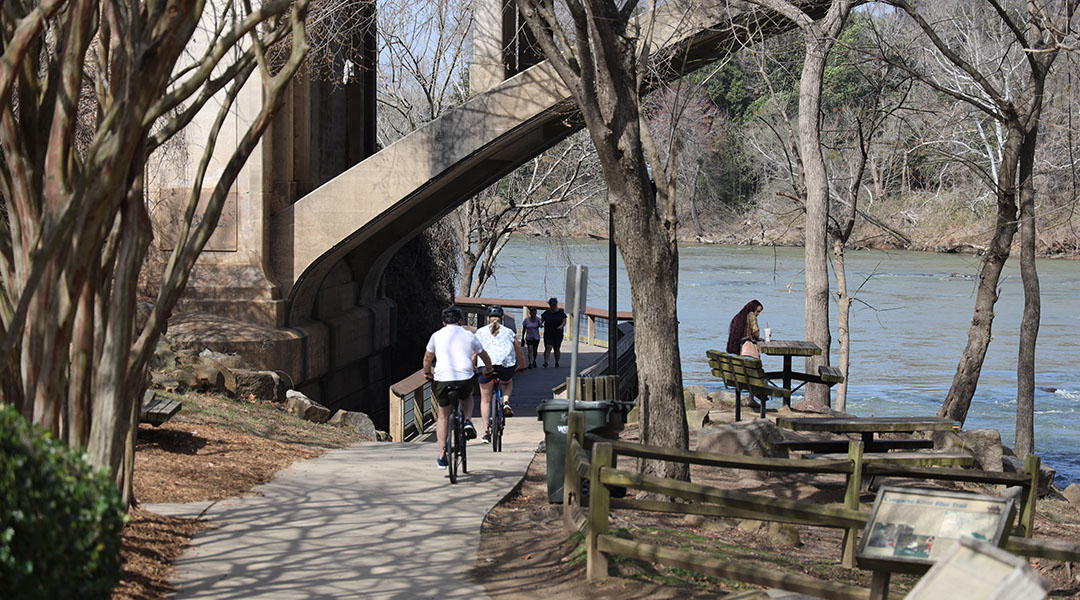
A proposed Congaree riverfront green space would be a 96-acre, multi-use, premier park with retail, restaurants and recreation spots. The park is expected to enhance residents’ quality of life while driving economic development nearby. Photo by Belle McGuirt/The Carolina Reporter
The City of Columbia has released its first version of a master plan for a premier, multi-purpose, public park on the Congaree River.
Shops, restaurants, hotels, apartments and recreational activities would open up the city’s downtown riverfront for public use. Amenities could include walking trails, sports fields, picnic areas, canoe and kayak ports and scenic gardens.
“I think the opportunity for any family or young people to have access to a destination to go swimming or kayaking or tubing, etc, is pretty exciting,” Mayor Daniel Rickenmann said. “This is something cities dream about having, and we actually have a site that is perfect for this.”
The low-lying land, owned by generations of the Guignard family, has been undeveloped for 300+ years.
“We have had these three rivers in Columbia, and our community members have often asked, when will we get to use the river?” said City Council Manager Teresa Wilson.
The city is encouraging community members and residents to express their wishes for the park as the planning process continues.
“We’re going to have community engagement meetings, starting in April, where community members can come write on sticky notes what are you looking for and wanting,” Wilson said. “We want it to be what the people want and what they have been yearning for.”
The Guignard Associates have partnered with the city for the project. Other partners for the project include the Boyd Foundation, the University of South Carolina and its foundations and Richland County. Officials said the county is a natural partner since the park “is intended to be a regional destination for all.” A goal is to inspire partnerships between investors and public entities.
“The project could be anywhere from $50 million to $80 million,” Rickenmann said. “We don’t know that yet until we have the design plans and layout.”
The Boyd Foundation already has donated $5 million. The foundation has helped shape the Midlands’ riverfront, the Columbia Museum of Art, tech incubators and other significant cultural landscapes in Columbia.
The Master Plan is a work in progress. The idea behind all of it is to allow everyone in the community access. Site maintenance will be important because parts of the property sit in a floodplain and an even more development-restricted floodway. The development team also will take into account wetlands designations for long-term sustainability.
Columbia has already partnered with Field Operations LLC for the parks design. The internationally recognized landscape architecture and urban design firm is known for leading transformational, large-scale, public space projects. The firm is best known for designing the elevated High Line walking trail in Manhattan and Domino Park in Brooklyn, New York.
Sarah Astheimer explained the firm’s proposal to city officials who might have missed an earlier presentation. She stressed the importance of enhancing natural landscaping and topography while sparking economic development.
“When people think of Columbia, we want them to think of this riverfront park,” Astheimer said.
“Now we have a partnership with a world renown design team that’s really going to set the stage,” Rickenmann said. “Once we have a process planned, hopefully that process will move pretty quickly, just like we did with Finlay Park.”
As much as community involvement and engagement is being prioritized, the riverfront park also will aim to enhance the city’s connectivity. The long-term vision for the park is to connect the existing Riverfront Park, near EdVenture, to Granby Park, in Olympia. The property is bounded by Huger Street, Blossom Street, USC’s baseball stadium and the Congaree River.
The new park could include a walking path from Columbia’s downtown core all the way to the river.
“This project represents a transformative step in Columbia’s continued growth and commitment to connectivity,” Wilson said.
Some Columbia residents are hoping the project adds more to do in the city of Columbia that’s intermixed with retail, dining and more active recreation.
“I have lived in Columbia my whole life and gone to college here as well, and there’s just not much to do nature or cost-friendly wise, so this would be really exciting to see,” Campbell Downing said.
USC students also are excited about potential scenic hangout spots in Columbia.
“Going to a read a book or eat on the water on the weekends would be a good way for me to decompress,” said USC student McKinley Cobb.
Cobb said her friends would feel the same, and she thinks it would be a popular spot for college students.
The project will be completed in phases. The City of Columbia Special Projects website will continuously post updates for the project.
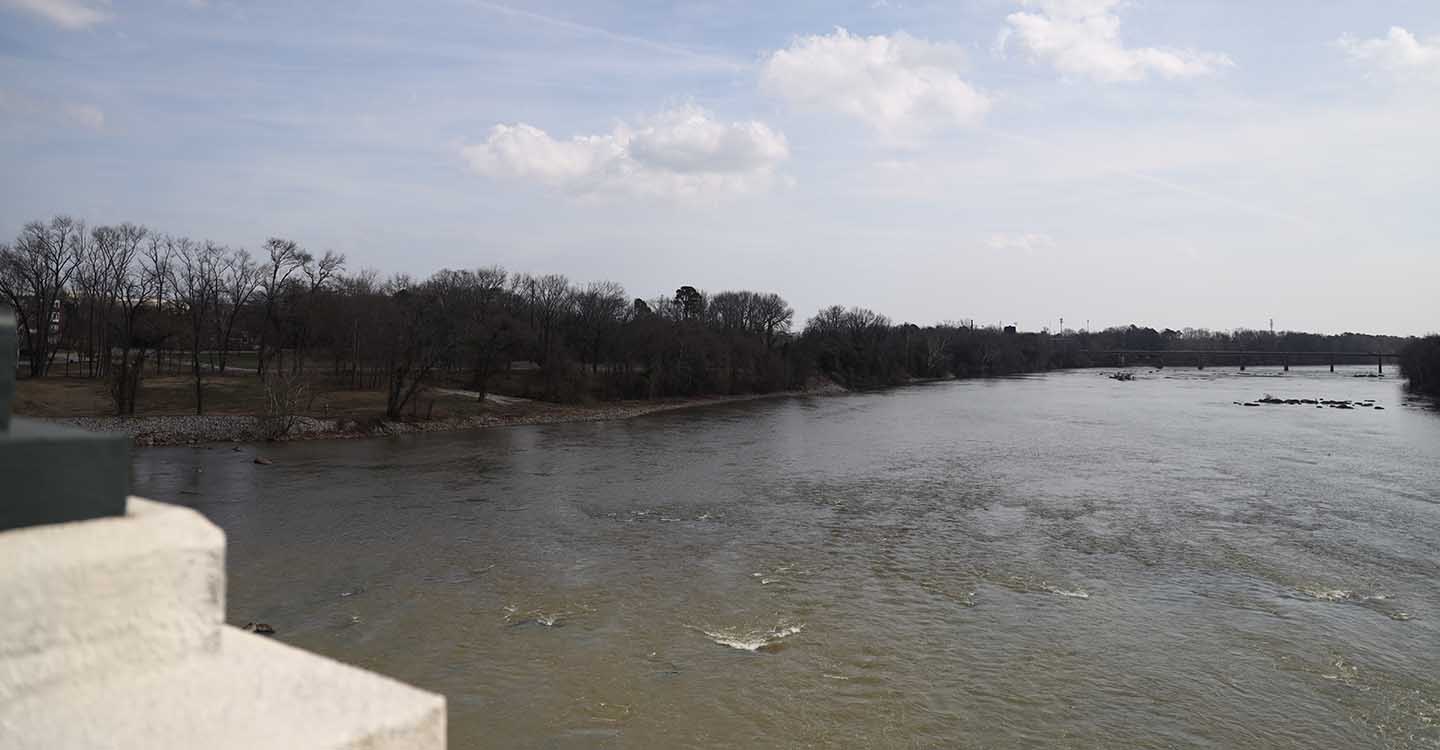
The property that sits behind the McDonald’s on Huger Street would be developed into the Riverfront District Park. Photo by Belle McGuirt/The Carolina Reporter
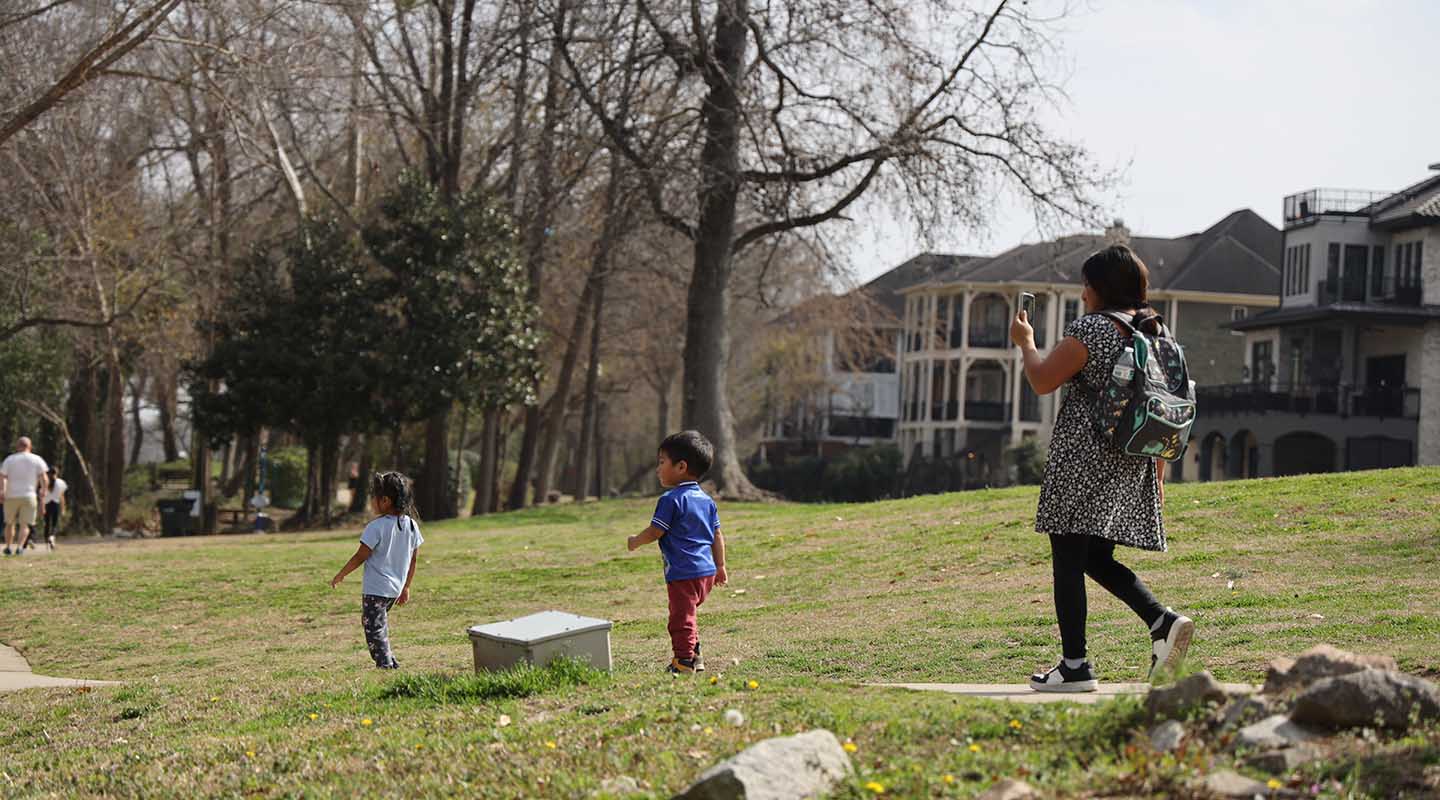
Families would be able to enjoy a public park with access to the riverfront and other amenities. Photo by Belle McGuirt/The Carolina Reporter
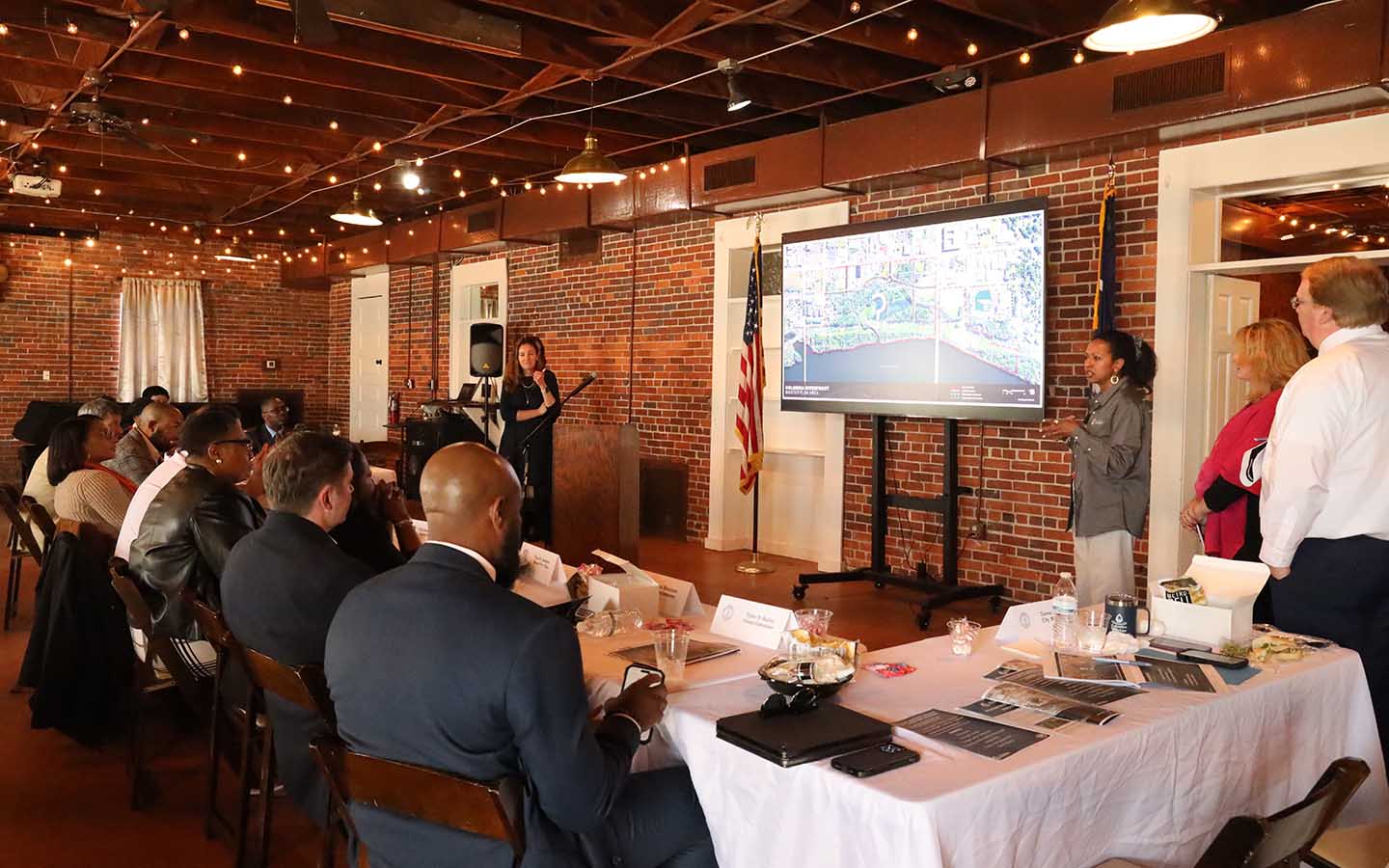
City Council had kickoff overview sessions to explain the plans for the project on Feb. 9 and 10. The sessions included a site tour for city leaders. Photo by Belle McGuirt/The Carolina Reporter
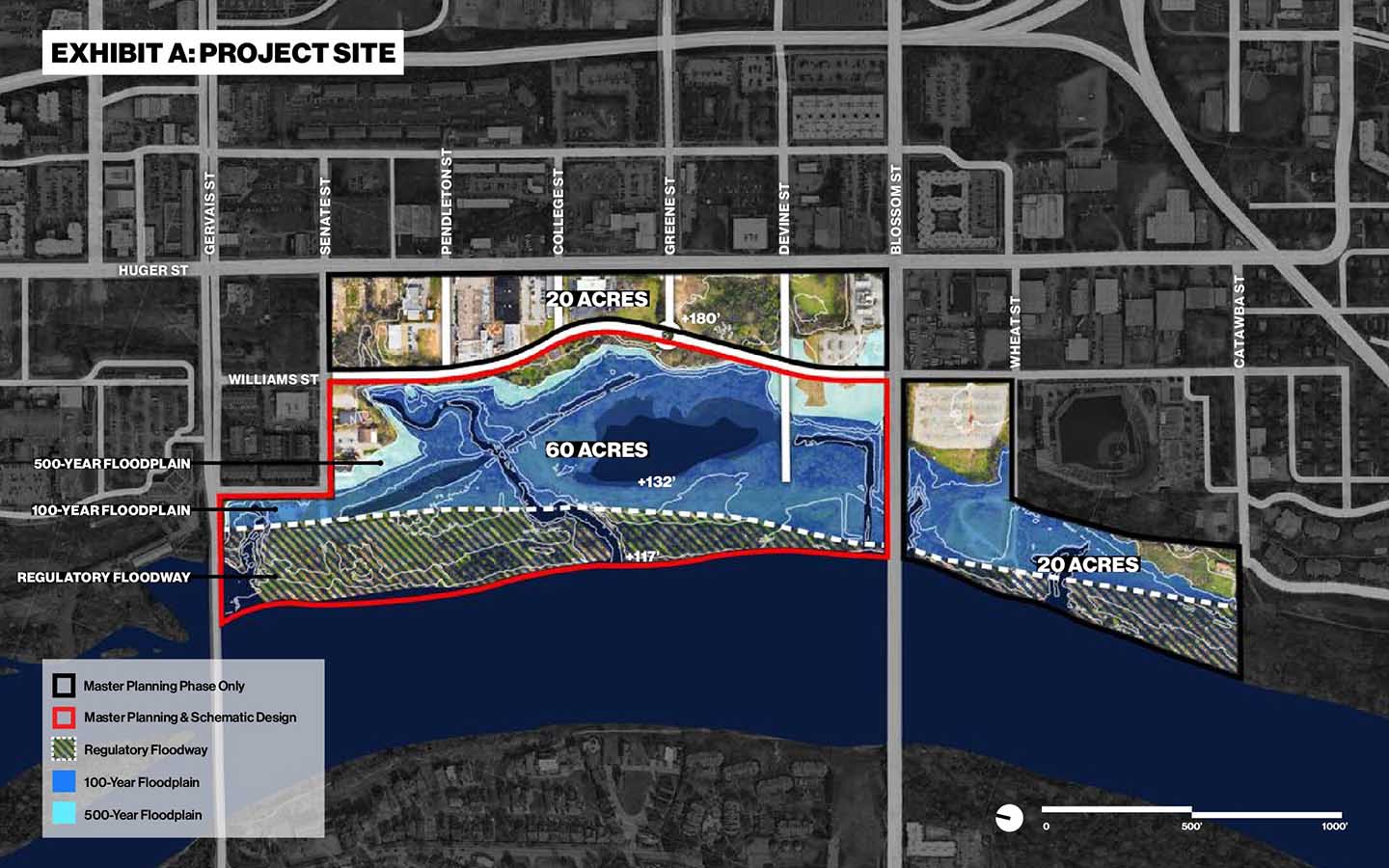
A map shows the layout of the project site. Photo courtesy of City of Columbia/The Carolina Reporter