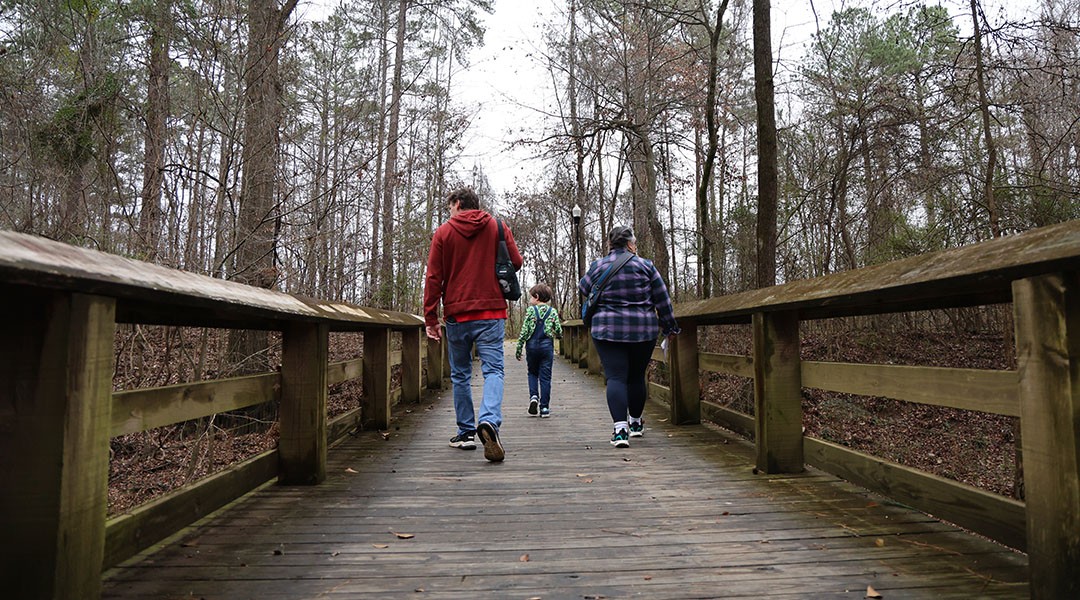
Will Hayden, left, and William Hayden walk across a bridge as Marcy Hayden leads a Native American heritage tour at the 12,000-Year History Park in Cayce, South Carolina. Photo by Hailey Cunningham/The Carolina Reporter
A 90-year-old woman from the Beaver Creek tribe didn’t know she was a Native American until she was 80 years old.
Stories like that are not uncommon in South Carolina, said Christopher Judge, assistant director of Native American studies at the University of South Carolina Lancaster.
Native American identity and history in the state often have been hidden, erased or excluded from classrooms and public memory.
Marcy Hayden, Cayce Historical Museum commissioner, struggles with the same issue. Hayden said she is enrolled in the Pee Dee Indian Tribe and has kinship ties on her father’s side to the Lower Eastern Cherokee of South Carolina.
“My tribe, no one speaks the language,” Hayden said. “We don’t know what the Pee Dee language was. We have a couple of words, and that’s it.”
Native American parents did not want their children to be “biased and ostracized and hoped to pass as country people,” Judge said.
“That unfortunately leads to the loss of cochlear tradition,” Judge said. “The last three speakers of the Catawba language died between 1959 and 1962. They go to their graves having not taught their children or their grandchildren the Catawba language.”
As languages disappear, so do the stories, traditions and identities they carry.
“Language is how we transmit culture,” Judge said. “If you take the Native language away, you’ve taken a big step towards erasing your culture.”
A lot of the history is under-recognized and sometimes unprotected, despite the evidence of 25 to 3o tribes living in the Midlands, Judge said.
In the Midlands, Cayce’s 12,000-Year History Park preserves land once inhabited by three Native tribes — the Congaree, Catawba and Cherokee.
Hayden leads regular tours through the park, which is still home to vegetation that Native communities once relied on, she said. Wild onions and blueberries provided food, while turkey tail fungi and Spanish moss were gathered for their medicinal properties. Tree sap was used to repair boats.
The park serves as a living record of an indigenous presence in the Midlands.
The historic Old State Road, unpaved where it runs alongside the park, isn’t fully protected and preserved, even though parts of indigenous history remain visible.
“It was one of the first major roads in South Carolina,” Hayden said. “And it started out as a trail – a trading trail.”
The road connects Columbia to Charleston. In Cayce, it served as a major trading hub for several Native American tribes taking advantage of the Broad, Saluda and Congaree rivers.
“The reason why we had the Revolutionary War, and we had the funds to fight England, is because of this trade that was with these connections to these tribes here in South Carolina,” Hayden said. “It’s not just South Carolina, it’s national history.”
Trees have been overgrowing the area until recently, Hayden said.
“I’m glad to see they’re now clearing it out so people can walk down it, utilize it, and share some of that history,” Hayden said.
While efforts are being made to preserve physical sites in Cayce, Native history is less apparent in South Carolina’s education system.
Native American children even have a hard time learning their history.
“They read about South Carolina history, and they don’t see themselves, and, you know, it’s demoralizing,” Judge said.
Five years ago, Judge participated in discussions to revise the state’s social studies curriculum, proposing more coverage of Native American history.
Judge said he had good ideas about it, but they were not incorporated.
There is a group called Indigenized South Carolina that has created a specialized social studies curriculum on Native American history, Judge said.
“We’re doing a website where we can get the information out, because in fourth and eighth grade, they teach South Carolina history. And it’s our feeling that it’s not adequately presented,” Judge said.
Hayden said Native history should be fully integrated.
“It needs to be taught alongside of what you consider the main European-centric” history, Hayden said. “It’s part and parcel. It’s a yin-yang situation: You can’t have one without the other.”
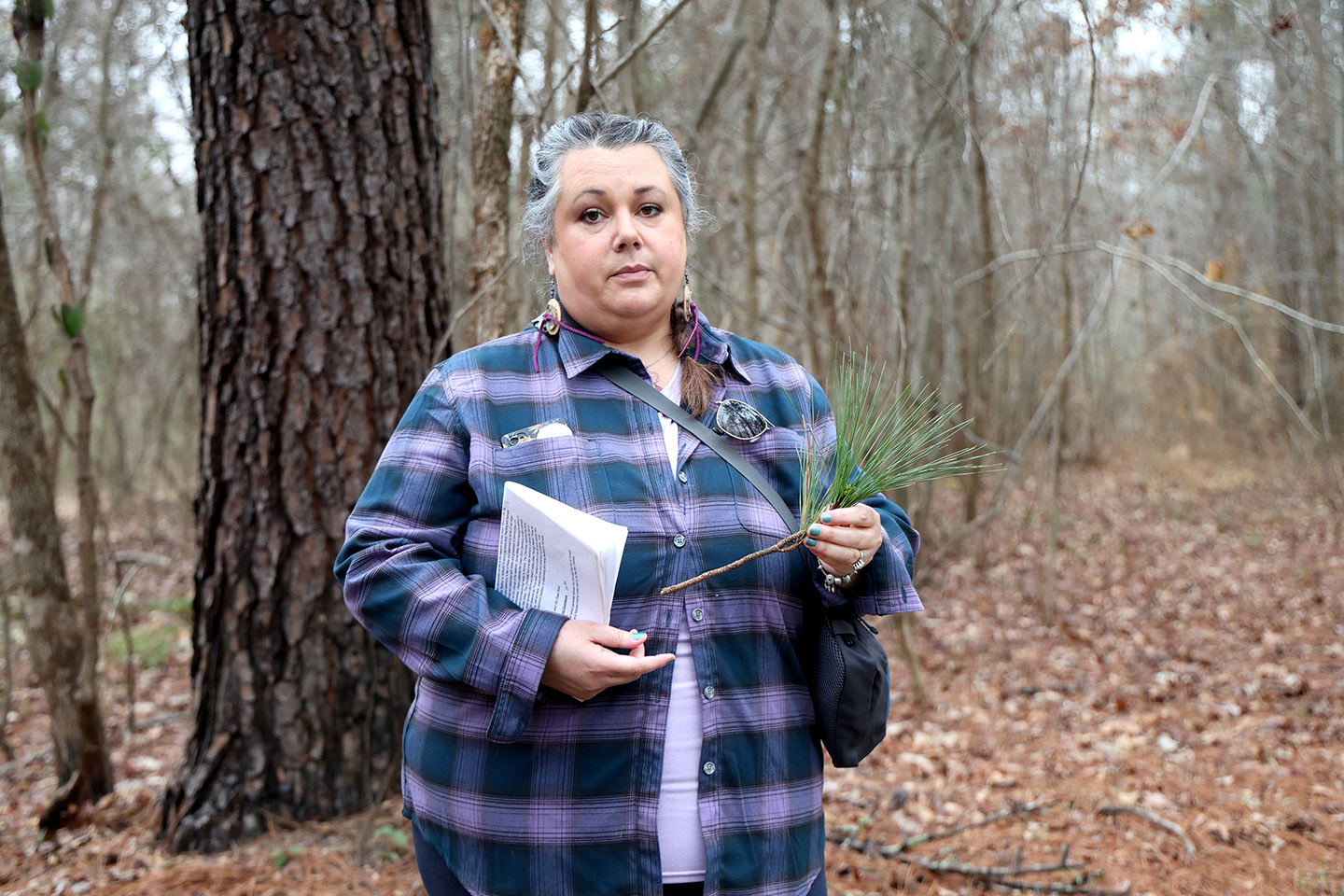
Marcy Hayden explains how Native Americans used green pine needles to make drinks and add to their food as she guides the tour. Photo by Hailey Cunningham/The Carolina Reporter
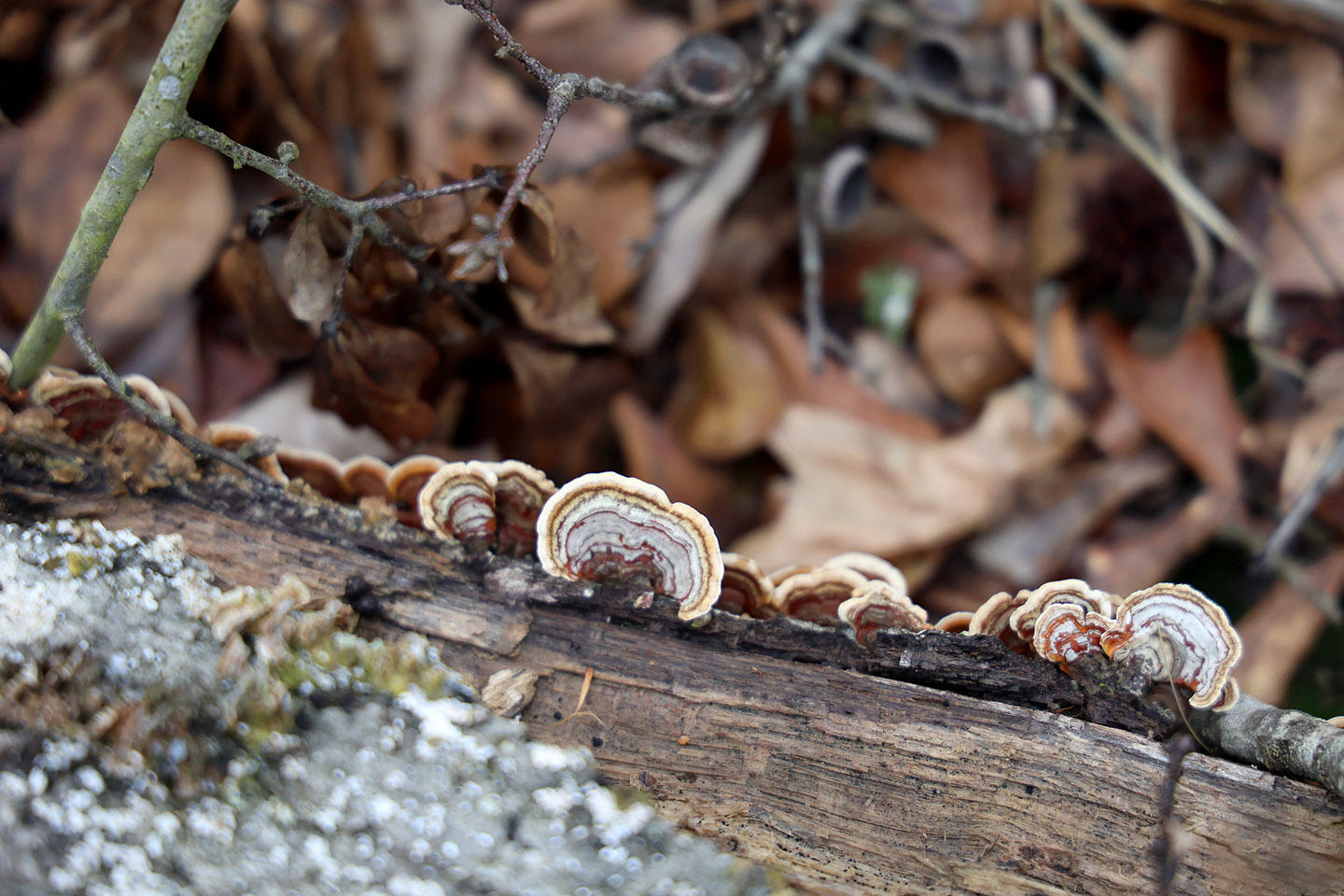
Turkey tail fungi grows on a log at the 12,000-Year History Park. Native Americans used these for medicinal properties. Photo by Hailey Cunningham/The Carolina Reporter
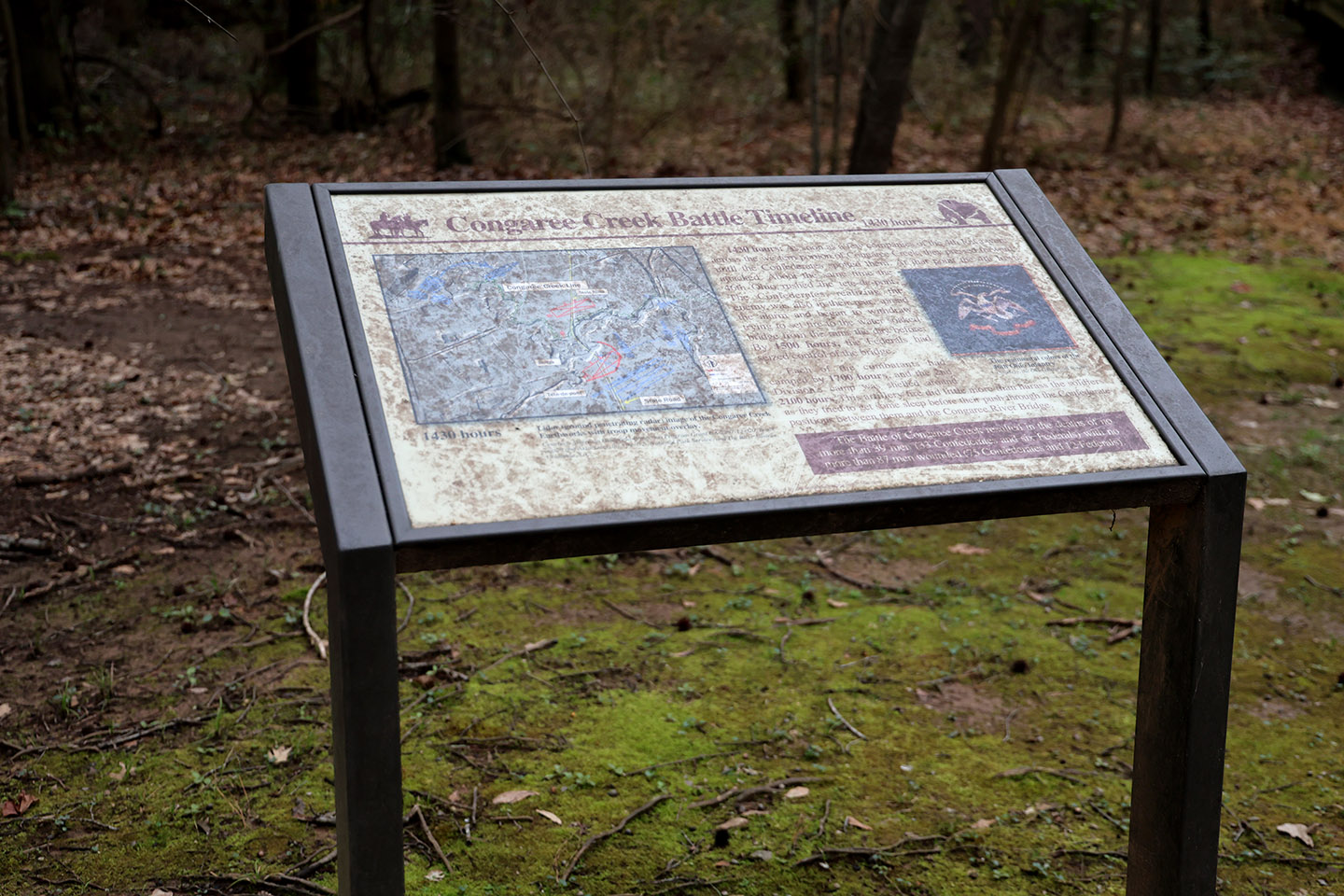
A historical marker identifies the Congaree Creek battlefield in the 12,000-Year History Park, showing maps and battle information. Photo by Hailey Cunningham/The Carolina Reporter
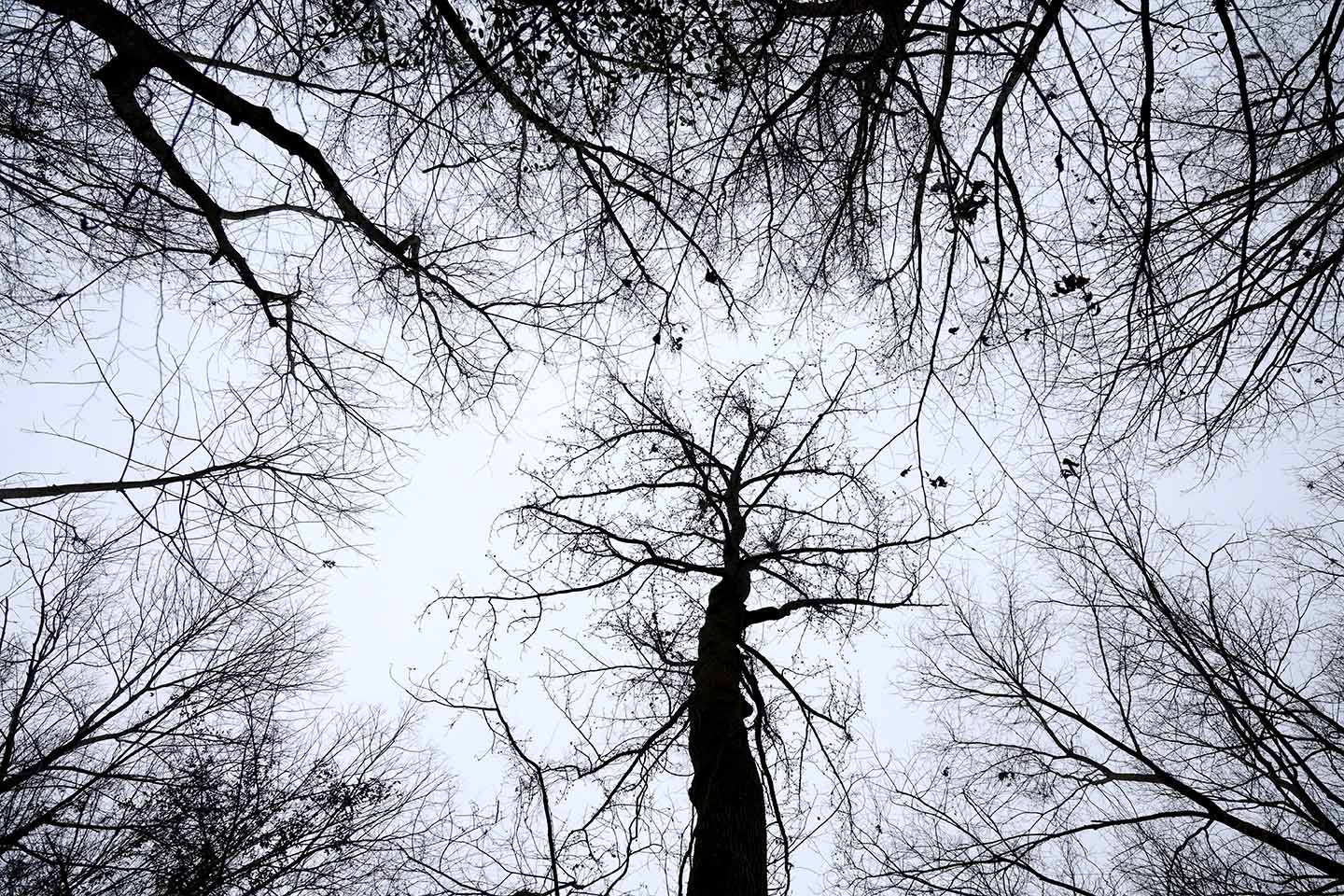
Bare tree branches stretch toward an overcast sky at the 12,000-Year History Park. Photo by Hailey Cunningham/The Carolina Reporter
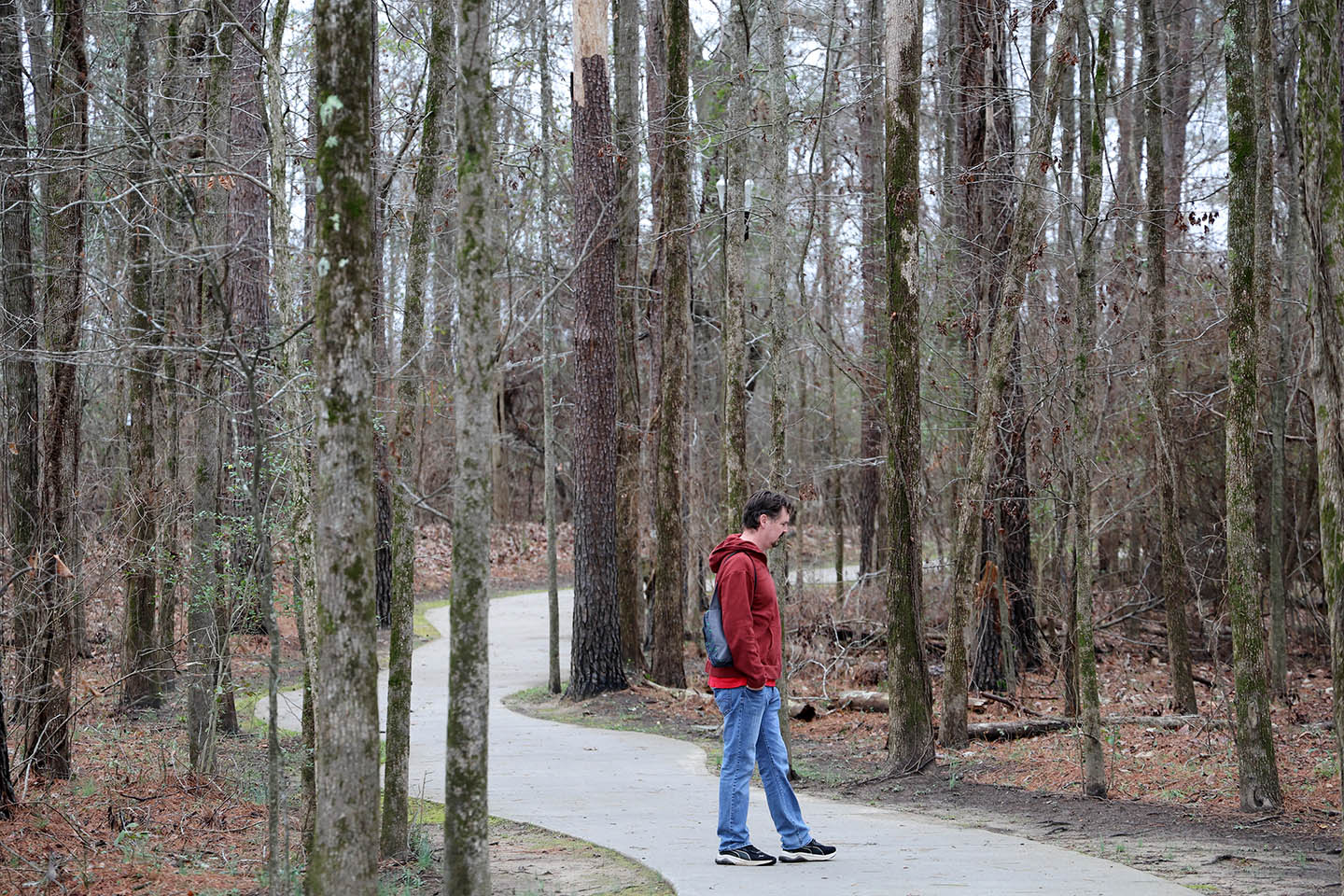
Will Hayden walks on the path at the 12,000-Year History Park. Photo by Hailey Cunningham/The Carolina Reporter