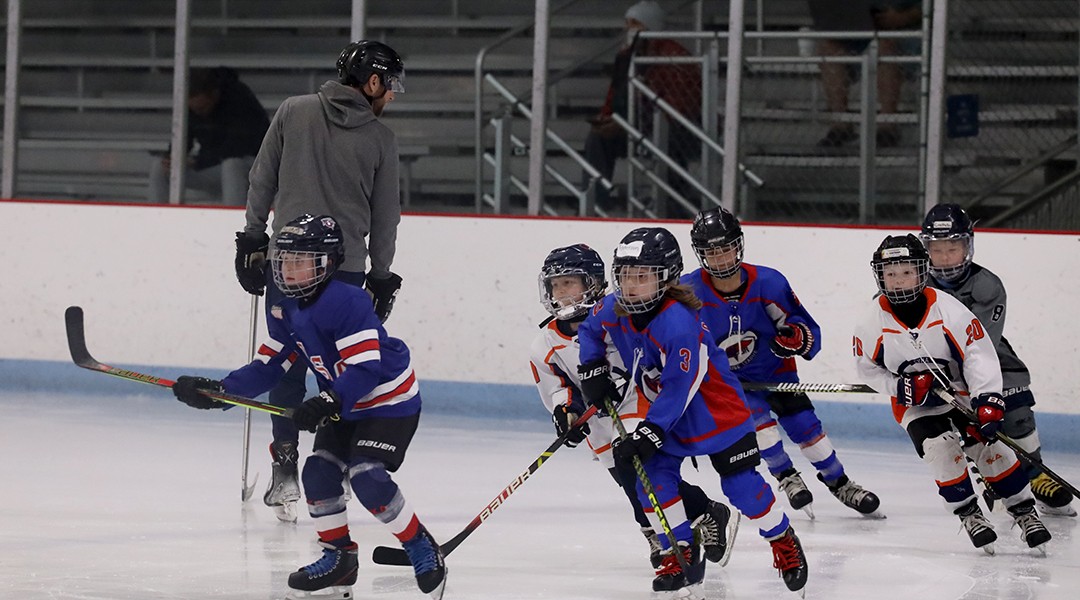
Young hockey players glide across the ice at Carolina Ice Palace in North Charleston, South Carolina. Photo by Miles Shea/The Carolina Reporter
While the American South has long been a hotbed for youth football, baseball and basketball, sports of the colder variety, perhaps understandably, haven’t gotten the same attention.
Indoor ice-skating sports in the South have never been growing faster, with the growth of the NHL’s popularity and the shine of Olympic gold.
When teenage hockey player Hays McCart gets on the ice, he said he knows he’s never alone.
“The one thing that stands out to me for hockey above other sports is how everybody gets to play,” McCart said. “Everybody’s going out for a minute and giving it everything they’ve got, then they’re coming to the bench and taking a breather and then they’re going back out again for another minute and giving it everything they’ve got.”
A South Carolina native with Georgia-born parents, McCart wasn’t interested in hockey until he was invited to a game by Canadian family friends. At 4 years old, he was hooked.
He now plays for both a youth team called the Greenville Rage as well as the Greenville High School team, which pulls players from across the county. Though he’s able to play close to home now, McCart said it hasn’t always been that way.
“There was a lot of traveling,” McCart said. “We were kind of going all over the place. Now, we can go find a team that we can compete with and have a good competition in a game with not having to go up to, like, New York or New Jersey every weekend.”
By the numbers, ice hockey has been on the rise in the state for both boys and girls. The number of boys under 18 playing has jumped 64%, from 3,650 to 5,982, since 2013-14. Girls’ enrollment, meanwhile, has grown from 282 to 913, a growth rate of 224%, according to data from USA Hockey.
McKenna Wessel, 15, also based in Greenville and part of the Greenville High team, said she’s drawn to the sport’s exciting nature.
“I love the competitiveness and how fast-paced it is,” Wessell said. “The team environment is very fun, and I’ve made lots of memories around it.”
Wessell has dreams of playing Division 1 college hockey. But female players still have a bit of a challenge.
While she has more of a local hockey community, she still the only player at her school, has to play with boys in Greenville and travels to New Jersey on the weekends to play for a high-level girls team.
“I’m the only person that travels for the team in New Jersey,” Wessell said. “Everybody else is based from there.”
Nova Scotia native Ginnette Romkey has served as president of Greenville Hockey and has been on the board of the South Carolina Scholastic Hockey Association while she raised both a son and daughter who played. Her daughter left home to play in California.
Romkey said it’s up locals to sustainably grow girls hockey longterm.
“If you don’t have the parents and families who are willing to drive that, it’s going to be a really hard area to grow,” Romkey said. “In the South, there’s always got to be someone to put the work in.”
A growing community
In Columbia, Trista McConegly is president of the Carolina Cyclones, a 150-member, six-travel-team youth hockey association.
McConegly had a passing relationship with hockey growing up, occasionally watching it on television. But she never picked up a stick herself. One of her sons happened to take an interest in the sport.
“My oldest wanted to learn how to play back when he was a little kid,” McConegly said. “So we found the rink in Columbia, and he started Learn to Skate first. … Now, all three of my boys play.”
McConegly said hockey can be a difficult sport to join, with its high costs and learning curve, but non-profit organizations such as hers are working to make the sport more accessible through advocacy and action.
“We try to keep our costs as low as possible,” McConegly said. “It’s only $50 to rent equipment. The equipment is relatively used – it’s not all brand new. But it helps get people into the sport, and they can rent as long as they want.”
McConegly said the feeling of watching her sons overcome the initial obstacles is hard to describe.
“You can go out and start drilling a ball, catching a football, kicking a soccer ball,” she said. “With hockey, you have to learn how to skate first. For us as parents, (you) watch your kids go from falling on the ice just learning how to stand up, … then all of a sudden, they start learning how to glide. And then they get really good, to know how to C-cut and backwards skating and backwards crossovers and frontward crossovers and all these complicated things. It’s incredible to see.”
Charleston-based, Toronto native Ryan Blair works as hockey director at the bustling Carolina Ice Palace. He’s a retired college and semi-professional player and coach who oversees both youth and adult hockey programs.
Support for the youth program comes from the local professional team, the South Carolina Sting Rays, which he previously led as head coach.
Having served in a similar role in Boston, Blair said his goals and approach remain consistent regardless of location.
“Even in those bigger markets, they’re still focused on getting as many kids playing for as long as possible,” Blair said. “… Whether you’ re a small market or a big market, you always want to get more kids playing, keep them playing and teach them as much as you can about the game.”
Greenville’s Romkey said the jarring feeling of coming from places where hockey is dominant to one where it is niche has made South Carolina’s growth all the more noticeable. Even die-hard football fans find themselves at the rink on Saturdays, she said.
“It’s just something you do,” Romkey said. “You walk outside your door, and you skate on the pond. You don’t have that here, and it was really hard when we first started because people don’t have that access. Getting more people, more Southerners, involved in seeing how fun it is has really been the turning point.”
The art of skating
Hockey isn’t the only ice skating sport in South Carolina, with a smaller but passionate figure skating community developing.
Figure skating stands out even among other winter sports, said Angi Grant, president of Columbia’s South Carolina Figure Skating Club and mother of two figure-skating daughters who also play hockey with the Cyclones.
“It’s one of the only sports I can think of that really combines athletics with artistry,” Grant said. “I think that really gives people a great outlet to do something you couldn’t do otherwise.”
Shelby Wells, a 14-year-old skater who’s been with the club since she was 6, appreciates the sense of belonging. She also likes the support the club provides despite the individualistic nature of the sport.
“It’s just a really close-knit community,” Wells said. “We all feel like family.”
Wells said she originally wanted to compete at major tournaments but that her relationship with the sport has evolved as she has grown older to a still driven, but healthier mindset.
“My goal used to be to go to nationals and international competitions, but now it’s more doing it for the love of it,” Wells said. “… I’m just trying to make it more of a hobby and less of an all-consuming personal identity.”
Leo Ha, who’s 18 and has won five national medals, recently volunteered with the figure skating club as a coach. Ha’s favorite aspect of skating is its room for freedom and creativity. He said he wants to inspire young skaters.
“I just want to pass on the lessons I learned from my own skating,” he said. “I love helping others find their goals and dreams.”
The club hosts a Learn to Skate program each Thursday, with skaters on hand to volunteer. Grant said adults, too, should feel just as welcome as kids. They might be surprised how quickly they pick it up, she said.
“When you’re on the ice, you’re so worried about not falling,” Grant said. “You can’t worry about anything else.”
The Cyclones on March 15 hosted their annual Try Hockey for Free Day, with 8-year-old Aldon and his father Phillip Ross among the attendees.
Ross said the supportive and welcoming atmosphere of the day made it perfect for their family.
“Aldon has pretty severe autism, and a lot of times official team sports are more difficult,” Ross said. “This is a great event for him to be able to come and try it out, to actually experience it instead of just being told what to do.”
Grant said figure skating, in contrast to hockey, could use more boys.
“There’s very few,” Grant said. “We definitely are always trying to grow the club.”
Finding the ice-time
Across the state, a lack of available ice was cited as the main obstacle for hockey and figure skating.
South Carolina has only three year-round ice rinks: one in Irmo, one in Taylors, near Greenville, and one in North Charleston.
Grant said that stands in stark contrast to both Northern states and the original migration hub, Florida.
“When we were in Michigan, you could put (it) in google maps and there were 10 rinks within five minutes,” Grant said. “In Florida, there’s many, many rinks – it’s the availability of ice and all the different types of people who are trying to get the ice.”
McConegly said simply maintaining the ice was among the Cyclones’ largest expenses. An hour costs the club anywhere from $350 to $400, adding up to thousands across a full season. She said the Cyclones’ home rink sees visitors from across the state.
“There’s soccer fields all over the place. There’s baseball fields all over the place,” McConegly said. “We have one rink in Columbia, so we literally have people coming from Charleston, Augusta, Florence, Greenville, Spartanburg, Fort Mill, all over, to come here. If they don’t make a team or they can’t get into a program where their rink is, they will try to come here.”
Things in Columbia could change, though.
A new nonprofit is trying to facilitate growth without ice. Katie Moore, president of Playmaker Sports DEK and mother of a Carolina Cyclones travel player, wants to make the sport more accessible through roller hockey, which is played on dry surfaces with inline skates.
The organization is in the early stages of planning to build a facility in West Columbia focused on roller hockey. Moore hopes that will bring down financial and social barriers that prevent locals from trying the sport.
“We really hope it’s a place that kids can come and feel like they belong,” Moore said. “Those kids who could never afford ice hockey, this is a gateway for them.”
FINDINGS
- Hockey and figure skating are growing in South Carolina in part to because large numbers of people are moving here.
- The main obstacles those sports face in the South remain high costs and a lack of available ice rinks.
- Young, skilled female players still have to travel north to advance their hockey careers.
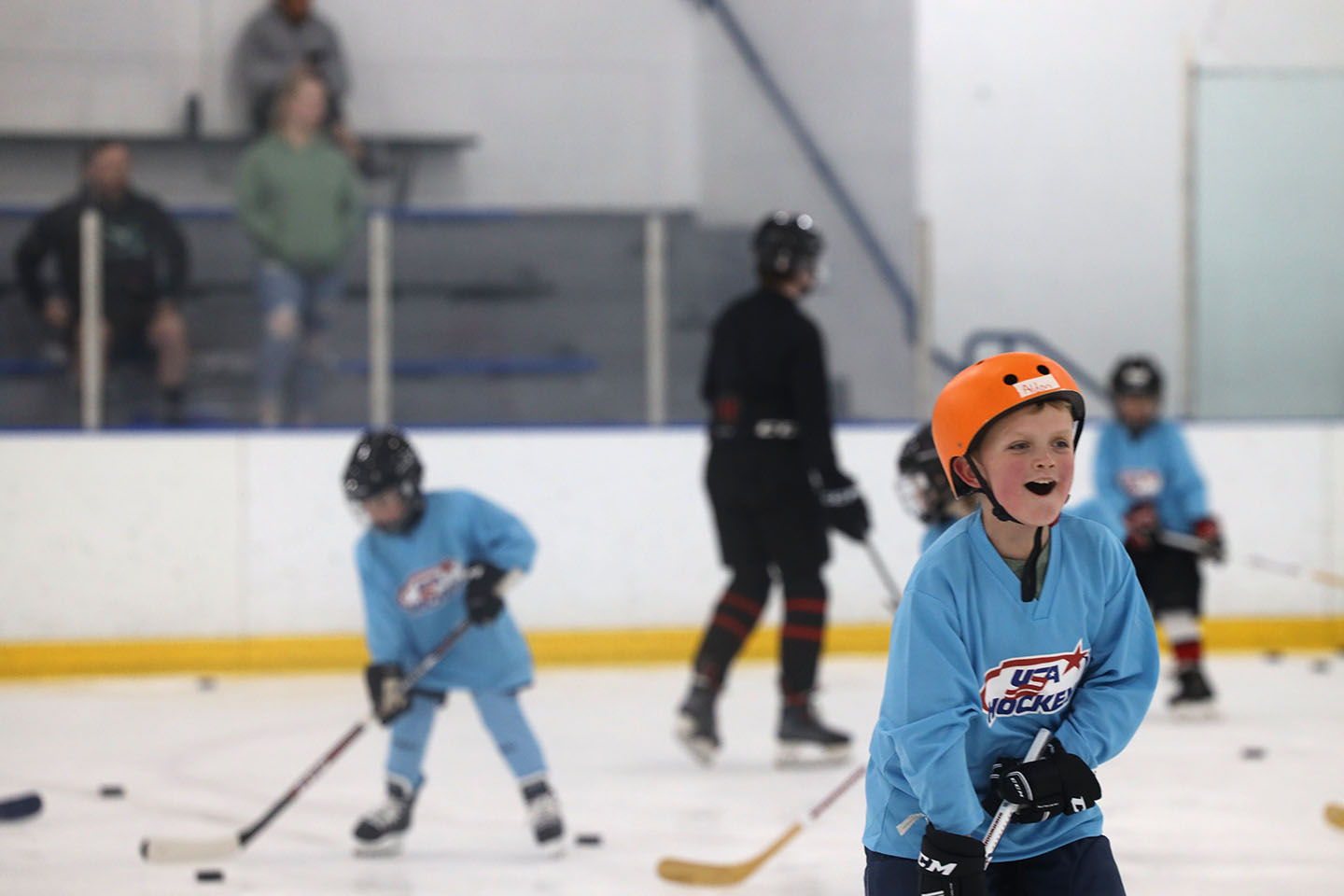
Aldon Ross, who’s 8, learns to play at the Carolina Cyclones-hosted Try Hockey for Free Day, an annual event at the Flight Adventure Park in Irmo. Ross’s father Philip said the experience was enjoyable and welcoming for Aldon. Photo by Miles Shea/The Carolina Reporter
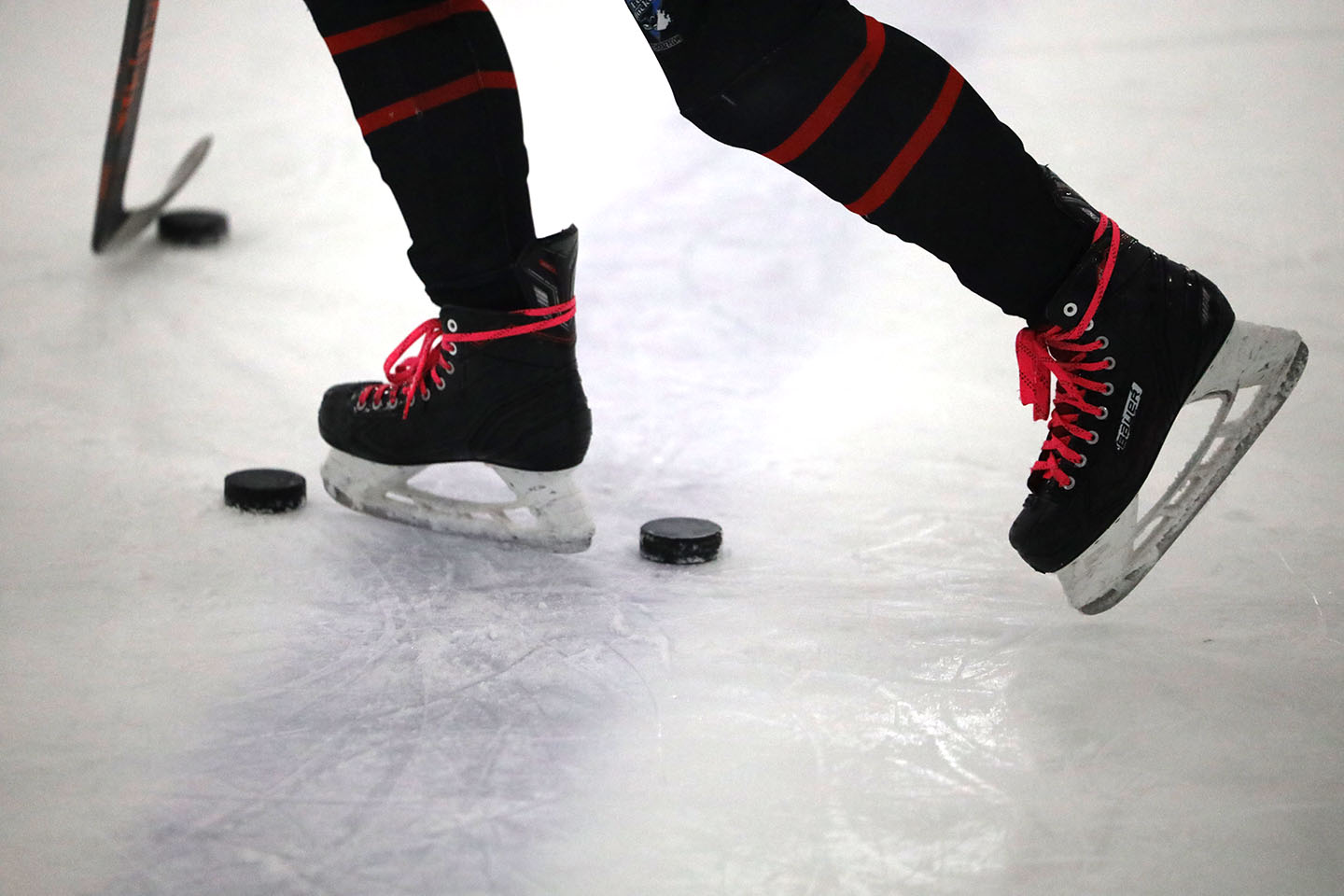
A young Carolina Cyclones player skates around two of the many pucks on the ice during practice at Flight Adventure Park. Photo by Miles Shea/The Carolina Reporter
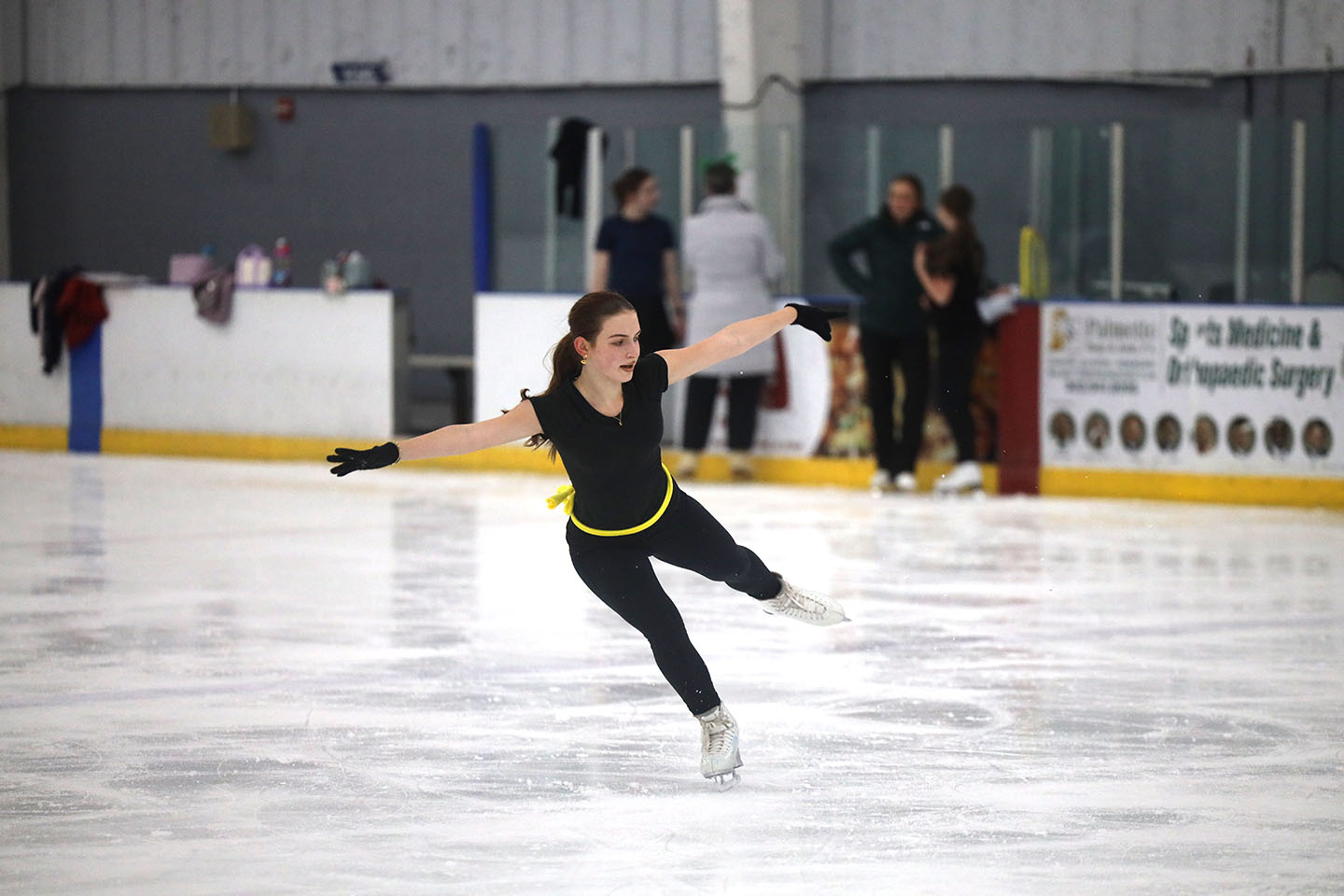
Shelby Wells, a 14-year-old figure skater and longtime member of the Columbia-based South Carolina Figure Skating Club, practices for an upcoming performance. Photo by Miles Shea/The Carolina Reporter
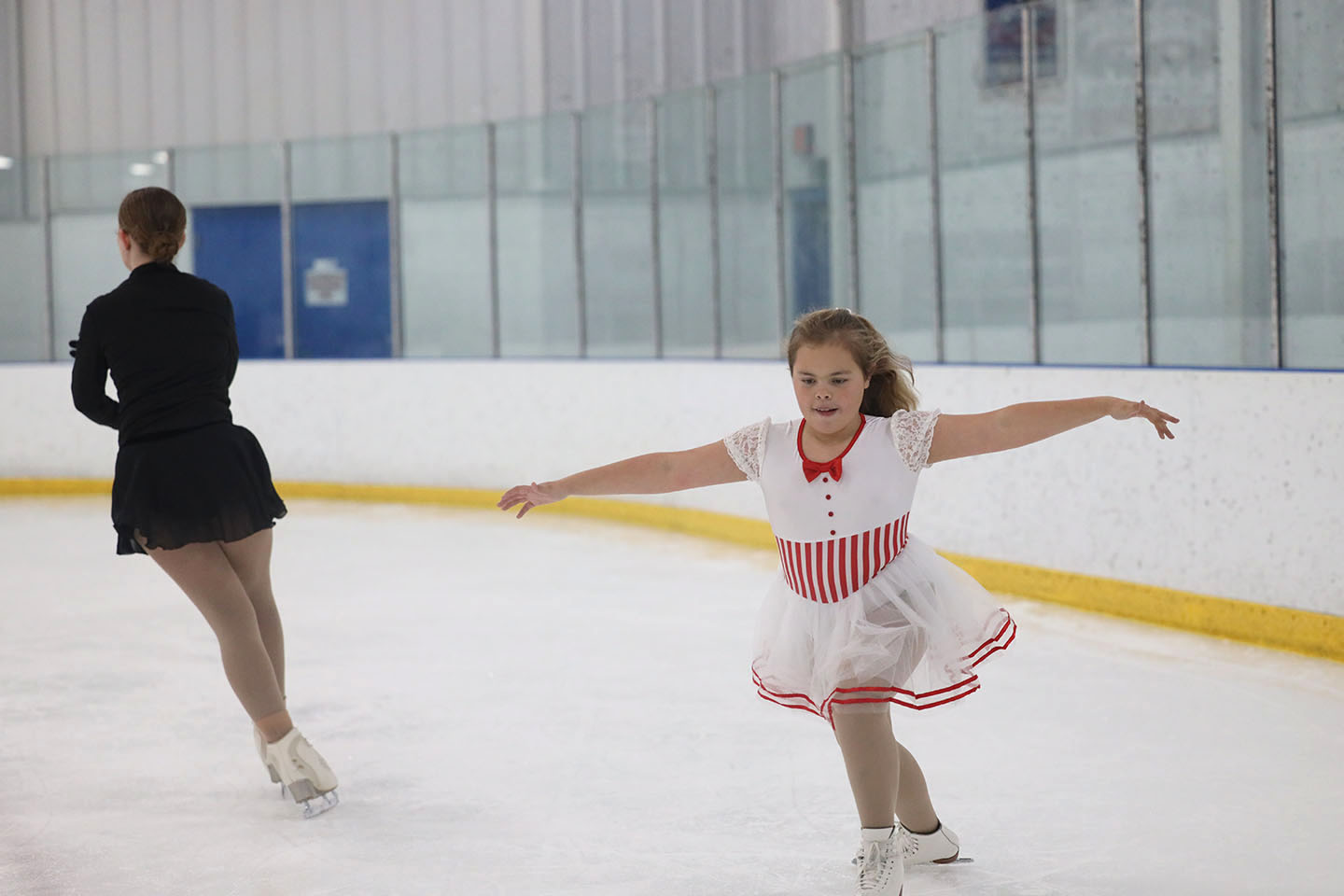
Alexsandra Gordillo, a 9-year-old figure skater, practices for an upcoming program dressed in a Mary Poppins-inspired outfit at Flight Adventure Park. Photo by Miles Shea/The Carolina Reporter