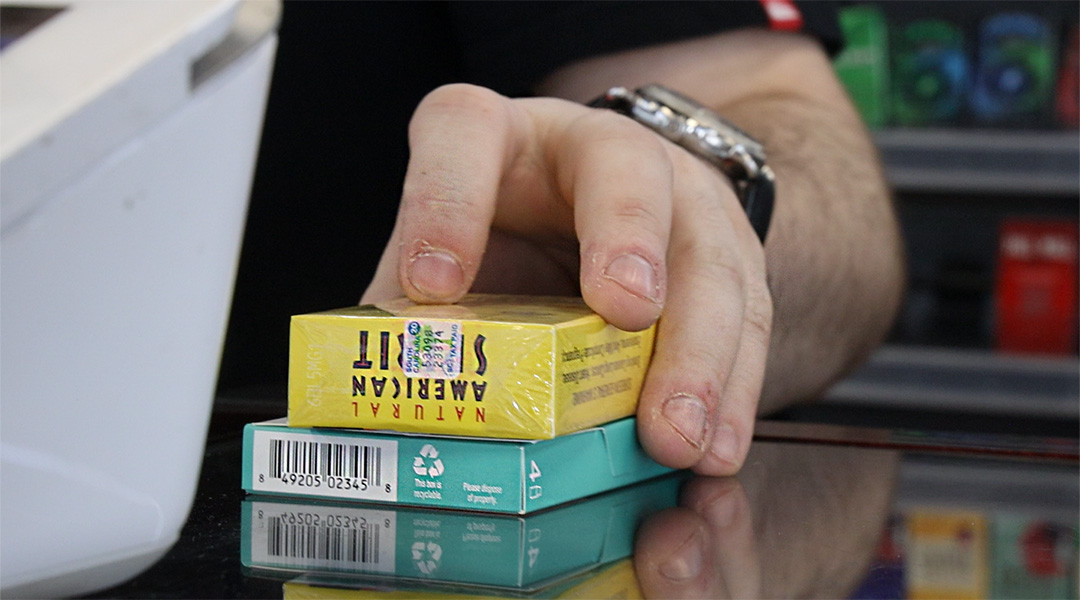
Researchers are as yet unable to determine long-term health data for the new heated tobacco products. But the American Cancer Society’s Beth Johnson said, “The problem that we do have some data on is dual usage, meaning this product will attract youth and young adults.” Photo illustration by Olivia Sisson/The Carolina Reporter
Elnora Hubbard thought she knew what a cigarette was. And what it was capable of.
But an emerging tobacco product that health advocates said is eerily similar to the traditional cigarettes Hubbard and South Carolinians know so well could reimagine the cigarette. The delivery device, known as a heated tobacco product, doesn’t burn but contains tobacco and tastes like it when inhaled. It’s like vaping but with real tobacco.
The advocates also worry the product, if legalized, would be marketed differently, attracting younger and younger users, and that it would escape the taxes that price many young people out of the cigarette market.
Hubbard has been advocating for more than four years for a healthier community, urging residents to quit smoking.
“My mother, Diane, passed away in 2022 from heart disease and heart failure,” Hubbard said of why she began her nonprofit, The Heart of Diane. “Do not take your health lightly. Do not smoke. Do not vape. Stop it.”
The industry offers heated tobacco products as a way for smokers to avoid cigarette smoke, step down their tobacco use and possibly quit smoking altogether. The FDA, however, has not approved the products as a cessation device.
Public health researcher Dr. Lizbeth Cruz Jimenez said the industry’s innovations can sometimes make quitting difficult.
“It’s new,” Jimenez said. “It’s novel. And we want to understand how smokers react to new tobacco products because they are more likely to be (attracted) to these new products.”
Two competing bills in the S.C. Senate will determine whether heated tobacco products – also known as “heat-not-burn” inhaled aerosols – qualify as cigarettes and if they will be taxed the same.
A version of one Senate bill has passed the S.C. House of Representatives but faces amendments. The other, competing bill would grant heated tobacco products more freedom to market and tax them differently than cigarettes.
If the second Senate bill passes, “these products will (cost) 50% less than a traditional pack of cigarettes,” said Beth Johnson of the Midlands’ American Cancer Society.
The price difference also could lead to an uptick in tobacco consumption, instead of leading customers to use it as a step-down method to quit tobacco altogether, Johnson said.
Robert Walden, of the S.C. Department of Revenue, said the second Senate bill would create a new excise tax on heated tobacco products and remove the surtax on the products. Without the surtax, heated tobacco products would get a 95% tax drop, Walden said.
Current cigarette excise tax and surtax help to deter the frequency of use. A traditional pack of 20 cigarettes is taxed at 57 cents; 20 cigarettes of a heated tobacco product, if defined differently, would be taxed at just 3 cents to 4 cents — 95% less.
Defining the product
New products can sometimes create scary ambiguities, the American Cancer Society’s Johnson said.
But if the bill passes, “ultimately, the state is changing the definition of these products and giving tobacco companies a tax break,” Johnson said.
Defining the product is key.
International research from the tobacco industry seems to contradict studies done by health advocates, she said.
“I think there is certainly a misconception by the legislature that this product is going to help adults quit,” Johnson said.
They still contain more than 20 toxic chemicals, including nicotine, she said.
“And some of the products can have more nicotine than even traditional cigarettes,” Johnson said. “So really, the long term health effects from heated tobacco are still unknown.”
Vape device manufacturers won legal endorsement by arguing that the lack of smoke reduced the number of noxious chemicals inhaled and could help cigarette smokers quit. They also lauded the lack of second-hand smoke.
Advocates for the new heated tobacco products are saying the same.
Vaping eliminated secondhand smoke. But research is conflicted so far on the estimated number of people who have given up cigarette smoking in exchange for vaping.
Still, did vaping pave the way for this new product’s approval?
Making the argument
Marketers for the heated tobacco products want them to be known as a cessation aid, rather than a cigarette lookalike.
Health advocates around the country have tried to counteract tobacco industry marketing, mostly because of the industry’s conflict of interest when it comes to public health.
Actions on Smoking and Health’s Nichelle Gray-Lkhagvadorj and her team work as national nonprofit watchdogs, monitoring both the tobacco industry and legislators who receive tobacco company contributions.
“The industry is the one that is pushing for some of this – this language and these policy changes,” Gray-Lkhagvadorj said. That “should be a reg flag to everyone because, again, their bottom line, or what they’re looking to get from this, is really to increase their market share.”
So what information are lawmakers seeing?
Tobacco companies, such as Philip Morris International, have supplied research to S.C. legislators to support claims that heated tobacco products will help users decrease their consumption.
Director Frank Rainwater of the S.C. Department of Revenue and Fiscal Affairs also drafted a fiscal impact statement for the new products.
If the bill with the lower tax rate passes, he said, the state stands to gain $619,000 in tax revenue in the 2026-27 fiscal year.
That number reflects estimated new nicotine users, dual product users as well as those who would switch from cigarettes or vaping to the new products.
It’s the new users that Johnson’s worried about.
New users in question
Health advocates say heated tobacco products have the potential to attract a large number of new users, similar to what drove the vaping and e-cigarette trends of the mid-2010s.
“When these products came out, the tobacco industry said the same thing,” Johnson said. “They said it’s a cessation device. … They’re less harmful. But then we see what an epidemic e-cigarettes caused and how they addicted new and young smokers.”
State revenue would decrease in 2026-27 if people were actually going to switch from traditional cigarettes, Johnson said.
Even so, that revenue would be higher if they were taxed as cigarettes, Johnson said.
To some, the bill could be a welcomed way to wean residents off traditional smoking.
But Johnson and many health advocates can’t look away from the possibility of an epidemic.
Findings
- Emerging tobacco products are new and, like vaping, could attract youth to nicotine and tobacco markets, health experts say.
- Legislators and health advocates in South Carolina are sorting through conflicting research on effects of new “heated tobacco products.”
- Lawmakers wonder if products that contain addictive substances could actually help users quit smoking.

Elnora Hubbard spoke with Columbia residents at the city’s “Jump Start Your Heart” event, which is dedicated to reducing the frequency of heart disease, the No. 1 cause of death in South Carolina.
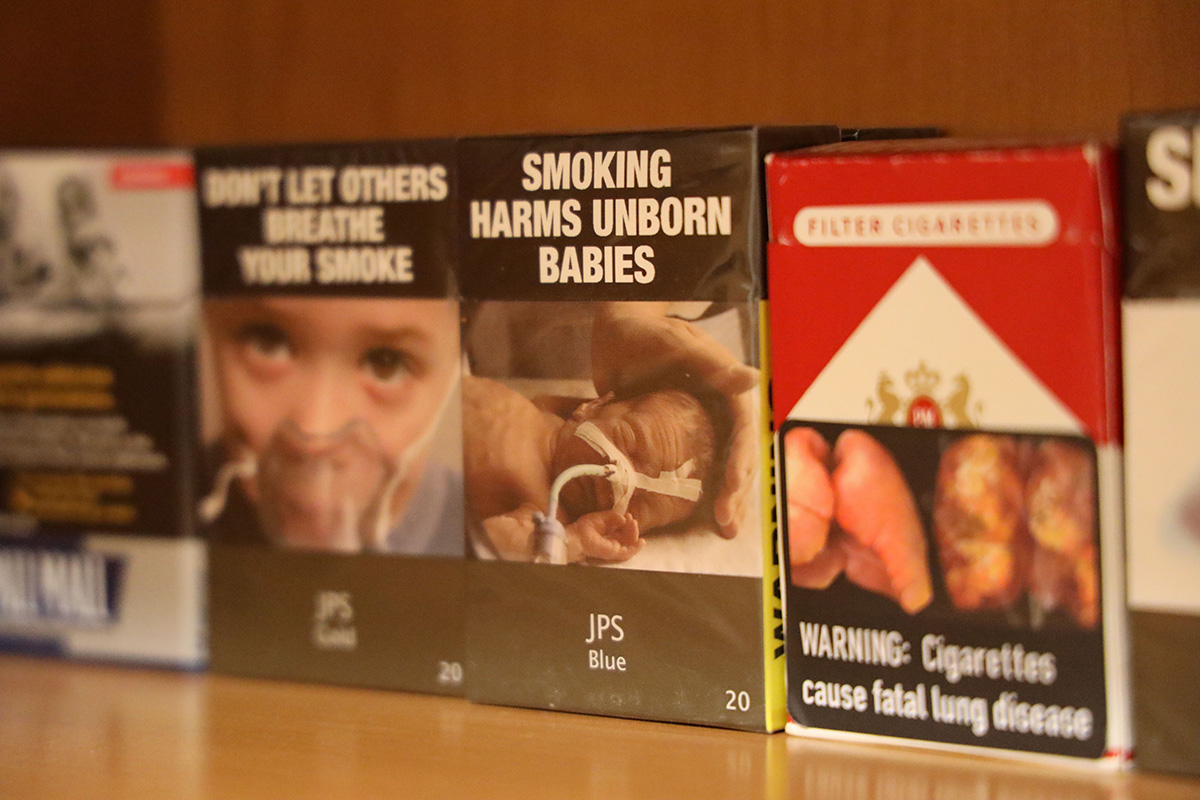
Long-term health data on cigarettes led to international regulations on tobacco industry marketing, taxation and lobbying. Many European countries enforce packaging that reveals the possible consequences of using the product. Photo by Olivia Sisson/The Carolina Reporter

Lizbeth Cruz is a part of an interdisciplinary program that focuses on tobacco control research at the University of South Carolina’s Arnold School of Public Health. She is studying how innovations such as heated tobacco products are being introduced to the market. Photo by Olivia Sisson/The Carolina Reporter