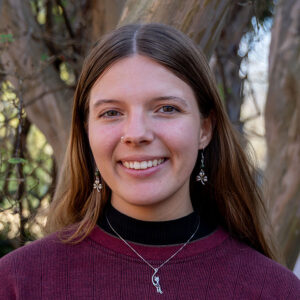
Trista Walter, a University of South Carolina student and member of the Seeking Refuge podcast team, considers information about upcoming recordings at a group meeting April 2. Photo by Lacy Latham/The Carolina Reporter
Seeking Refuge is a nonpartisan podcast run by University of South Carolina students that highlights the experiences of refugees, immigrants and those who study or support them.
Founded in 2019, the podcast features online interviews with academics researching migration, asylum-seekers, aid workers and more. Members publish episodes and news briefings every two weeks across platforms such as Apple Podcasts, Spotify and Instagram.
Executive Producers Charlie Winston, a junior studying music performance and history, and Tina-Maria Sandoval, a senior studying anthropology, environmental studies and Spanish, lead the organization.
“The purpose is to share the different faces of what human migration can look like,” Sandoval said. “Immigration touches a lot more parts of our lives than we anticipate. … It’s important to understand those different ways that it touches your life.”
Seeking Refuge members rotate roles such as conducting interviews, researching topics and editing audio.
“You have to be empathetic and understanding of the reasons why people migrate,” Sandoval said. “You have to be open-minded to hearing people’s stories, even if it’s something that you know you couldn’t imagine yourself going through.”
The group also produces migration-related news briefings. Sandoval said they aim to provide context that may be missing from broader media coverage of the hot-button issue, such as details about local developments such as the leasing of a U.S. Immigration and Customs Enforcement office in Columbia.
“I think that, in doing so, we might help prevent some of that fear mongering,” Sandoval said.
The podcast has expanded its reach beyond South Carolina. Early interviews often featured USC faculty, but the group now connects with sources internationally. Interested students do not need prior experience in podcast production to join. In fact, group members work from their phones.
“It showed me how accessible a podcast is to make,” Sandoval said. “You’d be surprised what you can accomplish with just an iPhone, laptop and some basic software.”
The podcast reported about 19,000 listens across two seasons last year.
“It really is worth it,” Sandoval said. “It’s not like we’re just yelling into the void. We actually are reaching people, which feels really great.”
Winston said his interest in refugee issues stemmed from his childhood. His family worked with Lutheran Services Carolinas, fostering 18 minors separated from their immigrant families while he was in middle and high school. He said the experience opened his eyes to the human element of stories he saw online.
“You hear all these news stories and all the ways that the media … alienates these people and kind of describes them by statistics and numbers,” he said. “I feel like the podcast does a good job of giving these people a voice.”
Alexander Tufino, a freshman studying global studies and Spanish, also joined Seeking Refuge due to personal interest: His parents immigrated to the United States from Mexico. He said he began learning about the immigration system in middle school while helping his mother study for her citizenship test.
“What’s more meaningful than giving back to the community that supported you?” Tufino said.
Members said changes in federal immigration policy under the current administration have influenced the podcast’s content and aid opportunities.
“A lot of these people that we’re interviewing are very passionate, and rightfully so, about their lived experiences and … how different administrations have affected them,” Winston said.
He said the organization still strives for non-partisanship.
Tufino recently interviewed Austin Kocher, a research assistant professor at Syracuse University, for an upcoming episode examining immigration policy under the Trump administration.
“They claim that they’re coming after the worst of the worst, when the data actually … shows otherwise,” Tufino said. “They’re actually rounding up people and deporting these people who have no criminal convictions or background.”
Tufino contrasted current policy with that of previous years.
“Say I joined a year (earlier),” Tufino said. “We would have been under the Biden administration, and they were more willing and accepting of immigration and asylum seekers.”
Tufino said contributing to the podcast during these times can be shocking because of the amount and caliber of stories.
“It’s good content, but it’s awful for our country … especially the immigrants and the refugees who are suffering from this,” Tufino said. “They show no mercy to these people.”
Sandoval said policy changes also have affected refugee aid organizations featured on the podcast, particularly through funding shifts.
“The way that their job has changed since (President) Trump’s second term has just been really dramatic,” Sandoval said. “We want to expand and talk about their mission, but they just can’t accomplish their mission.”
Seeking Refuge organizes fundraisers to support such groups, though Sandoval described those efforts as limited in scale compared with broader funding losses. She said this political climate has created obstacles to neutrality.
“That’s been a challenge: just trying to talk about things in a way that’s non-partisan when it’s becoming increasingly polarized,” Sandoval said. “Just loving thy neighbor is partisan.”
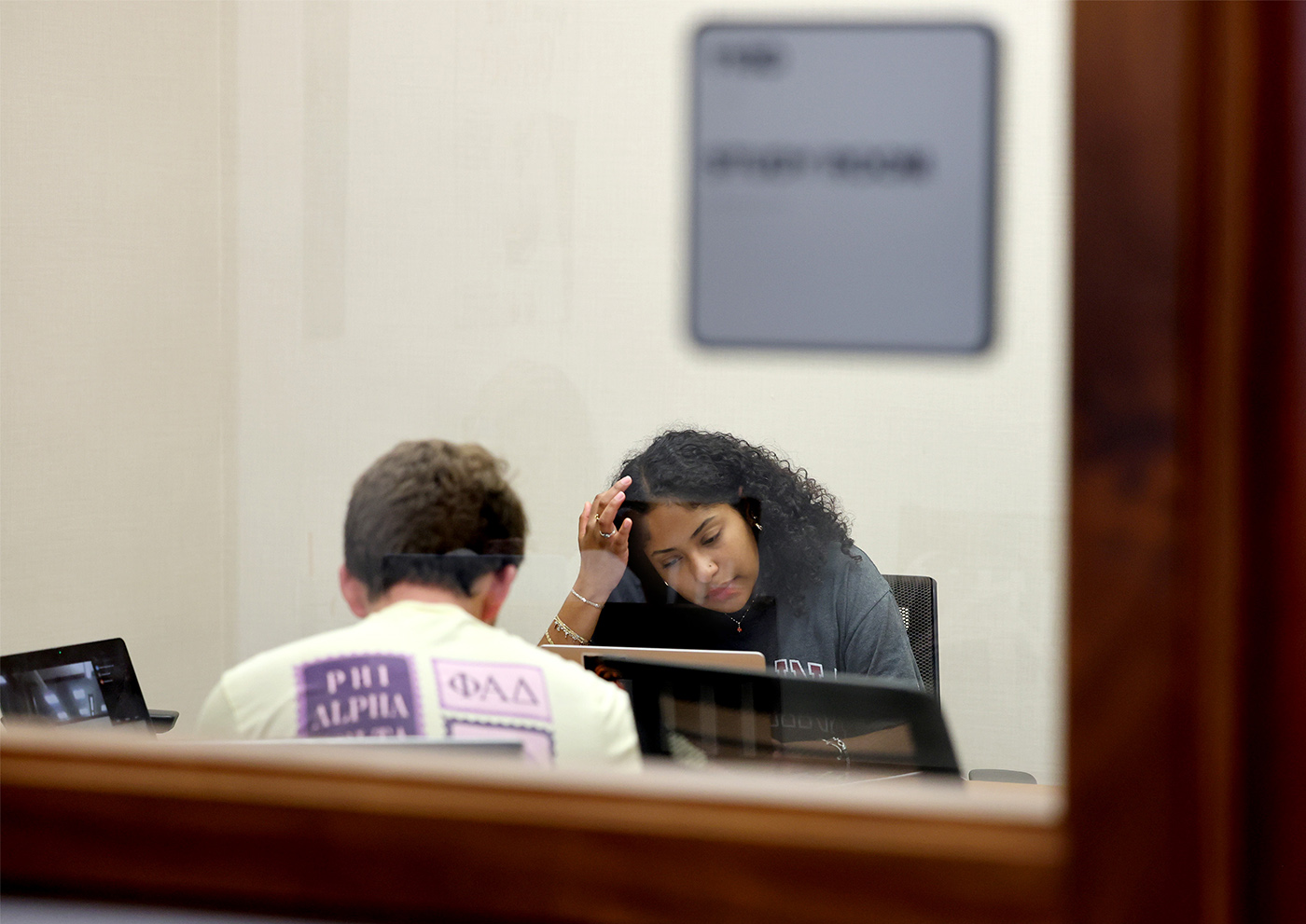
Seeking Refuge club co-presidents Charlie Winston and Sandoval plan the podcast’s April schedule. Photo by Lacy Latham/The Carolina Reporter
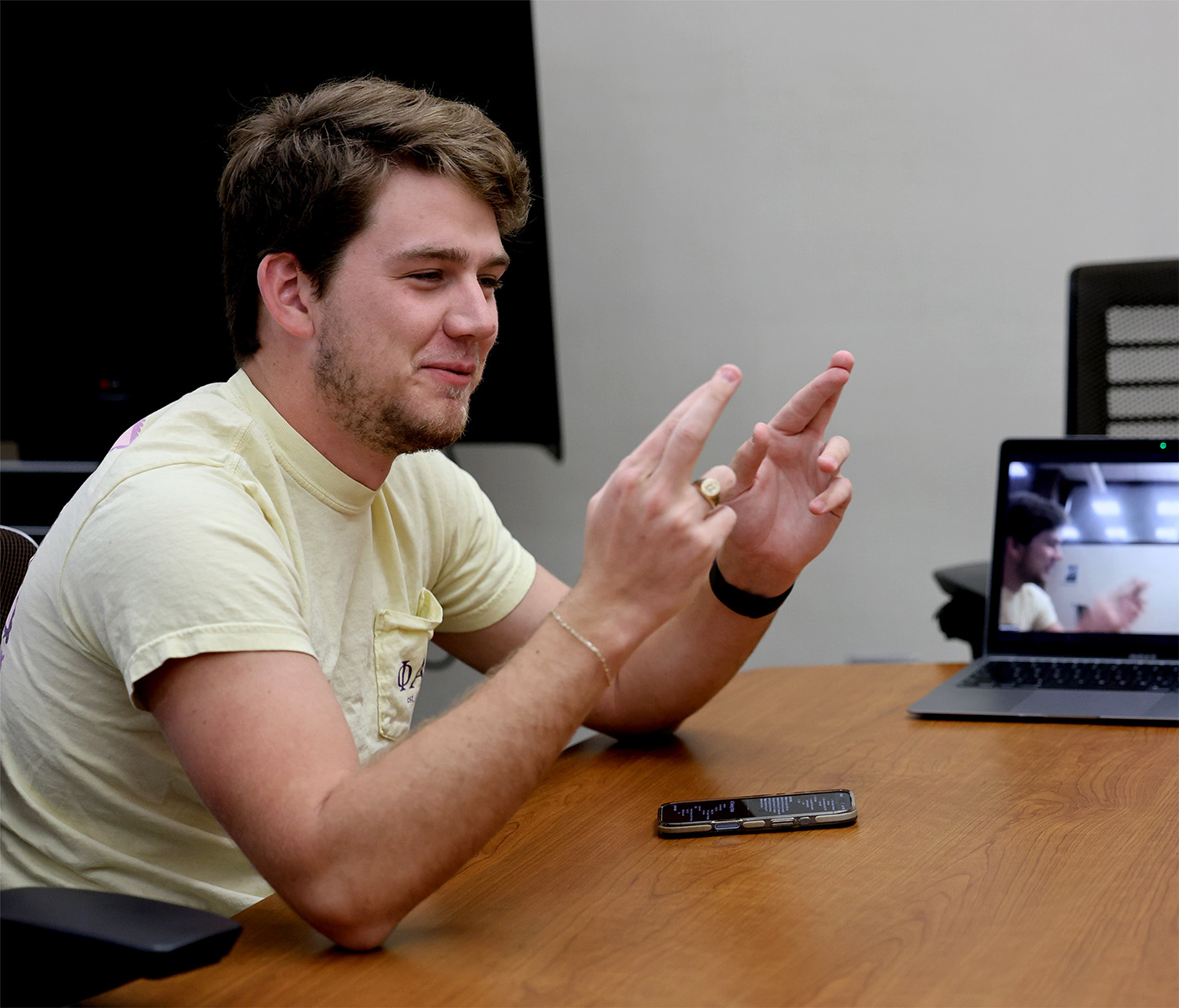
Winston crosses his fingers during the podcast meeting. Photo by Lacy Latham/The Carolina Reporter
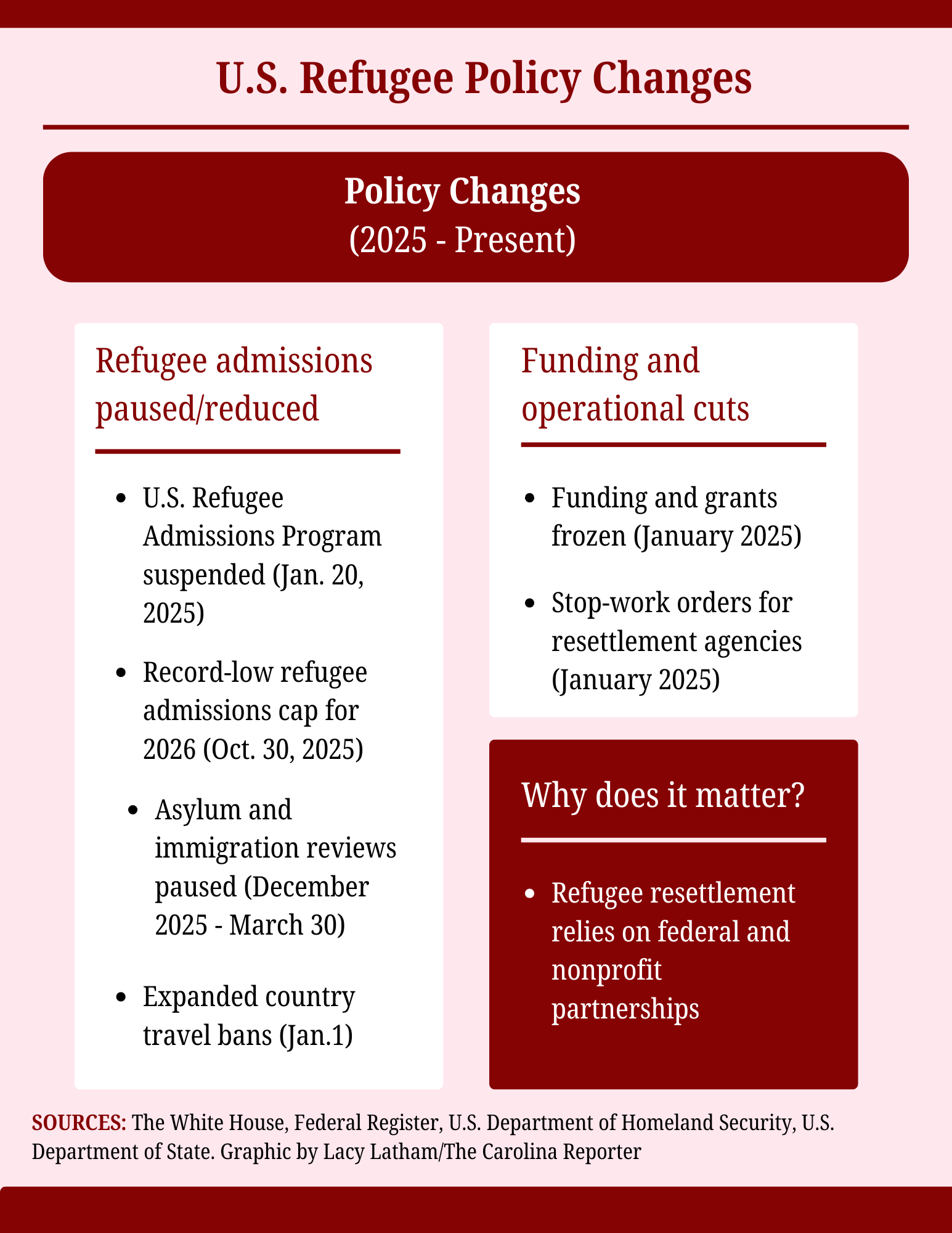
A graphic shows how U.S. policies regarding refugees, immigration and international travel have changed since President Donald Trump assumed office for his second term. Graphic by Lacy Latham/The Carolina Reporter