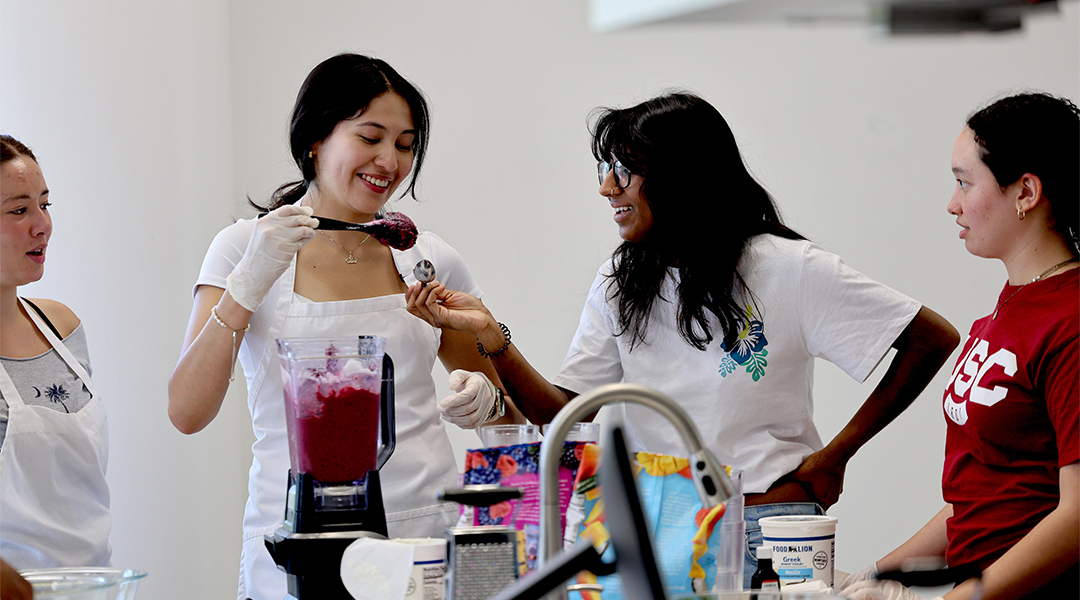
University of South Carolina upperclassmen Alison Hinojosa, left, and Marjan Nathani try the smoothie they made during the Adulting 101 cooking workshop April 10. Photo by Lacy Latham/The Carolina Reporter
Noise spills out of a kitchen classroom as students blend smoothies, toss salads and pull trays from the oven. Inside, the lesson is simple but essential: how to cook a meal.
The cooking workshop is part of Adulting 101, a University of South Carolina initiative designed to teach students practical life skills.
The series primarily targets juniors and seniors but is open to all.
The Carolina Experience office runs the program and has hosted five non-credit-hour workshops each full month this semester.
Topics range from cooking and sewing to financial literacy, commuting and self-defense.
Adulting 101 launched in spring 2025, about a year after the Carolina Experience office formed in response to student feedback. Amber Fallucca, the office’s director, said students wanted the university’s lauded first-year student experience to last throughout college.
“There are so many good resources designed and built for the first year … but it felt like a disconnect after that,” Fallucca said.
Student feedback now drives much of the office’s programming. Topics for Adulting 101 sessions are selected based on student surveys and input from student employees. Fallucca said Carolina Experience aims to answer specific questions.
“How do we support all students throughout the entire continuum of their time at Carolina?” Fallucca said. “How do we use student feedback to drive that conversation?”
The office recruits experts both on and off campus to lead workshops. Many instructors are faculty, staff and local professionals.
“We’re educating on good resources but also helping students launch beyond graduation,” Fallucca said.
The hands-on approach makes a difference for some students. Elizabeth Radecki, a junior studying geography and anthropology, attended the April 10 cooking workshop at the Center for Health and Wellbeing.
“This is the second time I’ve done it,” Radecki said. “I feel like I’ve learned so much and become more confident in my skills, … and it’s just also a good way to, like, talk and meet new people.”
Alison Hinojosa, a senior nursing major, said the workshop community is beneficial for learning unfamiliar skills.
“Adulting 101 classes, I think, reflect a good environment where people can be comfortable to practice new skills but also have a supportive environment where they can collaborate with others,” she said.
Other sessions tackle less tangible – but equally critical – skills. Nicholas Paschvoss, a career development coach for the Molinaroli College of Engineering and Computing, leads the “No Joke! Navigating Salary Benefits Workshop.” His most recent session, held March 1 at the Russell House student union, focused on professional communication and negotiating job offers.
Students used the session to ask detailed questions, from negotiating with long-term employers to deciphering contracts. Matt Thorpe, a junior political science major and Carolina Experience peer leader, asked about having education costs covered by employers.
Paschvoss said the workshops bring together students from different majors and backgrounds who might not otherwise interact.
“It’s valuable,” Paschvoss said. “The example of hearing from the sales industry and other industries that you typically don’t have that cross-over conversation with, it’s helpful to inform your own communication and message.”
He also emphasized the importance of access to the information, particularly for first-generation students.
“There are so many intricacies within the conversation to be aware of,” Paschvoss said.
The timing of the workshops aligns directly with real-life decisions for some students. Omomurewa Adebajo, a sophomore computer information systems major, said the salary negotiation session came just as she was considering asking for a raise in her part-time job.
“It just seemed like the perfect time to learn about that negotiation,” Adebajo said.
Fallucca said fostering connection is a central goal beyond skill-building, but the year-old program still faces challenges in garnering awareness.
Attendance has fluctuated as the office works to promote events and adjust scheduling to accommodate students who live off campus. Some workshops are also offered online to improve access.
“We very eagerly want to learn from the campus and student needs and really help support that,” Fallucca said. “Any ideas that help us and those endeavors are appreciated.”
Looking ahead, the Carolina Experience office hopes to expand partnerships and tailor workshops to specific student groups. Past collaborations have included sessions such as a car care workshop for student-athletes – because they asked for it. And conversations are underway now with the Office of Fraternity and Sorority Life.
“We’ll build the Adulting 101 session around your needs,” Fallucca said. “Tell us what your chapter has been talking about. … We’ll find the expert.”
The program also aims to deepen partnerships with groups such as the First-Generation Center and continue evolving based on student feedback.
“Our mission and our focus is to raise awareness of resources (and create a) sense of belonging,” Fallucca said. “We really are trying to build in that continuity all the way through and really kind of this feeling of preparation and confidence.”
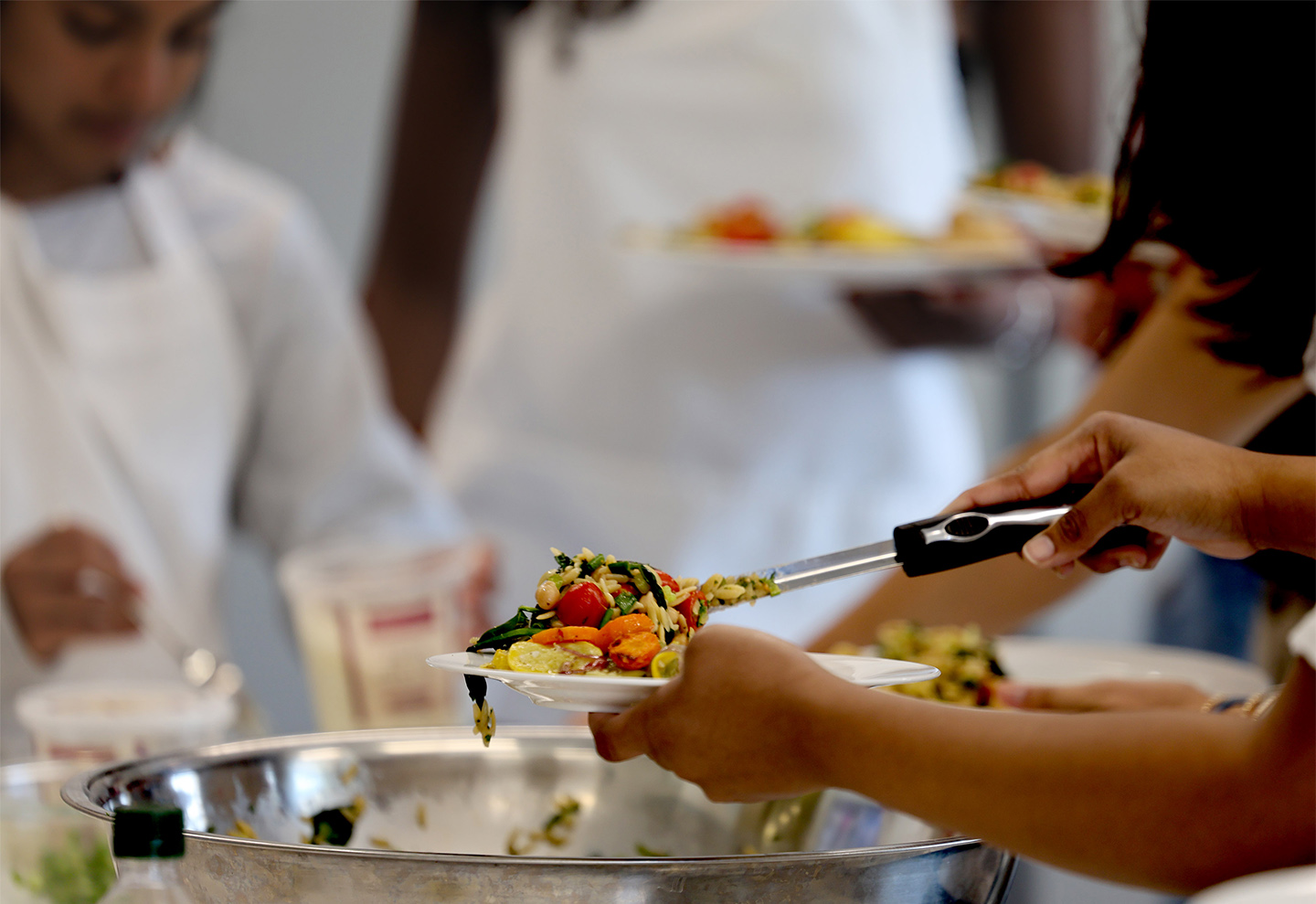
Students fill their plates with the salad, chicken and vegetables they made together during the cooking workshop. Photo by Lacy Latham/The Carolina Reporter
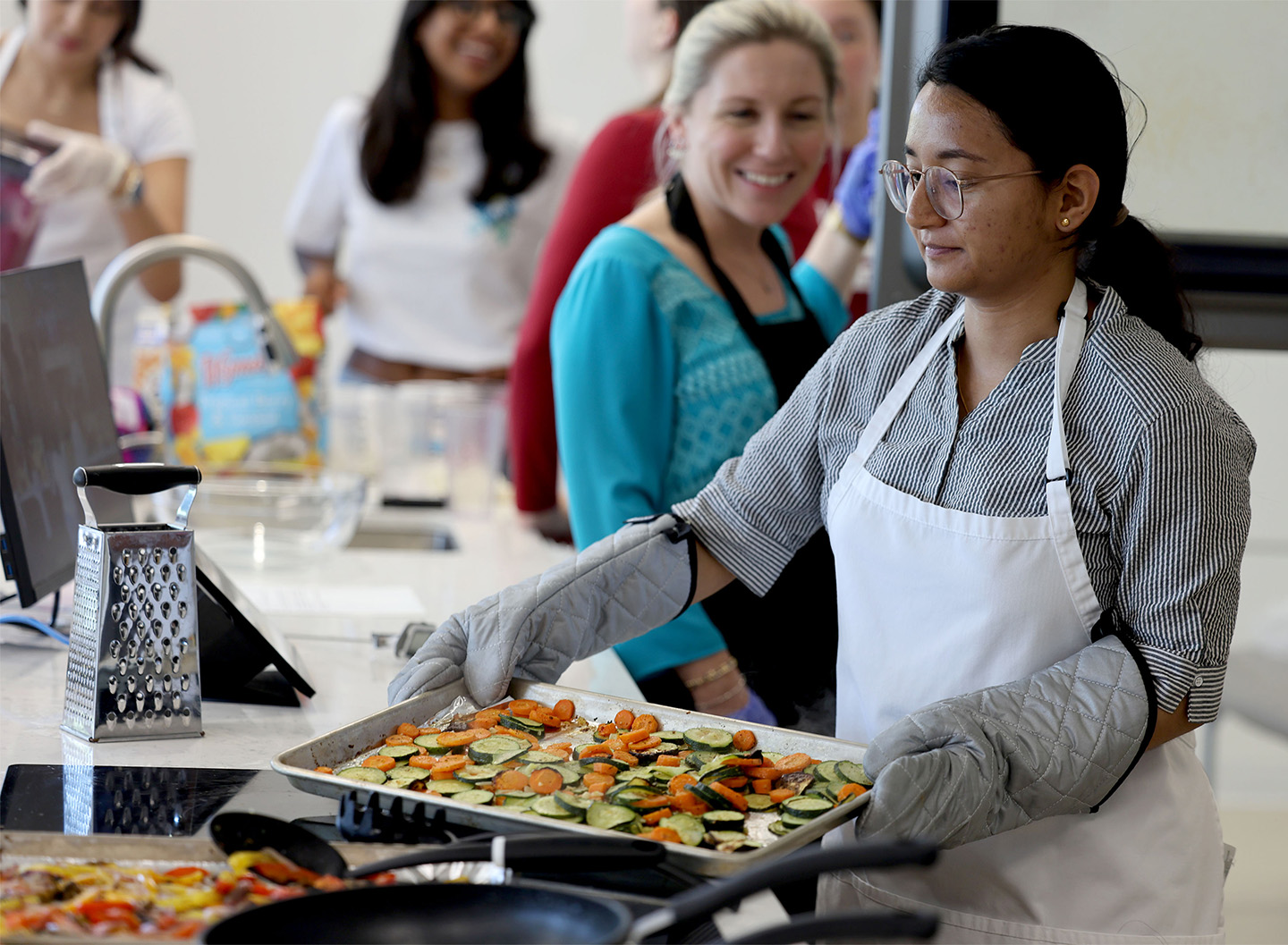
Dikshya Panta, a graduate student studying geography, pulls a pan of vegetables that the class prepared from the oven. Photo by Lacy Latham/The Carolina Reporter
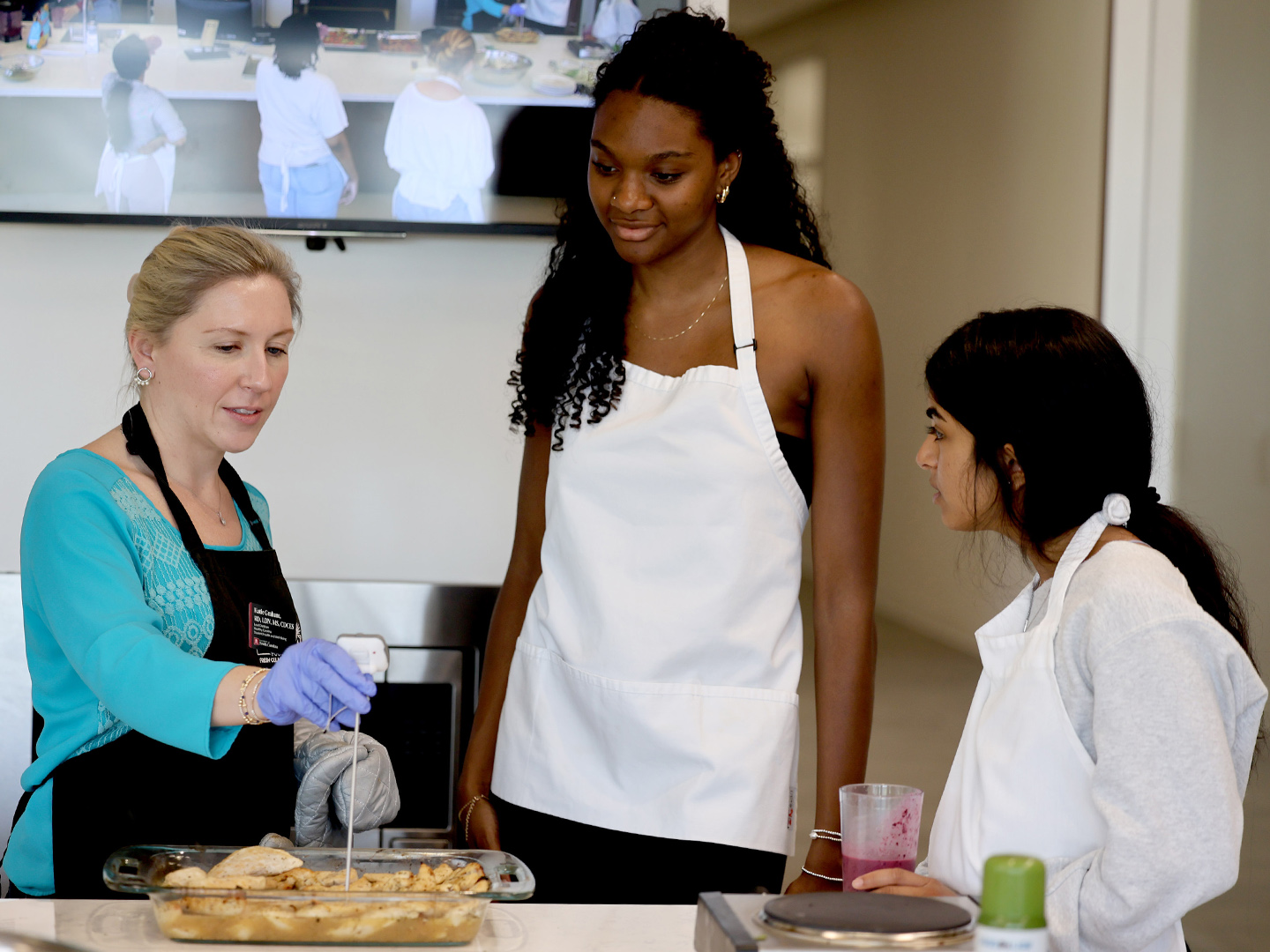
Katie Graham, a registered dietician and the cooking workshop’s instructor, shows freshmen Asong Holman and Aditi Poovadan how to check the temperature of cooked chicken. Photo by Lacy Latham/The Carolina Reporter