
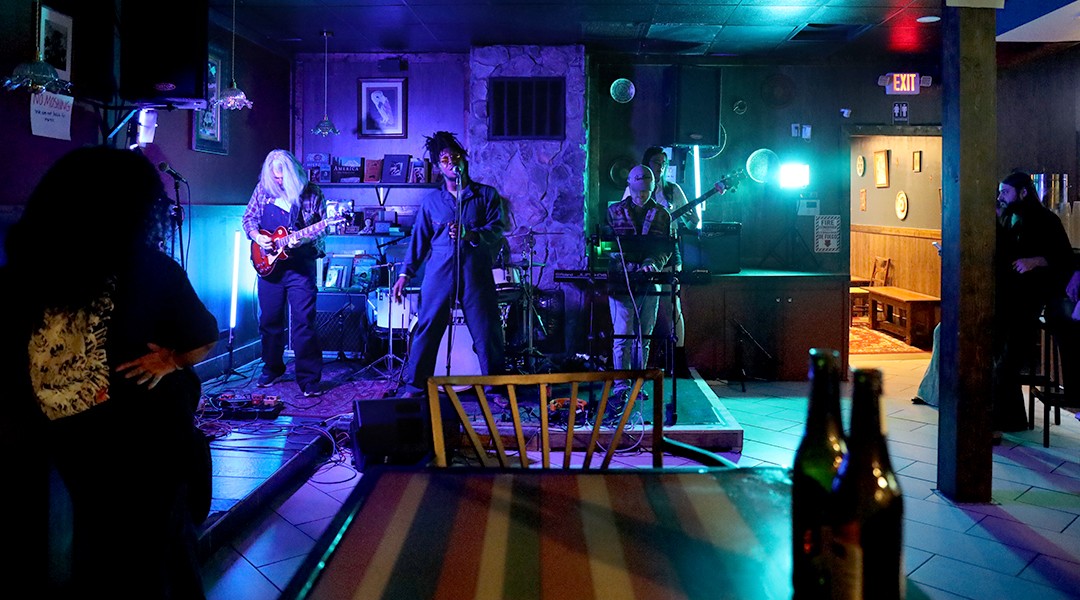
Opus & The Frequencies play a set at Cat’s Kettle, a Columbia eatery and music venue, on April 7. Photo by Colin Elam/The Carolina Reporter
If you go to a concert at Cat’s Kettle, you’ll see Connor Vogt dashing all over, running the soundboard, setting up equipment and taking food and drink orders.
“It’s a little hectic sometimes,” Vogt said.
The Charlotte native has been playing in bands since he was 10 and later got into studio recording. Vogt met Brandon Dowell, the owner of the restaurant and music venue that shares a building with PT’s 1109, while recording Dowell’s band.
Vogt, who does most of the booking for Cat’s Kettle, aims to platform smaller bands in particular, he said.
“I think the world would be a better place if everybody listens to their neighbors down the street that are making a record that’s better than the one you’re hearing from LA,” Vogt said.
That focus makes Cat’s Kettle one of only a few venues in Columbia to provide a stepping stone for small-time artists looking to play their own songs, according to Tony Opus, the front man of Columbia band Opus & The Frequencies.
Columbia has a robust music scene full of heavy hitting acts, Opus said. But smaller artists can have a hard time finding venues to play at, he said. Most of the venues around town look for cover bands or groups that already have strong name recognition. That leaves little room for small, original acts to play their own songs and gain a following, he said.
“There’s a high ceiling to get to, which is impossible for smaller artists,” Opus said.
But Vogt looks for smaller, local bands to bring their original music to the stage. He keeps an eye out for groups he thinks will put effort into promoting the venue and that would put on a good show, regardless of genre.
Cat’s Kettle aims to be as accessible as possible to let a greater variety of customers visit. It’s clean, serves healthy food and allows all ages, Vogt said. It’s a place your mom can take you to, he said.
“We’re not a bar, we’re a restaurant,” Vogt said. “Anybody can come. It’s not a place where people are going to go get trashed, and there’s not going to be weirdos in the bathroom doing coke or something like that.”
But while the venue doesn’t feel dirty, it doesn’t feel commercial either, like some of the venues that prioritize cover bands, Vogt said.
“We want you to care about the things that you create, rather than doing a really good job covering Tom Petty,” Vogt said.
Do it (music) yourself
Expanding Columbia’s DIY scene is one way the community could strengthen local bands, Opus said.
DIY refers to more informal and often countercultural music scenes.
Max Greenzweig is a local promoter that books and runs DIY shows in and around South Carolina. Putting together the bill, promoting shows online and with flyers, running sound and working the door are some of the many roles Greenzweig takes on.
“It allows you to create your music (with) a lot less worry,” Greenzweig said. “It’s a lot more of a laidback environment.”
Columbia’s DIY scene stands out among nearby cities. Greenzweig can count on a decent turnout for shows in the capital city, even when the crowd may not be familiar with the bands playing, they said. Greenzweig lives in Greenville, where audiences are pickier about what shows they go to.
Concerts in Columbia are “much more of a community event,” Greenzweig said. If a band was looking to play its first show, Greenzweig would send them to Columbia rather than Greenville, they said.
Columbia’s place as the capital of a conservative state puts pressure on the members of countercultures. And that pressure strengthens those communities, Greenzweig said.
Hazel Chapman plays in a Columbia screamo band named theyslashthem.
Theyslashthem plays in a variety of places, ranging from garages to more formal venues such as New Brookland Tavern.
Formal venues are typically better organized, Chapman said. For bands, this helps with determining when to arrive and what needs to be done after getting there. They sometimes have technology like stage monitors to help a band hear themselves play.
On the other hand, Chapman finds the crowds at DIY venues often more responsive to the bands. Compared to formal venues, attendees at a house show are more likely to know some of the people playing, and the more intimate dynamic makes it easier for the band to interact with the crowd, Chapman said.
“There’s this weird thing that happens whenever you see a musician on a stage versus, like, on the floor with you,” Chapman said. “There’s a sense of formality at venues that is sort of inherent to the space.”
The casual nature of those shows also puts less pressure on the bands, particularly when they are having a bad night, Chapman said.
“If you’re playing at a DIY venue and your set sucks, and your band sucks, I still think you can get people to dance, which is honestly all you can hope for at a show,” Chapman said. “If you see people dancing, then you know you’re doing something right.”
When DIY venues run into problems with the law – whether it’s a business license problem, an alcohol problem or neighbors complaining about noise – a music scene can face a lack of space to perform. The trend for those types of venues is for one to open up for some time, get busted and for another house to fill the gap after a while.
Expanding the scene
Greenzweig encourages members of DIY scenes to start their own bands, go to shows and host them if possible.
That’s how to grow a DIY community, they said.
For the music scene as a whole, Vogt said he feels that radio stations and other local media could play a big part in promoting up-and-coming bands.
Support with marketing is one of the best ways Columbia’s institutions could help its music scene grow to match larger cities such as Charleston and Charlotte, according to Opus. In Charlotte, bands without big names can still draw crowds, he said.
“That’s how you get a following,” Opus said. “If people are invested into the scene in general, then a ‘nobody’ can go there and become somebody.”
For regular people, the best way to support local music is showing up in person, Vogt said.
“You could listen to somebody on Spotify or TIDAL, or whatever, every day of your life, and that artist is never going to know you like them until they see your face at a venue,” Vogt said.
Merchandise is also an avenue for financial support. A T-shirt could match the value of thousands of streams, Vogt said.
It may not have enough support, but Columbia’s scene has an immense amount of potential, Opus said.
“I believe in Columbia,” Opus said. “I’m a nobody. And they believed in me. We were just some guys that got an hour show at White Mule, and now look at us. We have a garage full of equipment that can put on festivals.”
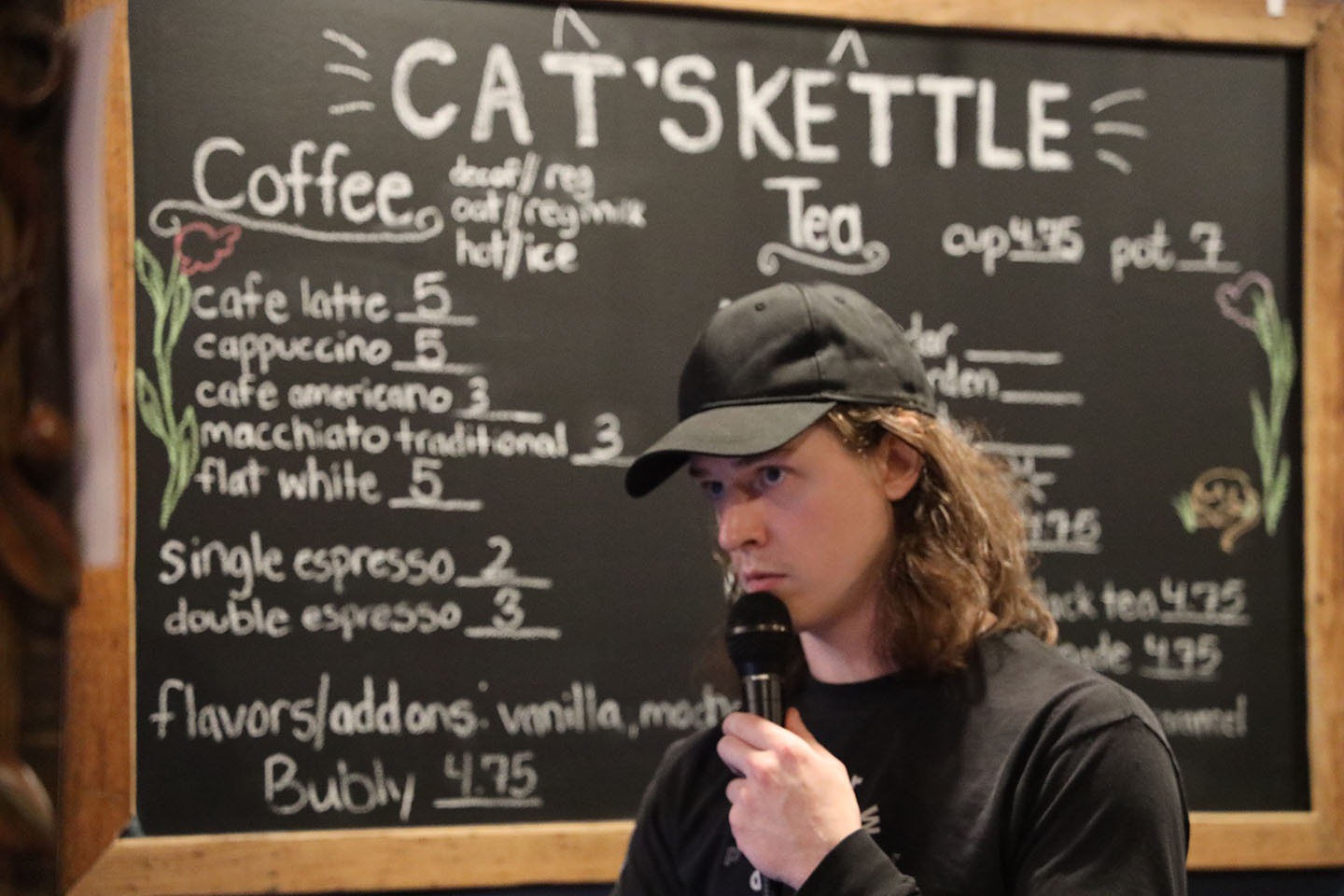
Connor Vogt mans the soundboard at Cat’s Kettle. The venue, adjacent to PT’s 1109, opened in July 2025. Photo by Colin Elam/The Carolina Reporter

Tony Opus is the lead singer of Opus & The Frequencies. Venues such as Cat’s Kettle and New Brookl
and Tavern are some of the few that lay stepping stones for smaller local artists, he said. Photo by Colin Elam/The Carolina Reporter
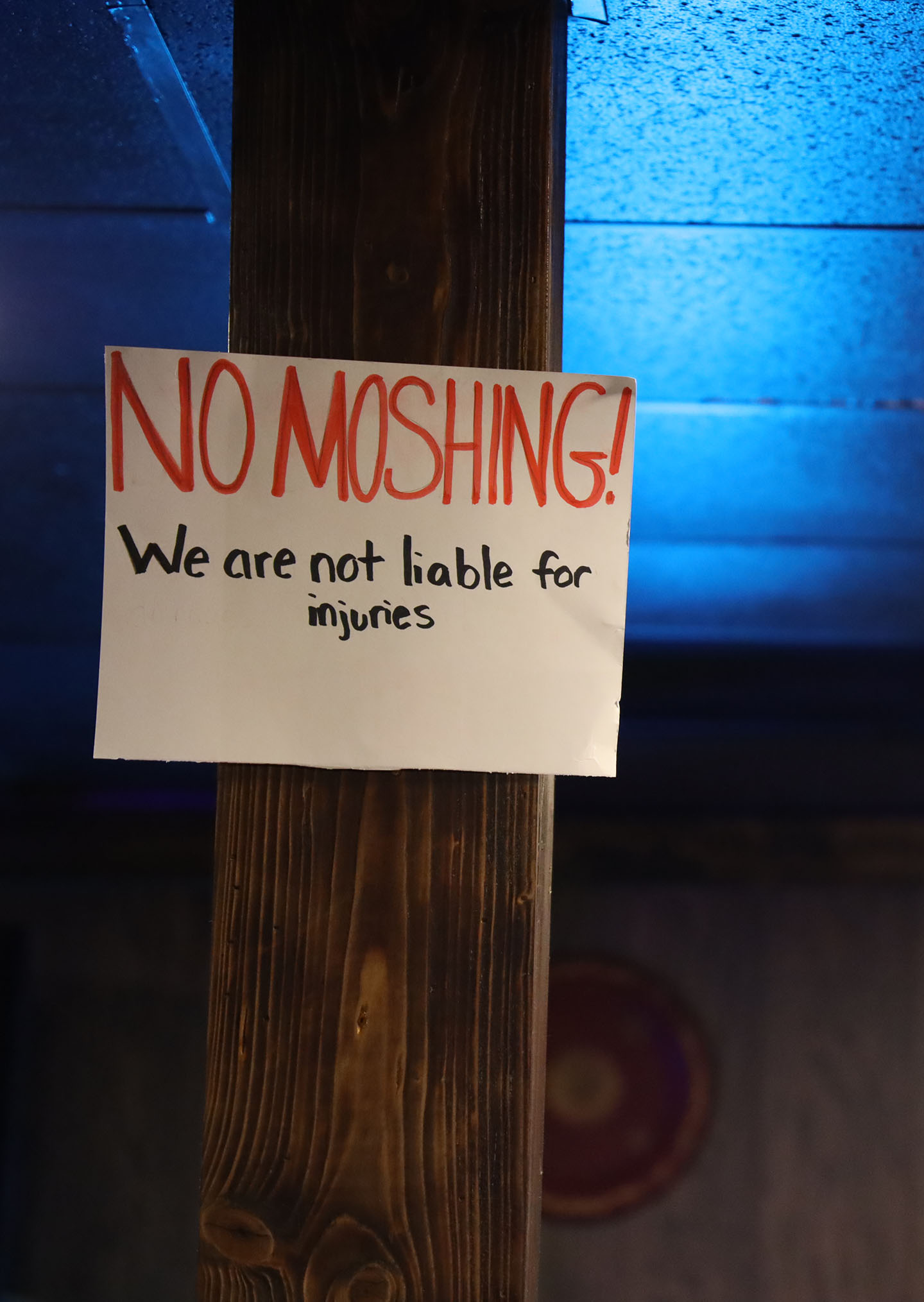
A sign warns patrons not to get too rowdy at Cat’s Kettle. Photo by Colin Elam/The Carolina Reporter
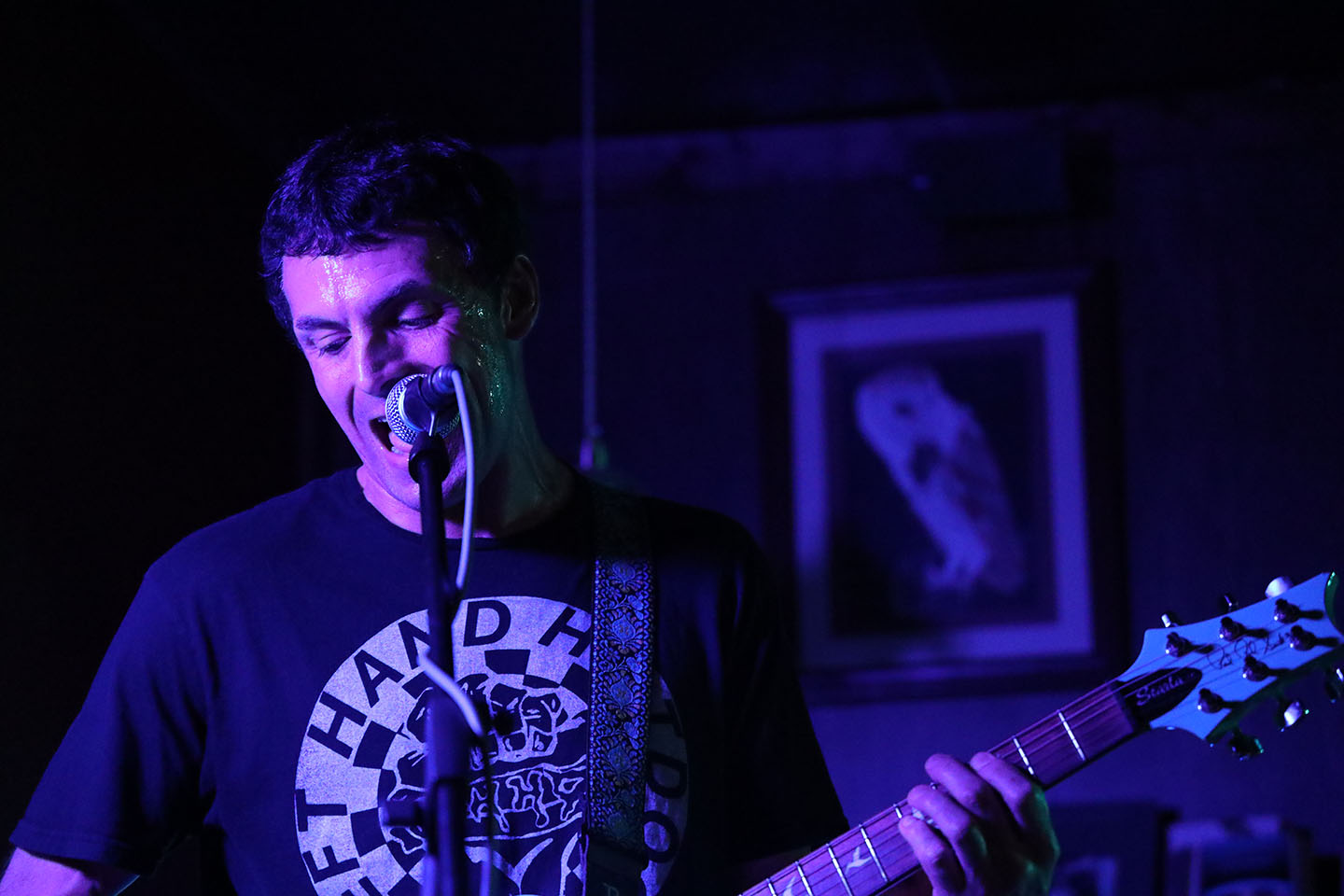
Aiken band Public Mind traveled to Columbia for a show at Cat’s Kettle on April 7. Photo by Colin Elam/The Carolina Reporter

