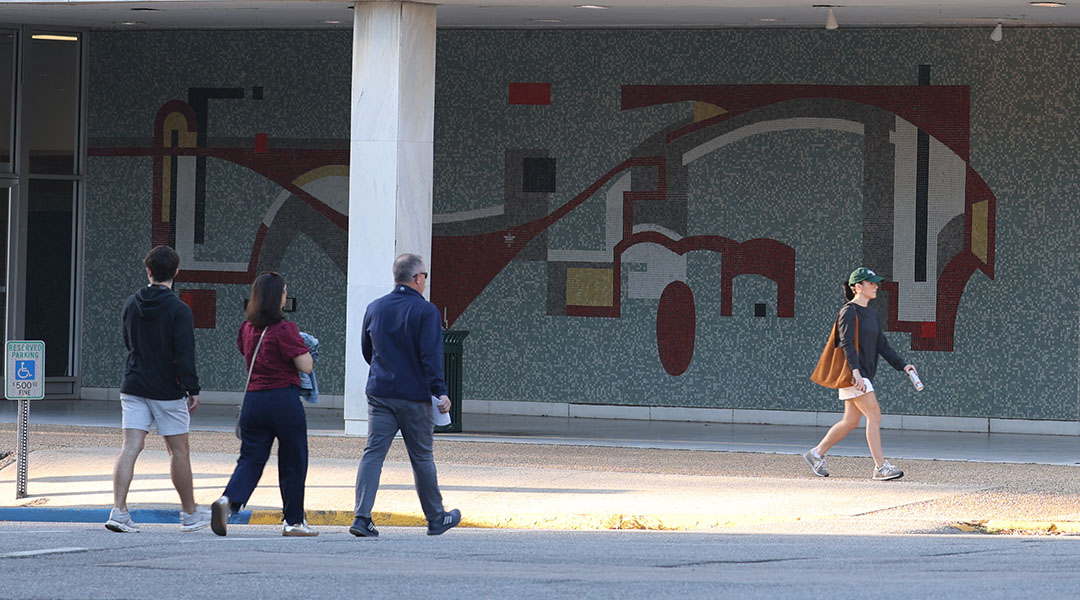
The James F. Byrnes Building sits at the foot of the Horseshoe at the University of South Carolina. The mosaic on the building’s front was created during the modernist art movement after World War II by Gilmer Petroff, a New York City artist who lived for a while in South Carolina. Photo by Ansley Peterson/Carolina Reporter
A piece of art sits just across from the historic Horseshoe, often overlooked by those passing by.
The abstract, mid-century mosaic on the James F. Byrnes Building was built into the building’s original design.
“The artist worked for the firm that designed the building,” said Susan Felleman, a professor of art history at the University of South Carolina.
Artist Gilmer Petroff, from New York City, was known for his postwar and contemporary paintings. He lived in Richland County until his death in 1990.
The mosaic adds value to the building, experts say. But some still fear for its future because it’s near what soon will be a construction site on the campus.
Felleman said the mosaic is one of her favorite of the city’s public artworks.
“I love them because they’re essentially abstract and really colorful and they just add so much to the environment around here,” Felleman said.
The building was designed in 1957 by Lyles, Bissett, Carlisle, and Wolff – a prominent architecture firm in Columbia from the 1940s-70s.
The mosaic itself can convey a story and invite people to look deeper than the surface level of a decorative facade.
One of Felleman’s students formally analyzed the mosaic to determine the artist’s intentions.
“It is telling an abstract, but not totally unrecognizable history of architecture,” Felleman said. “The different forms in it are really basic architectural forms and (the student) argues that they were in a chronological order.”
Felleman sees value in protecting the mosaic and the distinguished building it’s attached to despite modern architecture not getting as much attention and public interest.
Local preservation consultant Staci Richey shares the sentiment.
She said the artwork elevates the building’s significance and increases the need for preservation.
“They certainly do beautify the pedestrian’s experience as they walk past these pieces,” Richey said. “They create an ‘outdoor museum’ of sorts.”
This mosaic is vulnerable because of its location and the potential for removal or demolition depending on future plans for the Sumter Street building.
“The Byrnes Building mural is tile set in mortar, it wouldn’t be that easy to remove and preserve in some other location,” Richey said.
The building has been eligible for the National Register of Historic Places since 1993, according to the Columbia Downtown Historic Resource survey of 2020, but has yet to be added.
Columbia Architect Tom Savory said being on the register would protect the building should public dollars ever be used for a potential renovation.
Savory fears for the building because of USC’s growing campus and the fact that some people consider the building an eyesore because its style is different from the rest of the campus.
He frequently faced the question of ‘Why does it matter?’ with regard to historic preservation during his five years chairing the city of Columbia’s Design and Development Review Commission, which approves work in the city’s historic districts and urban design areas.
In the case of the Byrnes Building, it is pedestrian friendly, with its entrance at the street corner and its unique mural feature making it a good “urban neighbor,” Savory said.
The Byrnes Building currently houses the USC Official Campus Store and the Office of Veterans and Military Service on the first floor as well as the office of Student Conduct and Academic Integrity on the second floor.
“It would be a shame to demolish it,” Savory said.
The future of the Byrnes Building is unknown as of right now, said USC historian Evan Faulkenbury.
USC has identified the South Main Street corridor behind the Byrnes Building as an area for expansion, according to its long-term campus management plan, USC Next.
USC bought and tore down Main Street’s Hunter-Gatherer Brewery & Ale House, Columbia’s first micro-brewery, which sat a block behind the Byrnes Building.
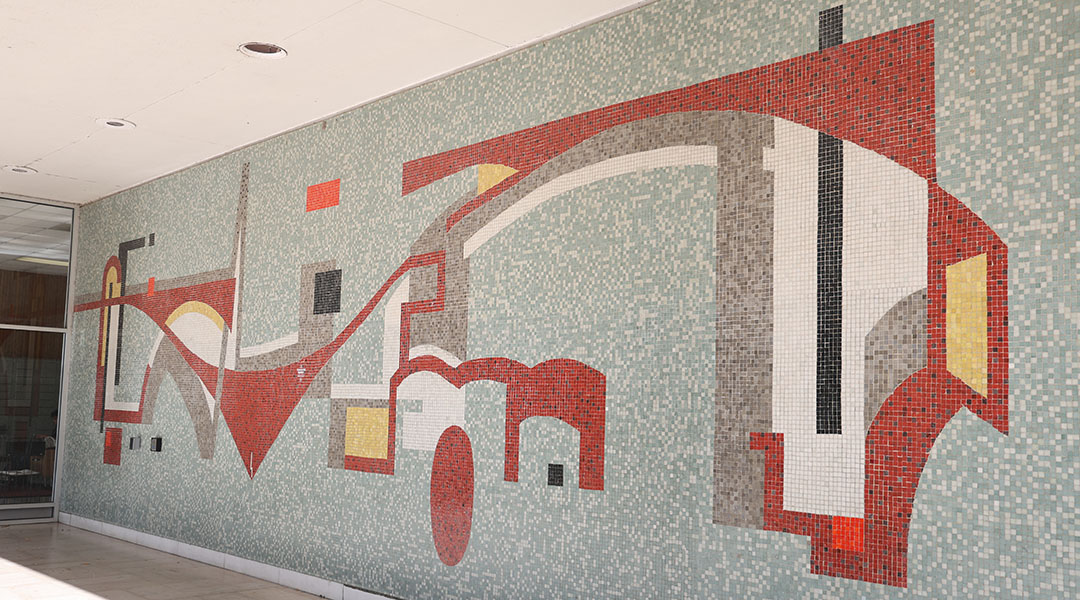
The 1957 mosaic by Gilmer Petroff is 12 feet tall by 40 feet wide and is made entirely of Venetian tiles. Photo by Ansley Peterson/Carolina Reporter
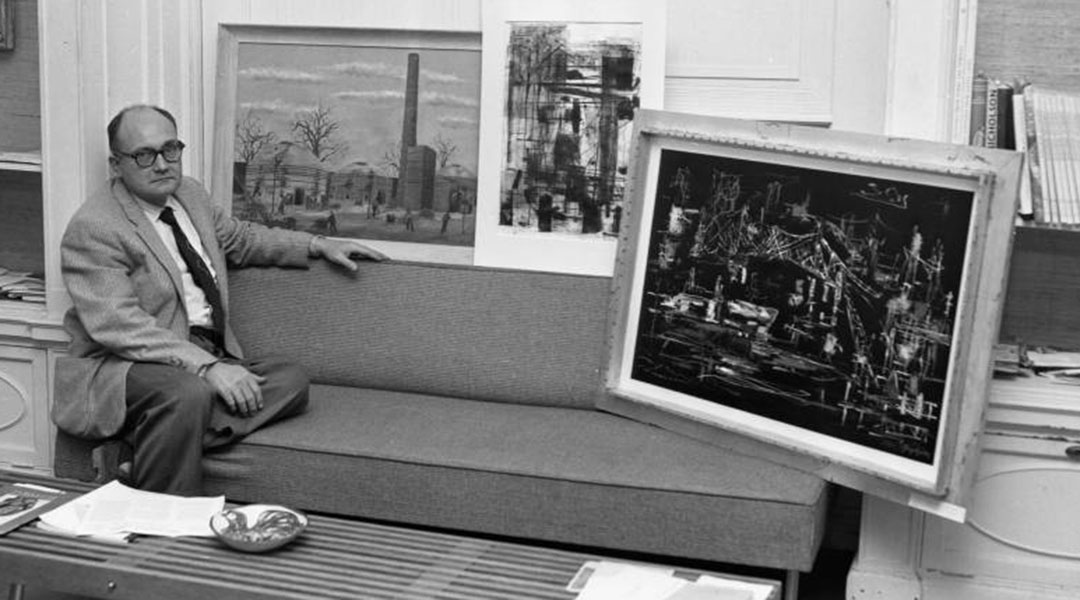
Gilmer Petroff sits with some of his paintings in the Columbia Museum of Art on Feb. 8, 1957. Photo by Tom Nebbia/The State newspaper photograph archive/Carolina Reporter
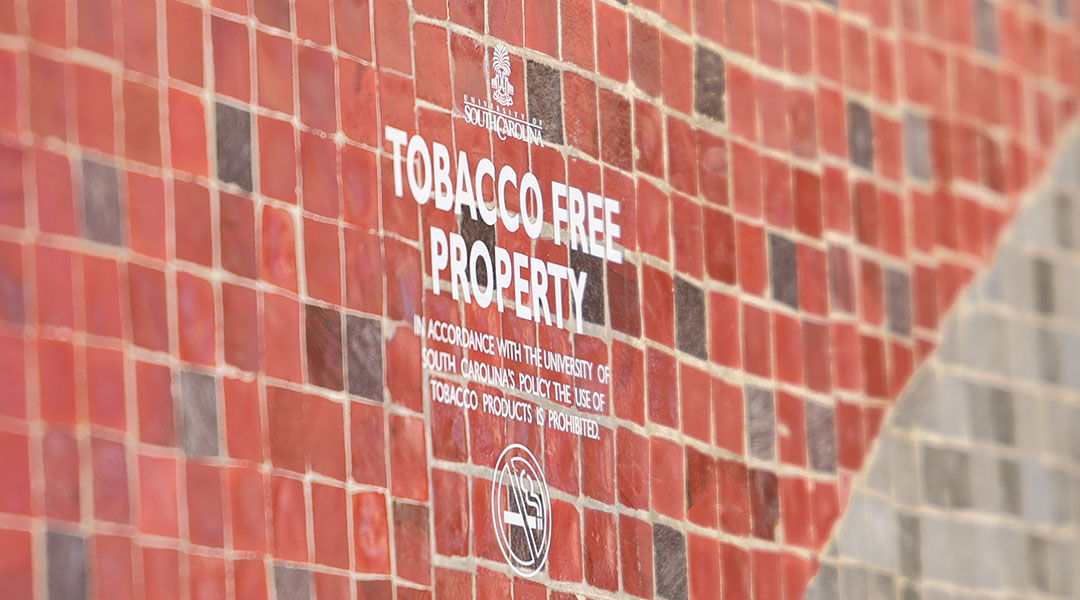
A modern sign was placed in the middle of the mosaic. “It’s affecting how it was meant to be seen,” said professor Susan Felleman. Photo by Ansley Peterson/Carolina Reporter
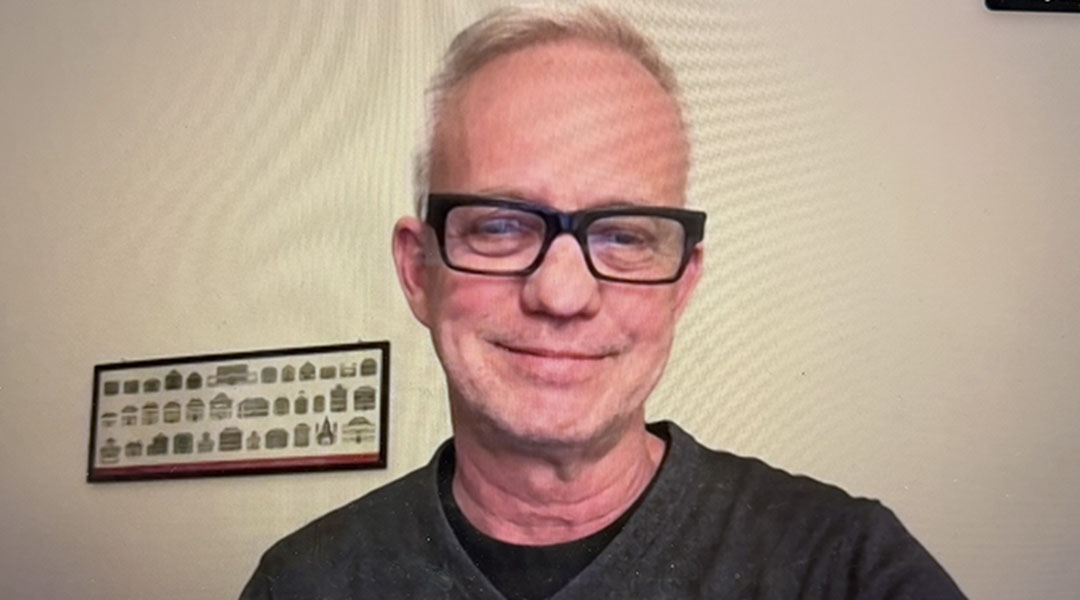
Tom Savory is a Columbia architect who’s now serving as the Clemson School of Architecture professor-in-residence in Genoa, Italy. He has given lectures on Columbia modern architecture that included the Byrnes Building. Photo by Ansley Peterson via Zoom/Carolina Reporter