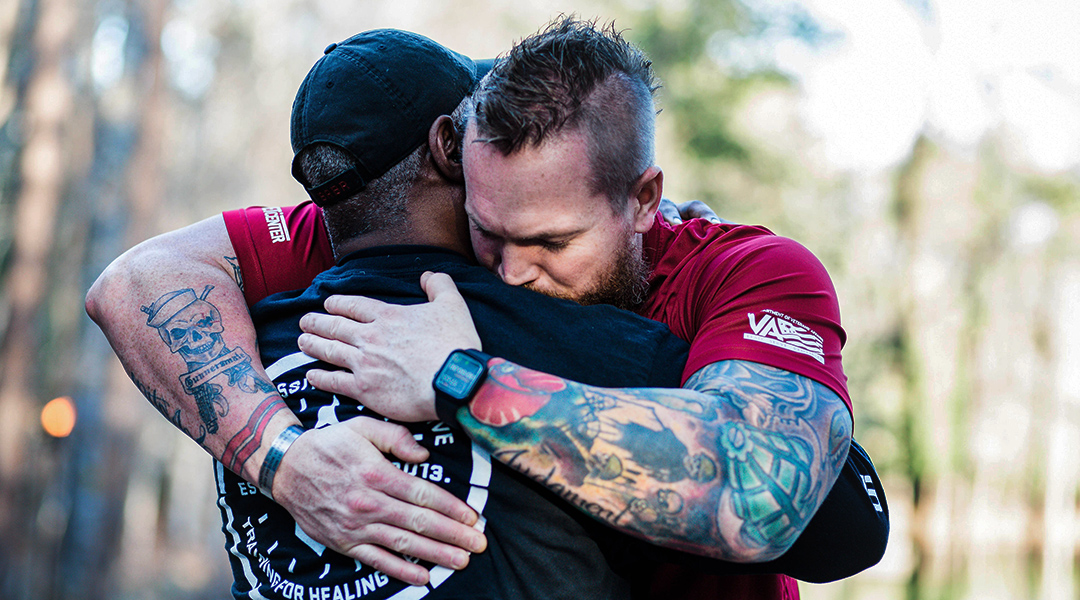
A Warrior PAATH program participant shares a hug with his guide. Photo courtesy of Big Red Barn Retreat/Carolina Reporter
Tucked away in the forest outside of Blythewood, a large red barn marks a place of reflection and recovery for military veterans and first responders.
Big Red Barn Retreat Executive Director Mitch Ray, driven by deep personal connections and passion, is trying to make a positive impact.
“Our heroes are foundational to our community and our society at large,” Ray said. “I’m proud to support them any way I can.”
The Blythewood-based Big Red Barn Retreat is a nonprofit focused on helping treat and prevent post-traumatic stress disorder, commonly known as PTSD. Marked by the eponymous red barn, the site looks to provide an outdoor, active space for participants among people that can truly relate to their experiences.
Retired police officer and South Carolina Army National Guard veteran Jemery Ashford said he needed something like that.
“I really didn’t know at the time what was going on with me, and the PAATH program was recommended,” Ashford said. “I was able to make my life make sense, and I was also able to use the practices that were given to me here for regulation, to become a better version of myself.”
Ashford after graduating became a guide for the Warrior PAATH program, or Progressive and Alternative Training for Helping Heroes, which provides the program for free, through donations. The program, which lasts a total of 90 days, begins with a seven-day residency at the retreat’s lodge.
A report by U.S. Veteran’s Affairs said nearly 18 veterans a day were victims of suicide in 2022, with the rate rising higher since 2001 despite a smaller population. The Center for Advancing Health estimated 30% of first responders have been diagnosed with PTSD.
Ray said the activities, including archery, horseback-riding and simply sitting and sharing experiences, are designed using evidence-based approaches to help people relax, relate and feel comfortable facing their struggles.
“If you carry things around and never tell anybody about it or disclose (to) somebody about it, that can be really damaging,” Ray said. “If you do share it with people that you trust, that can be transformational.”
Warrior PAATH doesn’t end after participants leave the lodge. The program includes an 83-day follow-up where participants do both virtual check-ins with guides and just keep in touch with the rest of their group.
Ashford said he joined the organization’s staff because he wanted to help others feel the same relief and fulfillment he achieved.
“As a person in the service community, it’s kind of natural for us, and that’s law enforcement, any first responder, veterans, all of us,” Ashford said. “We have a natural affinity to give back.”
The retreat also offers a training program, begun in 2022, called Struggle Well, which offers contractual services to local first-responder agencies. The team travels across the state and helps the agencies build a positive culture that helps people, whether they’re veterans or new recruits, feel supported in the face of challenging situations and, hopefully, prevent PTSD.
Ray said his biggest hope for the future of the organization is to expand Struggle Well throughout the state and onto military bases such as Columbia’s Fort Jackson, the Army’s largest training base. John Tjaarda, The Big Red Barn Retreat’s director of development, focuses on general outreach and fundraising. Tjaarda said spreading the word about what the organization has to offer is his top goal.
“We’re one of the greatest kept secrets, and we don’t want to be,” Tjaarda said. “Our best promotion is the graduates, people who have gone through the program and come out the other side.”
Tjaarda said along with donations, he organizes a variety of fundraising events, including a Rodney Atkins concert on Veterans Day. Though Ray and Tjaarda aren’t veterans themselves, they know many as family and friends.
Ray said that no matter what your background is, everyone can find common ground on mental health and recovery.
“It’s not unique to them,” Ray said. “Everybody experiences life and experiences, challenges and traumas. Myself, John, you.”
Ashford said that while awareness of PTSD has risen, people still need to be educated on what can come after.
“You can ask about any group of people, it doesn’t matter what size it is, have they ever heard of post-traumatic stress. Everybody’s heard of that,” Ashford said. “But then, if you ask somebody, same group of people, if they’ve heard of post-traumatic growth. If anybody raises their hand, it’s one or two people.”
Ashford said continuous growth is one of the most critical aspects of the program’s long-term impact, something he’s incredibly grateful for.
“I never look at this as a thing where I’m done,” Ashford said. “I’m putting these things in place in my life now. It’s a constant daily work. I’m always working on myself and being immersed in it on a day-to-day basis with people that are on the same walk I am.”
Video by Elliott Simpkins
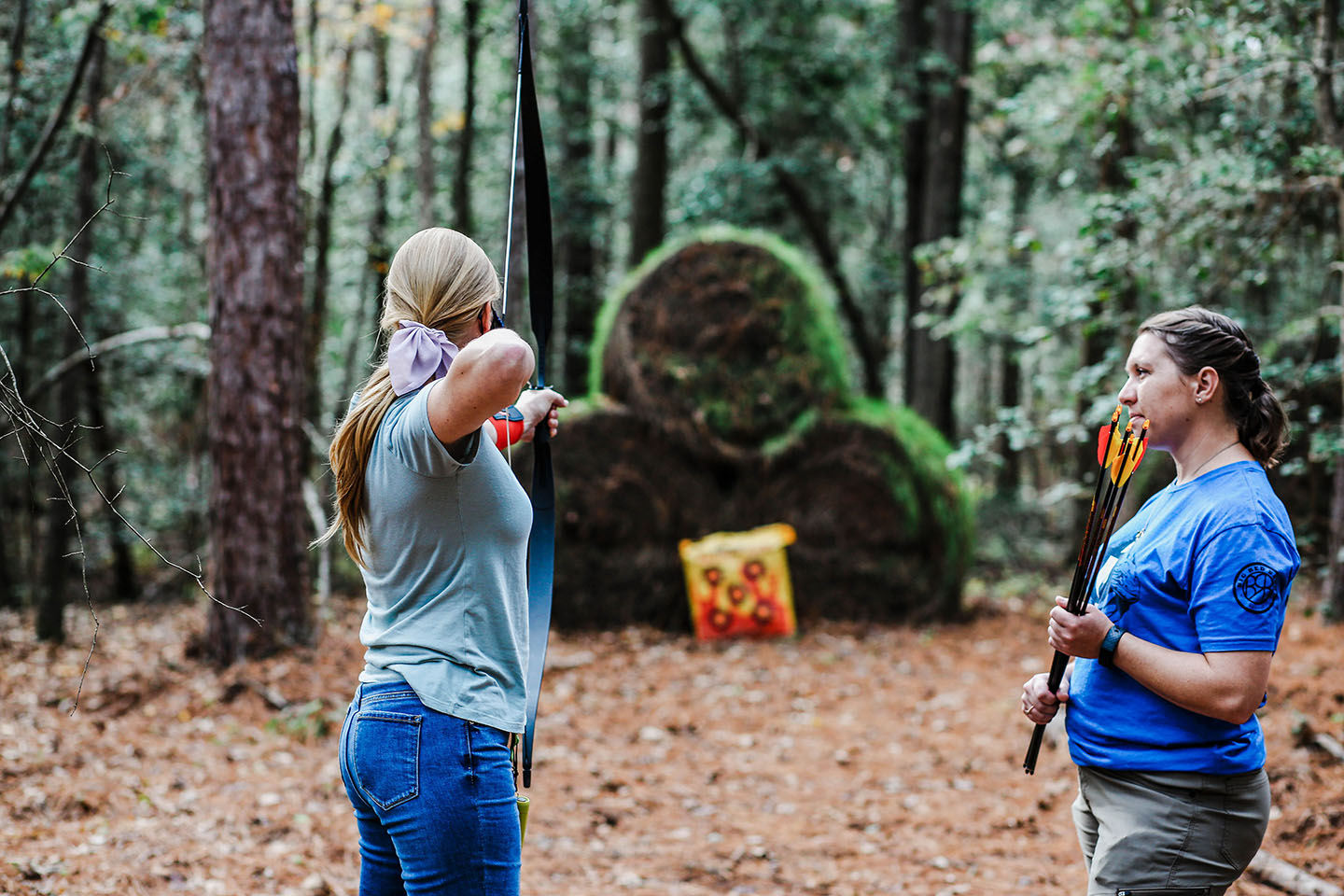
A program participant engages in archery, one of several activities available during the residential program. Photo courtesy of Big Red Barn Retreat/Carolina Reporter
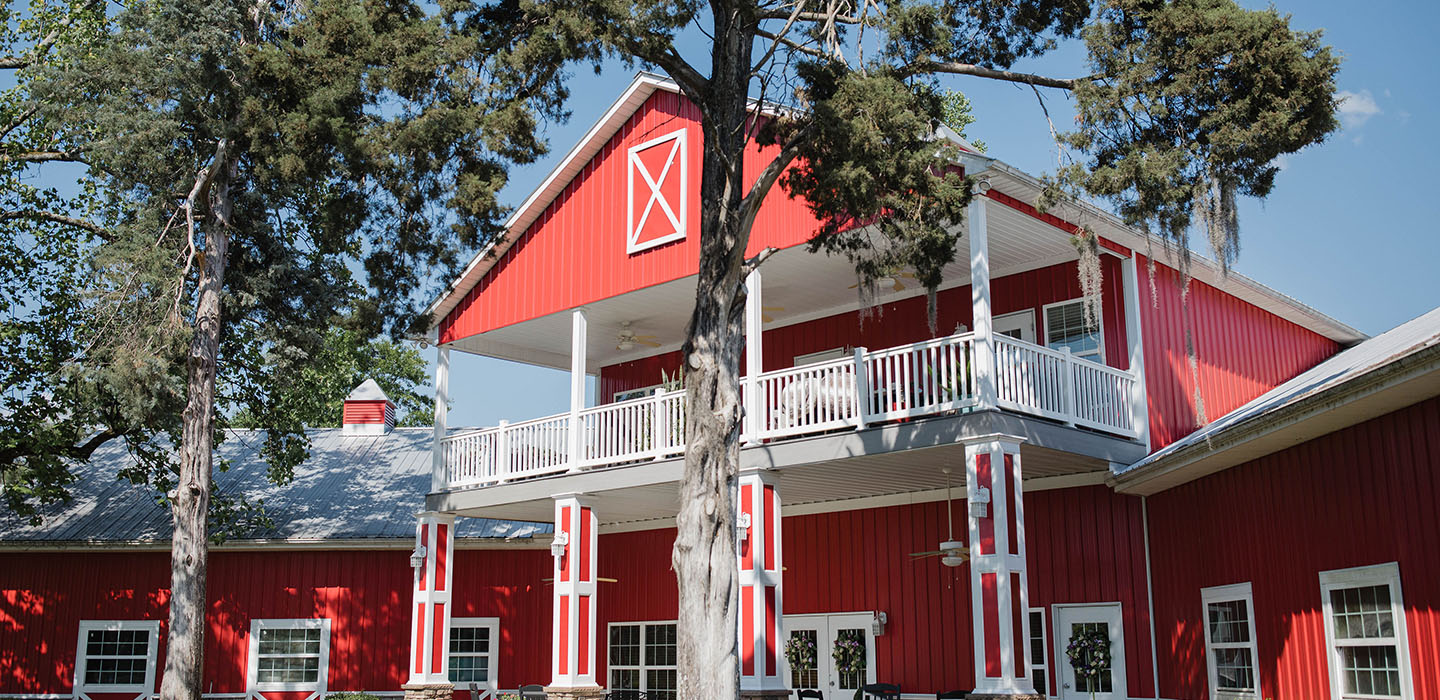
A large red barn is immediately visible when entering the Big Red Barn Retreat property. Photo courtesy of Big Red Barn Retreat/Carolina Reporter
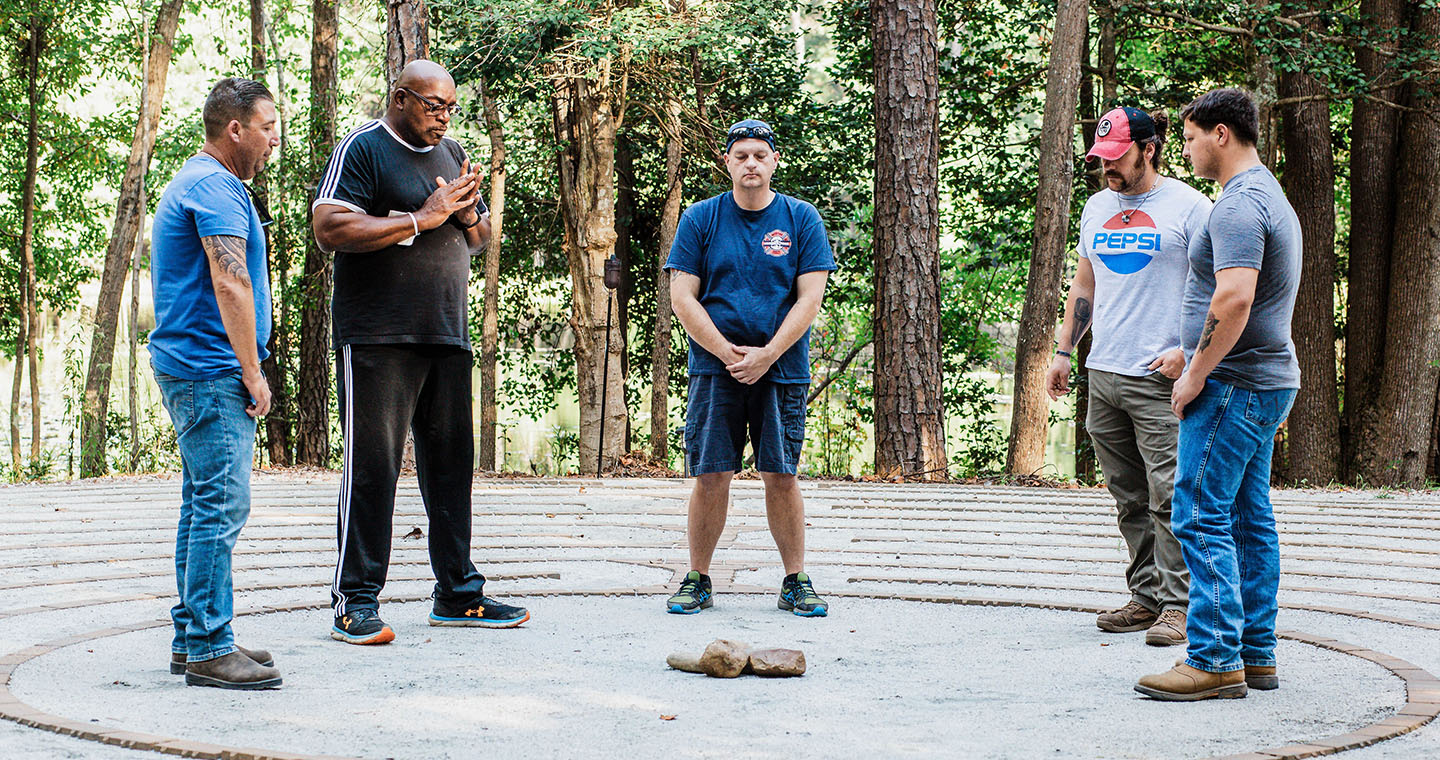
Participants reflect in a circle. Photo courtesy of Big Red Barn Retreat/Carolina Reporter
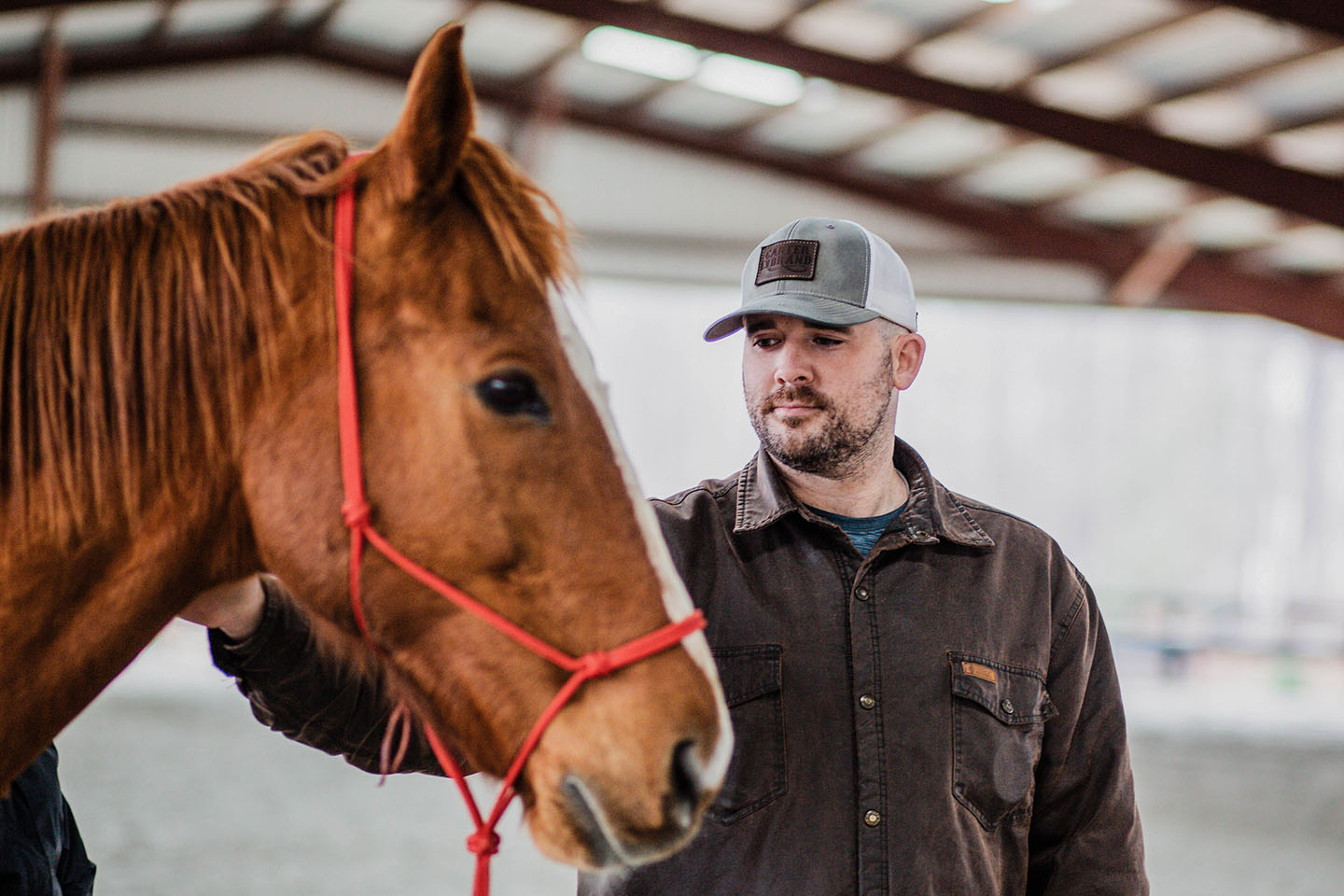
A Warrior PAATH participant becomes acquainted with one of the program’s horses. Photo courtesy of Big Red Barn Retreat/Carolina Reporter
ABOUT THE JOURNALISTS
Miles Shea
Shea, a Columbia native, is a junior journalism major at the University of South Carolina. He is an aspiring reporter and writes for the Daily Gamecock, USC’s independent student newspaper.
Elliot Simpkins
Simpkins is a visual communications major, graduating in December 2025. He plans to work as an electrical lineman and pursue freelance photography on the side.