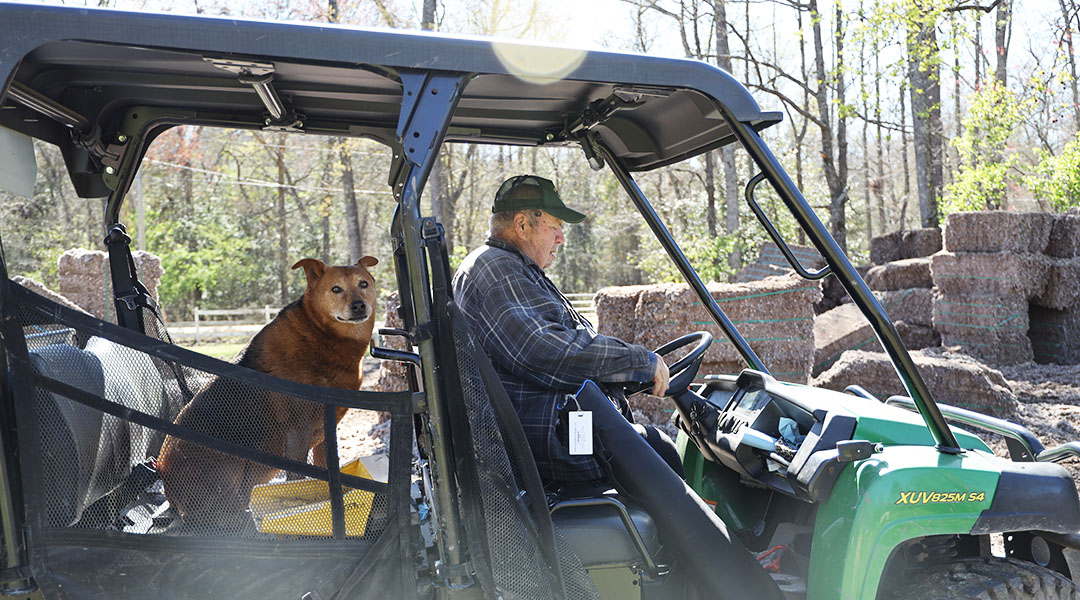
Roger Clayborne rides his John Deere cart while Dog, his dog, sits at the ready. Photo by Camille Molten/The Carolina Reporter
At 76, Roger Clayborne wakes up every morning to feed his cows, even when the pain in his feet makes it hard to stand.
His life of hard work began early, as he helped to support the family.
“We didn’t have much,” Clayborne said.
Clayborne and his wife and two sons live a rural life in Lugoff, surrounded by lots of land. And cows. Lots of cows.
He sells the calves to pay for the feed for the adults.
When he was young, his father collected scrap metal from old cars for income. He broke his back in Clayborne’s teenage years. The weight of the survival of his family fell on young Clayborne and his brother’s backs. They mowed lawns to bring in money.
“Things were hard back then,” Clayborne said.
The root of his love for cows began then as a boy when his family raised milk cows on their farm in Michigan. The boys raised calves from the heifers and would sell them for a small profit.
Cows would remain central to his life.
At 21, he divorced his first wife and joined the Army, driving freight trucks in Vietnam.
They traveled in a convoy with several armed trucks to protect the freight. The armored trucks would stay behind if they were attacked. They were shot at a few times and the convoy would have to split up, Clayborne said.
“Blood, Sweat and Tires is what we would call our trucks,” Clayborne said.
He enjoyed his time and said all able-bodied men should enlist.
“We were shot at a few times, but for the most part, I did my job,” Clayborne said.
Vietnam, though, left him with Type II diabetes and open sores on his feet for some time that made it hard to walk and still cause problems every day.
He returned home, moved to Fort Lee, Virginia, and reverted to what he knew would make him happy: He bought cows.
Two years later, he sold his cows and moved to Kershaw County, South Carolina, to be close to his brother. He was hired as an engineer at Fort Jackson, the country’s largest training base, in Columbia.
He then met his now-wife, Sarah, a forestry technician. They bought a cabin in Lugoff that they still live in with about 50 acres of land and a herd of cows.
They have two sons, Michael and Challey, both of whom are starting their own families. They have cows that live with Clayborne’s herd.
After leaving his job at Fort Jackson, he started a new business venture.
His brother in Ohio told him that he needed to start selling Amish furniture.
“’You ought to come up here and get some of this stuff and try to sell it,’” Clayborne said his brother said to him.
Clayborne started with a stall in Lexington County’s Barnyard Flea Market to sell his first purchases, and people seemed to love it.
He started his own business soon after called Clayborne’s Amish Furniture and is still running it with the help of his two sons.
“As long as I enjoy doing it, I’m going to keep on doing it,” Clayborne said. “And when I don’t, I will move it on to my son, Challey.”
He loves that his customers can order anything, and that the Amish will be able to build it.
“Their stuff lasts forever,” Clayborne said.
The process of getting an Amish piece is a long one, but worth the wait.
“The Amish are the best craftsmen of all,” Clayborne said.
A customer will put in an order to Clayborne, and he will contact the Amish with the piece they need. Six to eight weeks later, the piece is finished, and Clayborne or his son Challey will go to retrieve it from Ohio and haul it back.
Few Amish furniture dealers operate in Columbia, where demand for high-end pieces is limited.
“The richer people buy less expensive furniture because they like to replace it every two years. The people that want something to last forever go to the Amish,” Clayborne said.
His son, Challey, communicates with the Amish by phone.
“They have a communal phone at the end of each street,” Michael Clayborne said.
“They are interesting people because they make the best handcrafted furniture with only air tools,” said Michael Clayborne, who oversees deliveries.
The Amish give him a call when the furniture is ready for the customer’s home.
He drives to Ohio to retrieve it.
Roger Clayborne continued to collected scrap metal from old cars on the weekends to bring in more income.
He’s no stranger to hard work.
And, yes, the constant in his life has always been cows.
“I’ve always loved messing with cows,” Clayborne said.
Each morning he gets up to feed the cows and drags their pasture to distribute their manure evenly to fertilize the grass so the cows enjoy eating it.
Michael and Challey said their relationships with their livestock are not like their fathers’.
They raise pigs for eating, so they try not to get too close.
“They’re going to die anyways,” Challey Clayborne said.
Roger Clayborne’s closest companion is his loyal dog, named “Dog.”
Dog, by nature, rounds up the cows every day.
“Me and him are pretty good friends,” Clayborne said.
Clayborne has a special whooping call for the cows that they immediately respond to.
He calls them and rattles the bucket on his tractor to signal Dog to begin rounding them up to move to another pasture.
“They listen better than a wife,” Clayborne said.
Yes, he said cows are easier to deal with than people.
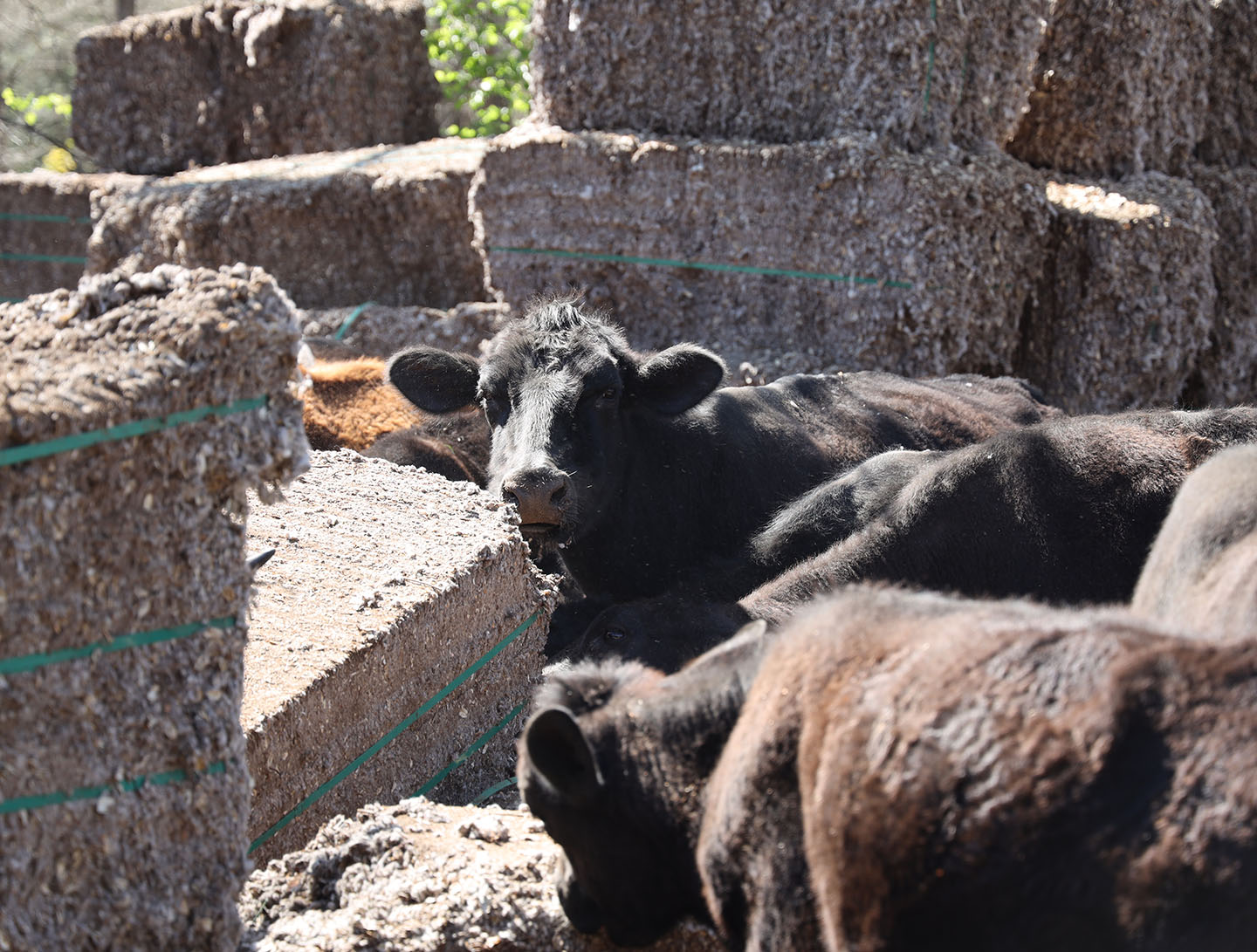
One of Clayborne’s cows eats hay with the herd. Photo by Camille Molten/The Carolina Reporter
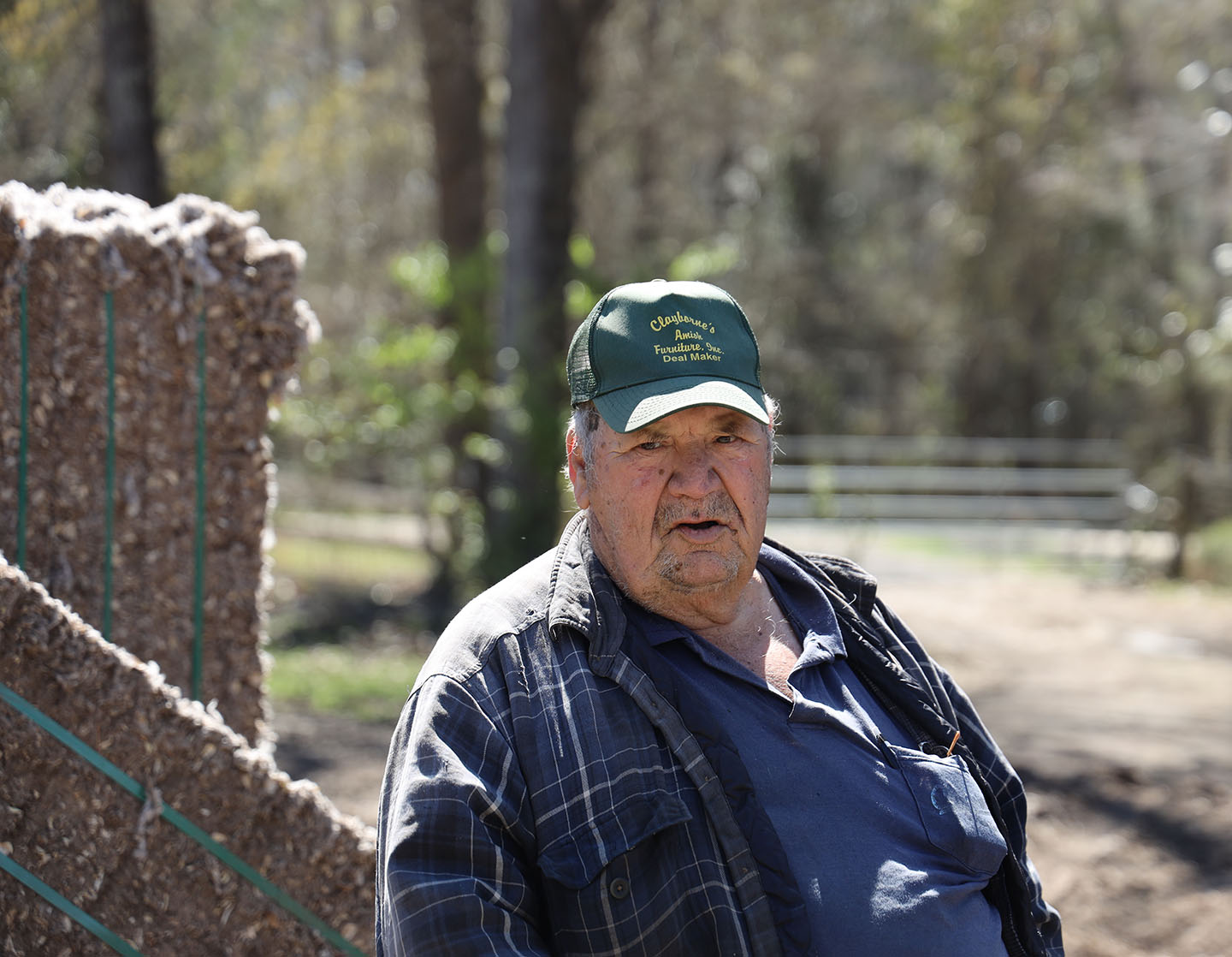
Roger Clayborne sits on a hay bale in Lugoff and watches his cows. Photo by Camille Molten/The Carolina Reporter
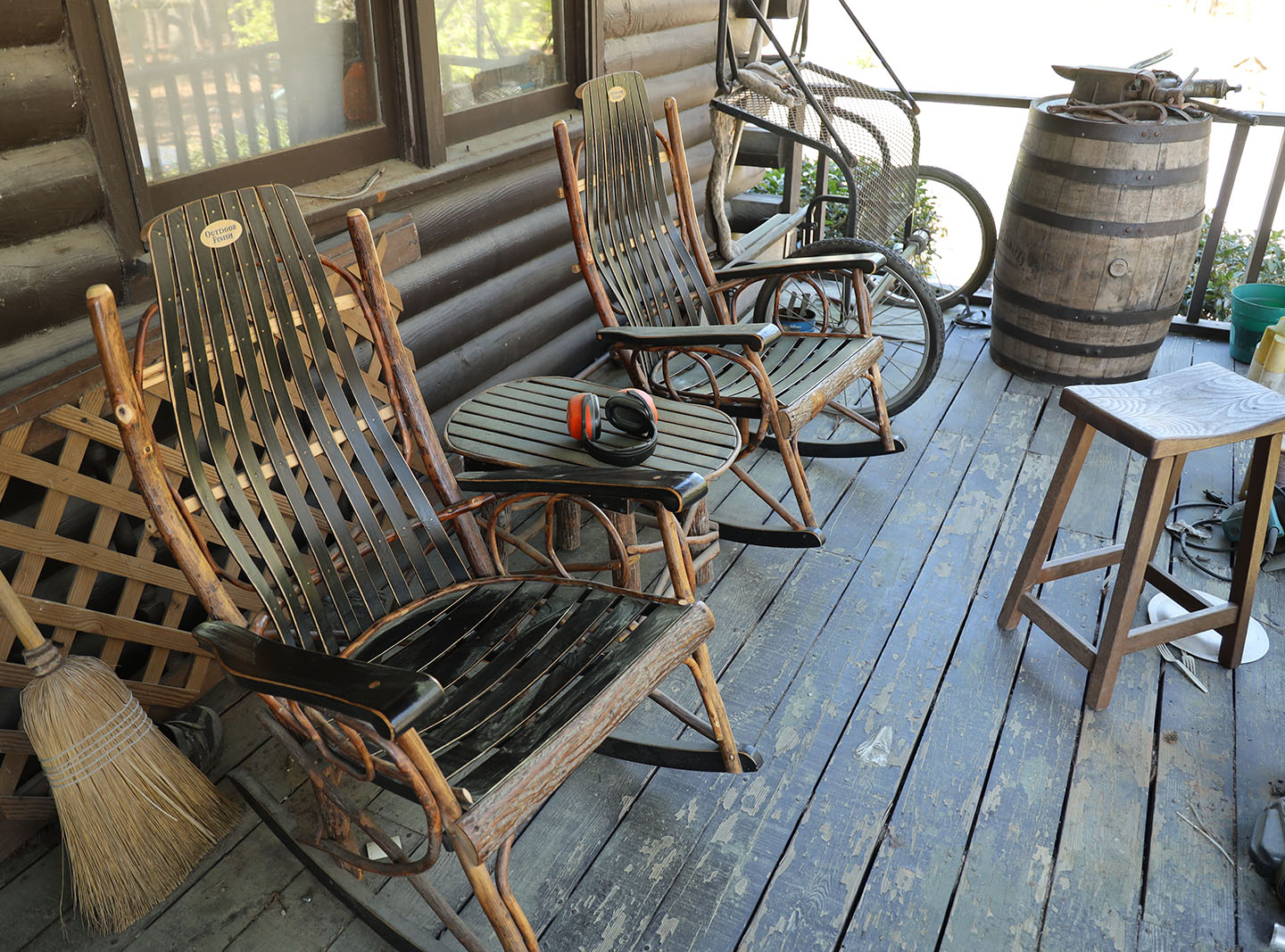
Clayborne’s cabin has porch furniture made by Amish craftsmen. Clayborne said, “They are the most comfortable chairs you will ever sit in.” Photo by Camille Molten/The Carolina Reporter
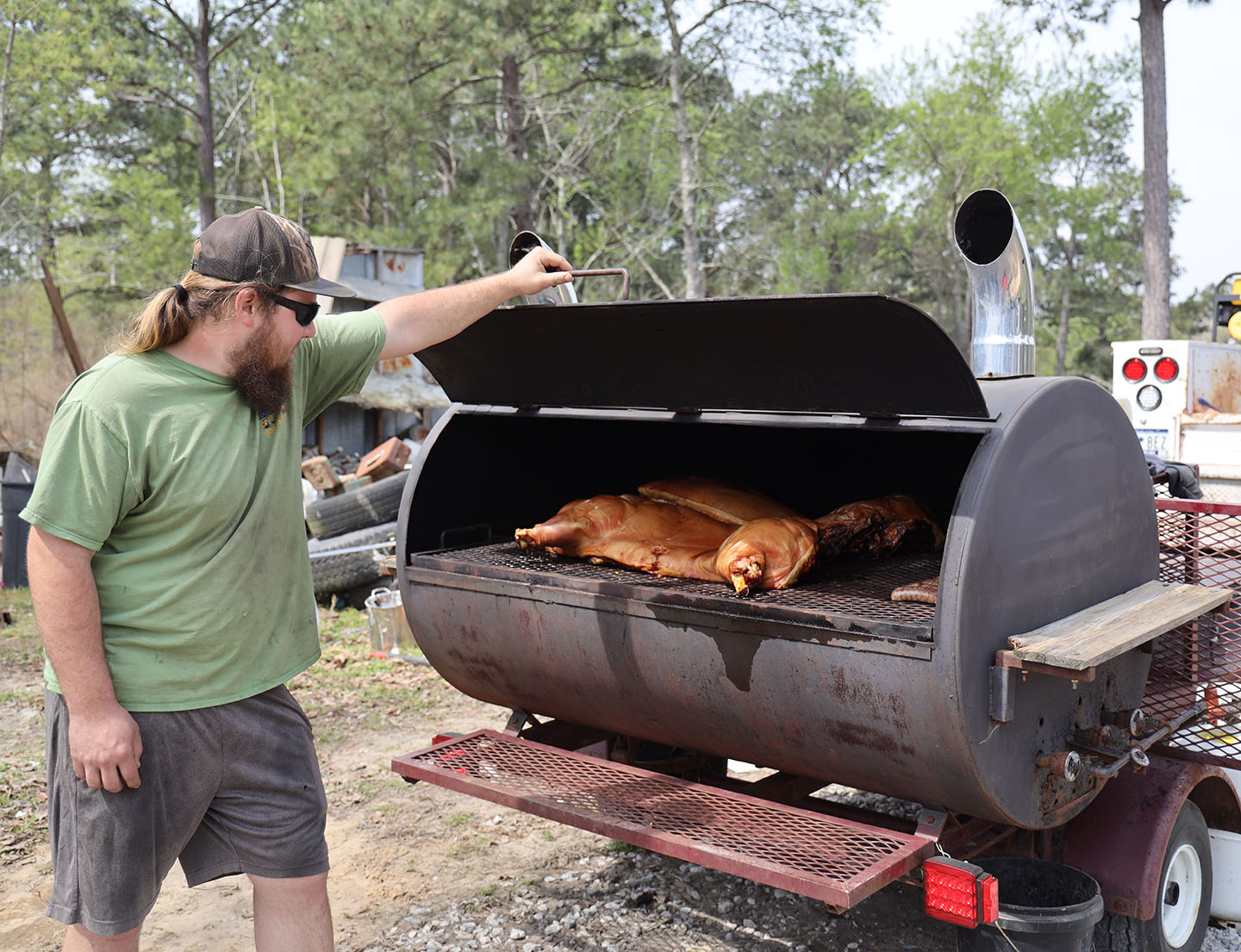
Michael Clayborne roasts a hog in a steamer for his father’s 76th birthday celebration. Photo by Camille Molten/The Carolina Reporter