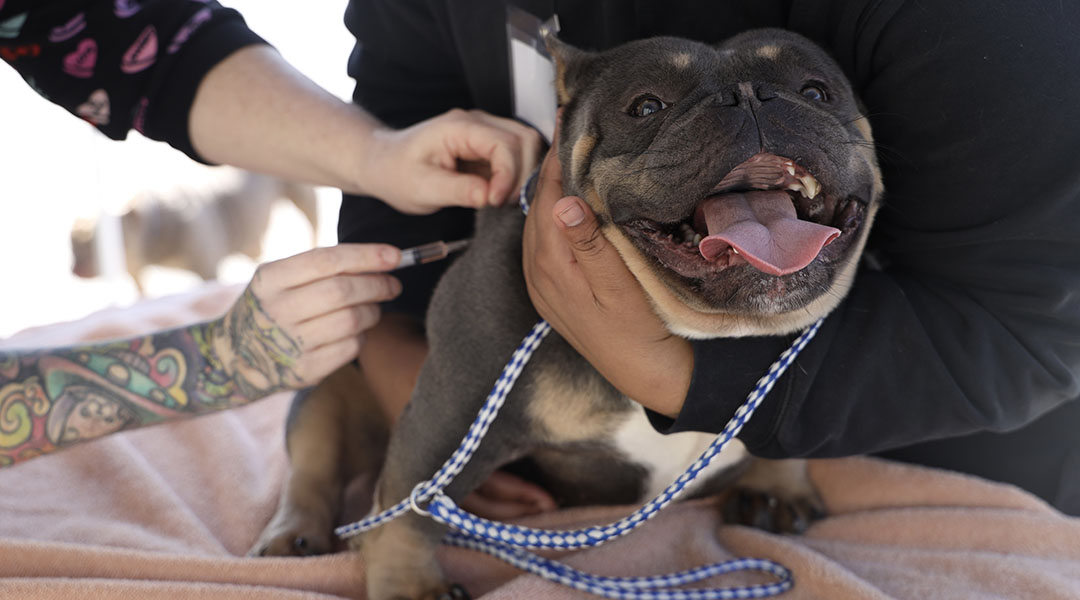
American Bulldog “Biggie” smiles while receiving his shots recently at the Care-A-Van mobile clinic. Photo by Morgan Kozak/The Carolina Reporter
Three days a week, Pawmetto Lifeline’s Care-A-Van can be found setting up shop in local parking lots across the Midlands, its doors open to a steady stream of pet owners seeking affordable veterinary care.
The mobile veterinary clinic was launched to address a growing need across the region: accessible, low-cost services for families that might otherwise struggle to afford or reach traditional veterinary offices. By bringing preventive care directly into the community, the Care-A-Van aims to reduce barriers tied to income, transportation and scheduling – to say nothing of the state’s vet shortage.
“Normal vet prices cost a lot, and it’s just easier to take them here and get them what they need,” said pet owner Jeremy Rish, who brought his dog, Buddy, to a Care-A-Van stop along the in-town Beltline Boulevard route.
Without that help, many pets would go untreated, a gap that has real consequences not only for animal health but for public health and community well-being, animal advocates say.
The growing need
Veterinary care in many places in the United States has become increasingly difficult to access.
Recent studies from the American Association of Veterinary Medical Colleges show that a shortage of tens of thousands of veterinarians has strained the system, a gap that could leave millions of pets without basic treatment by 2030 if it is not addressed.
In South Carolina, these shortages are stark. Access to veterinary care ranks among the lowest in the nation, particularly outside urban centers, where long distances and limited clinics mean owners often must choose between delaying care or paying steep fees.
“We want to keep it affordable,” said Dr. Robert Hall, a retired veterinarian who volunteers with the Care-A-Van. “You know, (the pet owners are) on a limited budget, but we want to protect their pet, too.”
Hall came out of retirement to assist with the Care-A-Van after Pawmetto Lifeline sent letters to local licensed veterinarians seeking help to address the problem.
How they operate
Operated by Pawmetto Lifeline, a 501(c)(3) nonprofit based in Columbia, the Care-A-Van provides low-cost vaccinations, basic exams, microchipping and preventive treatments against heartworm and parasites in dozens of counties across South Carolina.
The Care-A-Van operates on a low-cost model designed to make those services attainable. By focusing on prevention, the program helps prevent minor health issues from escalating into emergencies that are more costly for families and more difficult for animals.
“We are able to keep our prices affordable for the community solely because we do not perform full exams,” said Alex Moore, a Care-a-Van manager. “As long as the pets appear to be healthy, we proceed with the vaccines.”
Veterinary technicians staff the vans, and in any given week, they may see up to 1,000 pets across their stops.
“Our biggest stop I’ve seen has been about 130 animals on the Beltline route,” said veterinary technician Haley Wooten. “Since we’re only set up for an hour or two at each of three stops, that’s a good many for a day.”
The services are intentionally basic but essential. By bringing care directly to where people already are, in accessible parking lots rather than traditional clinic settings, the program reduces barriers that many owners face.
“We’ve been doing the Care-A-Vans for years,” said long-time customer Mick Carnett, who brought in his four cats. “It’s super convenient not having to schedule appointments. … The ease of the flexibility and the chillness here is what keeps us coming back.”
If you miss a Care-A-Van stop, you can “make the one tomorrow or next week,” he said.
Beyond parking lots
Mobile care is just one part of Pawmetto Lifeline’s broader strategy to combat pet homelessness and reduce euthanasia rates in shelters.
Founded in 1999 with a mission to create a no-kill community in the Midlands, the organization also operates spay/neuter clinics, wellness programs, adoption services and community education initiatives.
“The best way to have people support Pawmetto Lifeline is to have people participate in our clinics,” Hall said. “We have vaccine clinics, wellness clinics and spay and neuter clinics – all very important. We also want people to support their local veterinary community.”
Each year, tens of thousands of companion animals enter municipal shelters in Lexington and Richland counties.
Without interventions, many face euthanasia simply because there aren’t enough homes or affordable care options.
Their impact
The impact is immeasurable.
The program strengthens the bond between pets and owners, reduces the spread of preventable diseases and lowers the burden on shelters across the Midlands.
By reaching underserved neighborhoods, Pawmetto Lifeline ensures that love for an animal doesn’t have to be limited by income or access to care.
For those who bring in their pets, the trip to the vet is a happy and easy one.
For volunteers like Hall, the work is deeply personal.
“It’s rewarding to know that we’re keeping animals healthy and families safe,” he said.
FINDINGS
-
SC has a significant shortage of accessible veterinary care
-
Pawmetto Lifeline’s mobile clinic effectively reduces barriers to preventive care in the Midlands
-
Affordable preventive services help reduce shelter intake and euthanasia
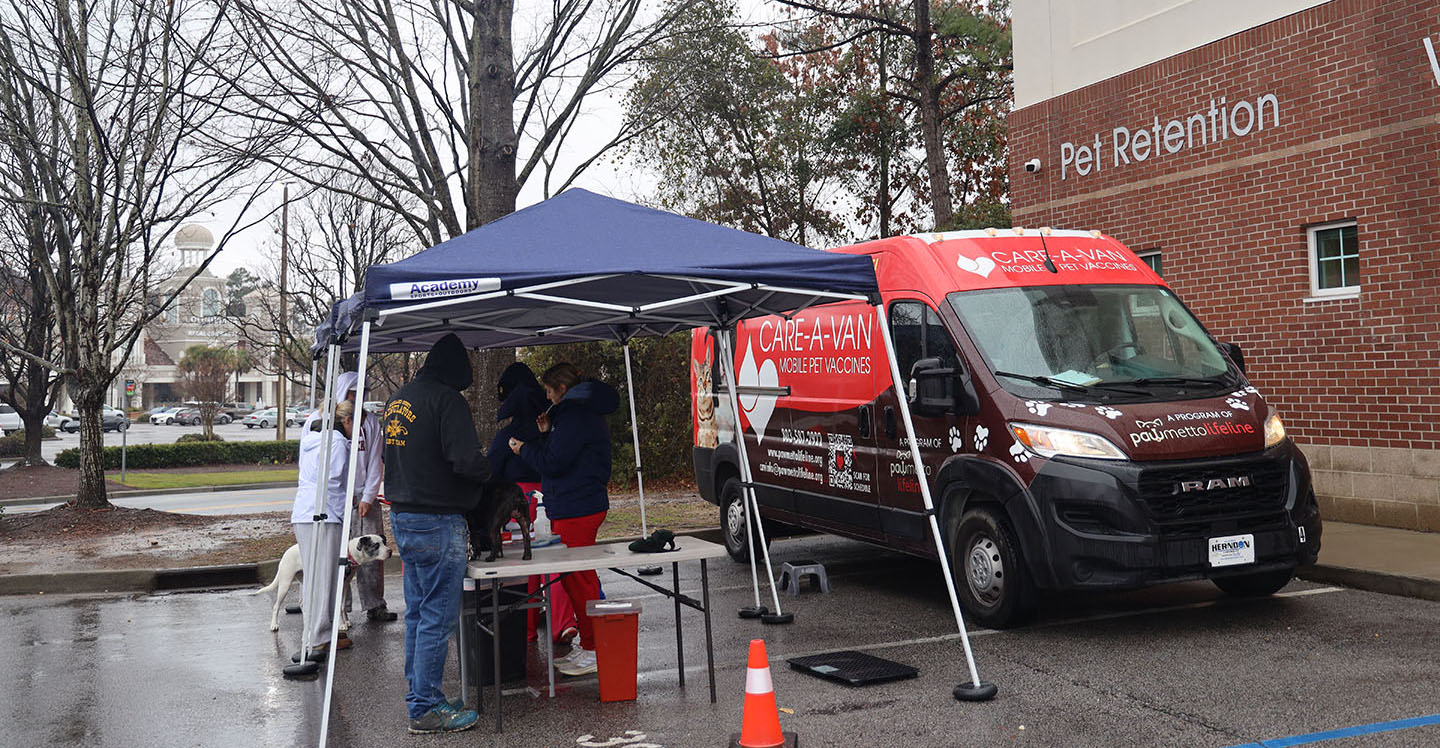
Pawmetto Lifeline’s Care-A-Van serves a variety of communities in all weather conditions. Photo by Morgan Kozak/The Carolina Reporter
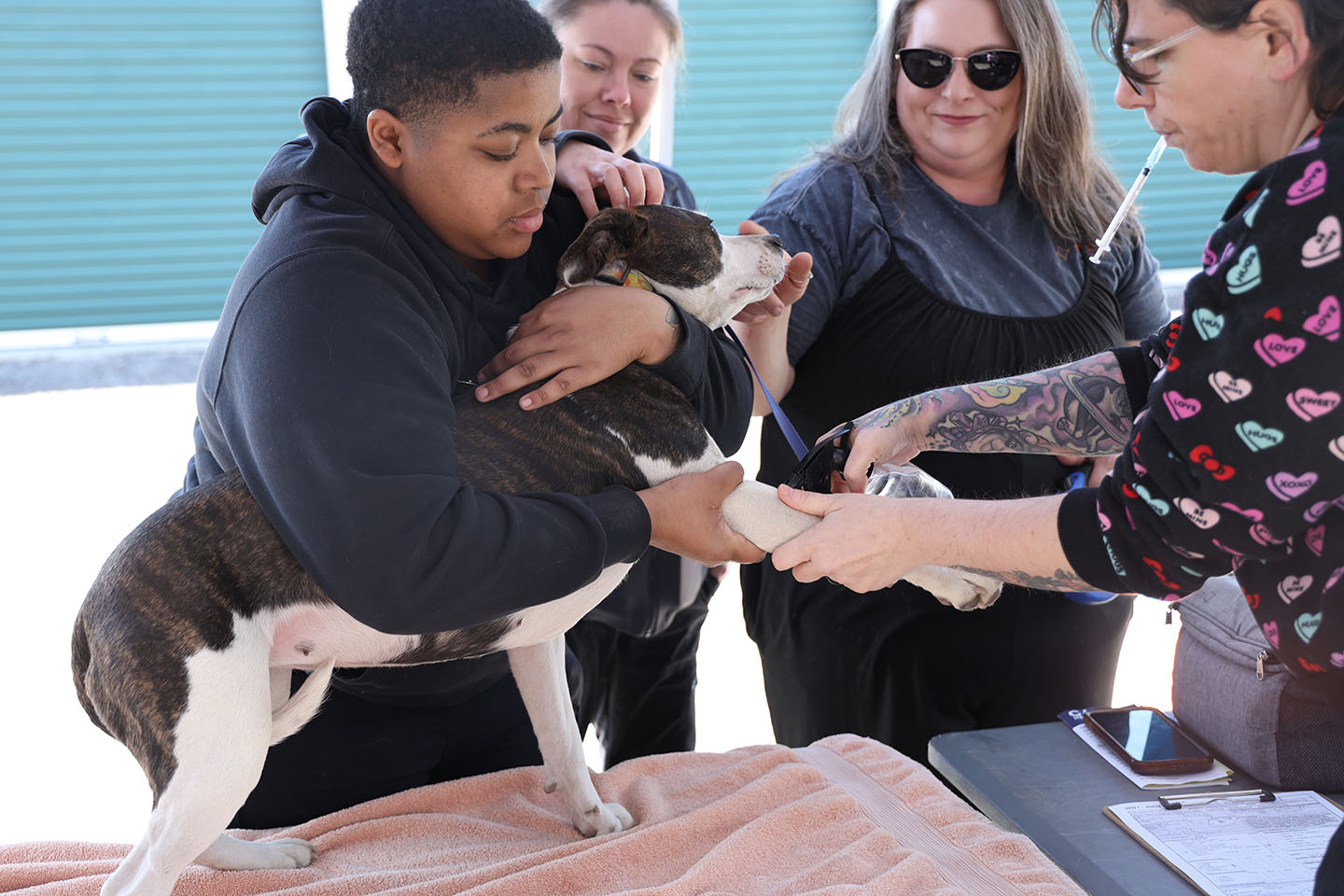
Veterinary Tech Assistant Jade Brown steadies “Bentley” the dog as Dr. Nicole Kaiser prepares him for his vaccinations. Photo by Morgan Kozak/The Carolina Reporter
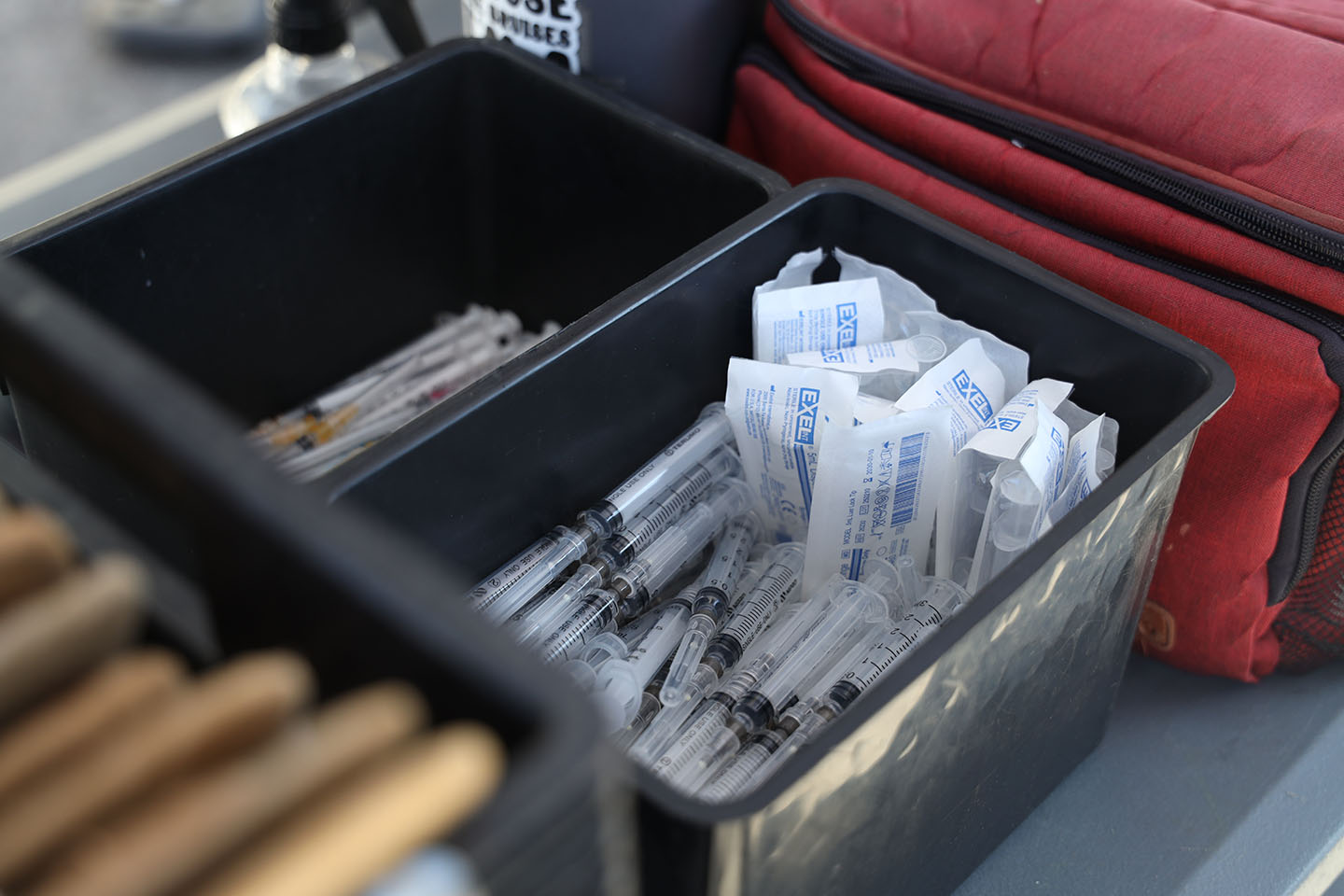
Unused syringes and sealed alcohol prep pads sit in a supply bin, ready for use at the next mobile clinic stop. Photo by Morgan Kozak/The Carolina Reporter

A 10-week-old puppy is held up for a health check during a mobile clinic visit. Photo by Morgan Kozak/The Carolina Reporter