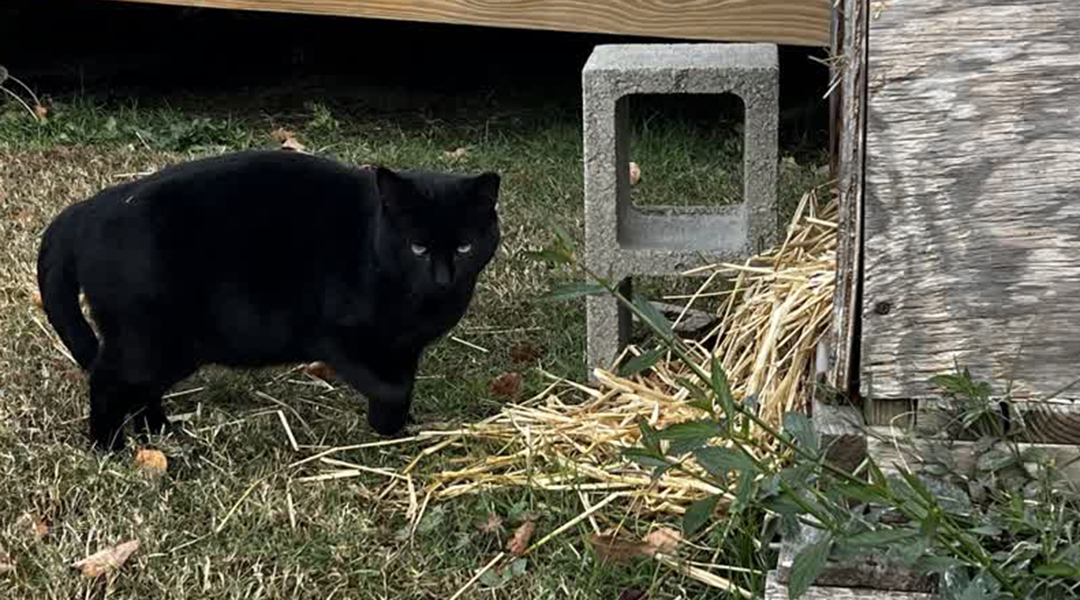
Pawmetto Lifeline has multiple stray shelters outside for its “community cats.” Photo by Luna Hiott/Carolina Reporter
Stray animals in Columbia face a challenge during the winter months as temperatures drop.
The winter season is deadly for outdoor animals. Animal shelters and online groups are sharing tips and showing how each person can help the animals survive.
People for the Ethical Treatment of Animals, PETA, reported 49 dog deaths were documented in the 2024-2025 winter season related to cold weather. And additional 605 animals needed to be rescued. The animals are exposed to the harsh weather without access to shelter, sometimes dying even if they are fed by locals.
The Midlands sometimes experiences snowfall, freezing rain and low overnight temperatures that form a threat to homeless animals who rely on humans for makeshift shelters and food.
Cardboard boxes lined with straw can provide lifesaving warmth, according to treehugger.com. The organization emphasized blankets should not be used because they can absorb moisture and freeze overnight, worsening the cold for animals. Plastic containers are listed as an alternative to cardboard.
Local shelters consistently struggle with being over capacity and often are unable to take in more strays in the cold months. Janet Hopkins, data coordinator for Pawmetto Lifeline‘s non-profit animal shelter, said there are both positive and negatives to the winter. Fewer animals are reproducing, but the population suffering starvation and freezing also goes down.
“We do have some feral cats around the building, not to mention ones that sometimes people just randomly drop there without us knowing,” Hopkins said. “And the best thing you can do to protect stray animals is put up some kind of a protected covering.”
Hopkins considers straw to be the best lining material because animals can settle themselves into it. She encourages lining a plastic bin with Styrofoam for extra layering and then place straw inside and the lid on top.
Animal shelters such as Pawmetto collaborate with residents who feed groups of strays to create new shelters in the area. Five Points as well as areas near Garners Ferry and Harbison have been known to have colonies of cats.
“Since everyone seems to be at capacity, no one can bring the strays in,” Hopkins said. “That’s the best place to put some of these homemade winter houses for them. This way they’ve got their food source there, and then they could go right into those (bins).”
There are videos on YouTube and posts on social media showing how to build other makeshift shelters.
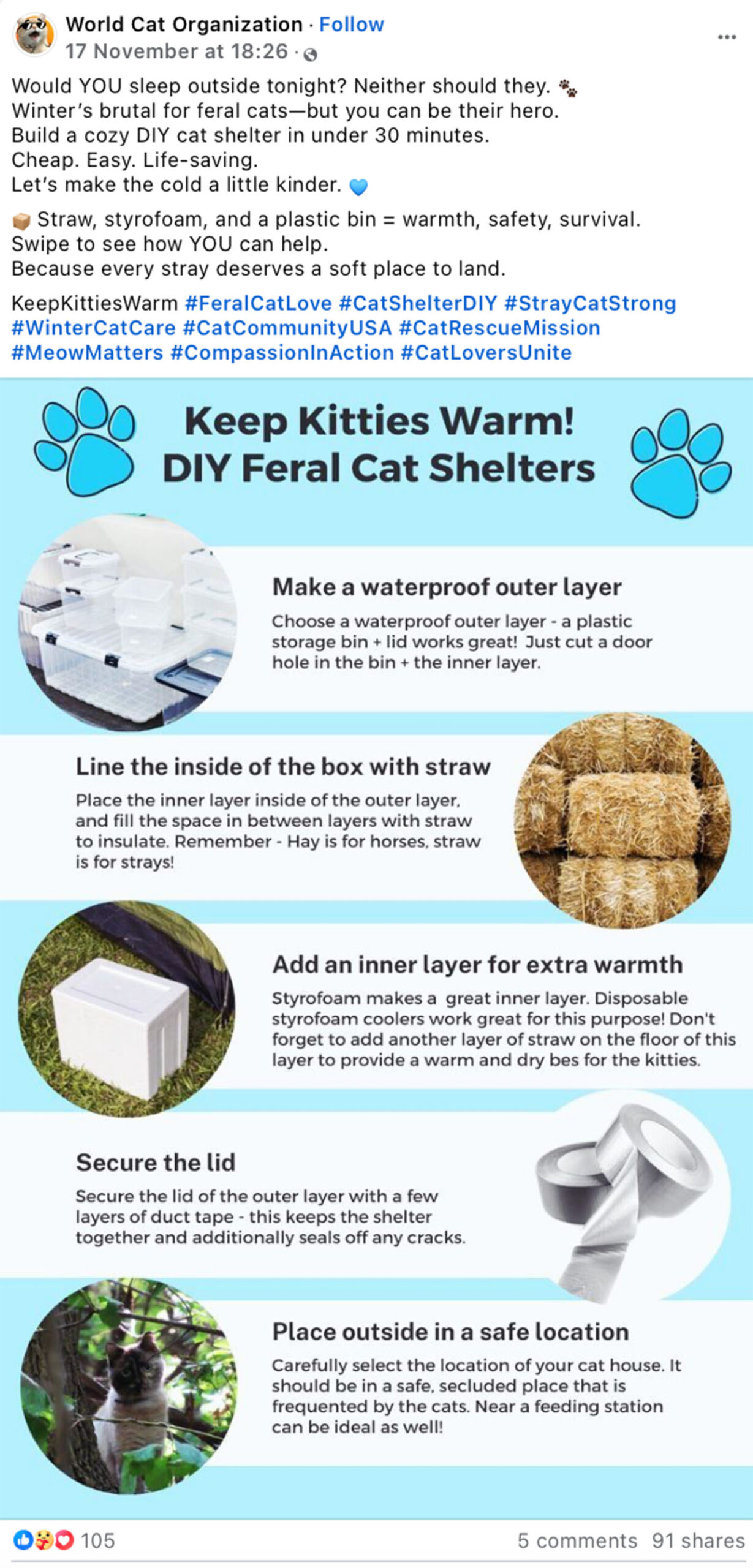
The World Cat Organization shared a step-by-step graphic on how to build an efficient stray shelter. Photo screenshot from Facebook/Carolina Reporter
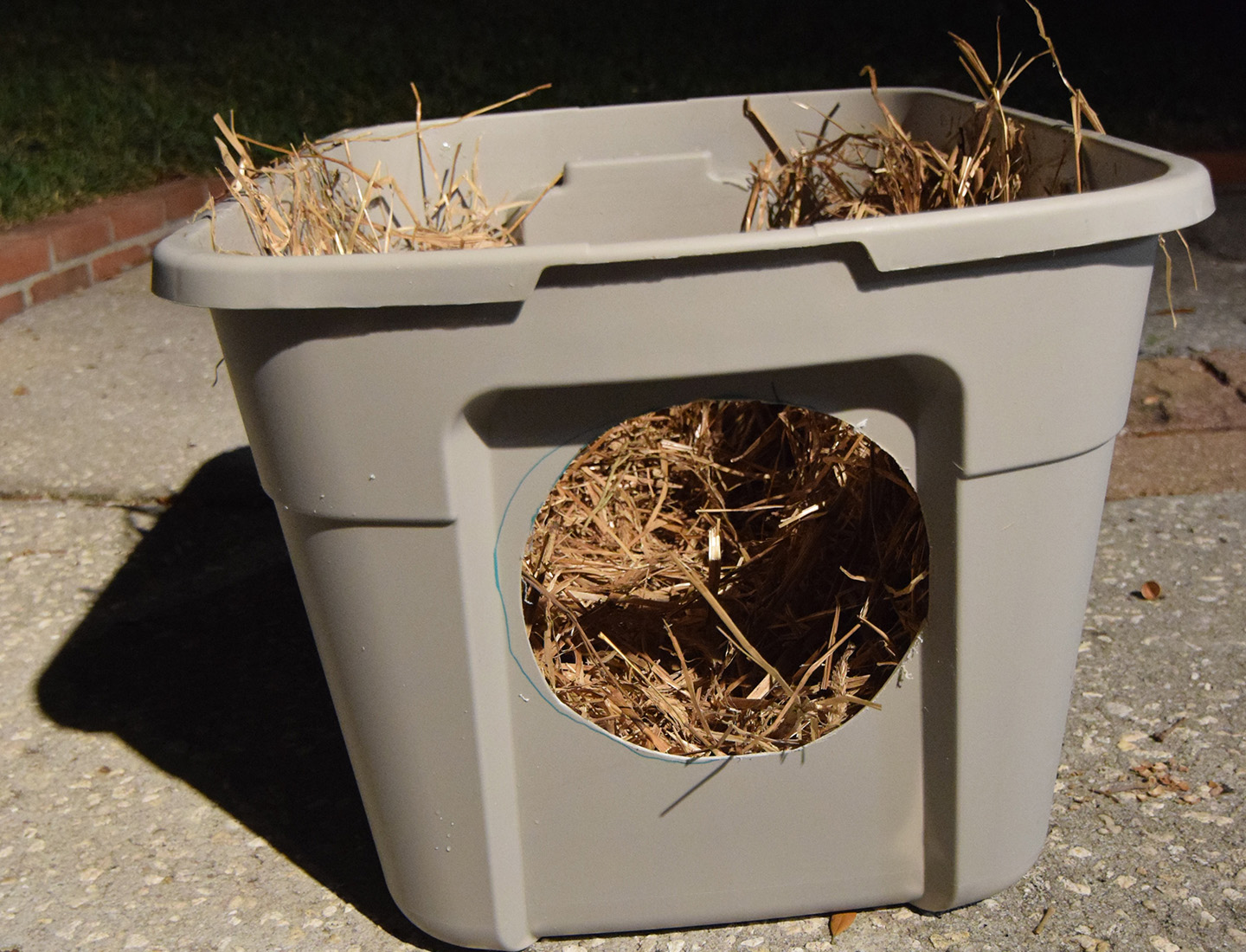
Pawmetto Lifeline recommends lining the sides and bottom of a plastic container with straw for animals to nest in and securing the lid with tape. Photo by Luna Hiott/Carolina Reporter