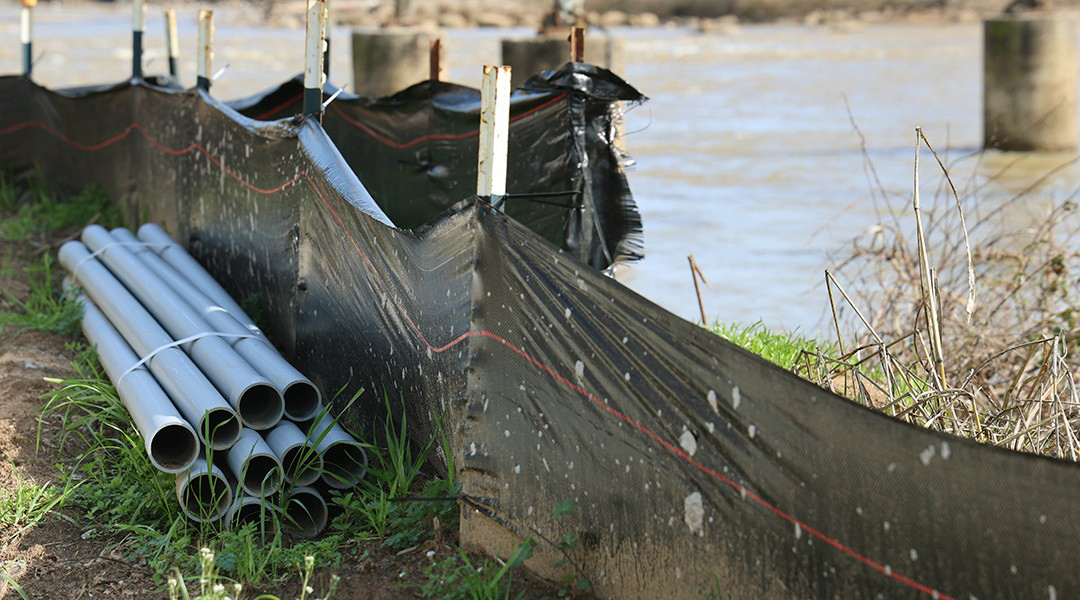
Construction begins on a new stretch of boardwalk leading from the Saluda Riverwalk to the future site of the Broad River Pedestrian Bridge connecting Columbia and West Columbia. Photo by Lucy Dixon/The Carolina Reporter
The 1905 “Kelsey and Guild Plan” for Columbia’s waterfront imagined walkable connectivity across the Broad, Saluda and Congaree rivers. The plan might finally come to fruition over 120 years later, bringing the disjointed 15.5 miles of the Three Rivers Greenway up to a fully connected 35 miles.
“Do you know how many people that’s going to bring?” long-distance runner Anna Calderas said. “A 35-mile mark – that’s amazing. It’s going to bring so many runners.”
Columbia Mayor Daniel Rickenmann hopes the entire project will be completed and open to the public in the next five years.
“I think this is our community’s legacy – I really do,” Rickenmann said. “There are so many people that are involved in this and have been working on this for decades — and the thought process. And I just think sometimes timing is everything. And the timing is now.”
The eventual 35 miles of uninterrupted trails will run from the Lake Murray dam, down the Saluda River, across to The Sanctuary at Boyd Island, over the future Broad River Pedestrian Bridge to the Columbia Canal and Riverfront Park in downtown Columbia. From there, it will reach down a future stretch of greenway to Granby Park and across the Blossom or Gervais Street bridges to Cayce’s and West Columbia’s riverwalks.
This planned pathway runs directly alongside major Columbia attractions such as the South Carolina State Museum and Riverbanks Zoo. It will be walkable from the Vista’s restaurants, bars and shopping, the Granby/Olympia area and the University of South Carolina campus.
Residents who know about the plans are thrilled.
“I hope to connect with nature more,” said USC marine science sophomore Marin Jasinski. “It’s just really nice and calming and good to, if you’re able to, walk off campus and go on to this. It’s a way to space out.”
The construction plan does not highlight any new parking options or bike lanes near entry points. Keyara Kaiser, USC Administrative Coordinator for the School of Hospitality and Tourism Management, has concerns about the accessibility of this trail.
“They’re not thinking about parking and what that does to the neighborhoods and what that does to the streets to get around,” Kaiser said. “And then there really aren’t any actual decent urban bike paths to then get you down to the riverwalk.”
Field Operations, an internationally recognized landscaping and urban design firm, the New York City Highline and the Chicago Pier will perform a complete makeover of the Columbia Canal and Riverfront Park and build an 80-acre park just to the south.
The project is possible due to a land donation from the Guignard family, which has owned the land between Gervais and Huger streets for about 300 years. A majority of the private property once was home to the now-defunct Guignard Brick Works, built in 1801.
The park will add to Columbia’s existing waterfront infrastructure, already enjoyed by residents and tourists.
“They’ve got the kayaking and stuff that just gets people outside, off electronics, which is incredible.” said Alyna Fite, as her four children climbed the rocks of the Saluda River recently. “It’s just fun seeing them use their imagination down here.”
The park construction will happen in tandem with the creation of the Broad River Pedestrian Bridge, a 500-foot steel bridge that will connect downtown’s Columbia Canal to the Saluda Riverwalk near the zoo.
Construction also began last fall on a trail from the Lake Murray Dam to Saluda Shoals Park in Irmo. The Saluda Shoals Riverwalk will continue further out, to Gardendale Landing.
Lexington County land will bridge the gap between the new Saluda Shoals Riverwalk to an existing 3.5-mile trail after roadwork is completed on the I-20, I-26 and I-126 interchanges.
The area’s River Alliance group created the 3RVRS campaign to raise awareness of the natural beauty of the rivers in July 2025.
“People, if they get out, they’re going to feel better about their community,” said River Alliance Executive Director Mike Dawson. “They’re going to feel better about themselves. They’re probably going to be physically better. It is a great public project that’s at a lower cost than a lot of other public projects.”
Rickenmann thinks the entire waterfront project will cost between $75 million and $120 million. Funding for the projects will come primarily from the Richland County Penny Tax, though the Darnall W. and Susan F. Boyd Foundation has pledged to support the project with up to $40 million.
“We’re very grateful for their commitment in the past, today and the future,” Rickenmann said of the Boyd Foundation. “They’re a big part of why this is happening.”
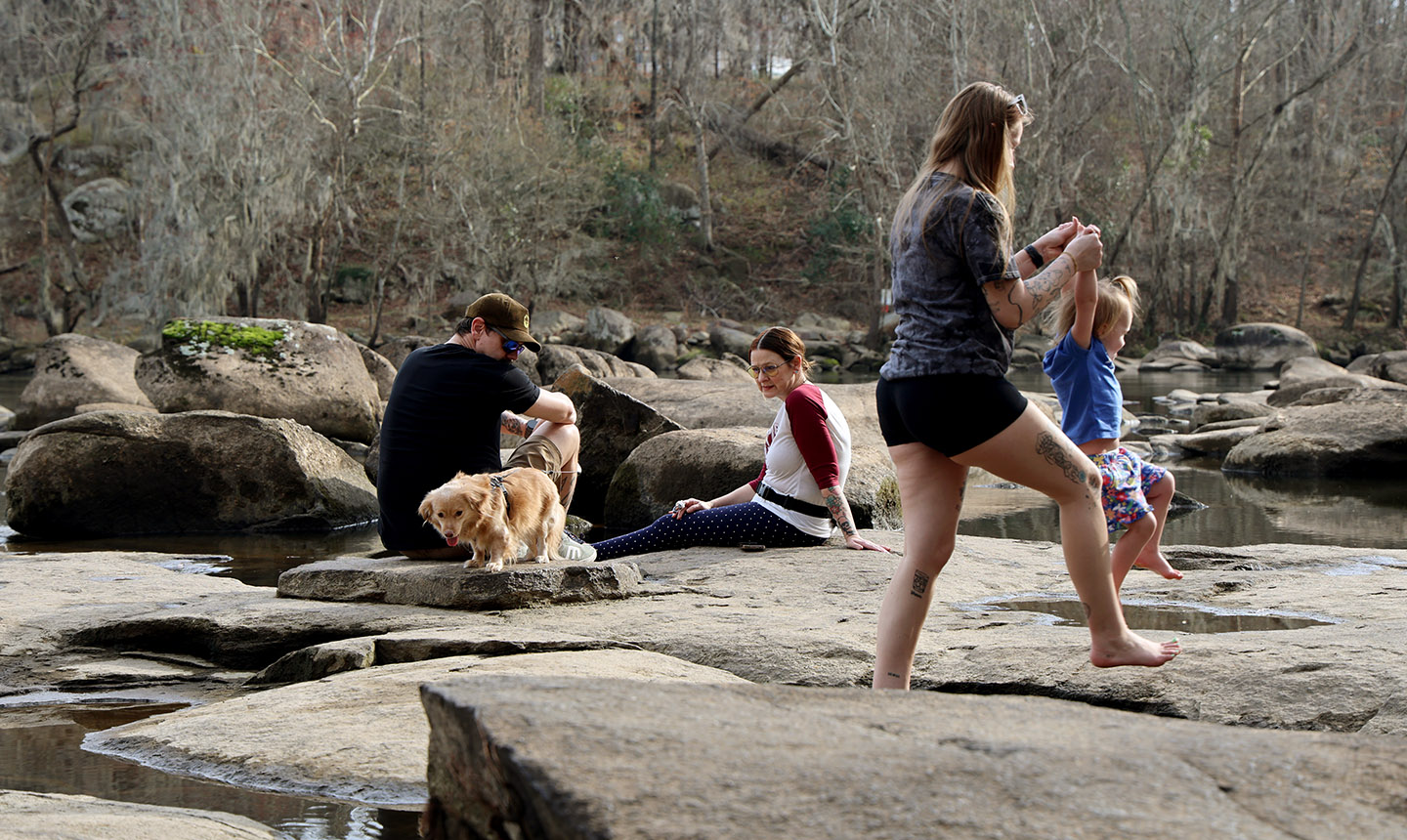
Jason Gunter, left, Toby the dog, Ashley Gunter, Hailey Pressley and 2-year-old Natalie James enjoy the rocks of the Saluda Riverwalk. Photo by Lucy Dixon/The Carolina Reporter
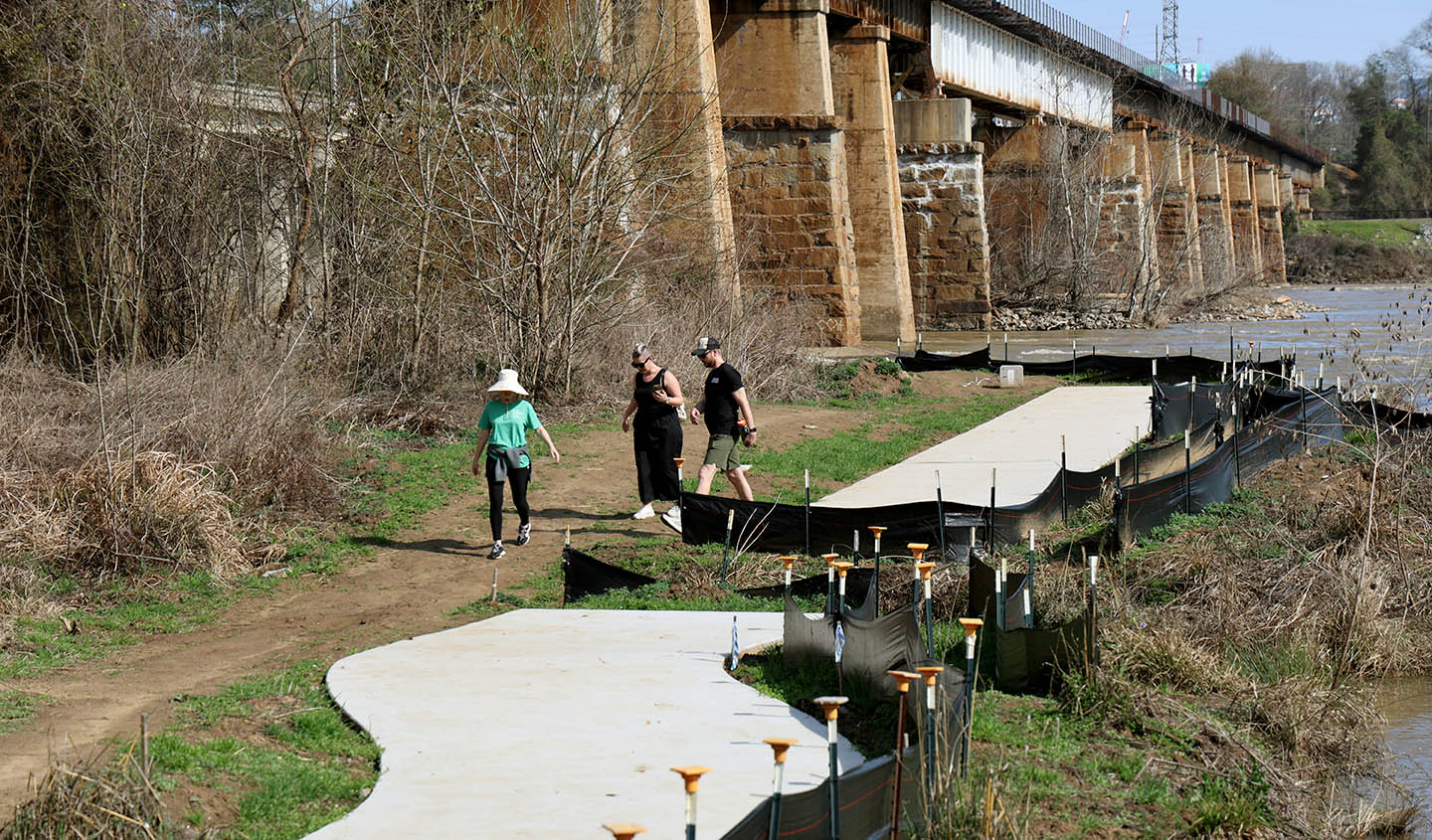
University of South Carolina Administrative Coordinator Keyara Kaiser, Fulbright Scholar Meldina Kokorovic Jukan and USC Associate Professor Scott Taylor examine the new construction at the Saluda Riverwalk’s end. Photo by Lucy Dixon/The Carolina Reporter
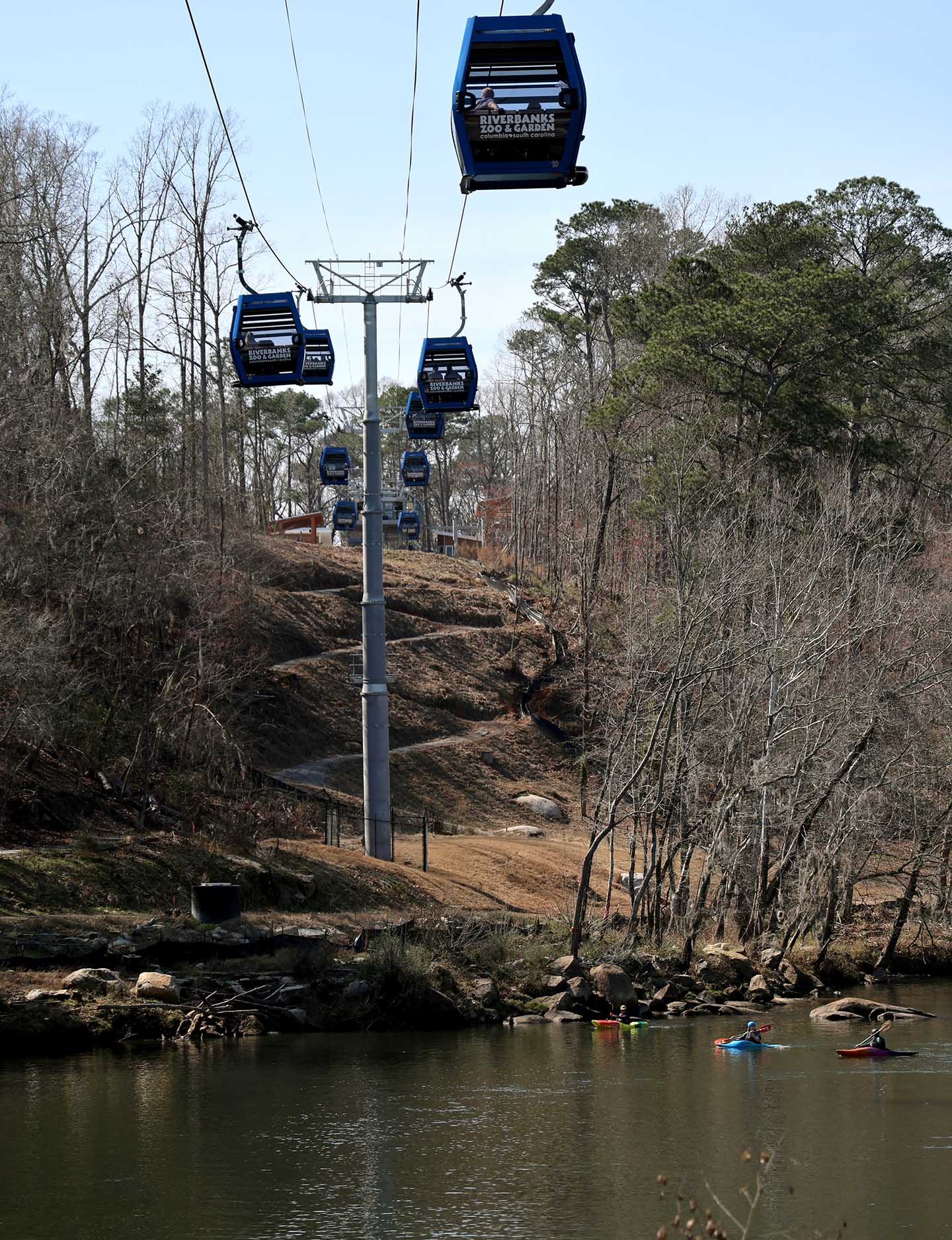
Three kayakers pass underneath the new gondola route over the Saluda River connecting Riverbanks Zoo to its botanical gardens. Photo by Lucy Dixon/The Carolina Reporter
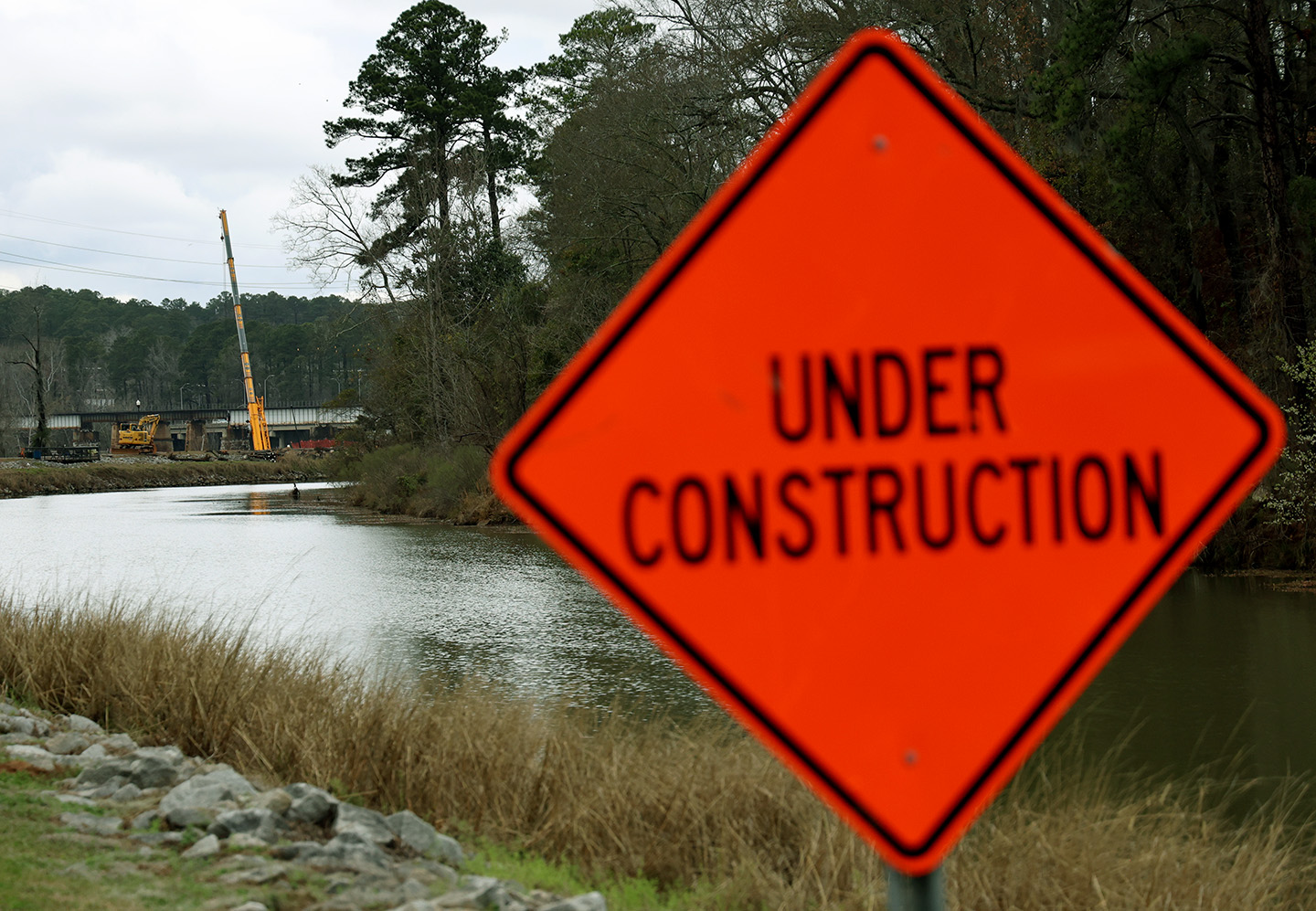
Construction continues to repair damage to the Columbia Canal from the historic 2015 flood. Photo by Lucy Dixon/The Carolina Reporter
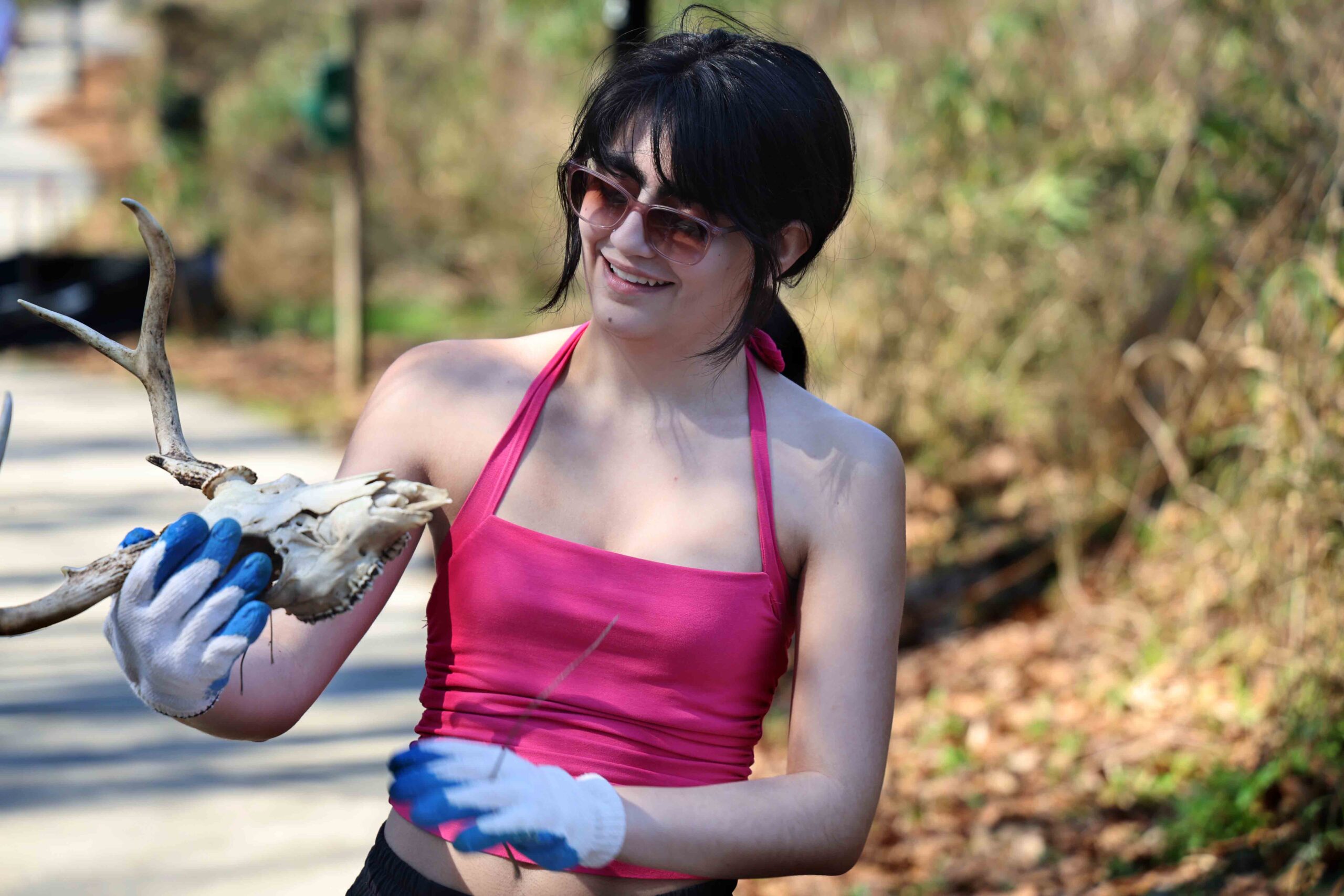
USC marine science freshman Ana Carolina Andreosi-Franceli found an intact deer skeleton during a trash pickup on the Saluda Riverwalk. Photo by Lucy Dixon/The Carolina Reporter
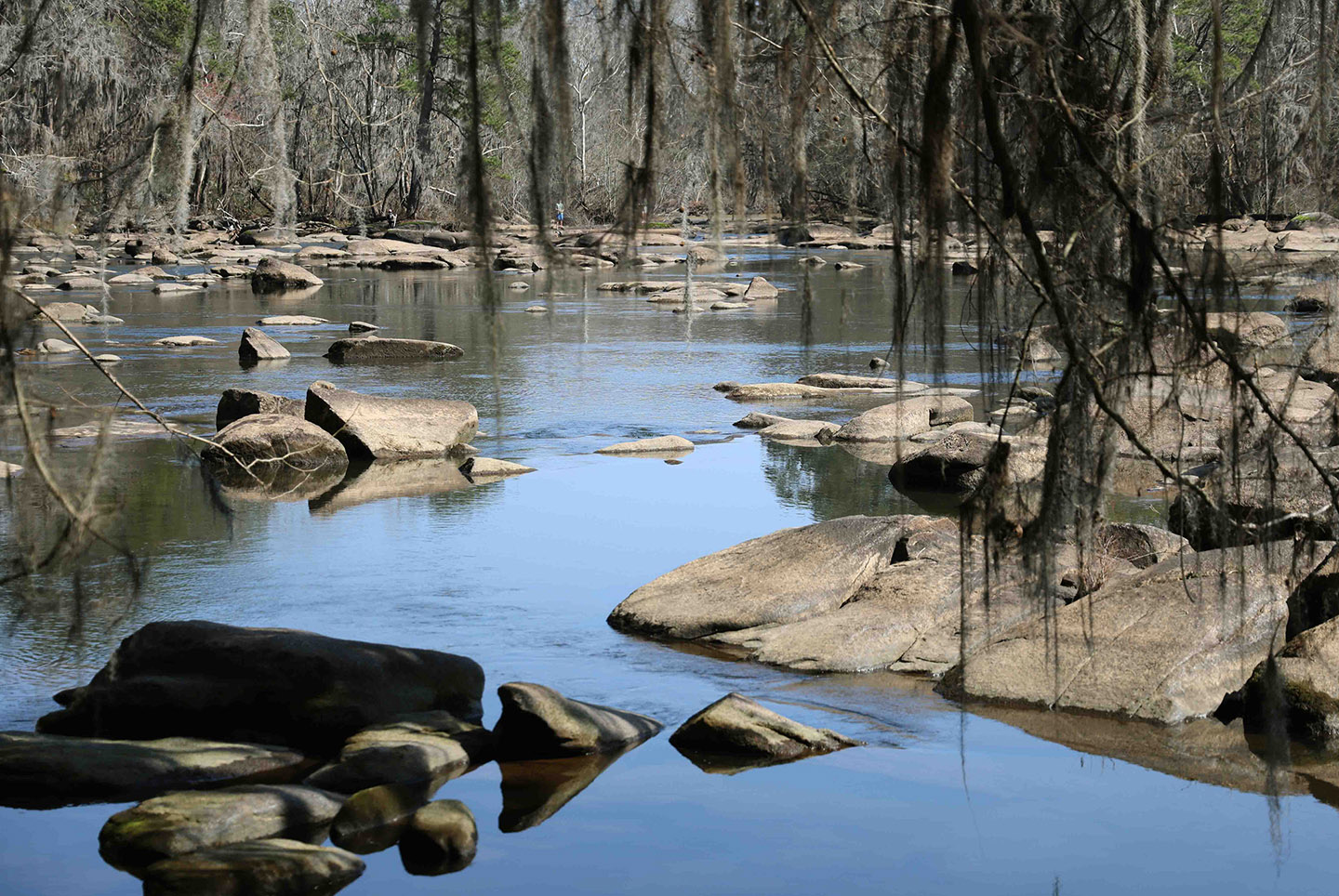
The Saluda River flows calmly around clusters of rocks protruding from the water. Photo by Lucy Dixon/The Carolina Reporter