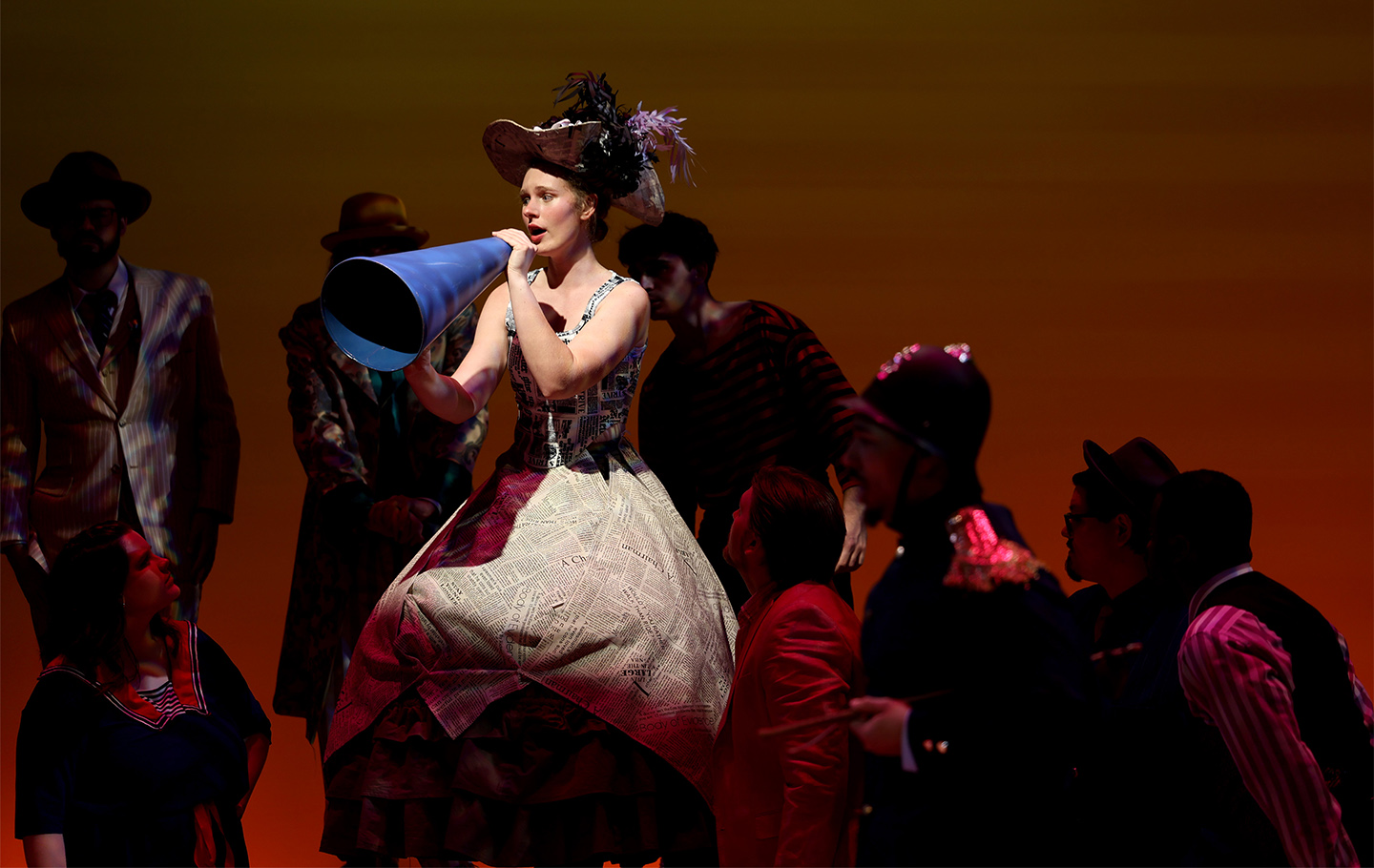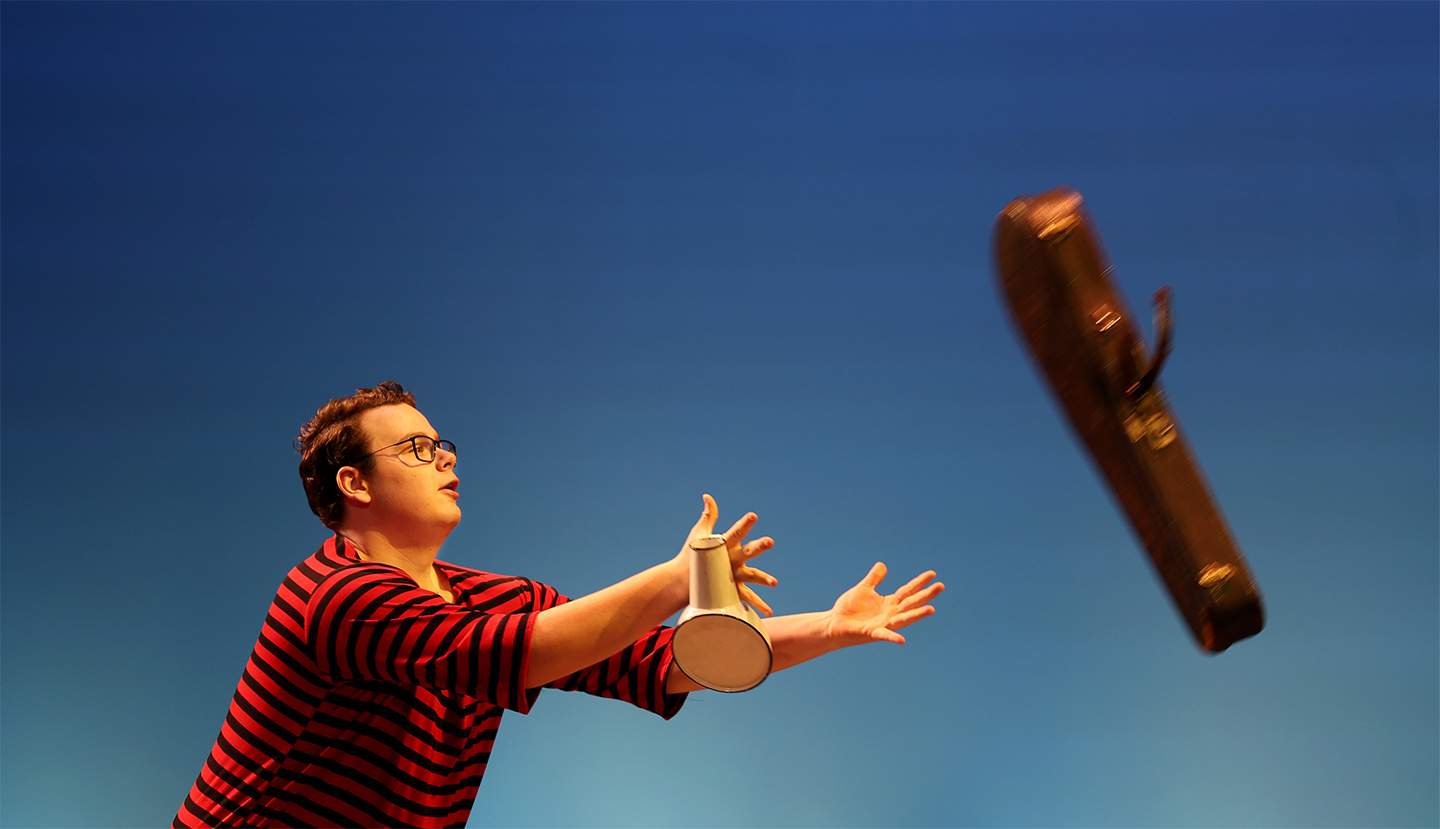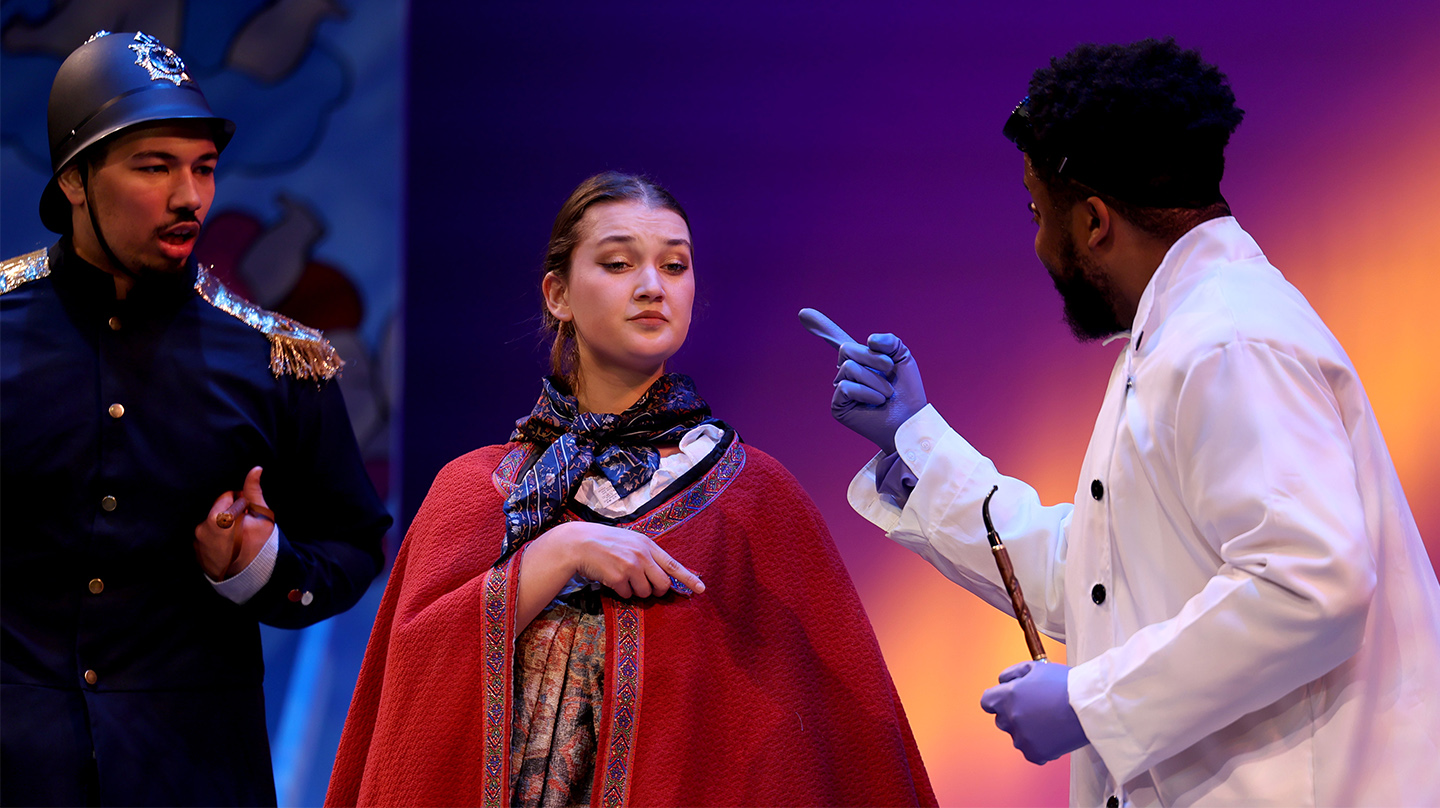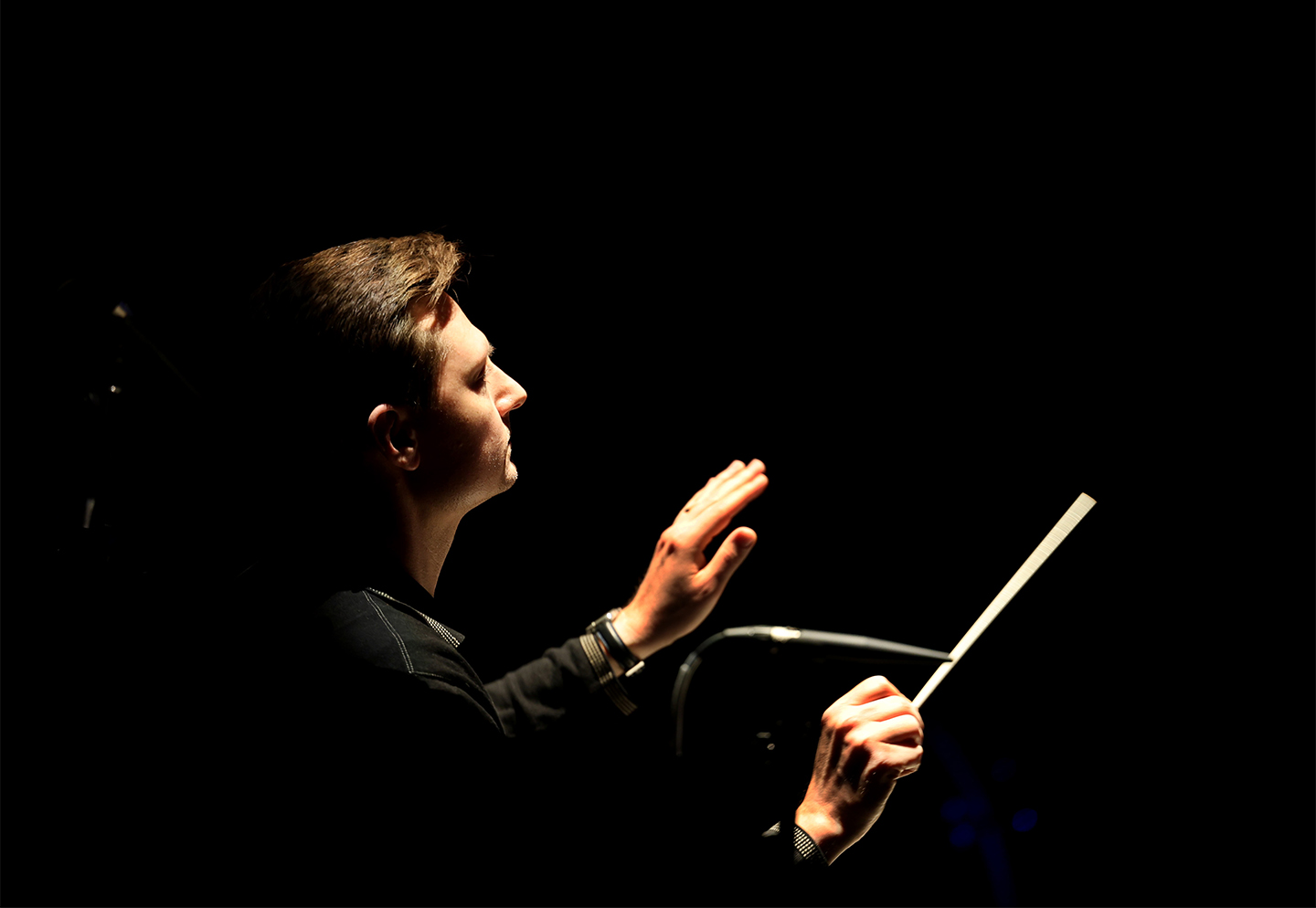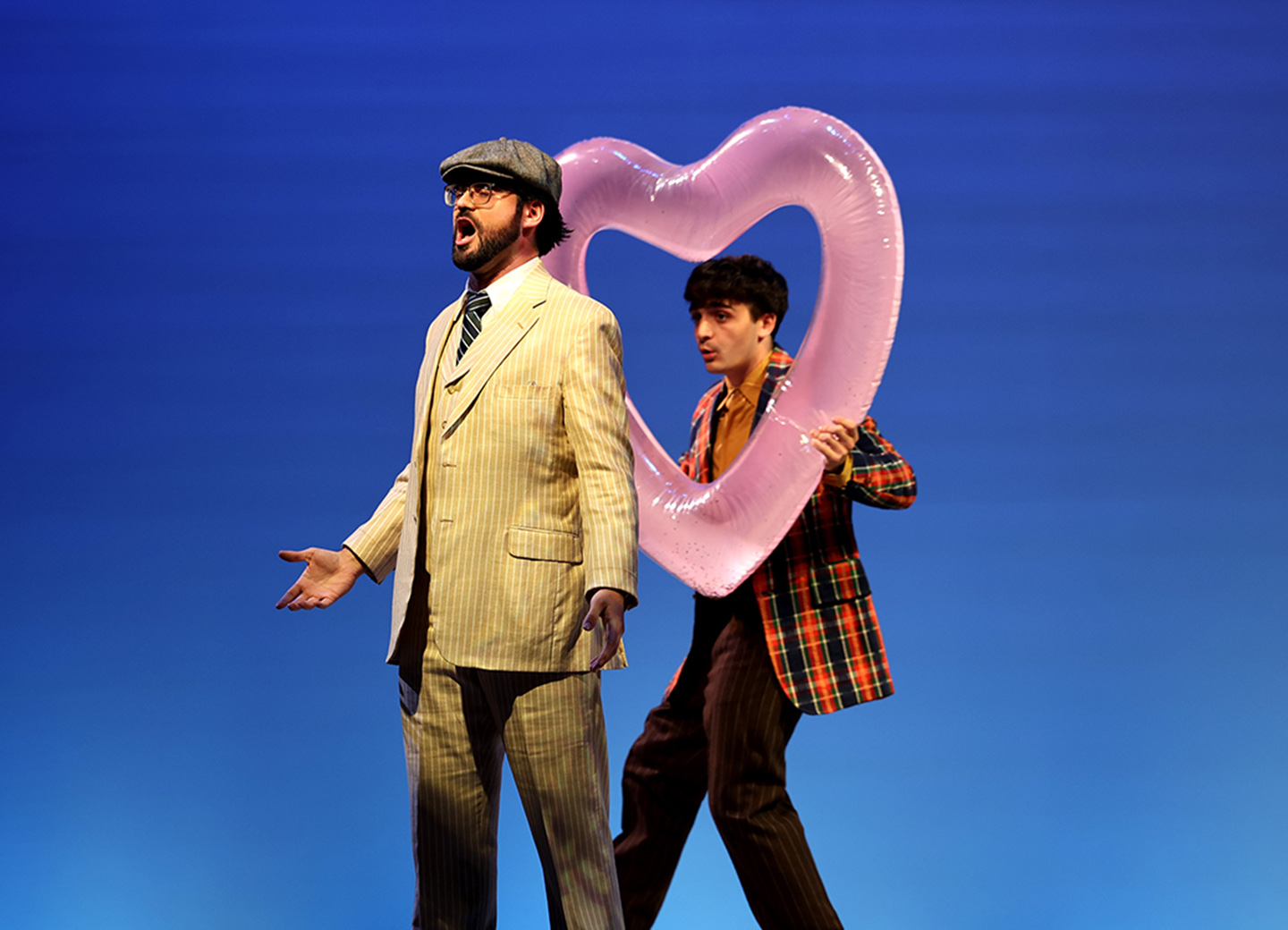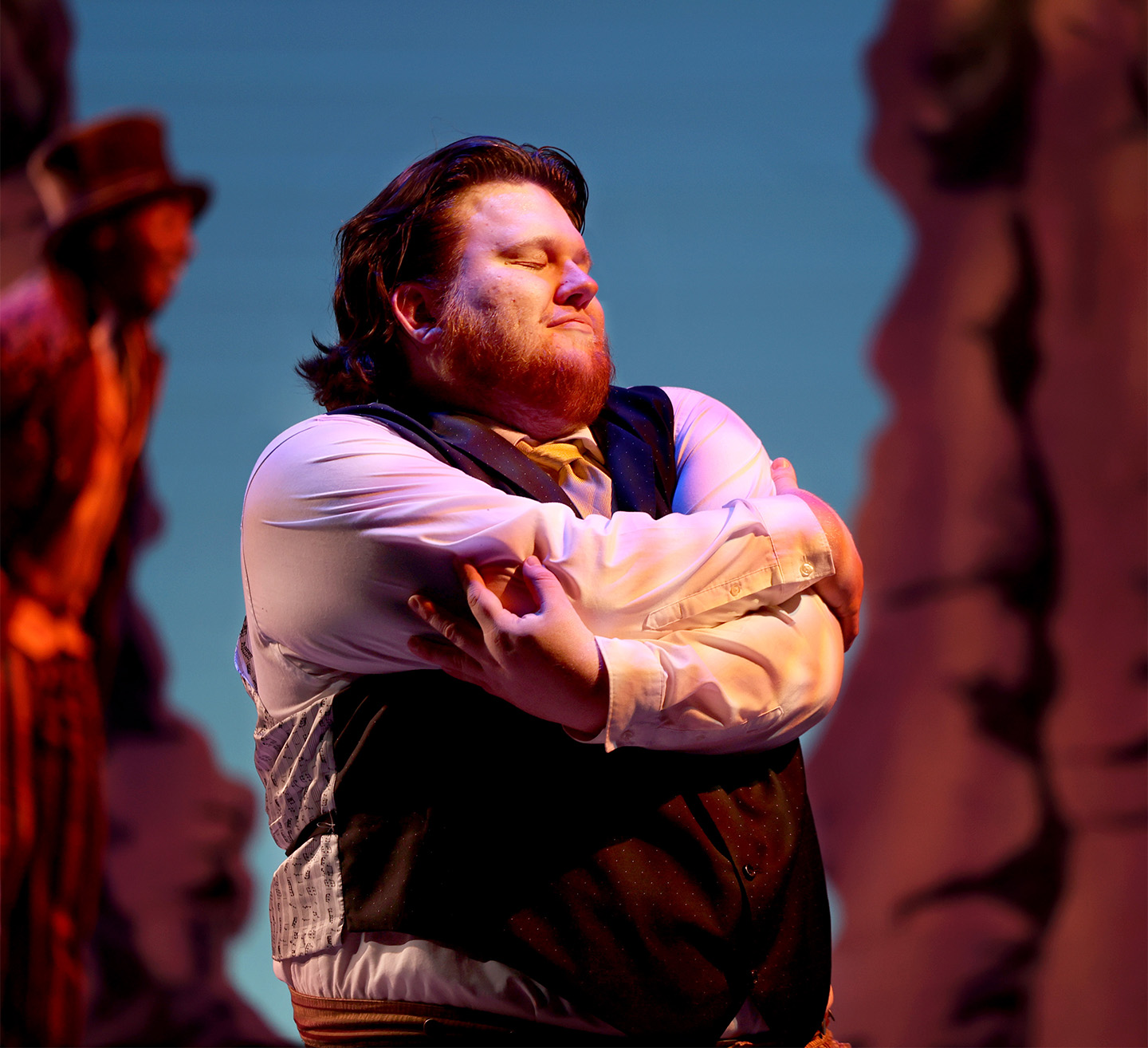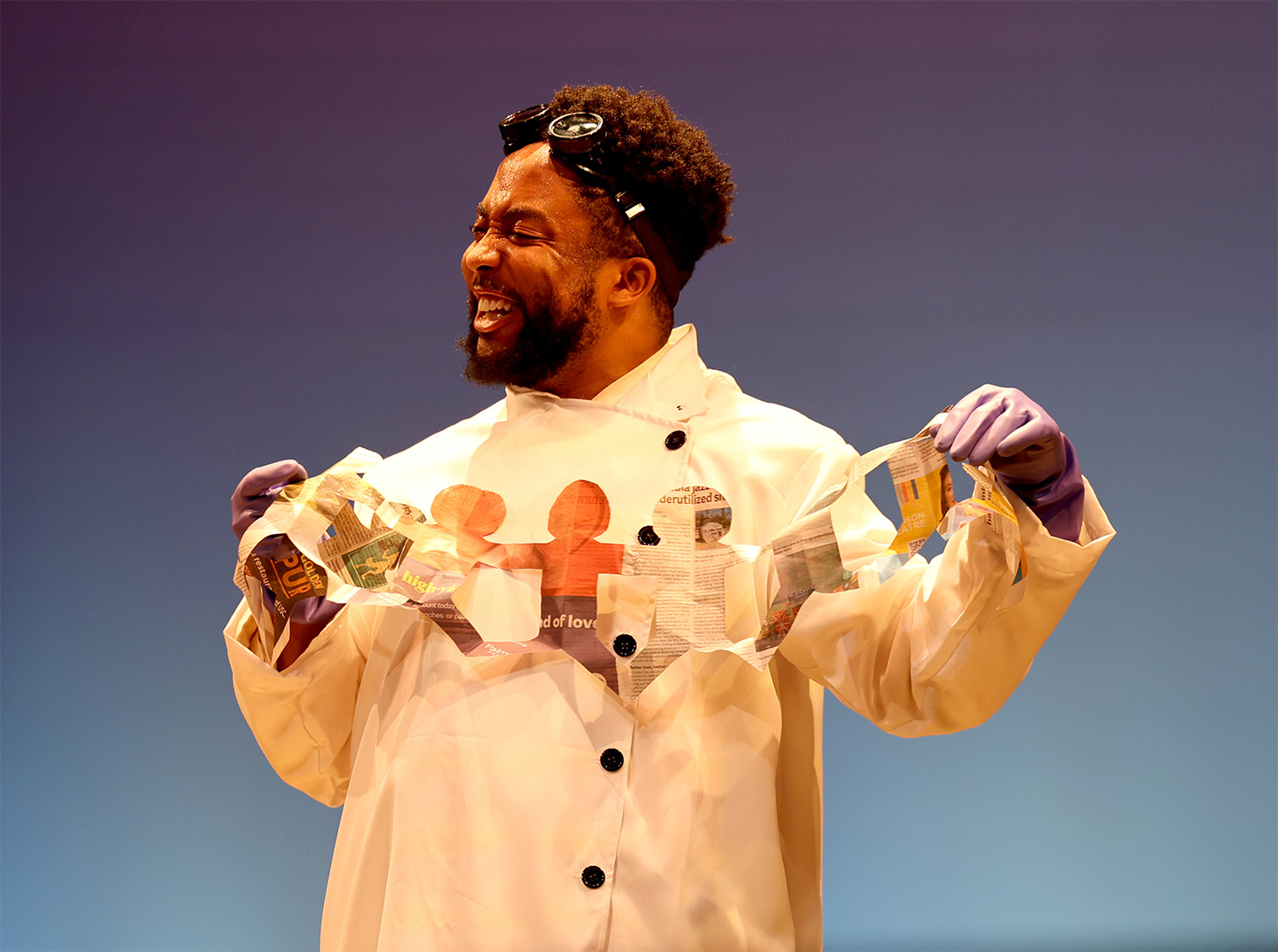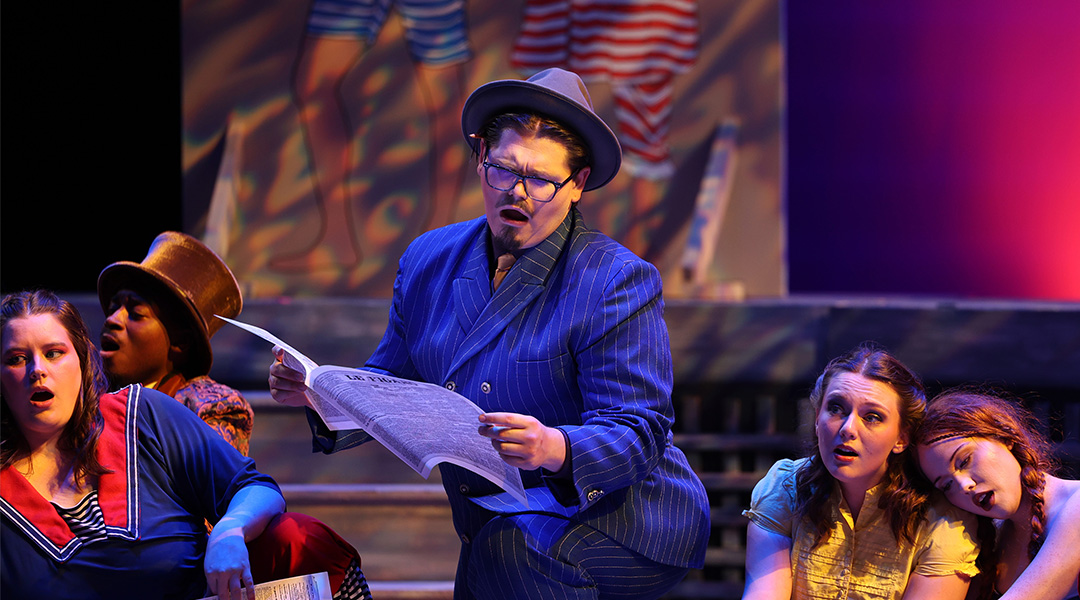
Student Bryce Stratton reads and sings from a newspaper in his role as Le Journaliste (The Journalist), while cast members sing around him during a Feb. 25 dress rehearsal at Drayton Hall. Photo by Lacy Latham/The Carolina Reporter
Antoin Marshall adjusts a jacket, lifts a prop pipe and steps into the glow of Drayton Hall’s stage lights, joining a set filled with bold colors and exaggerated movement.
Moments later, his voice rises above the orchestra and into the theater.
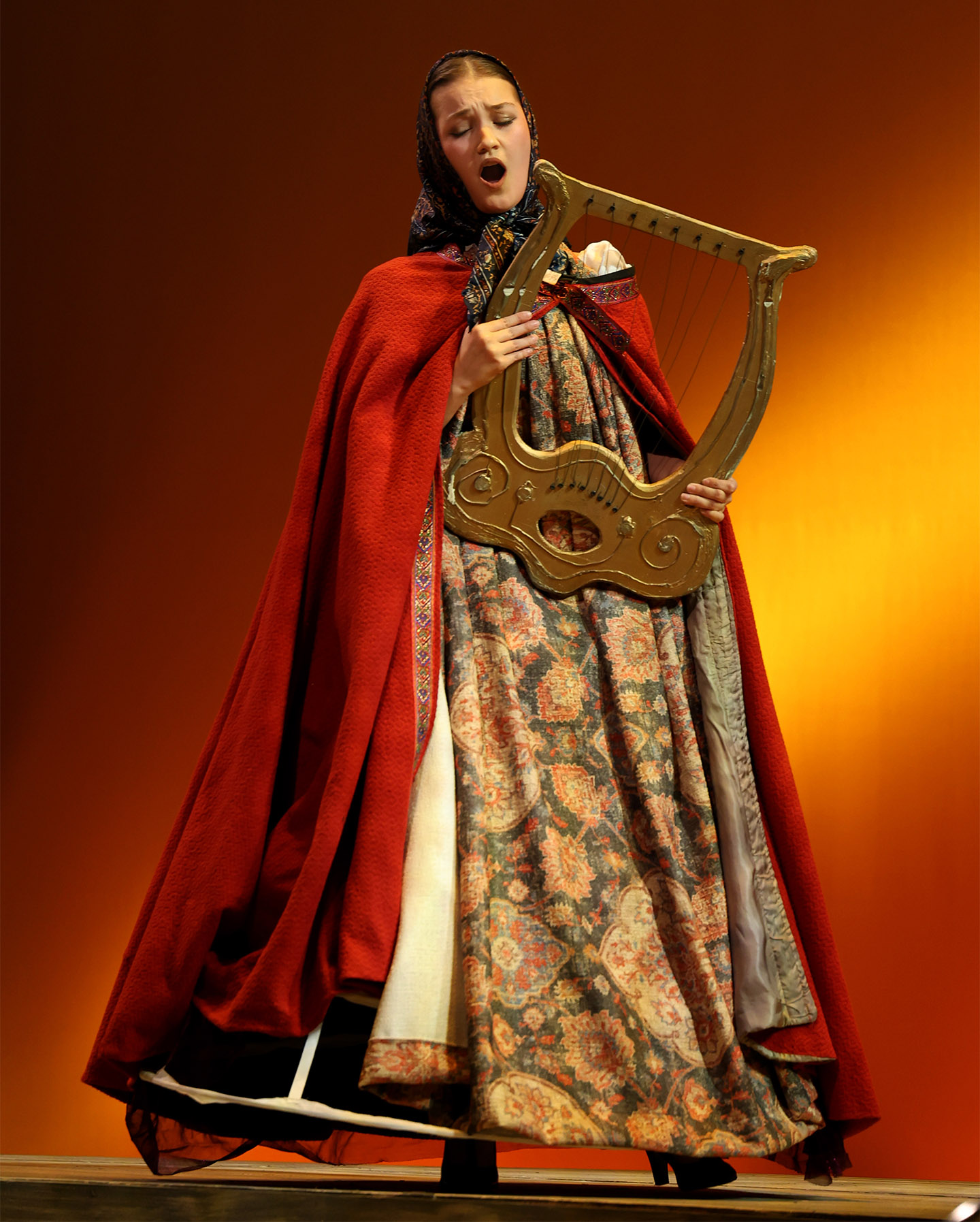
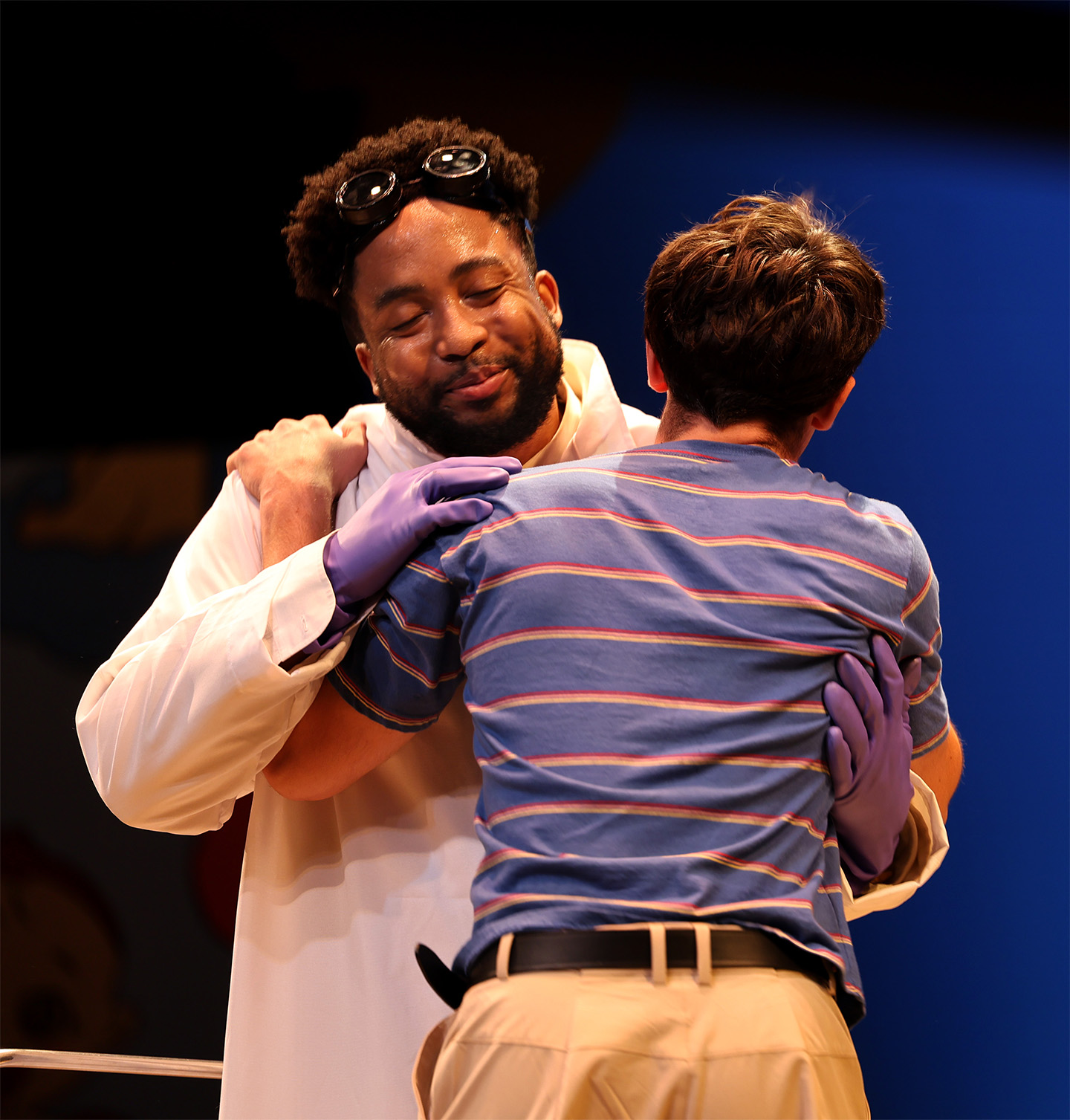
Marshall, a second-year doctoral student in the musical arts program, portrayed Le Mari (The Husband) in the University of South Carolina opera’s production of composer Francis Poulenc’s “Les Mamelles de Tirésias” (“The Breasts of Tiresias”).
Adapted from Guillaume Apollinaire’s 1917 surrealist play, which premiered as an opera in 1947, the work blends satire with social commentary. The story is set in post-World War II France and addresses the country’s push to repopulate through absurdist scenes and heightened characters. A director character frames the play-within-a-play. Thérèse transforms into Tirésias to reject her traditional role, so her husband plans to father 40,049 children in a single day. Fortune-tellers, duels, journalists and police officers move through the hour-long, two-act production.
Though the opera is named for Tirésias, the husband’s part has extended vocal passages that drive much of the performance.
“I have the most singing in the opera, which is kind of the point: The juxtaposition between women usually standing in the background and doing all of the work, while the man is in front,” Marshall said. “This time the woman does not do all of the work.”
The production was a first appearance with Opera at USC for Eleni Nicholas, a masters student in opera theater performance.
“When the cast list came out, and I saw my name next to Thérèse/Tirésias, I was ecstatic,” Nicholas said.
Nicholas recognized the character’s motivations within the larger narrative.
“On the surface, she is a French woman who is bored of her domestic responsibilities and desires to conquer the world under the name General Tirésias,” Nicholas said. “To me, she represents so much more. She advocates for equality and liberation while rebelling (against) societal expectation and responsibility.”
Despite the opera’s playful tone, the rehearsal schedule was condensed. Staging began with the spring semester, so the cast had about seven weeks to prepare before opening night.
Sophomore vocal performance student Peyton Kakouras, who performed as Le Fils (The Son) in his first principal role, said rehearsals intensified in the month before the show. Performers met four days a week for up to three hours at a time.
“It’s a challenge, but as long as you’re really dedicated to doing what it takes to learn your role and learn your part for it, then it’s really just trying to give up some things while trying to balance schoolwork and the opera, you know?” Kakouras said. “For me, I gave up going to the gym and I had to, like, make more time for the opera than for myself.”
The staging also demanded regular movement, particularly in roles that remain active throughout the production.
“There’s a lot of energy that is required for the show,” Marshall said. “I’m all over the place, and it requires a lot of stamina to be able to sing from beginning to end and do it well.”
Marshall said preparing for that level of activity required attention beyond learning notes and rhythms.
“I think people forget that singing is a physical activity,” Marshall said. “It is really a body workout, singing and performing and remembering everything.”
Cast members worked with language coaches to refine pronunciation and perform the opera in French. They also incorporated choreography and character direction while projecting over a live orchestra without microphones.
“You have to remember all of that while breathing and supporting the song that is coming out of your mouth,” Marshall said.
While the onstage action appears disorderly, backstage follows a plan. Madison Supino, a masters student studying opera stage direction, served as directing graduate assistant and stage manager. Her responsibilities included organizing cues, tracking entrances and exits, overseeing costume changes, communicating between everyone and more.
“This was surrealism and an upside-down world, and lots of crazy, kooky stuff,” Supino said. “Even my preshow ritual was different.”
Given the number of moving parts, Supino said managing the atmosphere behind the curtain was part of her role.
“It’s definitely something that … because of the chaos that is happening within the story, has the potential to spill into kind of frenetic energy backstage,” Supino said.
She said the cast’s approach to rehearsals kept that overflow from happening.
“I cannot sing the praises of this cast enough for handling what is truly, like, chaos on stage,” Supino said. “And then just being such constant professionals backstage and in the rehearsal room.”
Supino said USC’s unique opera stage directing program influenced her decision to pursue graduate study there.
“I was delighted to find out about the program here,” Supino said. “I was just like, ‘Wow, this is such a wonderful … environment.’”
As the production’s narrative unfolds, the characters confront the outcomes of their choices.
“By the end of the opera, you know, we come to the realization that … we’re all human beings and we’re equal,” Marshall said. “We have choices and opportunities to do what we would like to do without being constrained by how we were made.”
Cast members said the production’s style may differ from common expectations of opera and can provide escape for the audience. Supino said productions like this demonstrate that opera has more range than its typical stereotype.
“What we just performed is insanity and chaos and surrealism,” Supino said. “But, like, at its heart, it’s human emotion on a grand scale, expressing what words cannot necessarily convey and where music can pick up and help.”
She also described the educational value of participating in a production that involves multiple departments and contributors.
“Opera is the collaborative art form,” Supino said. “It’s so many parts that have to come together to make the whole. And I think that, as a student, seeing that in action is really important.”
Opera at USC’s next production, “The Lanny and Sidney Palmer One-Act Opera Series,” is scheduled for April 11 and 12.
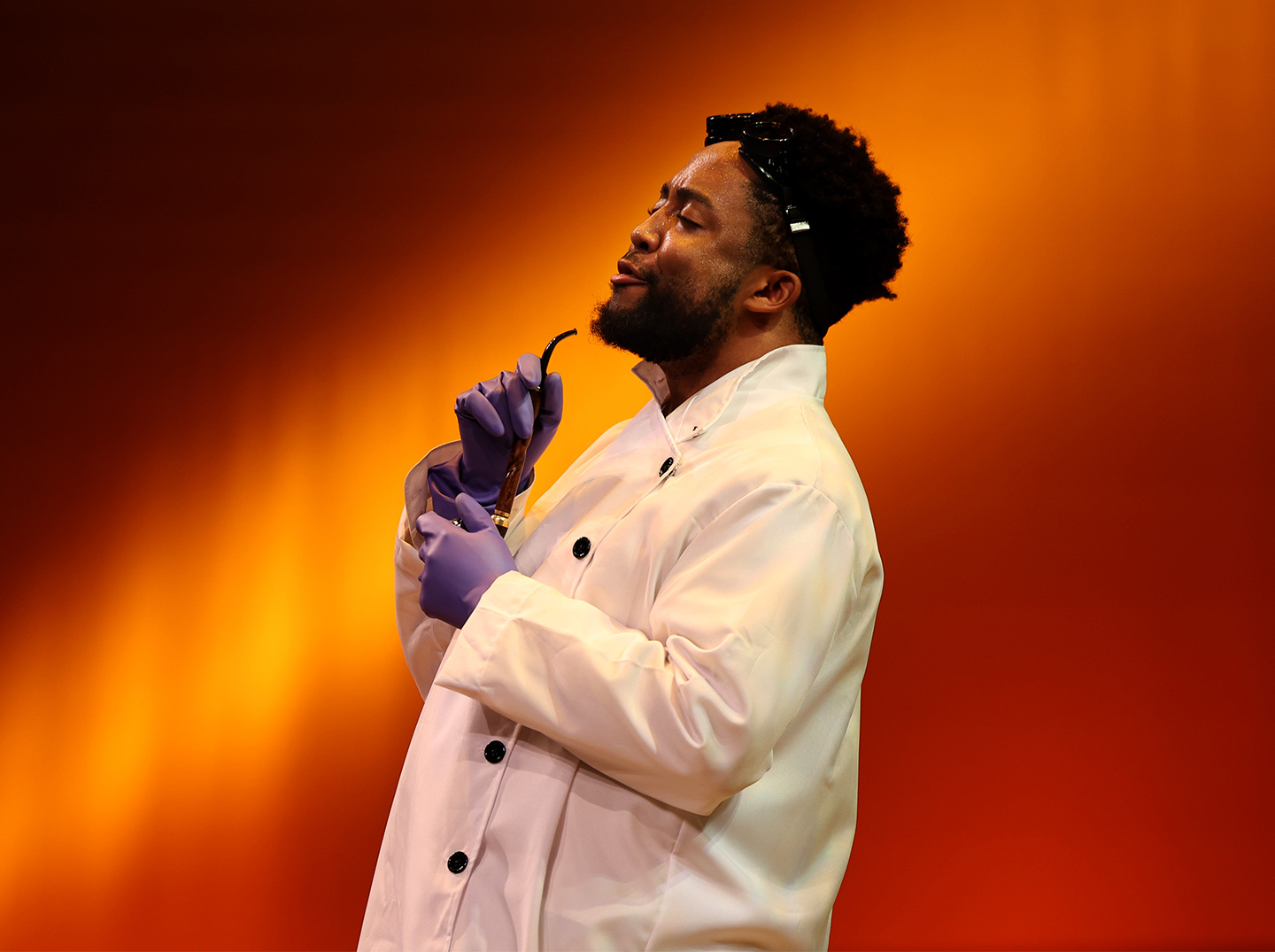
Antoin Marshall smokes a prop pipe in his role as Le Mari (The Husband) during a dress rehearsal. Photo by Lacy Latham/The Carolina Reporter
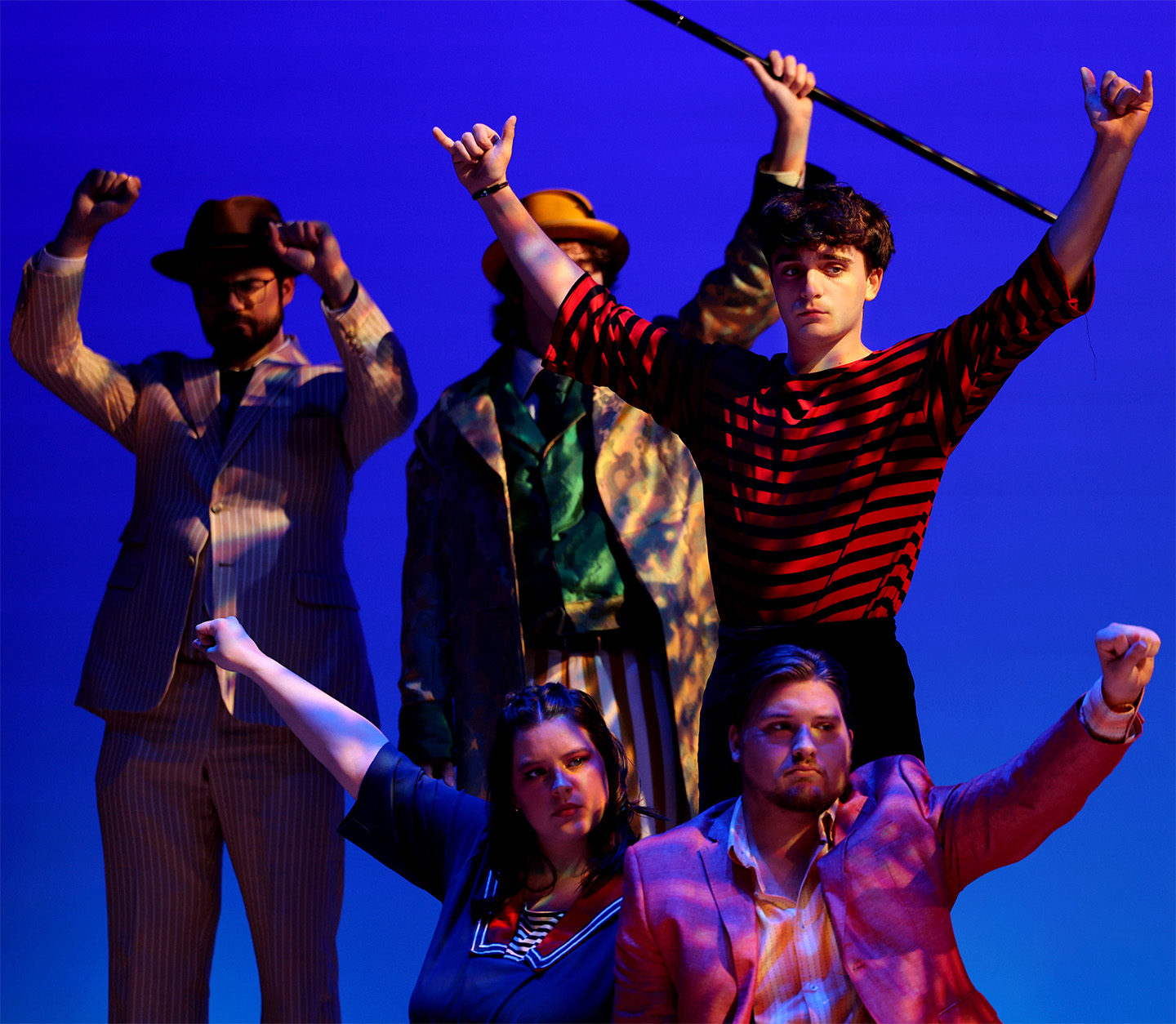
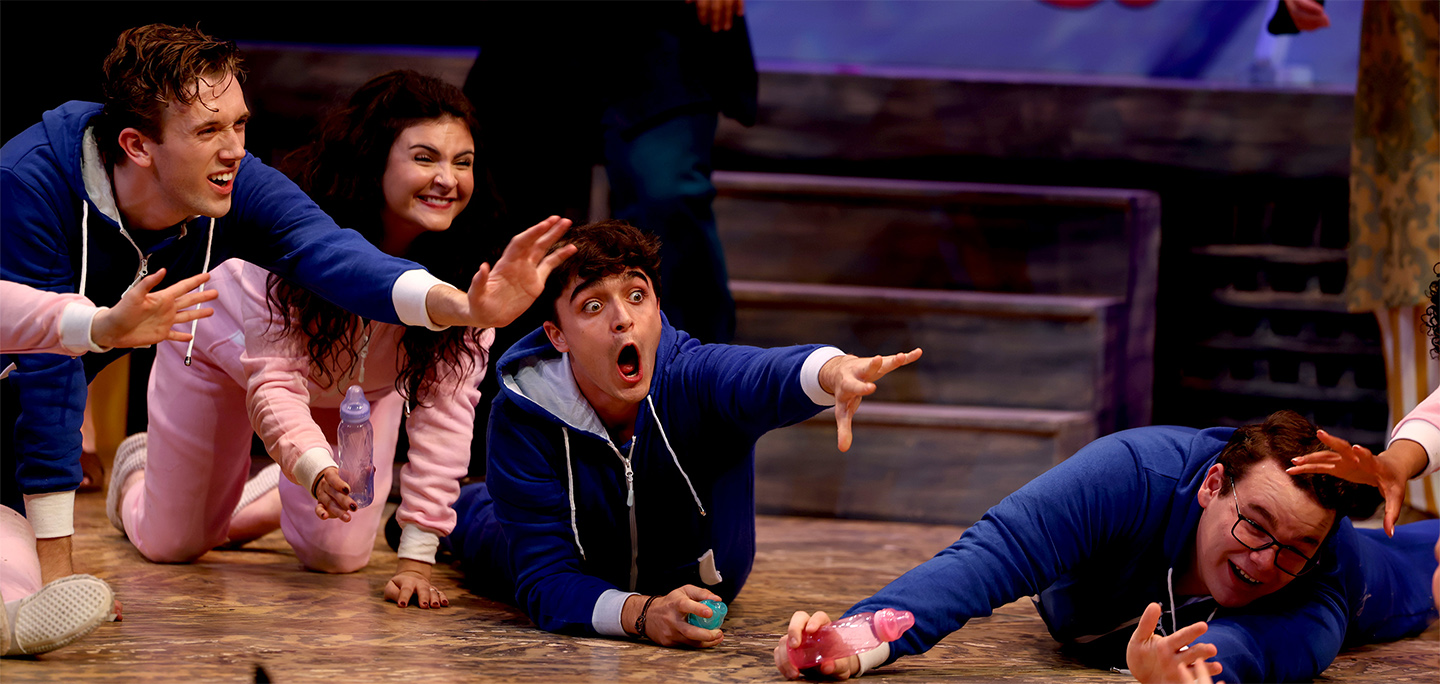
Opera at USC cast members raise their arms for a dramatic moment of the show during the production’s dress rehearsal. Photo by Lacy Latham/The Carolina Reporter
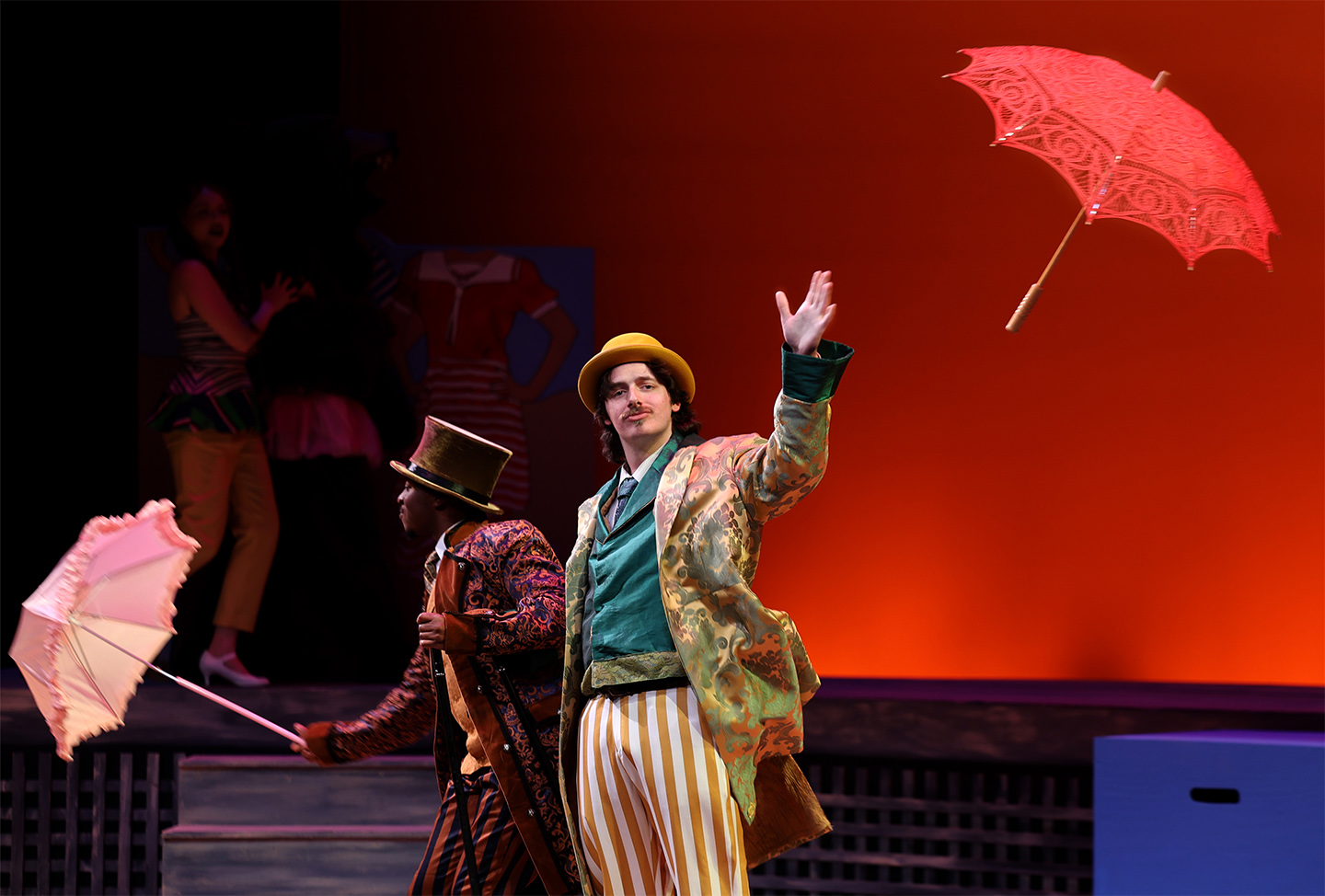
Junior music education majors, Jaden Hart, left, and Houston Hackett throw their umbrellas before a duel as Monsieur Lacouf and Monsieur Presto, respectively, during dress rehearsal. Photo by Lacy Latham/The Carolina Reporter
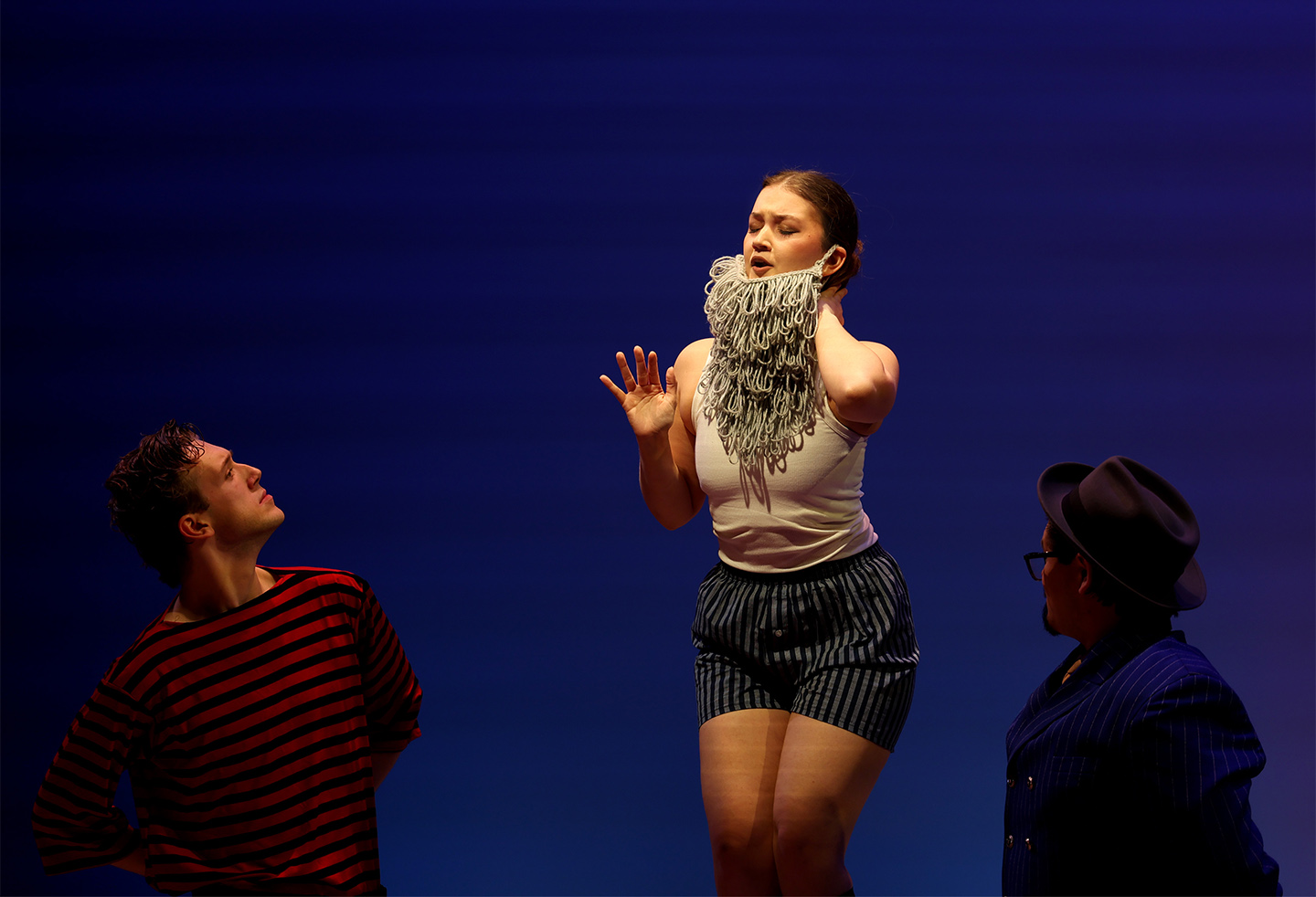
Student Alana Brezenski sings as Tirésias after Thérèse’s transformation during the dress rehearsal. Photo by Lacy Latham/The Carolina Reporter
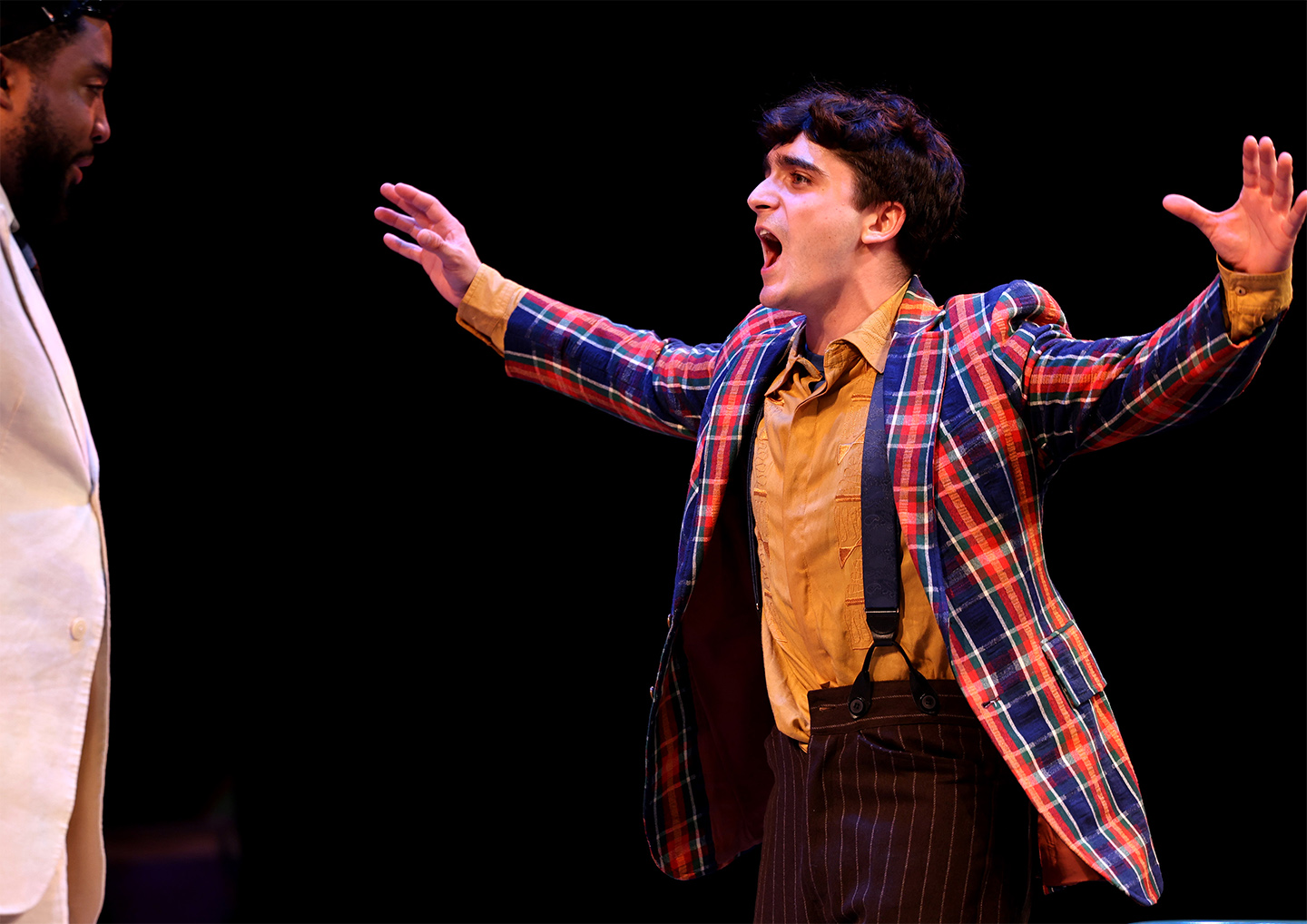
Peyton Kakouras performs as Le Fils (The Son), operatically yells at Marshall, playing Le Mari (The Husband). Photo by Lacy Latham/The Carolina Reporter
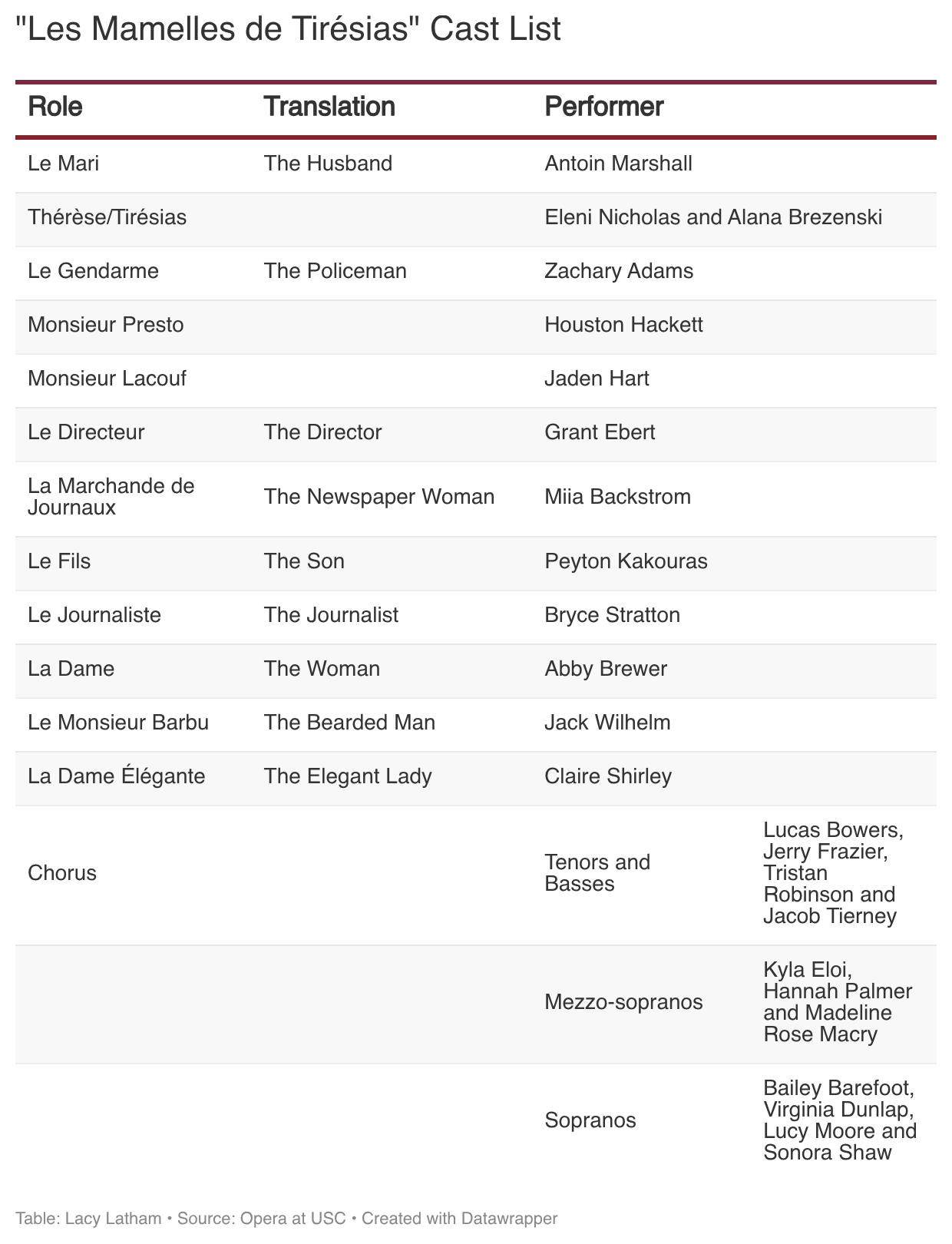
A chart lists the performers and their roles for “Les Mamelles de Tirésias.” Chart by Lacy Latham/The Carolina Reporter
More Photos