Cody Soles, member of Charleston’s breakdancing group Dancing On Air Crew, doing a handstand for the crowd at the Columbia Art Museum’s Keith Haring preview party. Photo by Erin Abdalla/Carolina Reporter
Local art enthusiasts can now enjoy a wide selection of Keith Haring’s paper drawings, silkscreens, posters and more at the Columbia Museum of Art.
The museum launched its newest exhibit, the Keith Haring: Radiant Vision collection, during its preview party on Sept. 26. Museum goers will have access to the exhibit, which features Haring’s works from the collection of art collectors Gary Cassinelli and Nick Preston, through Feb. 15.
Cassinelli kicked off the event with an impromptu talk about Haring’s life and legacy. Interested attendees squeezed into the front room of the gallery to hear Cassinelli speak about Haring’s career and highlight a few of his favorite works.
The crowd moved through the gallery during his talk, walking through the 10-year progression of Haring’s work. The museum’s Chadric Devin said curator Sadé Ayorinde wanted visitors to be able to see the evolution of Haring’s art in chronological order.
“The story that you were telling is … the story of who he was as an artist,” said Devin, CMA’s director of learning and engagement.
Haring wasn’t looking for fame when he first started creating his subway wall drawings, mostly done in chalk, in 1980.
“The amazing thing about the subway art – he never put his name on it,” Cassinelli said. “He wasn’t looking for recognition. And even when everybody was trying to find him, he didn’t raise his hand.”
Haring’s true passion lay in his art, not the notoriety that came from it. Haring was discouraged from pursuing art by his family and friends, who didn’t believe it could be a successful career. Haring was determined to make art work, in spite of the pressure to leave it behind, Cassenelli said.
“Keith believed if he stuck to it, um, that it would give him joy whether he made a lot of money on it or not, but that’s what he wanted to do,” Cassinelli said.
Accessibility was always at the forefront of Haring’s mind. He believed that anyone should be able to see his art.
“If you went up to him and said, ‘Hey, I love who you are, and I love what you’re doing’ – if you gave him a book he’d draw on it,” Cassinelli said. “If you allowed him, he’d draw on your jacket.”
Haring was passionate about connecting with people through art, and one way he connected to his community was through the club scene. Many of Haring’s works feature dancing characters, reflecting the artist’s deep appreciation of dance as a cultural unifier.
The museum honored the impact that dance had on Haring’s life with a live performance and lesson by Charleston breakdancing crew Dancing On Air.
Another art medium that heavily affected Haring’s artistic style was ancient cave drawings, Cassinelli said.
“That art was really a language, a language that crossed every barrier,” Cassinelli said. “And he felt that in his eyes, it was – art was the very first language to ever exist.”
Haring took that concept and created a cast of characters, which he called icons, that he featured heavily in his work. The “Radiant Baby,” “Barking Dog,” “Three Eyed Monster,” “Angel,” and “Flying Devil” are key to understanding the political nuance behind many of Haring’s works.
“When you go through the exhibit, you’ll see the radiant baby, which is innocent, untouched, and new,” Cassinelli said. “You’ll see the dog, which is protection. And then you’ll see the two angels, one (of) which is good, and one (of) which could be the devil with death. And then you’ll see the three-eyed man, which means, ‘Who’s smiling? Meaning he’s a friend of yours, but watch out, he’s got a third eye.”
These characters were featured in Haring’s works long before they were officially introduced in his 1990 “Icons” and “White Icons” series after he switched to creating embossings on silk and paper and paintings and drawings on canvas instead of on walls. The contrast between the bold colors of the “Icons” series and the complete lack of color in the “White Icons” series emphasizes the importance of the characters in Haring’s work.
The simplicity of Haring’s icons allowed anyone and everyone to see the messages he was trying to convey.
“Once you understood these icons that he was developing, you can walk through the exhibit,” Cassinelli said. “There were people that are not speaking in English, but they’re reading what he’s writing.”
His use of bold lines and intense colors makes Haring’s art approachable for people who aren’t well versed in the art world.
“What he found very important was young people understanding art and moving into it,” Cassinelli said. “And that was one of his wishes in life, is to get young people motivated in art.”
Haring’s art career, cut short by AIDS, was spent striving to show young people that the art world doesn’t have to be daunting.
University of South Carolina senior Zoe Leonard praised Haring for his approachability
“His art, like, could be understood by anybody, because like it’s really just, like, people and, like, figures,” Leonard said. “I think it’s less intimidating.”
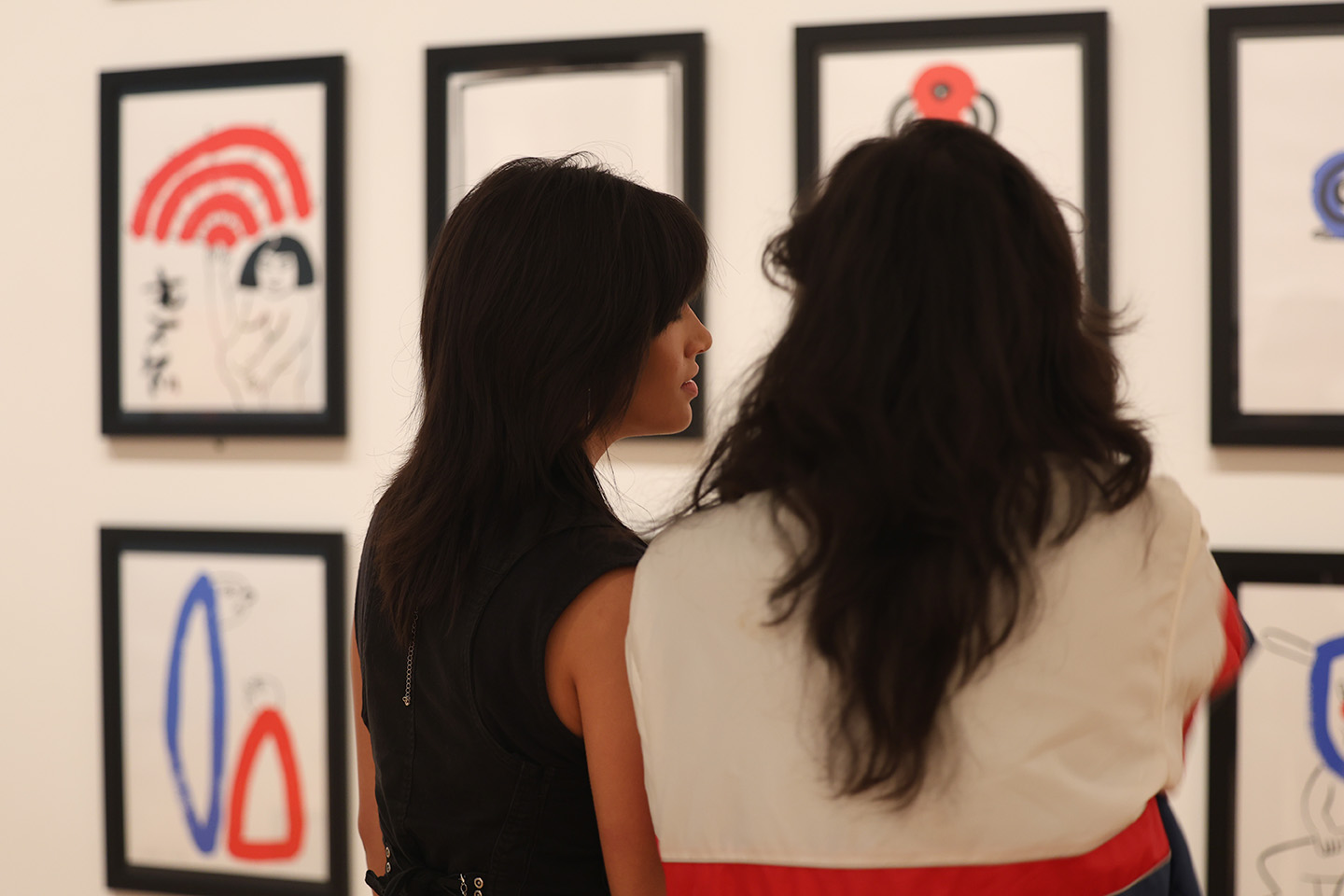
Jo Neri and Julia Green look at the “Story of Red and Blue” series that was part of the Columbia Museum of Art’s Keith Haring: Radiant Vision exhibit. Photo by Erin Abdalla/Carolina Reporter
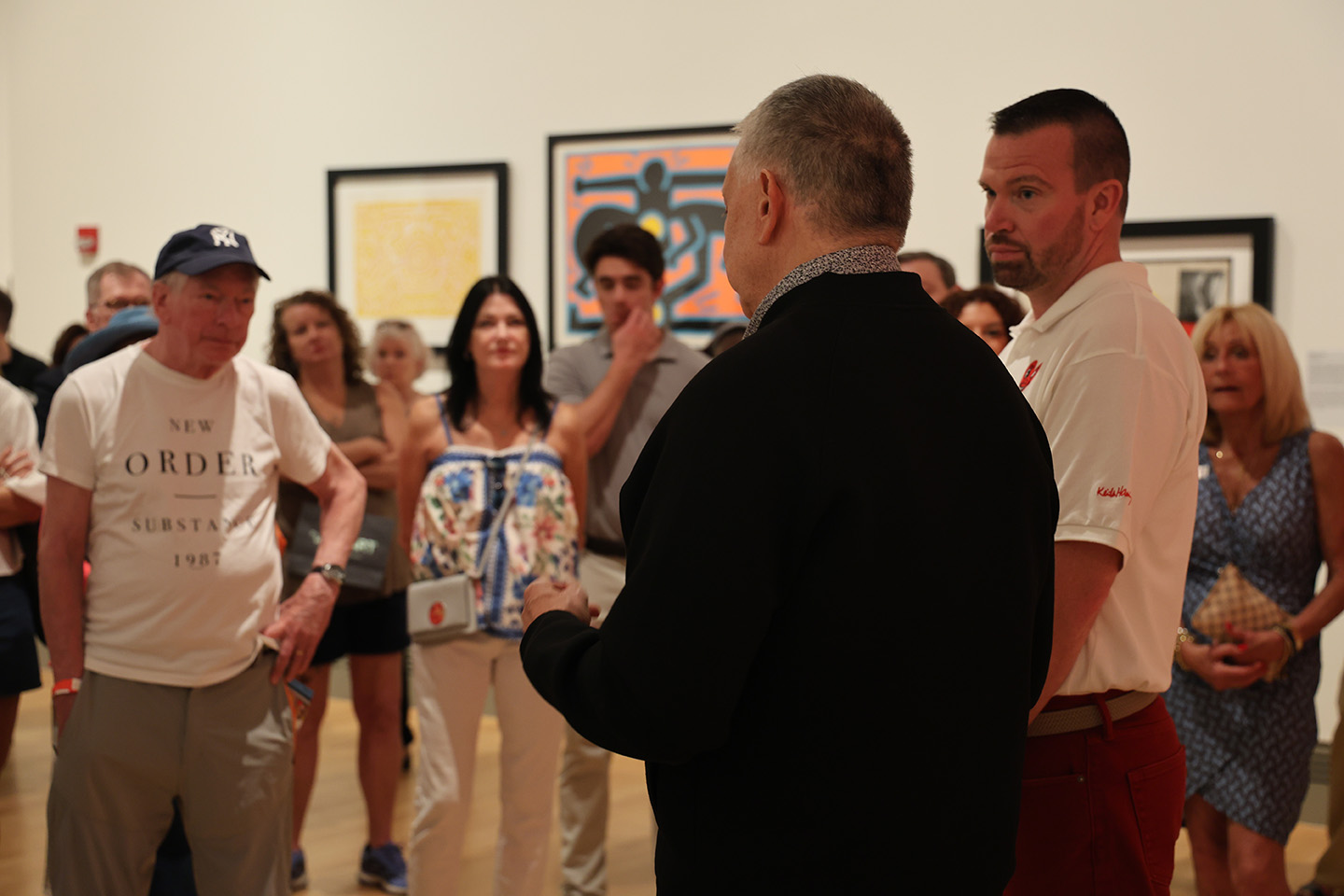
Collectors Gary Cassinelli and Nick Preston talk about Keith Haring’s legacy at the Columbia Art Museum’s preview party. Photo by Erin Abdalla/Carolina Reporter
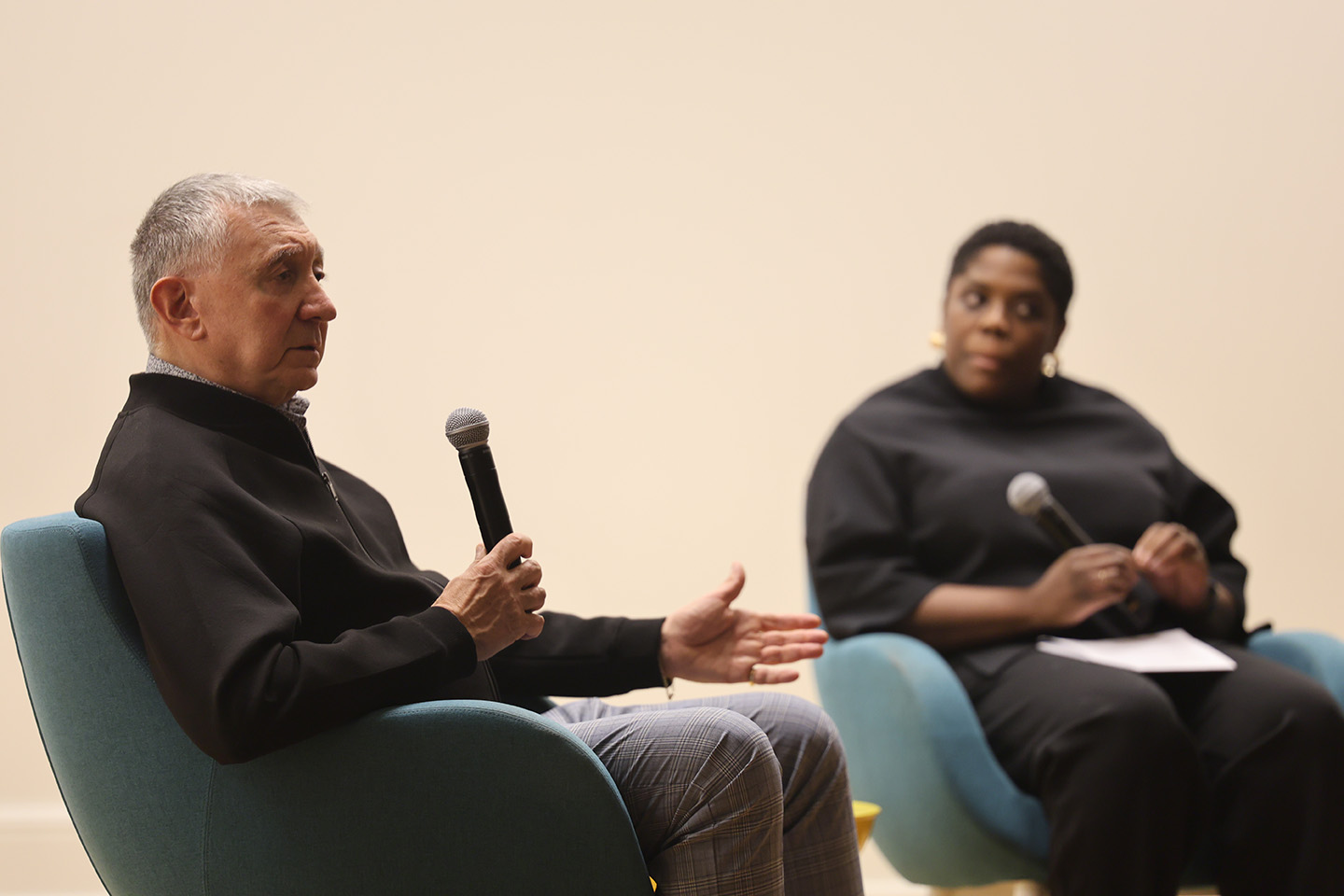
Collector Gary Cassinelli talks with Curator Sadé Ayorinde about Keith Haring’s legacy at the Columbia Art Museum’s Keith Haring Preview Party on September 26, 2025. Photo by Erin Abdalla/Carolina Reporter

Collector Gary Cassinelli gestures to Keith Haring’s “Blueprint Drawing 17” at the Columbia Art Museum. Photo by Erin Abdalla/Carolina Reporter