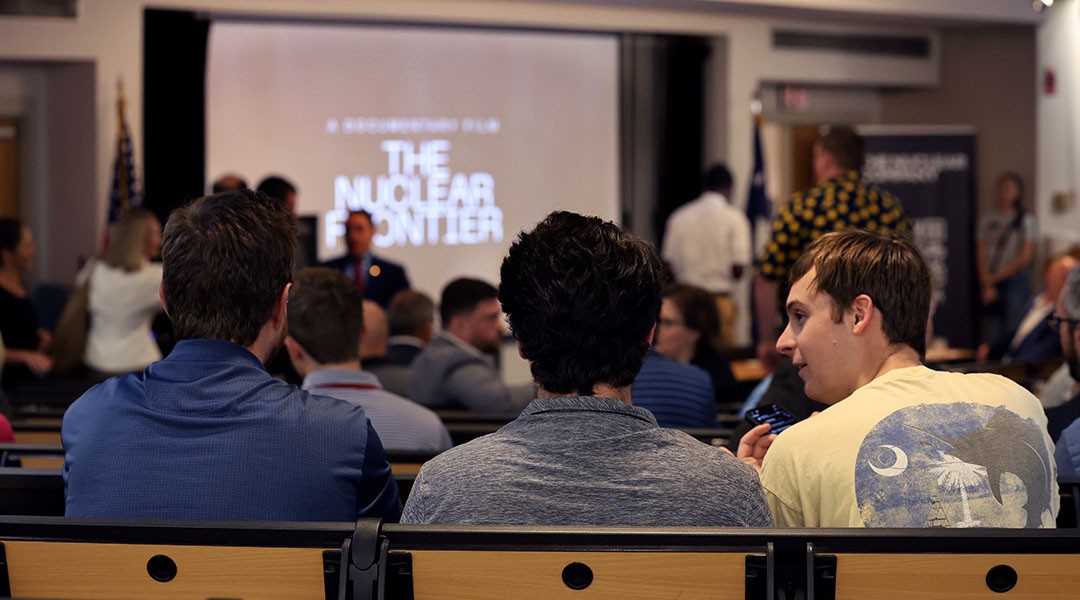
Junior mechanical engineering student Zachary Gardiner talks to friends before the start of “The Nuclear Frontier.” Photos by Miles Shea/Carolina Reporter
If you ask Joe Klecha, who works as chief nuclear officer at The Nuclear Co., the long-term solution to America’s reliance on fossil fuel is as clear as his company’s name: nuclear power.
The problem, Klecha said, has been mobilizing support.
“We believe we need to be building now,” Klecha said. “(The United States has) zero reactors currently under construction.”
Following its Kennedy Center premiere, “The Nuclear Frontier”-branded bus tour has been on the road for eight weeks. Klecha and company representatives are traveling to 14 universities to showcase the film, promote The Nuclear Co.’s goals and participate in post-screening panels with local experts.
The film makes the pitch that a shift to nuclear energy is among the most critical issues of our time, due to both climate change concerns and efforts to keep up with Russia and China on the geopolitical stage.
Panel participant and Palmetto Nuclear Coalition founder Ethel Bunch said nuclear energy could herald a new era of development.
“I’ve worked with the industry for a long time,” Bunch said. “‘Industrial Revolution’ is really transitioning into ‘Sustainable Revolution.'”
Carolina connection
University of South Carolina professor Dr. Travis Knight said he only expects growth in the coming years.
“It’s a good time to be in engineering at Carolina,” said Knight, who chairs the department of mechanical engineering and started the university’s nuclear engineering graduate program 21 years ago. “We’re growing in students and growing in programs.”
With four active nuclear power plants, South Carolina is the third-largest producer of nuclear power in the nation, and Klecha said both sides want that relationship to continue.
“We are definitely interested in South Carolina being our home for a long time,” Klecha said. “Making sure that we can go achieve not only what the president put out in executive orders, but what the governor mentioned in his State of the State, about South Carolina being the epicenter of the nuclear renaissance.”
USC was briefly featured in the documentary, and Gov. Henry McMaster announced in April that The Nuclear Company is set to open an engineering and construction office in Richland County.
Bunch said the numbers make a compelling case to continue development.
“As a state, we are a nuclear state,” Bunch said. “We have 55% of our energy produced (through) nuclear energy, making us the third-largest nuclear-produced per capita. We have 42,000 jobs and $11 billion all annually attributed to nuclear.”
Lingering questions
For Tom Clements, an outspoken anti-nuclear activist who broke records with more than 120,000 votes as a Green Party candidate in South Carolina’s 2010 senate election, the documentary is a symptom of his largest issue with nuclear energy: promotion without payoff.
“A lot of these issues (become) promotion and hype, not just open and honest discussion about the best alternatives,” Clements said.
Clements said he was especially frustrated with Dominion Energy’s Virgil C. Summer Nuclear Power Station project. The project is a partly built nuclear site in Fairfield County that shuttered after some former SCANA leaders were investigated for fraud and mismanagement and South Carolina energy customers had been charged up to $9 billion in construction costs.
“It’s just all rhetorical,” Clements said.
The project was meant to be, along with a now fully powered Georgia site, the first reactors built in the United States in 30 years.
Bunch addressed the project during the panel discussion, saying that while it didn’t succeed in the way state officials hoped, the site remains an asset that can help shape the future of nuclear energy in South Carolina if development is restarted.
“We need to just stop and think,” said Bunch, who favors continuing construction. “A black eye is getting ready to turn into the blueprint for nuclear energy dominance.”
Knight said that while he disagrees with Clements in “almost every possible way,” he thinks it’s important for some skepticism to counterbalance faith as the nuclear energy industry evolves.
“We do appreciate the questions that one should ask,” Knight said. “Focus on economics, on safety, on reliability, benefits to the community. All those are legitimate questions.”
Klecha said that while construction of nuclear plants is highly expensive, he believes the value far outweighs the initial costs.
“There’s never been a nuclear plant that’s finished and completed and started creating electrons that has lost money,” Klecha said. “We often think too short-term in this country.”
Knight said that when you look at the facts, it’s hard to argue against nuclear energy.
“The safety record speaks for itself,” Knight said. “[It] has been, for a long time, the lowest-cost form of base load energy.”
Future talent
Klecha said recruiting the talent of tomorrow is a key priority for The Nuclear Company.
“One of our biggest-focus areas is workforce development,” Klecha said. “How do we create the next generation of nuclear professionals?”
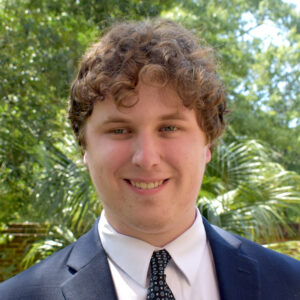
Zachary Gardiner, a junior chemical engineering student with a nuclear engineering minor, was among the documentary screening’s attendees. He praised the film and enjoyed seeing USC in it.
“It’s always good to see positive information out there when it comes to nuclear industry and nuclear research,” Gardiner said. “It was very incredible to see our school get featured for doing such incredible nuclear research.”
Caleb Navarrete, a student at Blythewood High School, attended the screening with his father. An aspiring engineer, Navarette said the film left him feeling better about renewable energy prospects and more interested in potentially pursuing the nuclear field.
Gardiner, who’s currently doing his own undergraduate research on nuclear power technology, was optimistic about its future.
“It’s great for having something that’s sustainable and reliable for the future of our nation,” Gardiner said.
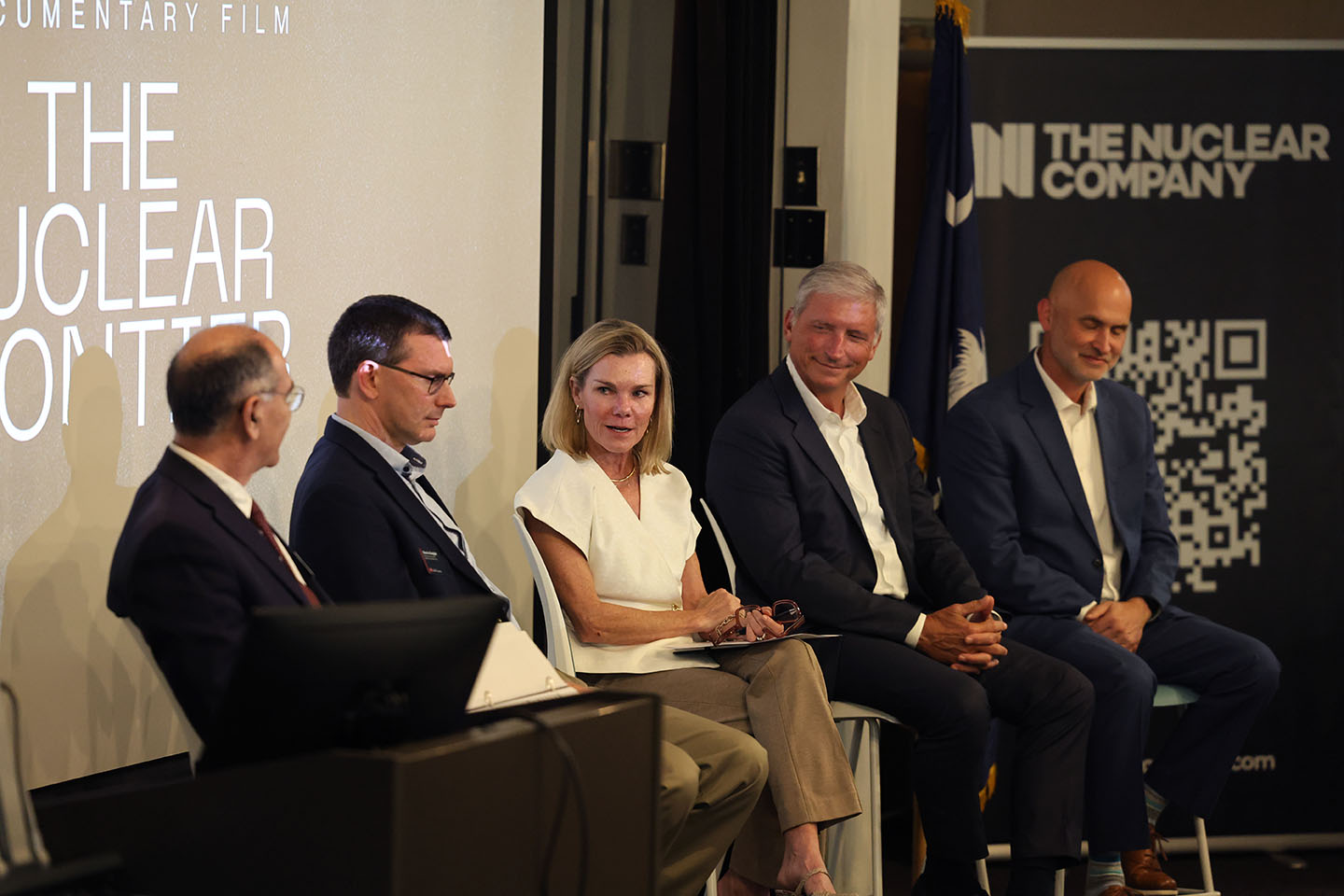
A panel that included USC engineering dean Dr. Hossein Haj-Hariri, professor Dr. Travis Knight, construction executive Greg A. Thompson, nuclear consultant Ethel Bunch and nuclear company representative Joe Klecha discussed nuclear energy issues after the film.
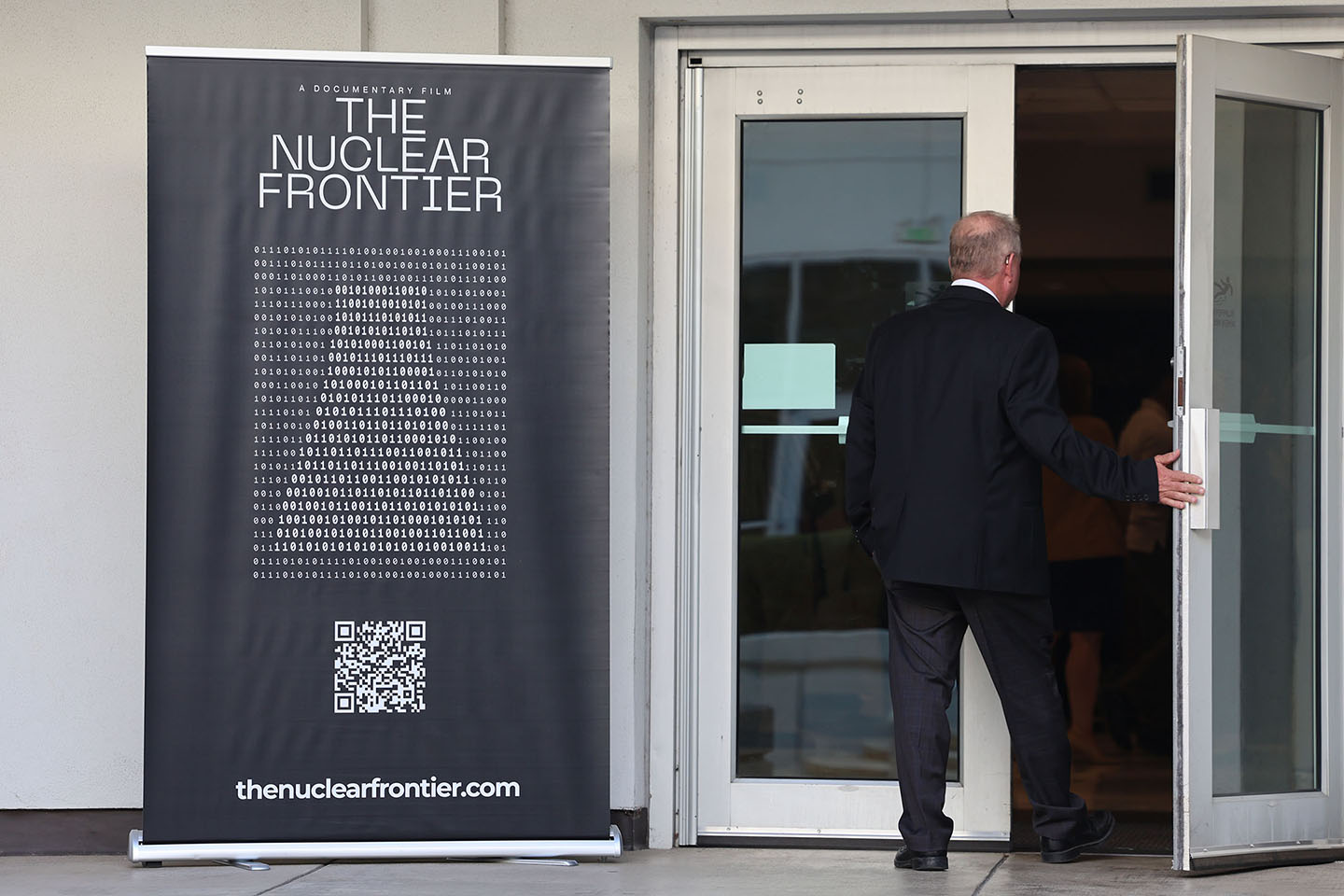
Th screening and panel discussion were held on USC’s campus.
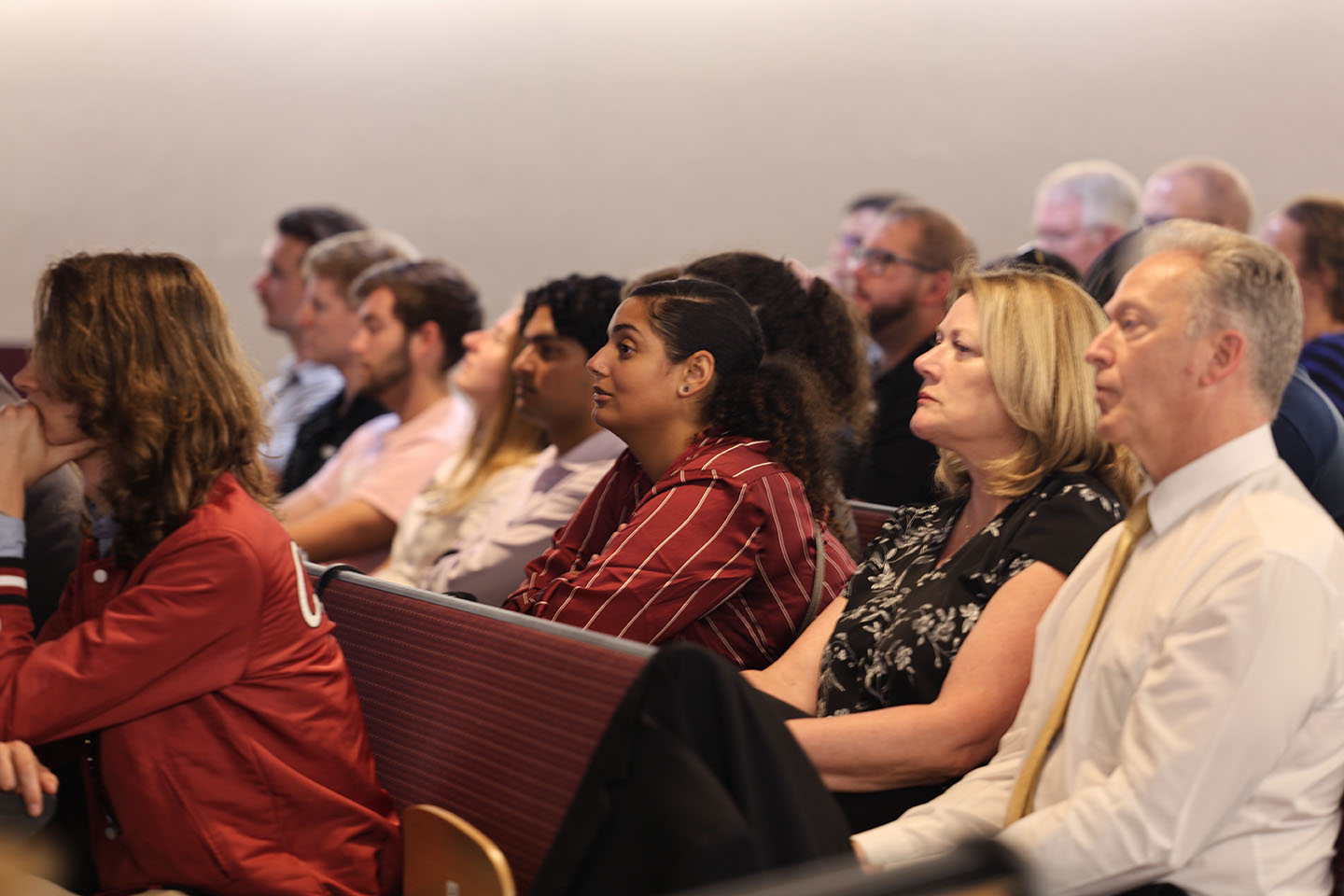
Event attendees watch “The Nuclear Frontier,” a documentary promoting nuclear power.
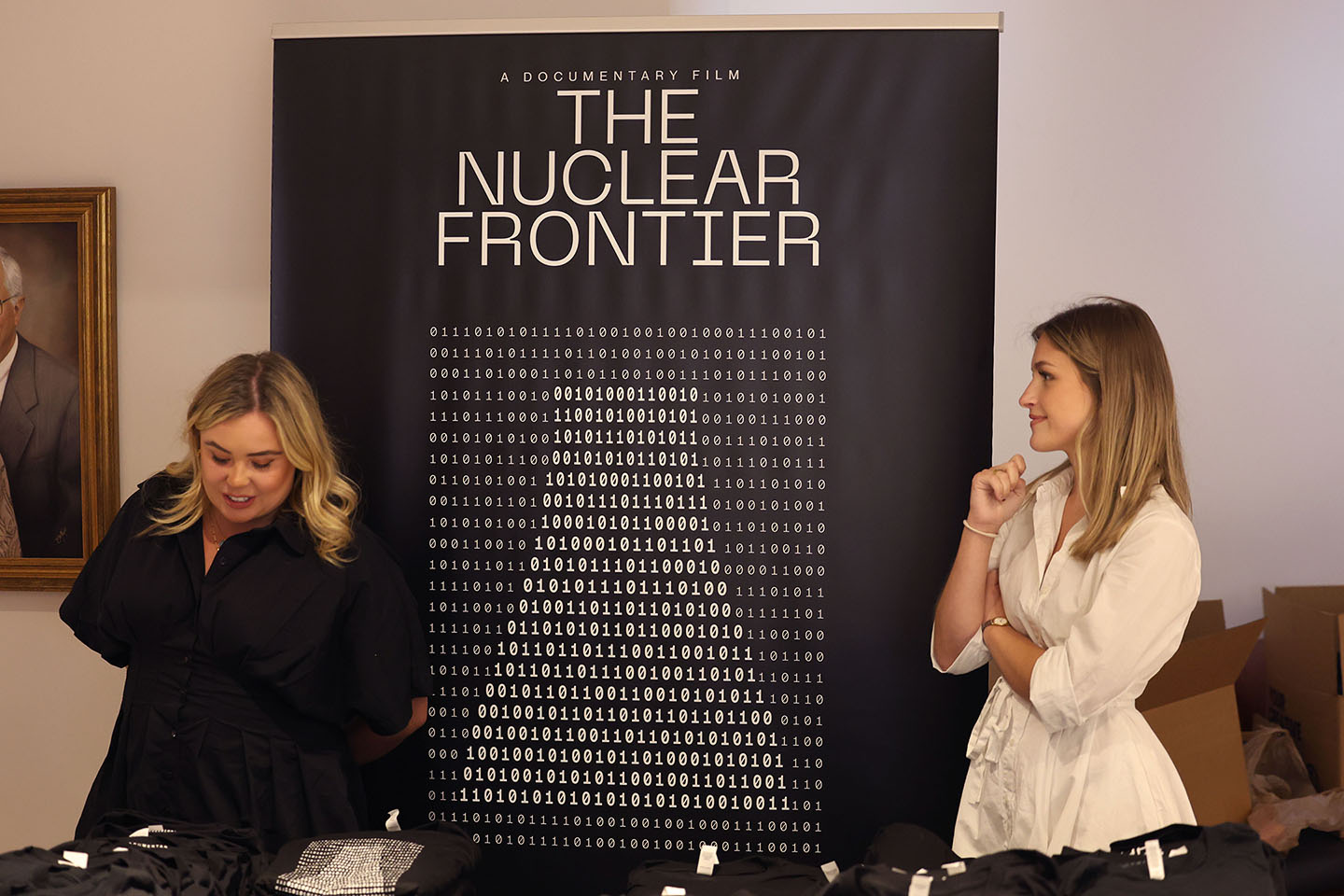
Free merchandise, including stickers and T-shirts, was distributed following the screening.