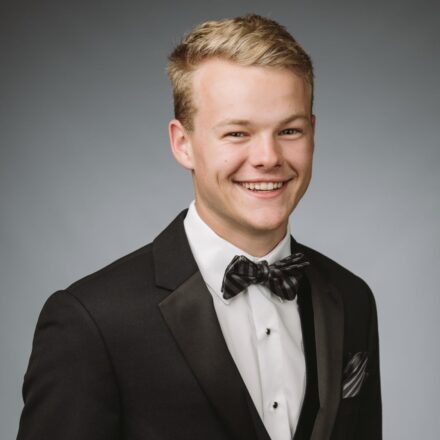
What began as a carefree senior skip day in October 2018 turned into a life-or-death moment for Josh Boyd, a former star quarterback at Richland Northeast High School.
Boyd was playing basketball when he suddenly collapsed, showing no pulse or vital signs.
“My tongue was sticking out of my mouth, and I was just not moving at all,” Boyd said.
At just 17 years old, he had suffered sudden cardiac arrest. Luckily for Boyd, local firefighters were also at the gym that day and administered CPR before he was rushed to the hospital, but doctors initially could not revive him.
“They wanted to get in touch with my mom, telling her ‘We keep doing it and nothing’s working. I think we’re about to let him go,’” Boyd said.
His mother urged doctors to continue. Moments later, his heart started beating again. Boyd was immediately rushed into open-heart surgery.
“When I woke up from the hospital, it felt like a great nap,” he said. “They were telling me you had a heart attack. You passed away a couple times.”
Doctors later diagnosed Boyd with cardiomegaly, or an enlarged heart, a condition that ended his playing career. Still, it did not keep him away from the game. He has since found a new purpose in coaching, starting at Coastal Carolina University and North Greenville University, and now is the quarterbacks coach at Dutch Fork High School, a program that experienced its own loss of a student-athlete to a heart condition in 2021.
Boyd’s story highlights the ongoing concern surrounding the growing number of heart conditions in young athletes. As of 2026, about 1 in 80,000 high school athletes experience sudden cardiac arrest each year, totaling more than 100 cases annually. Football players are considered among the highest risks.
South Carolina lawmakers are taking steps to address the issue. A bill passed April 2 will require coaches to undergo CPR training starting in 2027. Another proposal would mandate electrocardiograms, or EKGs, for student-athletes in grades 7 through 12 before participation.
“EKGs for everybody would be great. I think a heart echo would be better,” said Julie Sandy, the co-head athletic trainer at River Bluff High School.
Boyd now uses his experience to raise awareness, participating in events such as the Midlands Heart Walk, and encouraging young athletes to prioritize their health.
“Just talk to kids and not harp on those because you might look good on the outside, but you never know what’s going on inside of your body,” he said.
Nearly a decade later, the memory of that day remains vivid for Boyd. What once was a close call has become a source of motivation as he works to protect the next generation of athletes.