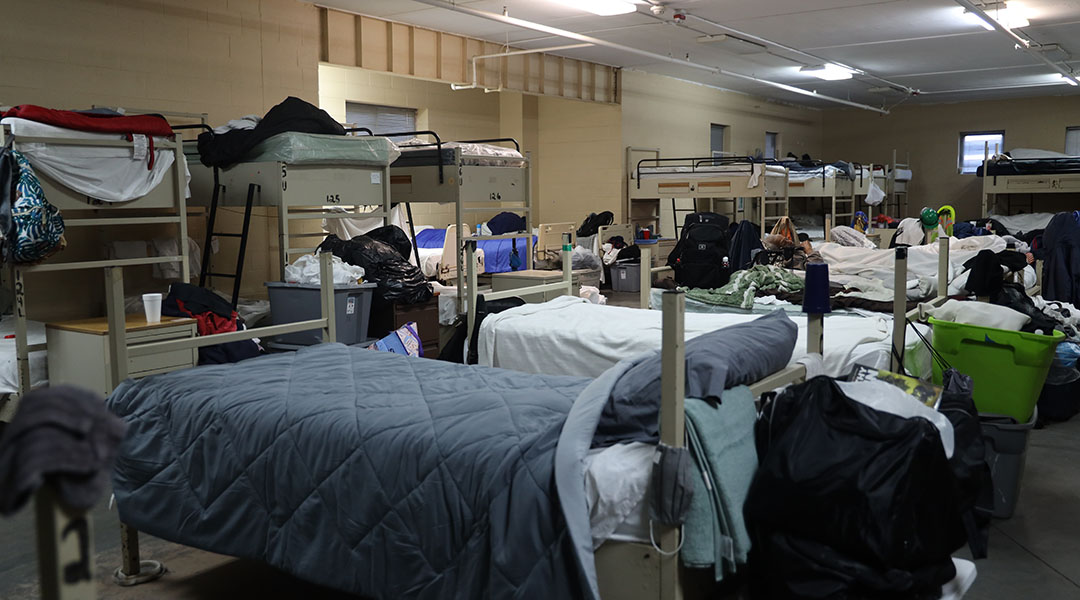
The Transitions Homeless Center in downtown Columbia provides 260 beds for adult men and women during colder winter weather. Photo by Sencere Rice/The Carolina Reporter
Homelessness continues to increase in Columbia and other parts of South Carolina as the final half of the decade begins.
The National Alliance to End Homelessness, an organization that provides statistics and data nationwide, reports that in late 2024 that the state’s homelessness population grew by 13 percent from the previous year.
That has put more people without a home at risk in extreme weather situations.
Columbia uses its Rapid Shelter facility downtown to provide temporary emergency housing for the homeless. The shelter opens when the temperature falls below 40 degrees.
This year, the shelter reached full capacity and had to transport people to the nonprofit Transitions Homeless Shelter located blocks away.
More than providing the homeless with a place to spend the night, Transitions also works to find affordable housing for residents.
Transitions President and CEO Craig Currey said the work it and other shelters in Columbia do for people is extremely important for people’s health and future.
“That’s the first thing we can figure out is, (when) somebody walks in the door, ‘Hey, how can we house you?’” Currey said. “We’ve done that with over 4,100 people since we’ve opened our doors.”
Transitions has operated at the southeastern corner of Main Street and Elmwood Avenue for 14 years. It is open 24/7, serving only adult men and women.
The center houses 260 beds, a clinic, garden and recreational center and provides three meals a day through its partnership with Harvest Hope.
Harvest Hope is a regional food bank established in 1981. Transitions and Harvest Hope announced their food-driven partnership last year.
“Harvest Hope’s partnership with Transitions Homeless Center reflects both a shared commitment and our shared values of serving our neighbors with dignity, respect and care,” interim CEO Sy Hughes said in a statement. “Food is not just a service, it is a foundational element for building community and caring for the most vulnerable.”
Harvest Hope and Transitions also accept help from volunteers with their joint operations.
Olivia White, a University of South Carolina senior, has a nutrition-based volunteer requirement for her school work. She chose to spend it working with Harvest Hope at Transitions.
“It’s a really fulfilling experience,” White said. “I really recommend it to anyone that has time.”
The center also works with the S.C. health care organization Cooperative Health, which owns a on-site clinic at Transitions. The Columbia Area Mental Health Center also has a full-time employee there who assists with mental health issues.
Transitions also directs people to the correct handful of shelters and homeless centers in the area, such as Homeless No More, which provides beds to families. Transitions does not accept children or people under the age of 18.
“It’s not one-size-fits-all,” Currey said. “You play all these different players together to then get a person into the right shelter where they need to be.”
This year’s winter weather brought with it a rare event and uncharacteristic cold to the Midlands in January into February.
Ice and very low temperatures hit the Midlands in late January, and the month’s final weekend also saw around three inches of snow.
The weather strained daily activities for residents in the Midlands.
It also tested the ability of homeless shelters to care for the homeless.
Currey said Transitions held 272 people in its Day Center the weekend of the snowstorm. He stressed the importance of removing people as quickly as possible from the harm the cold brought.
“Of course, the cold can be lethal to homeless folks,” Currey said. “If you’re sleeping on a sidewalk, and you’re not in good health to begin with, and you don’t have a good sleeping bag or you’re just lying there, you might not wake up in the morning. We need to get people off the street.”
Currey praised his staff, volunteers, partners and the city for what they’ve done to assist the city’s homeless.
“It takes a bunch of people to do this,” he said. “We’re good at beds and case management. But those partners come alongside us and help us with various needs.”
Findings
- Homelessness continues to grow in Columbia and the Midlands region of South Carolina.
- The Transitions Homeless Center partners with the city’s Rapid Shelter Center to serve as overflow in extreme weather situations.
- Transitions uses a number of partnerships to address a variety of needs.
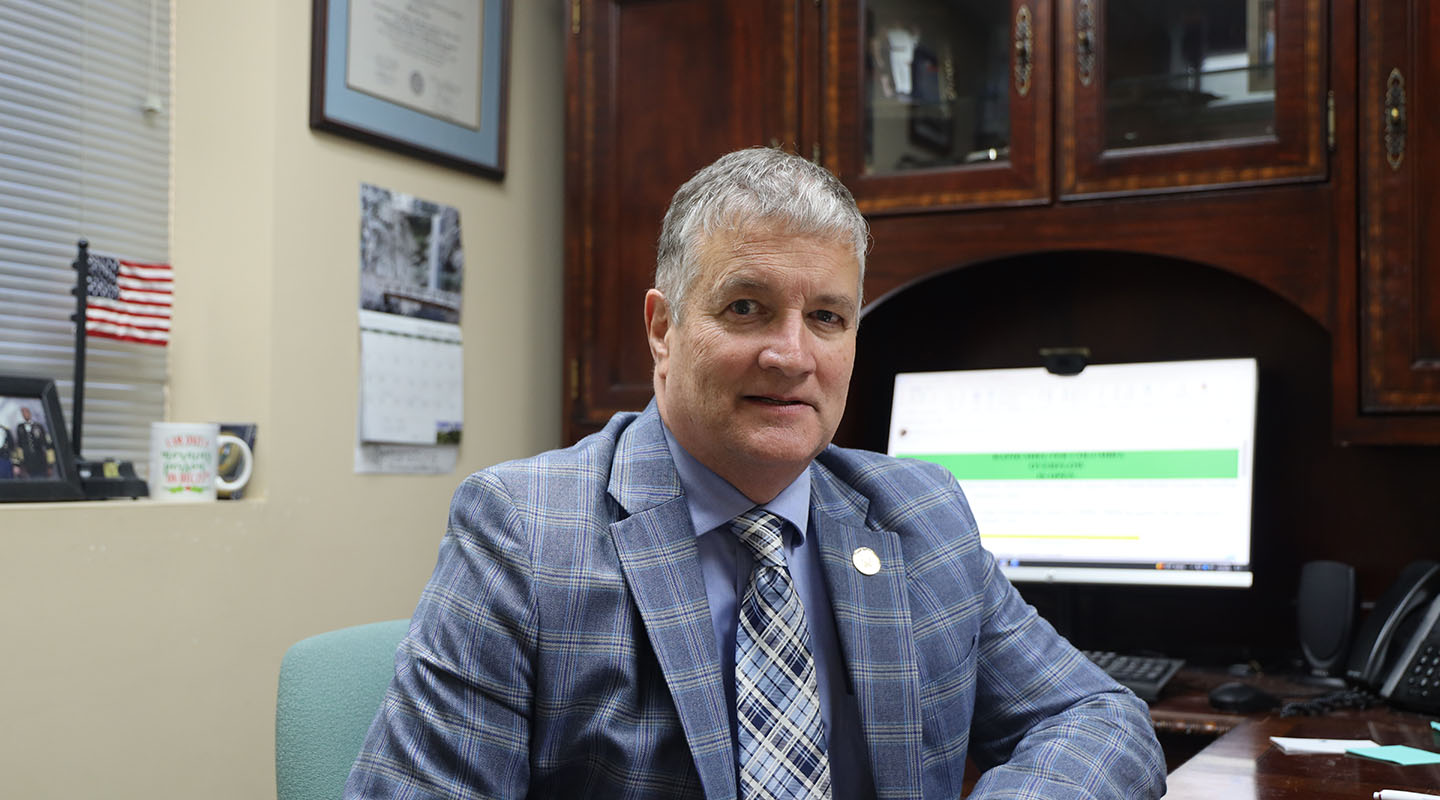
Craig Currey, president and CEO of Transitions, has held the position since April 2012, after his retirement from the United States Army. Photo by Sencere Rice/The Carolina Reporter