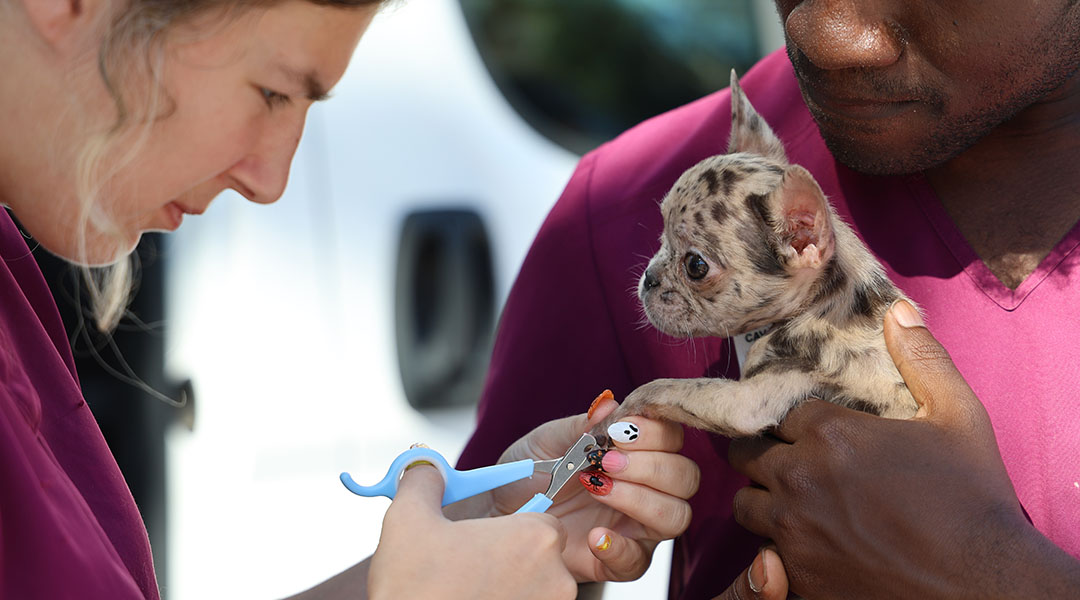
Three-month-old French bulldog Chip gets his nails trimmed by Care-A-Van vet tech Jesyca Iavaroni after receiving his DHPP vaccine from the clinic. Photo by Morgan Kozak/Carolina Reporter
Thousands of pets miss out on care in South Carolina because veterinary clinics are scarce, veterinarians are in short supply and costs are high.
Pawmetto Lifeline’s Care-A-Van is bringing vaccines, check-ups and preventive treatments directly to pets and their owners, making essential care more accessible.
South Carolina, like much of the Southeastern United States, is grappling with a growing shortage of veterinarians and vet technicians and an increasingly limited access to care. The problem is especially prevalent in rural and low-income communities, where long drives, higher costs and limited appointment availability often mean animals go untreated.
South Carolina ranks eighth-worst in the nation for veterinary care accessibility, according to the Veterinary Care Accessibility Score, which is based on data collected by the Veterinary Care Accessibility Project. Urban counties such as Lexington, which scored 79 of 100 for accessibility, and Charleston, which scored 74, fare relatively well, according to the data. But much of rural South Carolina faces severe shortages. Counties such as Marion, 5, Chesterfield, 4, and Dillon, 3, have some of the lowest accessibility scores in the country.
Pawmetto Lifeline of Irmo operates the Pawmetto Care-A-Van, a non-profit mobile veterinary service. The van travels across the state, offering low-cost vaccines, basic exams and preventive care in 33 counties. Vet techs man the vans, with doctors nearby for emergency services. The goal is to make veterinary services accessible to pet owners who might otherwise go without.
Joe Lytle, a regular Care-A-Van visitor, first discovered the mobile clinic years ago and continues to return for its affordable care.
“It’s a lot cheaper,” Lytle said. “Vets can be real expensive.”
The Pawmetto Care-a-Van’s team sets up in parking lots, community centers and outside other clinics, often serving dozens of animals in just a few hours.
“On Wednesdays, we see anywhere from 60 to 90,” said Ja-Korey Higgs-Jackson, a Care-A-Van veterinary technician. “… Altogether, I’d say they probably see a little over 1,000 pets every week.”
Each van provides basic but critical services such as core vaccinations, rabies shots, microchipping and preventive medications for heartworm and parasites.
The team operates three vans, though one is undergoing renovation. Scheduling can be a challenge because of the shortage of vets and vet techs, which has hit South Carolina particularly hard.
“The veterinary shortage is truly a tragedy that hinders the community,” said Care-A-Van manage Alex Moore. “… We are having to shut down some of our vans. Which means canceling routes. This hurts the community because they rely on us to come out and service their pets at our discounted cost.”
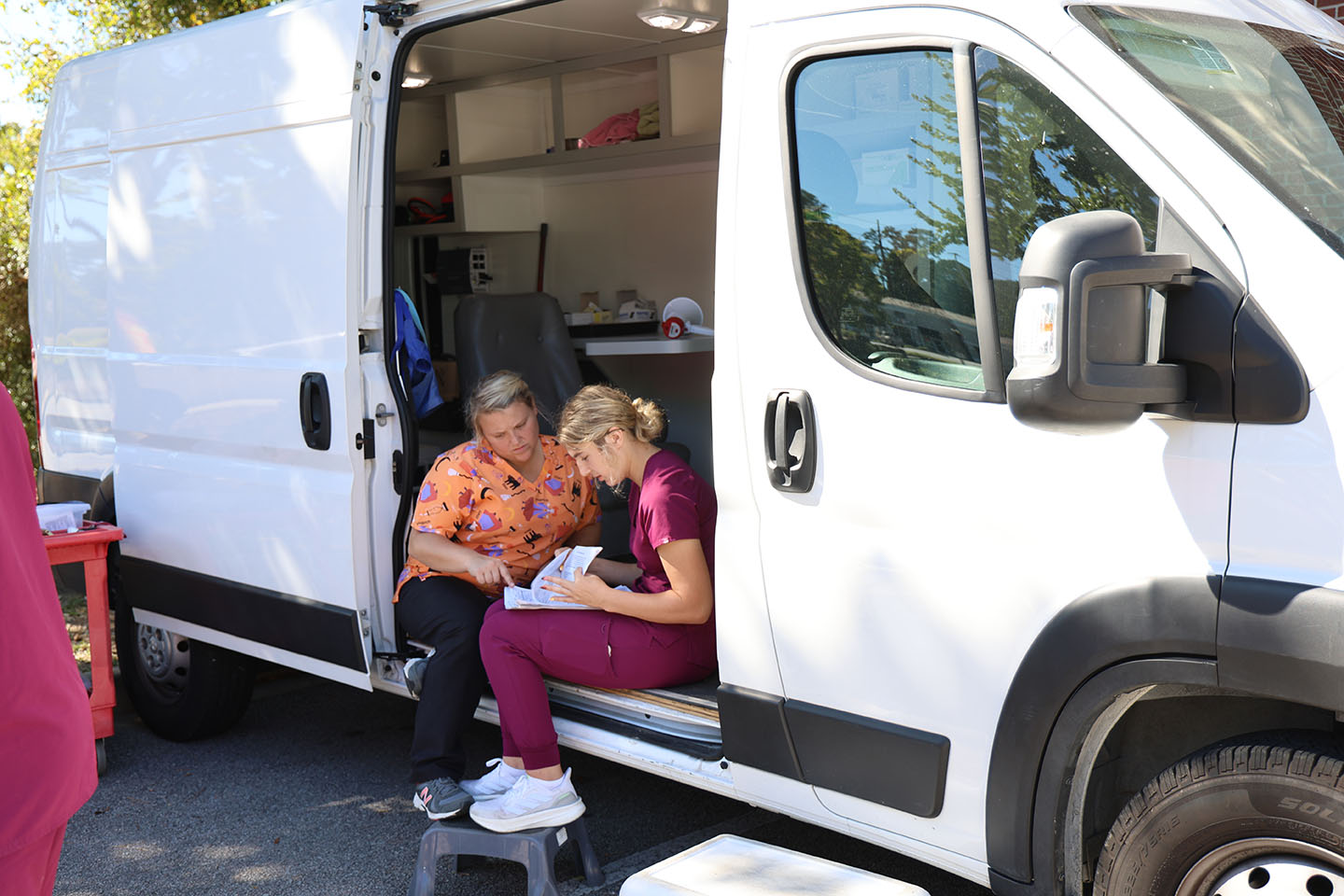
Care-A-Van coordinator Haley Wooten, left, and veterinary technician Jesyca Iavaroni review paperwork for visiting animals during a mobile clinic stop. Photo by Morgan Kozak/Carolina Reporter
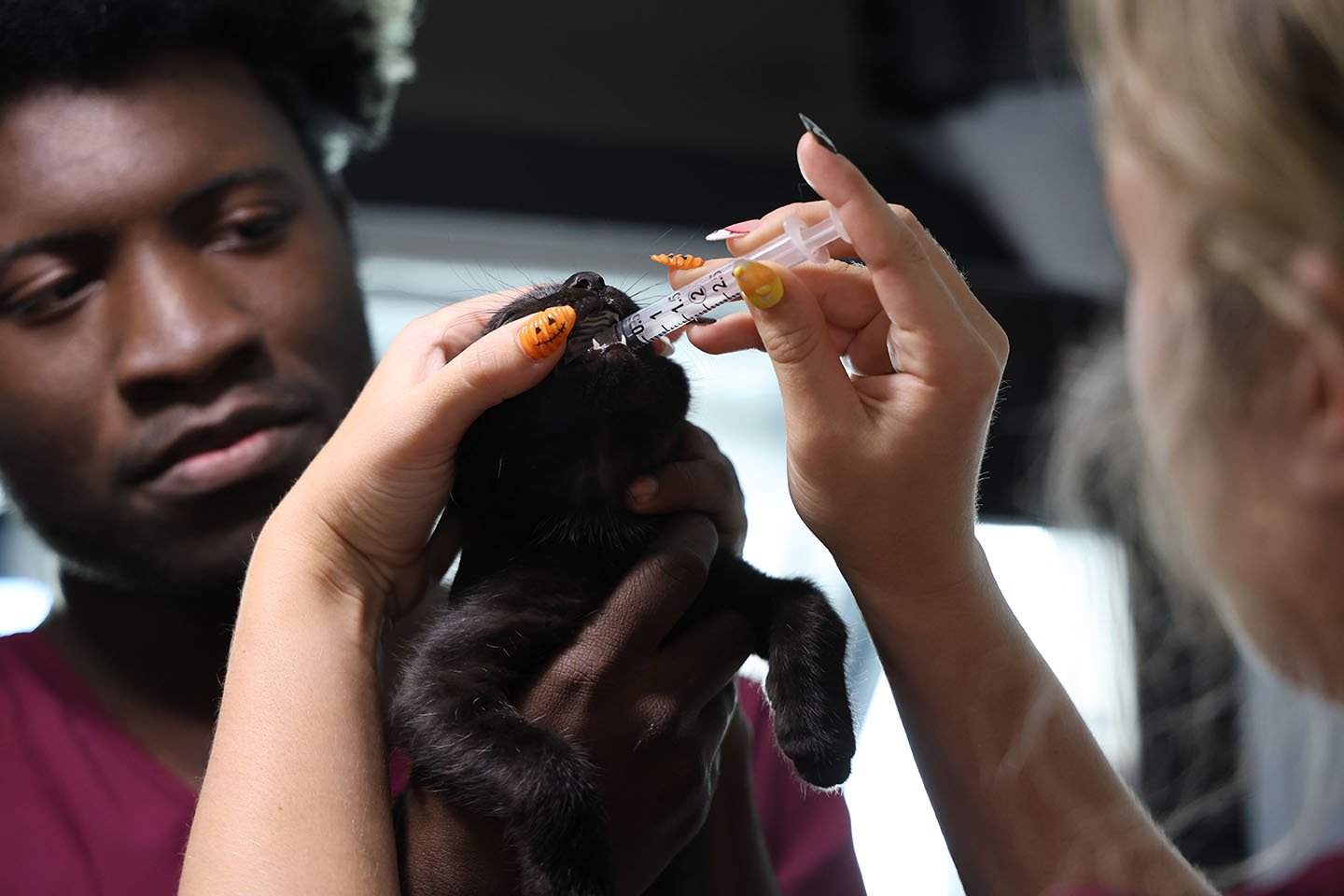
Eight-week-old kitten, Binx, receives an oral dose of heartworm prevention during a Care-A-Van clinic visit. Photo by Morgan Kozak/Carolina Reporter
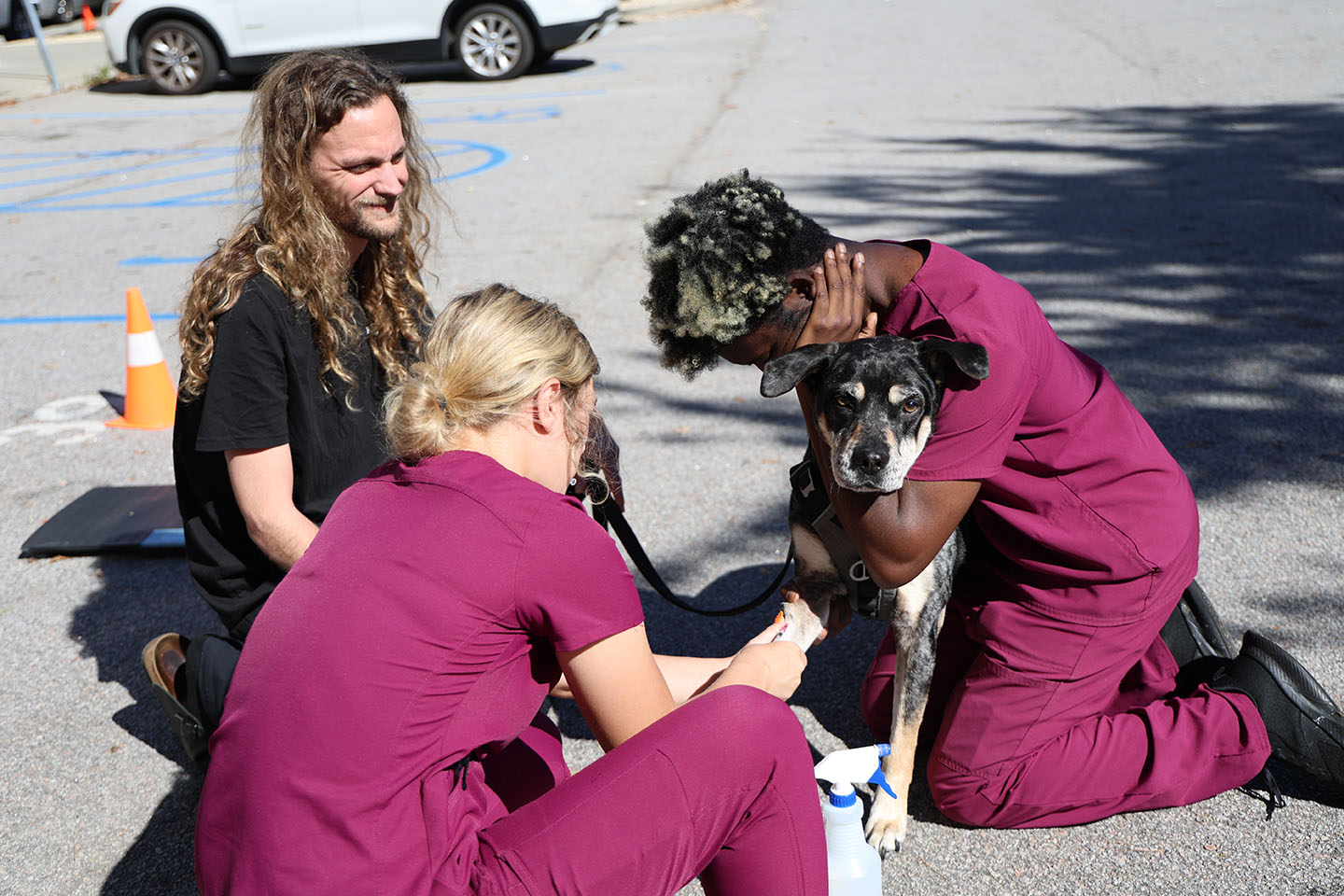
Veterinary technician Jesyca Iavaroni gives 3-year-old Hank his vaccination while owner Joe Lytle sits by his side. Photo by Morgan Kozak/Carolina Reporter
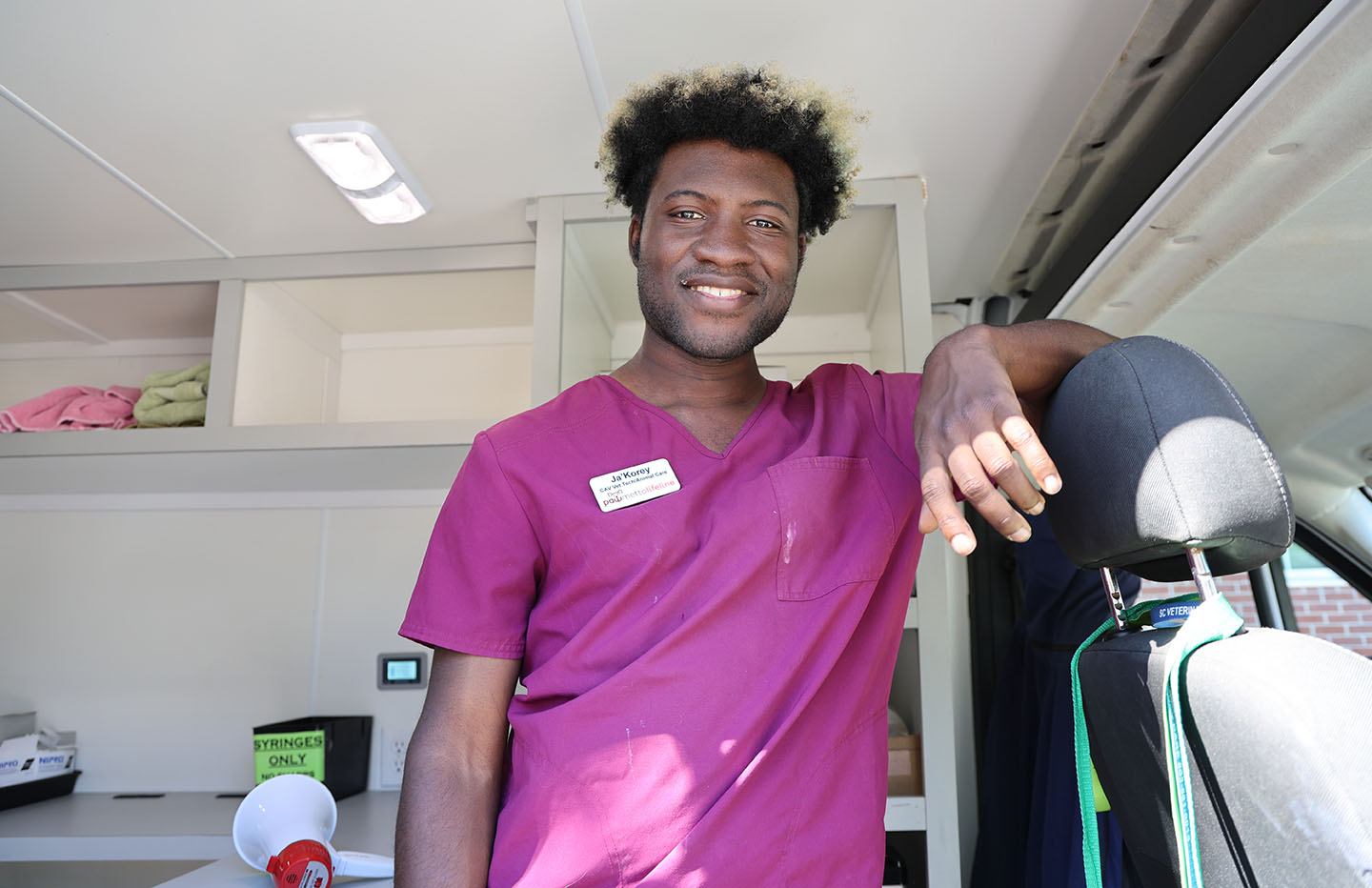
Care-A-Van veterinary technician Ja-Korey Higgs-Jackson takes a break inside the mobile clinic. Photo by Morgan Kozak/Carolina Reporter