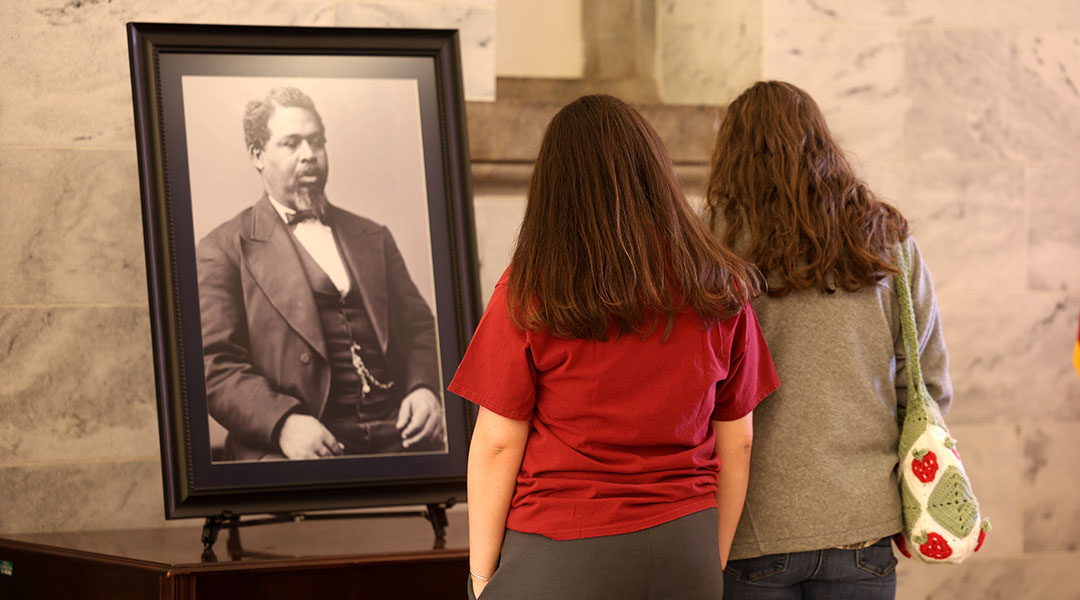
Emma Michaels and Leah Chandler read a brief history of Robert Smalls in the lower lobby of the South Carolina Statehouse. “He did so many amazing things I had never heard of before,” Emma Michaels said. Photo by Olivia Helfen/The Carolina Reporter
Under the cover of night, Robert Smalls navigated a stolen ship to freedom. Now, he is set to get a statue on the South Carolina Statehouse grounds.
Small’s statue will be the first of an individual African American on the grounds.
“Statues are important,” said Nancy Tolson, director of Undergraduate Studies for the Department of African American Studies at the University of South Carolina. “They are important for all to see and to ask the question of, ‘Who is this person?’”
Smalls is widely recognized as one of the most significant Black leaders in South Carolina’s history, and many believe it has been an oversight not to honor him publicly earlier. His impact on history is undeniable. In fact, state lawmakers’ vote in 2024 to approve the monument was unanimous.
Smalls was born into slavery in Beaufort, South Carolina, in 1839. He escaped slavery almost 30 years later by captaining the ship he was working on, the CSS Planter, according to the National Parks Service.
He successfully freed 16 people, including himself, his crew, and their families, by sailing this ship down the Cooper River in Charleston to Fort Sumter, inspiring thousands in the heat the war.
He then joined the Union army and became the first African American captain of a U.S. Navy ship.
Smalls later returned to Beaufort, where he bought the home where he was once enslaved.
“Robert Smalls became a hero for South Carolina, especially for the independence and the freedom of Blacks,” Tolson said.
Smalls soon became a politician, starting his career as a member of the General Assembly before eventually being elected to the U.S. House of Representatives.
He pushed for civil rights, educational rights and economic empowerment for African Americans.
“He’s a hero of South Carolina, even if he wasn’t a hero of the Confederacy,” Jill Found said.
Found, the assistant director for History Education and Research at the Center for Civil Rights History and Research at USC, said the work Smalls did made him a significant and influential figure in South Carolina’s history.
Statues provide space for people whose stories may not be known or told, Tolson said. She’s not the only one who feels that way.
Basil Watson said he, too, feels statues tell stories of history that have been forgotten.
“There are a lot of unrepresented stories within our history because of slavery, segregation and racial issues,” Watson said.
Watson, a Jamaican sculptor based in Atlanta, Georgia, is designing the sculpture and hasn’t begun sculpting it yet.
This won’t be the first sculpture of his in Columbia. He also made the desegregation monument at the University of South Carolina that depicts the first three Black students to attend the school in 1963.
Watson said one of the best parts of designing a sculpture is learning about the subject and finding the parts of them that need to be showcased.
“When I come across the major concept, that is the exciting part,” Watson said.
The design for the statue is mostly complete. Watson said he is waiting on final contracts and confirmation before the sculpting begins.
Watson said he took time to research Smalls, as he believes that to sculpt a person successfully, you must understand what makes them important.
“The person’s story is a reflection of them,” Watson said.
Watson plans to encapsulate Smalls’ push for education and the Statehouse. He said he plans to give Smalls a distinguished look because of the significance of the statue.
“Having a monument to him really shows the range of people who have and have always had an important place in South Carolina,” Found said.
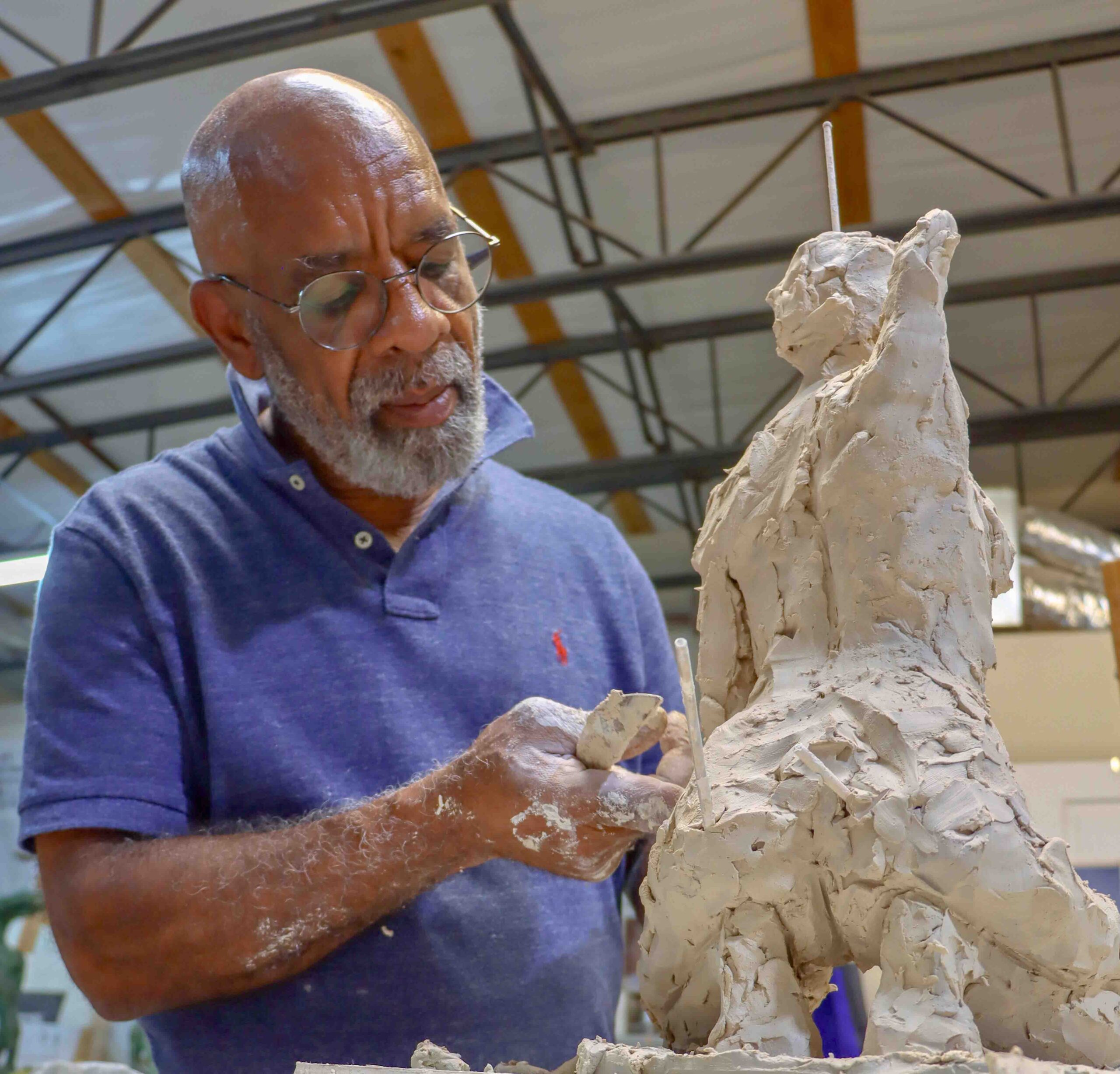
Basil Watson works in his studio in Atlanta, Georgia, on other sculptures. Photo courtesy of Basil Watson/The Carolina Reporter
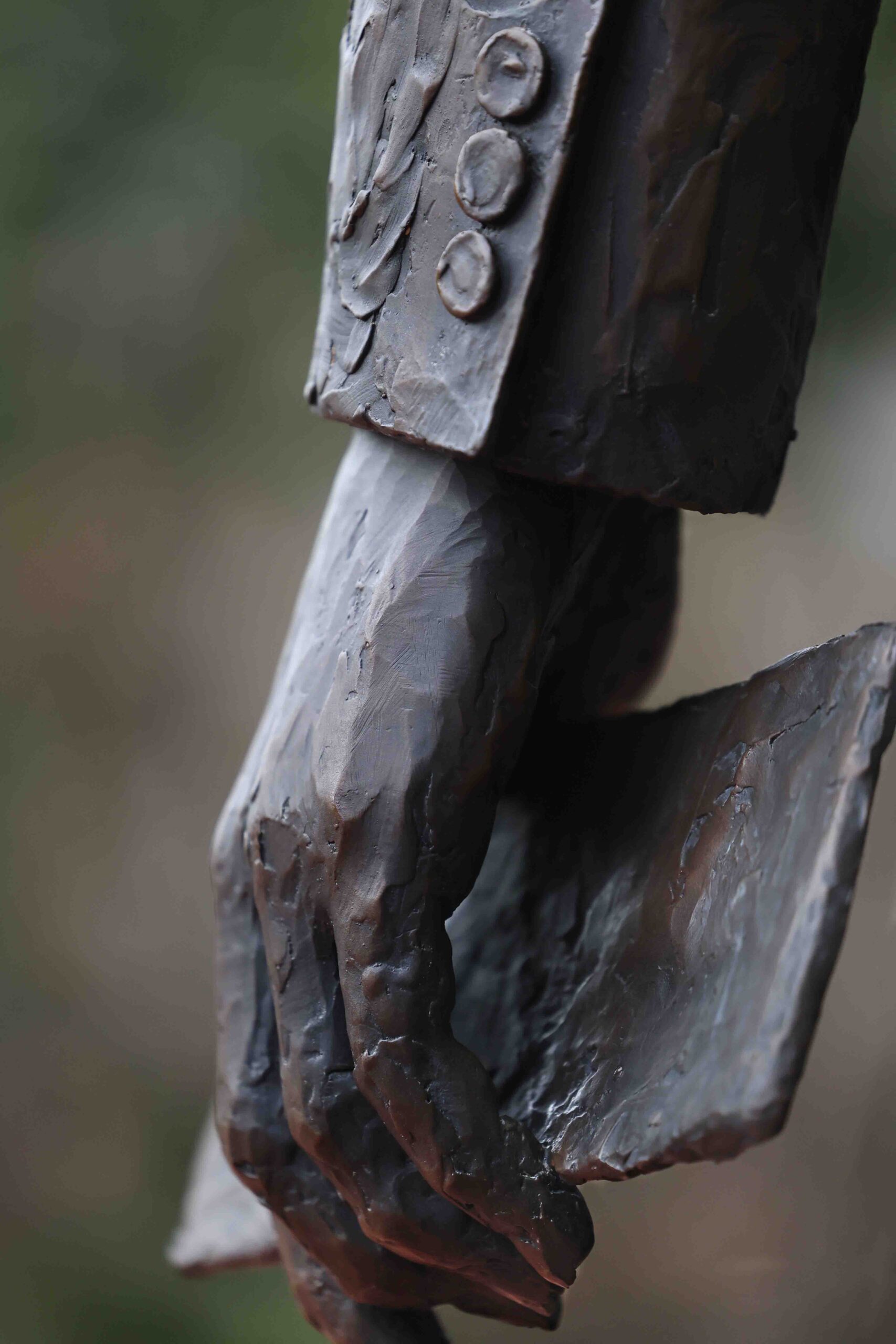
Watson also designed the desegregation monument that stands near the University of South Carolina’s McKissick Museum. Photo by Olivia Helfen/The Carolina Reporter

Watson works in his studio in Atlanta, Georgia. Photos courtesy of Basil Watson/The Carolina Reporter
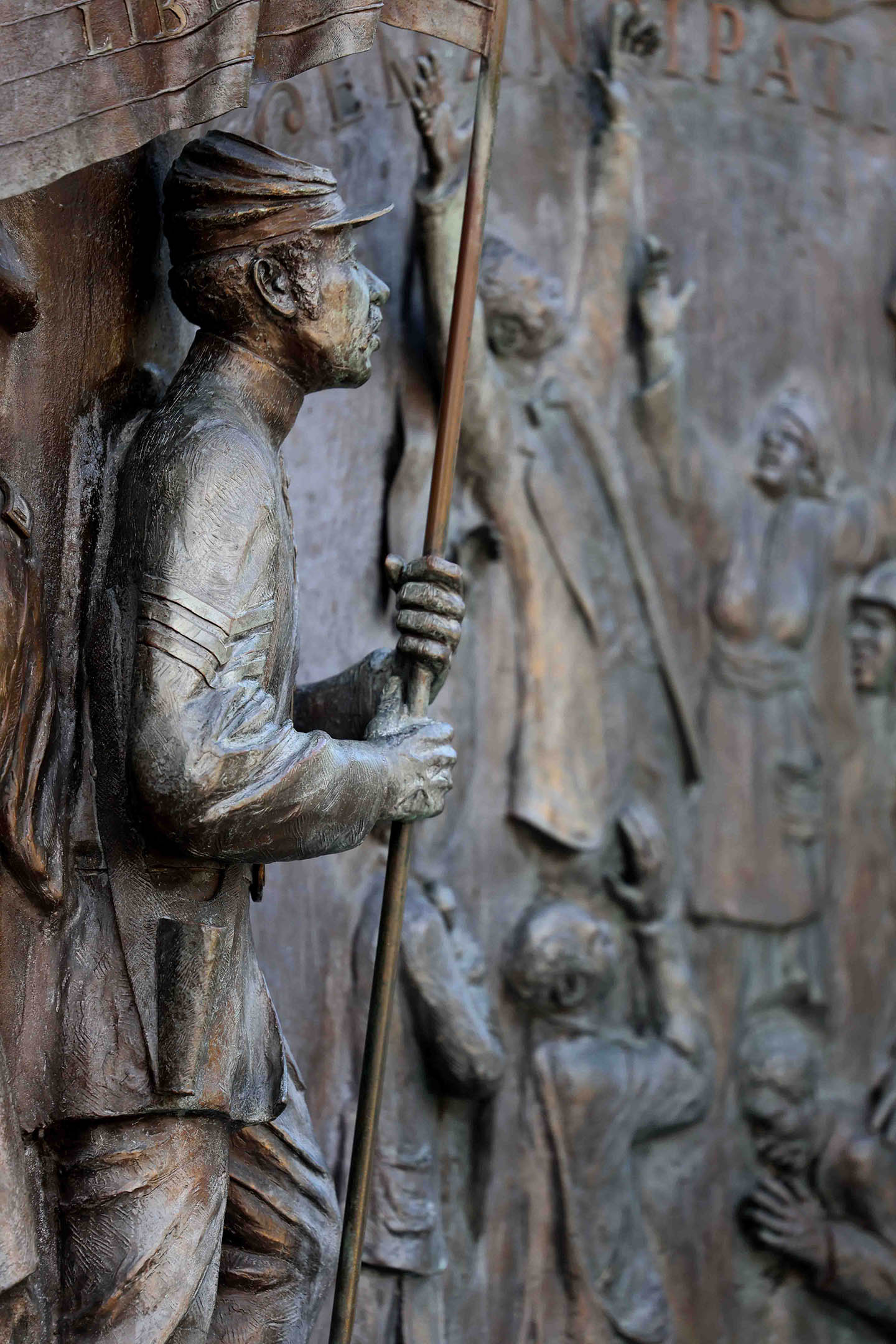
The African American history monument at the South Carolina Statehouse stands next to the site where Robert Small’s statue will be placed. Photos by Olivia Helfen/The Carolina Reporter