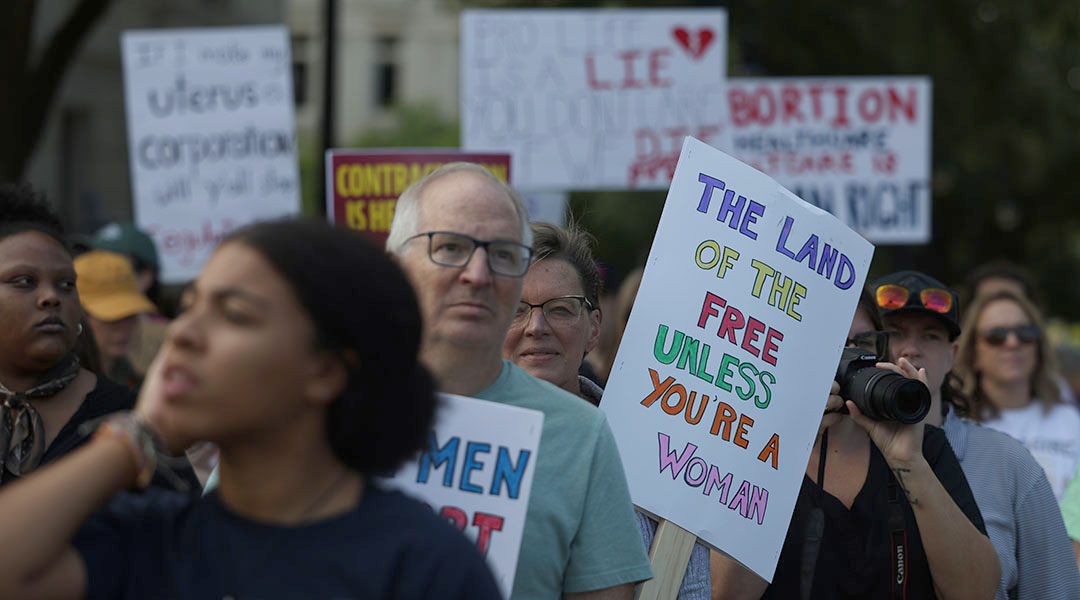
Carrie Silverstein and husband Mark, left, travelled around three hours from the Myrtle Beach area to protest Senate Bill 323, which would amend the state’s abortion ban by removing exceptions for rape and incest. Photo by Sydney Lewis/Carolina Reporter
State senators held a public hearing for South Carolina’s proposed, near-total abortion ban while hundreds of protesters waved signs outside.
“Two, four, six, eight. Separate the church and state,” protestors chanted outside the Gressette Building, where Planned Parenthood and coalition partners set up tents and tables. A Moment of Hope, a Columbia pro-life organization provided heart-shaped stickers reading “Protect Life.”
The ban would be among the most restrictive in the nation, removing protections from prosecution for pregnant women seeking abortions and categorizing abortion referrals as aiding and abetting a crime. Physicians who provide abortion care or prescribe abortion medication outside of life-threatening circumstances have the potential to lose their licenses and be charged with a felony carrying up to 30 years in prison.
The bill – referred to in the bill as the “Unborn Child Protection Act” – would remove the exceptions for rape and incest provided for in current law. SC’s existing abortion legislation, passed in May 2023, bans abortion after fetal cardiac activity can be detected at about six weeks.
Critics of the bill say its changes could prevent physicians from providing high-quality medical care or even push women’s health specialists to leave the state. South Carolina, according to data collected in a 2021 study by the South Carolina Office for Healthcare Workforce, has no active OB/GYNs in 15 out of 46 counties.
Dr. Meredith Mitchell, an OB/GYN practicing in Beaufort and Jasper counties, said if the bill is passed, she “can no longer practice medicine in this state.”
The bill’s additional legal definition of contraception also drew scrutiny at the hearing.
“Legally codifying the medical definition of anything is a dangerous interference in the complex practice of medicine,” said Dr. Jessica Charlton, vice chair of the S.C. chapter of the American College of Obstetricians and Gynecologists.
A sponsor of the bill, Sen. Richard Cash, R-Anderson, denied the bill had anything to do with contraception when questioning Charlton, pointing to the bill’s criminalization of terminating a “clinically diagnosable pregnancy.” He further defined this term as starting after implantation rather than the fertilization of an ovum.
Some opposed remained unconvinced by promises to leave contraceptives and fertility treatments alone, citing similar past promises not to remove exceptions for rape or incest.
“Now we’re here just a couple months later and it’s all at stake,” said Sydney Sinclair, a volunteer for the Palmetto State Abortion Fund. “It’s extremely disingenuous of our representatives that are supporting the bill.”
The hearing concluded in the early evening with no vote. Cash said he plans to hold another hearing without public testimony to shape the bill further.
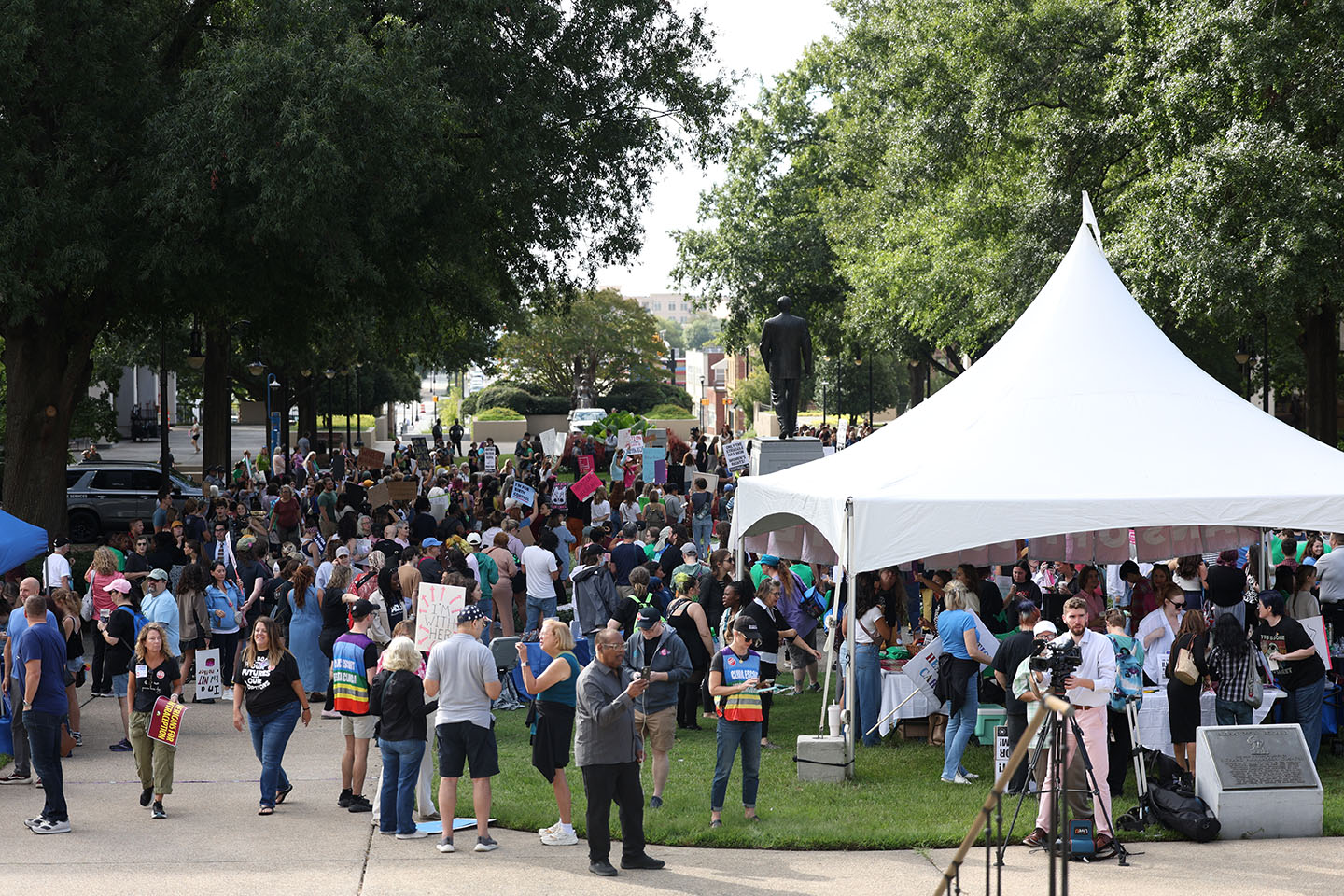
A hearing for Senate Bill 323 drew hundreds of protesters to the square between the South Carolina Statehouse and the Gressette Building on Oct. 1. Photo by Sydney Lewis/Carolina Reporter
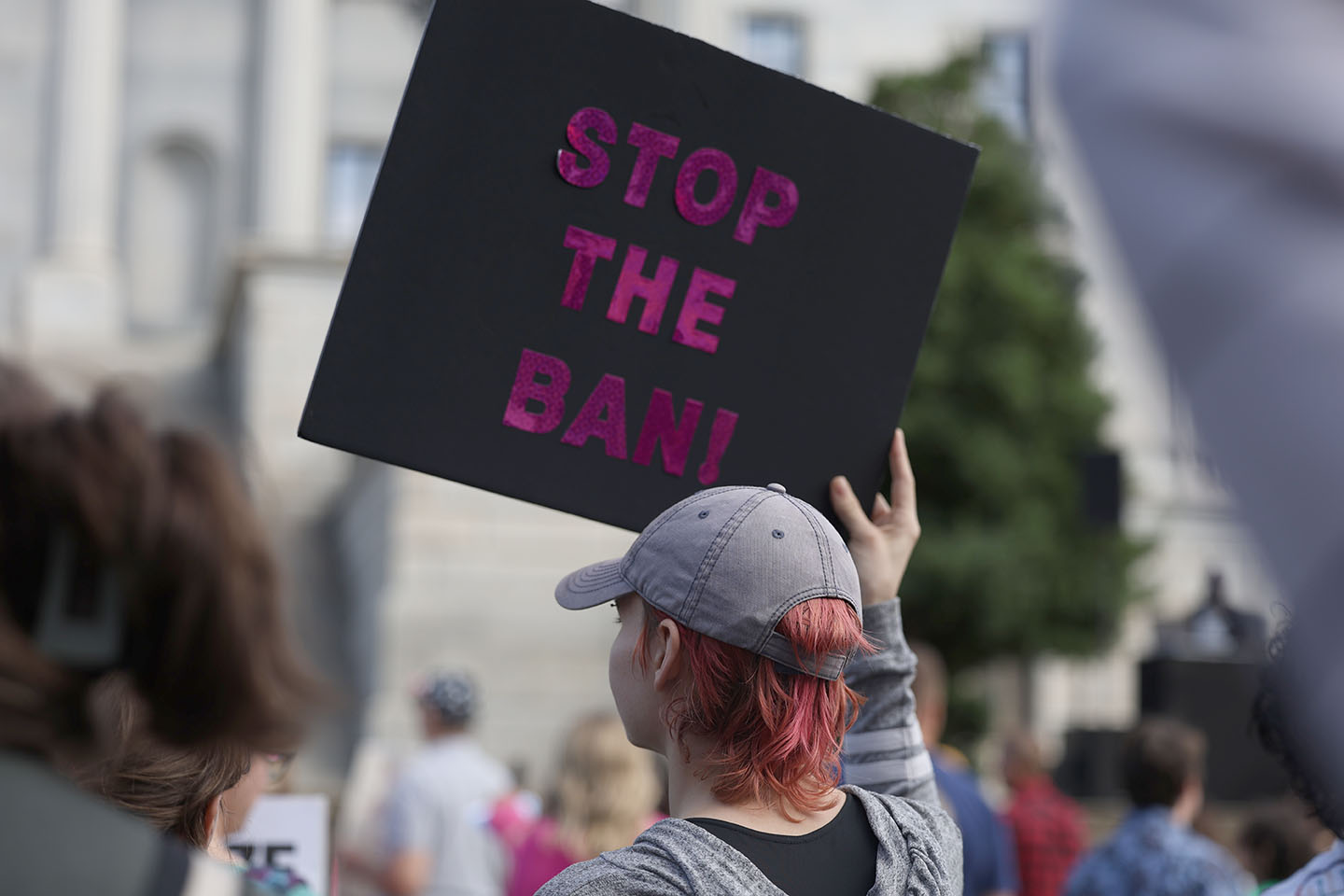
A protestor holds a sign aloft in opposition to the proposed near-total abortion ban. Photo by Sydney Lewis/Carolina Reporter
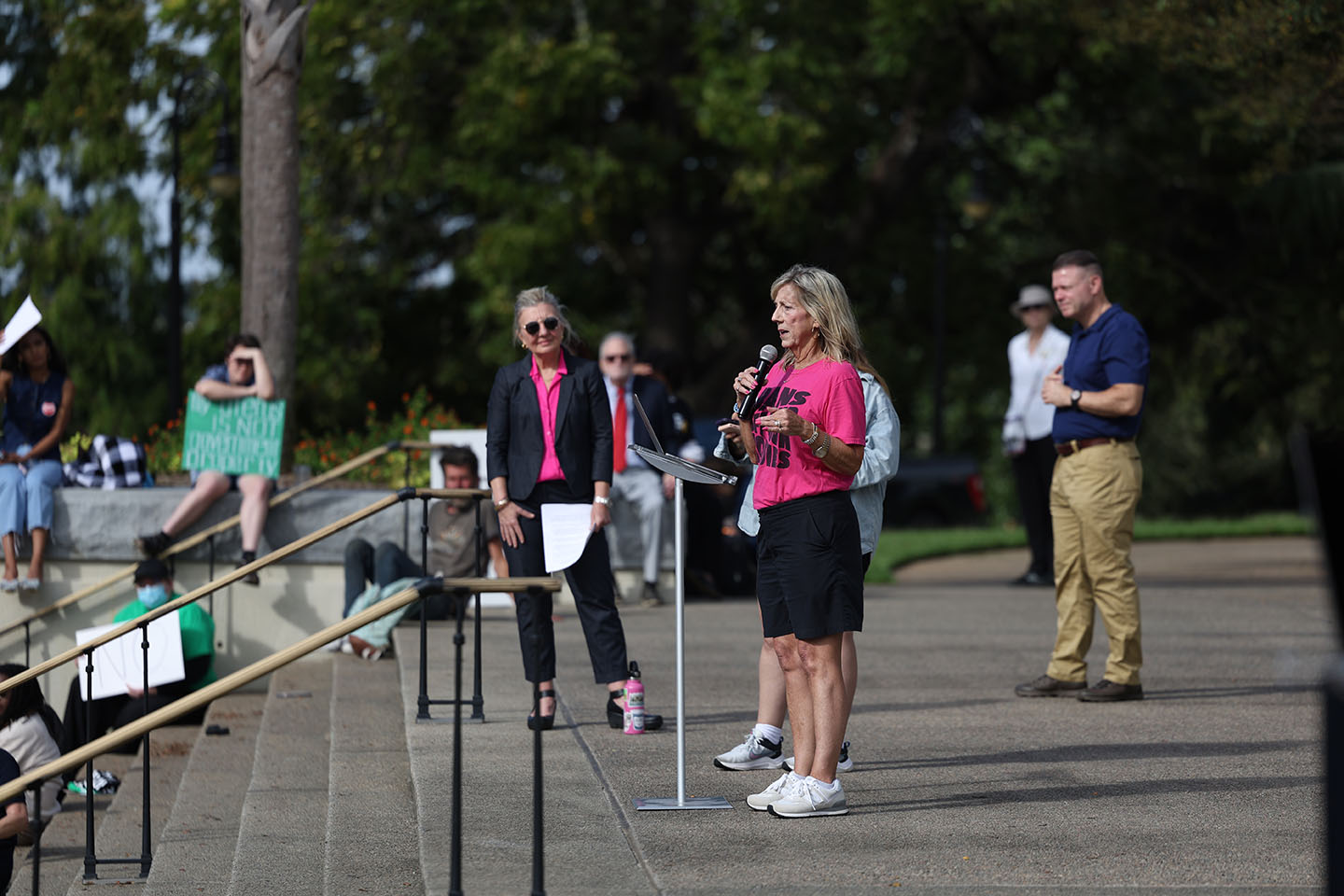
Planned Parenthood’s regional spokesperson, Vicki Ringer, addresses the crowd on the Statehouse steps. “I cannot tell you what this sight is to me,” Ringer told the crowd.