South Carolina's 50th state park provides historical context, peace to community
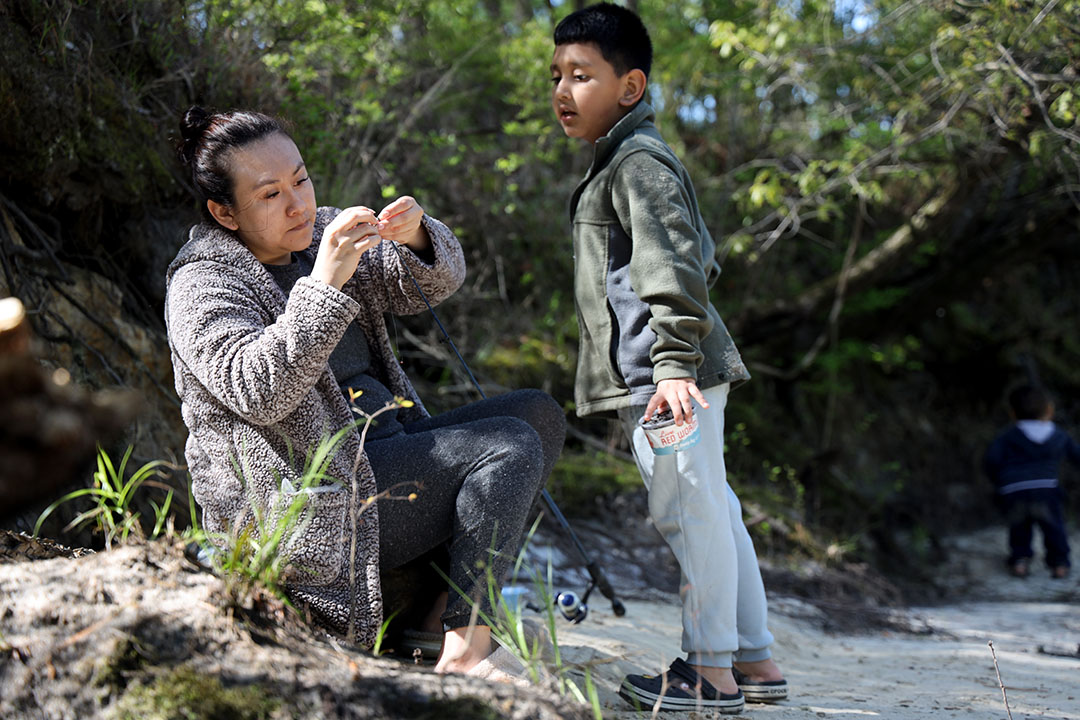
Alexis Perez, right, gets fish bait added to his rod by his mother before casting into the river. The 8 year old and his family have gone fishing and hiking every Tuesday since the park’s opening. Photo by CJ Leathers/The Carolina Reporter
By CJ Leathers | Apr 22, 2026
Missy Abi-Nader, her husband, Richard, and their two children, Paxton, 19, and Beckett, 16, live by their “nature bible.”
What started as a simple brochure the family picked up in 2020 resulted in them changing their lives and setting a goal: to visit all 50 state parks in South Carolina. The family visits parks near their travel destinations and collect stickers to represent where they have been, Abi-Nader said.
Abi-Nader homeschools her two boys and has done so for 12 years. She said getting her children outside of the house not only has changed their lives but given them memories they’ll never forget.
“We have so many memories based on trees,” Abi-Nader said. “There’s a tree that hangs over the river in Asheville at the Biltmore. I have so many pictures of Beckett on that tree. We call it the Winnie the Pooh Tree. … I feel like, you know, one day when I’m gone, hopefully that they’ll look at a tree and remember, ‘Oh, I remember when we used to do that.’”
The family visited Black River State Park on their way to Myrtle Beach, driving more than two hours from their near Charlotte, North Carolina, to visit.
“Everything looks so beautiful and intentional,” Abi-Nader said. “It’s so gorgeous, so clean and peaceful. Peaceful is the biggest: There’s no noises except for the birds and the wind.”
But the main attraction of the park is the Black River, rooted in South Carolina’s history of indigenous peoples and the state’s earliest societies and tribes.
The 50th state park opened to the public on April 2, launching its first track, The Meadows, in Salters, on the same day. It serves as one of only 10 scenic waterways in South Carolina, and the only linear park among the state parks, connecting multiple tracks by a waterway and not by land.
The Meadows is only one of eight tracks open along the Black River, said Duane Parrish, director of the South Carolina Department of Parks, Recreation and Tourism. The park stretches more than 70 miles long and covers 9,000 acres total, which would take days for someone to traverse.
Parrish said the goal of the agency is to provide recreation and educational opportunities to those who look.
“It’s about providing that public access to state lands, green space and a place to disconnect,” Parrish said.
And it’s working.
Alexis Perez, 8, and his family are originally from Mexico, and have lived in Sumter, South Carolina, nearly an hour away, for six years.
He and his father, William, his mother and little brother have gone fishing and hiking every Tuesday in The Meadows since the park’s opening.
“(The park) is very important to me because it is a place where you can go and engage in many activities, which helps with my peace of mind,” William Perez said. “I like going there to forget about the stress of work.”
Preserving nature
Dr. Maria Whitehead, the senior vice president with Land for the Southeast for the Open Space Institute, is the primary catalyst for the project.
The Open Space Institute is a non-profit organization that focuses on nature preservation and encourages public recreation, healthy communities and wildlife habitat, according to its website.
Whitehead began the project in 2019, closed on the first property in winter of 2020 and secured funding the same year, launching the vision and developing the stakeholders and partners for the project.
“We had over 30 people from the community, community leaders, state leaders, other non-profits (involved),” Whitehead said. “The working conservation (group) all came together to help vision and plan what this new state park might look like – what is special about the river that should be protected, what sort of amenities people from Williamsburg and Georgetown counties would like to see in a state park.”
And then came the outreach. Whitehead and the Open Space Institute conducted an online survey in 2021 to gather input and perspective from their community about the potential opening of the park. They received 1,500 survey responses, detailing exactly what they wanted and did not want in the park, she said.
But there was a voice missing.
“We realized that out of the 1,500 survey responses, I want to say less than five identified themselves as Native Americans,” Whitehead said.
She and her stakeholders then spoke at a meeting with all of South Carolina’s tribes about the project, which resulted in 2023 in the creation of the Black River Tribal Interest Working Group. This group delves into indigenous culture, gives access to tribal members and educates the public about the history of the river and its context with regard to the history of the state.
“I think there’s a way to tell a lot of the story of South Carolina’s relationship with land through this project,” Whitehead said.
But not without local support and backing.
A lot of research
State Sen. Ronnie Sabb, D-Williamsburg, also was part of the project from a budgetary standpoint.
He said the history and uniqueness of the river will become an economic staple in Williamsburg County.
“We’ll have visitors, I think, from all around the United States, as well as other countries, that will be in the area that will hear about the Black River, will be interested in what a black river looks like and what kind of resources come along with it,” Sabb said. “And so, I just look forward to introducing the river to the rest of the world, so to speak.”
The state has many black rivers between Columbia and the coast. Black rivers have darker water filled with mineral deposits because they’re on relatively flat land and are slow-moving.
Jayson Sellers, the park’s manager, said this is only one phase of the park’s opening. Sellers collaborates with verbal and financial partners who’ve supported the opening of the park.
“We do a lot of research,” Sellers said. “You check wetland delineation, archaeology, you survey and sometimes that changes what you might have initially put in your master plan.”
History has played a large role in the research and funding of state parks in general. Former U.S. president Franklin D. Roosevelt’s establishment of the Civilian Conservation Corps in 1933 allowed single men between the ages of 18 and 25 to enroll in work programs to improve and create the earliest of America’s public lands, forests and state parks. Nearly a third of South Carolina’s state parks were built by the corporation.
Sellers compared the development in the 1930s to the sharing of knowledge about the Black River.
“Not since the development of the Civilian Conservation Corps in the ’30s have we had an opportunity to create, open up and provide these treasured resources that have been locked away from the public for so many years,” Sellers said.
In addition to the site research, the plan needed the support of the Salters and Williamsburg County communities. Many were willing to donate and help, but others were reluctant to change and opposed the park’s opening, Sellers said.
Sellers and everyone behind the opening held many community outreach programs and public forums, inviting community members to educate them on the plans. He said he’s thankful for the continued support and funding for the project.
Partners and donors include the South Carolina Conservation Bank, the Darla Moore Foundation, the South Carolina Department of Parks, Recreation and Tourism and more.
“When you have collaborative effort, you have shared success,” Sellers said. “So, the more companies and the more organizations and partners you have, the bigger the success story.”
The park is open on Tuesdays, Thursdays and Saturdays from 8 a.m. to 5 p.m.
FINDINGS
- The Black River State Park at The Meadows is the first linear park in South Carolina, connecting multiple tracks by a waterway and not by land.
- Seven other tracks are opening between 2026 and 2027, according to S.C. Parks, Recreation and Tourism director Duane Parrish.
- Sixteen of South Carolina’s 50 state parks were built by the Civilian Conservation Corps in the 1930s.
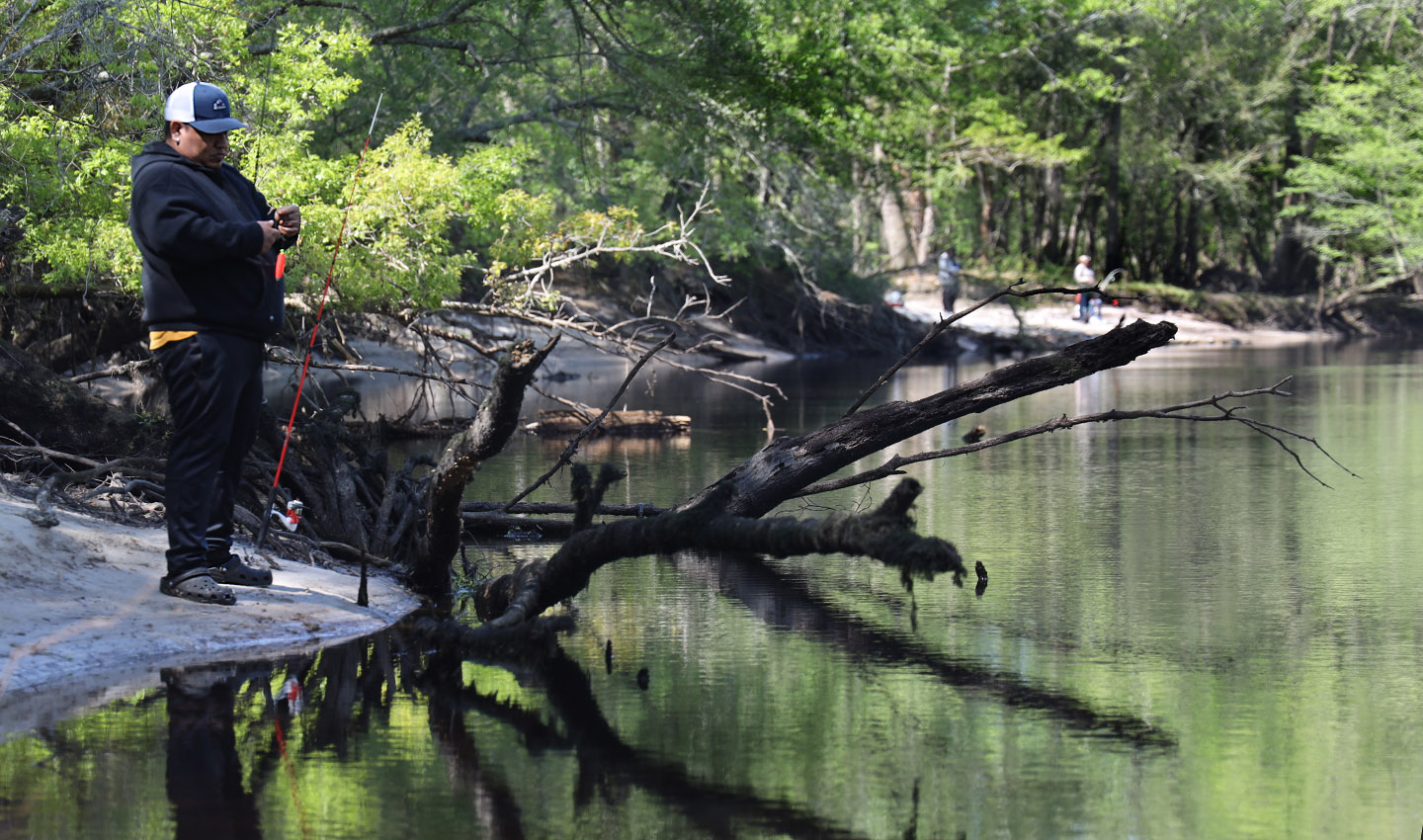
William Perez sets worms onto his fishing rod before casting into the river’s water. Perez said he and his family live in Sumter, South Carolina, nearly an hour drive away. Photo by CJ Leathers/The Carolina Reporter
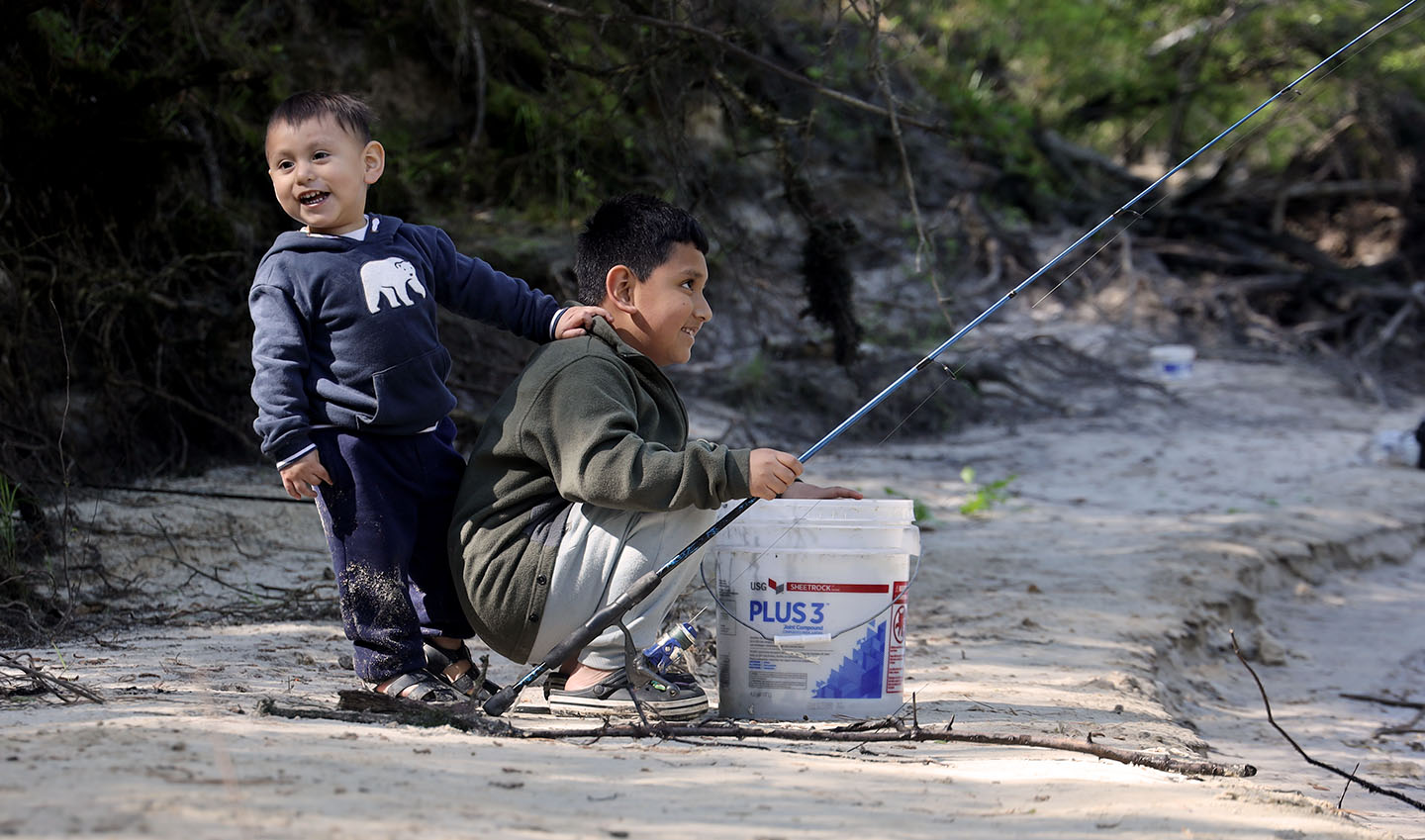
Alexis Perez, right, and his little brother add fish bait onto Alexis’ fishing rod before casting the rod into the water. Photo by CJ Leathers/The Carolina Reporter
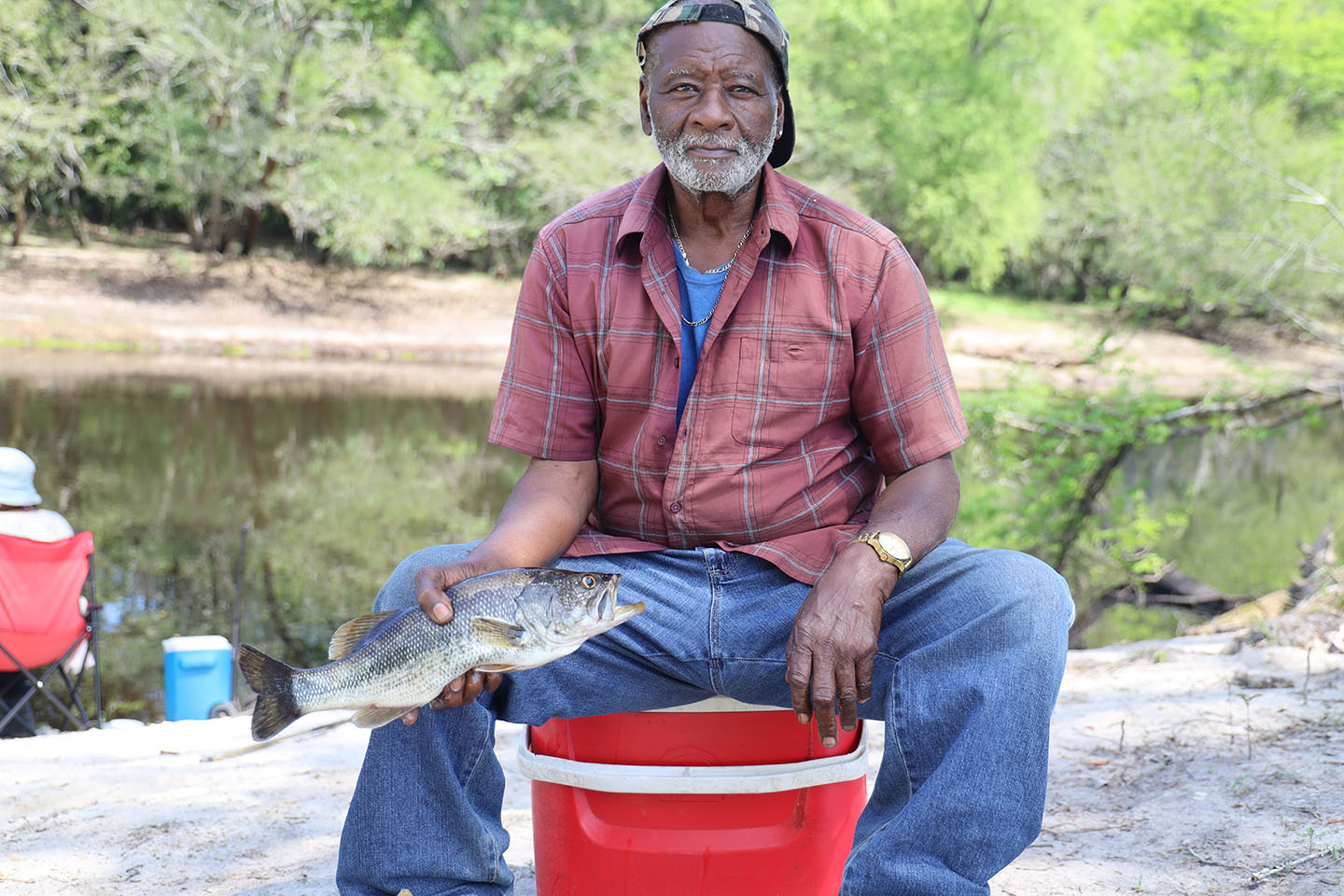
Nathaniel McCray, holding a bass fish he just caught, sits atop a bucket of smaller fish he caught earlier in the day. McCray, who was fishing with his family, said he caught the largest fish. Photo by CJ Leathers/The Carolina Reporter
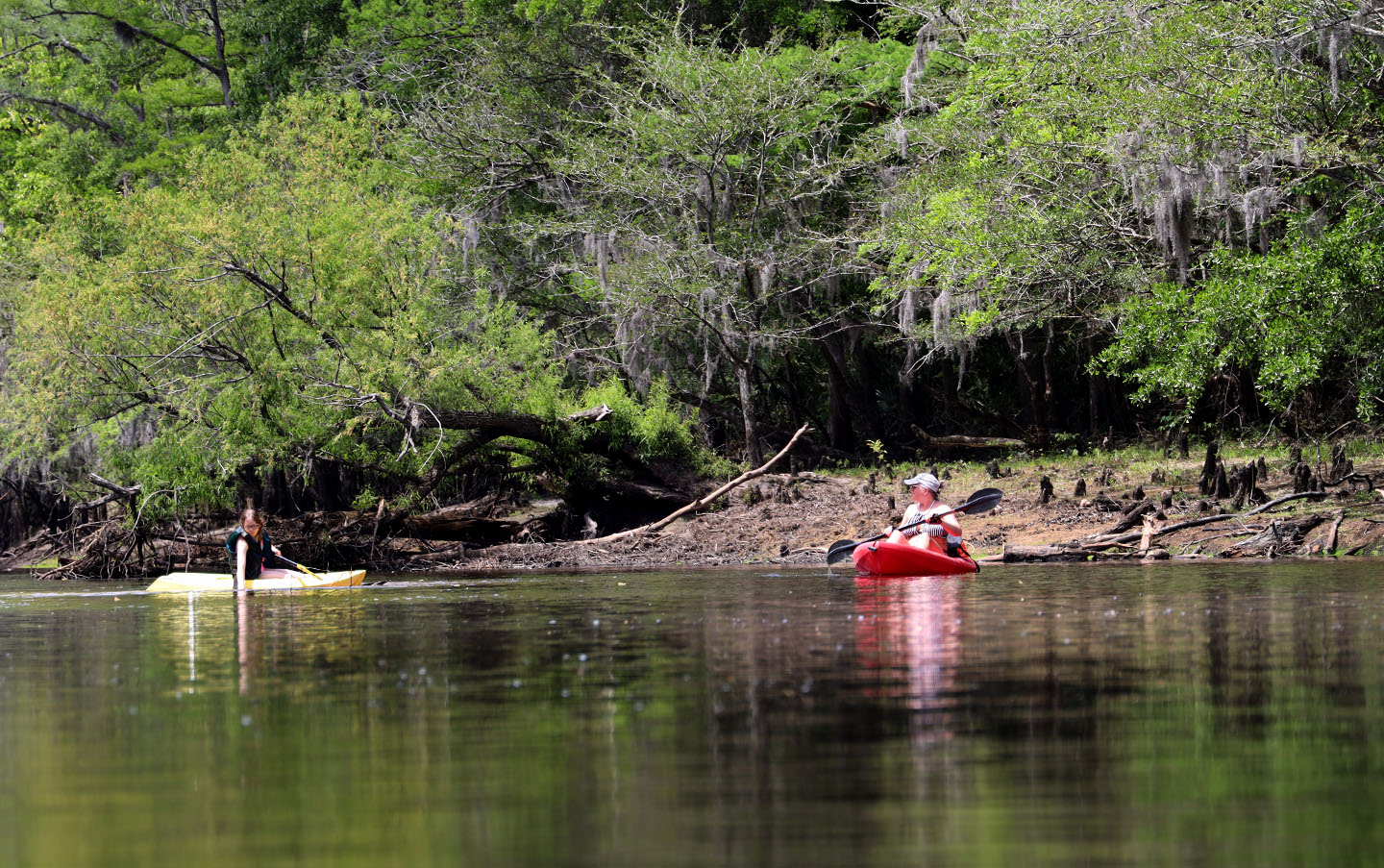
A mother and daughter paddle their way toward shore after kayaking in the Black River. It can take between five and seven days to travel from one end to the other of the 70-mile-long river. Photo by CJ Leathers/The Carolina Reporter
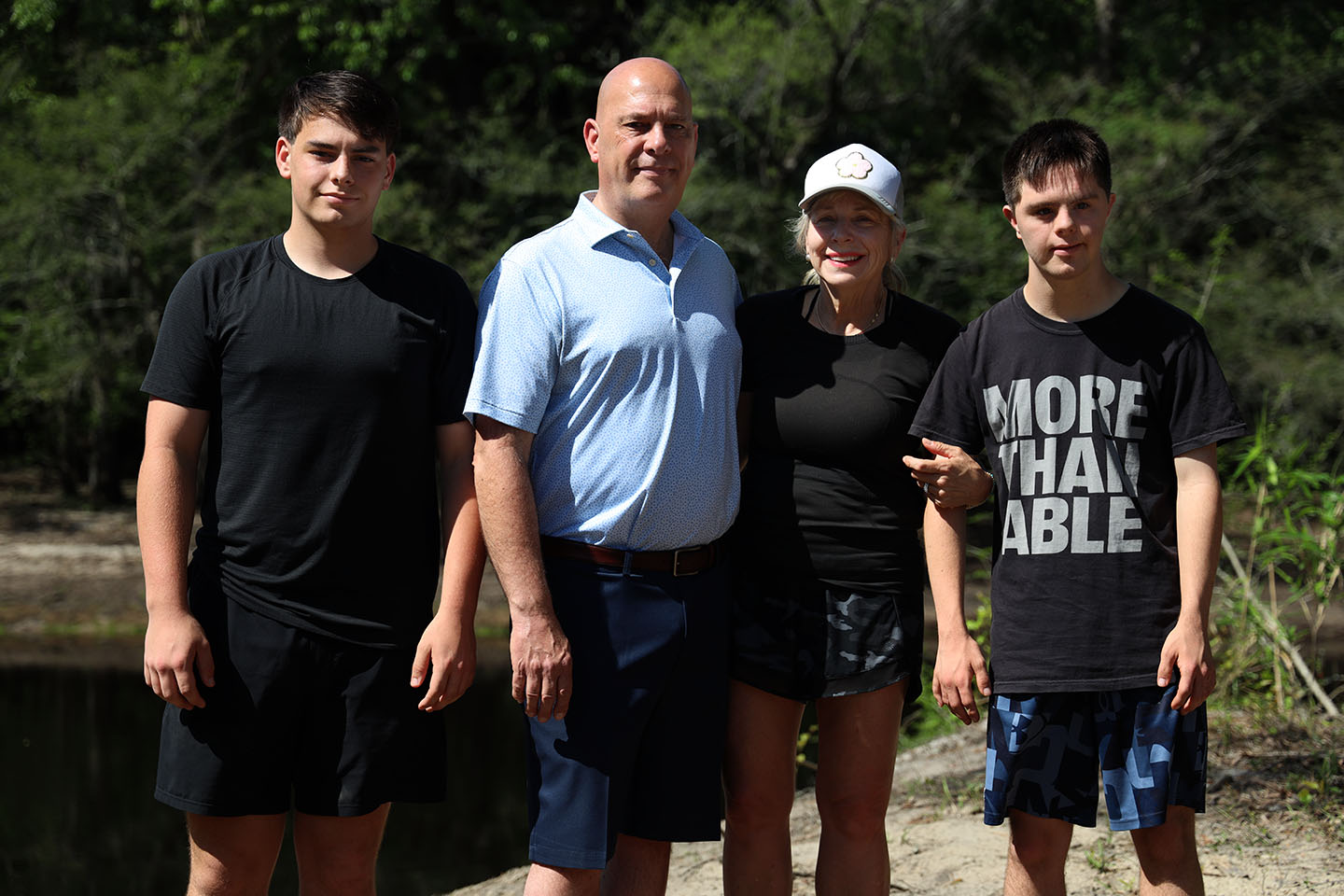
Husband Richard Abi-Nader, middle left, his wife Missy, middle right, and their two sons, Beckett, left, and Paxton smile for a family photo after a short visit to Black River State Park at The Meadows. Missy Abi-Nader said she and her family visit state parks across the state frequently and plan to see all 50. Photo by CJ Leathers/The Carolina Reporter