
Shandon resident Dave Mackey speaks with other audience members during a discussion on rental properties, hosted by the Shandon Neighborhood Council on Sept. 22. Photo by Colin Elam/Carolina Reporter
Columbia City Council has been mulling potential regulations on short-term rentals ever since a shooting in an Elmwood Park Airbnb left one teenager dead and three more in the hospital in June.
The first thing it did after the shooting was to place a moratorium on new short-term rental permits in residential areas. The council later passed a set of updates to the city’s regulations on that type of property on Sept. 16. But the moratorium remains in place, and there are talks of an ordinance to permanently limit future short-term rentals to commercially zoned parts of the city.
“That has not been voted on,” Councilman Tyler Bailey said. “There’s no secret back-door deal that’s been done. Anything that’s going to be done on it will be done in public.”
This is not the first time short-term rentals have come before the council. City Council passed a 2023 ordinance that for the first time required permits for the rentals – after nearly banning most of them.
The city defines a short-term rental as a property rented out for less than 30 days at a time. Airbnb and Vrbo are two companies that list this type of property, sometimes called vacation rentals.
Six days after City Council voted on the new regulations, the Shandon Neighborhood Council hosted a panel of city officials for a discussion of the future of both short and long-term rentals in the large southeast Columbia neighborhood.
The short-term rental question intersects with City Council’s goal of incentivising homeownership for young people and families as opposed to investors, Bailey told the audience in Shandon.
“Maybe with some of the short-term rental changes, those investors might put those properties in more commercial areas, which would free up opportunities for people to buy homes in neighborhoods like Shandon,” Bailey said.
One proposed regulation would have obligated short-term rental owners to cancel bookings from guests living within 30 miles of the property to prevent locals using the homes for parties. But the council changed the wording to only give hosts the option to cancel these bookings before it passed the ordinance Sept. 16.
If the owner of a short-term rental is found to be in violation of the ordinance and notified of it, they now have 15 days to fix the issue. If the problem remains, they can be fined $500 a day until it is resolved.
Also, the minimum age for booking a short-term rental is now 21 instead of 18.
Residents, managers and officials meet
Carla Guido has lived in Shandon for more than 20 years.
She has a short-term rental near her home, but that’s not the property giving her trouble, she said. Rather, it’s the long-term rentals.
“The great thing is that, with a short-term rental, it’s not occupied all the time,” Guido said during the discussion. “So it’s actually a quiet neighbor.”
David Hatcher, Columbia’s director of code enforcement, said the number of registered short-term rentals in Shandon is 29, with 13 more properties suspected to be operating without licenses. There are 680 long-term rental properties in Shandon, Hatcher said.
Guido was surprised to hear that the number of short-term rentals in her neighborhood was that low, and she wonders if some of the properties community members are complaining about are actually long-term rentals, she told Carolina Reporter after the meeting.
David Bergmann owns Heartwood Furnished Homes, a property management company that both owns short-term rental properties and manages them on behalf of other property owners. He attends a lot of neighborhood meetings to ensure the perspective of rental owners is represented in discussions about the future of that business model, he said.
Bergmann finds the new regulations passed Sept. 16 reasonable, he told Carolina Reporter. But a potential end to new short-term rental permits in residential areas would directly impact the future of his business, he said.
Both Bergmann and Guido believe the city should gather more data before making a decision on zoning-based decisions, they said.
“They haven’t gone through that process of actually understanding first,” Bergmann said. “We’ve skipped right to policy making based on anecdotes.”
City Council began discussing short-term rentals this summer following the Elmwood Park shooting. But shootings happen everywhere, including in long-term rentals, Bergmann said.
“The knee-jerk reaction in those cases is not to just ban long-term rentals in the city,” Bergmann said. “So that’s where we just feel like there’s an unfair treatment.”
Short-term rental properties are usually in residential areas, exactly the type of neighborhood customers seek out, Bergmann said.
“Airbnb’s motto is, ‘Live like a local.’ People want to come and stay and live like they’re a local in the neighborhood and have that neighborhood experience,” Bergmann said. “That’s why they’re booking it — not to be in just another hotel.”
Enforcement
City council also approved new staffing for code enforcement on Sept. 16.
“Really the big issue we have with short-term rentals was not being able to enforce the ordinances and being able to keep an eye on what they’re doing,” Hatcher said.
Regulations mean nothing without enforcement, Guido said.
“They’ve spent so much time, money and effort putting together rules and regulations for short-term rentals, and I feel like they’re not being enforced,” Guido said.
Also, she said, many residents are unsure of who to contact if they have an issue with a neighboring rental property.
“I think what’s interesting is that people complain, but no one knows who to call when there’s an issue,” Guido said during the meeting.
After a few other attendees said they didn’t know it, the panel placed a piece of paper with the contact number for code enforcement on the table facing the audience.
Judging the effectiveness of short-term rental regulations is difficult without proper enforcement, Bergmann said.
“What we’re just asking first is, ‘Let’s just enforce the rules, give the ordinance a fair shot this time and follow through on the promises that the city made two years ago,’” Bergmann said. “If that’s still not working, then we can consider more policy. But until we’ve done at least both of these things, then we feel like we haven’t given it a fair shot.”
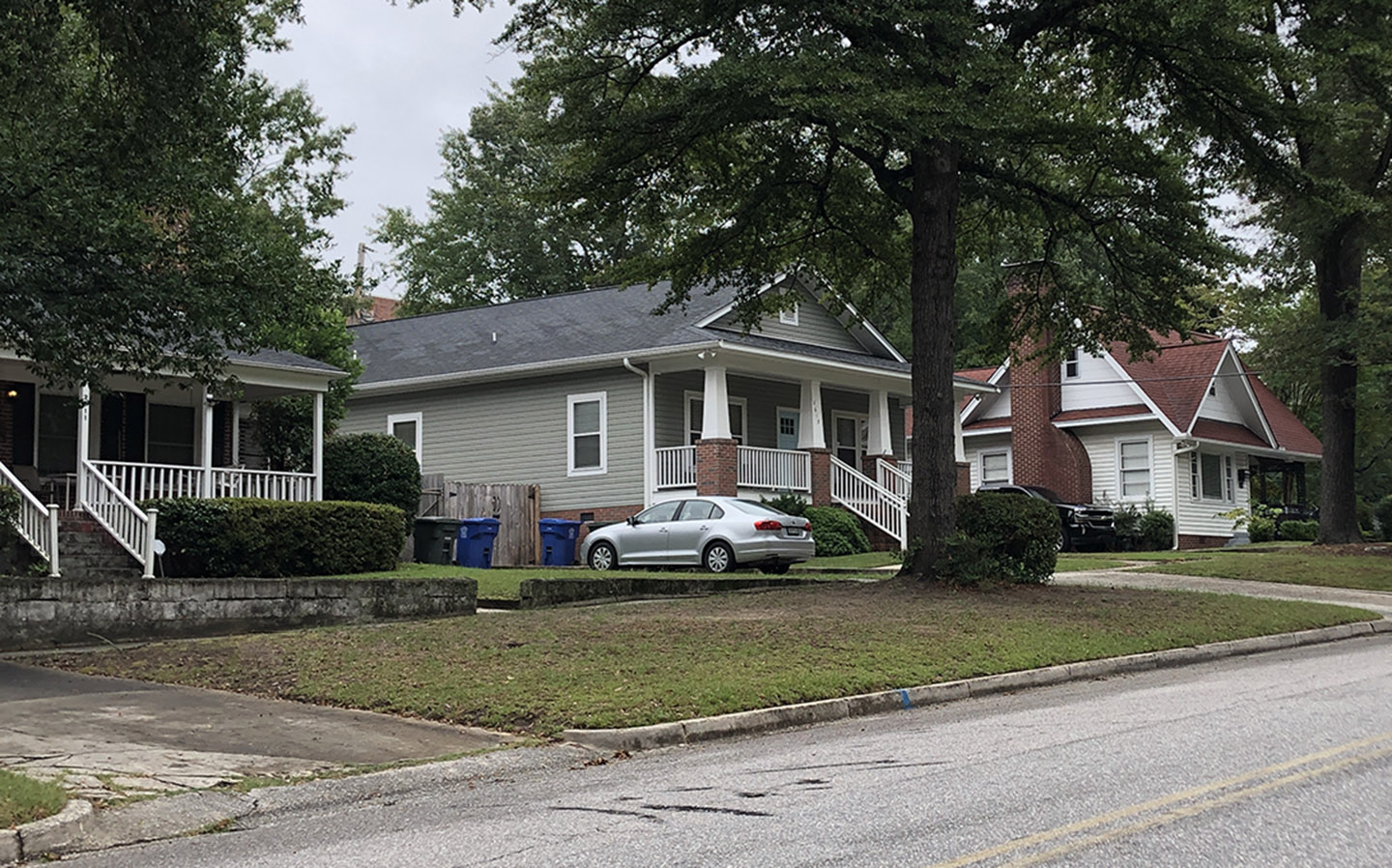
A short-term rental sits between two other homes on Lee Street. The center building is managed by Heartwood Furnished Homes, David Bergmann’s property management company. Photo by Colin Elam/Carolina Reporter

City Councilman At-Large Tyler Bailey and Captain Jeffrey Brink, the southeast region commander for the Columbia Police Department, speak to audience members at a neighborhood meeting in Shandon on Sept. 22. Photo by Colin Elam/Carolina Reporter
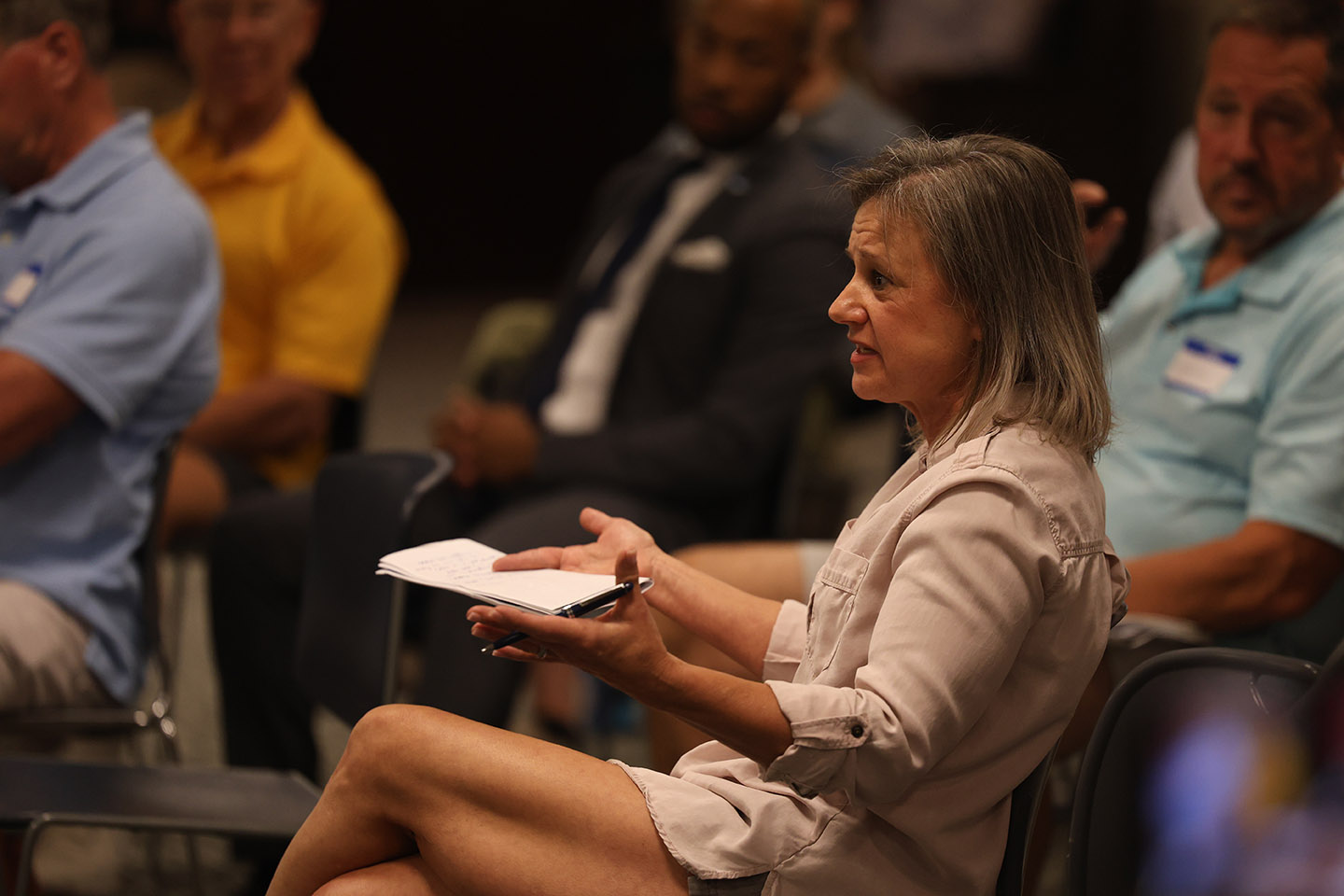
Carla Guido, a Shandon resident of over 20 years, speaks to the panel during a neighborhood meeting on Sept. 22. Photo by Colin Elam/Carolina Reporter
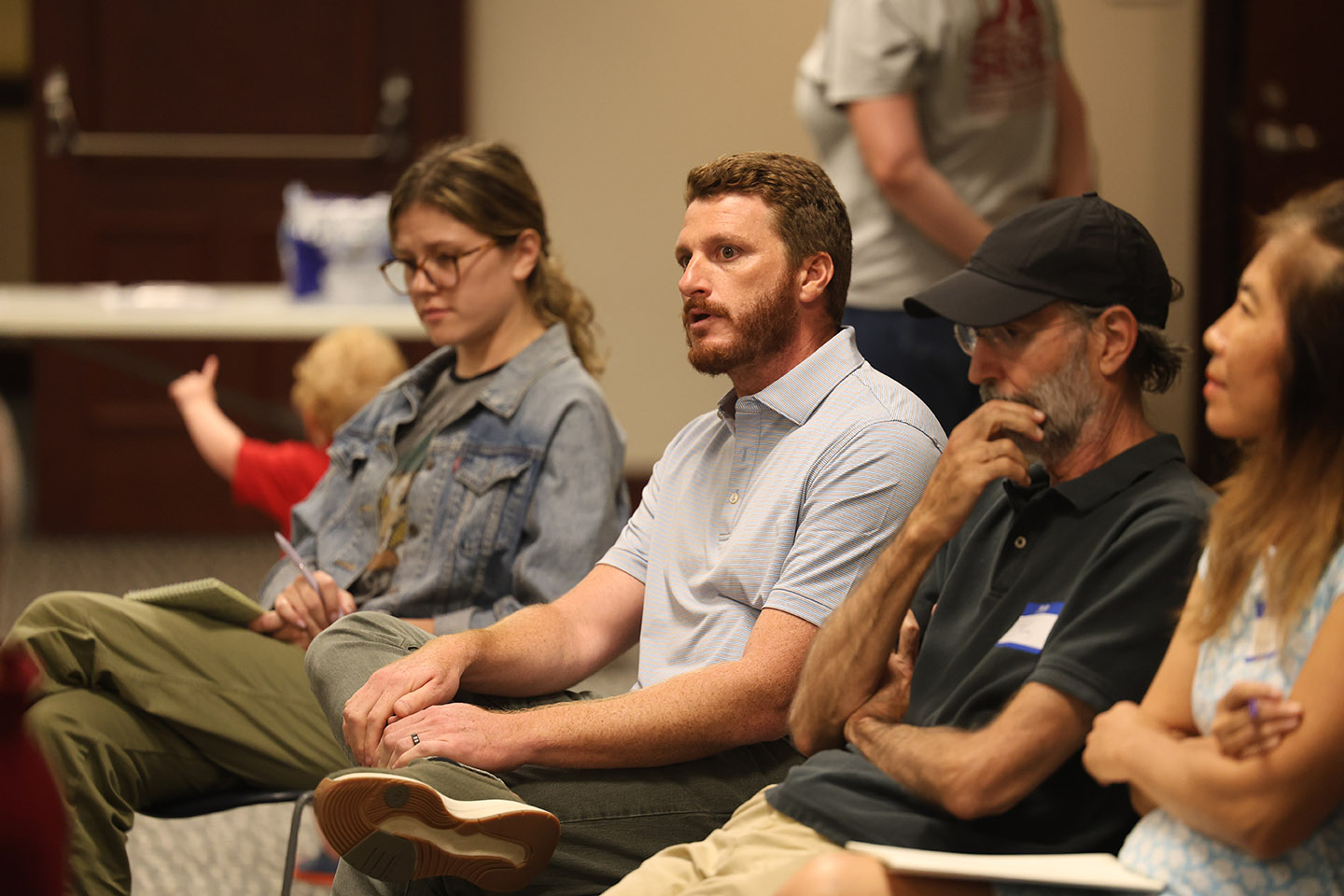
Property manager David Bergmann speaks to the panel during a neighborhood meeting in Shandon. Bergmann’s company, Heartwood Furnished Homes, manages short-term rentals on behalf of other property owners and owns some rentals on its own. Photo by Colin Elam/Carolina Reporter