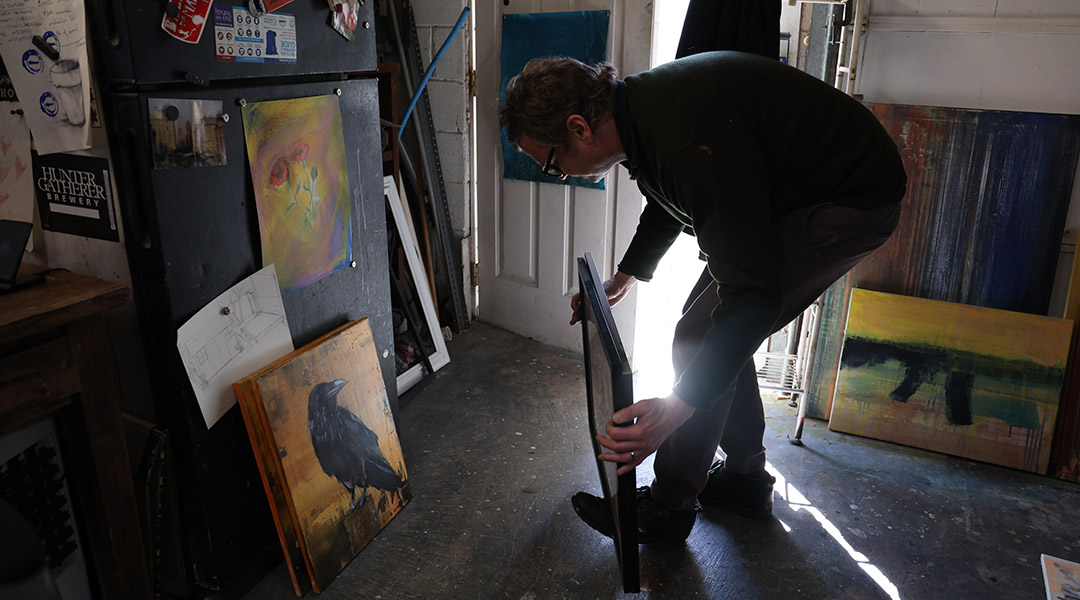
Painter Thomas Crouch’s home studio holds an assemblage of half-finished pieces, mementos from a well-lived life, and a motley collection of tools and art supplies. “I always say you never throw a piece of art out,” Crouch said. “You already put in the work, and it’s worth something.” Photo by Erin Abdalla/Carolina Reporter
The pounding drums of Babes in Toyland’s “Bruise Violet” leak through the cracked door of a plain white garage that lets in the afternoon sun.
Inside, every flat surface props up paintings in varying stages of completion, half-empty pots of paint and discarded paintbrushes. Shelves overflow with handyman’s tools and art supplies.
Painter Thomas Crouch bends down to lean another painting against a black refrigerator in his home art studio. Like his work, Crouch’s studio is unassuming at first.
Similar to the hardcore punk rock he listens to while he works, Crouch has always advocated for people speaking their minds. Making art helps artists have conversations about issues they are about.
Personal, political art isn’t always immediately recognizable. It can be anything from complex layers hidden in a painting to something as simple as giving a voice to the underrepresented. Sometimes artists have to revisit a piece again and again before the deeper meaning reveals itself. Subversive art brings light to issues that are minimized and pushed to the side, artists say.
Original punk “was kind of a voice for the lower class, the working class or the unvoiced,” said Crouch, 53. “Voicing my opinion about current issues and social issues, that’s just always been a punk rock thing, you know?”
Though some of Crouch’s work, like his painting “A Golden Age [redacted],” is overtly subversive, many of his paintings convey their messages in more subtle ways. When he began to prepare for the recent “Degenerate Art Project II” show at Columbia’s Stormwater Studios, he felt called to shine a light on the victims in the Epstein files.
“That’s probably the most disturbing piece I’ve ever done,” Crouch said. “People seem to like it a lot, it’s a very powerful piece.”
Crouch painted over a Gilded Age portrait of a young, smiling girl standing in a white dress, holding red flowers. A shock of red, in the form of a mask, covers the girl’s original smile. The mask silences her, and the flowers she holds bleed down the front of her dress. In her other hand, the girl clutches a piece of paper with the word “enigma” in capital letters. A garish gold frame wraps the piece, just as it did the original work.
Artist Betsy Halford (68) also created a piece for the exhibit, a collection of 37 humanesque figurines mounted onto a pieced-together white board. Each miniature work of art embodies its own message, and the overall theme of the piece is that people are stronger when they stand as a community. Many of the figurines have sold. But several still remain on the original canvas, and Halford is in her studio, producing more.
“They’re not so much in your face necessarily about what they are,” Halford said. “But if you ask me (what it’s about) I’ll tell you, but I won’t force it on you.”
When Halford creates her pieces, she isn’t looking to make something that someone wants to buy. She’s making something that she wants to see.
“Trying to create to sell, you know, it loses something,” Halford said. “It loses the essence of the piece.”
Halford uses bits and bobs she’s collected throughout her life and feels out what is meant to go together.
Contemporary artist Mary Ann Haven used a similar method when creating her piece “Out Of The Frying Pan Into The Fire.”
Haven spent a year and a half collecting cuttings from old paintings she no longer wanted to keep without knowing what she wanted to do with the scraps. She found emotions coming to life on canvas after sitting a while and thinking about the ever-increasing barriers immigrants face when trying to enter the United States.
“When I did begin moving some of them around on a flat canvas, … current events found their way onto the surface,” Haven said. “It took a while to make sense to me.”
Many artists’ creative journeys are born out of a need to see the issues they care about represented in the world around them.
Animator Corey “Roc Bottom” Davis was inspired to create his first comic book series, Jet Boy, because of the lack of representation of Black people he saw in comics and cartoons growing up.
“I wanted, you know, young kids of color to see this hero and learn that they can be Jet Boy,” Davis said. “I wanted to give them something that they could see themselves in.”
Inspiring kids to pursue the arts is one of Davis’ biggest passions. Trey Isles-Webster, who is 17, has been one of Davis’ mentees since he was 10 years old.
“You’re an inspiration for me to want to produce (animation),” was Isles-Webster’s message to his mentor.
Davis regularly gives workshops to high school students in animation classes and at studios so he can give back to his community. Educating young people going into the arts is important to Davis, who wants to fight the “war on education.”
Davis’ painting “The Cost of Living,” which was featured in the Degenerate Art Show II, reflects the decayed state of education in the United States. In the painting, a child, reduced to only his skeleton and clothes, sits in an abandoned classroom with a stack of banned books. Cobwebs gather, and flies circle around the boy. He has been abandoned for a very long time.
The art world’s lack of diversity isn’t limited to who it represents, 48-year-old Davis said it hasn’t always been easy to find studios and galleries that understand the artistry of animation and comics.
“You get to a point after creating for so long that you do another type of creation,” Davis said. “And that is creating spaces so you can continue to create comfortably and freely. Because, you know, not a lot of spaces may embrace the type of things that you create.”
Davis is in the works to open two new animation studios, one in Austin, Texas, and the other in Tulsa, Oklahoma. Davis is working on a project with the Black Wall Street Alliance that will bring music and art festivals to Tulsa. In Austin, Davis is working with Professor Frederick Aldama and his team at the University of Texas on an animation film festival that will piggyback off the university’s BIPOC PoP symposium.
The studios will provide opportunities for local artists to create and build connections within their communities in a space they’re comfortable in.
“The more you create, and the more you look around you, you’re going to notice that there’s not as many spaces to create the type of things that you want to create,” Davis said. “So you don’t wait for somebody to bring it to you. You’re a creator. Create it.”
FINDINGS
- Art is a vehicle for people to explore the issues they care about and show those issues to the world.
- It isn’t always obvious when art has subversive themes: Revisiting a work of art can show the deeper meaning of the piece.
- Artists say it’s imperative to make spaces for them to explore their creativity. They say it’s a disservice to artists and art enjoyers alike to limit the variety of art being created or displayed.
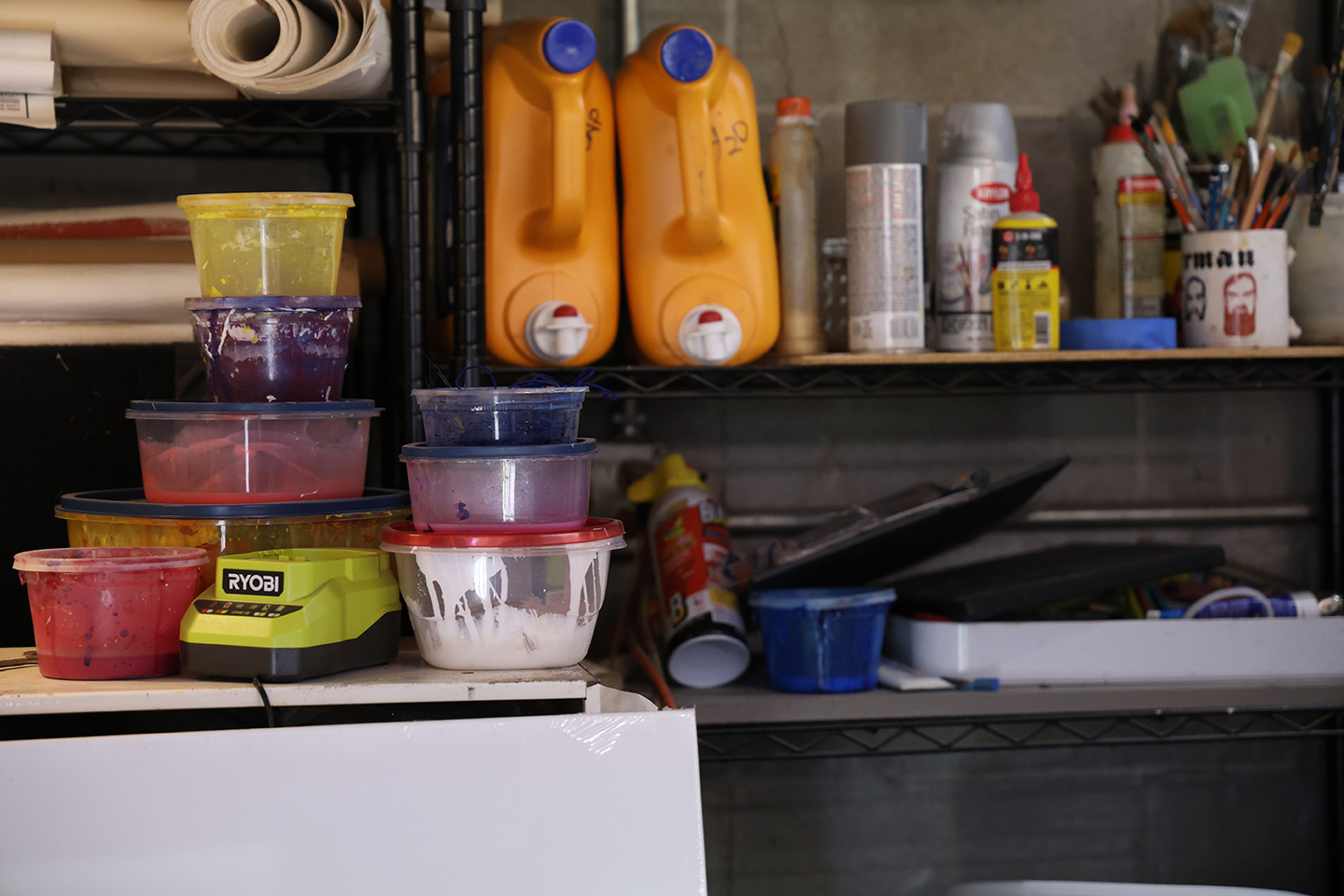
Containers of paint, rusty tools and various and sundry art supplies sit on the shelves of Thomas Crouch’s home studio. Photo by Erin Abdalla/The Carolina Reporter
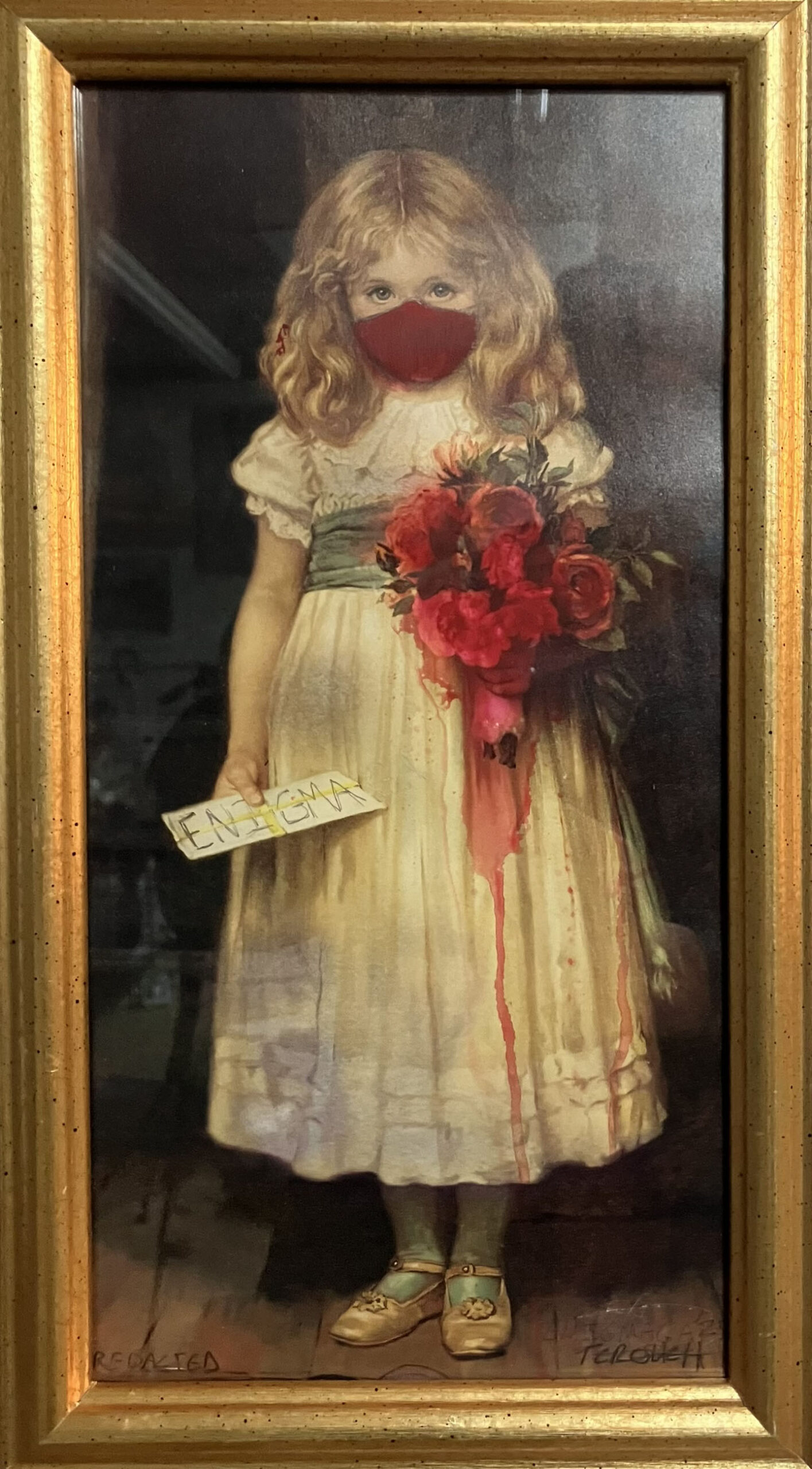
Thomas Crouch reworked a Gilded Age painting, “A Golden Age [redacted].” Photo courtesy of Thomas Crouch/The Carolina Reporter
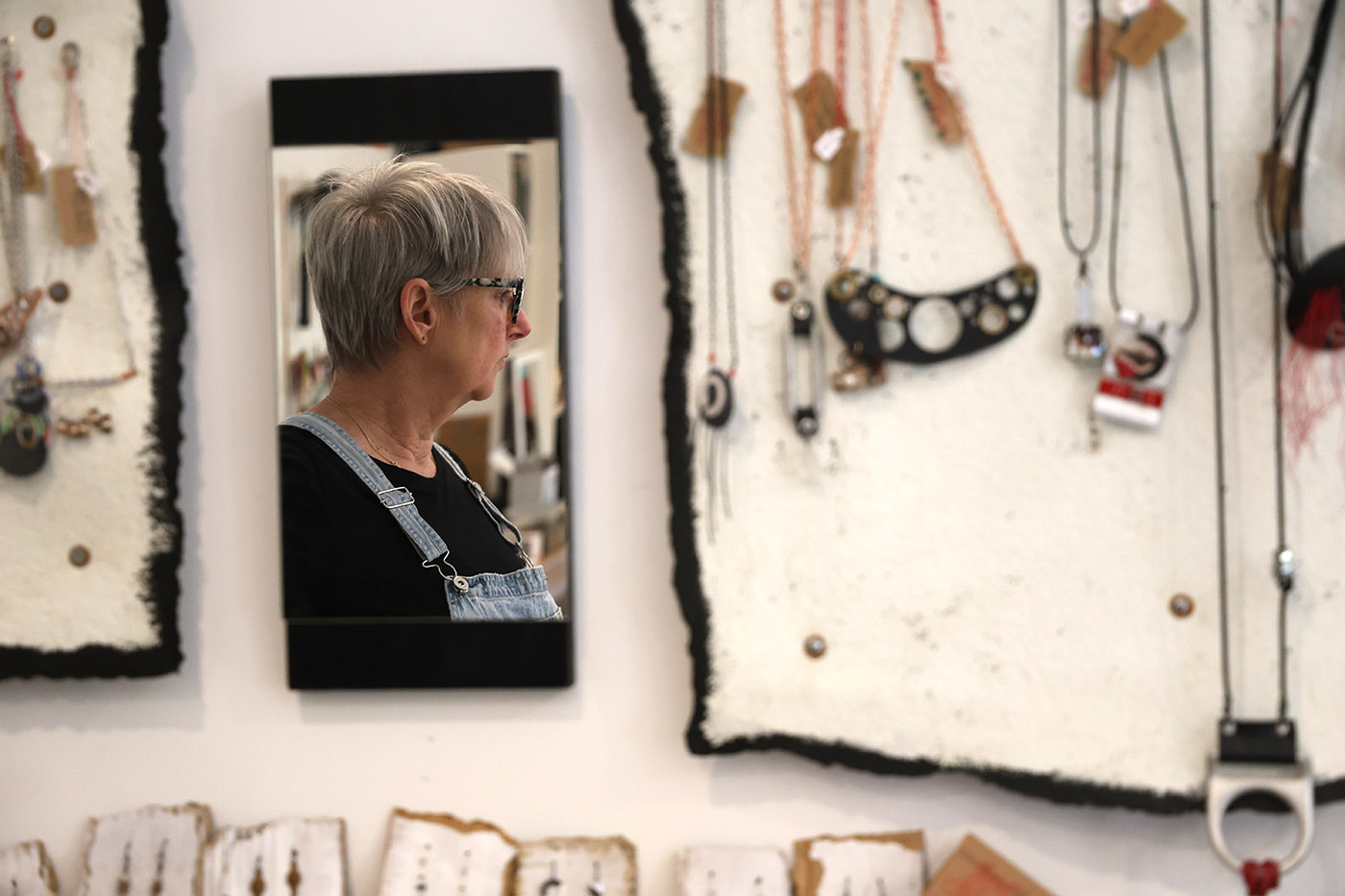
Betsy Halford breathes life into the mundane remnants of daily life to create her mixed-media works. “I’m trying to keep things out of the landfill,” Halford said. “It kills me what a wasteful society we are.” Erin Abdalla/The Carolina Reporter
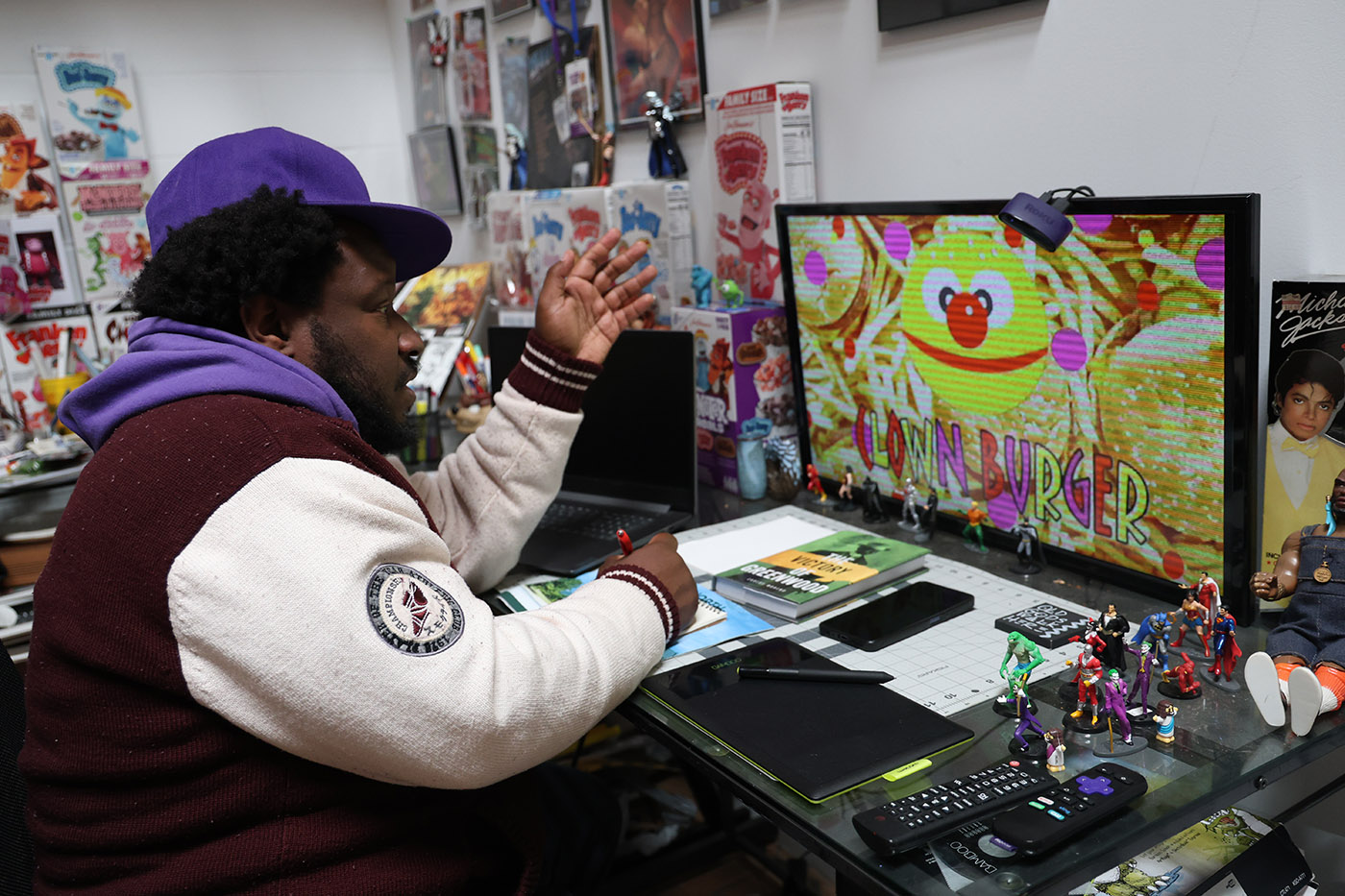
Corey “Roc Bottom” Davis is preparing to open new animation studios in Austin, Texas, and on Black Wall Street in Tulsa, Oklahoma. Photo by Erin Abdalla/The Carolina Reporter