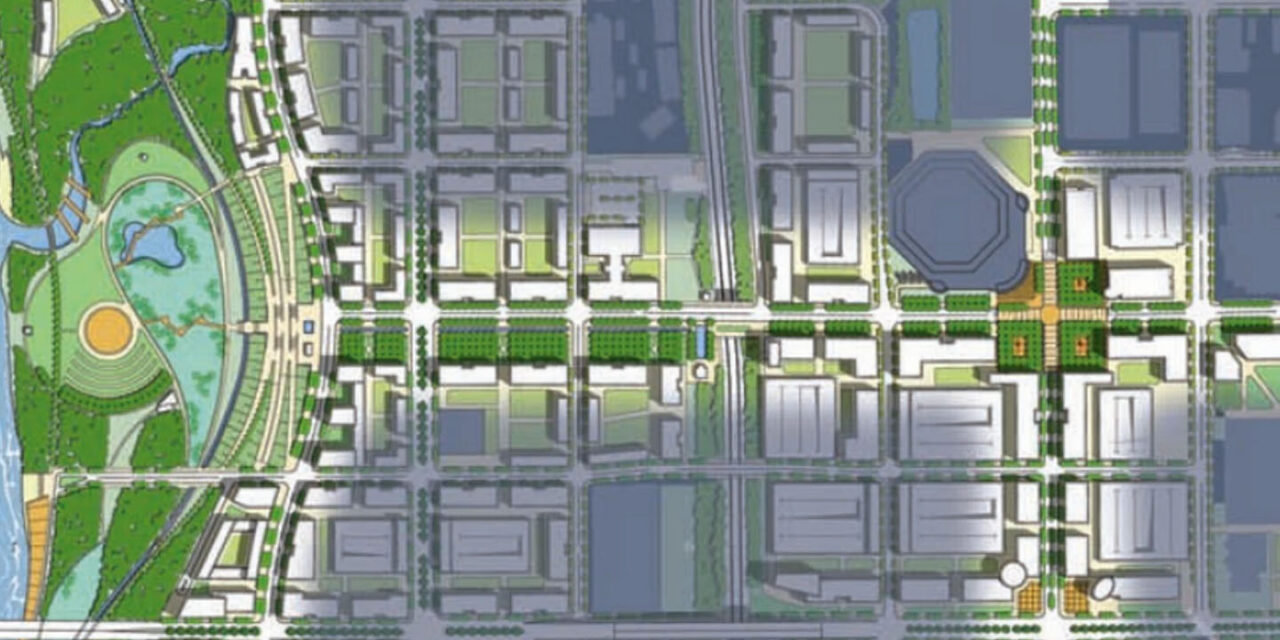
The vision for the Innovista Master Plan, an ambitious redesign of Columbia’s downtown, shows construction near the Congaree River. Illustration courtesy of Sasaki Associates, City of Columbia/Carolina Reporter
A project poised to greatly alter downtown Columbia and the campus of the University of South Carolina is showing new signs of life.
Gateway 737, a private, mixed-used student-living complex, opened in August on Gadsden Street near the Colonial Life Arena with 940 beds. VERVE Columbia and Antique Apartments, two other private student-living projects, are being constructed at the busy corner of the Blossom and Huger streets, near USC’s baseball complex. Both will have ground-floor retail spaces to contribute to urban walkability, according to plans provided to the City of Columbia.
The buildings are part of Innovista Project, a 500-acre academic, residential and retail district meant to connect USC’s core campus to the Congaree River, where the City of Columbia plans to build a large waterfront park.
The goal is to transform downtown Columbia, focusing on significant student- and non-student-residential spaces, retail shopping and research development at USC. The extension of the nearby Williams Street also will open access to the Congaree.
USC and Columbia in 2005 launched the initial plan, which is designed to improve the quality of life for USC students, said Derek Gruner, university architect and associate vice president of Facilities Planning, Design and Construction.
“The vision for the Innovista District was to create a premier downtown and waterfront district in Columbia that could offer living, learning, working and recreational opportunities for residents,” Gruner told the Carolina Reporter. “One of the many goals of this project is to attract and retain business to help USC grow not only its community partnerships but also its already robust research footprint.”
Sasaki Associates, the plan’s designer, and USC assumed 2% yearly student population growth to conceive the need for an abundance of beds or student-living projects.
After 20 years, the project is still yet to be near its idealized goal. However, a few projects have already been completed and others are underway.
The USC Horizon I Research Facility, on the corners of Blossom and Main Street on USC’s campus, was the first building completed as a part of the project in 2009.
The building is home to USC’s Office of Economic Engagement, which brands itself as “The Flagship of Innovation.”
The office connects businesses, researchers, entrepreneurs and government officials with the university. It also promotes the development of economic and business innovation within the state.
Next door is the M. Bert Storey Engineering and Innovation Center, or Horizon II. It houses some of the largest companies in the technology industry, such offices IBM.
The center “provides (USC) students with educational opportunities and internships,” according to the USC Development Foundation.
The Greene Street Bridge opened in December 2022. The project brought new sidewalks, greenery and bicycle lanes that stretch to Huger Street.
The city waterfront park, which is to be ringed with market-driven – not student – apartments, is to be built on the other side of Huger.
In 2018, USC provided an update to its role in the plan, presenting details of new housing and environmental projects.
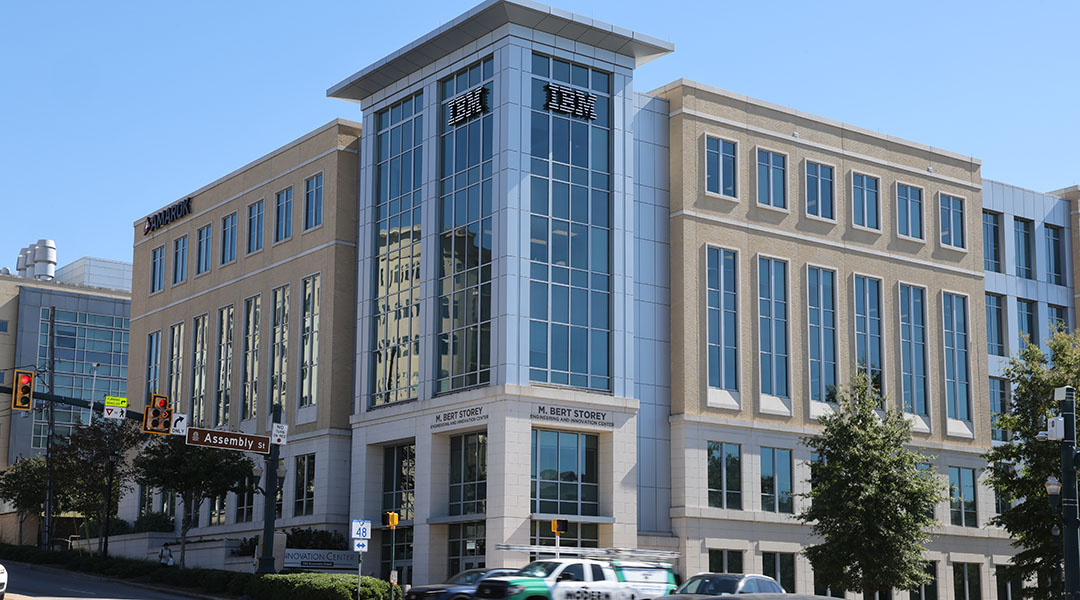
The M. Bert Storey Engineering and Innovation Center at the intersection of Assembly and Blossom streets was one of the earliest buildings constructed as part of the Innovista plan. Photo by Sencere Rice/Carolina Reporter
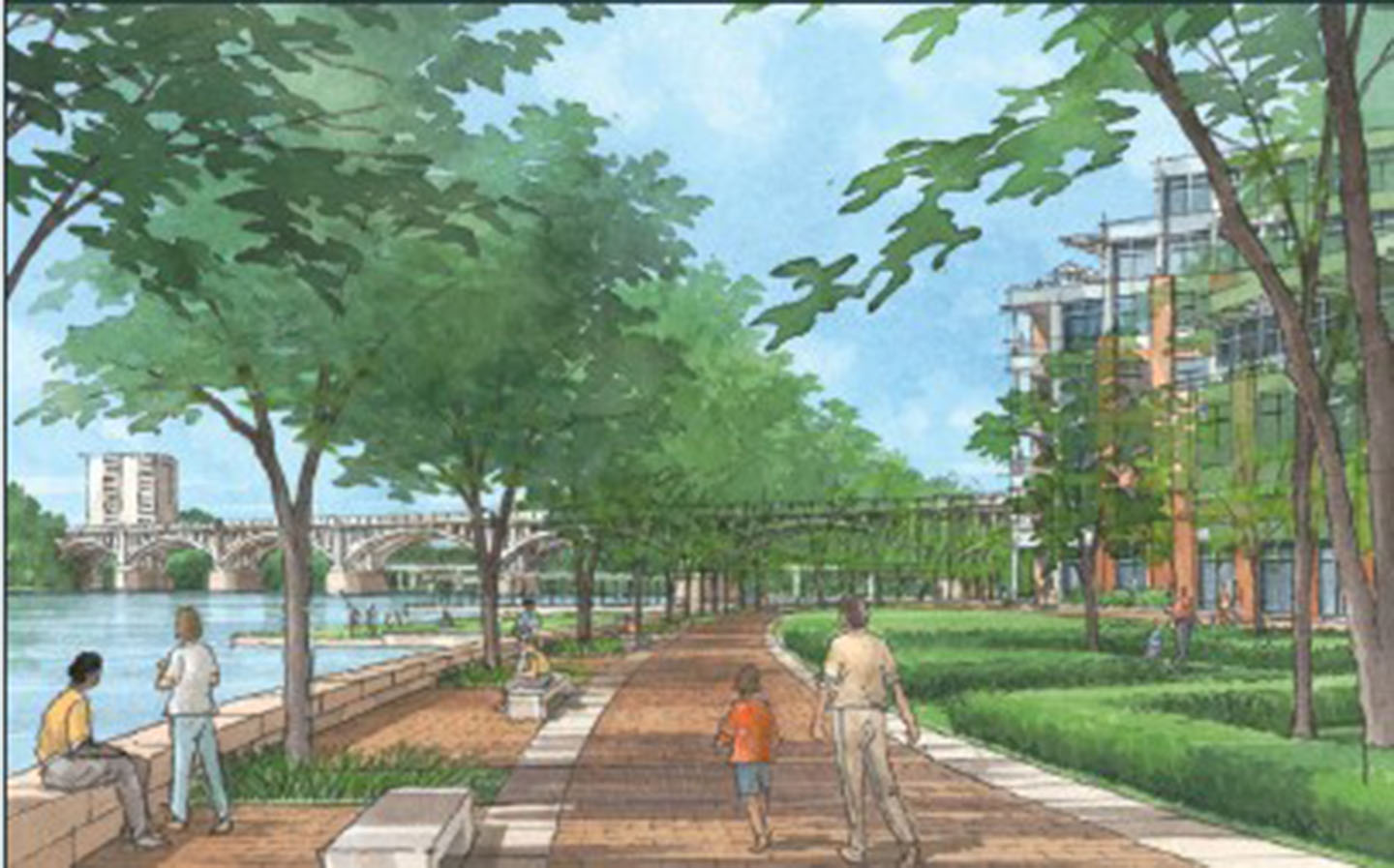
A rendering shows a waterfront park on the banks of the Congaree River as part of the Innovista Master Plan. Illustration courtesy of Sasaki Associates, City of Columbia/Carolina Reporter
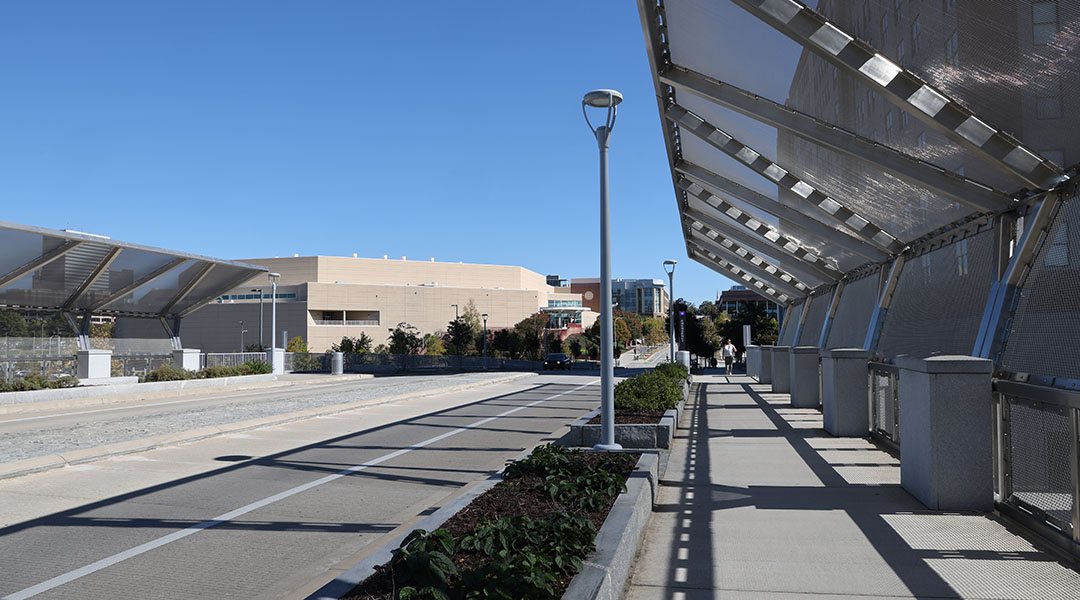
The Greene Street Bridge, one of the backbones of the project, opened in December 2022 to allow cyclists and pedestrians to safely cross the large rail yard near Huger Street. Photo by Sencere Rice/Carolina Reporter