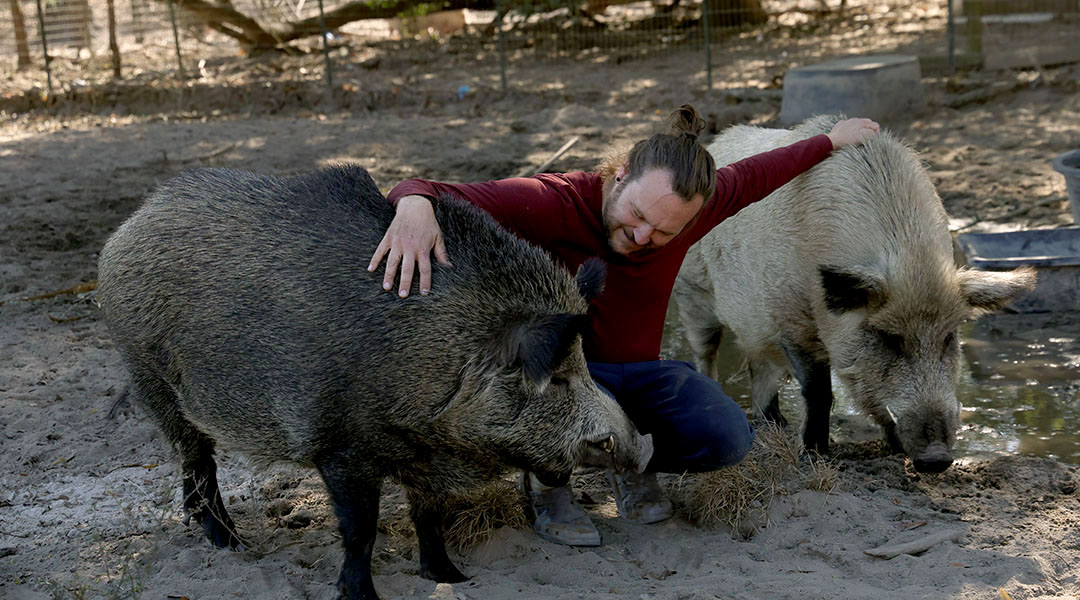
Cotton Branch co-director Josh Carpenter embraces two rescued feral pigs, Kirby and Harry. There are around 200 pigs under the care of Cotton Branch Farm Sanctuary, including 40 up for adoption by eligible caretakers. Photo by Sydney Lewis/Carolina Reporter
BATESBURG-LEESVILLE – Joshua Carpenter and Evan Costner – co-directors of Cotton Branch Farm Sanctuary – are often met with the gruff greetings of several potbellied pigs when they step through their front door.
The couple moved from Charlotte onto the property in 2017 after taking on executive roles. Founded in Lexington County in 2004, the sanctuary now houses about 200 pigs, 40 of which are adoptable. Many of the pigs are potbellied, but their numbers also include rescued feral and farm pigs.
The farm is run entirely with donations and volunteers. Carpenter and Costner make their money in other ways. They run a nearby event space together, and Carpenter sometimes teaches yoga.
The pigs are sorted into compatible herds based on age, metabolism, behavior and medical needs and live relatively peaceful lives that once may have seemed impossible. The sanctuary is home to many pigs in need of special care or rehabilitation, whether caused by abuse, neglect or genetic abnormalities. That number includes Jules – the matriarch of the “greeter pigs” – who has chemical burns covering her snout, and Pickles, a young pig found with rope embedded nearly two inches into his skin. The pigs are provided with both emergency and routine veterinary care while at the sanctuary.
Most Cotton Branch residents show a marked improvement in happiness as well as health after arriving, Carpenter said.
“So many of them got here and would run from you and not come near you,” he said. “Most of them, we see a 180-turnaround, where they’ve gone from running from you to running to you.”
The effect can go both ways, with the Cotton Branch team planning to involve a licensed therapist to build animal emotional support groups and workshops in the future.
“They think a lot like us,” Carpenter said.
Pigs are cared for by the Cotton Branch team and groups of volunteers, Carpenter said, though the sanctuary has been rebuilding its volunteer base since the COVID-19 pandemic caused numbers to dwindle.
Volunteer groups frequently at the refuge include University of South Carolina students and people on company service retreats. USC’s Mountaineering and Whitewater Club has partnered with the sanctuary for about five years, said service chair Ryan Cataldo.
“It really feels like service that makes a difference,” Cataldo said. “We want to do service trips that are building and using influence, and Cotton Branch is just so unique.”
People often surrender their pet pigs when they realize they don’t stay piglet-sized forever. Inflation and overbreeding also have placed a strain on animal shelters and sanctuaries across the country, and Cotton Branch is no exception. Potbellied pigs are also becoming more likely to have genetic abnormalities due to inbreeding, making care more expensive and time-consuming.
The refuge is at capacity for its resources, Carpenter said, only having taken in two pigs in emergency situations this year.
“Our No. 1 commitment is to the animals we have taken in, the ones we have given a commitment to give them the best life,” Carpenter said.
But that doesn’t mean Cotton Branch isn’t willing to provide advice for caretakers or prospective caretakers of potbellied pigs. Advice and advocacy are also a part of Cotton Branch’s mission to improve the lives of pigs and farm animals nationwide. Carpenter and Costner, for example, put together a livestream on the Cotton Branch YouTube channel called “50 States, 50 Days” detailing the protections for farm animals in each state. While South Carolina has laws preventing general animal cruelty, there exists a potentially vague exception for “accepted farm animal husbandry.”
“There is a severe lack of animal protection in this entire country,” said Costner in the seminar’s final few minutes. “We need to push education, we need to push our elected representatives, we need to push everything we can to shine a light on these animals, because they’re going to continue to suffer unless we step in.”
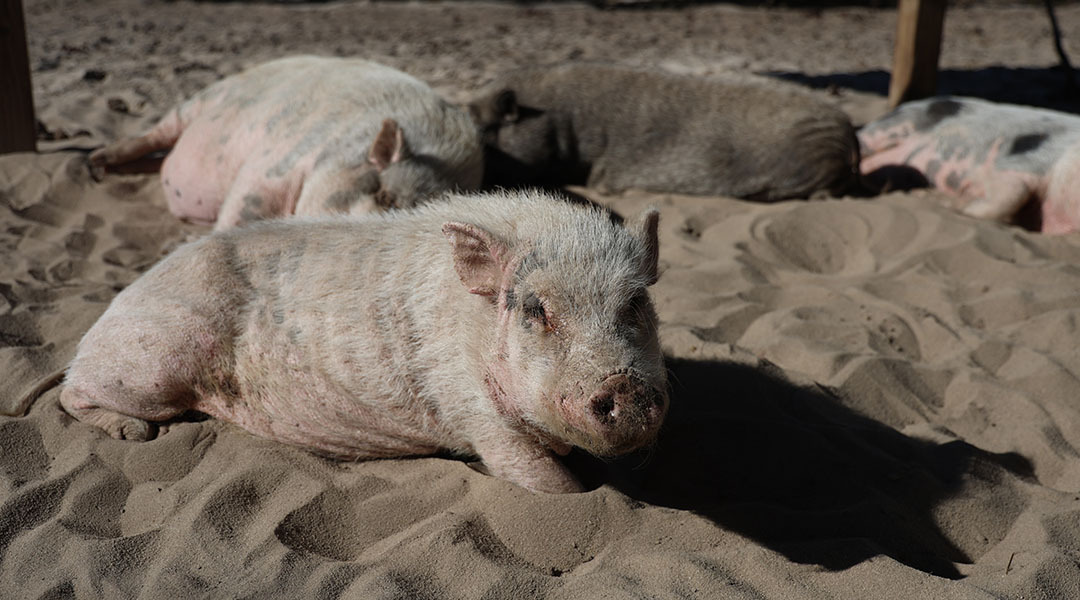
Pigs sun themselves underneath an awning, one of many scattered across the property. The pigs are organized into herds based on similarities, everything from metabolism to age, to better meet their needs. Photo by Sydney Lewis
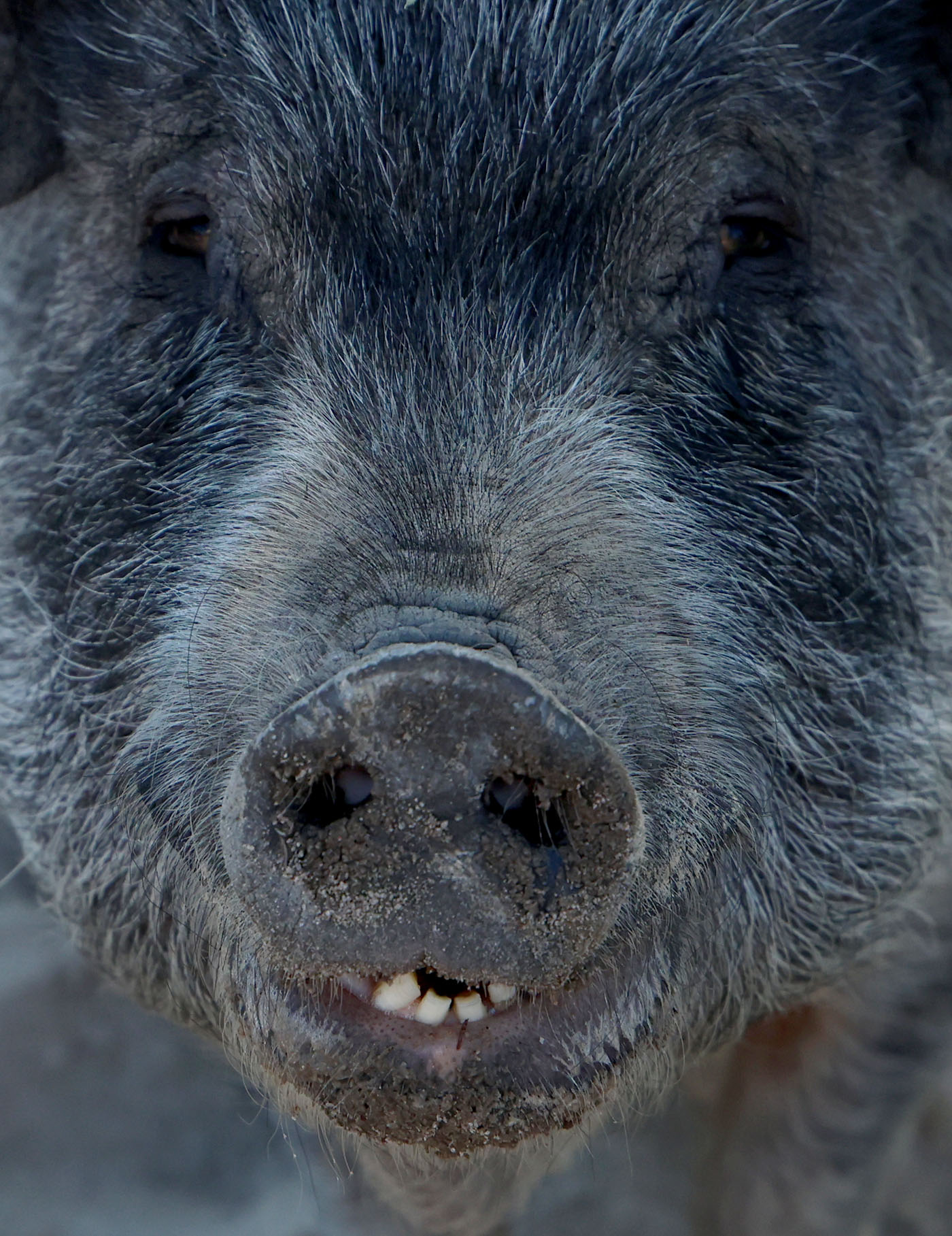
Peppa looks up at a visitor to the pen. Photo by Sydney Lewis/Carolina Reporter
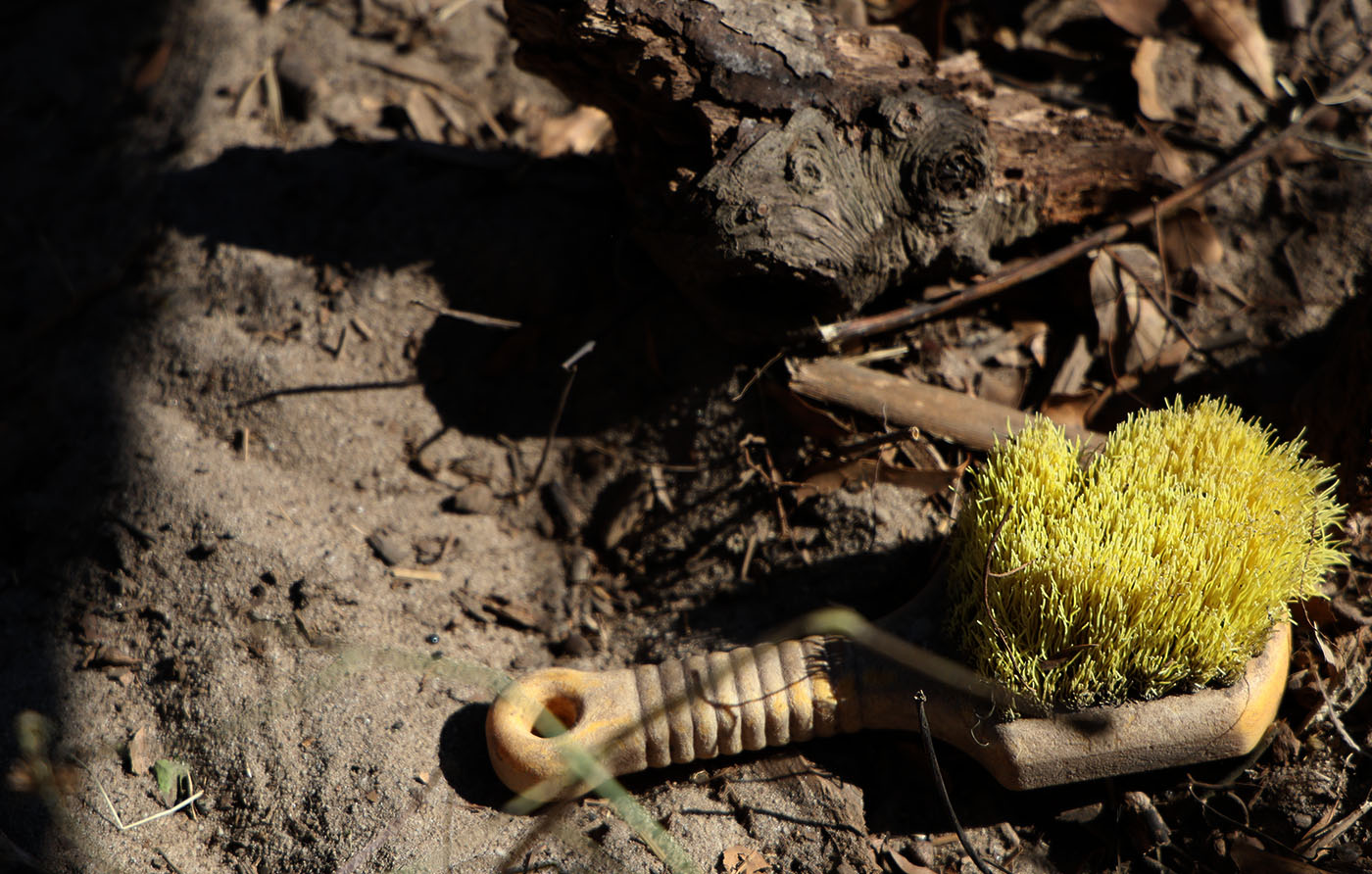
A brush lies in the sand at Cotton Branch Farm Sanctuary. Brushing is important for removing dust, dander and dead skin from pig coats. Photo by Sydney Lewis/Carolina Reporter
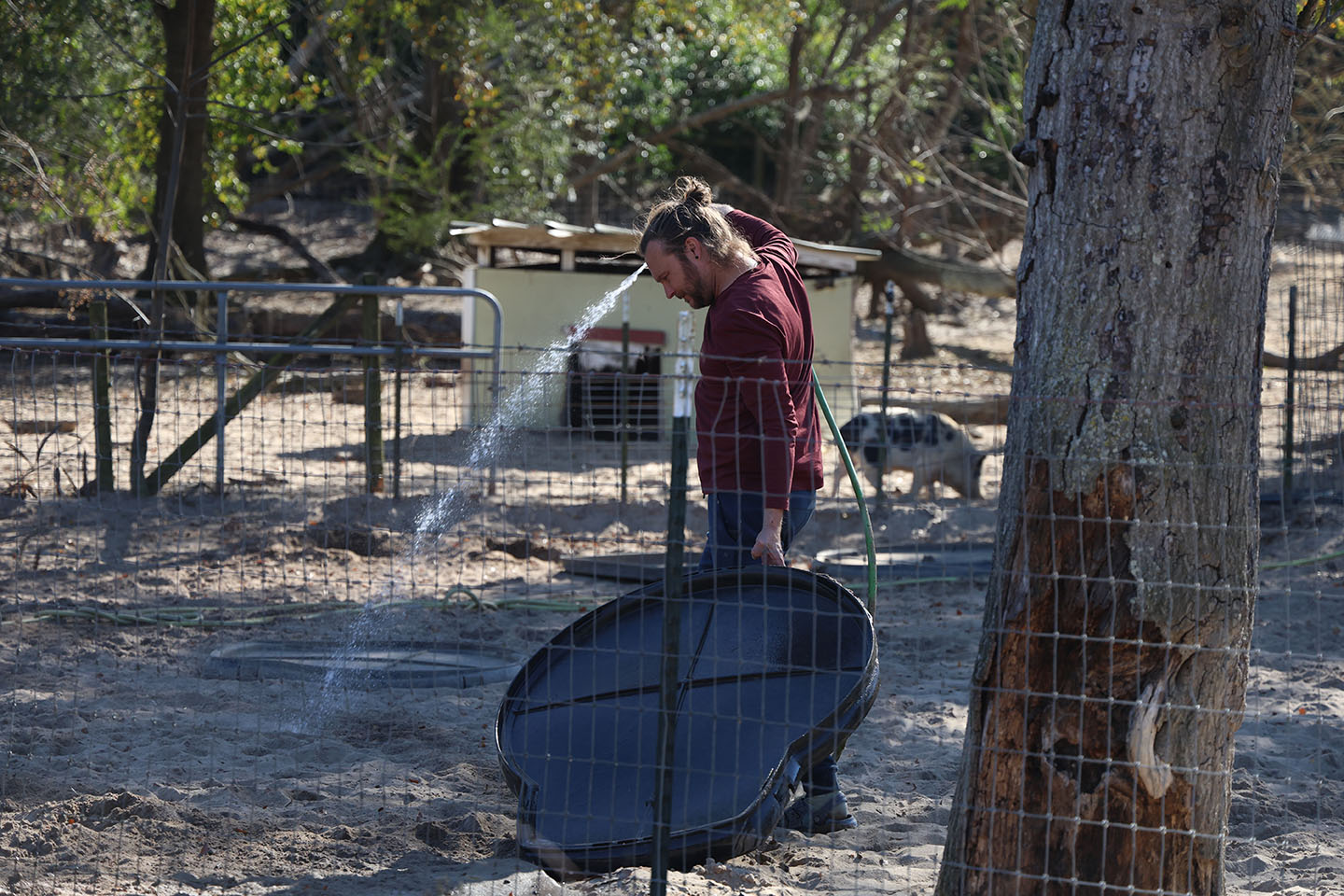
Joshua Carpenter rinses off a trough. Many of the troughs used at Cotton Branch are made from donated dog or rabbit enclosures, or are handmade. Photo by Sydney Lewis/Carolina Reporter
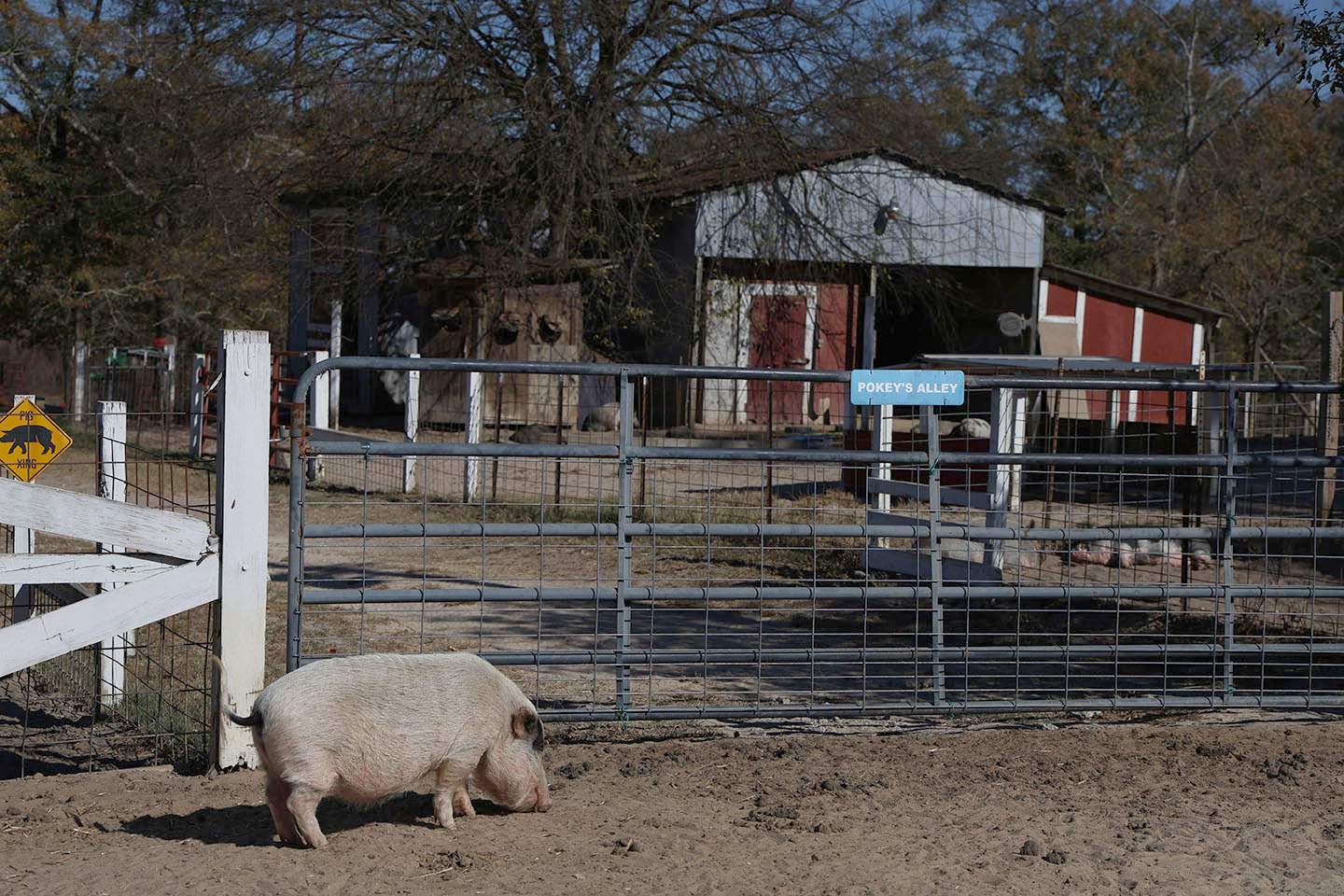
The greeter pigs’ pen leads into the rest of the expansive property by way of a dirt road nicknamed “Pokey’s Alley.” Photo by Sydney Lewis/Carolina Reporter

Joshua Carpenter and Evan Costner live on the property that houses 200 pigs and features a barn with its hand-painted logo. Photo by Sydney Lewis/Carolina Reporter
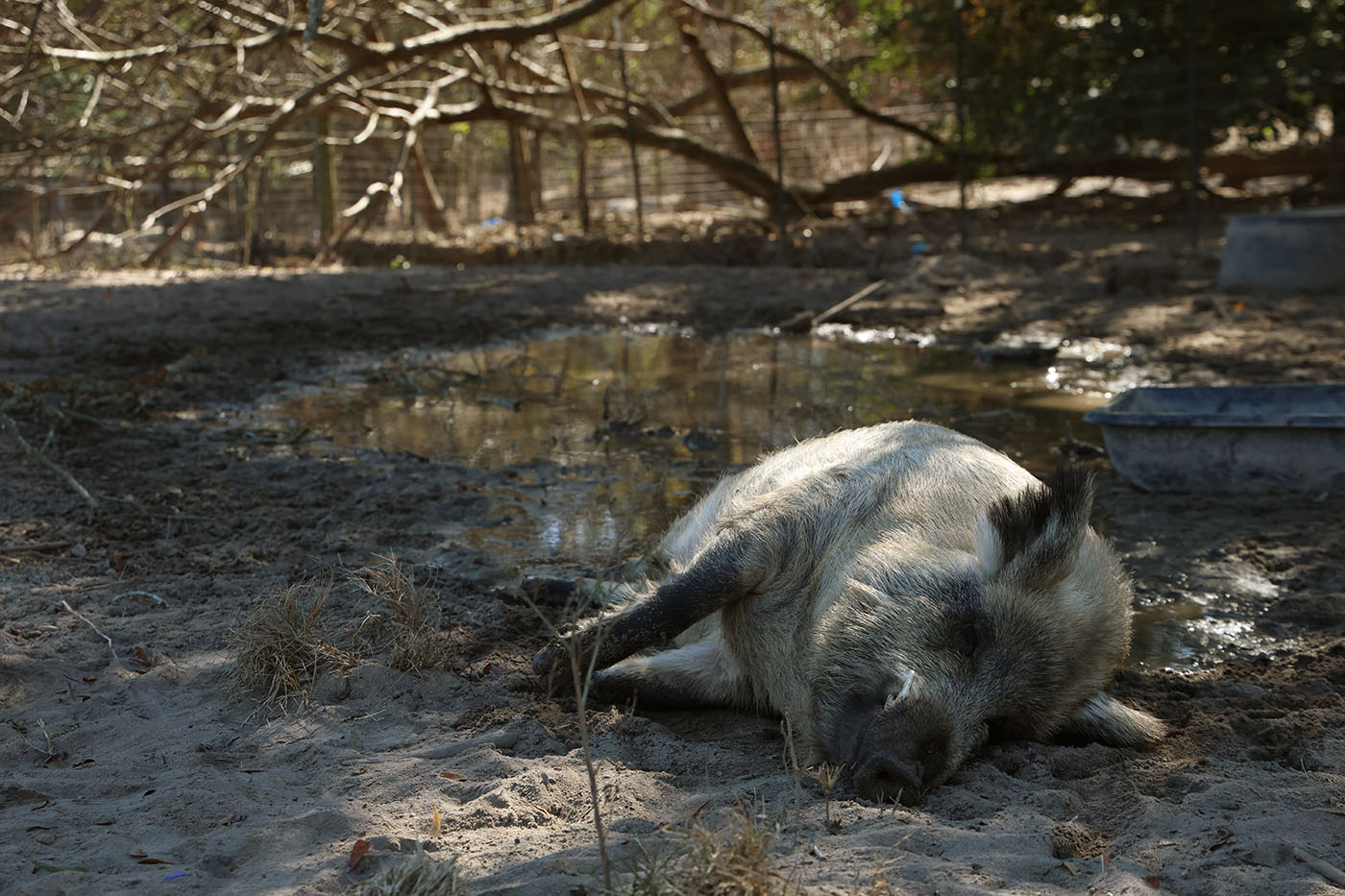
Wallows are maintained to help keep pigs cool in the summer heat, but this feral pig enjoys them year-round. Photo by Sydney Lewis/Carolina Reporter
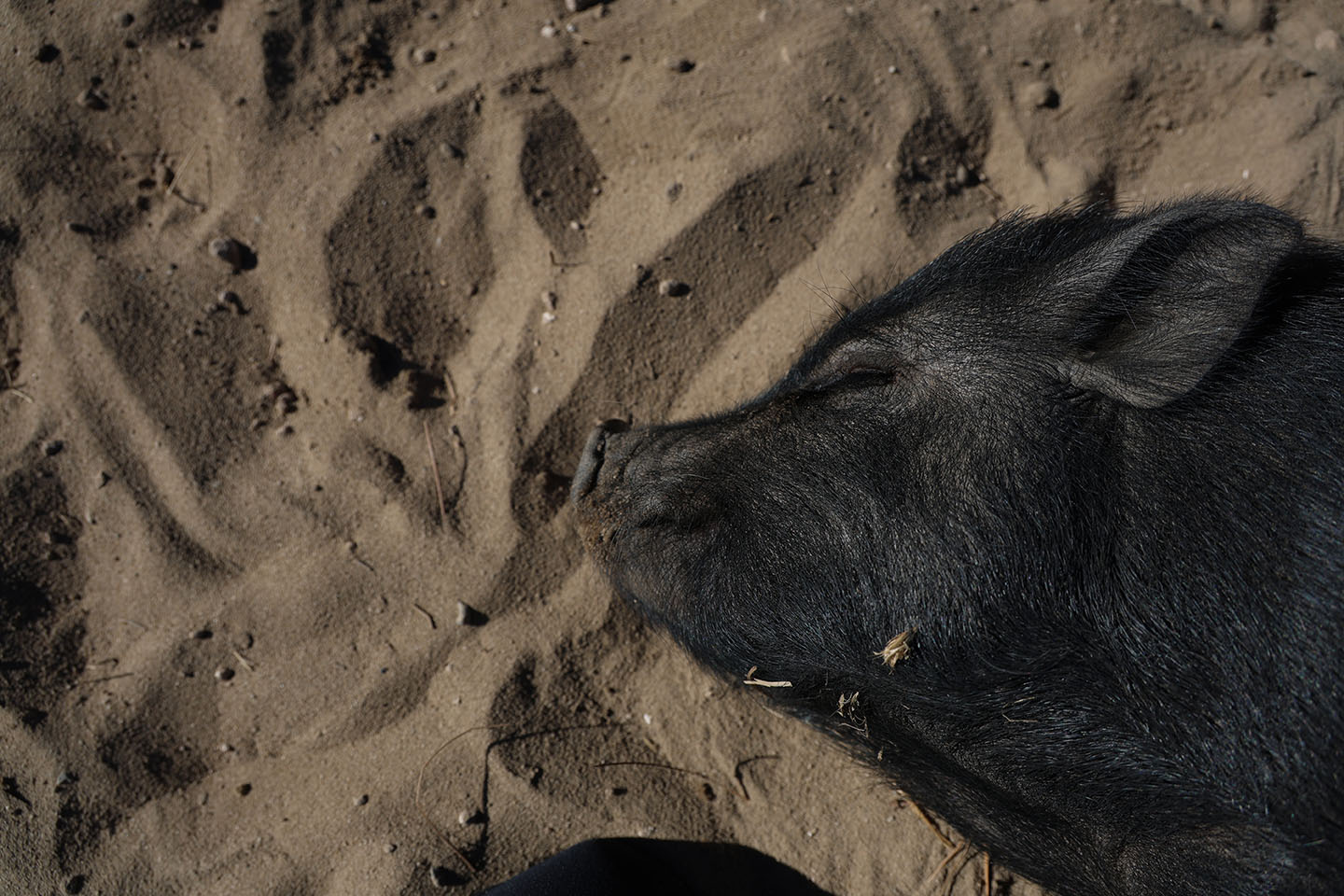
Greeter pig Oliver basks in the sun. Oliver was rescued after his mother died when he was a small piglet. He has been adopted by fellow rescue Jules, joining a large family that includes brothers Nightcrawler and Xavier. Photo by Sydney Lewis/Carolina Reporter
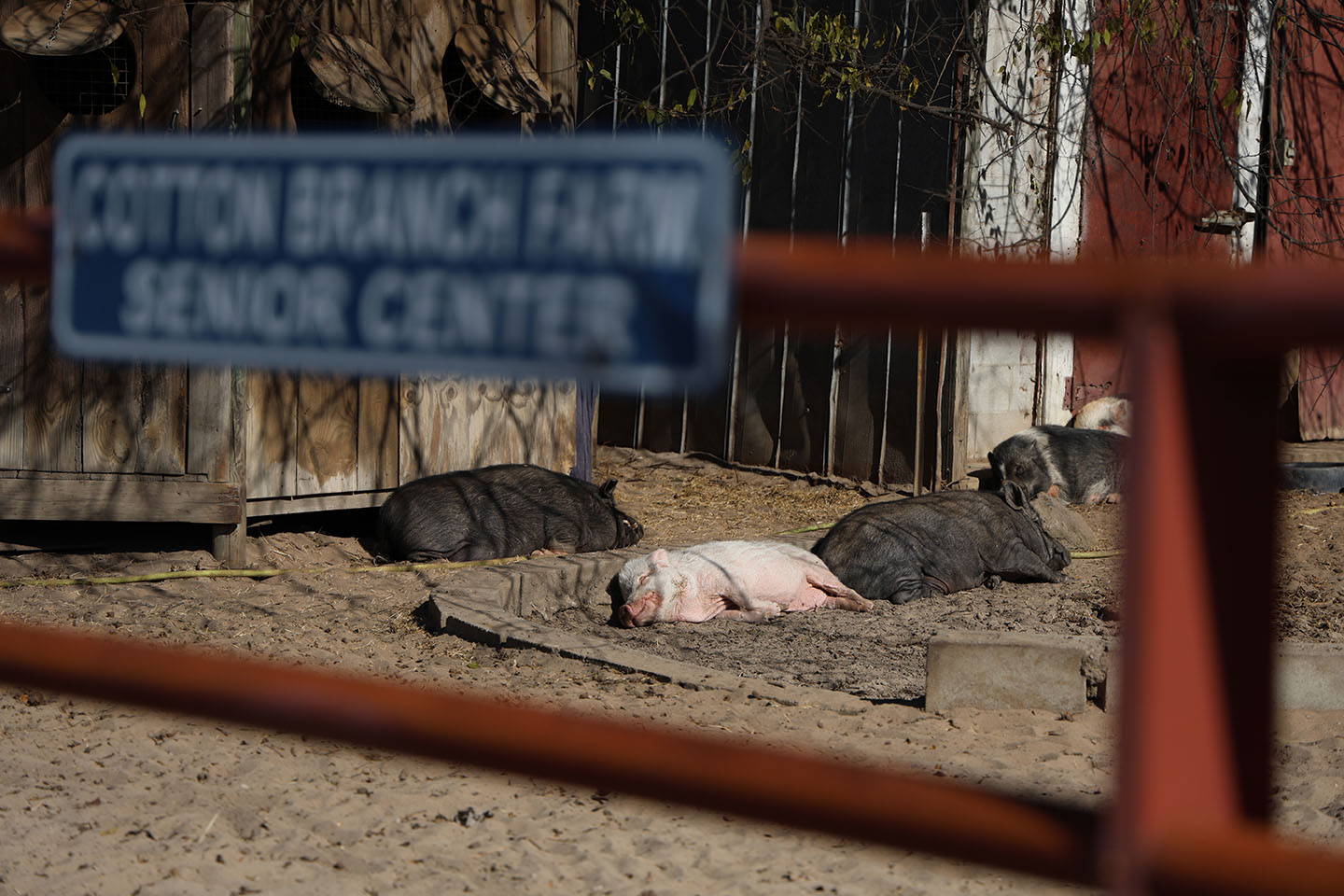
Senior pigs lounge in a group. The “Cotton Branch Farm Senior Center,” as this herd has been nicknamed, includes pigs in their later years of life. It is rare that the sanctuary loses a pig before the age of 20, Carpenter said. Photo by Sydney Lewis/Carolina Reporter