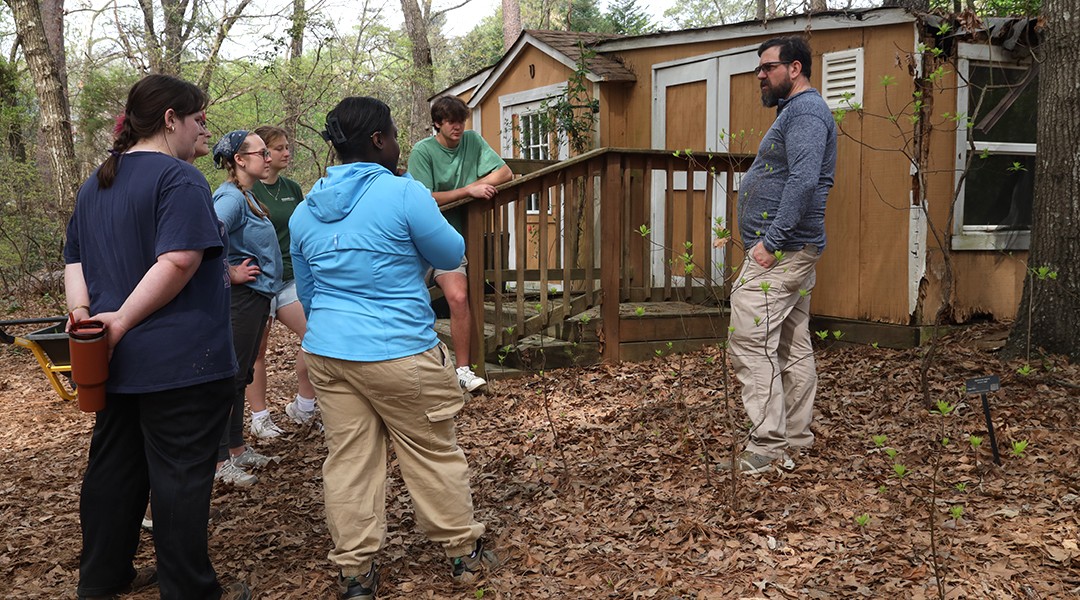
Trey Franklin, director of the W. Gordon Belser Arboretum, leads a group of University of South Carolina students from the Sustainable Carolina Leadership Program on a tour. Photo by Sencere Rice/The Carolina Reporter
South Carolina and the Southeastern United States were at the mercy of the elements about a year-and-a-half ago.
In late September 2024, Hurricane Helene blasted through the Southeastern coast and the Appalachian Mountains.
The inland hurricane caused billions of dollars in property damage. In South Carolina alone, 49 people died, 1.35 million homes lost power and more than 2,500 homes were damaged.
The storm also caused $194 million in timber and forest damage, according to the South Carolina Department of Natural Resources’ report on Helene.
That included trees – some of them large – in Columbia’s downtown Shandon neighborhood, where the University of South Carolina’s W. Gordon Belser Arboretum is located.
The 10-acre botanical garden and nature preserve had notable canopy damage as a result of Helene’s powerful gusts.
Trey Franklin, USC senior instructor and director of the arboretum since 2018, said the major damage faced at the preserve was related to tree fall.
“We lost somewhere on the order of 12 trees, some of which were fairly sizable,” he said.
Franklin said one of the most visually striking images was seeing a fallen hickory tree on top of the arboretum’s Outdoor Classroom, near the property’s Bloomwood Road entrance.
“It really was just a matter of losing a number of trees, but other than that, we came out really lucky,” Franklin said. “The fact that the tree that fell on the Outdoor Classroom didn’t completely demolish it is a testament to, one, the strength of the building itself and, two, just how lucky we were.”
The morning following the storm, Franklin assessed the damage at the preserve and put a call out for assistance with clearing the mess.
Among the volunteers were community members and their families, faculty from the USC Department of Biological Sciences and supporters of the arboretum’s mission. Franklin said a family from as far away as Camden came to help.
“I think we had on the order of 30 people come out that day,” Franklin said.
But the important thing was working to re-open the arboretum’s gates and continuing to push its mission of education and preservation.
Lynn Yenkey, a manager at the preserve since late 2020, said it was crucial that the arboretum stay open.
“It’s important from the perspective of recognizing South Carolina landscapes to help people appreciate it,” Yenkey said.
Bob Askins, another manager, said the success of the arboretum continues to help the environment, including the sequestration of carbon in the atmosphere.
While most of the damage caused by Helene has been cleared, Franklin said the cleanup from the powerful storm is still ongoing.
“It’s been a long process, and I appreciate all the help that we’ve got to do it,” Franklin said. “… But, for the most part, we’re just continuing on, meeting our mission.”
Findings
- Hurricane Helene caused extensive damage to South Carolina forests and trees, culminating in $194 million in losses.
- The University of South Carolina’s W. Gordon Belser Arboretum lost 12 trees as a result of the storm.
- The arboretum continues to address the damage 18 months later.
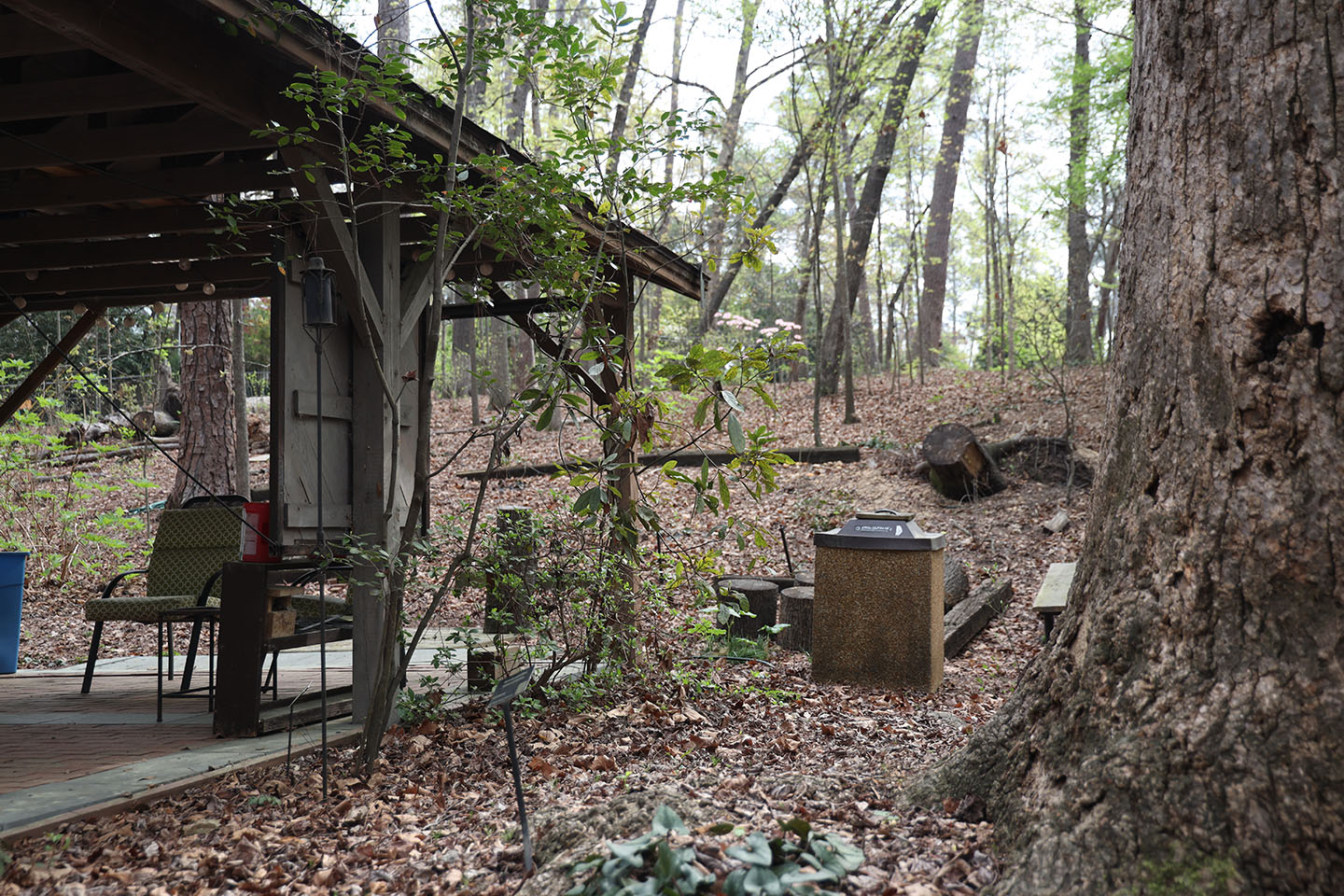
The 2024 inland storm knocked down 12 of the arboretum’s trees, including a large hickory, which fell on top of the Outdoor Classroom. Its stump remains visible behind the building. Photo by Sencere Rice/The Carolina Reporter
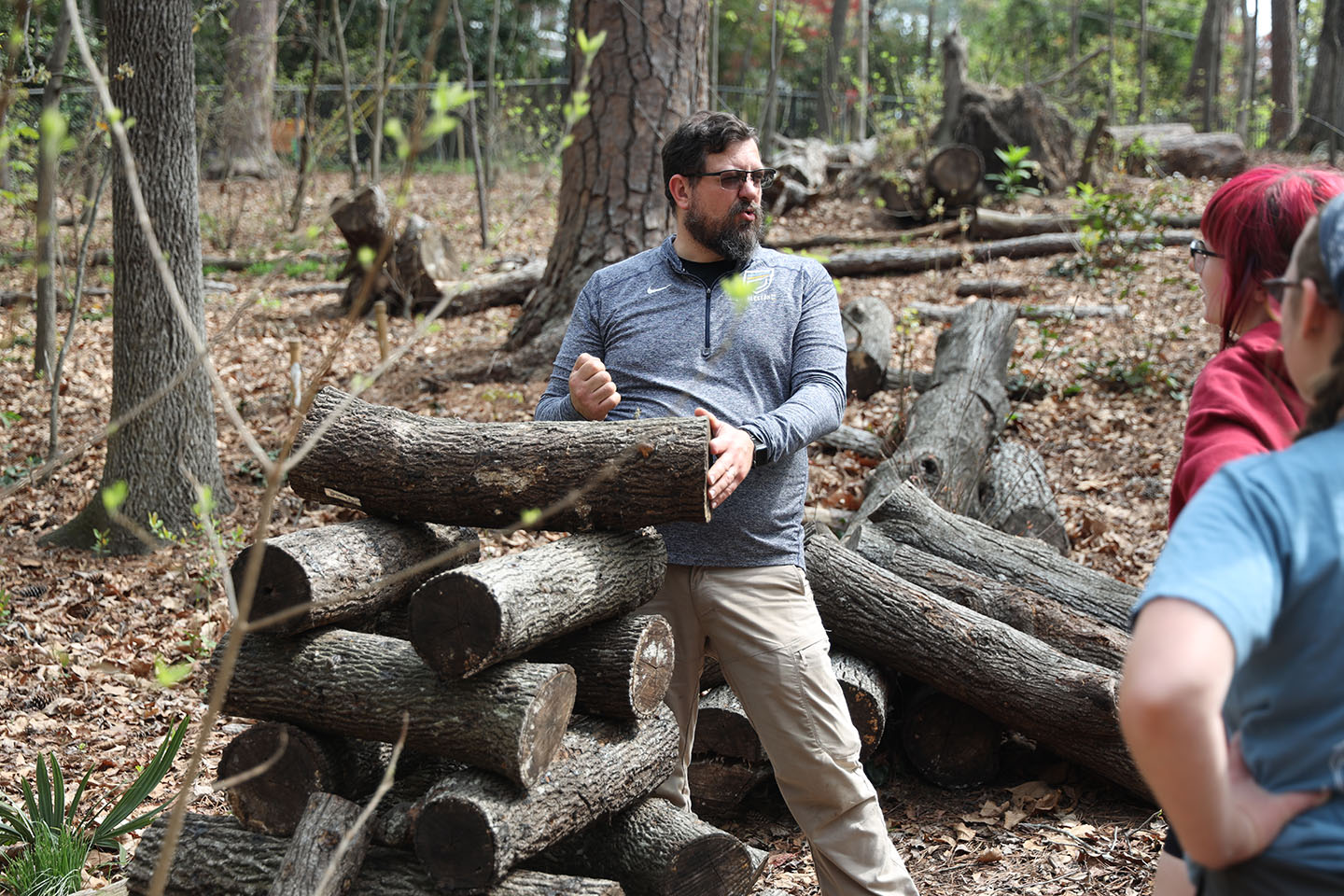
Franklin shows the group wood logs cut from trees that fell during the historic, 2024 inland hurricane. Photo by Sencere Rice/The Carolina Reporter
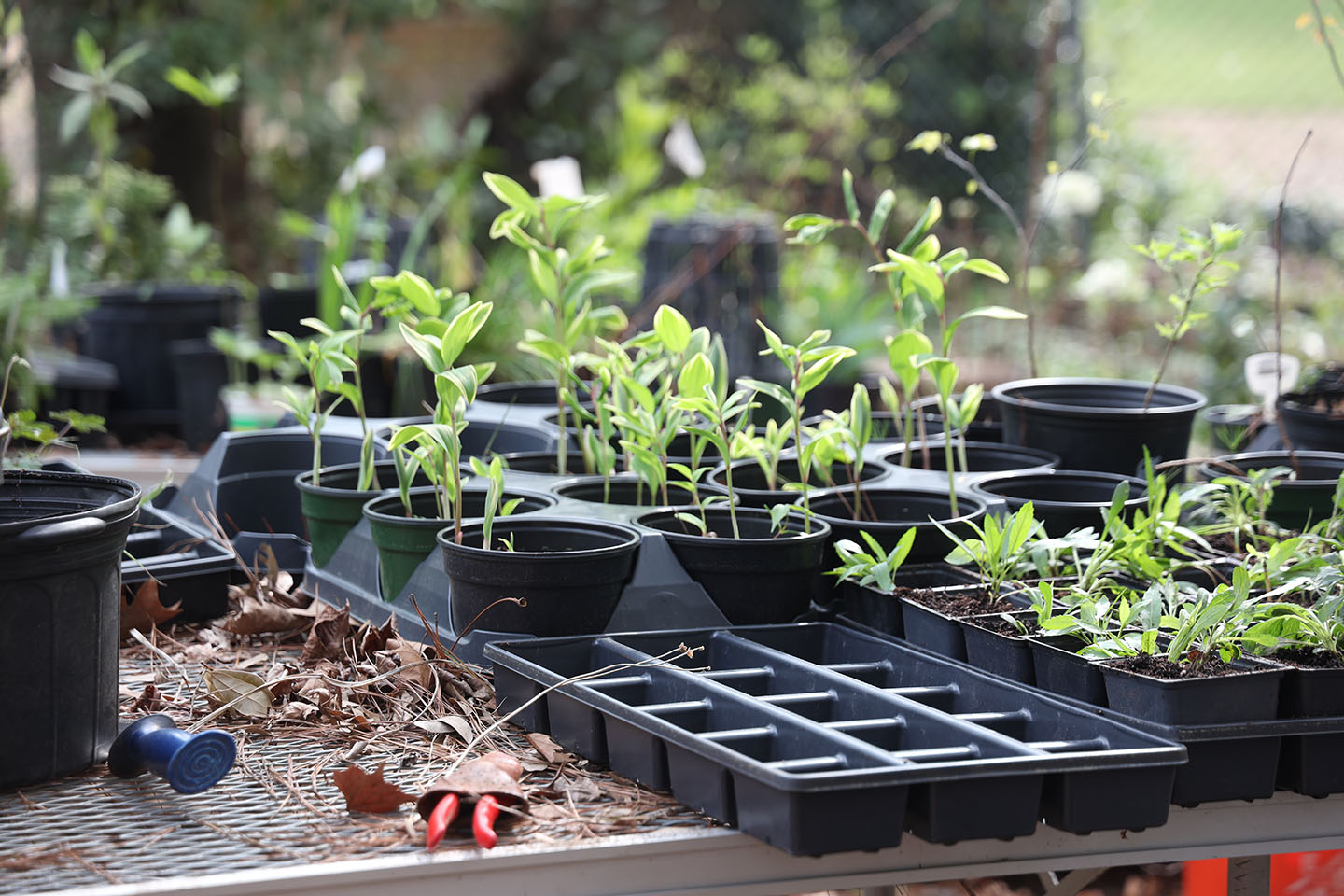
The arboretum grows a wide variety of plants and trees, including small pot plants. Photo by Sencere Rice/The Carolina Reporter
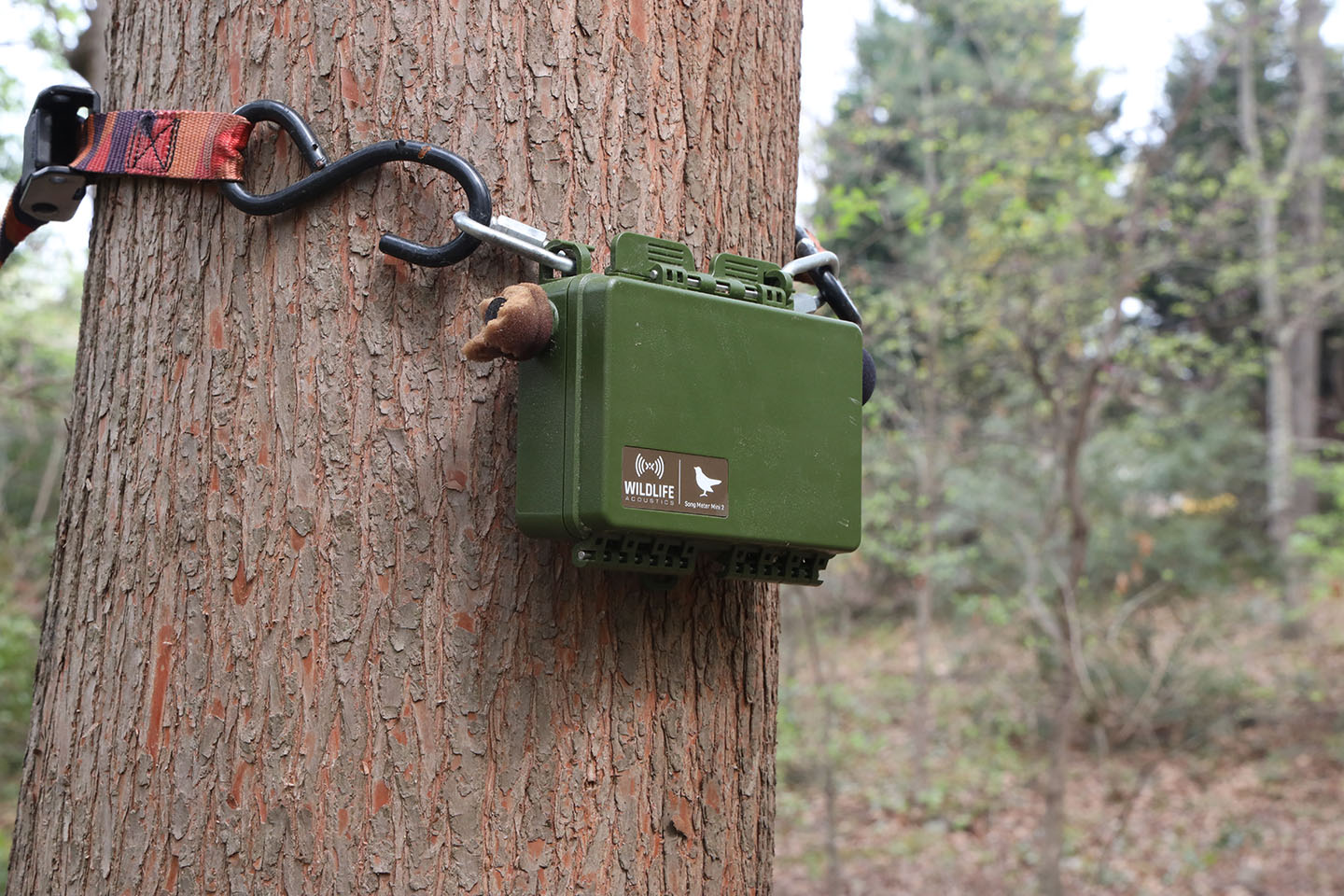
Acoustic recorders, which record the first five minutes of every hour, are used at the arboretum to log sounds of nature and bird calls. Employees use the recordings for research, for example, as a way to check which birds visit. Photo by Sencere Rice/The Carolina Reporter