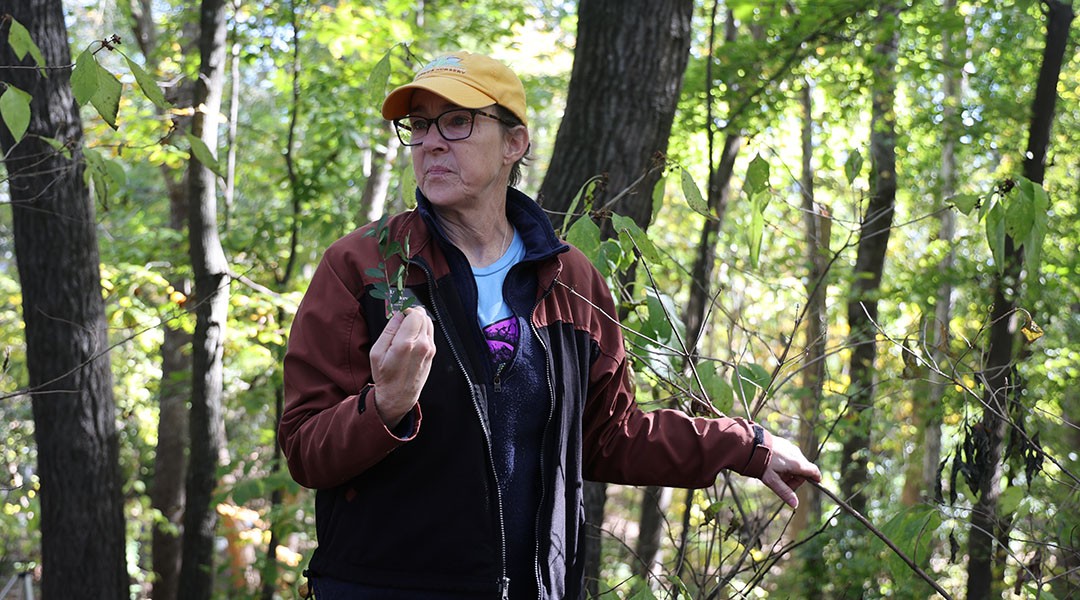
Lynn Yenkey, one of the managers of the W. Gordon Belser Arboretum, describes yaupon leaves during a tour. Photo by Sencere Rice/Carolina Reporter
University of South Carolina students have access to a relaxing, soothing space of nature they may not know exists.
The W. Gordon Belser Arboretum, affiliated with USC’s Department of Biological Sciences, is a 10-acre nature preserve located on the edge of the Shandon neighborhood in east Columbia.
The green community is about three miles from the heart of USC’s campus. It serves as a space to relax or volunteer for students, alumni, faculty or other visitors.
The preserve’s mission, listed on USC’s website, includes the desire to “maintain a wildlife preserve” within Columbia. It also serves to educate visitors on the preservation and nature of its diverse plants and wildlife.
Karen Campbell, USC University 101 instructor and president of the Lexington County Master Gardener Volunteers organization, initiated a tour with her group through the preserve recently to help promote community garden education.
“I had no idea that (the arboretum) even existed,” Campbell said. “But to think about the different types of plants and to promote the native plants, … it’s phenomenal to have that right here where people can actually see them in a natural environment instead of a very landscaped long space.”
The site also stresses the importance of preserving wildlife in the area.
Bob Askins, one of the managers at the arboretum, said one of the most important things about the arboretum’s existence is the safety it provides for local animals.
“(The arboretum) is kind of an oasis for people,” Askins said. “… But we see it every spring and fall, as well, as an oasis for migrating birds.”
Birds, foxes, raccoons and a number of caterpillars and insects are among the animals that call the arboretum home.
Lynn Yenkey is also a manager at the arboretum, starting there in late 2020 after volunteering for two years. She said the space also helps visitors’ mental health.
“Being in nature is an evidence-based practice to improve anyone’s mental well-being,” Yenkey said. “… It’s very important, especially for people who spend a lot of time inside, to be able to get out of that environment and recalibrate.”
Global climate change is continuing to affect temperatures, climates, weather and sea levels. But forest and tree restoration is a proven way to reduce the rate of global warming.
Science, an academic journal of the American Association for the Advancement of Science, concluded in a study that tree-growing is one of the most effective ways to mitigate climate change.
Areas like the arboretum help play a role in this mitigation.
USC, the city of Columbia, Benedict College and a number of local volunteers in August 2022 worked to release a heat map study of the city.
Surfaces like parking lots, buildings and pavement were identified as significant contributors to increased heat accumulation. The study also found that green spaces and preserved forests were buffers to the collection of heat.
Both Yenkey and Askins said a space like the arboretum “sequesters” excessive carbon in the atmosphere, which is a key contributor to global warming.
The arboretum is open for limited hours listed on USC’s website but encourages visitors and volunteers to help maintain the space.
“One of our goals is to help people see and experience a microcosm of South Carolina’s landscape and find the things here that delight them and understand there’s a lot more of that out in our state and in the region and the country to enjoy and also protect because we don’t have a lot of wild space left,” Yenkey said.
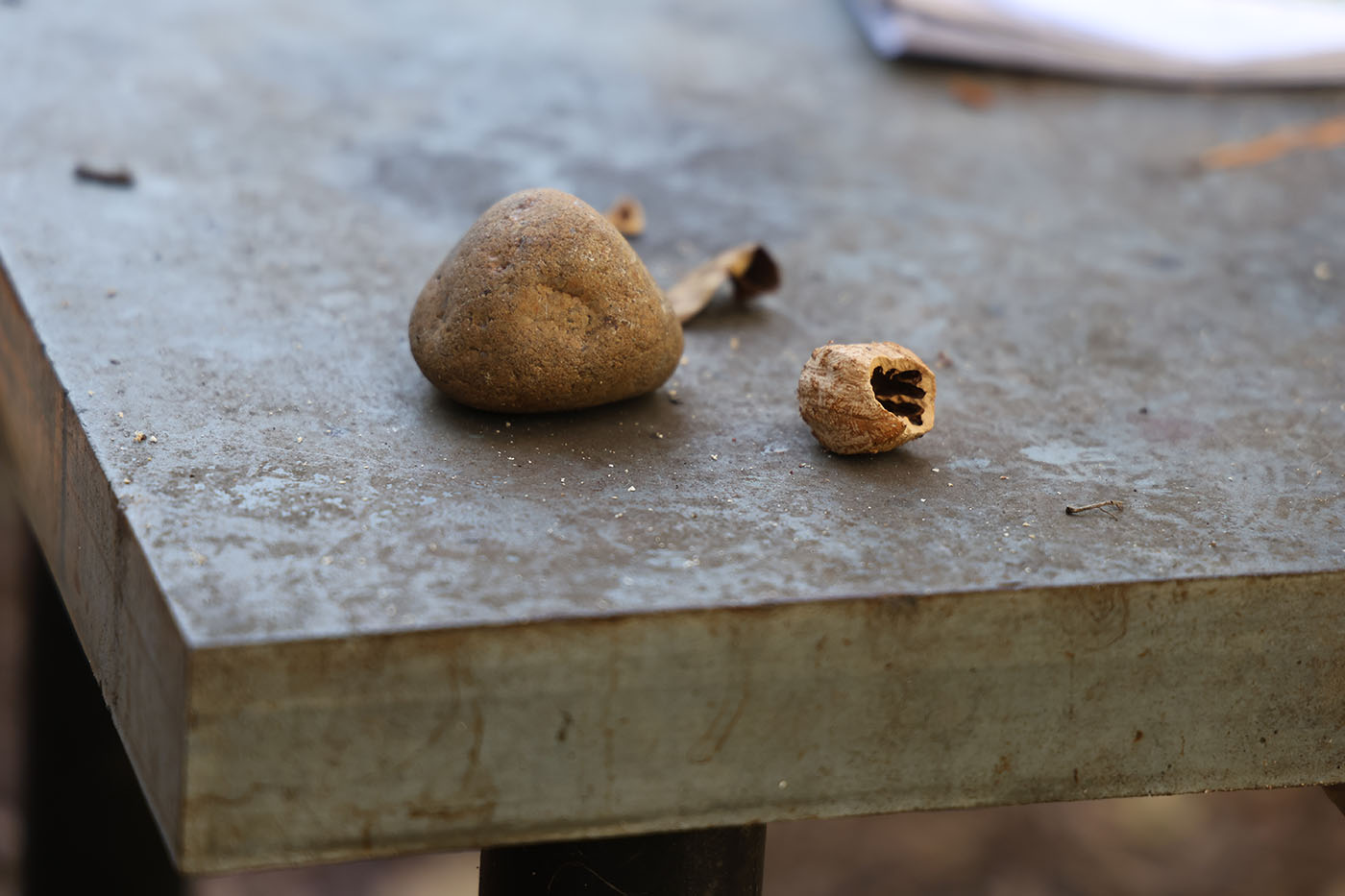
The arboretum has a variety of nuts and acorns on site, including the functionally extinct American chestnut. Photo by Sencere Rice/Carolina Reporter
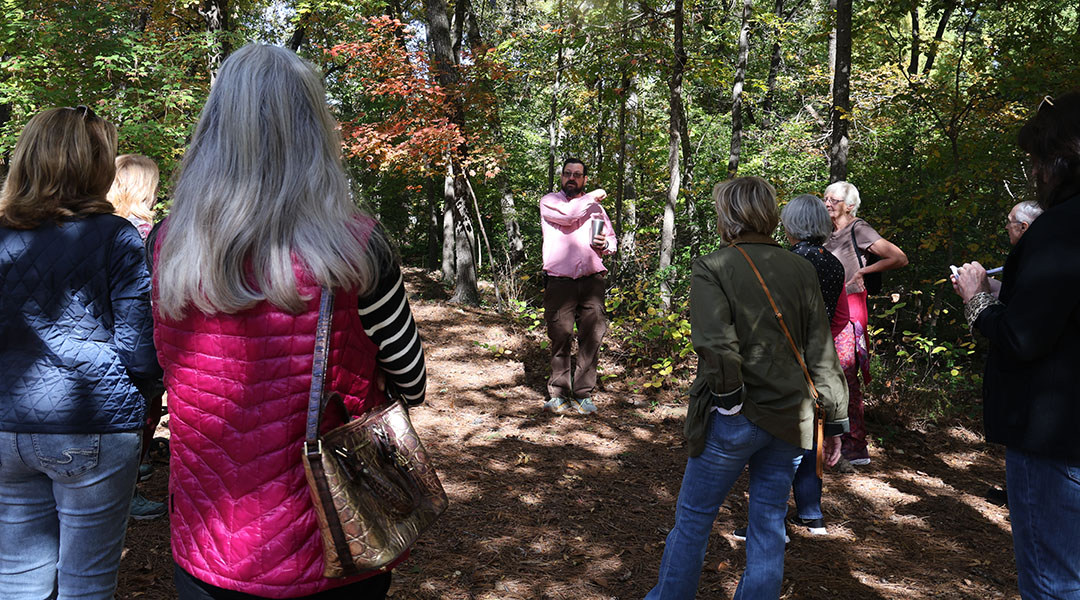
The director of the preserve, USC biological sciences professor Trey Franklin, leads members of the Lexington County Master Gardener Volunteers on a tour of the site Wednesday. Photo by Sencere Rice/Carolina Reporter
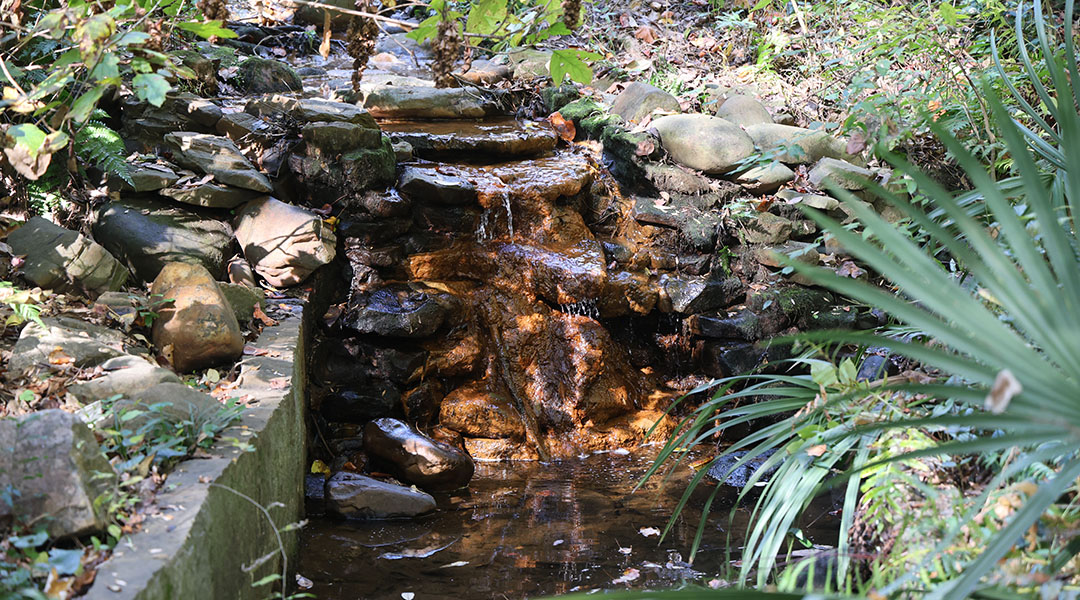
The preserve has a few streams and waterfalls that add detail and provides space for wildlife that call the arboretum home. Photo by Sencere Rice/Carolina Reporter
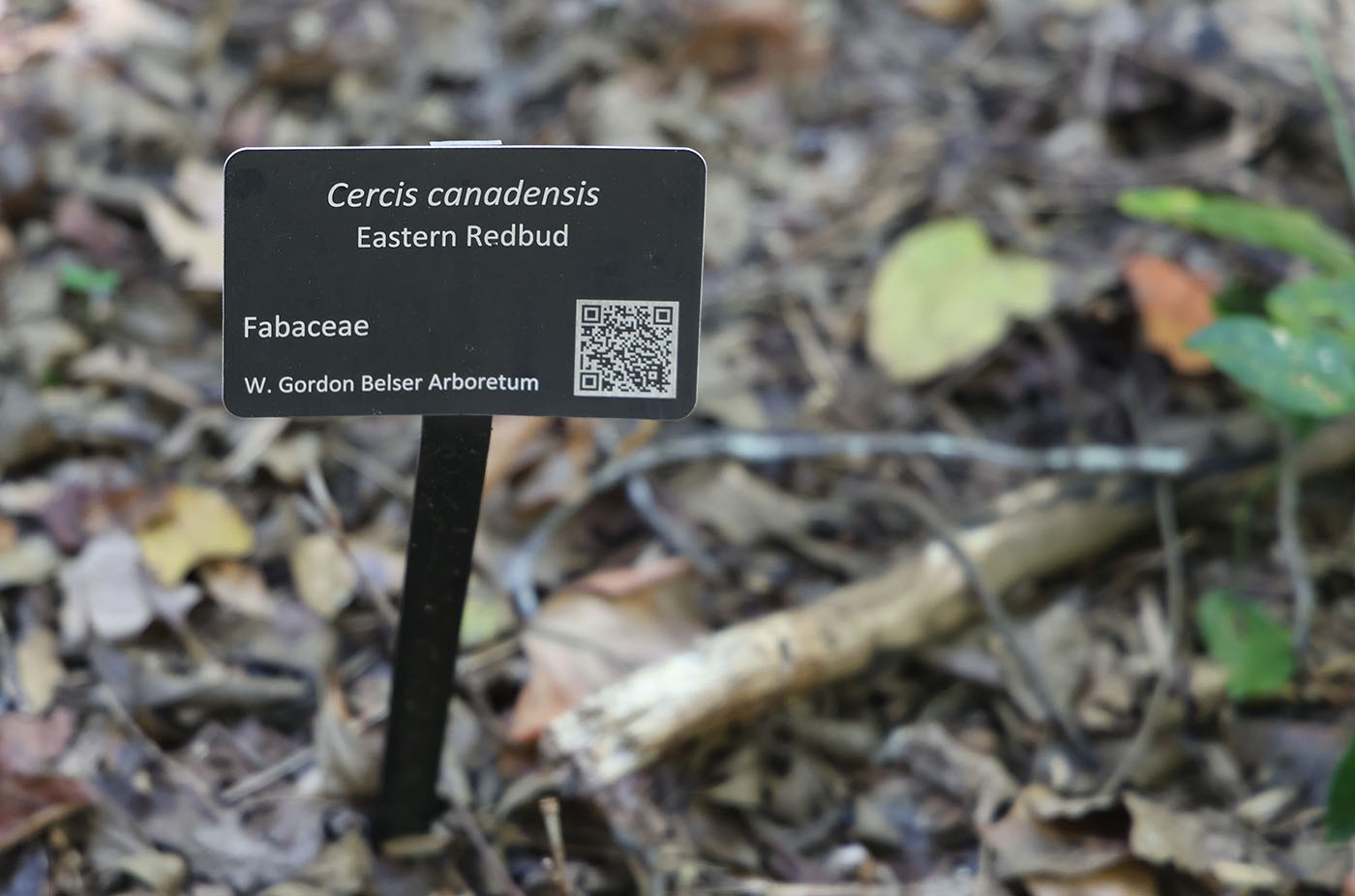
Many sites along the trail have signs that describe the trees and plants in the area, like the eastern redbud, native to Eastern North America. Photo by Sencere Rice/Carolina Reporter