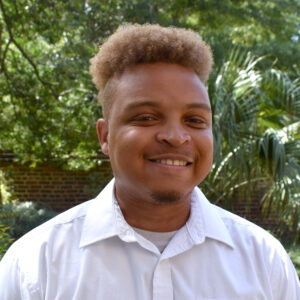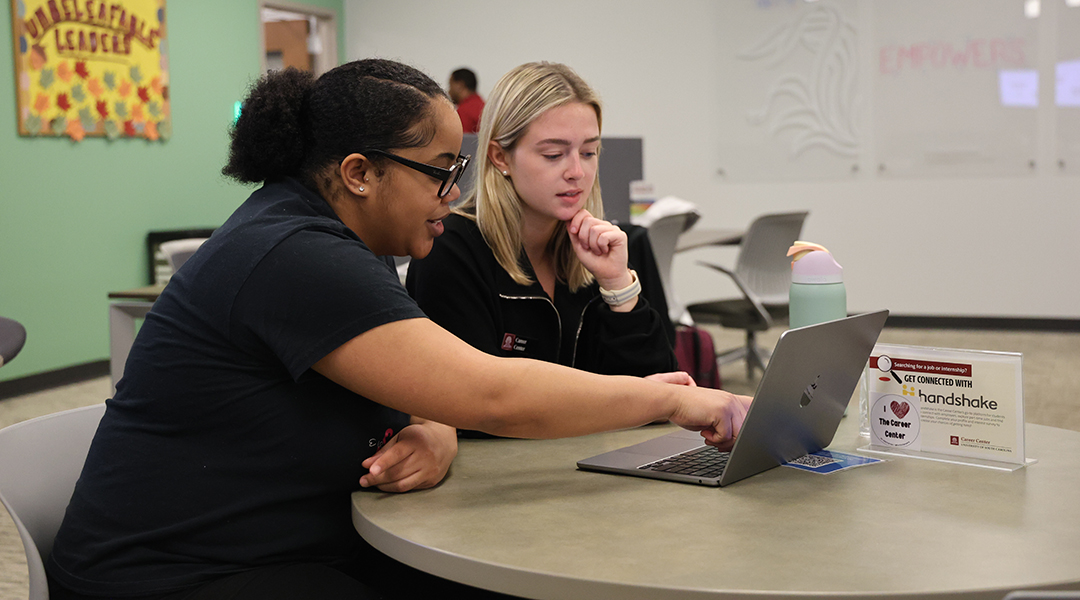
Senior Chayce Solomon, left, talks to University of South Carolina Career Center Peer Educator Maddyn Stout at the center. Photo by Sencere Rice/Carolina Reporter
An accomplishment nearly as rewarding as graduating from college is finding a dream job immediately after graduation.
But the task of finding a job after school has become increasingly difficult.
That’s when University of South Carolina students and alumni might turn to the USC Career Center to launch their careers.
The Career Center is housed in a central location, on the fifth floor of the campus’s Thomas Cooper Library.
The purpose of the center is to “educate” students and alumni, “build” the relationship between those entering the workforce and employers, and “connect” employers and candidates using online tools.
The center encourages students to use the counseling the office provides, said Helen Powers, a Career Center director.
The center also helps students and alumni explore desired and potential careers, search for hiring jobs, speak to experts and career coaches and write and edit resumes and cover letters.
USC hosts occasional career fairs and events where students can speak and interact with employers within their career directly.
The center is an opt-in service, which means students are not required to use Career Center resources, said Dr. Justin Lawhead, the center’s vice president for career readiness and post graduate success.
But administrators in the university’s many departments and colleges also play a role in helping students enter the workforce after school.
Dr. Rushondra James, for example, presents career outreach opportunities to students in the the College of Information and Communications. She is assistant dean of student services for CIC.
James said the large student body at USC is why the university offers a number of career and success resources.
“We definitely have to feed on our campus partners,” James said. “…We are all partners because we know that we can’t possibly attend to all the needs that our students have.”
James said the variety between the resources helps students better find the right professionals and faculty to help them.
Recent college graduates are finding it challenging to enter into the workforce despite receiving higher education.
The unemployment rate for recent college graduates has trended upward since mid-2023, according to a report by the Federal Reserve Bank of New York.
The rate was as high as 5.8% in April of this year, its highest since August 2021, according to the report. The highest reported, disregarding the spike caused by the COVID-19 pandemic, was 6% in August 2013.
Among the reasons for unemployment are job cuts, economic uncertainty and job displacement.
Oxford Economics, a global economic advisory firm, reported similar unemployment statistics as the Federal Reserve. But it ultimately cited AI adoption as a main reason for increasing unemployment.
But AI adoption rates are trending downward, according to the United States Census Bureau. Which means it is unlikely that artificial intelligence is affecting the unemployment rate in a noticeable fashion.
Experts say economic uncertainty is the leading factor.
Jaison Abel, a Federal Reserve economist, told NPR that companies are cautious in the face of unstable economic policy.
“What happens, basically, in a time when there’s uncertainty is that businesses tend to hold steady,” Abel said.

The Career Center’s interior is lined with couches, chairs, desks, classrooms and offices where visitors can speak to career coaches. Photo by Sencere Rice/Carolina Reporter

USC juniors Keegan Ringenberg, left, and Vidhya Yegireddi are two of many peer educators at the Career Center, focused on greeting and assisting visitors of the office. Photo by Sencere Rice/Carolina Reporter
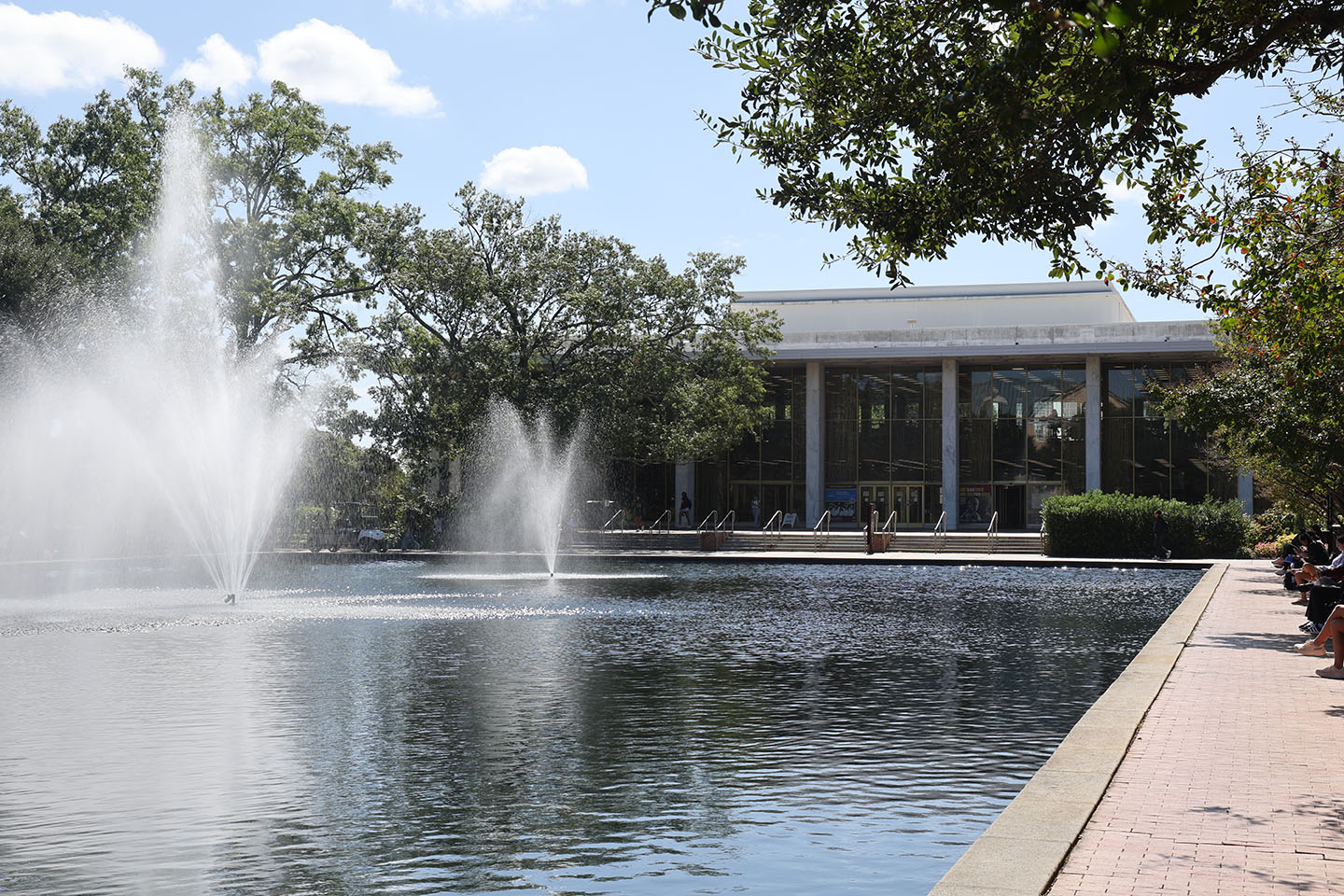
The USC Career Center has its main office on the fifth floor of the Thomas Cooper Library, with two satellite offices elsewhere on campus. Photo by Sencere Rice/Carolina Reporter