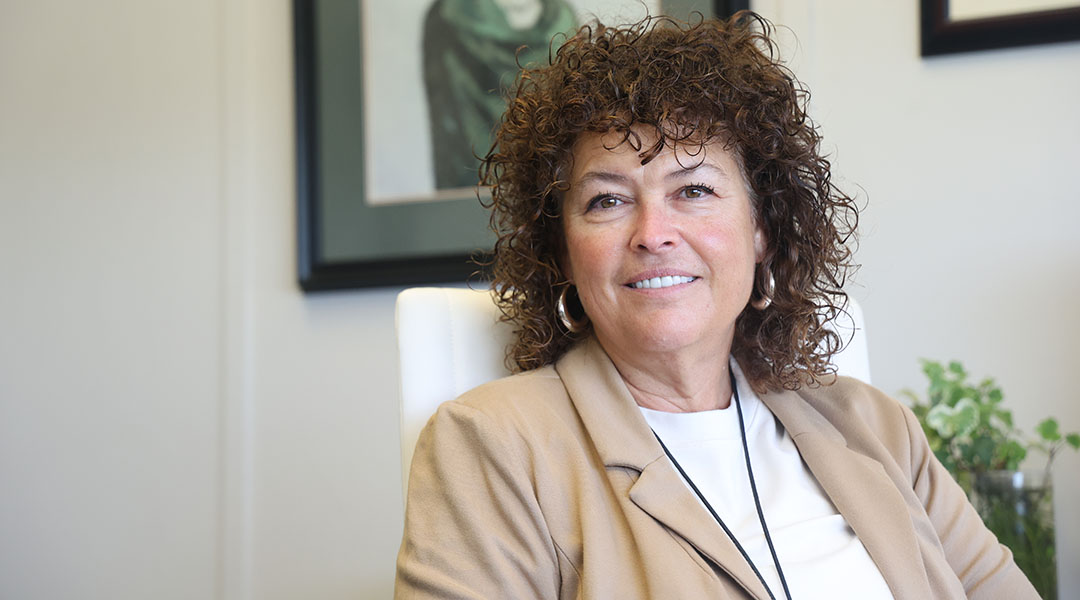
Dr. Jane Roberts, a psychologist, co-founded USC’s neurodevelopment research center in 2019 with an initial $4.8 million investment from the school. She views the Board of Trustees’ new designation of the center as a acknowledgement of its growth. “It really sort of represents the stamp of approval and of support at multiple levels of the university,” Roberts said. Photo by Sydney Lewis/Carolina Reporter
When USC first established the Carolina Autism and Neurodevelopment Research Center in 2019, only about 12 faculty were studying neurodevelopment at all.
Now – an additional 20 faculty members and $94 million in grants later – the University of South Carolina Board of Trustees has officially designated CAN as center that’s leading the way in neurodevelopmental research and community support.
“It says, ‘The work you’re doing is valuable, important to the university and to the state, and we want to recognize that,’” said Dr. Jane Roberts, a psychologist, researcher and founding director of CAN.
Roberts and her colleague Jeff Twiss founded CAN with an initial university investment of $4.8 million. They envisioned CAN as a robust, multidisciplinary effort to aid individuals and families with neurodevelopmental disorders – an effort that has made great strides in the years since.
Roberts hopes the university designation may increase community awareness and funding opportunities for CAN as it enters its next phase of growth.
“I got a lot of emails from people saying, ‘Congratulations on being designated,’” Roberts said. “You know, ‘I didn’t know what CAN was,’ or, ‘I’d love to meet with you and hear more,’ which is exciting.”
Roberts and her colleagues would love to expand CAN to new heights in coming years, outlining plans that include a multi-million dollar initiative to support neurodiverse students at USC and to build a clinic equipped for diagnosis and treatment.
“We’re not going to rest and say, ‘That was great, let’s keep doing the same.’ What we’re looking at is expanding in important ways,” Roberts said.
The new clinic would “provide comprehensive diagnostic and treatment services delivered by USC psychology, speech language pathology, special education, social work, physical therapy, and genetics professionals,” according to a 2025 case for support. The clinic would also include a bank for biospecimen collected during research.
CAN recently hired a clinical director, Dr. Lindsay McCary, to spearhead the expansion of services. McCary says CAN is designing additional neurodivergent support for existing student disability services.
“There are other models of programs where there might be support for executive functioning or social opportunities, or supports for interviews for students who are neurodiverse, that are above and beyond what’s already provided on campus,” she said.
Roberts says CAN is poised to grow and serve as a resource for the community at a time when autism research is drawing more attention than ever.
“We’re poised strongly to help contribute to what we know causes autism, and how … we support treatment,” Roberts said. “Do we know all the answers? ‘Oh my goodness, no.’ But we know pretty confidently a lot of information.”

Sam Blackwood, 9, smiles with his parents, Robin, left, and Weston Blackwood. He has fragile X syndrome, a genetic disorder affecting intellectual development. The Blackwood family met Roberts through CAN’s research registry. Photo courtesy of Carolina Autism and Neurodevelopment Research Center/Carolina Reporter
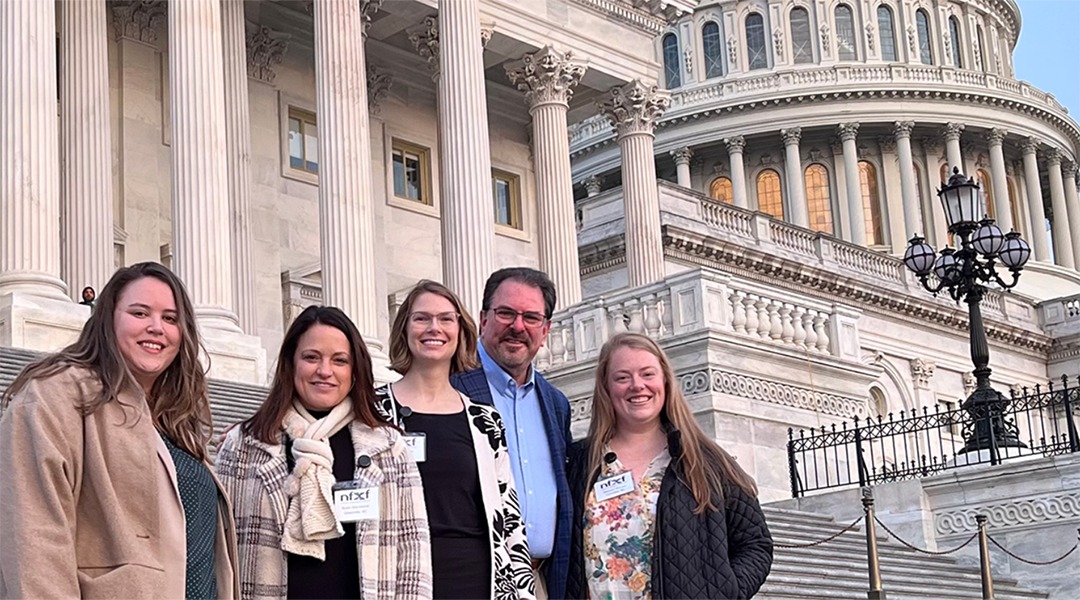
South Carolina representatives, including center researchers and other advocates, champion individuals with fragile X syndrome at Fragile X Advocacy Day in Washington, D.C., on Feb. 27, 2024. Laura Friedman, left, Robin Blackwood, Jessica Klusek, Roger Kuperman and Veronica McLean. Photo courtesy of Carolina Autism and Neurodevelopment Research Center/Carolina Reporter