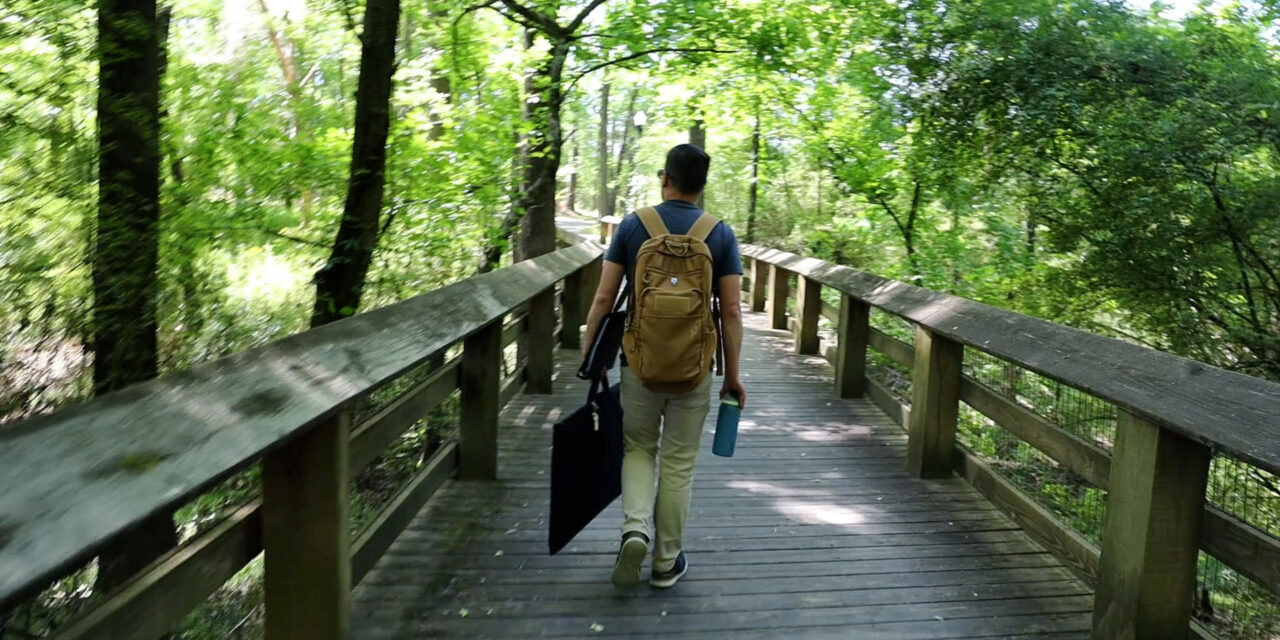
Aric Bruggeworth, a 12,000 Year History Park tour guide, walks through the park while giving a Fort Conagree-focused tour. Photo by Miles Shea/The Carolina Reporter
When a South Carolina student sits in history class, Cayce is far from the first city mentioned.
But Cayce Historical Museum Curator Andy Thomas said most locals just don’t realize how rich the legacy around them is.
“There’s a lot of people that say they didn’t even know Cayce had a museum,” Thomas said. “Most people assume that the history took place across the river.”
The Cayce Historical Museum sits next to City Hall. The museum, dedicated to local history, was originally founded in the 1980s after advocacy from local enthusiasts. It is housed in a re-creation of the Cayce House, a historic building that once served as a British outpost during the American Revolution and as a home for the Cayce family.
Thomas, who’s been passionate about history from a young age, said the museum covers a wide range of topics despite its limited size, from Native American history to World War II heroes and modern culture.
“We tell a lot of different stories, from 12,000 years ago all the way up to the 21st century,” Thomas said. “We’re a small museum, but we’ve got a lot of stories.”
Elise Partin, who has served as mayor of Cayce since 2008, said the local government is proud to fund and keep the museum going.
“It’s amazing to have that level of care and interest in telling the story,” Partin said. “Those stories would be lost if it weren’t for those residents that came together to create this building.”
What’s on show
The museum has two floors, and features items from the prehistoric, colonial, antebellum and civil war eras up to modern times, with a display of all the city’s mayors, including Partin.
Thomas said a personal favorite was donated by a friend, who happens to be a beekeeper.
“One of mine is a jar of honey that’s in our African American Legends of Cayce exhibit,” Thomas said. “Honey is a substance that lasts for a long, long time.”
In a Native American exhibit, a vast array of arrowheads and other stones sit mounted on the walls, along with displays of tools, weapons and grinding stones from the period. The room also features signposts from Colonial Granby, which featured blacksmiths and trading posts in contrast to today’s student apartments and pizzerias.
Another display shows off artifacts from the training of the Doolittle Raiders, a group of United States fighter pilots that famously carried out the nation’s first strike on Japan following the Pearl Harbor attacks, after beginning training at Lexington County’s Columbia Army Air Base, now the Columbia Metropolitan Airport.
Another room is dedicated to the tale of a local revolutionary war legend, Emily Geiger, a local woman who’s said to have eaten a message for Patriot Gen. Nathanael Greene upon her capture by loyalists and delivered it orally to the general after her release.
Thomas said the event doesn’t quite have the concrete historical backing most of the collection does but is just as deeply reflective of the area’s heritage.
“There’s no documentary evidence – we can’t find that,” Thomas said. “But we love the legend of Emily Geiger, kind of like George Washington chopping down the cherry tree. I think it’s a great legend, and we’re going to continue to tell folks about her.”
Along with its permanent collection, the museum also regularly hosts guest speakers, with USC Lancaster Director Stephen Criswell being the most recent. Staff also attends nearby living history events and host events on the grounds, such as archaeology workshops.
Elizabeth Lumsden, who works at the museum as the office and communications associate and holds a archaeology degree from Francis Marion University, said she enjoys occasionally hosting historical sewing programs. something that keeps those practices alive.
“That’s why I like to do the programs that I do,” Lumsden said. “It’s sort of ancestral, because it’s what we grew up doing.”
Beyond the museum
The museum isn’t the only center of history in Cayce.
The city government also supports and sponsors guided tours of the nearby 12,000 Year History Park, named in honor of the number of years Native Americans have occupied the area.
Tours center around various topics, such as Native American Lifeways, Colonial Fort Congaree and the 1865 Civil War clash at Congaree Creek. Florida native Aric Bruggeworth, who has worked for the National Park Service, is one of the guides.
Bruggeworth said he was quickly taken by the area’s history after he arrived.
“Florida absolutely has some amazing history, but I love that this area really promotes their history,” Bruggeworth said. “From the number of different museums, historical societies, battlefield parks, there’s so much to see here and I absolutely love it.”
Bruggeworth said he hopes to connect with the people who go on tours and inspire their own curiosity about history, whether they moved here like him or have been here their whole lives.
“I like getting to know people,” Bruggeworth said. “I think it just gives them a better appreciation of the history of our community here.”
Preservation through gamification
David Brinkman, a member of the museum’s commission board and a retired computer and electrical engineer, wasn’t always fascinated by history.
He disliked it in high school and avoided it in college.
“My dad actually suggested I take some history courses for electives, and I said, ‘No, I’m not interested,’” Brinkman said. “Many years later, when my dad hosted his World War II reunion group in Myrtle Beach, my wife and I helped out with that, and shortly after, he was diagnosed with cancer and passed away. We continued going to his reunions, and I ended up becoming the historian for the group.”
Since then, Brinkman’s backyard has been featured on a PBS show called History Detectives, he has been featured several times in The State newspaper and, because he was so excited about the Finding Granby project, he purchased a second home close to the Fort Congaree II dig site. Working alongside USC students and professors, Brinkman was a leader in the effort to uncover the site and was named South Carolina Archaeologist of the Year in 2017.
An unlikely but now highly passionate and successful historian, Brinkman said he wants to inspire others in the same way he was, especially younger generations.
Brinkman believes he found a way to do that by combining his two skillsets: creating a game.
“I found my old report for high school football and realized it was all D’s and F’s, and I remembered the teacher was an assistant high school football coach,” Brinkman said. “I was bored with it. That’s the problem I had, and I think a lot of students are like that. There were some teachers that knew how to tap into that. … Hopefully, this is something that could be used by those good teachers.”
In Brinkman’s game, players can walk around a recreation of the Cayce area that spans multiple eras, from Native American villages to 19th century settlements, finding points of interest and figures such as Geiger and George Washington to earn points.
Brinkman said he’s working on a new game that will showcase a digital recreation of 1864 Columbia. Brinkman said he hopes after playing the game, people are inspired not just to go outside and experience history themselves, but become motivated to protect and preserve it.
“One of the big volunteers for our digging was a sixth-grade history teacher, and he was the type that could really get kids interested – take them places and show them things, let them walk where the real history happened,” Brinkman said. “That’s what a lot of people like to do. They just like to walk where the history is. And one of the big things we’re trying to do with Cayce, is protect what’s left here.”
FINDINGS
- Cayce has a strong community of historians and history enthusiasts, working to promote and preserve what the area has to offer.
- Though the Cayce Historical Museum is small, it has a large collection that covers a wide span of local history and tradition.
- Innovative methods will be needed to preserve history and motivate the next generation to carry out that goal, whether through visits to historical sites or digital means.
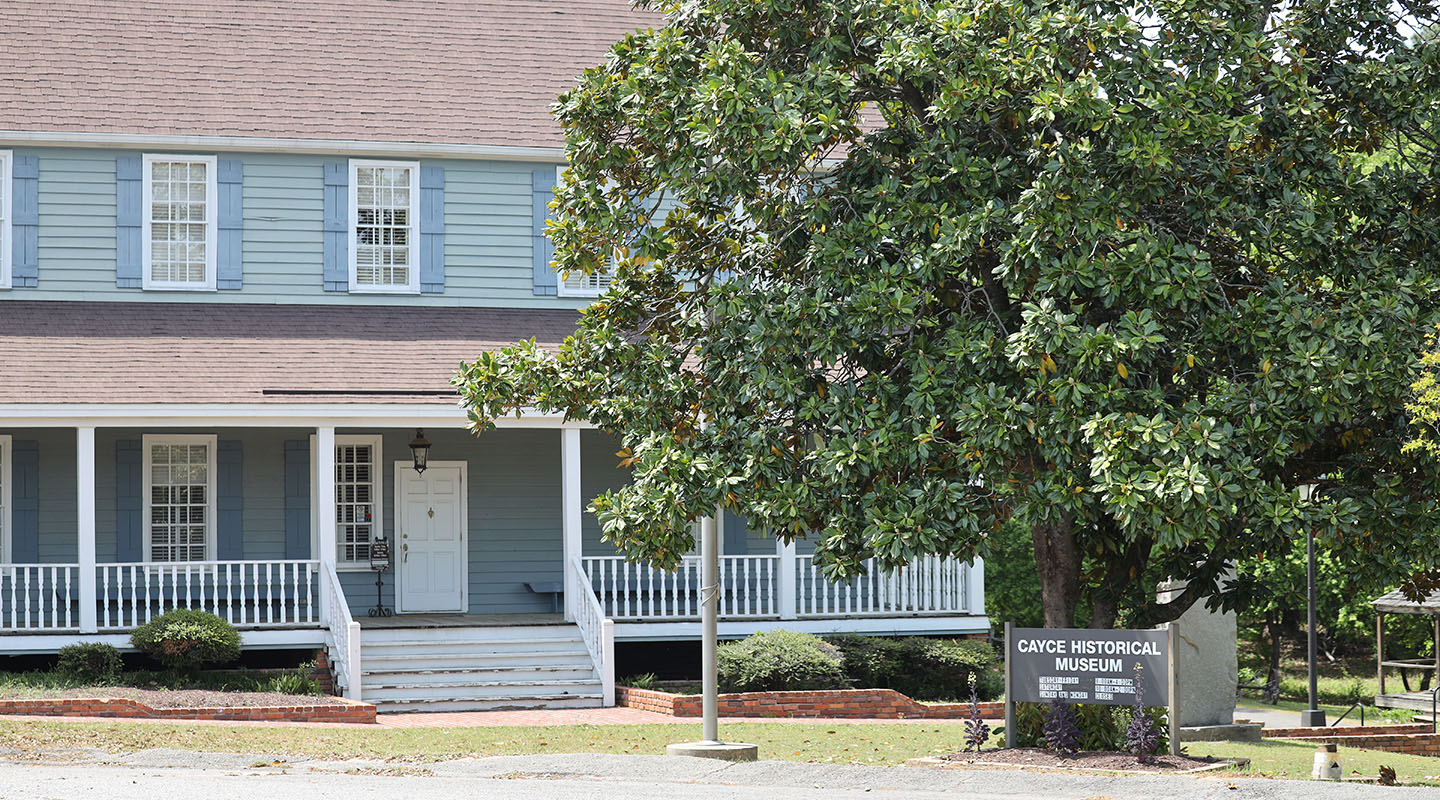
The Cayce Historical Museum sits next door to City Hall and housing a diverse collection of artifacts. Photo by Miles Shea/The Carolina Reporter
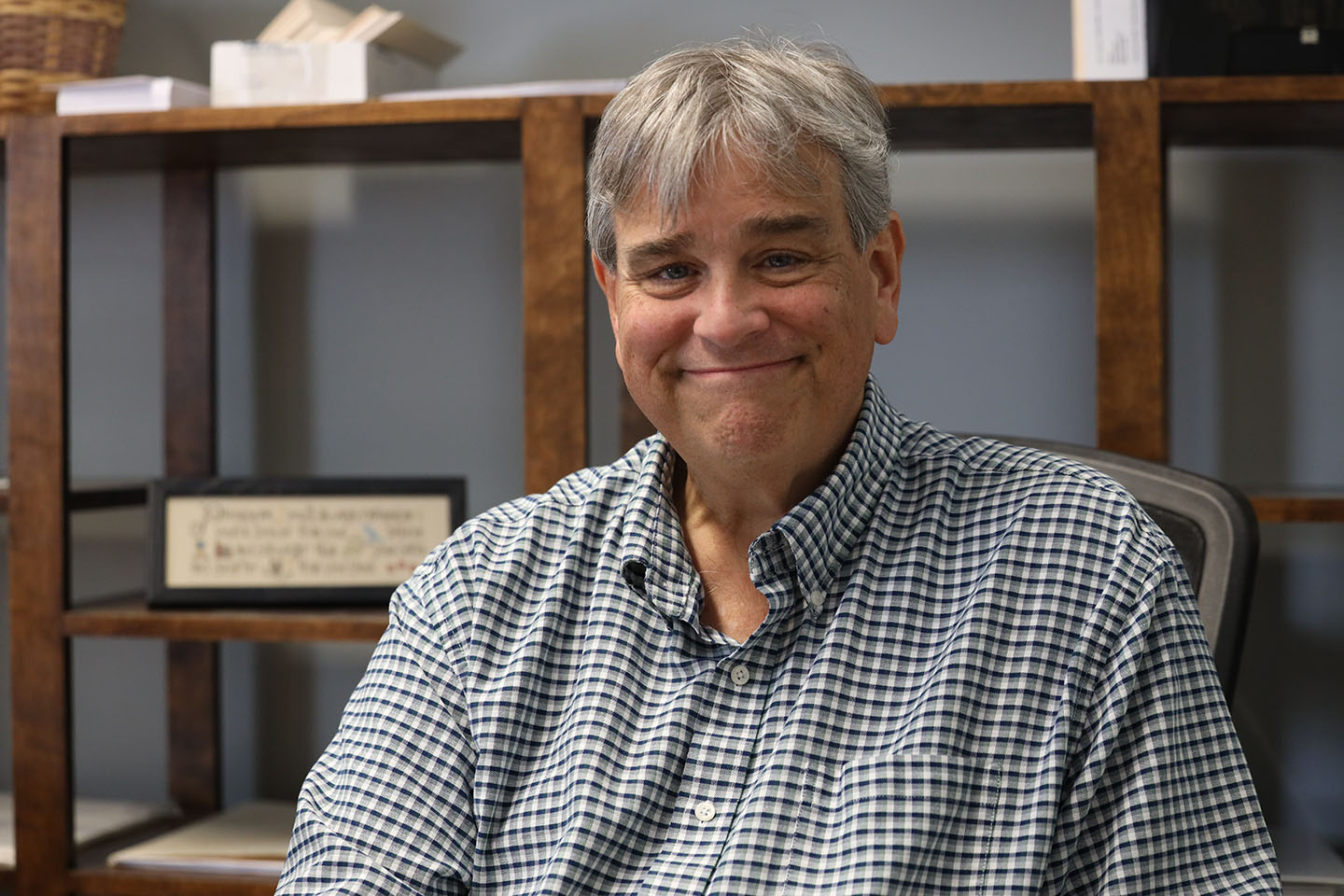
Andy Thomas, a former USC student advisor, serves as curator of the Cayce Historical Museum, overseeing the collection along with events and programming. Photo by Miles Shea/The Carolina Reporter
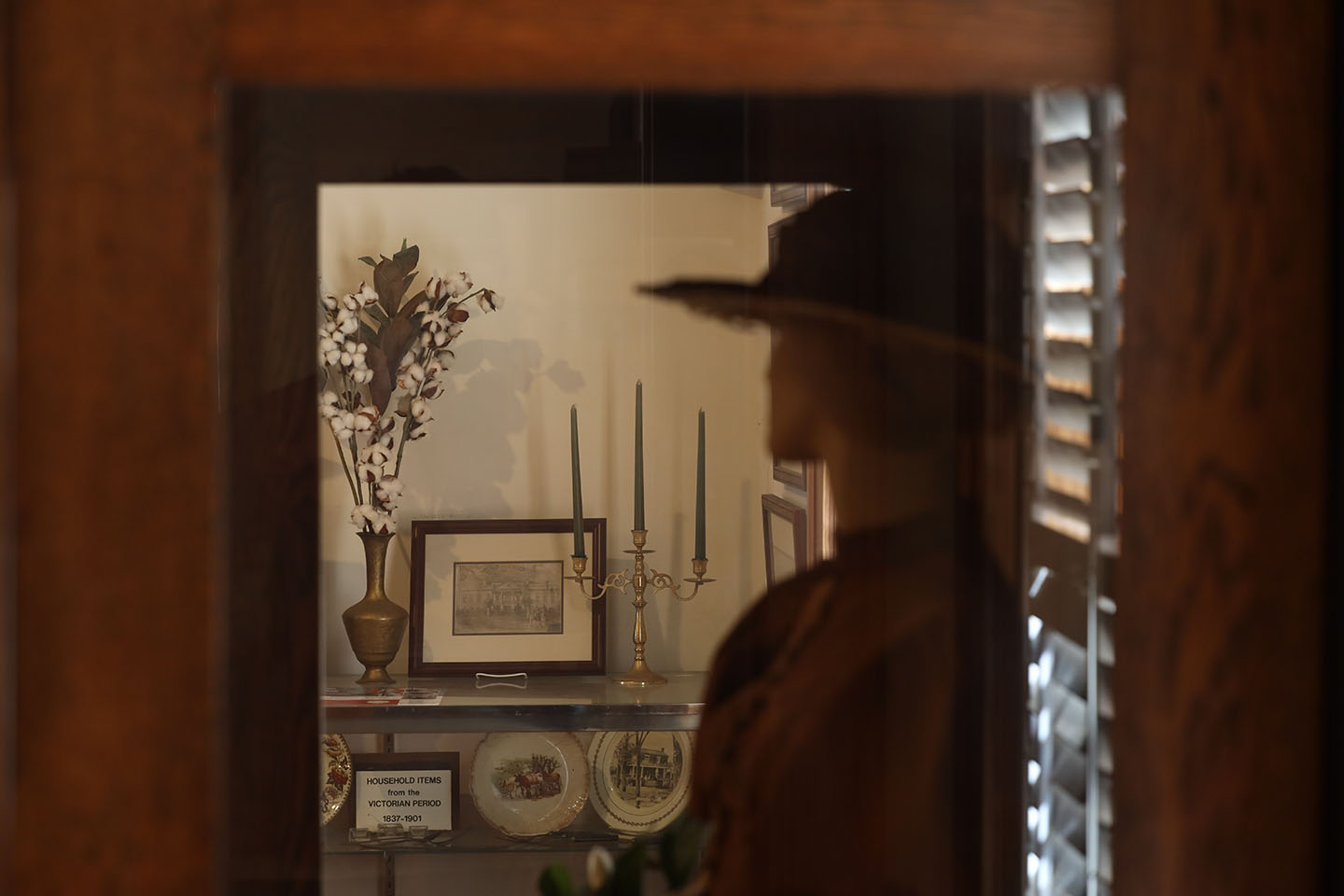
A display in the Cayce Historical Museum shows a woman dressed in 19th century clothing. Photo by Miles Shea/The Carolina Reporter
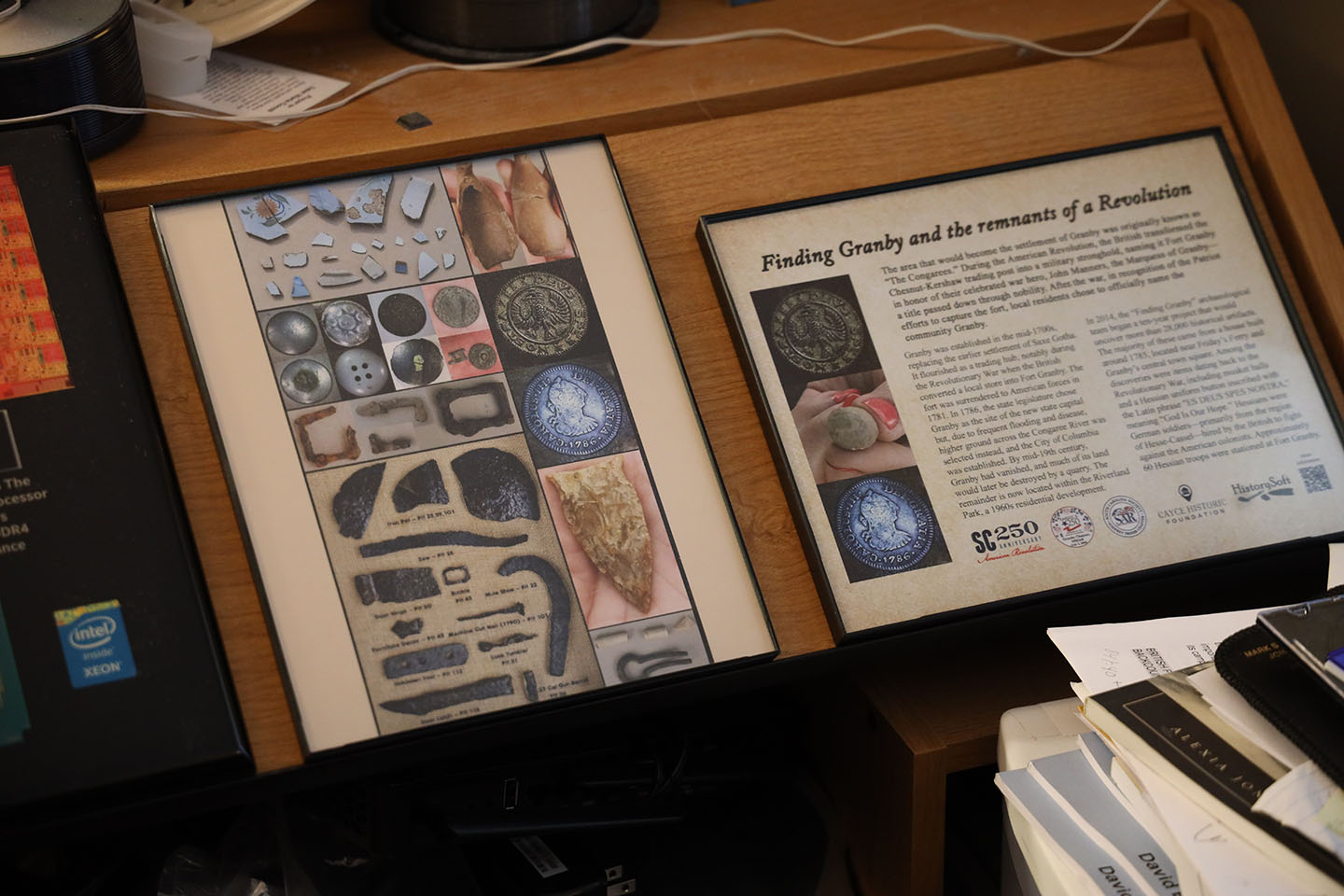
A display in the office of local historian and archaeologist David Brinkman shows artifacts found in the Finding Granby dig. Photo by Miles Shea/The Carolina Reporter