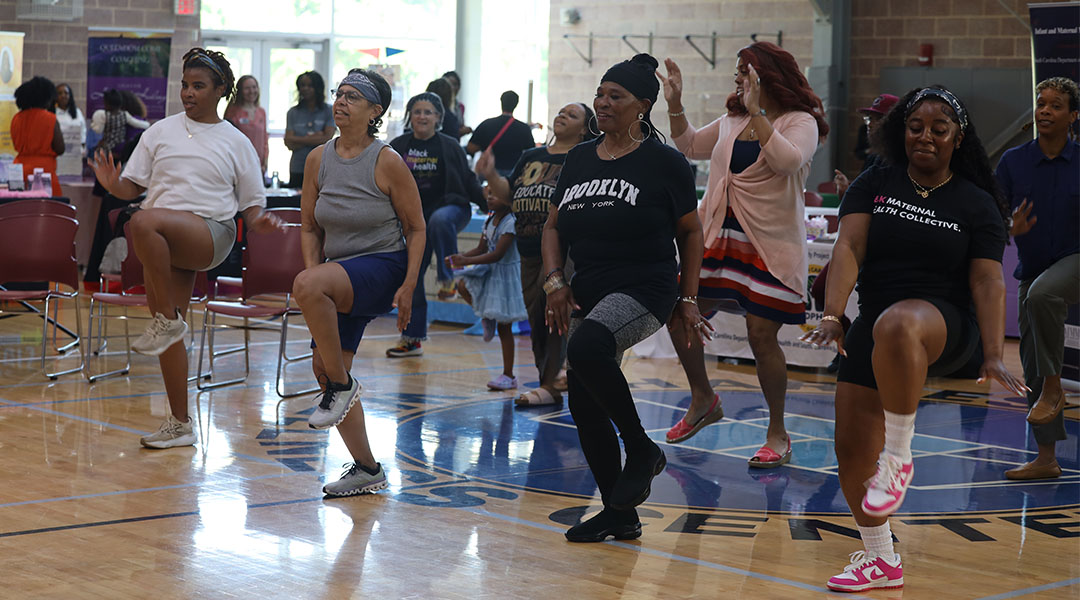
Attendees, vendors and organizers dance at the kickoff for Black Maternal Health Week on April 11. The BLK Maternal Health Collective has held the event for the past three years, aiming to highlight the need for racial equity in maternal health care. Photo by Sydney Lewis/The Carolina Reporter
Tia Tucker-Cain, a doula of 30 years, was once told by her doctor during labor that she had to give birth by 2 p.m. or receive a C-section.
Her first son was born at 1:58 pm.
“I couldn’t really enjoy that moment leading into his actual birth because I’m wondering what time it is because I don’t want a C-section,” said Tucker-Cain, who is Black. “You should never feel like that about a birth – that’s a beautiful, wonderful, sacred experience.”
Racial disparities in childbirth – whether that means a history of stories, possibly like Tucker-Cain’s, or increased maternal mortality – are notable in every state. The South Carolina maternal mortality rate nationally for Black women was more than twice that of their white counterparts in 2024, according to the CDC.
Black Mamas Matter Alliance hosted the first Black Maternal Health Week in 2018 “to build awareness, activism and community-building to amplify the voices, perspectives and lived experiences of Black Mamas and birthing people.” It since has taken place annually from April 11 to 17.
Executive Director of BLK Maternal Health Collective, Rho Sims, has hosted Columbia Black Maternal Health Week since 2023.
“We realized there is a disconnect of maternal health disparities education” among mothers and families, Sims said. “We believe that the work that we do has uplifted and brought that to light, especially in our state. We wanted to bring those same events to our community locally.”
The week’s events included a “Mom’s Marketplace” for vendors and education providers to interact with each other and attending families, breakout sessions by maternal health experts and a virtual session to learn more about the risks and rewards of home-birthing.
Rates for all races are elevated in South Carolina, but there are 59.6 pregnancy related deaths per 100,000 Black women compared to 25 per 100,000 white women, according to a 2026 brief released by the South Carolina Maternal Morbidity and Mortality Review Committee.
“In my life, I have not known a single Black woman who does not have ‘a story,’” saidLadrea Williams-Briggs, a public health professional and executive director of #NotUsSC. “That’s just the state of health care.”
#NotUsSC started in 2018 as a social media campaign for pre-eclampsia awareness and is now part of the BLK Maternal Health Collective, which aims to improve outcomes for Black mothers in South Carolina through coalition and education. Pre-eclampsia is a condition characterized by hypertension, which can increase the risk of seizures during labor.
Williams-Briggs experienced her own maternal health emergency in 2022. Unaware that she had pre-eclampsia, she developed a rare disease called HELLP syndrome, affecting the blood and liver function.
Williams-Briggs’ discomfort was originally dismissed by hospital staff until she repeatedly told them something felt wrong.
“I was told, ‘Oh, you’re in labor, there’s nothing I can do for you,’” she said. “It’s traumatic. I still get anxious talking to doctors.”
Her sister, who has sickle cell anemia, was told to be quiet when she repeatedly reported severe chest pain during labor. Another friend was told by hospital staff to quiet down during labor because her sounds were disturbing other patients.
Her experience and those of her loved ones inspired her to transform #NotUsSC into a dedicated maternal health education organization. Williams-Briggs has found that disseminating information through culturally trusted institutions such as the church, community health centers, barber shops and beauty supply stores is the most effective in reaching Black families.
“We took that hashtag and we’ve evolved to create and distribute culturally responsive maternal health education materials for Black women, their support networks and the community,” she said. “We particularly focus on non-traditional spaces, … places that Black folks frequent that they already trust.”
While organizations such as #NotUsSC bridge the education gap, systemic change in healthcare practices in the United States would improve outcomes significantly, Williams-Briggs said.
“That conversation goes a lot farther than just not being listened to,” she said. “People don’t understand that that is a result of a broken system. It’s not just that provider. It’s an entire system.”
In the absence of a system that meets their needs, many Black women are turning to doulas and midwives to provide them with more autonomous, holistic maternal care.
The United States has the highest maternal mortality ratio of any comparably developed nation, and pregnancy-related complications cost the nation tens of billions of dollars each year. Peer countries generally approach birth from a more holistic perspective, leaning on midwife deliveries for mothers without high-risk pregnancies. According to a study conducted at the University of South Carolina, rates of Black mothers delivering via planned homebirth were in double digits in 2018 but rose by 285% between 2018 and 2022.
After her doctor’s impatience despite the healthy pace of her labor, Tucker-Cain decided to focus more on autonomy and advocacy in her doula work. Xola Serene Doula Services, her business, automatically provides at least six hours of education on childbirth and advocacy to aid mothers and their partners in the journey.
“We want to make sure our families are making informed decisions, because they have to live with those decisions,” Tucker-Cain said.
Kathryn Luchok, the maternal health professor who directed USC’s study on homebirthing, said that for maternal outcomes to change, preventative and post-partum care must be further prioritized.
While working with the Healthy Start initiative across South Carolina – whose participants are more than 80% Black, according to Luchok – she saw the gap between white and Black maternal outcomes narrow. Healthy Start provides qualifying mothers and their support networks with educational, financial and medical assistance from pregnancy to up to two years post-partum.
“We know what we need to do,” Luchok said. “We don’t spend our money that way. It isn’t that we don’t have the money. We spend our money mostly on tertiary care, dealing with the crises and trying to fix them at the end.”
Post-partum care is yet another piece of the puzzle. Katherine Brown, a family nurse practitioner, recently started ResilientShe Women’s Care, a service that provides post-partum home visits. She aims to reduce strain on mothers in the post-partum period, when they might dismiss important warning signs as exhaustion.
“Most women only see their OBGYN at their six-week visit, and there’s some women who can’t … go there for that visit because they don’t have the transportation, they don’t have the support,” Brown said. “A lot of times, that is our Black moms who aren’t able to make it to their appointments. And also, a lot of our Black women suffer from postpartum health issues that they might not even attribute to being a health issue.”
Brown attended Columbia Black Maternal Health week in hopes of offering support to mothers who need it.
“It’s an issue that’s very, very dear to my heart,” Brown said. “I felt like it was important for me to come and support those that need help.”
FINDINGS
-
Rates for all races are elevated in South Carolina, but there are 59.6 pregnancy-related deaths per 100,000 Black women compared to 25 per 100,000 white women, according to a 2026 brief released by the South Carolina Maternal Morbidity and Mortality Review Committee.
-
Rates of Black mothers delivering via planned home births were in double digits in 2018 but rose by 285% between 2018 and 2022, according to a study conducted at the University of South Carolina,
-
The BLK Maternal Health Collective brought in more than 200 attendees to its third annual Columbia Black Maternal Health Week kickoff, connecting advocates and vendors with families.
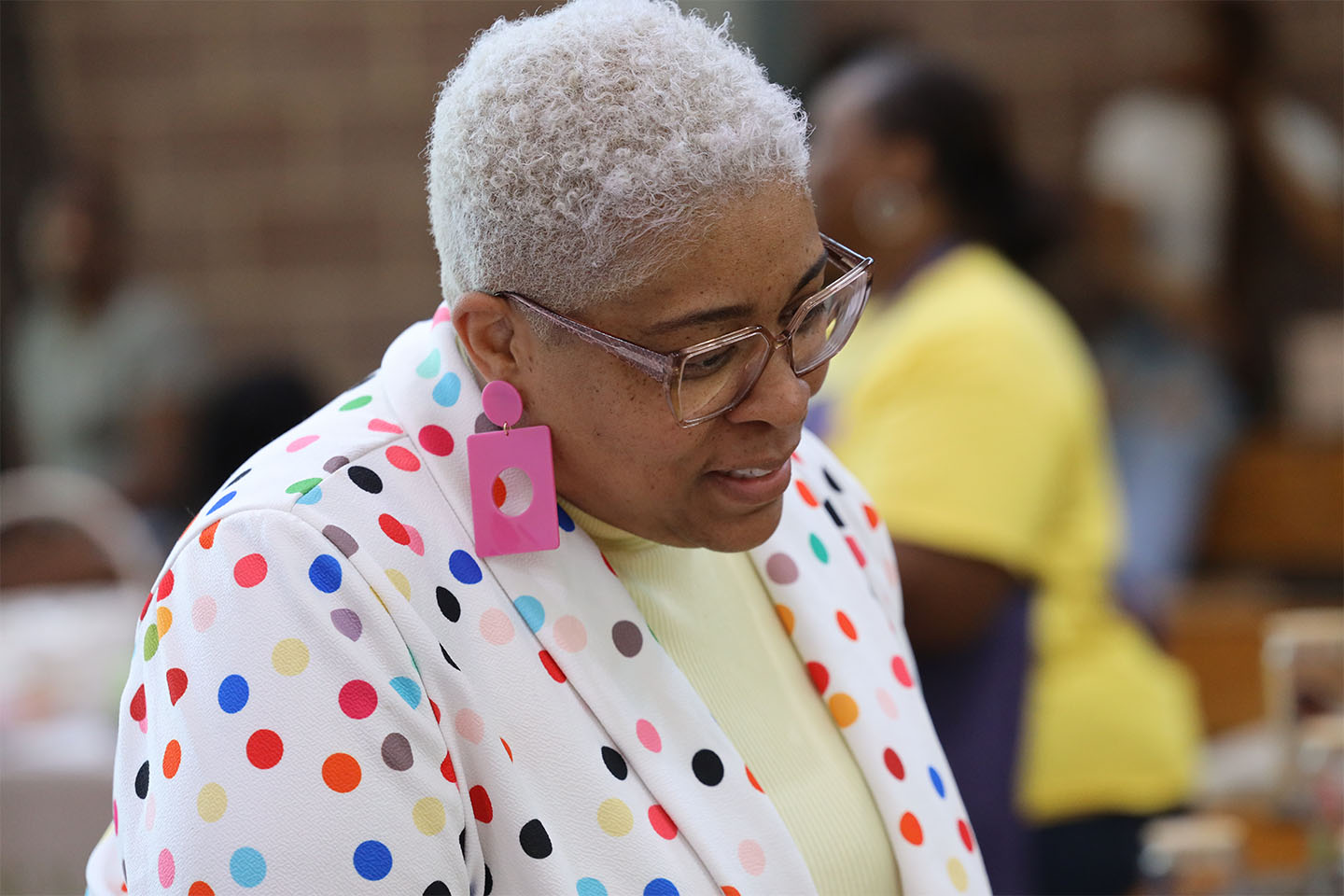
Tia Tucker-Cain, doula and founder of Xola Serene Doula Services, speaks with a fellow vendor. Photo by Sydney Lewis/The Carolina Reporter
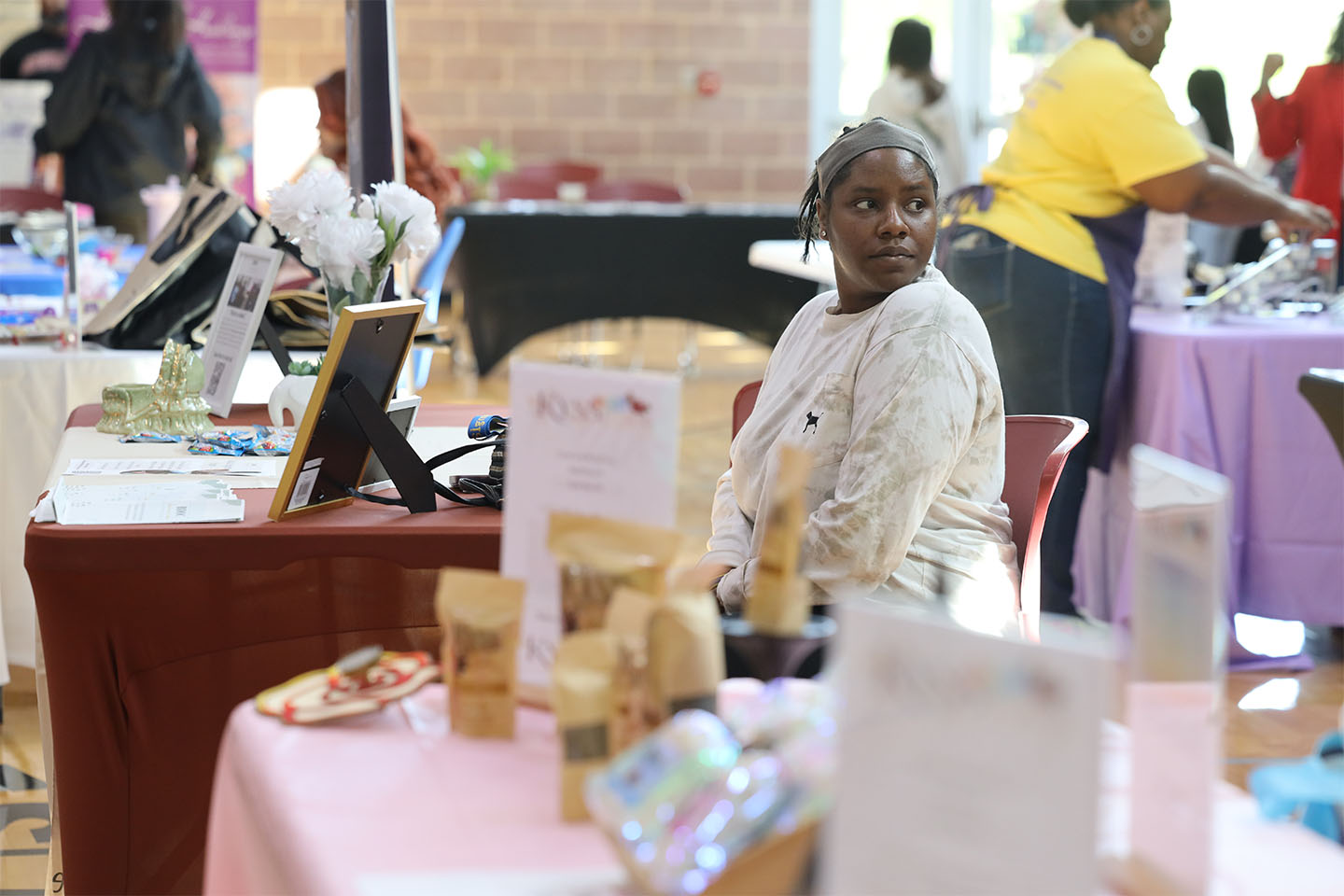
Paige Demery, a doula with the Black Doulas of Columbia Collective, observes displays at “Mom’s Marketplace,” an event designed to gather Black maternal health resources and advocates in one space. Photo by Sydney Lewis/The Carolina Reporter
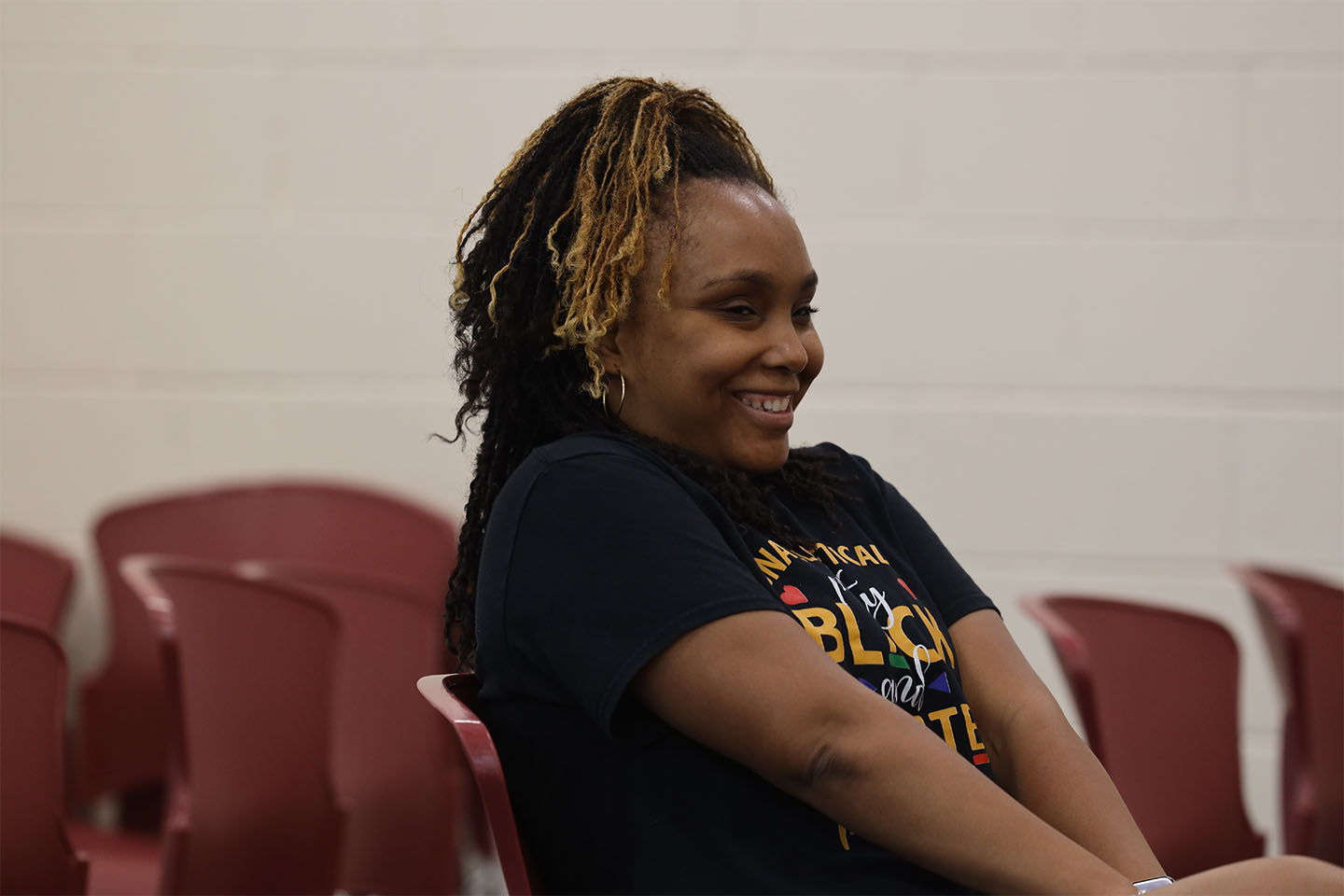
Katherine Brown, a family nurse practitioner and founder of ResilentShe Women’s Care, attends a breakout session about postpartum wellness navigation. “A lot of women think something has to be wrong before they go seek help, but the key to recovery is consistent care,” Brown said. Photo by Sydney Lewis/The Carolina Reporter
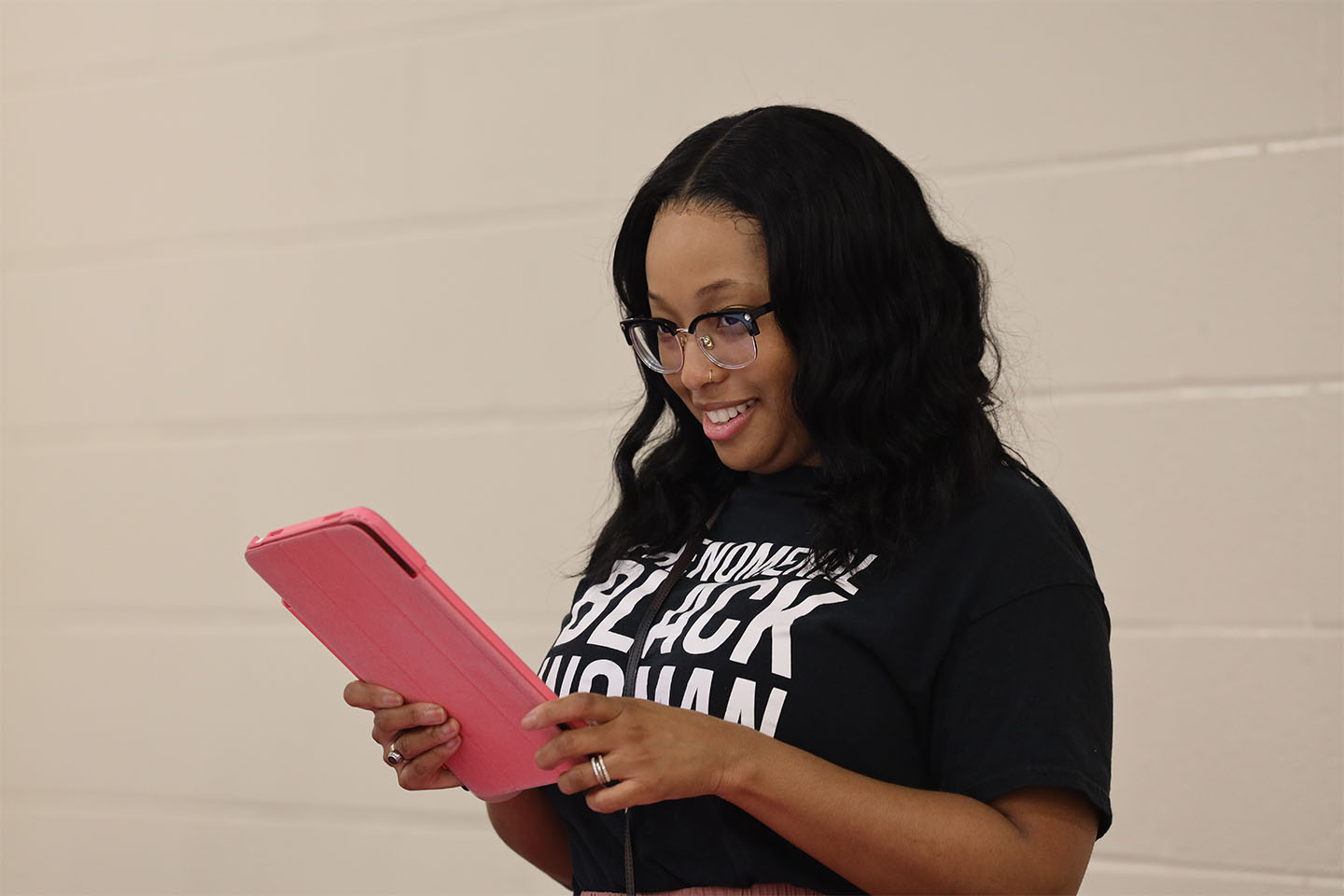
Ladrea Williams-Briggs, executive director of public health initiative #NotUsSC, leads a breakout session on recognizing warning signs of maternal health complications and learning about self-advocacy as a Black woman in healthcare settings. Photo by Sydney Lewis/The Carolina Reporter

April Frederick, a registered nurse, talks to attendees at Columbia’s Black Maternal Health Week kickoff about Attainable Life, her nurse coaching service that blends medical knowledge and holistic care. Photo by Sydney Lewis/The Carolina Reporter