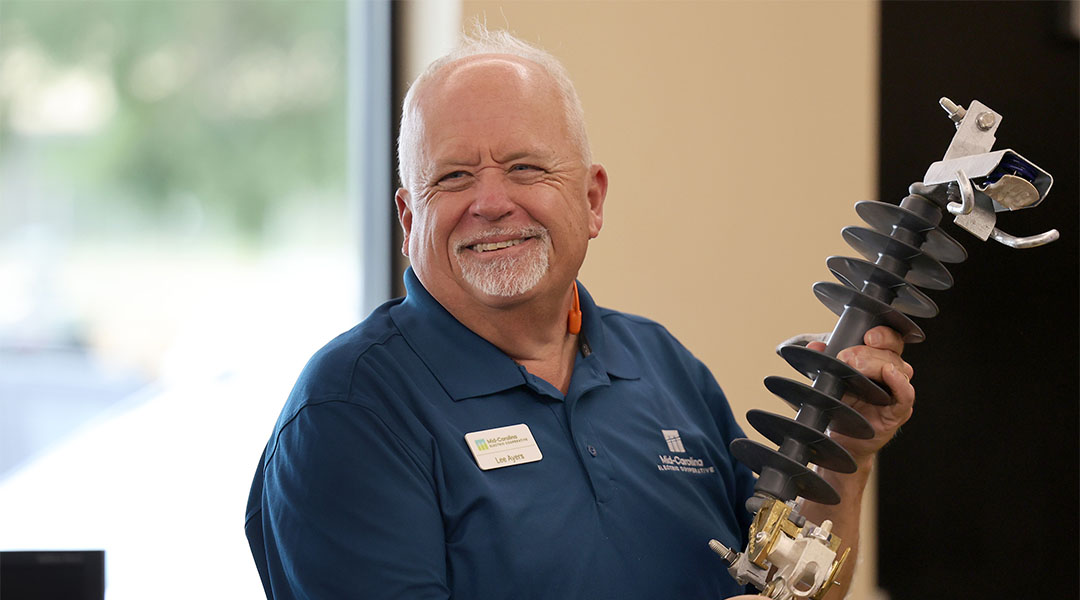
Mid-Carolina Vice President of Engineering Lee Ayers holds part of a transformer and stresses the importance of efficiency in restoration efforts. “We want to isolate it to the smallest piece of line that we can, the smallest piece of equipment, smallest number of people we can,” Ayers said. Photo by Erin Abdalla/Carolina Reporter
Close to a year after Helene, South Carolina’s electric cooperatives are taking lessons from the massive storm into hurricane seasons to come.
The Electric Cooperatives of South Carolina mobilized one of the largest power restoration efforts in state history after the storm, bringing in more than 3,400 line workers from 24 states and 11 cooperatives. The 19 cooperatives and additional affiliates serve more than 1 million members in all 46 counties, mainly in rural areas, where the rough terrain complicated restoration efforts in Helene’s wake.
Now, with several more months of hurricane season to go, the co-ops are focusing on improving communication about estimated restoration times and efforts, as well as infrastructure upgrades.
Hard-won lessons
Electric cooperatives are finding ways to boost transparency and infrastructure without passing on unwieldy costs to members.
President and CEO of Mid-Carolina Electric Cooperative Bob Paulling, for example, shared plans to use AI to update a model that locates outages. Giving members more accurate estimated restoration times is always a goal.
“Those type of things are being worked on very diligently,” Paulling said.
The cooperatives also are pivoting to social media to share blackout updates.
“I think that’s what we all learned from Helene, just to get as much information out to the consumer,” said Bruce Bacon, president and CEO of Fairfield Electric Co-op.
Cooperatives are hoping heightened communication also will help members better understand what they do. Amid the chaos of Helene, the collective of cooperatives faced backlash from frustrated customers who didn’t understand why their area wasn’t switching to underground lines.
The short answer? Cost.
S.C. Sen. Lindsey Graham after Helene suggested the state could potentially find funding from Congress to convert to underground lines. But cooperative leaders say there has been little to no follow up from politicians. According to a 2003 report by a North Carolina utilities commission, the estimated cost of burying the lines of three major power companies there would have been $41 billion – a price tag the commission deemed “not feasible.”
While Mid-Carolina Electric has installed underground lines in what management calls “problem areas,” South Carolina’s cooperatives are mostly turning to more cost-effective ways of improving infrastructure. That includes transitioning from wooden to steel poles. It also means installing additional switches, to create a system that’s more resilient and easier to repair.
“There’s a balance between operations and expense and what our members can stand,” Paulling said.
Member response during disasters
If there’s a power outage, cooperatives recommend each household should call it in.
Mid-Carolina’s Vice President of Engineering Lee Ayers said if only one home in an area calls in an outage, responders will think they only have to fix the power at that one home.
“Please report the outage,” Ayers said. “We may know about it, but we’d rather know about it twice.”
But it’s important to use discernment when calling in reports. Dispatch operators frequently receive reports about flickering lights, but that’s something that usually can be fixed remotely, without dispatching a lineman.
“We want to isolate it to the smallest piece of line that we can, the smallest piece of equipment, smallest number of people we can,” Ayers said.
During natural disasters, line workers must often navigate difficult terrain in rural areas, complicating repairs and restoration time. Sometimes, their own facilities are affected.
The Electric Cooperatives of South Carolina website has a page dedicated to staying safe during storms that gives advice on what to do during power outages, how to prepare and information about how they repair damages. Customers can find an outage tracking map for all 19 cooperatives on the South Carolina Electric Cooperatives website.
Hurricane season after hurricane season, co-op leadership promised to evolve.
“‘What can we do better?’ Bacon asked. “Because we never … we’re never perfect. There’s always things we can improve on.”

President and CEO of Mid-Carolina Electric Cooperative Bob Paulling talks about preventing outages. Photo by Sydney Lewis/Carolina Reporter

Mid-Carolina lineman Jeff Helms, right, watches a presentation during the recent Electric Cooperatives of South Carolina Media Day. Helms was a part of the cooperative’s power restoration response to Helene. “I’m 50, so my body was sore after a couple weeks,” Helms said. “The community was great.” Photo by Sydney Lewis/Carolina Reporter
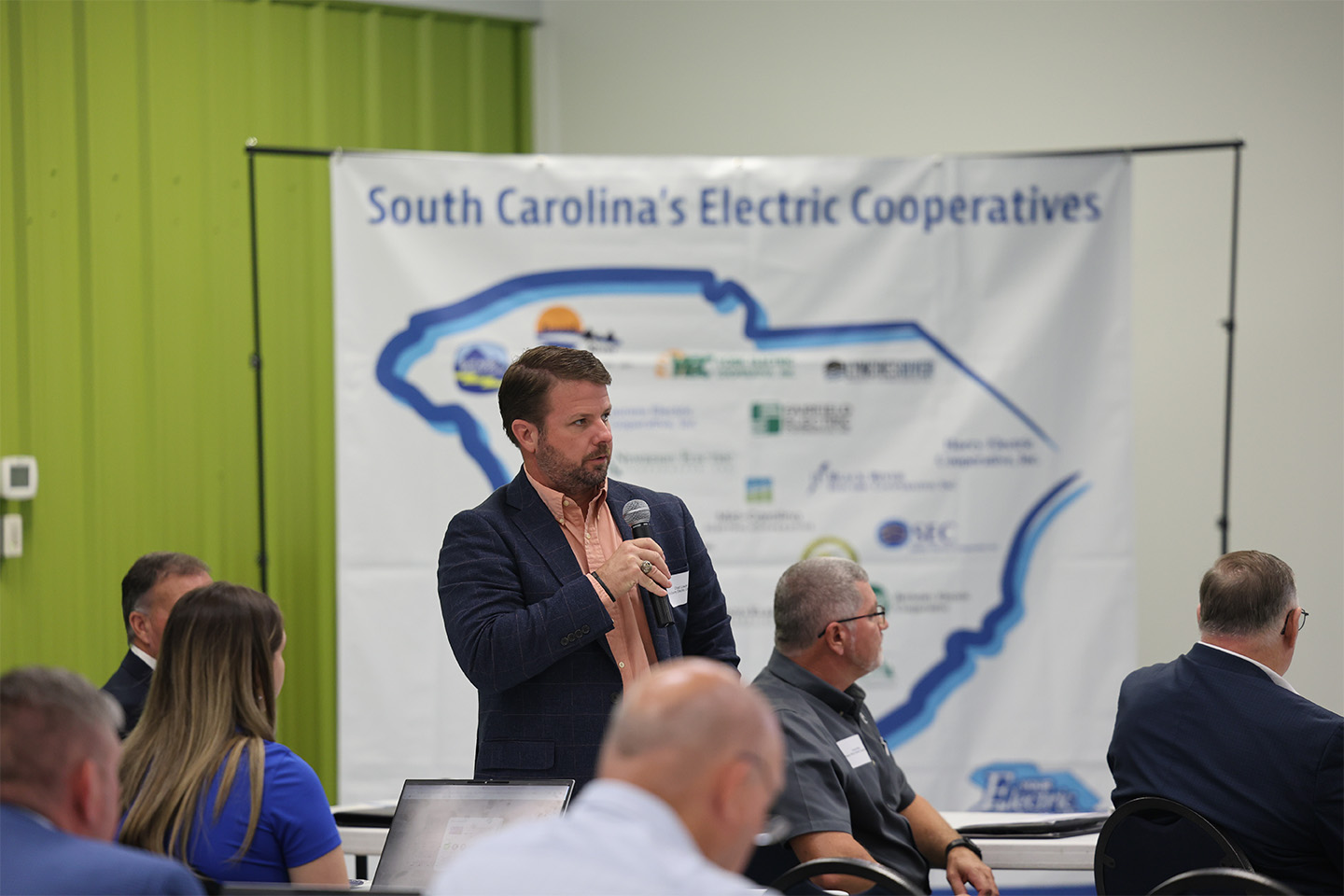
Chad Lowder, CEO of Tri-County Electric Cooperative, explains co-op storm preparation. Photo by Sydney Lewis/Carolina Reporter

A monitor in the Mid-Carolina Electric dispatch center shows data used for tracking possible outages. Photo by Sydney Lewis/Carolina Reporter
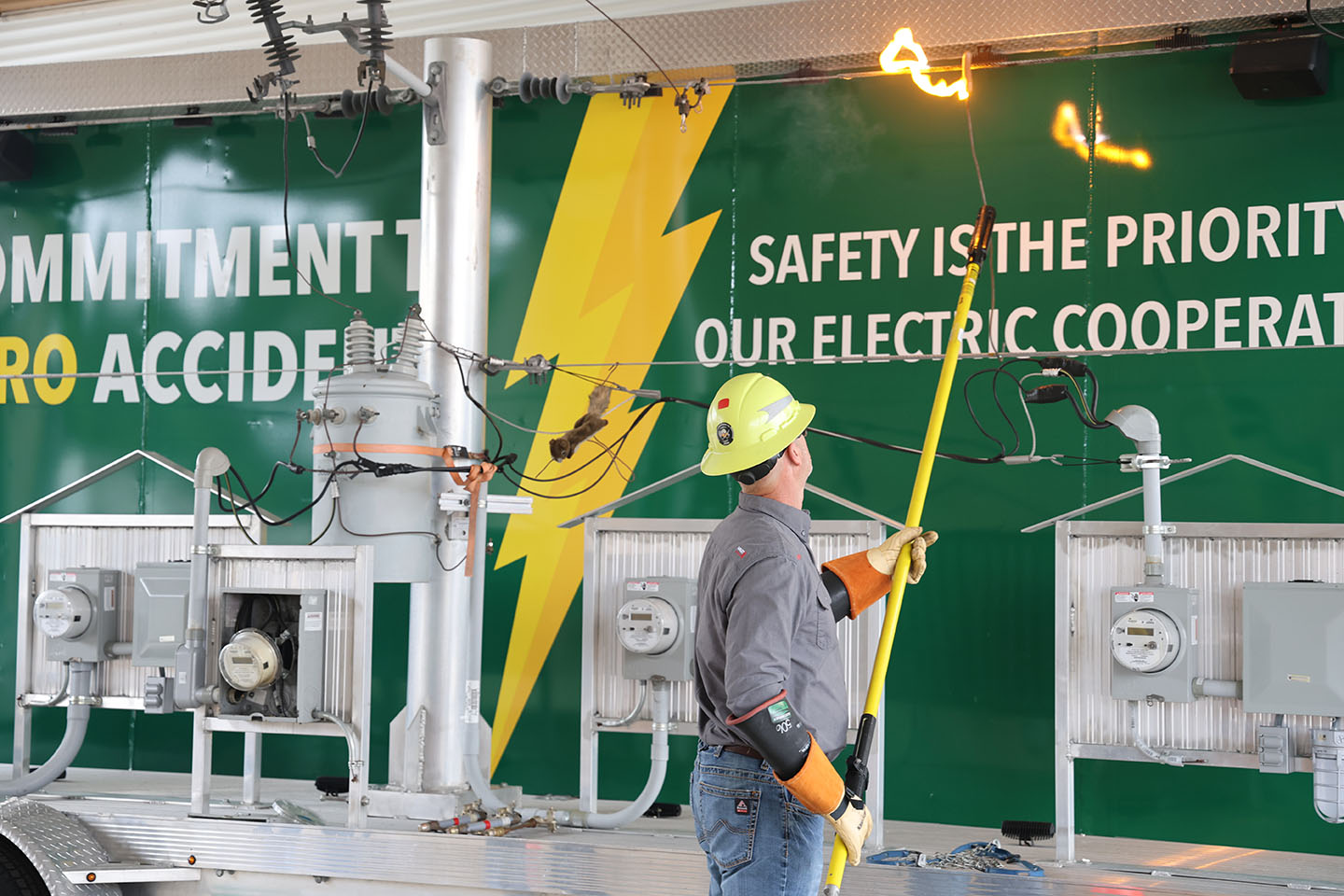
Mid-Carolina lineman Kenny Infinger burns a hot dog during a live wire demonstration to simulate its effect on bare skin. Photo by Sydney Lewis/Carolina Reporter
ABOUT THE JOURNALISTS

Sydney Lewis
Lewis is a junior multimedia journalism student at the University of South Carolina. She is interested in arts and culture reporting as well as feature writing. She is the editor-in-chief of Garnet & Black Magazine and has been a production assistant at SCETV Columbia.

Erin Abdalla
Abdalla is a senior multimedia journalism major with a minor in anthropology at USC. She is editor in chief of Blossom, a campus collective dedicated to helping young creatives get started. She is interested in the interconnected nature of people and the world around them. She wants to pursue investigative reporting and continue artistic direction.