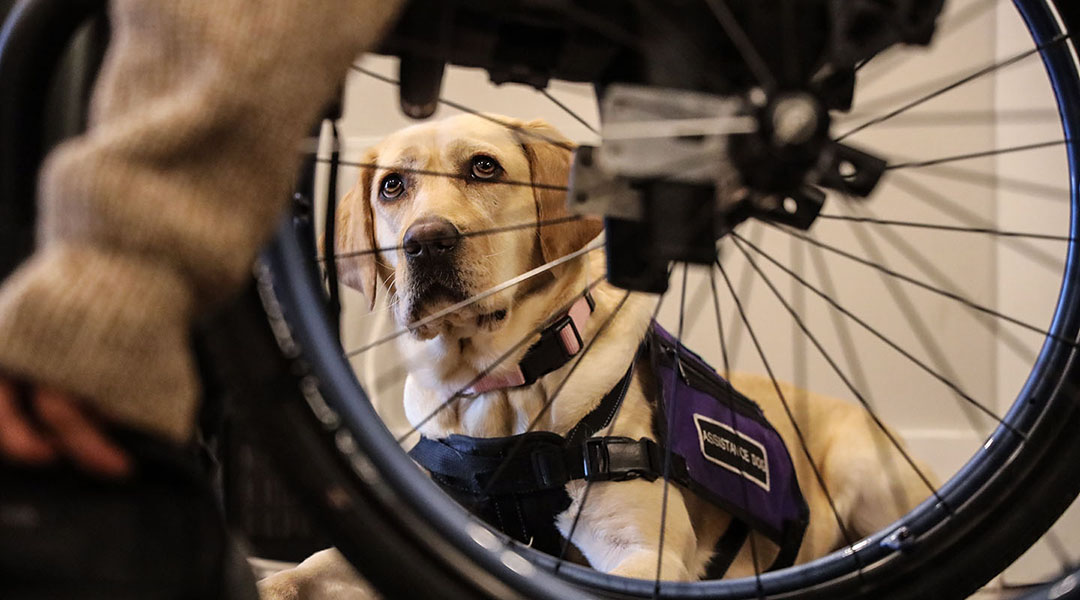
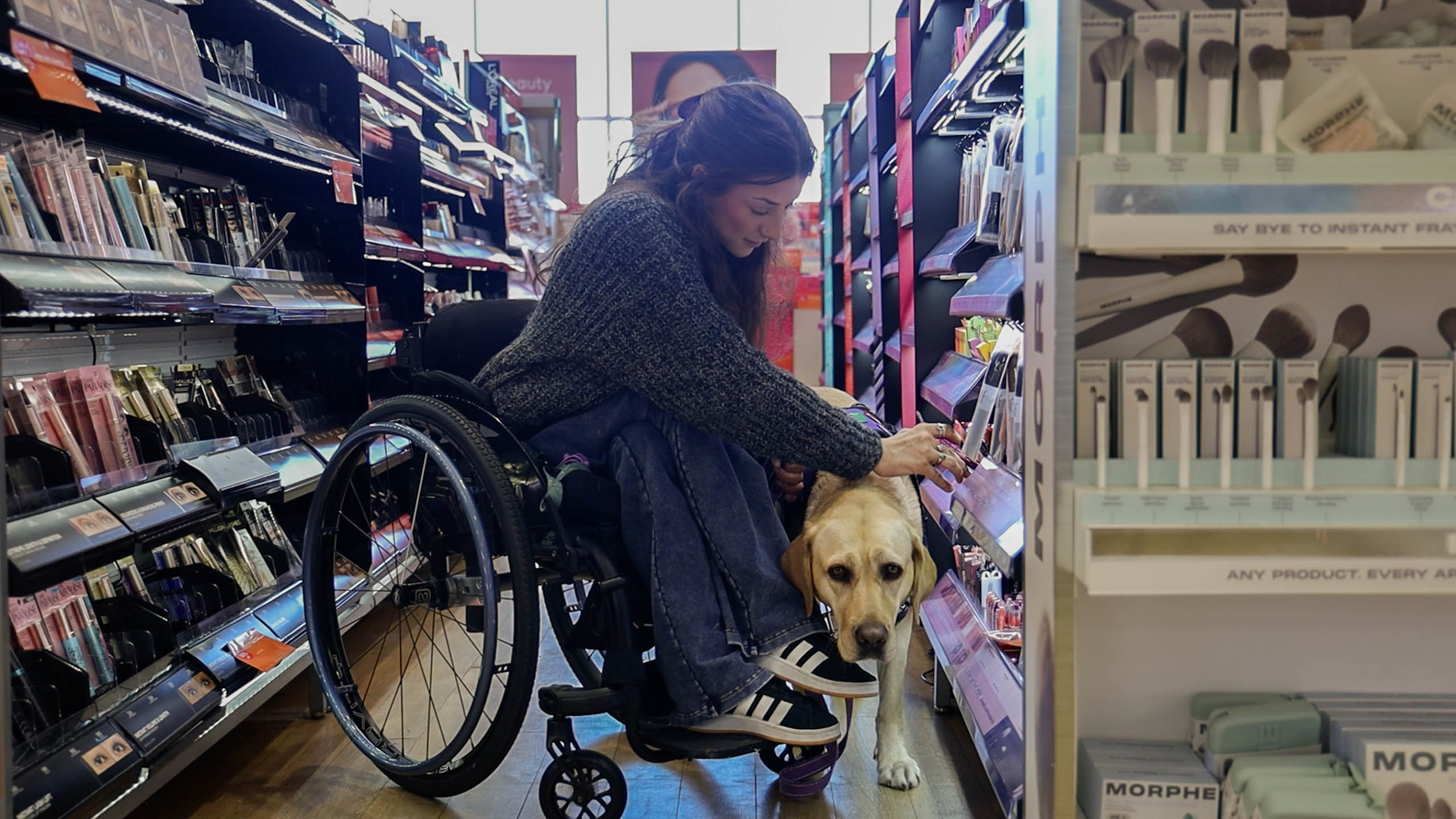
Sammie looks intently up at Kaylyn in her wheelchair. Once her purple “assistance dog” vest goes on, she doesnt leave Kaylyn’s side. Photo by Katie Cannon/Carolina Reporter
Kaylyn Sinclair doesn’t panic when her keys fall from her lap. She just sighs softly and tilts her head. They hit the floor with a clatter, skidding just out of reach. If this were a movie, this might be the time she’d look up and lock eyes with a stranger rushing to help. You know, love at first sight.
Kaylyn did have a moment like that once. Short blonde hair. Dark brown eyes. A wide, happy smile. Four legs. And a tail.
Before anyone else can move, Sammie steps forward from beside Kaylyn’s wheelchair. She lowers her head, grabs the keys gently with her mouth, and lifts them toward Kaylyn’s waiting hand. Her tail hasn’t stopped wagging.
“Thank you, Sammie,” Kaylyn says smiling, pulling out a piece of kibble to reward her for the cue.
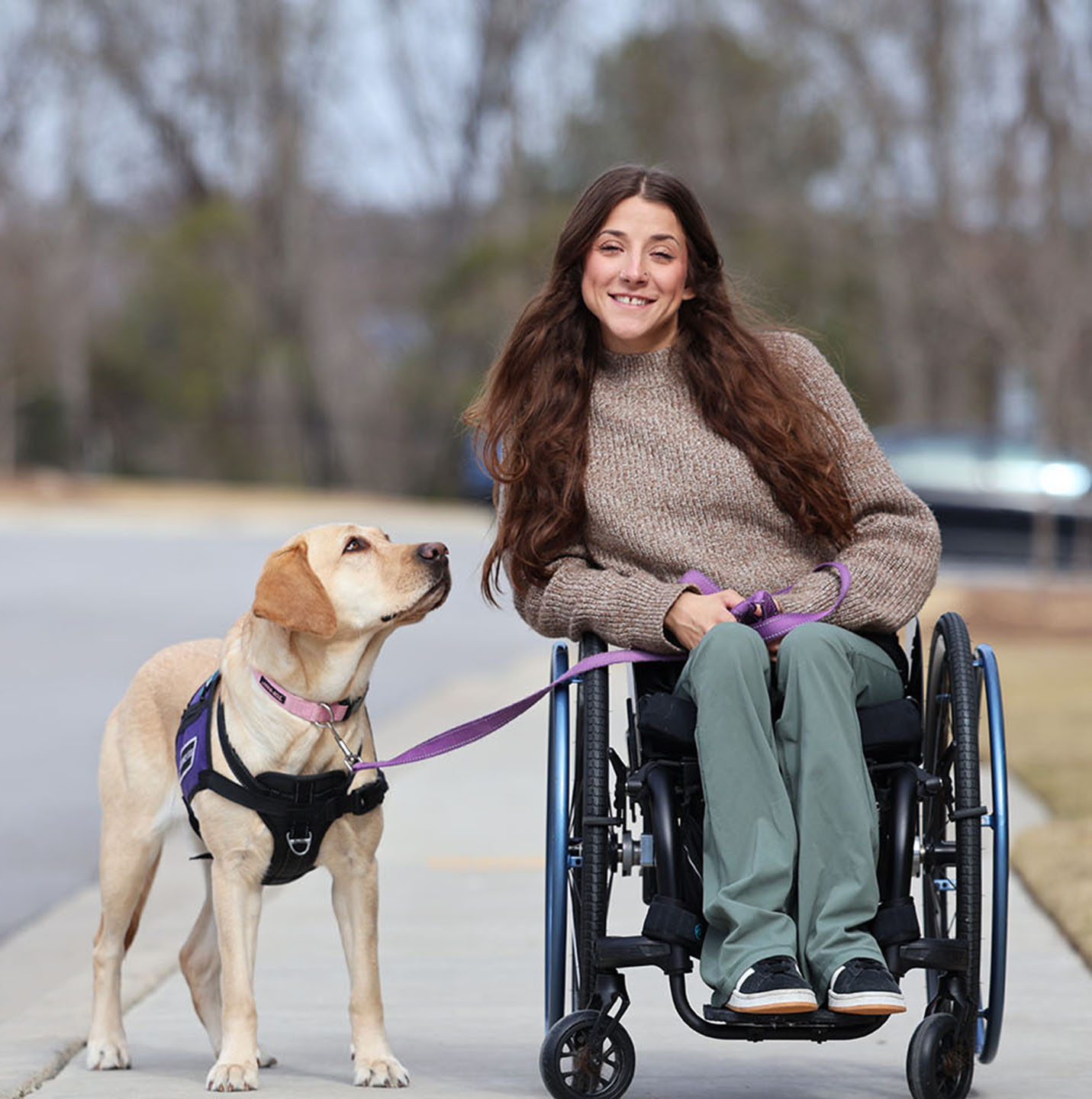
Kaylyn Sinclair, 26, has been in a wheelchair since she was 6 years old. Photo by Katie Cannon/Carolina Reporter
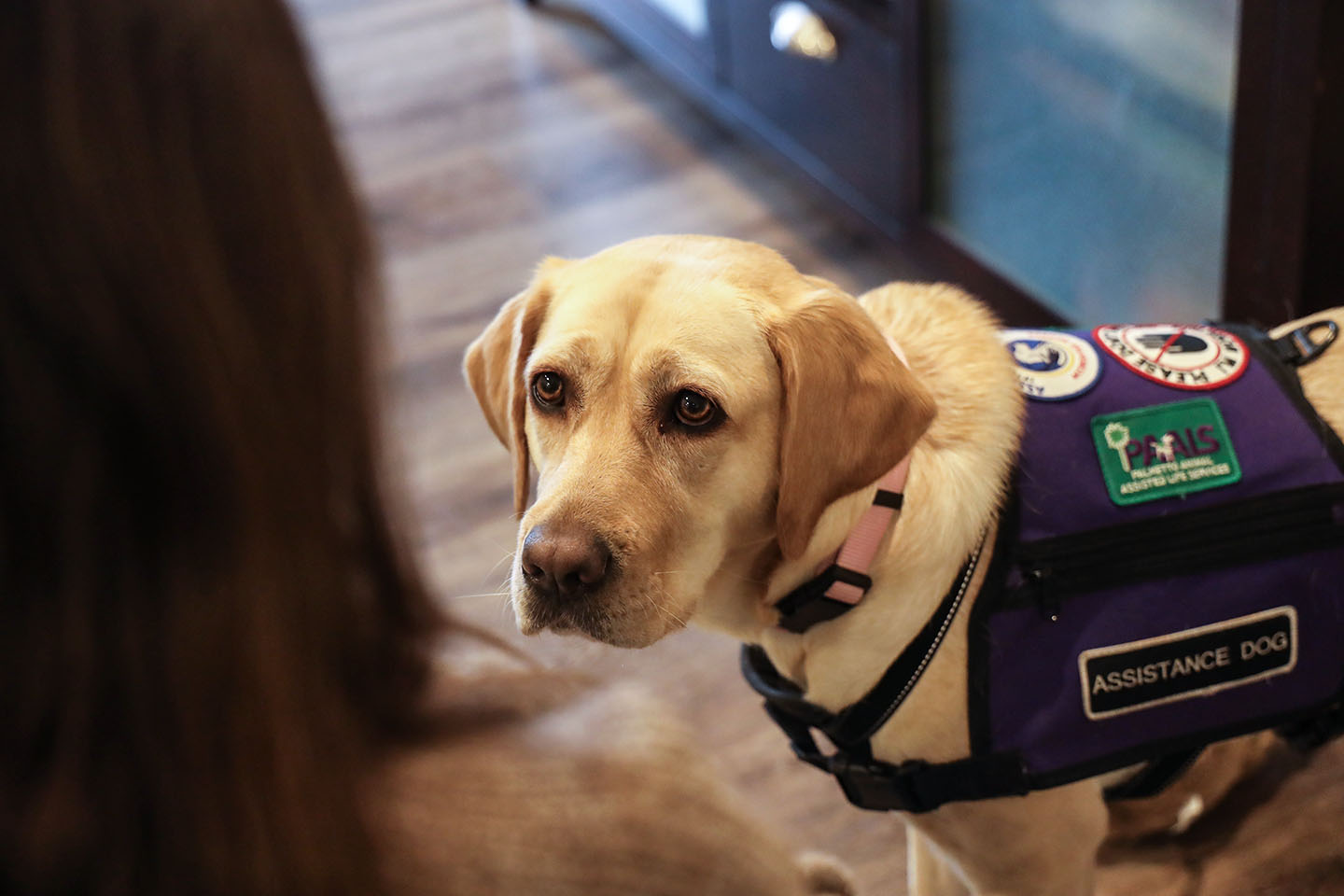
When Sammie isn’t assisting Kaylyn, she’s usually staring at her — eagerly waiting for the next time she can be of use. Photo by Katie Cannon/The Carolina Reporter
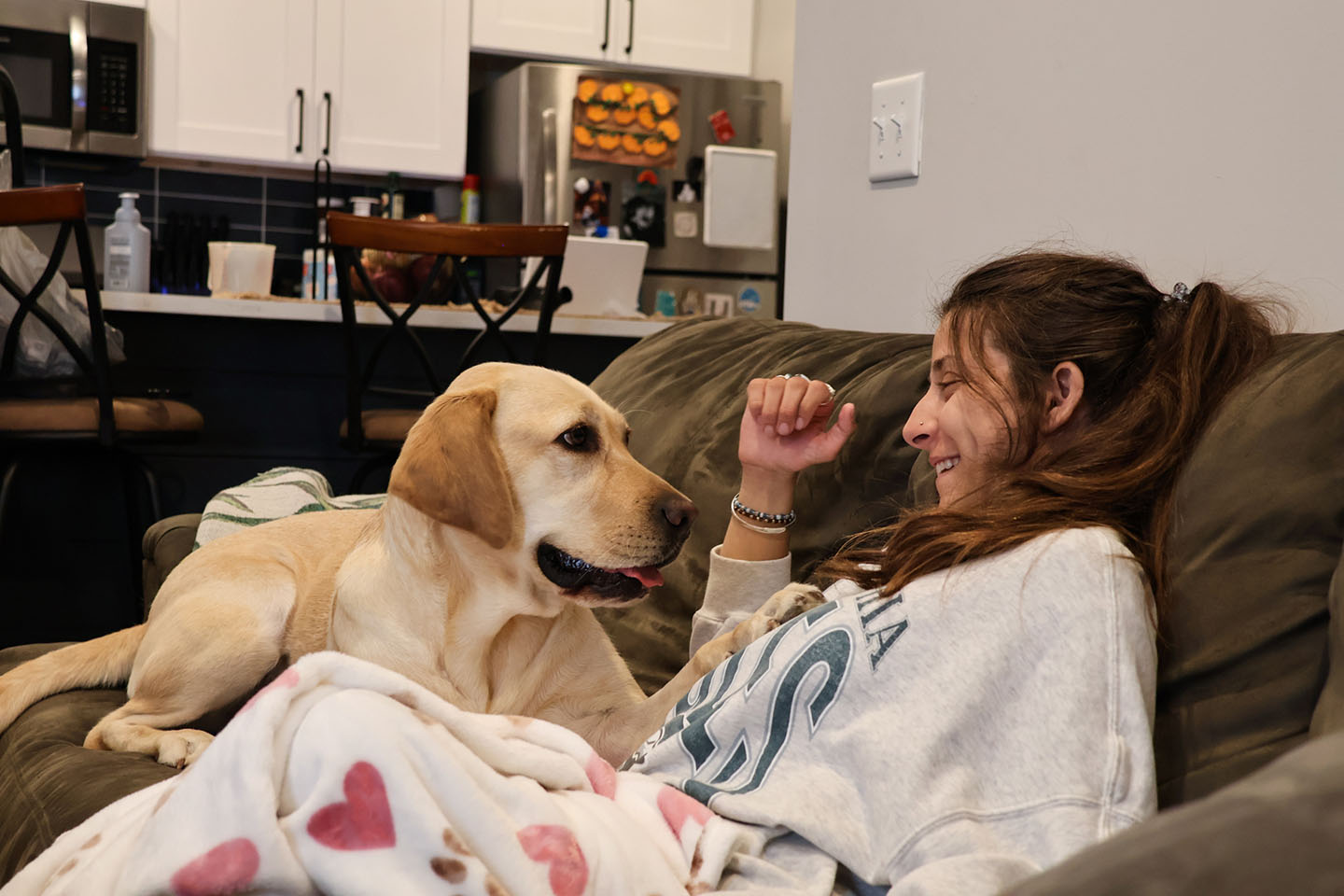
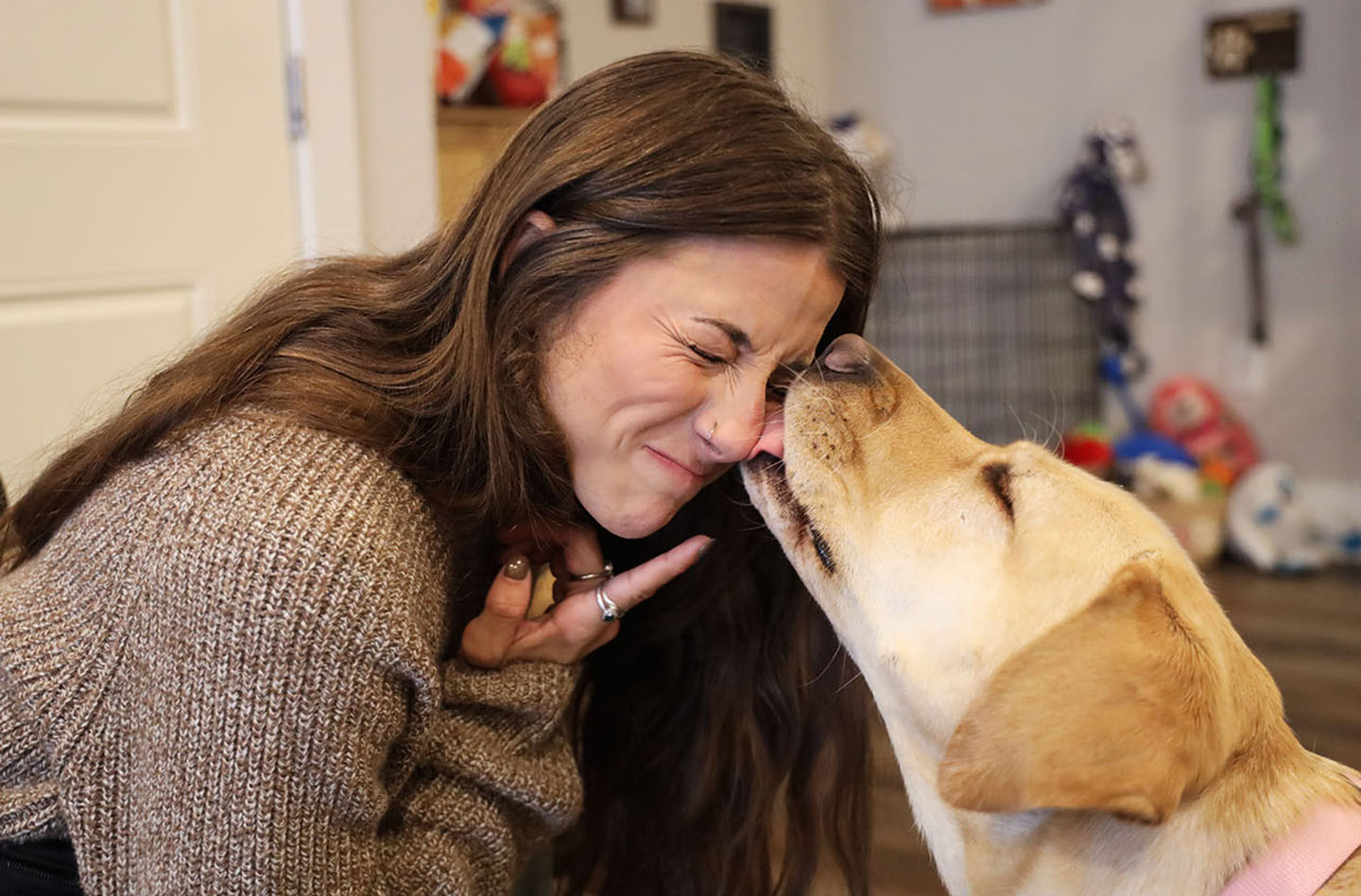
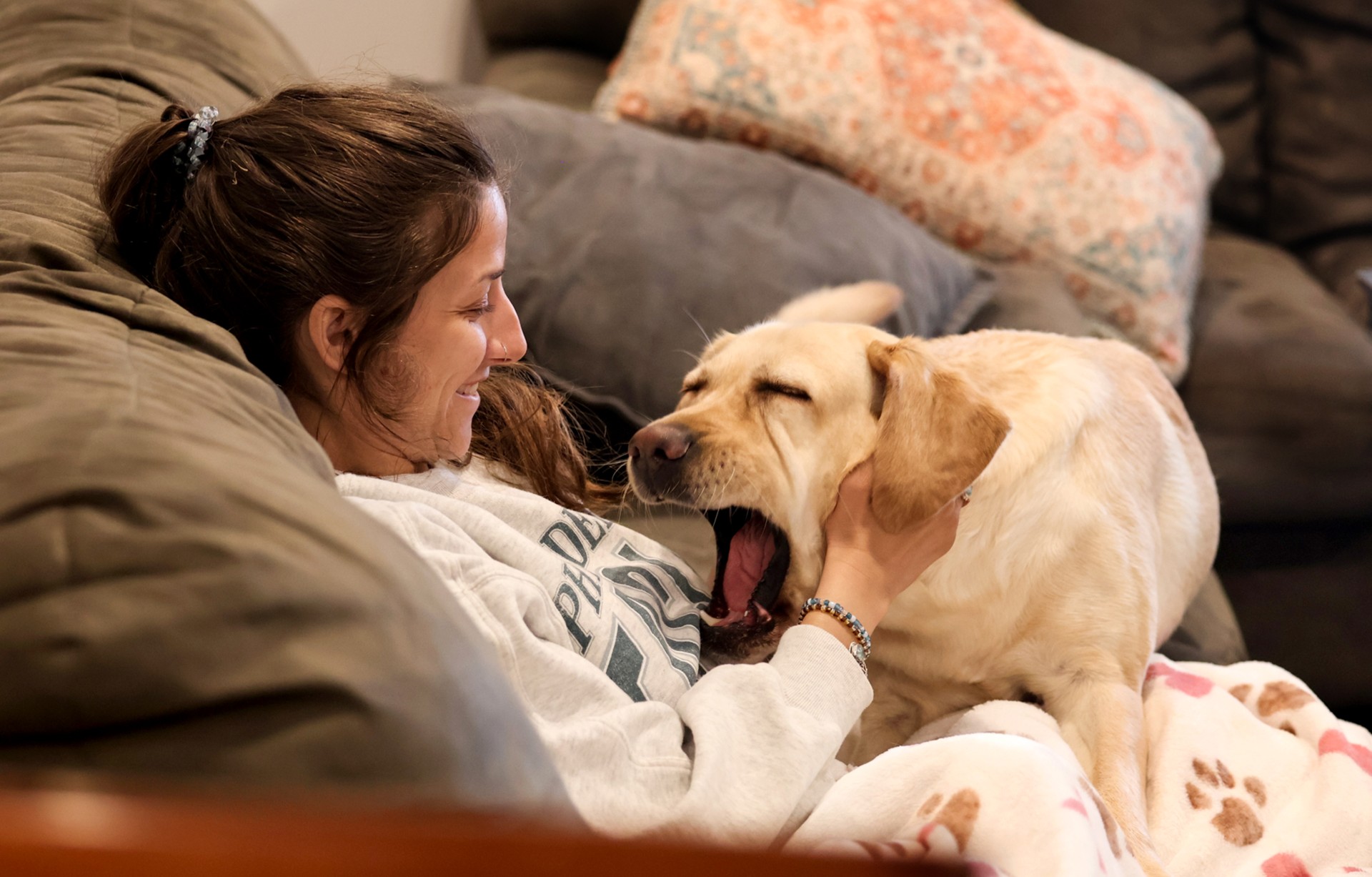
Sammie and Kaylyn exchange smiles while resting on the couch. Photo by Katie Cannon/The Carolina Reporter
Kaylyn is one of those people who wants the best for everybody. She’s in tune with everyone’s emotions, she wants to understand them.
She’s from Macon, Georgia, enjoys thrifting, prioritizes spending time with the people she loves — like her boyfriend of three years, or her besties Jenelle and Emily — has two cats and loves exploring new places.
Her wheelchair is a part of her life, not the definition of it. It’s as ordinary to her as someone else’s hat, or their favorite pair of shoes.
When she was 6-years-old, Kaylyn was in an accident that left her with a spinal cord injury.
“I know more of my life in a chair than not in a chair,” Kaylyn said.
When she was growing up, getting used to a wheelchair was an adjustment for Kaylyn.
“I hated my chair at first. I wanted my mom to carry me everywhere,” Kaylyn said. “I did not want to use it.”
But Kaylyn’s mom, Shana Williams, laid a crucial foundation from the beginning: If there’s a wheel, there’s a way.
“I never allowed her to just use her wheelchair as an excuse to not do something or not try something,” Williams said. “We always faced it with the mentality that, ‘You know what? If this is what you want to do, we’ll figure out a way.’”
With lots of love and encouragement from her friends and family, Kaylyn began to understand that she was still her.
“I was really lucky with my support system growing up,” Kaylyn said. “I was always taught that, ‘You can do it. We’re just going to find a different way,’ and that has definitely stuck with me my whole life.”
As she entered her adolescent years, Kaylyn found herself pushing away from her chair. Being a teenager was already hard enough, and using a wheelchair just added an extra layer of angst.
“I wanted to fit in as much as possible and ignore my chair,” Kaylyn said. “It wasn’t something I was proud of. I wouldn’t say I was sad about it. I just didn’t want to acknowledge it.”
But as she started college, moved away from home and had a newfound sense of independence, her perspective began to shift. Instead of being passive about her chair, she became proud.
That mindset only strengthened when she went on to get her masters in counseling and rehabilitation at the University of South Carolina, which focused primarily on people with disabilities.
It was about that time in her life when Kaylyn knew who she was becoming — strong, understanding, independent — and that she was ready to have a service dog.
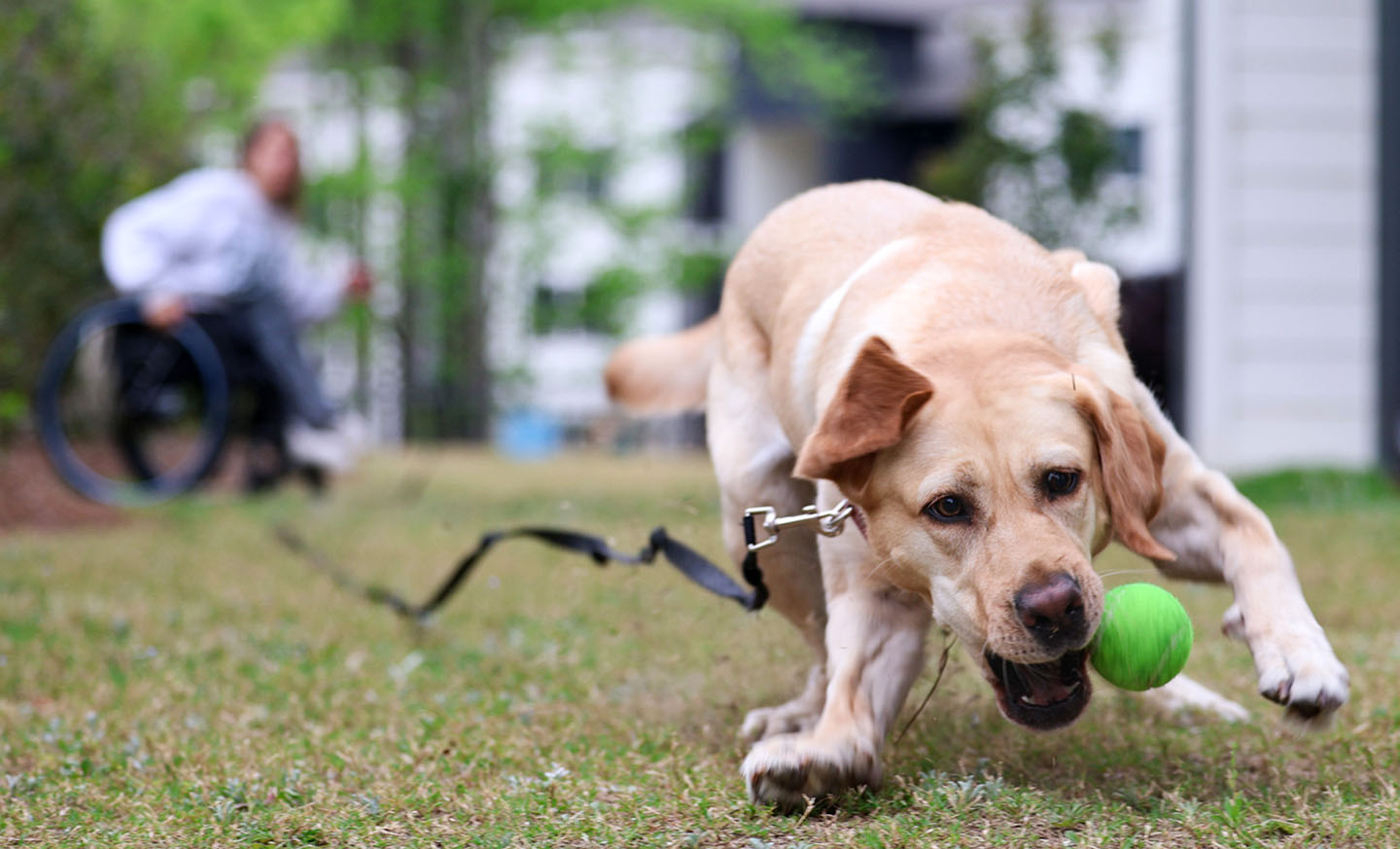
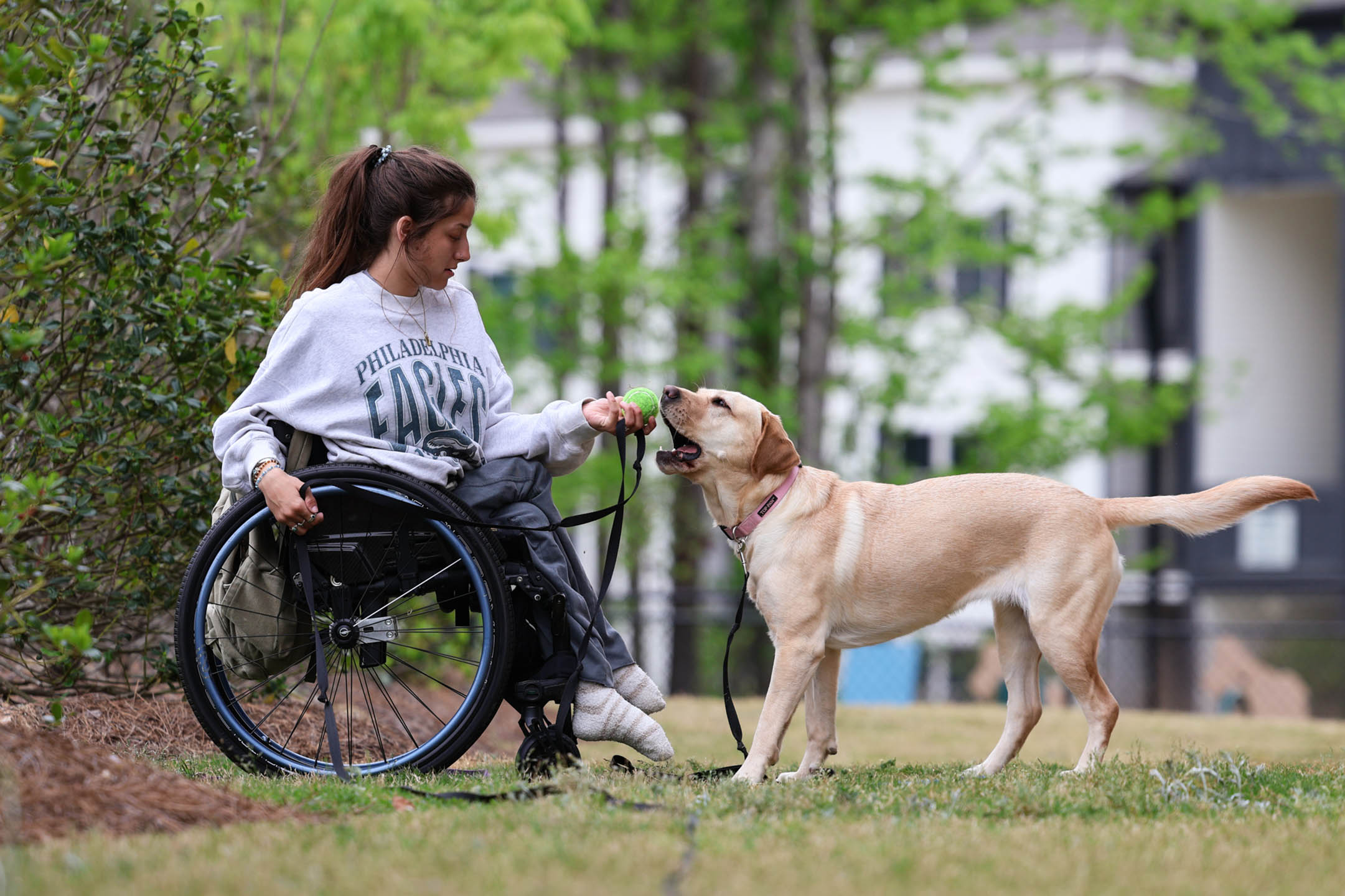
Sammie plays fetch during her off-duty time. These essential breaks allow her to “be a dog” and help balance her work life. Photo by Katie Cannon/The Carolina Reporter
Growing up, Kaylyn always wanted a fluffy companion, but knew deep down knew it wasn’t the right time.
“I put off getting a service dog for years and years, even going through undergrad and living on my own, just because I knew how much of a responsibility it was,” Kaylyn said. “I just wanted to know, ‘OK, I’m ready for that point in my life.’”
After moving to a new state, living alone and starting her masters, the time was right.
Watching Kaylyn and Sammie together now, it’s hard to imagine there was ever a time where they were apart. But that partnership didn’t happen overnight.
A service dog is defined by the American for Disabilities Act as any dog that is individually trained to do work or perform tasks for the benefit of an individual with a disability, according to the National Library of Medicine.
Sammie is a Palmetto Animal Assisted Life Services service dog. PAALS enriches and empowers those with physical, intellectual and emotional disabilities by training educational, therapeutic and recreational dogs, matching dogs with people based on personality, lifestyle and specific needs.
Kaylyn first heard of PAALS through a friend she met in the disabled community, and from there she didn’t waste a minute. After a long application process, meet-and-greets with different dogs and some patience, it was finally time for Kaylyn to meet her match.
“I still remember meeting Sammie for the first time like it was yesterday,” Kaylyn said. “I didn’t know she was my match at the time. I was sitting in the middle of a room, they counted down from three and opened the door, and Sammie came running out to me.”
From the moment they greeted each other for the second and final time, Kaylyn looked down to where Sammie was resting her head on her shoes and knew she was perfect.
Before Sammie even met Kaylyn five months ago, the dog had spent the first two years of her life perfecting cues and learning how to stay focused in busy environments.
Former PAALS director Melissa Payne said the group’s training almost mirrors a school.
“Our dogs are on a curriculum just like students. They start in pre-K and go all the way to college-level training,” Payne said. “In that training, they learn over 70 cues, both verbal and visual.”
Some of the ways Sammie helps are easy to spot.
She retrieves dropped items, carries things when Kaylyn’s hands are full, helps take off her jacket — and even assists with the laundry.
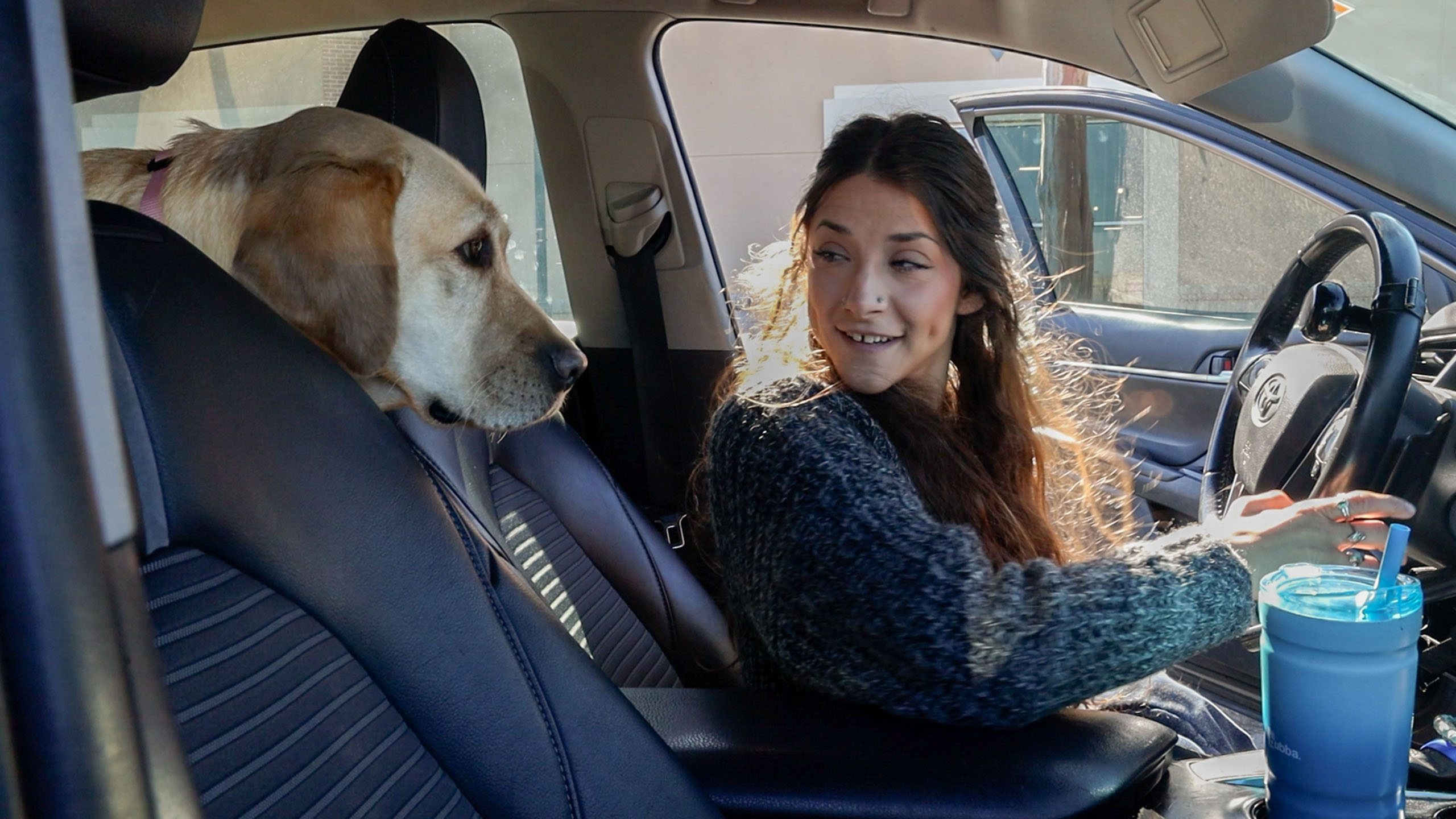
Palmetto Animal Assisted Life Services (PAALS) trained Sammie, and many dogs like her, to assist people with varying disabilities and help them live more enriched, independent lives. Photo by Katie Cannon/The Carolina Reporter
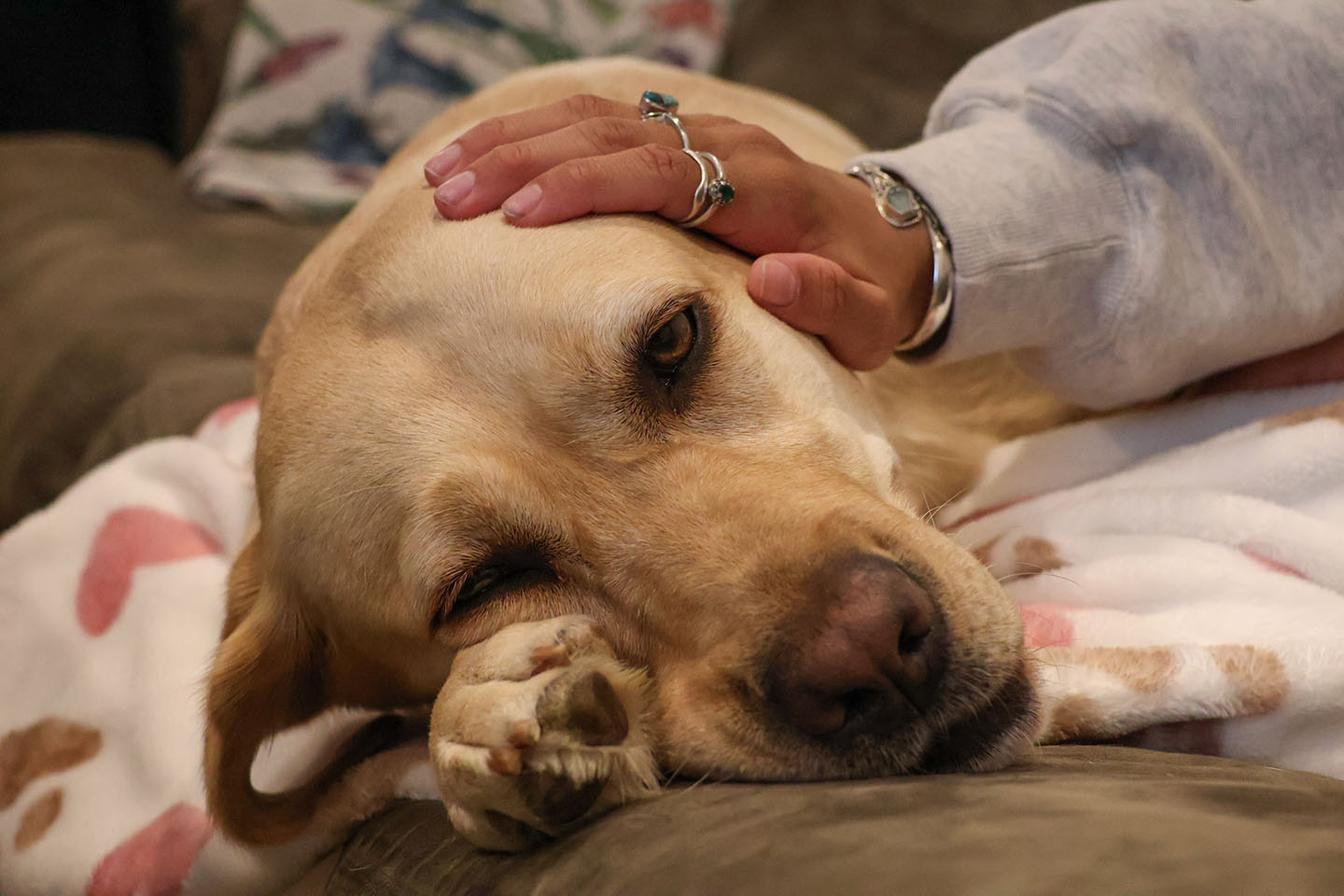
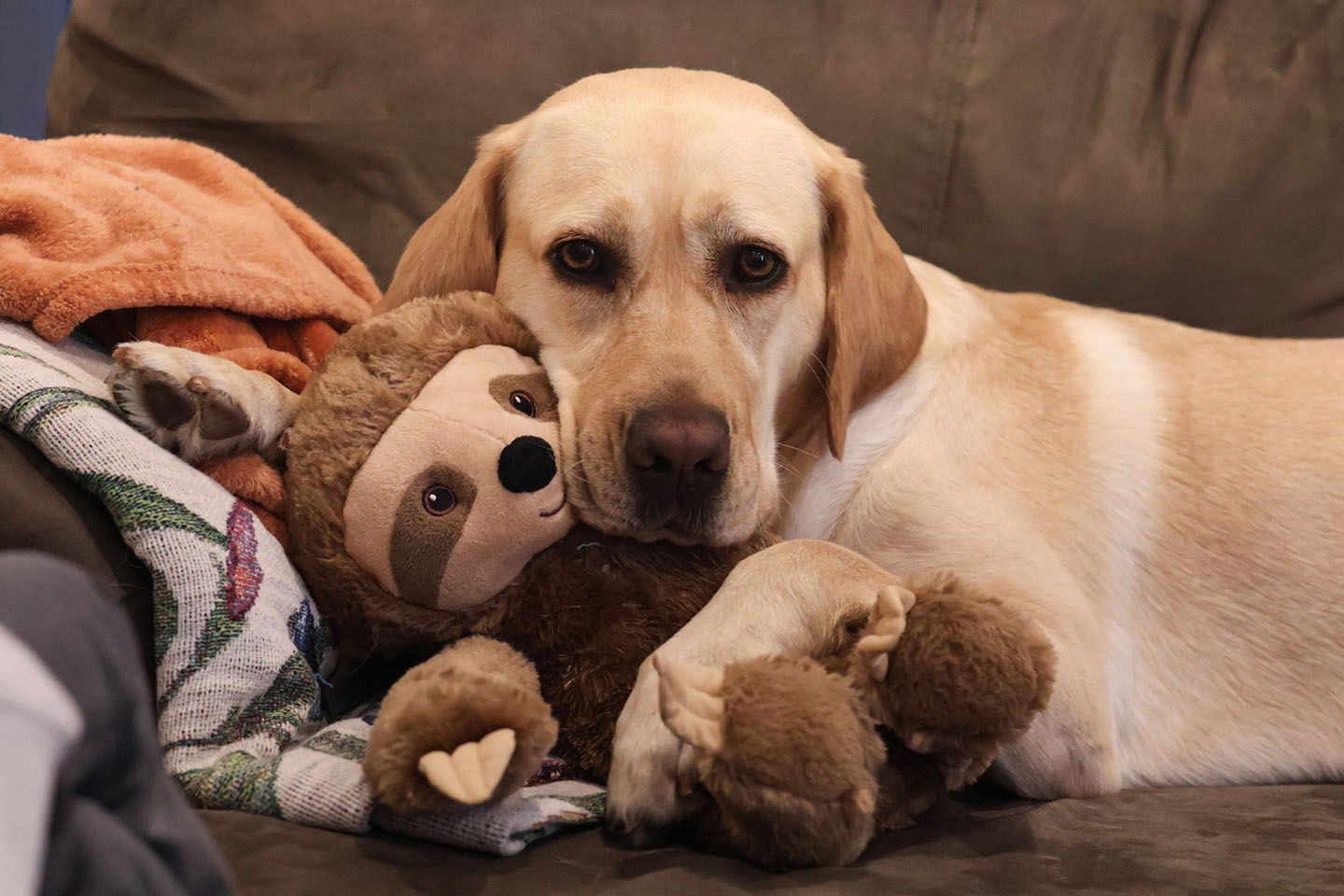
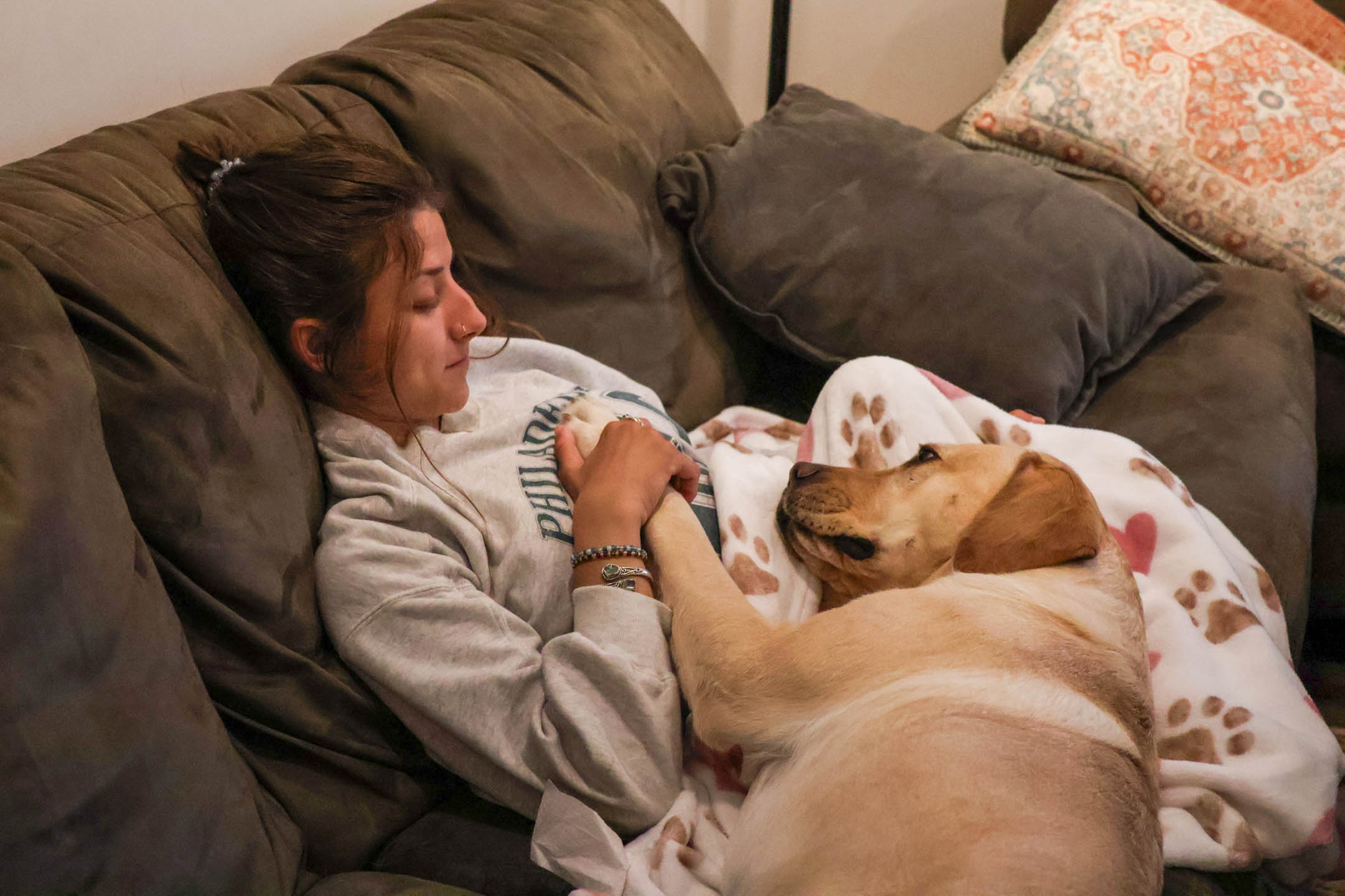
When Sammie isn’t working, she loves to cuddle. Photo by Katie Cannon/The Carolina Reporter
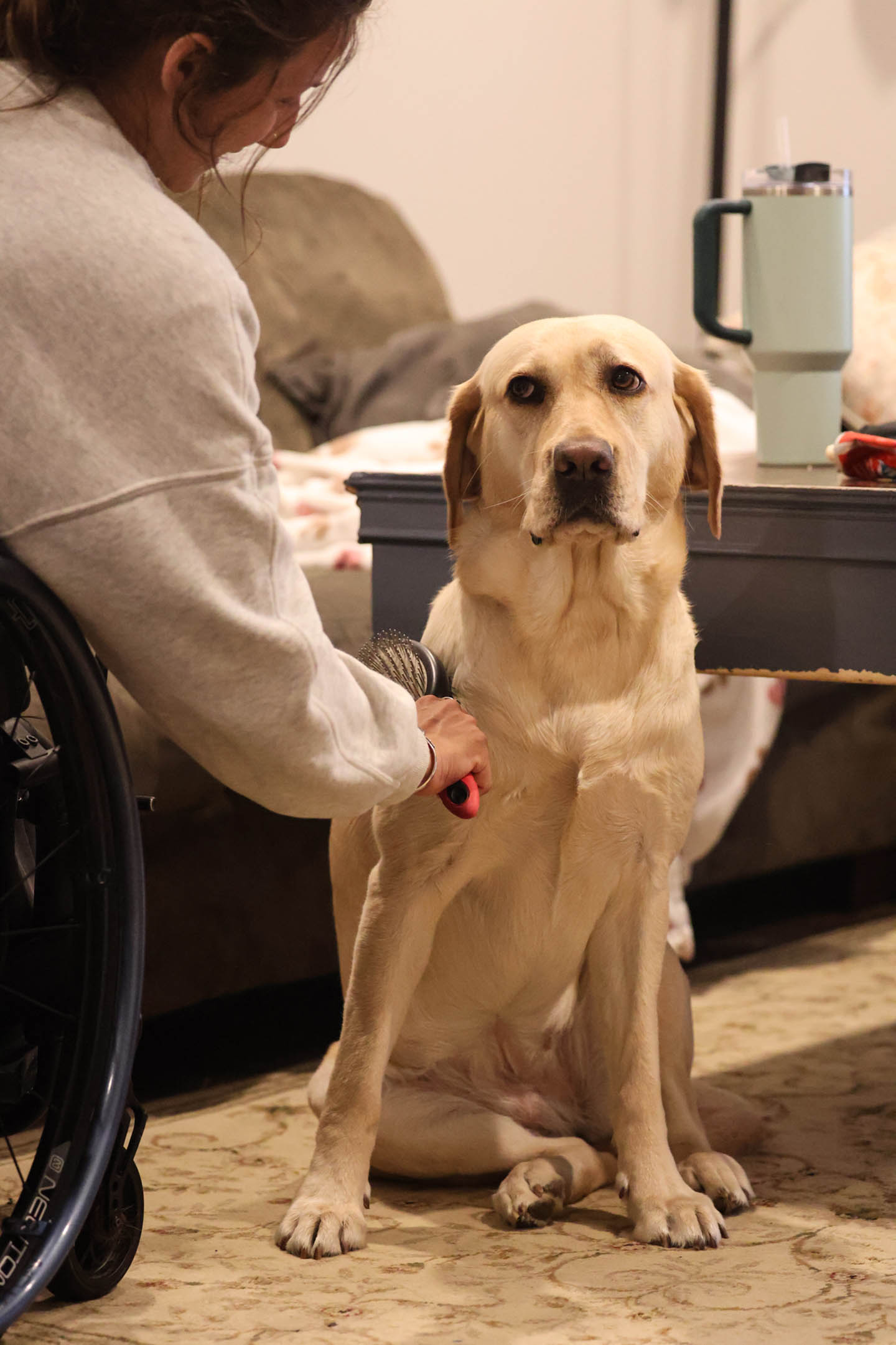
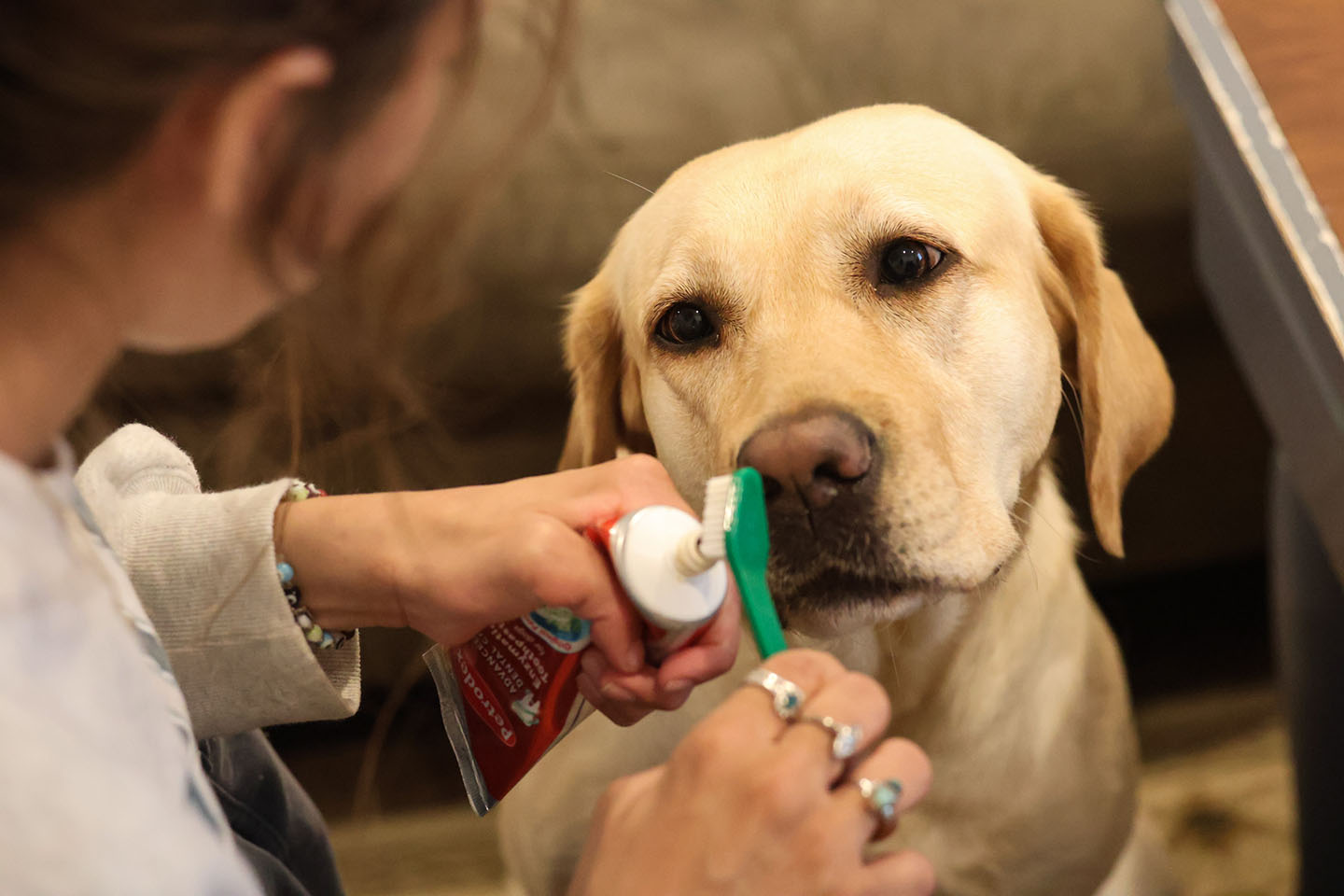
Every night Kaylyn brushes Sammie, which is something advised by the trainers at PAALS — and Sammie loves it. Photo by Katie Cannon/The Carolina Reporter
While these things may seem small to some, it makes all the difference to Kaylyn.
“Even though I can do these things myself, it requires extra strength that might normally not affect people who are able bodied,” Kaylyn said. “These are things she does that help me in my day to day life.”
But there are other things Sammie does that aren’t as obvious.
“Sammie is the reason I gained a lot of my confidence back,” Kaylyn said. “Even though she’s a mobility dog, she does offer that emotional support as well.”
In situations where emotions are high or accessibility is lacking, Sammie is there to help.
“I have a lot of anxiety when I go out in public,” Kaylyn said. “Even just having her there and being able to reach down and love on her, I can tell a significant change in my anxiety.”
And while Sammie offers her support and companionship, the partnership goes both ways. Kaylyn is just as much Sammie’s purpose as Sammie is her helper.
Service dogs are trained to work, but oftentimes the work doesn’t even seem like work to them. Sammie isn’t just trained to help Kaylynn – she wants to, says Payne.
“We don’t force our dogs into doing anything,” Payne said. “They show us their personalities and what type of work they’re suited for. Every day a dog gets up, it’s their best day ever.”
When Kaylyn leaves a room, it only takes a few seconds before she hears the sound of Sammie’s nails clicking down the hallway behind her.
“I am very attached to Sammie,” Kaylyn said. “And I think Sammie is very attached to me, too.”
FINDINGS
- A service dog is trained, often for years, to perform tasks that help someone with a disability
- PAALS service dogs learn more than 70 verbal and visual cues
- Service dogs might be as reliant on their owners as the owners are on them