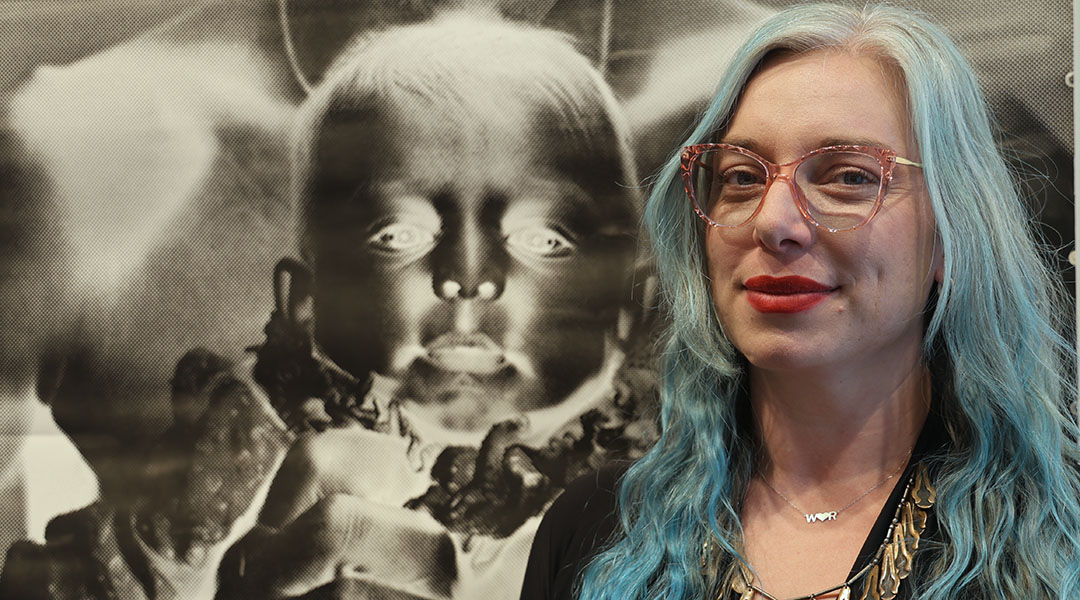
Roxy Lenzo Douthit stands in front of an image of her and her father when she was a toddler. Photo by Duncan Greer/The Carolina Reporter
Peter Lenzo’s work lives at the intersection of memory, emotion and identity, a deeply personal reflection of both the artist’s life and the Columbia art community he helped shape.
Through a retrospective exhibition presented by Lenzo’s daughter and the Jasper Project, that legacy is being preserved for both those who knew him and those experiencing his work for the first time.
Rows of Lenzo’s embellished, ceramic face jugs and wooden reliquaries filled Stormwater Studios, each piece carrying layers of personal history, family memory and artistic experimentation by the artist, who died in 2024.
Visitors on April 10 paused to take in the art’s details, tracing the care and thought that went into every curve, glaze and embedded artifact. That day, they also came to see an early version of a Jasper Project documentary on Lenzo, filmed by Wade Sellers.
“Artists interpret reality for us. And in so doing, they create a culture,” said Cindi Boiter, founder and executive director of the Jasper Project. “Peter’s work interprets a very unique, sort of niche aspect of our culture: aging, dementia and how we respond to that.”
The exhibition reflects both that beauty and that struggle. Known for his distinctive face jugs and deeply autobiographical pieces, Lenzo’s work offers viewers an intimate look into his experiences with epilepsy, memory losses and later, dementia.
For those who knew him beyond his public work, that evolution was something they witnessed firsthand.
Valerie Ingram first met Lenzo in 2004 through pottery classes at his Southern Pottery studio on Rosewood Drive. She said her early impressions of his work were uncertain but changed as she spent more time around his creative process.
“At first, some of his larger pieces felt a little scary and a little odd,” Ingram said. “But watching him work is when things really changed for me and my opinion of his sculpture and art, the heart and soul of what he was doing. And it’s just absolutely amazing.”
Ingram said being inside his studio gave her a deeper understanding of the skill behind his work.
“The detail, it just is mind blowing. It really is,” she said.
Beyond the artwork itself, Ingram said Lenzo’s presence left a lasting personal impact on her.
“When his health deteriorated to the point that he really needed to move to Chicago, it was a big loss for me,” she said. “It kind of felt like a death for me. I’m just eternally grateful to him for everything that he did, and for everything he taught.”
For his daughter, Roxy Lenzo Douthit, helping bring the exhibition together has been as much about remembrance as it has been about art.
“Curating this exhibition has been emotional, and it’s kind of been a way to grieve his passing,” Douthit said. “It’s a way to celebrate him and keep his memory alive.”
Douthit said Lenzo’s earlier reliquaries focused heavily on preserving family memories, while his later face jugs became more direct expressions of what was happening inside his mind.
“His work was very autobiographical,” Douthit said. “He would say that they’re all self-portraits.”
As Lenzo’s health challenges progressed, his art evolved with them. Especially in his later years, Douthit said, her father referred to his condition as “the gifts of dementia,” spending hours focused on the smallest details of each piece.
“He always thought he was making the best work of his life,” Douthit said. “He spent a lot of time and energy getting lost in these pieces.”
That devotion is visible throughout the exhibition, where each work carries layers of personal symbolism and emotional weight.
“When you look at his artwork, it is like looking into his brain and seeing his process,” Douthit said.
Boiter said Lenzo’s work continues to resonate because of the way it captures both beauty and pain.
“The work represents both some of his most whimsical ideas as well as some of his most terrifying ideas,” Boiter said. “I hope people can recognize that Peter was responding to his life.”
Lenzo’s influence on Columbia’s art community extends far beyond the walls of the exhibition. Boiter said he was a longstanding presence on the local arts scene, admired by colleagues, students and patrons alike.
“So many people worked with him, studied under him and loved his work,” Boiter said.
For Douthit, some of the most meaningful pieces are the ones tied directly to family.
“Dad would make me a birthday jug every year,” she said. “He would always try to incorporate his love for his family in his artwork.”
That love is central to how both the exhibition and how the community now remembers him. Beyond the displayed works, the retrospective also includes a book available through the Jasper Project preserving Lenzo’s legacy for future generations.
Boiter said the project reflects the Jasper Project’s broader mission of celebrating South Carolina’s cultural contributions.
For those closest to Lenzo, however, the exhibit is about something even more personal.
“He loved art and he loved his family and he loved his friends,” Douthit said. “I hope that Columbia remembers Dad’s warmth and his love.”
FINDINGS
- Peter Lenzo’s face jugs and reliquaries reflect a deeply personal artistic practice, documenting his lived experiences with epilepsy, aging and dementia.
- The Jasper Project’s exhibition not only archives Lenzo’s artistic contributions but also creates a shared environment for reflection and grief.
- Beyond his art works, Lenzo played a significant role in shaping Columbia’s local art scene through teaching, mentorship and collaboration. His lasting impact is evident in the personal testimonies of those he influenced.
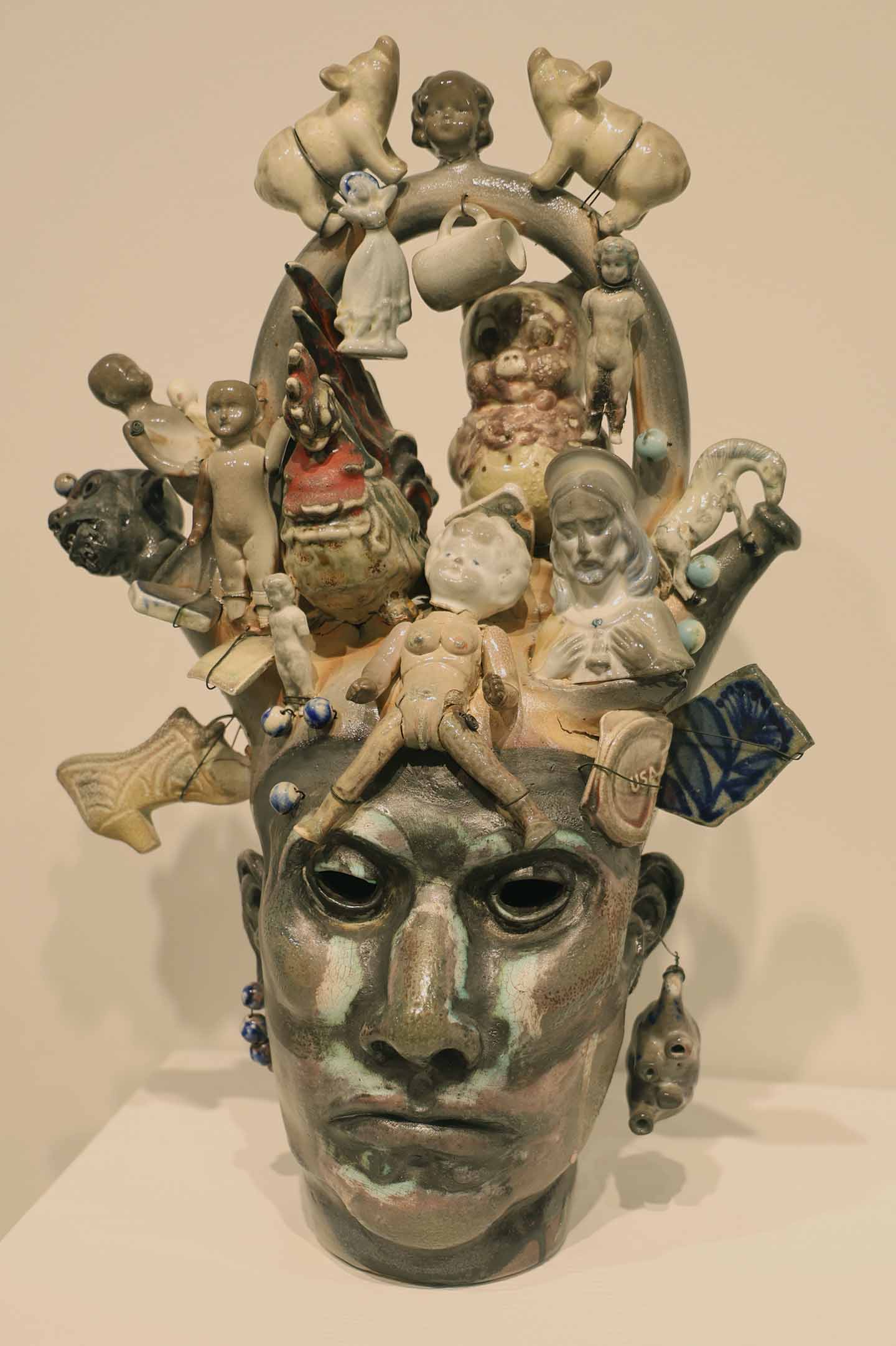
Peter Lenzo made face jugs from clay, using loads of small details to illustrate what he was going through at the time with his health and his family and friends. Photo by Duncan Greer/The Carolina Reporter
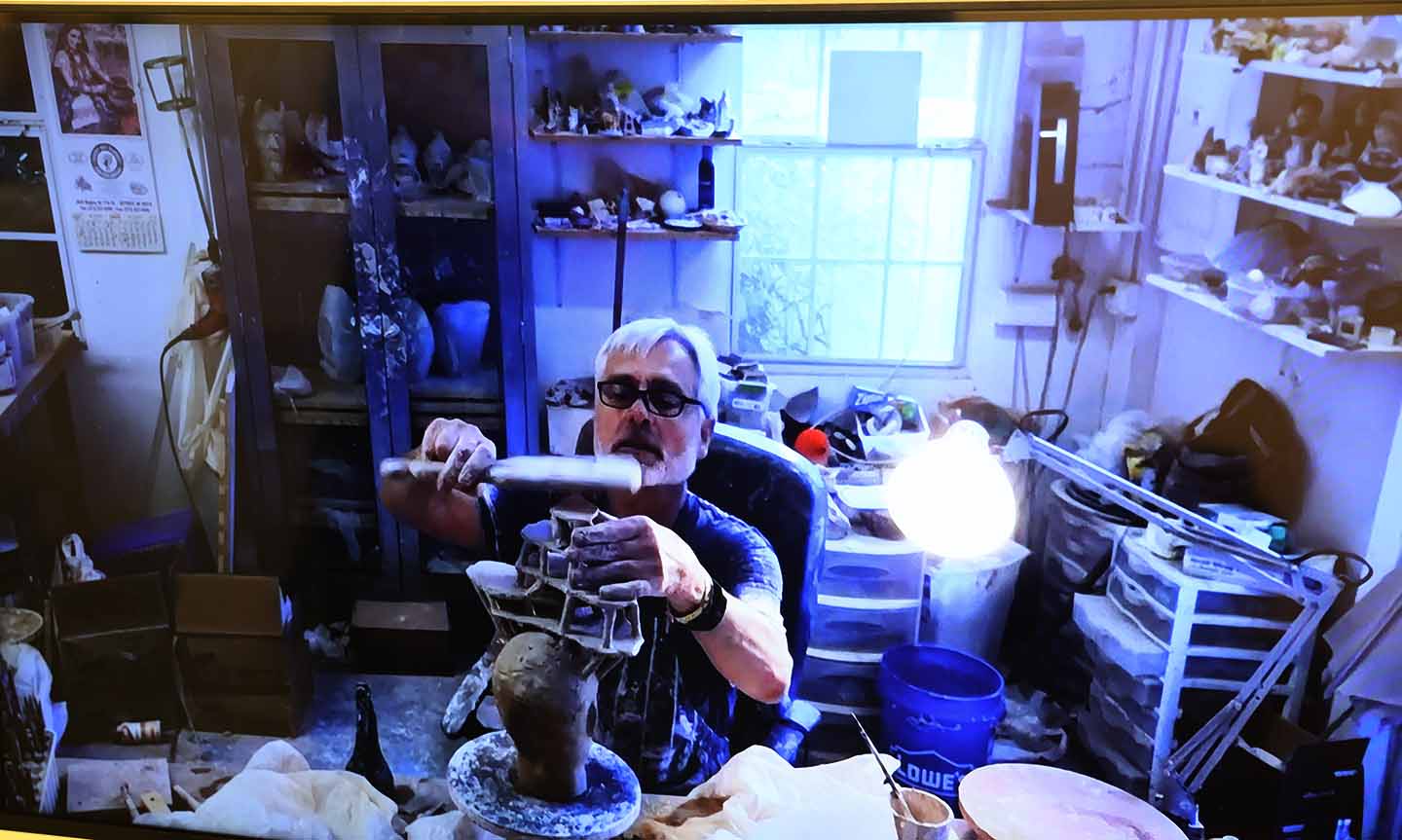
The Jasper Project film honoring Lenzo’s life and art showed clips of him working, incorporated with comments from his friends and family about who he was and how he was coping with his health issues. Photo from film by Duncan Greer/The Carolina Reporter
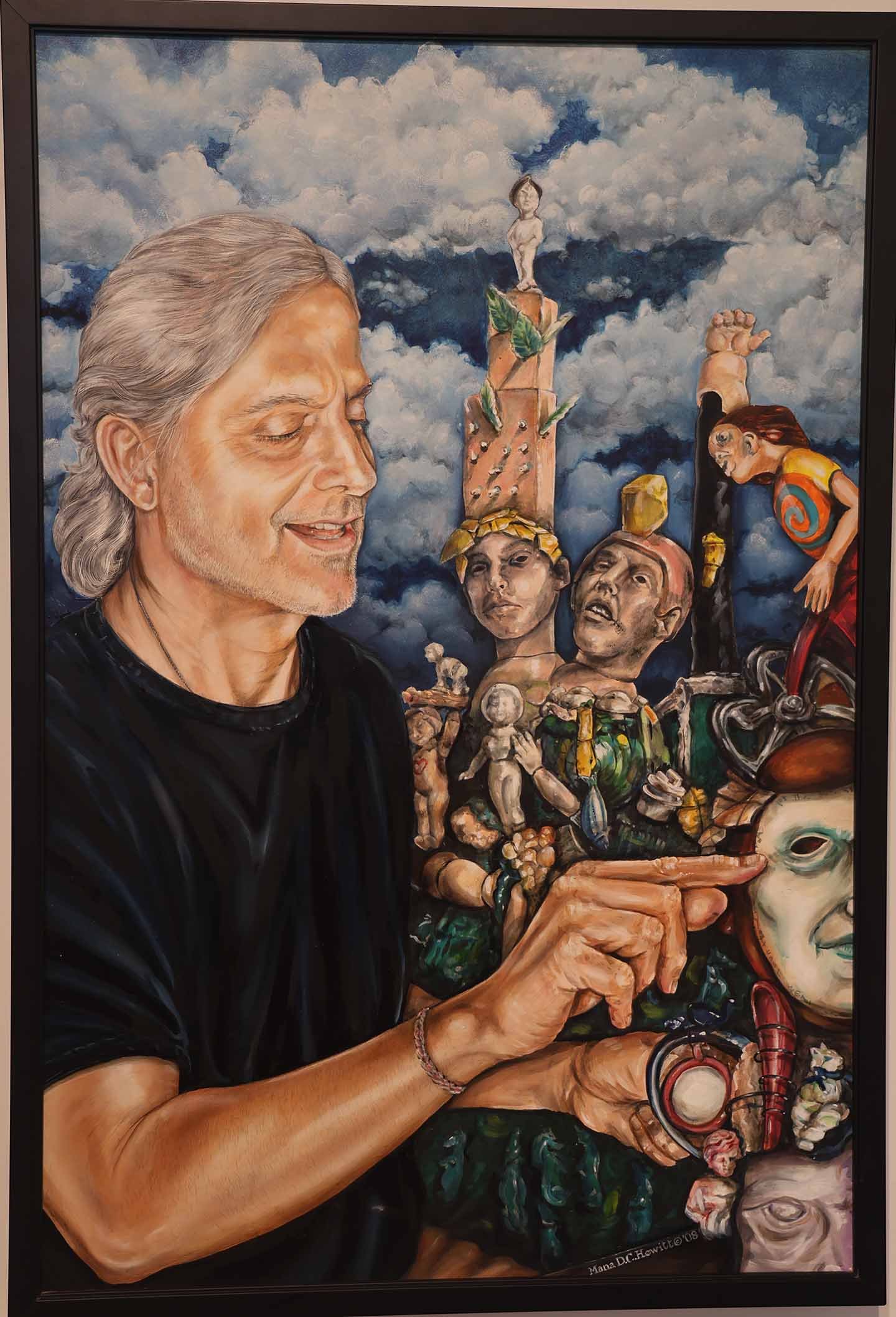
Lenzo’s family was given a portrait painted by Columbia artist Mana Hewitt showing Lenzo working on his art. Photo by Duncan Greer/The Carolina Reporter
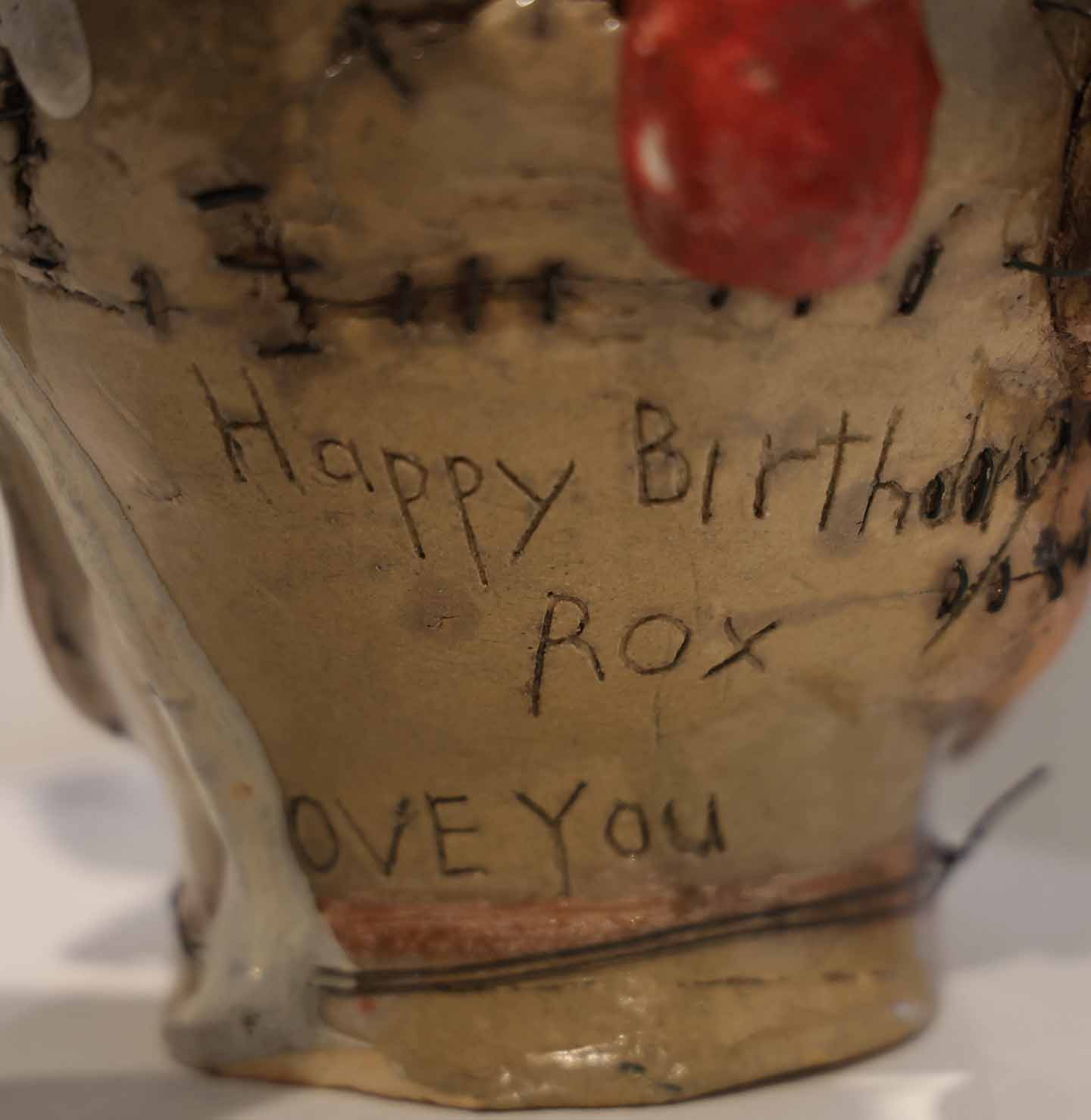
One of Lenzo’s many pieces of art, some of which contain his signature hidden messages to help his family remember him. Photo by Duncan Greer/The Carolina Reporter