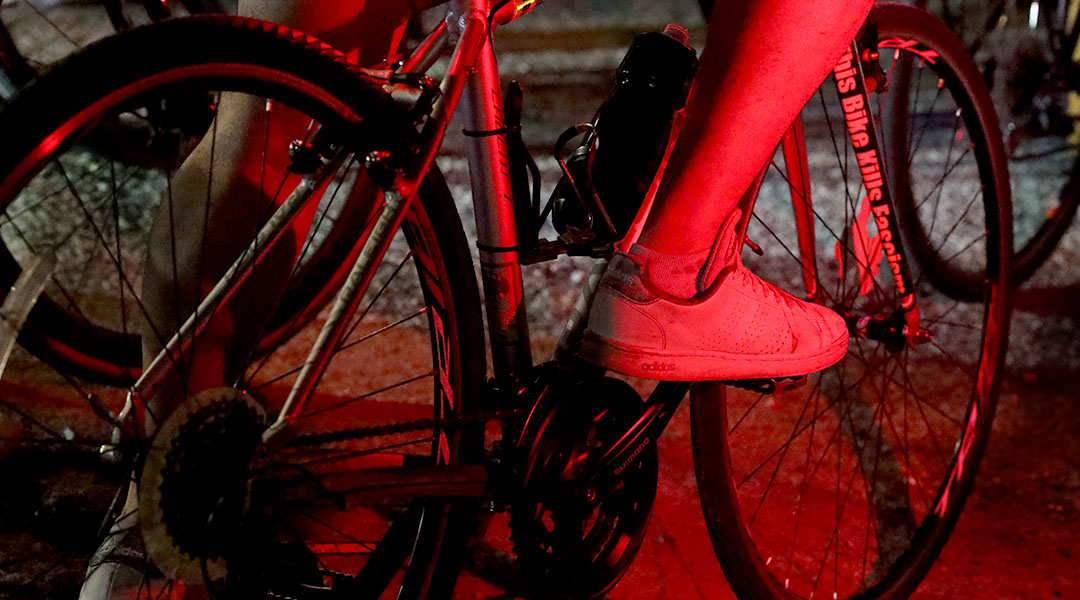
Street Meat is a local biking group that meets on Tuesdays at the Cola Town Bike Collective for rides around the city. Photo by Giovanni Cusatis/The Carolina Reporter
For Columbia locals and visitors, attractions such as Riverfront Park, the Three Rivers Greenway and the Cayce-West Columbia Riverwalk are popular recreational cycling and walking trails.
Those are great for locals and visitors.
But what about people who, in their day-to-day lives, want cycle to work or around town?
Columbia is making strides toward improving cycling safety by giving cyclists their own space on downtown roadways while signaling to drivers they should be cautious. Bike lanes are painted green, images of bikes are painted on the roadway and signs warn drivers they can’t turn right on red.
All of that points to the city of Columbia becoming “biker-friendly.” The capital city of the country’s fastest-growing state should continue to hyper-focus on safe and useful transportation routes, longtime local bikers say.
Columbia’s most recent bike infrastructure project, on South Main Street, from Pendelton Street to Blossom Street, was completed in July 2025. The project, just behind the Statehouse, introduced the city’s first sidewalk-level bike lane. The lane lets cyclists cross intersections like pedestrians but in their own designated lane.
Williams Julius, a lifetime Columbia biker, said the South Main project is what the cycling community needs.
“I think it is a good start,” Julius said. “It’s the only lane that is protected and gives a feeling of safety to bikers.”
The South Main Street project has received national recognition and was featured in “The Best New U.S Bike Lanes in 2025” by PeopleForBikes.
Lucinda Statler, City of Columbia Planning Administrator, said the recognition increases confidence in future projects.
“To be having a conversation about a facility in Columbia and to be saying nationwide, ‘This is one of the best new facilities,’ is fantastic,” Statler said. “It’s a really great point of recognition and realizing that we do have great facilities that can compare with other cities.”
Guillermo Espinosa said the South Main Street project was a collaborative effort in partnership with the city and the University of South Carolina. USC invested heavily on the project, but it still took 10 years to launch and complete.
“It takes a lot of people to get it off the ground,” said Espinosa, the state Department of Transportation’s active transportation planning manager. “It shows what we are capable of as an agency as we are moving to be more multimodal.”
Julius said while he enjoys riding on park trails, a focus on functional and safe transportation routes for bikers is important in a growing city.
“We need to connect everyone and do it right,” he said. “Otherwise, we are just going to waste our time and money on projects that won’t get used.”
Julius visited Greenville one weekend last month, and he said the experience was eye-opening.
“People of all ages were walking and biking from their homes and apartments to shops and parks – all without having to drive and take up space in the growing downtown,” he said.
Greenville’s Prisma Health Swamp Rabbit Trail is a 28-mile greenway that promotes biking and walking as primary, not secondary, modes of transportation. Statler said the trail is a great example of what everybody wants in their city. The trail runs from downtown to Furman University, then out to the growing city of Travelers Rest.
“It is a very different layout and a different city,” she said. “We are working on some really exciting things for our city.”
Regan Freeman is the executive director of Palmetto Walk Bike group and advocacy director of the Cola Town Bike Collective, which repairs and sells bicycles. It also takes donated bikes and refurbishes them and sometimes gives them away.
Freeman began biking during Covid and got involved with the two nonprofits.
“For me, I just loved riding my bike, and I understood that sometimes when you’re in a city, it can be difficult to do that,” he said.
Freeman said the goal is to create safe streets for all. That doesn’t just mean for bikers. It includes accessible crosswalks and curb cuts for wheelchairs.
“Every time we discuss a project with the DOT, we are thinking about all of these things,” Freeman said.
Espinosa said the DOT feels the same way about how they approach all projects.
“Safety is our top priority,” he said. “At the same time, we are trying to be more multimodal as to how to address this, while still trying to provide what people are asking for.”
Freeman said the South Main Street bike lanes are a good example of what the city is capable of regarding safe transportation.
“This is about making it comfortable for everybody,” he said. “The vision is that we want normal people riding bikes.”
What the city lacks in infrastructure, it makes up for with a strong cycling culture. There are many community cycling groups that meet weekly and ride around the city. Street Meat, a group of locals with a passion for biking and grilling, meet on Tuesdays at the Bike Collective to socialize, eat and ride. Eric Jones, a Street Meet board member, said the group is growing exponentially, as about 50 people show up each week. He said the event is something he looks forward to every week.
“I joined two years ago and instantly found a community,” Jones said
A study done in Portland, Oregon, found that less than 7% of all people feel comfortable biking everywhere, while 60% of the population want to bike, but worry about their safety. Columbia leaders have used these statistics to recognize they need to make the 60% feel safe. Statler said the stats help Columbia with future plans.
“If we provide connectivity with that type of facilities, we could hugely increase the amount of people who are willing to go to the grocery store or go to work on their bike,” Statler said. “I think we’re in a place where we’re starting to see more momentum from not just the cycling community, but from the general population saying, ‘We want more of this.’”
Freeman said he looks forward to the future of biking and walking in Columbia. After initially looking at the city from only a biking standpoint, he said the main goal is connectivity.
“I do think you catch more flies with honey,” Freeman said. “Even if you don’t use a bike, we have a vision for the city that is safe and connected and better for everyone.
FINDINGS
- Cyclists complain the city offers a surplus of recreational bike paths but lacks functional, safe, daily transportation routes.
- Such projects take a lot of time and cooperation between parties. A recent project on South Main Street took 10 years.
- Confidence levels are important. Less than 7% of people feel highly confident about biking everywhere, and 60% of the population want to ride but worry about their safety.
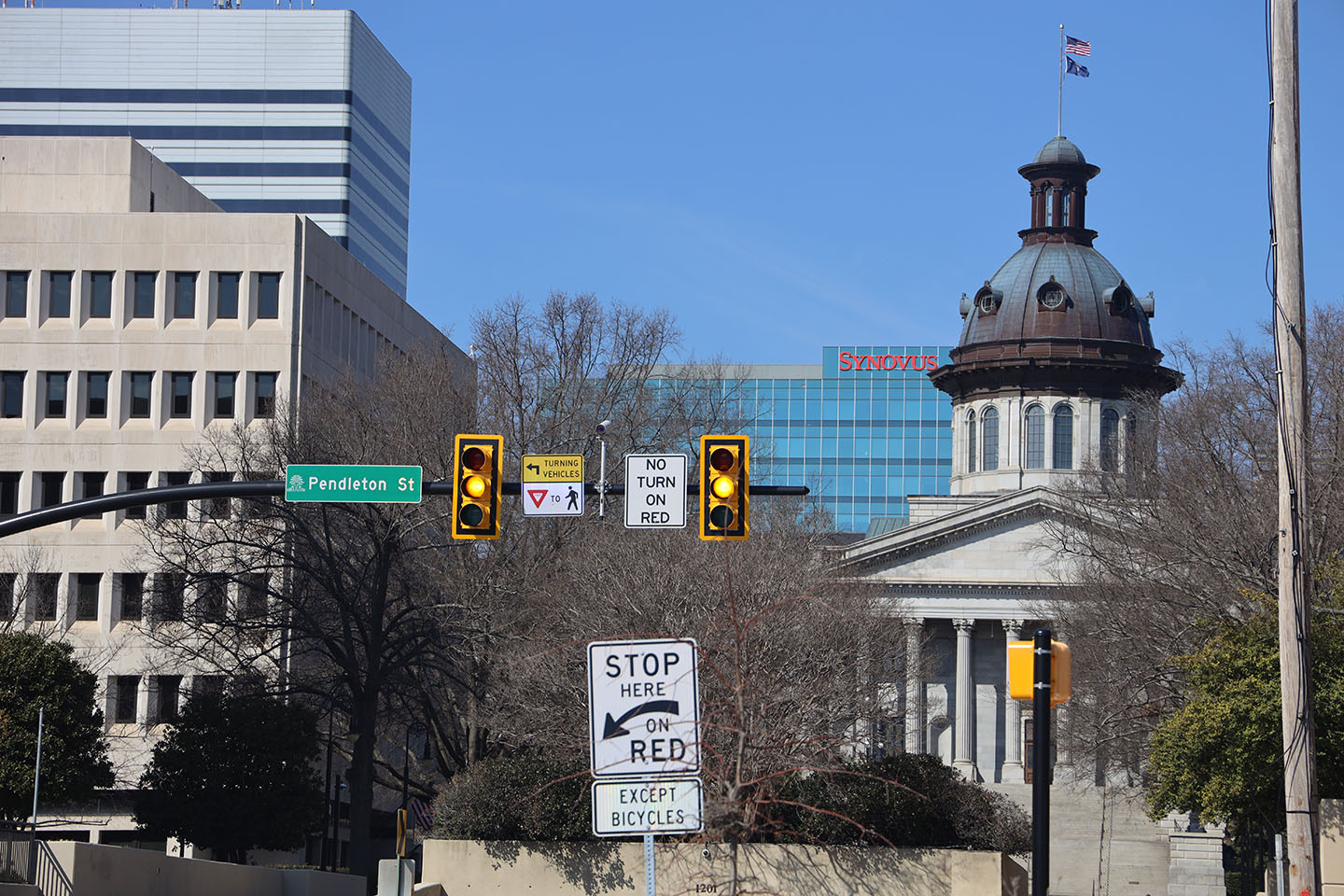
The South Main Street bike lanes were completed in July 2025. They run from Pendelton Street to Blossom Street. Photo by Giovanni Cusatis/The Carolina Reporter
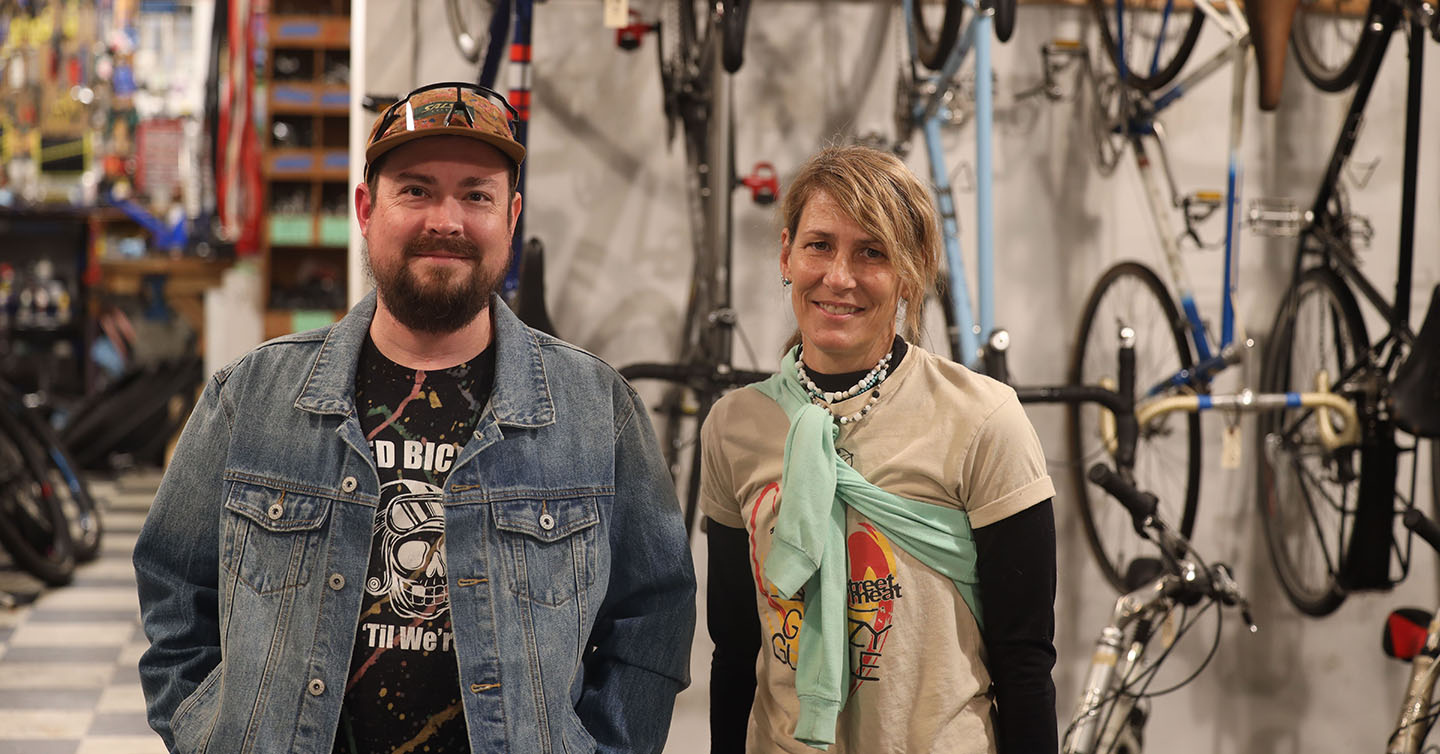
Eric Jones, left, and Laura Liger are board members for Street Meat, a local community bike group. Photo by Giovanni Cusatis/The Carolina Reporter
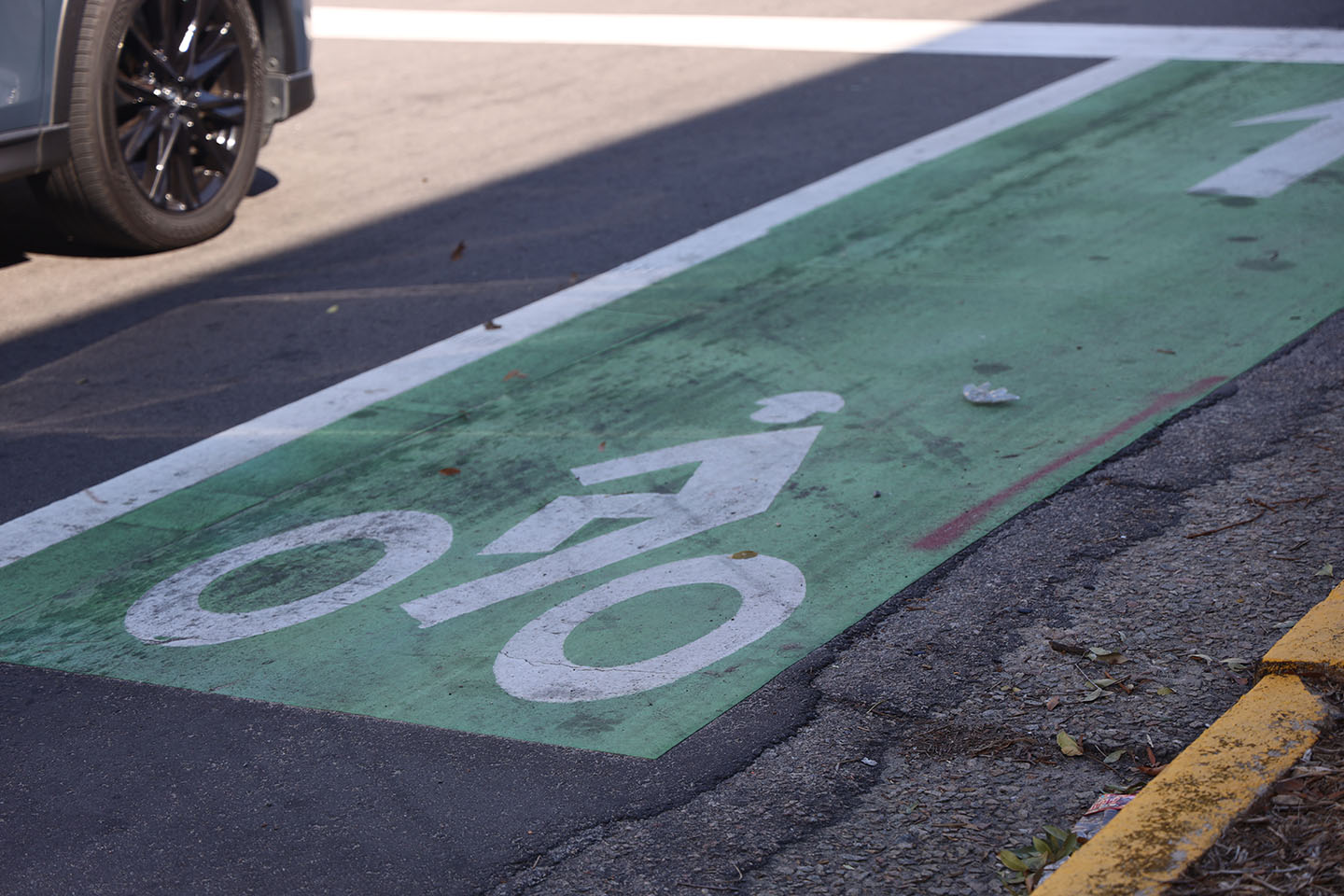
The South Main bike lanes are the first sidewalk-level lanes in the state. Photo by Giovanni Cusatis/The Carolina Reporter
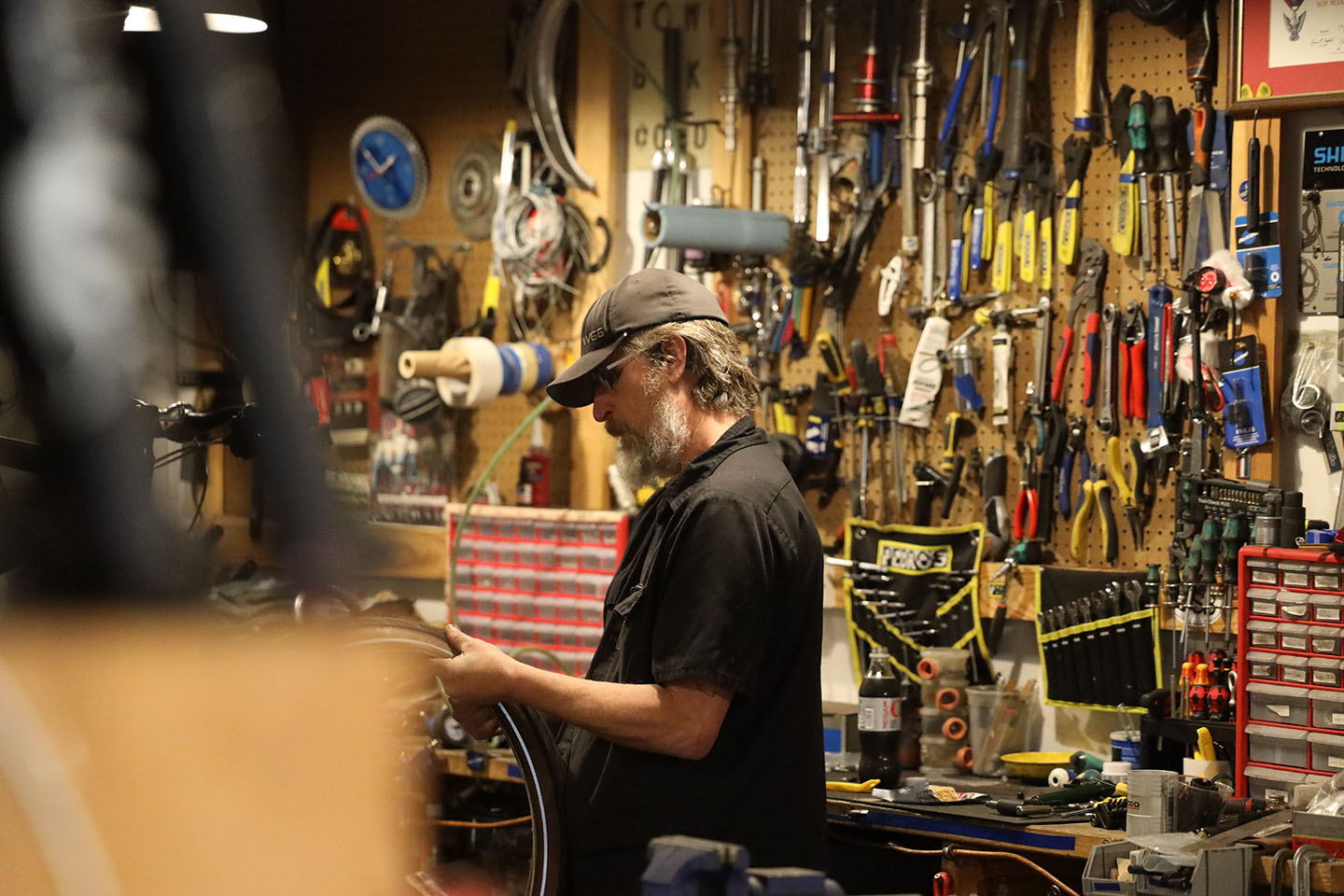
Scott Nuelken is the executive director of Cola Town Bike Collective , a non-profit organization that fixes and provides bikes to the community. Photo by Giovanni Cusatis/The Carolina Reporter