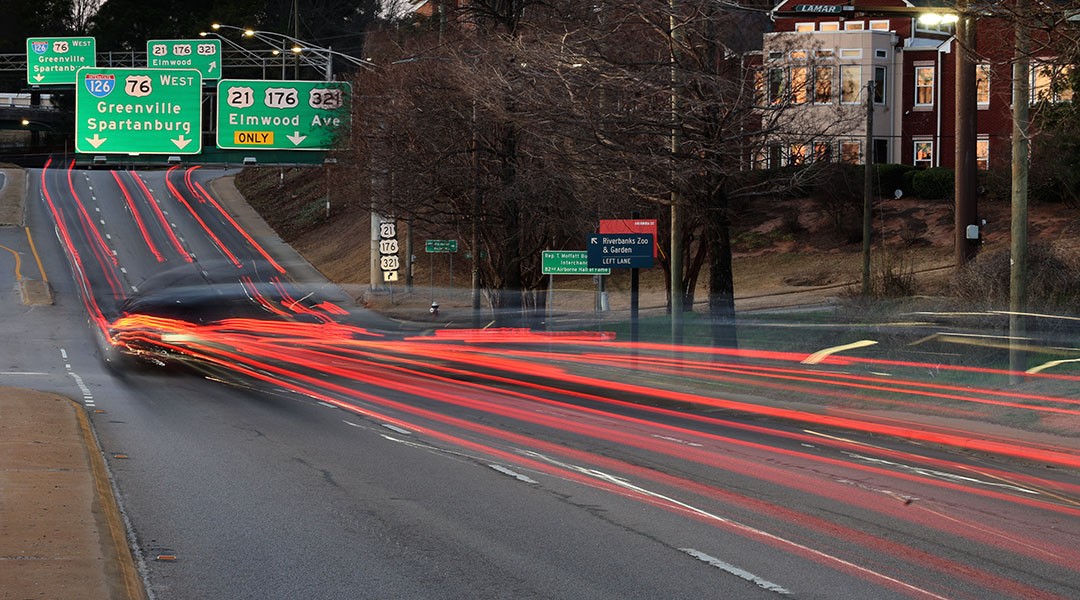
Locals describe Interstates 20 and 26 as “malfunction junction” due to the constant traffic and collisions that occur during the evening despite an ongoing South Carolina Department of Transportation project to improve it. Photo by Payton Hamrick/The Carolina Reporter
Years of construction and still-short merge lanes on Interstates 20 and 26 have turned into a different kind of daily headache for local commuters, as ongoing highway projects test drivers’ patience.
The Carolina Crossroads project has five phases as part of reconfiguring 14 miles of I-20, I-26 and I-126. There are a lot of moving parts going on, with Phases 1 and 2 almost complete, interim project director Brad Reynolds said.
“They’re going to begin some major work out there this spring, with some clearing starting even as early as the next month,” Reynolds said. “Phase 3 is what we consider to be the major interchange of what used to be called ‘malfunction junction.’”
Commuters take the interstates daily to get to work or school. Resident James Windham said in a Facebook comment he tries to avoid the whole area at all costs due to the construction.
Windham said he will be happy when the construction is over. Based on the progress, it seems like it will take 20 years to complete, he said.
“It’s gotten substantially worse after the clearing of the I-20 and I-26 clover with the Bush River exit being blocked off as well,” Windham said on Facebook.
The traffic causes problems for students who have to drive far to get to school. Jared Kaplan, a University of South Carolina junior majoring in biological sciences, said a 35-minute drive can take an hour and 15 minutes on a bad day.
Kaplan said he has to wake up an hour earlier to leave for class so he doesn’t get stuck in traffic.
“I’m a busy man,” Kaplan said. “I’ve got things to do. That hour could be used for doing something else. But, no, I actually use that hour … just to get to campus.”
The confusion caused by the traffic patterns – old and new – has led to more than 1,000 car accidents at or near malfunction junction from 2020 to 2025, according to the Carolina Crossroads Crash Analysis Report. Nearly 90% of the crashes have no injuries, due to them being at low speeds.
Jessica Chaney said on Facebook she has almost been a part of an accident due to the 5 p.m. traffic backups.
“I’ve slid off into the grass to avoid wrecking, because they will have the whole lane out in the interstate for a half a mile,” Chaney’s comment said.
Phases now being completed will get rid of some problems that locals have been facing, Reynolds said. The end goal is to get rid of quick interstate exchange decisions and give drivers more time to merge.
Drivers will see more benefits when trees are removed from being in the way of people being able to see, Reynolds said. Merging will be easier when the trees and utilities are moved.
“Those are some interim benefits, but the major benefit won’t be seen until we plug in the final piece,” Reynolds said.
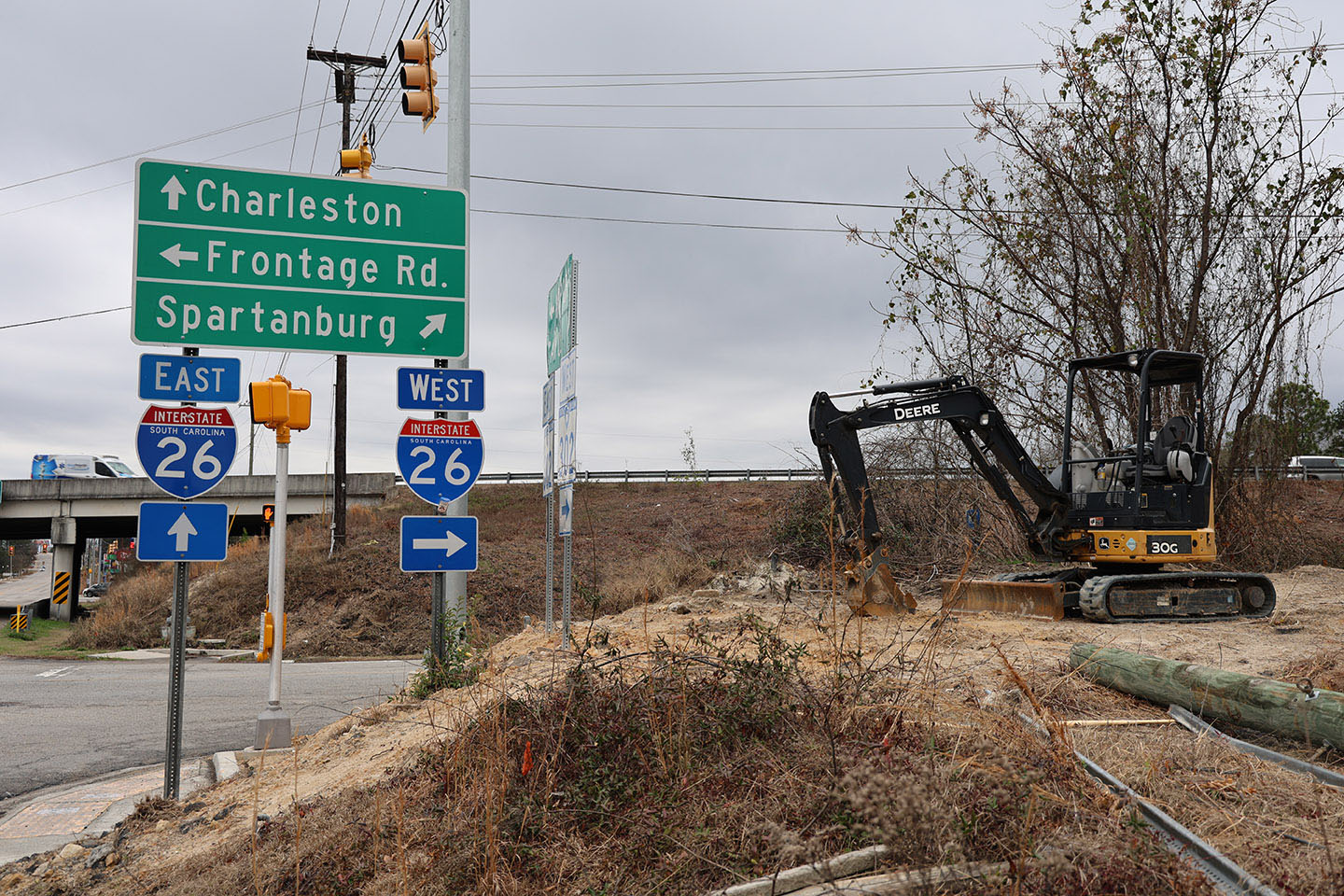
Construction on I-26 stretches all the way from Chapin toward Charleston and is the site of corridor improvements, preservation designs and bridge rehabilitation. Photo by Payton Hamrick/The Carolina Reporter

Jared Kaplan is a commuting student at the University of South Carolina and wakes up an hour early so he does not miss class because of traffic. Photo by Payton Hamrick/The Carolina Reporter
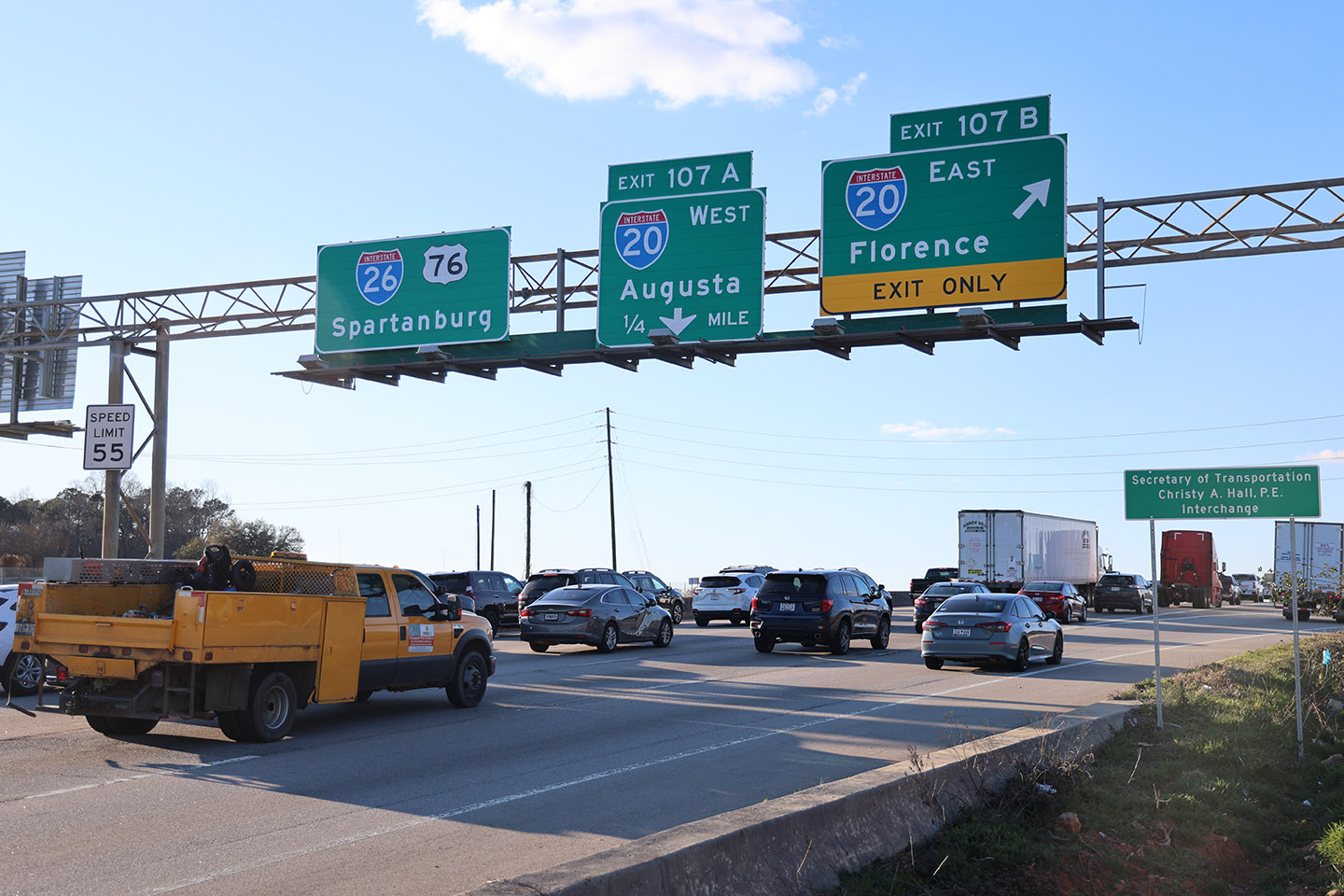
Cars driving toward Lexington face traffic backups during the week due to other drivers having trouble merging properly to get to their exit. Photo by Payton Hamrick/The Carolina Reporter