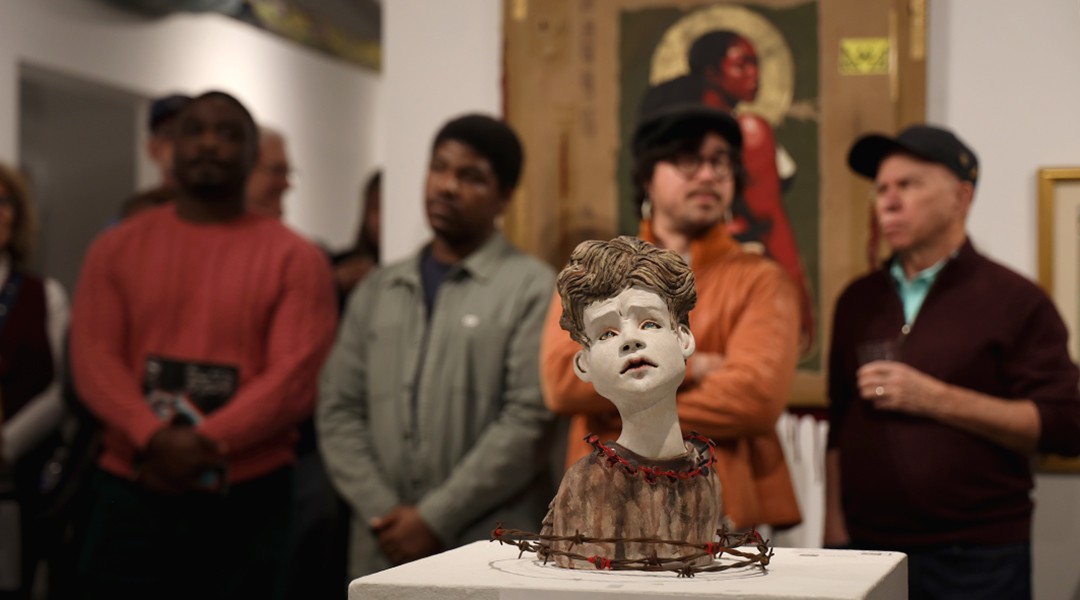
S.C. artists and residents at a The Jasper Art Project event listen to speakers talk about the cultural significance of combining art with history. Photo by Olivia Sisson/The Carolina Reporter
Arts and humanities organizations nationwide faced withheld funds, grant terminations and staff layoffs in 2025 even after Congress approved money for the programs. South Carolina artists and humanities advocates fear 2026 may bring the same threat to their livelihoods.
The biggest worry is that even some long-lived South Carolina projects might not be eligible under new presidential funding priorities.
Jennifer Gunter, director of the federally funded S.C. Humanities organization, sees a great loss for the small projects that were once consistently eligible for federal grants but have not been since the Trump administration temporarily halted grants in April 2025. And recipients might not be eligible in the future under shifting grant guidelines, even though Congress promised to revive the grant process in 2026.
“A lot of organizations get programming off the ground because of the smaller grants that they are able to get from us,” Gunter said. “Once you get one organization to believe in you, others start to believe in you.”
The National Endowment of the Arts and the National Endowment of the Humanities are federal umbrella organizations created to administer funding to states and territories. They’ve existed now for 60 years.
“According to the founding documents of the NEH, it was created because democracy demands wisdom,” Gunter said.
The humanities are the “soul of our shared story,” Gunter said. And despite support from former grantees and sponsors, Gunter emphasizes the number of lost initiatives in the last 10 months.
“We’ll never know about them because they could never apply,” Gunter said.
‘Strongly encourages … administration priorities’
These organizations have weathered threats for years.
But the executive branch had not gotten intimately involved until the Trump Administration did so last spring. That is when Gunter’s work began to change, she said.
“The most important parts to me were actually paused in April 2025, when we lost about $504,000 of our funding that had been appropriated to us by Congress,” Gunter said. “But we never received it.”
South Carolina artists and art organizations quickly had to change their processes when funding was withheld.
Jeff Robinson, director of the S.C. Arts Alliance, is a chief figure in arts advocacy for the state, but doesn’t receive federal funding itself. It works closely, however, with the S.C. Arts Commission, the state’s arts agency.
“The Arts Commission receives a little over $1 million from the NEA,” Robinson said.
Other money goes directly to artists as federal grants.
“We receive a handful of those each year (in South Carolina),” Robinson said. “So that funding directly touches communities.”
Going forward, grants must align with the funding priorities of the executive branch and the NEA, federal officials said.
Those priorities can be found on the NEA website. The site “strongly encourages applications for arts projects that focus on one or more Administration priorities.”
Some guidelines follow former grant preferences, though the broader outline of accepted arts initiatives has been replaced with an alignment of national goals. Those goals encourage artists to involve American heritage and modern celebrations like the 2028 Olympic Games in Los Angeles in their work.
Columbia artist Joe Churchill said less funding and specific guidelines could unfortunately create uniformity in a nonconformist field.
“The smaller that circle gets, the less new ideas you get,” Churchill said. “You won’t see this huge amalgamation of ideas, thoughts, styles – everyone starts using the same style because you have such a small group of artists working together.”
Despite regulations, South Carolina artists and humanities organizations are hopeful that funding will be disbursed as it was meant to be last year.
“That is the reality we’re dealing with right now,” Robinson said. “But what is encouraging is that grant funding will still be going out into communities.”
The “undeniable impact” of the arts is what keeps organizations like the S.C. Art Alliance confident that everyone – including Congress – will continue to support arts and humanities initiatives in the state, Robinson said.
“It’s always been a bipartisan issue in South Carolina,” Robinson said. “It’s not necessarily the same in states like ours. But I’m really, really proud of the relationships that we’ve been able to build with our elected officials, proud of the advocates on the ground that do the work every day to make these things real.”
Because, Robinson said, the arts do have economic value.
‘Art is not transactional,’ or is it?
Federal funding for the NEA and NEH under President Trump’s proposed budget report for this year and last, would be cut completely, along with the organizations themselves.
Congress, with bipartisan support, did not accept those budgeting conditions and in 2025 and 2026 approved continuous funding for both organizations.
But the economic reasons behind the proposed terminations have stuck with artists and humanities employees.
Cindi Boiter, founder of the Columbia arts nonprofit, The Jasper Project, said “art is not transactional” in response. She said the arts are an efficient use of federal spending, bringing a large return on investment.
“In areas where the arts flourish, the people are happier, the people are healthier,” Boiter said. “They’re more profitable in that way.”
University of South Carolina professor Dr. Qiana Whitted views the economic side as a necessity.
“Historically, the arts and humanities tend to be positioned as a ‘value add’ when learning is quantified solely in terms of statistical outcomes,” said Whitted, director of the USC Humanities Collaborative. “But I was struck by Professor Sara Guyer’s description in the most recent World Humanities Report that the humanities reveal who we are, who we have been, what we have thought, and how we think today.”
Robinson, of the S.C. Arts Alliance, said the bipartisan support of Congress shows that the government recognizes both of these values.
“The economic impacts are undeniable,” Robinson said. “In South Carolina, arts have an estimated annual impact of $14.1 billion.”
On the federal level, Robinson said, that number is in the trillions.
Robinson and humanities professionals also detail the economic benefits that occur from arts and humanities culture.
“Without the humanities, there is no tourism,” Gunter said. “What do people come to South Carolina for? Sure, it’s warm. But they want to see the buildings in Charleston, they might want to buy a seagrass basket, they want to eat shrimp and grits. They come for the culture, and that’s what we have and that’s what we support.”
Mostly, Robinson said, this blend of American culture is what residents and Congress seem to value most.
“We don’t lead with data,” Robinson said. “We lead with personal stories. And elected officials have their own personal stories. Their grandkids are involved in the arts. They have been involved in the arts. They are a participant in their communities. Those are the things that I think truly resonate with folks.”
‘Inside Baseball’
South Carolina arts and humanities organizations, with unwavering support from Congress and the community, now question why 2025 funds were withheld, why NEA and NEH termination was proposed – and why grant priorities will be shifting.
“It’s … inside baseball but, I mean, this is the nature of politics,” Robinson said. “It is why public funding sometimes can experience times of turmoil.”
One thing that arts and humanities organizations said they appreciate was the community support during the past 10 months. They also were buoyed by the unity between Congress and the states.
“It truly is not a wedge issue among Americans or among elected officials,” Robinson said. “It is a consensus issue.”
There might not be a general agreement among Congress and the executive branch. But there is one in the arts community, Boiter said.
“We all want a culture that people want to stay in,” Boiter said. “We want people to want to live here. We want people to put their roots down here and give their hometown all their gifts – all of their human gifts.”
Artists are passionate about where they are from, Boiter said. It’s a history and a place that they get to be a part of, that they get to contribute to even if they do not make a profit from it.
“One of our priorities is economy, making a penny scream by doing the most you can with it,” she said. “It’s amazing what you can do with increments of $50. It’s amazing the art we can create.”
All of that contributes to a priceless South Carolina society, Boiter said.
Gunter, who began her career as a student of Southern history, couldn’t agree more.
“We have the best culture, so why not celebrate it?”
FINDINGS
- Federal administration’s new priorities change grant guidelines
- Arts and Humanities create trillions in national impact
- Congress, communities push to save grants; Executive branch pushes for termination
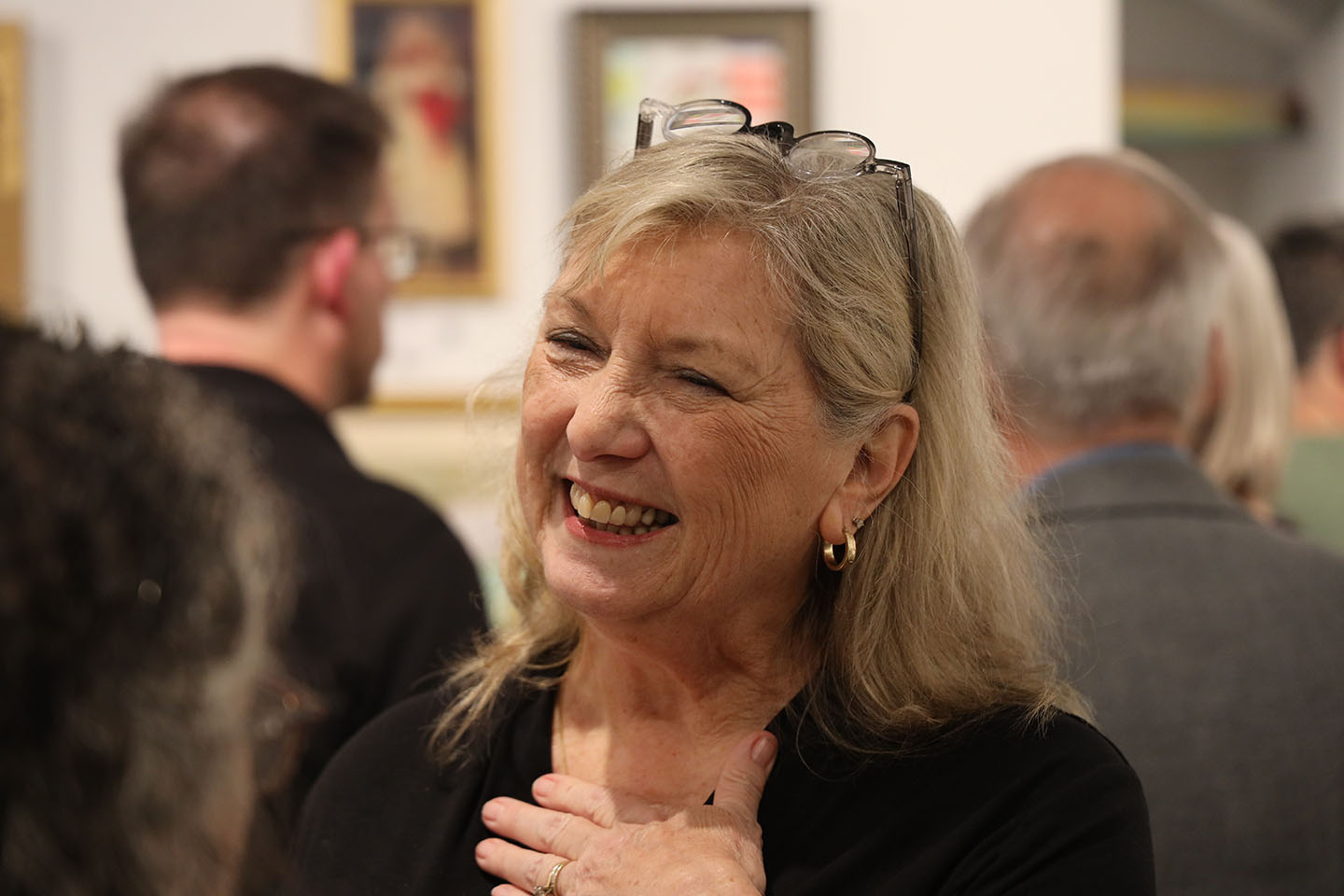
Cindi Boiter, founder of The Jasper Project, speaks during a Columbia art show funded by local sponsors and Jasper employees. Photo by Olivia Sisson/The Carolina Reporter
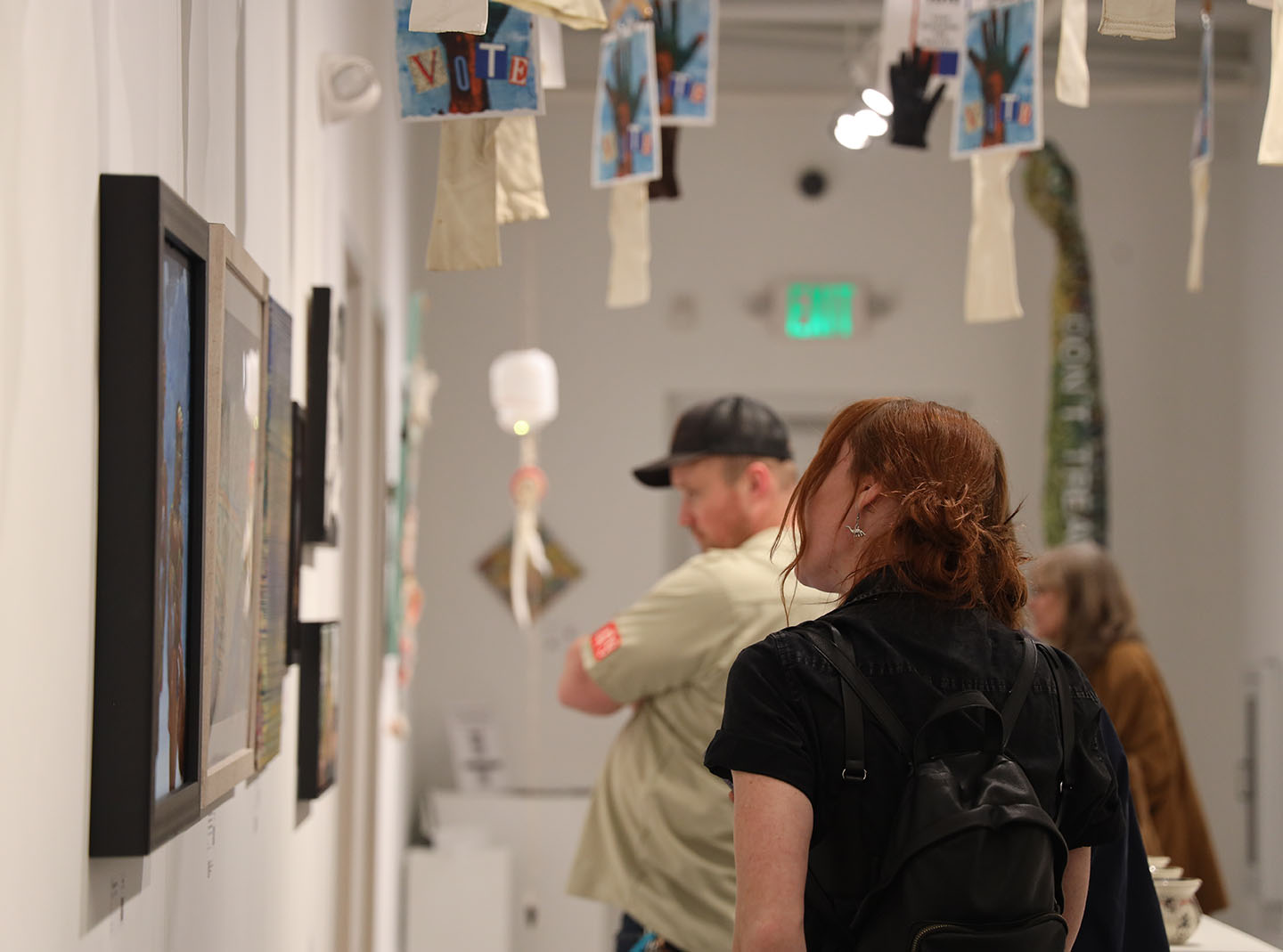
Nicole Hallbick, who has just began studying art, attends a local exhibition in downtown Columbia. “I’m not quite ready to put my work out there,” she said. “But I am so inspired by projects like this.” Photo by Olivia Sisson/The Carolina Reporter
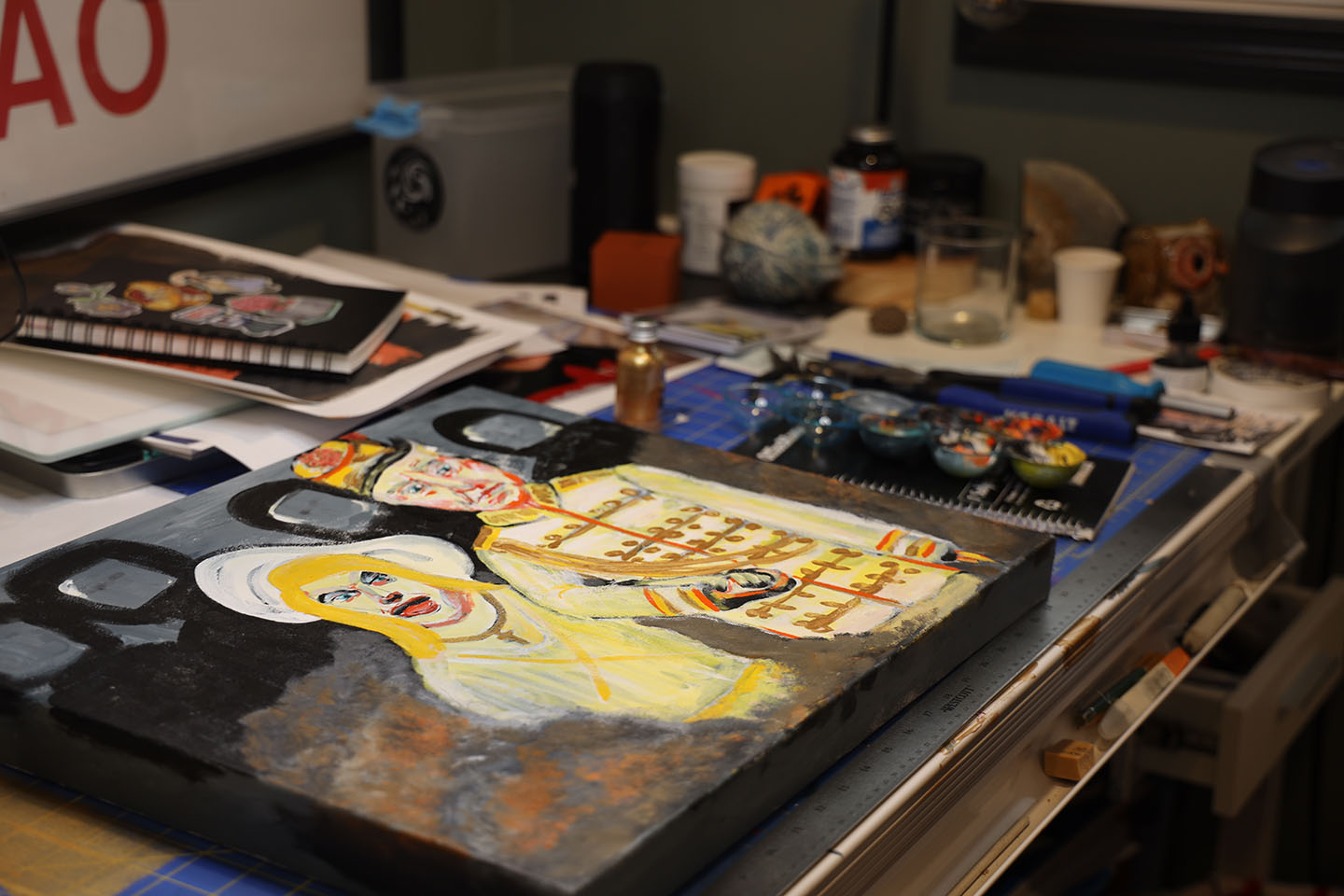
Artist Joe Churchill’s piece for The Jasper Project exhibit sits in his home studio – a space in his backyard separate from the everyday chaos of a young family. Photo by Olivia Sisson/The Carolina Reporter
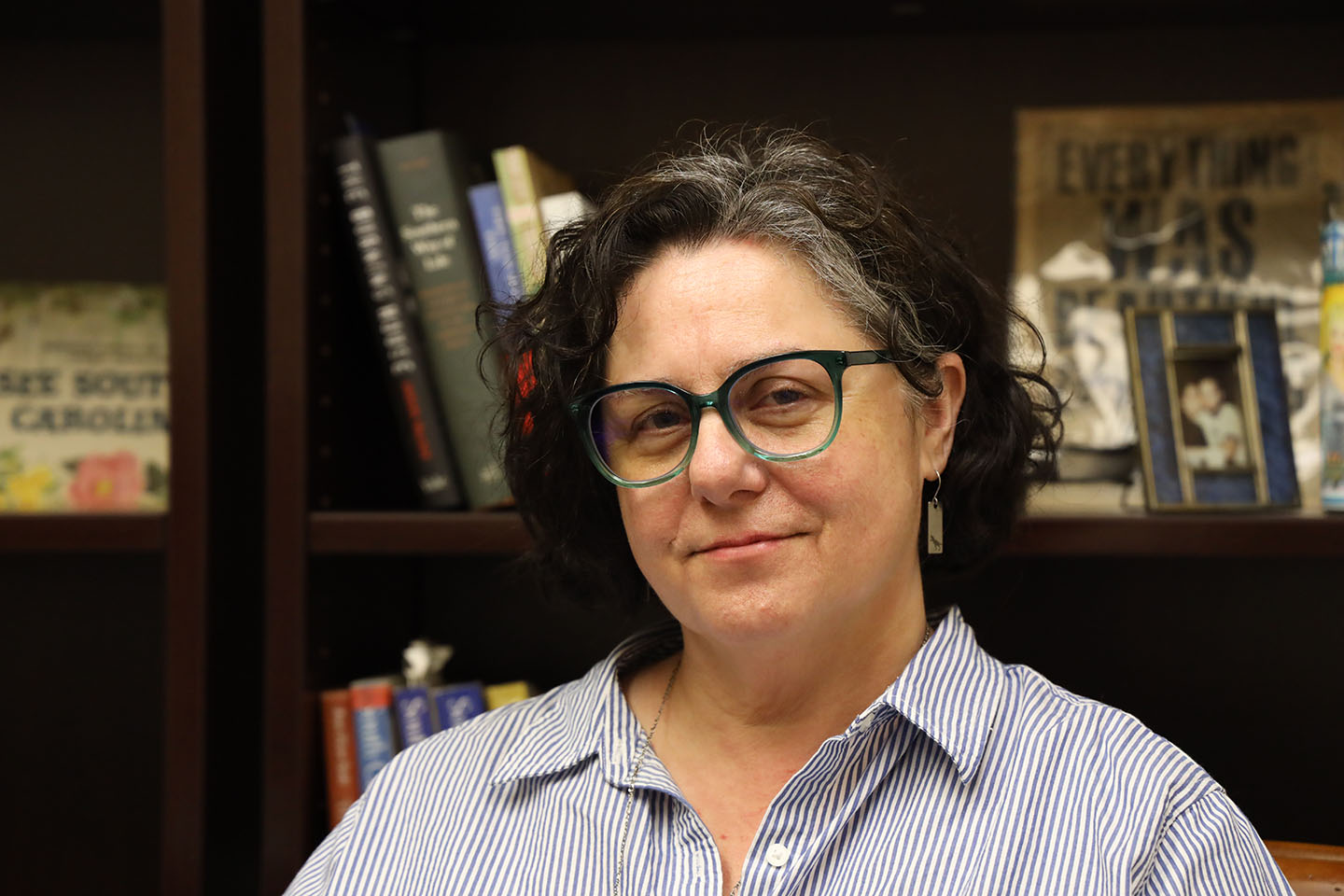
S.C. Humanities Director Jennifer Gunter’s inspiration for joining the organization was rooted in “curiosity.” “I learned a lot about philosophy and rhetoric and all these other disciplines of the humanities,” Gunter said.
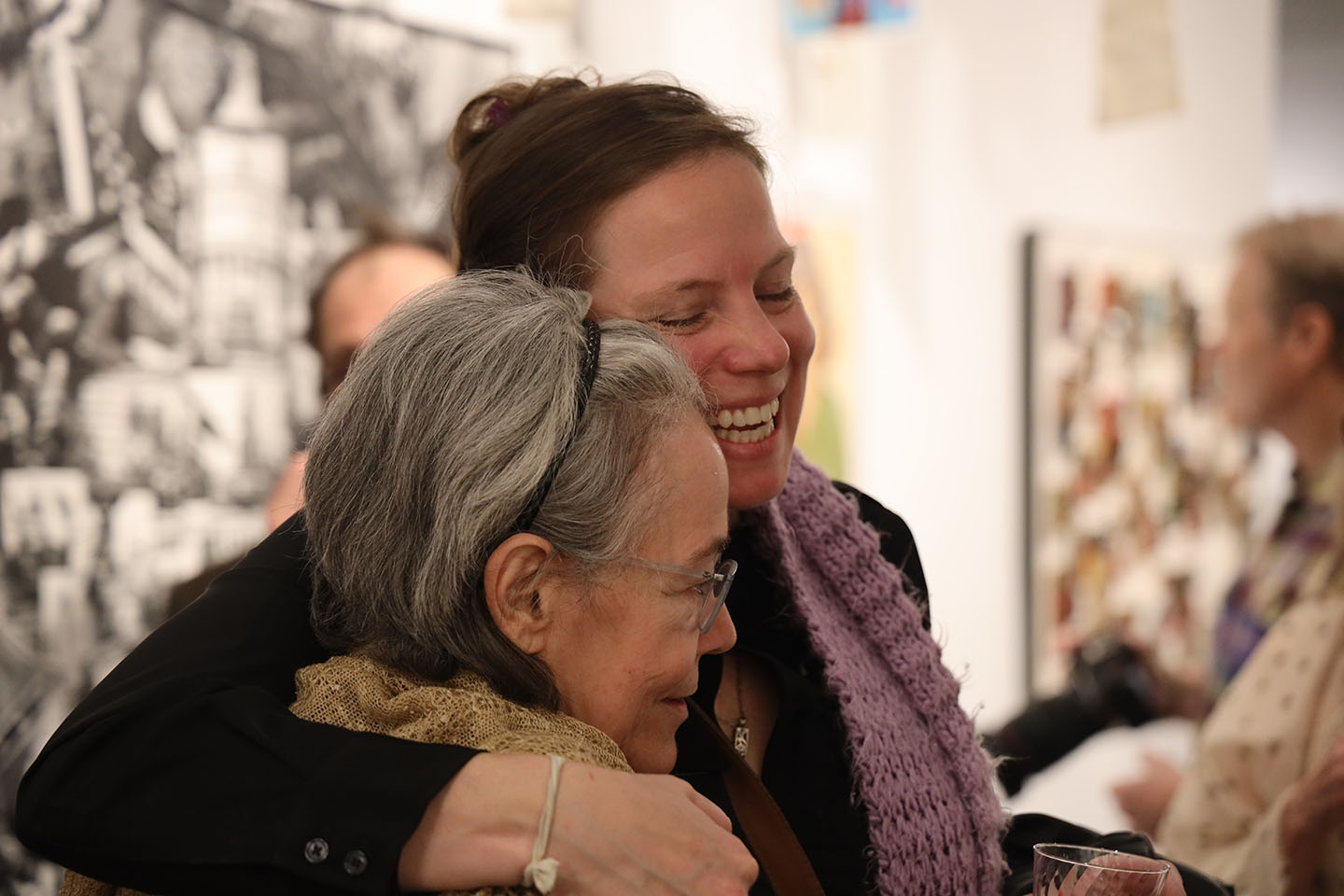
Vi Hendley, left, embraces Leah Griffin at the Degenerate Art Project opening, one of the few times the two have been able to come together recently. Photo by Olivia Sisson/The Carolina Reporter